
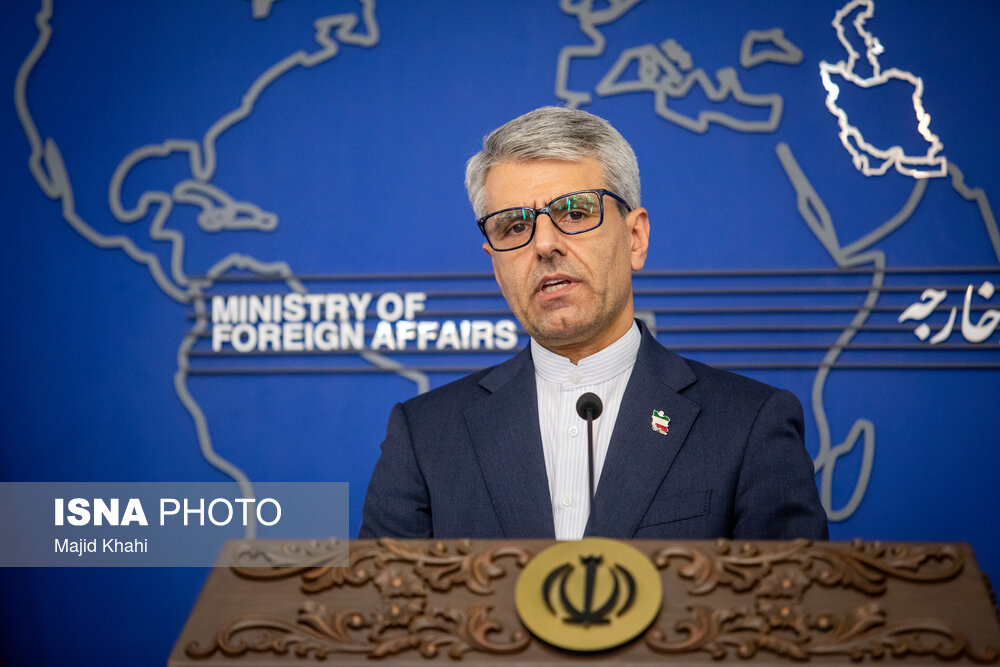
Baqaei stated that at the Geneva meeting, the responsibilities of the European parties were clearly conveyed, and Iran’s demands regarding the lifting of sanctions and its nuclear rights were explicitly outlined.
The seventh round of talks between Iran and the three European countries—Germany, France, and the United Kingdom—was held on Tuesday, August 26, in Geneva, with the participation of the Deputy EU Foreign Policy Chief.
The talks, at the level of deputy ministers and political directors, focused on sanctions relief, Iran’s nuclear program, and UN Security Council Resolution 2231.
Majid Takht-Ravanchi, Deputy Foreign Minister for Political Affairs, and Kazem Gharibabadi, Deputy for Legal and International Affairs, headed the Iranian delegation.
In a televised interview, Baqaei said that this negotiation process is part of the Islamic Republic of Iran’s policy to use all diplomatic capacities to safeguard the country’s national interests.
Referring to threats by the European parties to resort to the UN Security Council’s sanctions snapback mechanism, he stressed: “We presented our principled position that, for clear legal and juridical reasons, none of the three countries holds such a right. Moreover, if such a move is taken, its consequences and impacts will also affect those countries themselves.”
Kazem Gharibabadi also wrote last night on X: “Both sides set out their views on Resolution 2231. Iran remains committed to diplomacy and to a mutually beneficial diplomatic solution. It is time for the three European countries and the UN Security Council to make the right choice and give diplomacy time and space.”
