Saturday, December 27, 2025
Home Blog Page 99

Iranian MP warns ex-FM Zarif over remarks on Russia’s role in nuclear talks

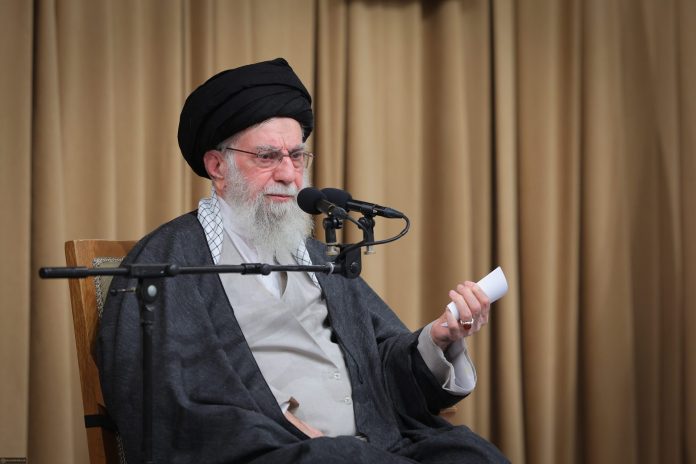
Javad Zarif

Mojtaba Zarei, a member of the parliament’s National Security and Foreign Policy Commission, wrote on X that if Zarif “fails to understand the sensitivity of the current situation,” the Attorney General’s Office “must immediately summon him to safeguard national security”.

Zarei urged Zarif to be silent and align with Iran’s national consensus, warning against statements that could “benefit the enemies of the nation”.

His remarks came after Zarif responded to Russian Foreign Minister Sergey Lavrov’s recent accusations and accused Moscow of undermining the JCPOA process.

Zarei cautioned that continued criticism could be seen as disrupting national security amid what he described as “a sensitive geopolitical moment for Iran”.

Hamas returns bodies of two more hostages, says Israel violating Gaza ceasefire

Israel Hamas Hostages

“Israel has received, via the Red Cross, the bodies of two hostages”, which were returned to Israeli security forces in Gaza, Netanyahu’s office said in a post on the X social media platform early on Sunday.

The prime minister’s office announced that the families of Israeli captives were updated on the return of the remains, and the two bodies had been transferred to Israel’s National Centre of Forensic Medicine for identification.

“The effort to return our hostages is ongoing and will not cease until the last hostage is returned,” the prime minister’s office added.

The Israeli military reported later that one of the bodies was confirmed to be that of Ronen Tomi Engel. The 54-year-old was killed during the Hamas attack on southern Israel on October 7, 2023, and his body was taken to Gaza.

Identification tests are continuing on the second set of remains, the military noted.

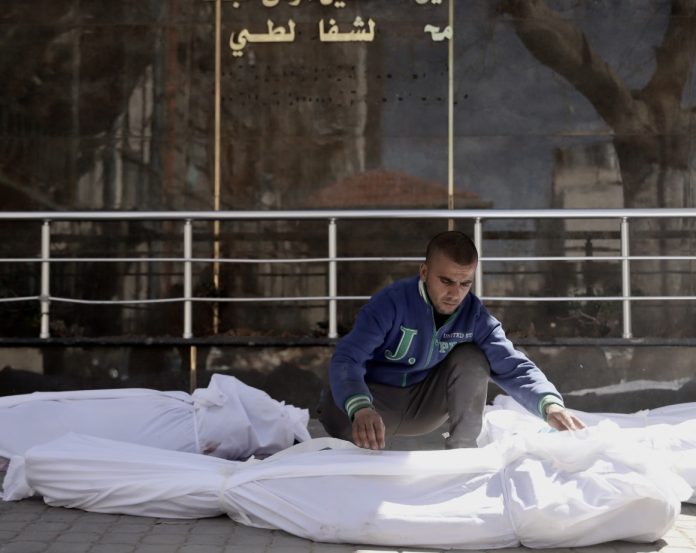
With the handover late on Saturday, Hamas has now returned the remains of 12 of the 28 bodies of captives being held in Gaza, a key demand by Israel in the week-old ceasefire deal to end the two-year war.

According to the deal, Hamas was to return all of the Israeli captives – both the living and dead – within 72 hours of its signing. In exchange, Israel was to release 360 bodies of deceased Palestinians and some 2,000 prisoners.

Hamas has stated that the widespread devastation in the Palestinian territory and the Israeli military’s continuing control of certain parts of Gaza have slowed the recovery of the bodies.

For days, Hamas and Israel have traded blame over violations of the US-mediated ceasefire.

On Saturday, Hamas accused the Netanyahu government of “fabricating flimsy pretexts” to not follow through on its commitments to the peace deal, as well as denouncing Israel’s refusal to open the Rafah crossing with Egypt as “a blatant violation” of the agreement.

On Friday, Israeli forces killed 11 members of a single family, including seven children, in an attack east of Gaza City.

The Palestinian Embassy in Egypt announced earlier on Saturday that the Rafah crossing, the main gateway for people in Gaza to leave and enter the enclave, would reopen on Monday.

But Netanyahu announced that the border crossing would remain closed until Hamas hands over the bodies of all the deceased captives.

The delivery of humanitarian aid into Gaza also remains slow despite the ceasefire deal.


Israel commits 47 violations since Gaza truce came into effect: Media office

Gaza War

The violations have led to the killing of at least 38 Palestinians and the wounding of 143 others.

“These violations varied between crimes of direct fire on civilians, crimes of deliberate bombing and targeting, and the arrest of a number of civilian citizens, practices that reflect the occupation’s continued aggressive approach despite the declaration of a ceasefire,” the office added.

“We note that these attacks were carried out by the occupation forces using military vehicles and tanks positioned on the outskirts of residential neighborhoods, electronic cranes equipped with sensors and remote targeting devices, and drones (quadcopters) that continue to fly over residential areas, carrying out shooting operations and directly targeting civilians.”

Hamas released 20 living Israeli hostages and handed over the remains of 11 more captives in exchange for nearly 2,000 Palestinian prisoners under the ceasefire agreement.

The deal was reached between Israel and Hamas last week, based on a plan presented by US President Donald Trump. Phase one included the release of Israeli hostages in exchange for Palestinian prisoners. The plan also envisages the rebuilding of Gaza and the establishment of a new governing mechanism without Hamas.

Since October 2023, Israeli attacks have killed nearly 68,000 Palestinians in Gaza, most of them women and children, and rendered it largely uninhabitable.


Hamas says will not commit to disarm until further negotiations

Hamas

Asked if Hamas would give up its arms, Nazzal said: “I can’t answer with a yes or no. Frankly, it depends on the nature of the project. The disarmament project you’re talking about, what does it mean? To whom will the weapons be handed over?”

Arab diplomats previously told Middle East Eye that mediators were in discussions with Hamas about turning its weapons over to Arab peacekeepers or locking up long-range weapons such as missiles instead of destroying them.

US President Donald Trump’s 20-point peace plan calls for Hamas’s demilitarisation. It also calls for a complete staged Israeli withdrawal from the Gaza Strip. The plan doesn’t provide a timeline for either step.

Nazzal stated Hamas will have a “clear” and definitive answer when they get to the negotiating table for phase two of the deal, and that other Palestinian groups would need to be consulted. The Popular Front for the Liberation of Palestine and Islamic Jihad both operate in Gaza.

Nazzal added that Hamas was looking for a three to five-year window for the ceasefire so that Gaza could be rebuilt for civilian purposes. His comments were the first time Hamas has publicly put a timeline on its expectations for the deal, and he was pressed by Reuters whether that prediction meant the group was buying time to rearm for another war.

“The goal is not to prepare for the next war – the goal is that we want a truce in which we rebuild the Gaza Strip because the average years needed to rebuild the Gaza Strip is at least five years, and I don’t want to say less or more, but this is the average,” he stated in response to the question.

“The priority for us in this period that we are putting forward is to build the Gaza Strip and return the Gaza Strip to normal civilian life, this is our priority,” he said.

“But if there are parties that want guarantees for the future after this period of time, then these countries need to offer real hope to the Palestinian people,” he added.

“The Palestinian people want an independent Palestinian state.”

The text of Trump’s 20-point plan says that Hamas will have no role in Gaza’s future governance, but offers members amnesty.

It calls for a body of technocratic Palestinians to run Gaza, overseen by a so-called “board of peace” chaired by Trump. The plan includes some soft language that says the Palestinian Authority may take over Gaza after unspecified reforms. It provides a brief mention of a potential Palestinian state.

On the ground, Hamas has demonstrated that it remains well-organised. Hamas security forces deployed throughout Gaza after the ceasefire. Trump himself said he approved of Hamas deploying to prevent crime, but then said he wanted the group to disarm.

Asked about the deployments, Nazzal said: ”This is a transitional phase. In a civil sense, there will be a technocratic administration as I said. On the ground, Hamas will be present,” he said.

He said after the transitional phase, there should be Palestinian elections.

Hamas has governed Gaza since 2007. Fighting between Hamas and its rival Fatah broke out after the former swept to power in Palestinian legislative elections the year before. In the end, Hamas consolidated its hold over Gaza, and Fatah in the occupied West Bank through the Palestinian Authority.

Reconciliation talks between Fatah and Hamas have been ongoing for years, but there has been little progress on mending ties to potentially stage fresh elections.


Iranian lawmakers receive suspended prison sentences, media bans

Iranian Parliament

According to the Judiciary, Kavakebian, a reformist politician, was sentenced to 14 months in prison for making “unsubstantiated claims” during a televised interview concerning alleged links between a woman and political figures. The sentence will be suspended for four years.

He was also banned from engaging in any media activities, including interviews or publishing material, for two years. The editor of the outlet that aired the comments was fined.

Kavakebian claimed in July that Catherine Shakdam, a French-born journalist and an Israeli spy, had intimate relations with 120 senior Iranian officials.

In a separate case, Tehran MP Zohrevand was found guilty of “spreading public anxiety” after making statements deemed contrary to national security during an online interview about the 12-day conflict between Iran and the US-Israeli alliance in June.

In an interview in June, Zohrevand claimed President Massoud Pezeshkian’s administration was plotting to “end the Islamic Revolution” in Iran.

He received a three-month-and-one-day prison sentence, suspended for three years, along with a two-year media activity ban.

Both verdicts are open to appeal before the Court of Appeals, the Judiciary said.

Iran formally approves conditional accession to anti-terror financing convention

The announcement follows the Expediency Council’s conditional approval on October 1 of Iran’s long-debated membership in the convention, part of a broader effort to align with international standards on combating money laundering and terrorism financing.

Council spokesperson Mohsen Dehnavi said Iran’s participation in the convention comes with two main conditions: the Islamic Republic will implement its commitments within the framework of its Constitution, and domestic laws will take precedence if any provision of the convention conflicts with national legislation.

Dehnavi emphasized that the safeguards uphold Iran’s legal sovereignty while allowing it to enhance cooperation with global mechanisms against terrorism financing.

The CFT is one of the key treaties recommended by the Financial Action Task Force (FATF). Iran’s accession could help remove restrictions on its financial and trade relations.

Trump says To meet with China’s leader At South Korea summit

Trump Xi

“We’re going to meet in a couple of weeks. We’re going to meet in South Korea, actually with the President Xi and other people, too,” Trump said in an interview with Fox News show “Sunday Morning Futures.”

“We have a separate meeting,” he added.

The APEC summit will take place October 31 – November 1 in the South Korean city of Gyeongju.

Trump had threatened to scrap the meeting as he raised the stakes in his trade war with China, warning that he would impose 100 percent tariffs on goods from the world’s second-biggest economy.

He issued the tariff threat in response to what he called “extraordinarily aggressive” new Chinese export curbs on rare-earth minerals.

Stock markets slid on the announcement and Trump then struck a conciliatory tone, saying in a social media post “The U.S.A. wants to help China, not hurt it!!!”

The meeting would be the first encounter between the leaders since Trump returned to power in January.

Venezuelan Nobel winner holds call with Israeli PM

Writing on X, Netanyahu’s office said Machado told the Israeli leader she “greatly appreciates his decisions and resolute actions in the course of the war” and also praised the “agreement for the release of the hostages in Gaza”.

But in a separate post on X, opposition leader Machado, who won the Nobel for leading resistance to President Nicolas Maduro, avoided all mention of Israel and Gaza.

In a carefully worded statement, she stated Venezuelans knew that achieving peace “requires immense courage, strength, and moral clarity to stand against the totalitarian forces that oppose us”.

“Just as we fight for freedom and democracy in Venezuela, all nations in the Middle East deserve a future built on dignity, justice, and hope — not fear,” she added.

She did however directly call out “the Iranian regime,” as “a key supporter of the Maduro regime” which also “backs terrorist organizations like Hamas, Hezbollah, and the Houthis”.

Colombia’s left-wing president Gustavo Petro, a fierce critic of Netanyahu, last week questioned the awarding of the Nobel to Machado, over her past outreach to the Israeli leader in seeking support for her campaign to oust Maduro.

Venezuela does not have diplomatic ties with Israel.

Maduro’s firebrand socialist predecessor Hugo Chavez broke off relations in 2009 in protest over the 2008 Gaza war.

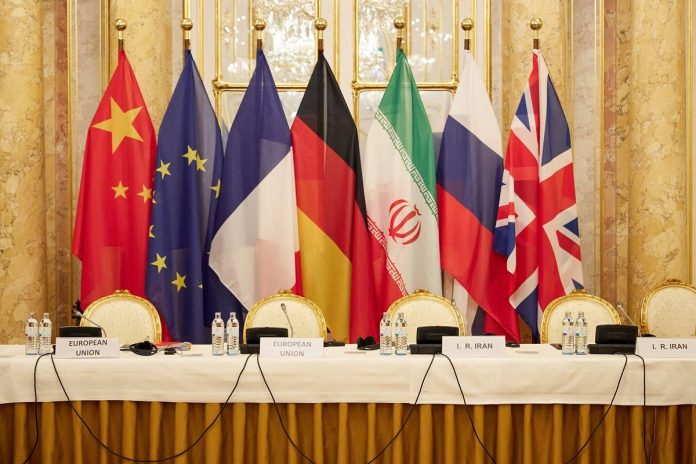
Iran says nuclear restrictions under UNSC Resolution 2231 no longer valid

Ministry of Foreign Affairs of the Islamic Republic of Iran

The Ministry of Foreign Affairs of Iran issued a statement on Saturday regarding the termination of UN Security Council Resolution 2231.

What follows is the text of the statement:

As previously emphasized in Iran’s official positions and statements concerning the Joint Comprehensive Plan of Action (JCPOA) and UN Security Council Resolution 2231 of July 20, 2015, regarding Iran’s peaceful nuclear program, the ten-year period stipulated in that resolution expires on Saturday, October 18, 2025. From that date, all provisions of the resolution, including the limitations imposed on Iran’s nuclear program and related mechanisms, are to be considered terminated.

Accordingly, the nuclear issue of Iran—which has been under the Security Council’s agenda under the title of “non-proliferation”—must be removed from the Council’s list of matters for consideration. With the expiration of Resolution 2231, Iran’s nuclear program should be treated in the same manner as that of any other non-nuclear-weapon State Party to the Non-Proliferation Treaty (NPT).

The stated purpose of placing Iran’s nuclear issue on the Security Council’s agenda was to ensure the peaceful nature of Iran’s nuclear activities and to prevent any alleged diversion toward weaponization. This objective has been fully achieved. No report by the International Atomic Energy Agency (IAEA) has ever contradicted this fact. Despite persistent political pressure by the three European countries and the United States on the Agency to allege Iranian non-compliance with safeguards obligations, no such determination has ever been made. Meanwhile, the Islamic Republic of Iran, despite voluntarily accepting extensive transparency measures under the JCPOA, has remained under unjust sanctions, while it was the three European countries, the European Union, and the United States that violated their own commitments regarding sanctions relief.

Resolution 2231 and its annex, the JCPOA, represented a major achievement of multilateral diplomacy, whose effectiveness was evident in its early years of implementation. Unfortunately, the United States, through its irresponsible withdrawal from the JCPOA in 2018, and the three European countries, through their continued failure to fulfill their obligations, undermined this important diplomatic achievement.

The Ministry reiterates the illegality of the recent move by the three European participants in the JCPOA (the United Kingdom, France, and Germany), who—without any legal basis or logical justification and merely in compliance with US pressure—abused the JCPOA’s dispute resolution mechanism to attempt the reinstatement of terminated Security Council resolutions. This was done despite the fact that the United States had unilaterally and unjustifiably withdrawn from the JCPOA in 2018. The Ministry clarifies that the actions of the three European countries have no impact whatsoever on the legal arrangements stipulated in Resolution 2231, including its expiration date. Therefore, the resolution must be considered terminated as scheduled on October 18, 2025.

It also emphasizes that, despite the unlawful actions of the three European countries—who have themselves been in “substantial non-performance” of their obligations since the US withdrawal from the JCPOA in May 2018 and are therefore legally disqualified from invoking the dispute resolution mechanism—the UN Security Council, due to the explicit opposition of its two permanent members, China and Russia, has made no decision to reinstate any of the terminated resolutions.

Based on this, Iran considers the confrontational measures by Germany, the UK, and France—persistent violators of the JCPOA who acted in bad faith and without following the required legal procedures to revive canceled Security Council resolutions—as devoid of any legal, procedural, or executive validity. The UN Security Council Secretariat is not authorized to endorse or recognize such illegal actions.

The statement stresses that, as reflected in the joint communications by Iran, China, and Russia to the UN Secretary-General, the Security Council has made no decision authorizing the Secretariat to draw any independent conclusion regarding the reinstatement of the terminated resolutions. Such authority lies exclusively with the Security Council itself.

Accordingly, the Islamic Republic of Iran calls upon the UN Secretary-General, in accordance with Article 100 of the UN Charter, to immediately correct the false information posted on the United Nations website concerning the alleged “reinstatement” of terminated resolutions against Iran and to prevent further confusion in the Council’s legal and procedural processes.

Iran also deems any re-establishment of Security Council sanctions mechanisms, including the Sanctions Committee and the Panel of Experts, as illegal, and expects the Secretariat to promptly remove all such claims from the Security Council’s website.

This is particularly necessary given the fundamental ambiguity surrounding the purpose, validity, and termination mechanisms of the now-defunct resolutions.

All UN Member States are expected—considering the unlawful nature of the actions by the three European countries, their evident procedural flaws, and the absence of any Security Council decision to extend Resolution 2231 or to reinstate terminated resolutions—to refrain from granting any legal or practical effect to the claims of the three European countries and the United States regarding the reimposition of previously terminated resolutions (including 1696, 1737, 1747, 1803, 1835, and 1929), and to regard Resolution 2231 as terminated.

The Islamic Republic of Iran reaffirms the exclusively peaceful nature of its nuclear program and strongly condemns the Security Council’s failure to denounce the military aggression committed by the Israeli regime and the United States against Iran’s territorial integrity and sovereignty, including attacks on Iran’s safeguarded peaceful nuclear facilities. These brutal and unlawful attacks, carried out in the midst of diplomatic negotiations with the United States, represent a grave betrayal of diplomacy and a major blow to international law and to the integrity of the global non-proliferation regime.

These aggressions resulted in the martyrdom and injury of several thousand Iranian citizens, the destruction of thousands of residential units, and significant damage to Iran’s peaceful nuclear infrastructure. They also disrupted Iran’s regular cooperation with the IAEA. Efforts by Iran to restore constructive engagement—culminating in the Cairo Understanding—were undermined by the irresponsible and politically motivated actions of the three European countries who abused the JCPOA dispute mechanism.

The Ministry of Foreign Affairs of the Islamic Republic of Iran expresses its appreciation to China and Russia, as permanent members of the Security Council, for their consistent opposition to the misuse of the JCPOA dispute mechanism by the three European countries, and also to Algeria and Pakistan, as non-permanent members of the Council, for rejecting this illegal initiative. The Ministry also commends the decisions of South Korea and Guyana, the two other non-permanent members, for not endorsing the European move.

Furthermore, Iran extends its gratitude to the Member States of the Non-Aligned Movement, which, in the Final Declaration of the 19th Ministerial Meeting in Kampala (Uganda), emphasized the termination of Resolution 2231 in accordance with its paragraph 8 and the need for full respect of its provisions and timetable. Appreciation is also expressed to the Members of the Group of Friends in Defense of the UN Charter in New York for taking a similar stance.

The Islamic Republic of Iran reaffirms its unwavering commitment to diplomacy while firmly insisting on the legitimate rights and lawful interests of the Iranian nation in all fields, including its right to the peaceful use of nuclear energy.

Pakistan, Afghanistan to hold talks in Qatar after deadly clashes

Defence Minister Khawaja Asif and intelligence chief General Asim Malik will be heading to Doha today for talks with Afghan Taliban, Pakistan state TV reported.

An Afghan Taliban government official also confirmed the talks would take place.

“A high-level delegation from the Islamic Emirate, led by Defense Minister Mohammed Yaqub, left for Doha today,” Afghan Taliban government spokesman Zabihullah Mujahid wrote on X.

A 48-hour truce paused nearly a week of bloody border clashes that killed dozens of troops and civilians on both sides.

But late Friday Afghanistan accused Pakistan of breaking the ceasefire, with deadly effect.

“Pakistan has broken the ceasefire and bombed three locations in Paktika” province, a senior Taliban official told AFP, speaking on condition of anonymity.

“Afghanistan will retaliate.”

Ten civilians were killed and 12 others wounded in the strikes, a provincial hospital official told AFP on condition of anonymity, adding that two children were among the dead.

The Afghanistan Cricket Board told AFP that three players who were in the region for a domestic tournament were killed, revising down an earlier toll of eight.

It also announced it was withdrawing from the upcoming Tri-Nation T20I Series involving Pakistan, scheduled for next month.

In Pakistan, a senior security official told AFP that forces had “conducted precision aerial strikes” in Afghan border areas targeting the Hafiz Gul Bahadur Group, a local faction linked to Tehreek-e-Taliban Pakistan (TTP) — the Pakistani Taliban.

Islamabad noted that same group had been involved in a suicide bombing and gun attack at a military camp in the North Waziristan district that borders Afghanistan, which left seven Pakistani paramilitary troops dead.

Security issues are at the heart of the tensions, with Pakistan accusing Afghanistan of harbouring militant groups led by the Tehreek-e-Taliban Pakistan (TTP) — the Pakistani Taliban — on its soil, a claim Kabul denies.

The cross-border violence had escalated dramatically from Saturday, days after explosions rocked the Afghan capital Kabul, just as the Taliban’s foreign minister began an unprecedented visit to India, Pakistan’s longtime rival.

The Taliban then launched an offensive along parts of its southern border with Pakistan, prompting Islamabad to vow a strong response of its own.

When the truce began at 1300 GMT on Wednesday, Islamabad said that it was to last 48 hours, but Kabul said the ceasefire would remain in effect until Pakistan violated it.

Pakistan’s Defence Minister Khawaja Muhammad Asif accused Kabul of acting as “a proxy of India” and “plotting” against Pakistan.

“From now on, demarches will no longer be framed as appeals for peace, and delegations will not be sent to Kabul,” Asif wrote in a post on X.

“Wherever the source of terrorism is, it will have to pay a heavy price.”

Taliban government spokesman Zabihullah said its forces had been ordered not to attack unless Pakistani forces fired first.

“If they do, then you have every right to defend your country,” he stated in an interview with the Afghan television channel Ariana, relaying the message sent to the troops.