Saturday, December 27, 2025
Home Blog Page 98

Syrian FM to make first official visit to China in November

Hassan al-Shaibani

“We have redefined our relationship with China, which had politically supported the former regime of Bashar al-Assad and used its veto power on his behalf,” Shaibani said during an interview with the state-run Alikhbaria TV.

“In early November, there will be the first official visit to China, based on an invitation from Beijing,” he added.

Shaibani stressed that Syria needs China’s support at this stage for reconstruction, noting that this development reflects a shift in bilateral relations, as Beijing had previously supported the former government and even upgraded ties to a “strategic partnership” during Bashar al-Assad’s visit to China in Sept. 2023.

Commenting on Syrian-Russian relations, particularly after President Ahmad al-Sharaa visited Moscow, the minister said: “Our engagement with Russia has been gradual. No new agreements have been signed, and the agreements concluded between Russia and the former regime remain suspended—we do not accept them.”

He also expressed Syria’s intention to restore relations with Lebanon, saying: “There is a legacy we are not part of and for which we bear no responsibility.”

On the Syrian refugee issue in Lebanon, the minister added it “has been a source of pressure on both the Lebanese state and Syria.”

Speaking about the country’s new foreign policy, Shaibani stated: “We have launched an external policy free of polarization, without aligning Syria to any bloc or placing it in a state of hostility with any country.”

Addressing the issue of the Syrian Democratic Forces (SDF), whose backbone is PKK/YPG terrorist groups, he said: “We have succeeded in convincing the countries concerned that the only solution is the March 10 agreement, because the absence of SDF representation within state institutions deepens the divide between them and the state.”

“There is a historic opportunity for northeastern Syria to play an active role at this stage,” the minister added, emphasizing that “partnership with the SDF should be finalized as soon as possible.”

Regarding Israel’s repeated attacks on Syria, Shaibani said: “Tel Aviv sought to impose a new reality and an expansionist project, exploiting the political changes in the country.”

He added that “Israel has an expansionist agenda, and its actions only reinforce instability in Syria and the wider region.”

He concluded by affirming, “We reject any form of partition or federalization—this is not a matter open for discussion or negotiation.”


Iran FM condemns UK parliament’s drone display

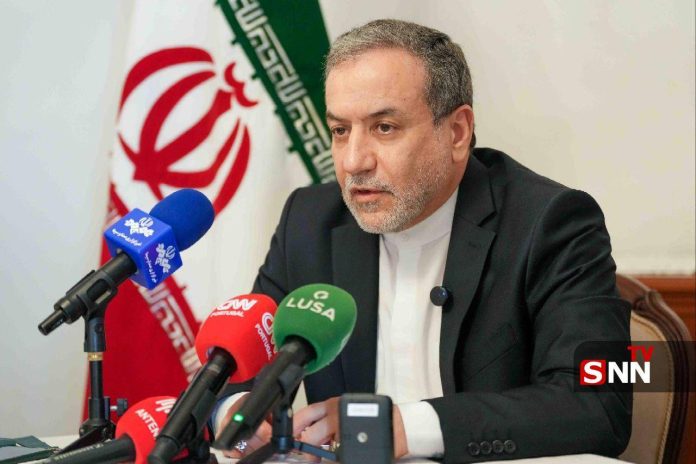
Abbas Araghchi

Seyed Abbas Araqchi said on Sunday that those opposing friendly relations between Iran and Europe are attempting to fabricate narratives that contradict the centuries-old ties between Iran and European nations, including Poland.

In a post on X, Araqchi wrote that Iran remains ready for technical talks and the exchange of documents to clarify the facts, particularly in response to this “ridiculous show.”

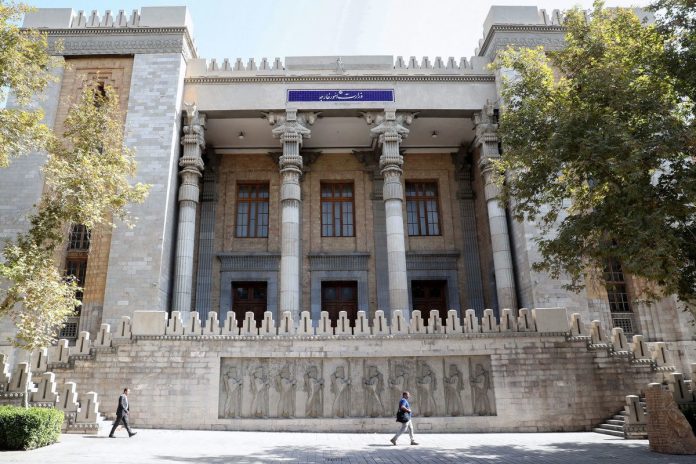
Recently, following the participation of Poland’s foreign minister in an anti-Iran performance at the UK Parliament—staged in collaboration with an American-Zionist group and involving claims about the use of Iranian drones in the Russia–Ukraine conflict—Marcin Wilczek, the head of Poland’s mission in Tehran, was summoned to Iran’s Foreign Ministry.

The Islamic Republic of Iran has repeatedly and categorically rejected allegations of providing military assistance to Russia in the Ukraine conflict, stressing the need to resolve the issue through dialogue.


Two Russian banks agree to accept letters of credit from Iranian banks

Iran Central Bank

He said the move will help expand financial cooperation and enable new payment mechanisms between Iran and Russia, particularly in the agricultural sector.

Speaking at a meeting with members of Iran’s Chamber of Commerce Agricultural Commission, Bandani said discussions with several Russian banks are ongoing and a third bank may soon join the arrangement.

The new mechanism is expected to facilitate imports and the supply of essential goods under bilateral financial frameworks.

He noted that, despite budgetary limits, more than $9 billion in foreign currency has been allocated to the Ministry of Agriculture this year, exceeding the legal ceiling, in coordination with senior authorities. The Central Bank has also provided $5.5 billion in preferential-rate currency to support the sector.

Officials at the meeting emphasized the need for efficient foreign exchange management, timely supply of agricultural inputs, and better oversight to prevent market disruptions.

They called the collaboration with Russian banks a strategic step toward stabilizing trade and securing Iran’s food supply.

Hamas refutes US claim on Gaza ceasefire violation

In a statement on Sunday, Hamas said the US allegations were false and “fully align with the misleading Israeli propaganda and provide cover for the continuation of the occupation’s crimes and organised aggression” against the Palestinians in Gaza.

The US State Department had claimed that Hamas is planning an attack against civilians in Gaza “in grave violation of the ceasefire” and called on the mediating nations to demand that the group uphold its obligations under the US-backed peace deal.

In a statement late on Saturday, the State Department noted it had obtained “credible reports indicating an imminent ceasefire violation by Hamas against the people of Gaza”.

“Should Hamas proceed with this attack, measures will be taken to protect the people of Gaza and preserve the integrity of the ceasefire,” it added, without giving specific details on the planned attack.

Hamas called on the US to “stop repeating the [Israeli] occupation’s misleading narrative and to focus on curbing its repeated violations of the ceasefire agreement”.

“The facts on the ground reveal the exact opposite, as the occupation authorities are the ones who formed, armed, and funded criminal gangs that carried out killings, kidnappings, theft of aid trucks, and assaults against Palestinian civilians. They have openly admitted their crimes through media and video clips, confirming the occupation’s involvement in spreading chaos and disrupting security,” it said.

Hamas added its police forces in Gaza, “with broad popular and community support, are fulfilling their national duty in pursuing these gangs and holding them accountable according to clear legal mechanisms, to protect citizens and preserve public and private property”.

Hamas and Israel have been trading blame over violations of the US-mediated ceasefire since it came into force last week, threatening the success of the week-old deal.

The Gaza Government Media Office announced on Saturday that it had counted almost 50 Israeli violations of the peace deal, resulting in 38 Palestinian deaths and 143 injuries since the ceasefire took hold.

It called Israel’s actions “flagrant and clear violations of the ceasefire decision and the rules of international humanitarian law”.

According to the office, Israeli forces in Gaza fired directly at and bombed civilians, attacks that reflected Israel’s “continued aggressive approach despite the declaration of a ceasefire”.


20 European states demand measures to return Afghans either voluntarily or forcibly

Afghan Refugees


Many EU countries say that the fact that they cannot currently deport Afghans, even those convicted of crimes, due to no formal return agreement with Afghanistan since the Taliban takeover in 2021 poses a threat to EU countries security and “undermines public trust in asylum policy”.

The initiative, led by Belgium’s Minister for Asylum and Migration, Anneleen Van Bossuyt, is supported by 18 other countries across the EU and Norway: Austria, Belgium, Bulgaria, Cyprus, the Czech Republic, Estonia, Finland, Germany, Greece, Hungary, Ireland, Italy, Lithuania, Luxembourg, Malta, the Netherlands, Poland, Slovakia and Sweden.

They are demanding the European Commission bring the return of Afghans to the top of its agenda, including negotiating with the Taliban regime to agree upon a return policy.

Van Bossuyt has suggested giving the EU’s border agency Frontex a stronger role in organising and supporting voluntary returns through the EU Reintegration Programme. Meanwhile, for forced returns, the letter suggests that those deemed dangerous or criminal should be prioritised, through a joint mission to Afghanistan between the Commission, the EEAS and the Member States wishing to take part.

Since the fall of Kabul in 2021, the only country to recognise the Taliban as the legitimate government of Afghanistan has been Russia. Despite this, Germany, led by Friedrich Merz’s conservative government, has been close to cutting a deal with the Taliban on the return of Afghans, who form the second-largest group of asylum seekers in Germany.

However, Germany’s actions have previously been criticised by the UN, as Afghanistan is still under a “non-return advisory”, according to Ravina Shamdasani, a UN refugee agency spokesperson.

Meanwhile, another worker for the UN Human Rights Office (OHCHR), Arafat Jamal, said: “We have been documenting continuing human rights violations in Afghanistan.”


US claims Hamas planning ‘imminent ceasefire violation’

Hamas

“This planned attack against Palestinian civilians would constitute a direct and grave violation of the ceasefire agreement and undermine the significant progress achieved through mediation efforts,” department officials said in a statement shared on the social platform X.

The statement added that if the attack proceeds, the U.S. will take measures “to protect the people of Gaza and preserve the integrity of the ceasefire.”

“The United States and the other guarantors remain resolute in our commitment to ensuring the safety of civilians, maintaining calm on the ground, and advancing peace and prosperity for the people of Gaza and the region as a whole,” the statement concluded.

Following the initial phase of a 20-point peace plan agreed to by Israel and Hamas, with the deal itself overseen by President Donald Trump, Hamas has aimed to reassert its control over Gaza with a wave of retribution executions.

The group has killed at least 33 people as of Tuesday, when the ceasefire went into effect, according to Reuters.

Trump stressed on Tuesday that if Hamas did not lay down their weapons, “we will disarm them.” Should Hamas not follow the peace plan, the Israeli Defense Forces (IDF) are allowed to resume military operations in Gaza.

Iran’s FM: Snapback mechanism not activated, UNSC Resolution 2231 has officially expired

Abbas Araghchi

Araghchi stated that with the official expiration of Resolution 2231 on October 18, all UN Security Council restrictions on Iran have been lifted and the Iran issue is no longer on the Council’s agenda.

He added that this position is supported by over 120 countries, including members of the Non-Aligned Movement, which endorsed the same stance in their recent ministerial meeting in Uganda.

Russia, as a permanent UNSC member and its current rotating president, also issued an official statement confirming that it does not recognize any reinstatement of previous sanctions.

Araghchi said Iran, China, and Russia have expressed consistent positions in joint letters to the Security Council and the UN secretary general.

Meanwhile, Araghchi described Iran-Russia ties as “rooted in mutual trust, shared interests, and a long-term strategic outlook.”

He emphasized that strengthening coordination among Iran and like-minded countries in the Security Council remains vital for advancing national interests and maintaining regional stability.

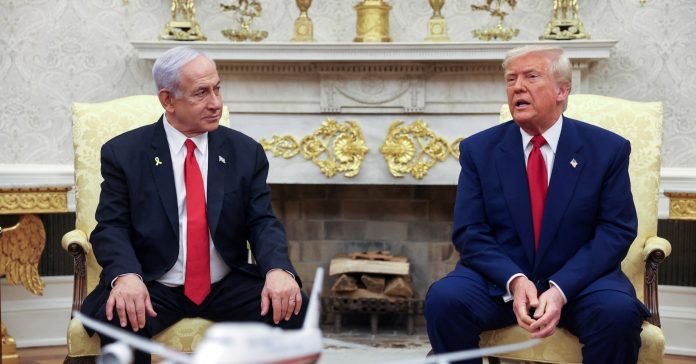
Netanyahu seeking another term as Israeli PM

Benjamin Netanyahu

Netanyahu’s recent tenure has been defined by his controversial judicial reform, the Hamas hostage crisis, and the war in Gaza – issues for which he has received both criticism and praise.

In an interview with Israel’s Channel 14 on Saturday, the prime minister confirmed that he intends to seek another term in office, adding that he expects to win.

The polarizing leader of the right-wing Likud party served as prime minister from 1996 to 1999 and 2009 to 2021. He returned to office in December 2022 following the collapse of the ruling coalition.

Netanyahu has claimed that he is “the only person capable of keeping Israel safe” and boasted about his close ties with US President Donald Trump. He has taken a hardline stance on Hamas and initiated a 12-day air war with Iran in June.

The prime minister is currently on trial in three corruption cases, in which he denies any wrongdoing. He has also sought to limit the powers of Israel’s Supreme Court, triggering mass protests.

A Channel 12 poll published this week indicates that Likud would win 72 seats if the election were held today, remaining the largest faction in the Knesset. The uptick in popularity follows an internationally brokered ceasefire with Hamas and the release of the remaining hostages.


Afghanistan, Pakistan agree to immediate ceasefire after talks in Qatar

Qatar’s Ministry of Foreign Affairs said early on Sunday that Afghanistan and Pakistan had agreed to the ceasefire “and the establishment of mechanisms to consolidate lasting peace and stability between the two countries”.

Doha said the two countries also agreed to hold follow-up meetings in the coming days “to ensure the sustainability of the ceasefire and verify its implementation in a reliable and sustainable manner”.

Earlier, both sides said they were holding peace talks in Doha on Saturday as they sought a way forward, after clashes killed dozens and wounded hundreds in the worst violence between the two South Asian neighbours since the Taliban seized power in Kabul in 2021.

“As promised, negotiations with the Pakistani side will take place today in Doha,” Afghan government spokesperson Zabihullah Mujahid had said, adding that Kabul’s negotiating team, led by Defence Minister Mullah Muhammad Yaqoob, had arrived in the Qatari capital.

Pakistan’s Ministry of Foreign Affairs said earlier that the country’s defence minister, Khawaja Muhammad Asif, had led discussions with representatives of Afghanistan’s Taliban leadership.

“The talks will focus on immediate measures to end cross-border terrorism against Pakistan emanating from Afghanistan and restore peace and stability along the Pak-Afghan border,” the Foreign Office said.

Cross-border fighting between the one-time allies and Pakistani air strikes along their contested 2,600km (1,600-mile) frontier were triggered after Islamabad demanded that Kabul rein in rebels who had stepped up cross-border attacks in Pakistan, saying the fighters were operating from safe havens in Afghanistan.

The Taliban has denied giving haven to armed groups to attack Pakistan, and accuses the Pakistani military of spreading misinformation about Afghanistan and sheltering ISIL (ISIS)-linked fighters who have undermined the country’s stability and sovereignty.

Islamabad has denied Kabul’s accusations. Pakistan has accused Kabul of allowing armed groups to reside inside Afghanistan and wage war for years against the Pakistani state in a bid to overthrow the government and replace it with their strict brand of Islamic governance system.


Iran’s Islamic Revolution Guard Corps unveils two enhanced missiles

Iran Missile

The Qadr precision ballistic missile has been equipped with anti-electronic-warfare systems.

The Emad missile has also been upgraded and is operational.

The Qadr is an early-generation long-range missile in the country’s arsenal, with an operational range of about 1,350 to 1,950 kilometres, and it flies on a ballistic trajectory.

The Emad is among the weapons deployed in the IRGC’s new underground missile cities and is known as Iran’s first long-range, liquid-fuel ballistic missile fitted with a guided warhead.

The Emad has a range of 1,700 kilometres and can carry a warhead weighing 750 kilograms.