Saturday, December 27, 2025
Home Blog Page 100

Iran, Russia, China send joint letter to UN on end of Resolution 2231

Kazem Gharib Abadi

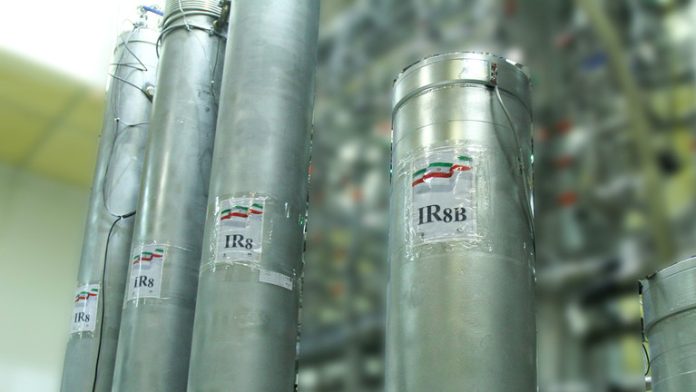
Speaking on state television, Gharibabadi said Iran had engaged in extensive diplomatic efforts in recent days as Resolution 2231, which endorsed the 2015 nuclear deal Joint Comprehensive Plan of Action (JCPOA), was set to expire on Saturday.

He added that more than 121 member states of the Non-Aligned Movement supported Iran’s interpretation that the resolution will conclude, while 21 members of the “Group of Friends in Defense of the UN Charter” also issued a statement confirming its end.

Gharibabadi stressed that Western countries’ attempts to reinstate UN sanctions under the “snapback mechanism” under the guise of the JCPOA lack legal validity and that UN members are not obligated to enforce such measures.

He noted that the joint letter from Iran, Russia, and China reiterates that the resolution has expired and that nations have no commitments to defunct Security Council sanctions.

Gharibabadi added that with the termination of Resolution 2231, periodic reports on Iran’s nuclear commitments by the IAEA director-general will also cease.

Trump hopes to put an end to Russia’s war without dispatching Tomahawks to Ukraine

“I think we carry a lot of momentum, a lot of credibility. Getting Middle East done was very important. Nobody thought it could be done”, Trump said.

“We got it done pretty swiftly after we set the table properly. We had to set the table properly. I think the table is set properly here too now”.

“It’ll be a great honour to get it done,” he added.

The US president hopes his upcoming meeting with Russia President Vladimir Putin in Hungary will bring the end if the war closer, although he allowed for the possibility that Russian President may be trying to buy himself time.

“I am,” he said when asked whether he was concerned about Putin playing for time.

“You know, I’ve been played all my life by the best of them, and I came out really well,” he added.

“I think that he wants to make a deal,” Trump stated referring to Putin, claiming that both Volodymyr Zelensky and Putin were ready to end the war, but personal animosity between the leaders had delayed the process.

“I think President Zelensky wants it done and I think President Putin wants it done,” he said, adding, “Now all they have to do is get along a little bit.”

Zelensky restated his belief that Putin is “not ready” for peace, but added “I’m confident, with your help, we can stop this war.”

“I think this is the momentum to finish Russia’s war against Ukraine.”

After the meeting in the White House Zelensky had a call with some more of Ukraine’s strategic partners, including the leaders of the countries of the Coalition of the Willing.

Zelensky confirmed that the president of the European Commission Ursula von der Leyen and the President of the European Council António Costa were on the call together with Finland’s Alexander Stubb, Norway’s Jonas Gahr Støre, the UK’s Keir Starmer, Italy’s Giorgia Meloni and NATO’s Mark Rutte.

Zelensky admitted that the most “sensitive and difficult” question was the issue of Ukraine’s territories.

Until any ceasefire talks begin, the big question for Kyiv is whether Ukraine would get more weapons from the US. The possibility of selling Tomahawk missiles was on top of the agenda at the White House meeting in Friday.

Trump said he hopes Tomahawks won’t be needed in peace efforts aimed at Putin and end to Russia’s war in Ukraine.

“Hopefully, we’ll be able to get the war over without thinking about Tomahawks”, Trump stated, adding that the US needs its Tomahawks and “a lot of other weapons that we’re sending to Ukraine.”

Zelensky countered by pointing out that the sending doesn’t have to be a one-way street.

“If you want to target a military goal, you need thousands of drones,” he stressed.

“It goes together with such missiles. The United States has Tomahawks and other missiles, very strong missiles, but they can also have our thousands of drones. That’s where we can work together.”

Trump confirmed Washington’s interest, saying, “We would be interested in Ukrainian drones. We build our own drones, but we also buy drones from others. And they make very good drones.”

The possibility of Ukraine getting Tomahawk missiles triggered worry and sabre-rattling from Moscow over the past few days.

The Kremlin said it is causing “extreme concern” in Russia, adding that the war is entering what spokesperson Dmitry Peskov called a “dramatic moment in terms of the fact that tensions are escalating from all sides”.

Before traveling to the US, Zelensky had said that part of the agenda for the trip included talks on what Kyiv calls “Mega Deal”, an agreement on the purchase of American weapons, and a so-called “Drone deal” to to sell Ukraine-made drones to the US.

The deal was initially earmarked to be worth around 77 billion euros.

The Ukrainian president estimated in June that his country had the capacity to make 8 million drones a year, but lacked the funding to do so.

Trump said that the upcoming meeting with Putin in Budapest, Hungary, will be just those two countries, but he noted that the US will be in touch with Zelensky.

“It’s going to be a double meeting,” the US president said. “But we will have the President Zelensky in touch. There’s a lot of bad blood with the two presidents, and I’m not speaking out of turn when I say it.”

Zelensky stressed that “Putin hates me” explaining why Russian president refuses to meet with him.

When asked by journalists “Do you hate him?” he admitted “They (Russia) try to kill of us. It would be strange if I had any other attitude to this person.”

Zelensky reiterated once again that he is ready to meet Putin in any format, pointing out that now only the US and Trump have direct communication with Moscow.

Putin only agreed to meet Trump when the two leaders had a summit in Alaska in August. Since then the US president stated he can bring Zelensky and Putin to the table in a bilateral format and that he was ready to join the two. But since the Alaska meeting the Kremlin’s stance hasn’t changed.

Commenting on the upcoming meeting in Hungary, Trump said “it is a safe country”.

“It is a leader that we like. We like Viktor Orbán. He has been a very good leader in the sense of running his country. He doesn’t have a lot of the problems that other counties have. I think he’ll be a very good host”.

Earlier in the summer Hungary offered to host the trilateral meeting between Trump, Zelensky and Putin, together with Austria, Switzerland and the Vatican.

The International Criminal Court (ICC) arrest warrant for Putin for the abduction of Ukrainian children limits the choice of location as he risks arrest in any of the court’s 125 member states if he steps foot into their territory.

Earlier this year, Hungary became the first member of the EU to announce its intention to withdraw from the court in response to the arrest warrant placed on Israeli Prime Minister Benjamin Netanyahu, which Hungary, like the US, had contested.

But Hungary’s withdrawal will not take effect until June 2026, one year after it filed the notification. In the interim period, the country remains bound by the tribunal.


Hamas hands over remains of one more Israeli hostage

Israel Hostages

The armed wing of Hamas, the Qassam Brigades, announced in a statement on Friday that its fighters handed over the remains at 11pm local time (20:00 GMT), without elaborating on where the body was retrieved.

According to the group, the remains were pulled out earlier in the day and were those of an “occupation prisoner”, suggesting they belonged to an Israeli rather than one of the captives of several other nationalities also taken by Hamas on October 7, 2023.

Prime Minister Benjamin Netanyahu’s office confirmed a short while later that Israel had received the coffin of a captive after it was handed over to the Red Cross by Hamas in Gaza.

The coffin will be transferred to Israel’s Ministry of Health’s National Center for Forensic Medicine, where a formal identification process will be conducted before the family is informed.

The Israeli military requested that “the public act with sensitivity and wait for the official identification”. It also added that “Hamas is required to uphold the agreement and take the necessary steps to return all the deceased hostages”.

Hamas has said it’s committed to the terms of the United States-mediated ceasefire deal, including the handover of captive bodies still unaccounted for under Gaza’s ruins. It has repeatedly stressed it has returned all the bodies it was able to recover, but needs help locating remaining captives trapped under the rubble following Israeli strikes.

In a statement earlier on Friday, Hamas announced that some captives’ remains were in tunnels or buildings that were later destroyed by Israel, and that heavy machinery was required to dig through rubble to retrieve them. It blamed Israel for the delay, stressing it had not allowed any new bulldozers into the Gaza Strip.

Most heavy equipment in Gaza was destroyed during the war, leaving only a limited number as Palestinians try to clear massive amounts of rubble across the bombarded territory.

US President Donald Trump has warned Hamas that he would greenlight Israel to resume the war on Gaza if the group does not live up to its end of the deal and return all captives’ bodies, totalling 28. So far in the past days, Hamas handed over the remains of nine captives, along with a 10th body that Israel claims was not that of a captive.

The return of the 10th dead captive on Friday comes as Gaza’s civil defence said more than 10,000 slain Palestinians remain trapped under debris and rubble across the enclave. Only 280 have so far been retrieved.

Hamas has urged mediators to ensure the increased flow of essential aid into Gaza, expedite the opening of the Rafah border crossing with Egypt and start reconstruction. Despite the ceasefire deal agreed last week, Israel has yet to allow the entry of aid in scale and is still operating in about half of the Gaza Strip, as attacks continue in some areas.


Iran says answers only to rule of law, not coercion

Iran Nuclear Program

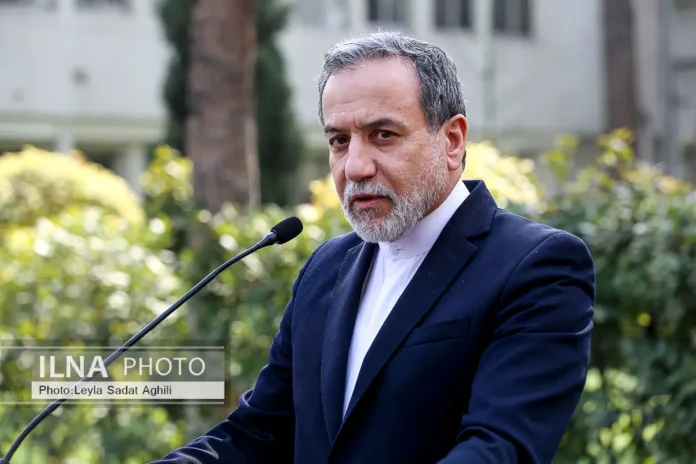
The top diplomat made the remarks in a post on X, former Twitter, on Friday.

He noted that Saturday would mark the expiration date of United Nations Security Council Resolution 2231 that endorsed a 2015 nuclear deal between the country and others, therefore imposing the restrictions.

Upon expiration, the official said, Iran would legally be removed from the Security Council’s agenda.

The development will allow the Islamic Republic to increase its peaceful nuclear energy activities within the provisions of the Nuclear Non-Proliferation Treaty (NPT).

“As an NPT signatory, Iran will remain bound solely to its rights and obligations under the Treaty,” Araghchi likewise said.

“This includes no limits whatsoever on the scale of its nuclear program.”

The International Atomic Energy Agency (IAEA)’s inspections of the country’s nuclear program too would be confined to the agency’s Comprehensive Safeguards Agreement and not beyond that, he added.

Additionally, Iran’s cooperation with the agency would be subject to a legislation passed unanimously by Majlis (the Iranian Parliament) that has required suspension of all cooperation with the body following an unlawful and unprovoked Israeli-US war on the Iranian soil, the foreign minister said.

The legislation has conditioned resumption of cooperation with the IAEA on ensuring the safety and security of the country’s nuclear facilities and scientists. It has also demanded respect for Iran’s right to peaceful enrichment activities inside the country’s soil.

The agency has so far stopped short of meeting the dual requirements.

Araghchi noted how countries of the Non-Aligned Movement (NAM), which met in Uganda on Thursday, voiced support for the Islamic Republic in its opposing the unlawful re-imposition of the Security Council’s sanctions against Iran late last month.

The sanctions were restored after the European trio of the UK, France, and Germany illegally triggered Resolution 2231’s so-called “snapback” mechanism.

In doing so, the trio accused Iran of “diversion” of its nuclear activities, while sidestepping their own sheer non-commitment to the resolution that had mandated them not to stop their trade with Iran.

Araghchi hailed the NAM summit for “recognizing reality.”

He denounced the European states’ actions as “unlawful measures pursued by a handful of isolated governments, reiterating that those measures “have been rejected by a vast majority of nations.”

“Those who insist on distorting reality will only further isolate themselves with their current path,” the foreign minister stated, concluding, “The rule of law — not coercion — must prevail.”


Afsaneh Hessamifard becomes 1st Iranian woman to summit all 8,000-meter peaks

Afsaneh Hesami Fard

In a video message shared on her Instagram page, Hessamifard dedicated her achievement to the people of Iran, saying, “Through cold, hardship, and death, one can reach their dreams, for a prosperous Iran and a free tomorrow”.

Hessamifard had previously become the first Iranian woman to summit K2, the world’s second-highest and most technically challenging peak, in July 2022.

Earlier that same year, in May 2022, she and fellow climber Elham Ramezani successfully reached the summit of Mount Everest. Born in 1976 in Bojnourd, Hessamifard holds a Doctor of Medicine (MD) degree and serves as both a sports team physician and the head of the Mountaineering and Sport Climbing Board of North Khorasan Province.

Iran FM: Any claim to restore or reactivate terminated UNSC resolutions null and void

Abbas Araghchi

In his letter, Araqchi stated that despite Iran’s full and verified compliance, the United States, in blatant violation of its JCPOA commitments, first refused to implement its obligations and subsequently, on May 8, 2018, unilaterally withdrew from the agreement, reinstating and even expanding its unlawful, unilateral, and extraterritorial sanctions.

Araqchi added that the European parties to the JCPOA—France, Germany, and the United Kingdom—despite their initial pledges to preserve the deal and offset the effects of the US withdrawal, not only failed to meet their own obligations but also imposed additional illegal sanctions on Iranian individuals and entities, thus committing further material breaches of the JCPOA.

He said that after one year of Iran’s full compliance with the JCPOA despite the US withdrawal, the Islamic Republic of Iran, within its legitimate rights under the terms of the JCPOA, began implementing phased, proportionate, and reversible remedial measures as of May 8, 2019.

The letter further stated that Iran’s clear record of constructive engagement—including multiple rounds of consultations with European parties and even talks with the US side—demonstrates its continued commitment to diplomacy.

However, according to Araghqchi, these good-faith efforts were met with acts of sabotage and aggression against Iran’s peaceful, safeguarded nuclear facilities.

He said in recent months, instead of fulfilling their obligations, the three European countries have launched a new campaign of political manipulation and legal distortion, attempting to turn the so-called “snapback” mechanism into a tool against Iran.

Araqchi stressed that, in light of the foregoing, the course pursued by the three European states constitutes a clear case of abuse of legal procedures and runs counter to both the letter and spirit of Resolution 2231 (2015) and the JCPOA.

He further emphasized that Resolution 2231 (2015) remained in force until October 18, 2025, and as of that date, pursuant to its operative paragraph 8, all its provisions, as well as those of the previously terminated sanctions resolutions, have expired and no longer carry any continuing legal effect.

According to the Iranian foreign minister, none of the previously terminated measures can be revived or implemented after that date, and any attempt to do so is illegal, null, and devoid of any validity.

3 Iranian villages join UNWTO’s list of best tourism villages in the world

Eight Iranian villages from Ardabil, Qeshm, Lorestan, West Azerbaijan, Yazd, Mazandaran, Alborz, and Kurdistan were nominated by Iran for consideration by the UNWTO.

After evaluation, the three were selected as part of the prestigious global network.
Iran’s Minister of Cultural Heritage, Tourism, and Handicrafts Seyed Reza Salehi Amiri hailed the recognition as “a reflection of Iranian wisdom in sustainable development and heritage protection”.

Soheili, known as the “Star of the Persian Gulf”,souhern Iran, has pioneered eco-friendly wetland tourism by replacing noisy motorboats with floating gazebos and hosting culinary and cultural festivals that celebrate southern Iran’s heritage. Kandolus, in the Hyrcanian forests along the Alborz Mountains, north of Iran, represents a model of cultural and community-based tourism rooted in 4,000 years of local history and craftsmanship.

Shafiabad, in the Lut Desert, is a symbol of women’s empowerment in desert tourism. According to the UNWTO’s official website, inclusion in the Best Tourism Villages list draws global media attention and provides a unique opportunity for countries to showcase their cultural and natural assets on an international stage.

Funeral of Iranian dubbing artist Saeed Mozaffari held in Tehran

A group of artists and colleagues participated in the ceremony.

Born in 1942, Mozaffari began his dubbing career around 1962 and became one of the prominent figures in Iranian voice acting.

After a period of illness, he passed away on October 13, 2025, at the age of 83.
More in these pictures…

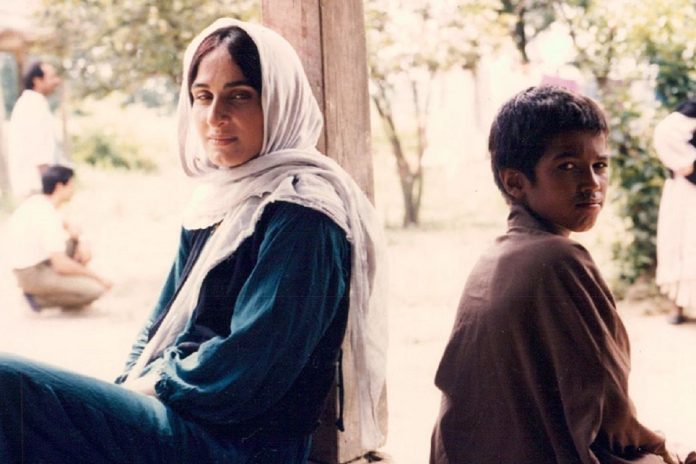
Iranian film “In the Embrace of the Tree” wins top award at Canadian Muslim Film Festival

Directed by Babak Khajeh-Pasha and produced by Mohammadreza Mesbah and Sajjad Nasrollahinassab, the film continues its international success, earning critical acclaim for its emotional storytelling and artistic direction.

Established in 2019, the Muslim International Film Festival celebrates authentic and bold voices in global cinema, providing a platform for Muslim filmmakers and audiences worldwide to engage with diverse cultural narratives.

“In the Embrace of the Tree” has already been recognized at several domestic and international festivals, praised for its delicate yet powerful portrayal of family and social issues through a deeply human perspective.

The film’s success at MIFF further underscores the growing influence of Iranian cinema on the global stage, showcasing its ability to blend artistic vision with universal themes that resonate with audiences and critics alike.

Zarif rejects Lavrov’s claims on ‘snapback’ mechanism

Speaking at Tabriz University on Thursday, Zarif said snapback, as part of the 2015 Joint Comprehensive Plan of Action (JCPOA) nuclear agreement, was neither a late-stage bargaining chip nor limited to his private talks with then US Secretary of State John Kerry.

Lavrov on Wednesday blamed Zarif for the inclusion of the snapback mechanism in the nuclear deal, describing it as a “legal trap” set ahead of the 2015 accord.

Zarif accused Lavrov and French officials of proposing a damaging Security Council approach toward Iran that Tehran resisted.

He recalled that in 2020, when the US sought to reimpose sanctions via snapback while Iran had scaled back JCPOA commitments, 13 Security Council members signaled Washington could not act unilaterally: 11 abstained and Russia and China voted against further measures.

The former foreign minister noted that Russia had previously supported UN resolutions under an earlier Iranian administration.

Defending Iran’s nuclear record, Zarif said Tehran had preserved its ability to resume certain activities and published documents to the UN as evidence.

He reiterated support for strategic ties with Russia and China but warned their policies do not always serve Iranian interests, and urged diplomacy over confrontation in regional affairs.