Thursday, January 1, 2026
Home Blog Page 947

CIA chief warns Ukraine could lose war without US boost

Russia Ukraine War

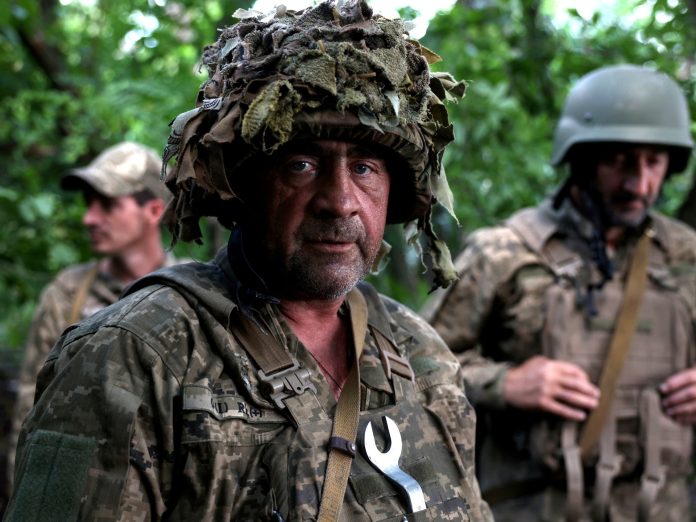
“With the boost that would come from military assistance‚ both practically and psychologically — Ukrainians are entirely capable of holding their own through 2024 and puncturing Putin’s arrogant view that time is on his side,” Burns said during an event at the George W. Bush Presidential Center, referring to Russian President Vladimir Putin.

Burns argued there is a “huge amount at stake” for not only Ukraine, but wider European security and that of U.S. allies in the Indo-Pacific.

“Without supplemental assistance, this picture is a lot more dire, and there is a very real risk that the Ukrainians could lose on the battlefield by the end of 2024. Or at least put Putin in a position where he could essentially dictate the terms of a political settlement,” he continued.

Burns has previously warned that without Congress passing any supplemental aid for Ukraine, the embattled nation would struggle against Russian forces. Other Joe Biden administration officials have also warned that Ukraine faces a grim future without more U.S. help, but have yet to place a specific timeline on a potential Ukrainian defeat.

Maj. Gen. Pat Ryder, press secretary for the Pentagon, stated Thursday that the U.S. was focused on getting Ukraine the assistance it needs, when asked about the CIA director’s comments.

“What we’re focused on right now is ensuring that we can get Ukraine the assistance that it needs,” Ryder told reporters.

“The Ukrainians have demonstrated their resilience and their courage under fire. We have no reason to think that’s going to change. But we also understand the dire situation there right now.”

Pressure has mounted on Congress in recent months to pass additional funding for Ukraine to fend off Russia’s invasion. Sharp divisions among lawmakers have stalled aid from passing for more than a year, with mostly far-right lawmakers expressing concern about continuing to fund Ukraine.

In the House, Speaker Mike Johnson (R-La.) unveiled a series of foreign aid bills this week that would include funding for Ukraine, Israel, allies in the Indo-Pacific and other national security priorities. Votes on separate portions of the package are expected by this weekend.

The bills follow months of delays after Johnson rejected the Senate’s $95 billion foreign aid bill, which would have provided about $60 billion in aid to Ukraine. Several Republicans have lambasted further aid for Ukraine, arguing U.S. funding should go toward domestic issues, including the country’s southern border.

Congress has not passed a Ukraine aid package since the end of 2022, and all available funds dried up around the end of 2023, leaving Kyiv in a perilous position with depleting air defenses and artillery, both crucial in the war.

Russia is now advancing on the battlefield across eastern Ukraine, taking the town of Avdiivka in February and threatening now to seize Chasiv Yar in the Donetsk region, which could provide Russian forces a path toward bigger cities.

The Institute for the Study of War also assessed this week that Russia is gaining the initiative on the battlefield because of the delayed U.S. aid and predicted that without any more assistance, the Ukrainians could lose significant ground this year and in 2025.

Burns has said how Congress chooses to act will send a larger message to the U.S.’s adversaries and allies.

“This is really a question of whether or not our adversaries understand our reliability and determination and whether our allies and partners [understand] that as well,” he continued, adding, “So the consequences are enormous right now for what the House of Representatives is considering.”
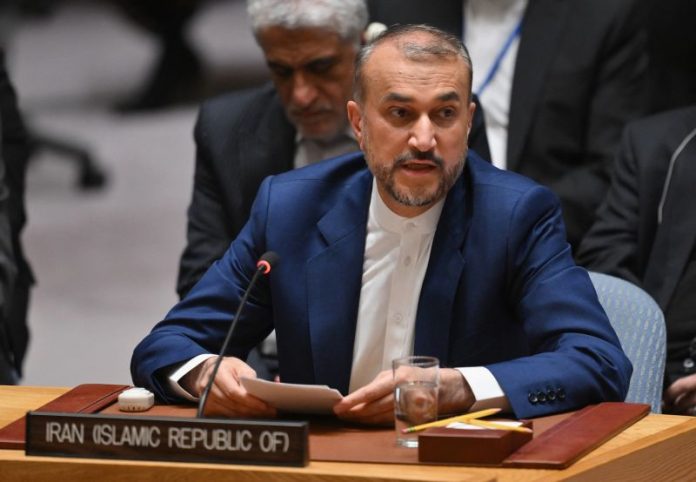
Iran calls on UNSC to stop any further Israeli aggression

Hossein Amirabdollahian

“Iran’s legitimate defense and countermeasures have been concluded. Therefore, the Israeli regime must be compelled to stop any further military adventurism against our centers, assets and interests,” he told the council in New York on Thursday.

“In case of any illegal use of force by the Israeli regime, the Islamic Republic of Iran will not hesitate a bit to assert its inherent right to give a decisive and proper response to it to make the regime regret its actions. This is an unchangeable decision,” he added.

Amirabdollahian stated the Israeli attack on April 1 on the Iranian diplomatic premises in Damascus showed yet again that the regime does not hesitate to violate the fundamental principle of the immunity of such places and people as well as the Vienna Conventions.

“As the majority of the members of the Security Council declared at the April 2 meeting here, the attack was a clear violation of the Charter of the United Nations, international law and the 1961 Vienna Convention on Diplomatic Relations, and thus is strongly condemned.”

At the meeting, the Iranian minister said, the council failed even to issue a mere statement containing a simple condemnation “due to the unfortunate and completely irresponsible behavior of the United States, the UK and France in response to this illegal attack”.

“No member state will remain silent in the face of such a brazen and serious military attack on its embassy, which is considered a symbol of its sovereignty as well as the killing of its legal, official and diplomat agents,” he added.

Iran, the top diplomat stated, had until recently “shown considerable restraint against other terrorist missile attacks bearing in mind the dire situation in the region and willing to give the role of the United Nations a chance to prevent the escalation of the conflict”.

But it “was faced with the continuation of the White House’s green light granted to the Israeli regime as well as the continued inaction of the Security Council in preventing these attacks”.

“Therefore it could no longer be patient against the attack on its embassy and the attack on its sovereignty,” he added.

Iran’s military attack, he stressed, “was first and foremost, necessary because Iran had no other option”.

“Secondly, it was carried out in response to a series of attacks and recurring aggressions by the Israeli regime on Iran’s interests, especially on our embassy in Syria.”

“Thirdly, it took place in the fulfillment of Iran’s right to legitimate defense under international law. “Fourthly, it was conducted by observing the criterion of non-aggression to civilian people and places,” he continued.

“And fifthly, it focused solely on the two military bases of the Israeli regime which had been used in the attack on our Embassy, and therefore it was completely limited and proportionate in terms of scope and military requirements,” Amirabdollahian summed up.

Moreover, the minister stated, “since it was clear that the supporters of the Israeli regime, who are unrelenting partners in its carnage in Gaza, would assist the regime in neutralizing the Iranian attack, a wide variety of weapons were used to ensure the achievement of the attack’s goal i.e. legitimate defense”.

“The attack by my country’s armed forces was limited and minimal, targeting only military bases and was in line with international law and the principle of non-aggression against civilian areas to ensure proportionality and accurate execution.”

Iran has always been a positive part of regional developments, treading the path of stabilizing peace and lasting security, including the fight against terrorism, he underlined.

It “will have no reservations nor compromise at all with any party over our national security and interests as well as the collective security in the sensitive region of West Asia”, he underscored.

The Security Council, the minister added, “must compel the rogue and rebel regime of Israel to immediately stop the war and genocide in Gaza”.

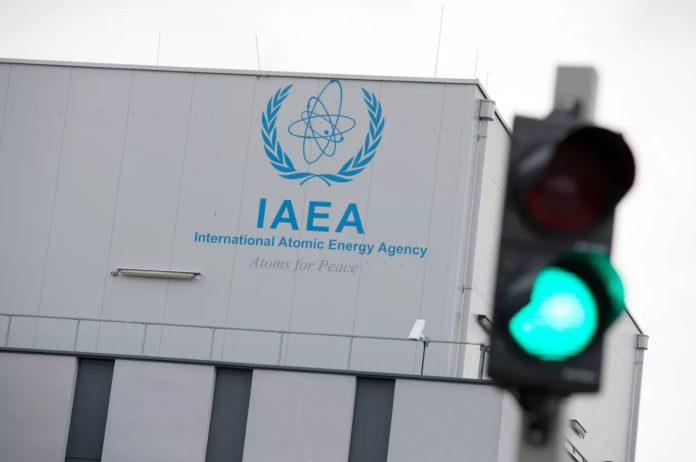
IAEA: Iran’s nuclear sites safe following explosions

IAEA

The UN nuclear watchdog’s chief Rafael Grossi took to X to write, “IAEA can confirm that there is no damage to #Iran’s nuclear sites.”

The assurance came amid speculations that the explosions were caused by Israeli attacks in the city, which triggered air defense batteries.

Iranian news agencies reported the explosions were heard near Isfahan airport and the 8th Shekari army airbase, but also added that the nuclear facilities in Isfahan were “completely secure.”

Days earlier, Iran launched a barrage of missiles and drones over Israeli-occupied territory in response to a deadly attack on its diplomatic site in the Syrian capital, that left seven Iranian military personnel dead.

“DG @rafaelmgrossi continues to call for extreme restraint from everybody and reiterates that nuclear facilities should never be a target in military conflicts. IAEA is monitoring the situation very closely,” the message by Grossi further read.

The IAEA chief said Monday that Iran had shut down its nuclear facilities for security reasons.

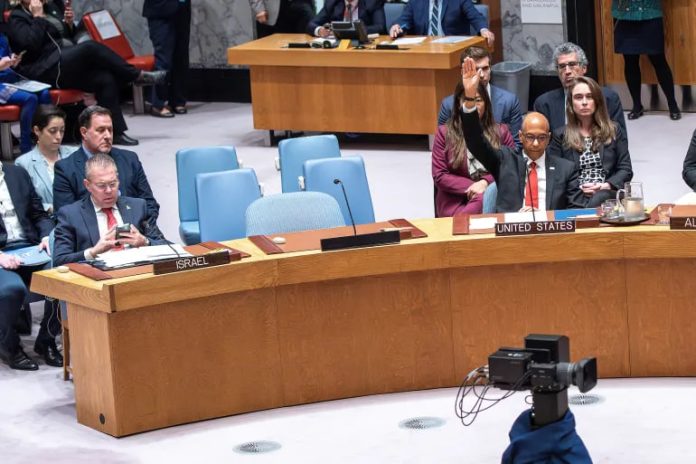
US vetoes Palestinian push for full UN membership

US vetoes Palestinian push for full UN membership

Twelve countries voted in favour of the resolution, which was brought for a vote during an hours-long Security Council session in New York on Thursday, while two others – Britain and Switzerland – abstained.

After vetoing the measure, the US deputy envoy to the UN, Robert Wood, said Washington believes there is no other path to Palestinian statehood than through negotiations between Israelis and Palestinians.

“We also have long been clear that premature actions here in New York, even with the best intentions, will not achieve statehood for the Palestinian people,” Wood added.

The resolution was widely expected to fail, as the US – Israel’s staunchest ally – holds veto power at the Security Council and had opposed its passage.

The vote comes more than six months into Israel’s bombardment of the Gaza Strip, which has killed almost 34,000 Palestinians and plunged the coastal enclave into a humanitarian catastrophe.

The state of Palestine currently is a non-member observer at the UN. But an application to become a full UN member needs to be approved by the Security Council and then at least two-thirds of the General Assembly.

Before the vote on Thursday afternoon, Ziad Abu Amr, the UN special representative for the state of Palestine, had appealed for support.

“We are still longing to practice our right to self-determination, to live in freedom, security and peace in an independent state similar to other countries around the world,” Abu Amr told the council.

Palestinians, he added, “made and continue to make great sacrifices to achieve this goal”.

Abu Amr also dismissed claims that the resolution would imperil political negotiations and prospects for peace.

“To those who say that recognising the Palestinian state must happen through negotiations and not through a UN resolution, we say: ‘How was the State of Israel established? Wasn’t that through a UN resolution, which was Resolution 181?’” Abu Amr said.

“This resolution will not be an alternative to negotiations and to resolving pending issues. It will grant hope to Palestinians for an independent state after this hope dissipated,” he continued.

“We hope you will give us the opportunity to become an integral part of the international community that is working to achieve international peace and security.”

Israeli ambassador to the UN, Gilad Erdan, used his address to the Security Council to accuse the body of being politicised. He also described the resolution as a “prize to [the] terrorists” involved in the October 7 attack by the Palestinian group Hamas, which governs Gaza.

“If this resolution passes – God forbid – this should no longer be known as the Security Council but as the ‘terror’ council,” he said.

“The only thing that a forced unilateral recognition of a Palestinian state will do is to make any future negotiation almost impossible.”

In addition, Erdan called the Palestinian Authority (PA) a “genocide-loving entity that doesn’t deserve any status” in the UN, which requires new applicants to be “peace-loving” nations.

He further argued that the PA has no authority over Gaza and some parts of the West Bank.

“So who is the UN going to recognise? Who is going to be in charge?” he asked.

“The UN is not committed to multilateralism. Sadly, it is now committed to multi-terrorism,” he continued, adding, “Today the mask has finally fallen. The UNSC has exposed itself.”

Erdan slammed the UN for voting on a “destructive and immoral” resolution at a time when confrontations between Israel and Iran were at risk of escalating.

Residents: Iranian cities of Tabriz, Isfahan completely calm following blasts sound

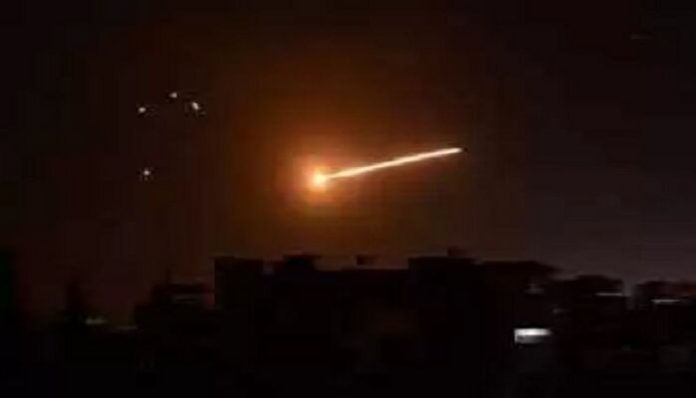
A senior army commander in Isfahan said the sound heard in Isfahan was due to the activation of air defenses in the central city.

General Siavash Mihandoost said air defenses in Isfahan targeted ‘suspicious objects,’ adding no damage was caused.

Informed sources said Iran’s air defenses shot down three quadcopters over Isfahan, asserting that the nuclear facilities in the city are safe.

Meanwhile, the airports across Iran have resumed their normal schedule after flights were temporarily suspended as a security precaution.

The developments come as speculations are rife that Israel might launch an attack on Iran following a retaliatory operation by the Iranian Armed Forces on Sunday on occupied territories. The attack was provoked by an Israeli strike on the Iranian consular affairs building in Damascus earlier this month that killed seven Iranian military advisors.

Iran has warned any Israeli threat and action will face an immediate and heavier response.

Iranian FM says UN inaction prompted Tehran retaliatory measure against Israel

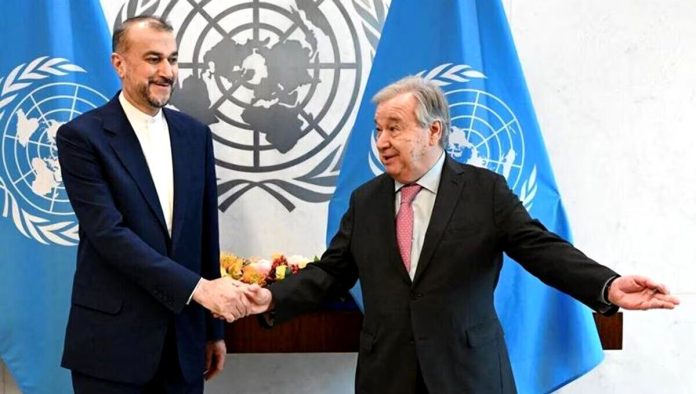
Iran’s Foreign Minister Hossein Amirabdollahian met with UN Secretary General Antonio Guterres on Thursday amid a flurry of diplomatic talks and meetings in New York.

The Iranian foreign minister said the operation by the Iranian armed forces that hit the aggressor Zionist regime’s military positions was within the framework of legitimate defense and international law.

He said, “Although Iran could stage the operation in a wider scope, it targeted only that part of the Zionist regime’s military positions from where the strike on our country’s embassy in Damascus had been initiated.”

Amirabdollahian hailed the UN secretary general for his efforts to help the Palestinian people, but added, “The Security Council’s inefficiency and its failure to condemn the Israeli regime’s attack on the Iranian Embassy in Damascus made legitimate self-defense and punishment of the Zionist regime the only option left for my country.”

The Iranian foreign minister reiterated that the security of the region is of paramount importance for Iran, but noted that the Zionist regime, with the support by the US and its other allies, has waged a killing and genocidal campaign against the defenseless Palestinian children and women in Gaza.

Amirabdollahian lauded the UN secretary general for his ‘positive’ approach and efforts to cease the Gaza war and deliver humanitarian aid to the Palestinian people, stressing that Iran welcomes any initiative or effort by the UN secretary general that can help bring about lasting security in the region.

For his part, touching on Iran’s recent operation against the Israeli regime, the UN secretary general called on the parties to the conflict in the region to show continued restraint.

The UN secretary general once again flatly condemned any aggression against diplomatic missions and stressed that diplomatic premises should enjoy immunity.

Meanwhile, Guterres recalled the risks involved in expanding the scope of tensions in the region and asserted that the UN seeks to de-escalate the tension in the region and will do its utmost to help establish peace and security.

The UN secretary general pointed out, “Currently, the international community has focused on an immediate ceasefire in Gaza and a quick end to the war.”

Senior commander: Iran may review nuclear doctrine amid Israeli threats 

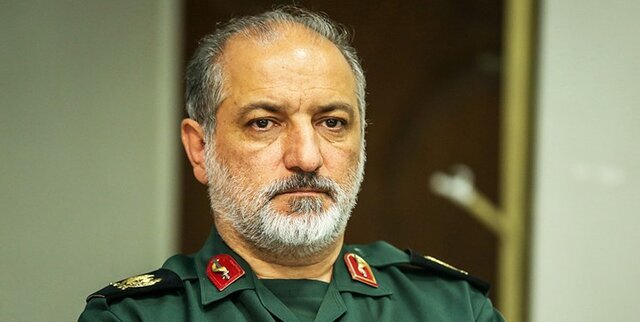
Brigadier General Ahmad Haghtalab said, “If Israel attempts to use the threat of attacking nuclear facilities to put pressure on Iran, a revision of the nuclear doctrine and a departure from the previously announced considerations is likely.”

He noted that Israel has a history of sabotage against Iran’s nuclear industry, “Although according to international protocols and standards and the International Atomic Energy Agency (IAEA) regulations, all countries are advised to refrain from attacking nuclear facilities.”

Despite the Israeli threats, however, the Iranian commander sought to dismiss concerns over the risks posed against the country’s nuclear sites amid tensions, saying all atomic facilities in the country are “completely safe.”

Iran and Israel have been at loggerheads with attacks and counterattacks since earlier this month when Tel Aviv launched a lethal strike on Iran’s diplomatic mission in Syria, and Tehran retaliated with a massive drone and missile operation on the Israeli-occupied territories.

General Haghtalab warned if Israel seeks to escalate the tensions, “our fingers are on the trigger of powerful missiles to destroy the specified targets in response to their possible action.”

US, UK impose new sanctions on Iran over military operation against Israel

Iran Attack Israel

UK Foreign Secretary David Cameron announced the sanctions at a meeting of the Group of Seven (G7) foreign ministers in Italy on Thursday, days after Iran launched hundreds of missiles and drones at the occupied territories in response to Israel’s attack on the Islamic Republic’s diplomatic premises in Syria.

The sanctions target Iran’s defense minister and other military figures and organizations including the Armed Forces General Staff and the Islamic Revolution Guards Corps (IRGC) Navy.

Britain’s sanctions, amounting to 13 in total, also target individuals whom it described as key actors within Iran’s drone and missile industries.

Washington’s sanctions target 16 people and two companies involved in Iran’s unmanned aerial vehicle (UAV) program, as well as components for the drones used in the Saturday attack, according to the Treasury Department.

Alongside its sanctions against Iran’s UAV program, the US also targeted five companies providing parts for Iran’s steel industry, and an automaker involved in providing “material support” to the IRGC.

In a coordinated package with the US, the European Union has also sanctioned leading Iranian military figures in response to Iran’s direct attack on Israel.

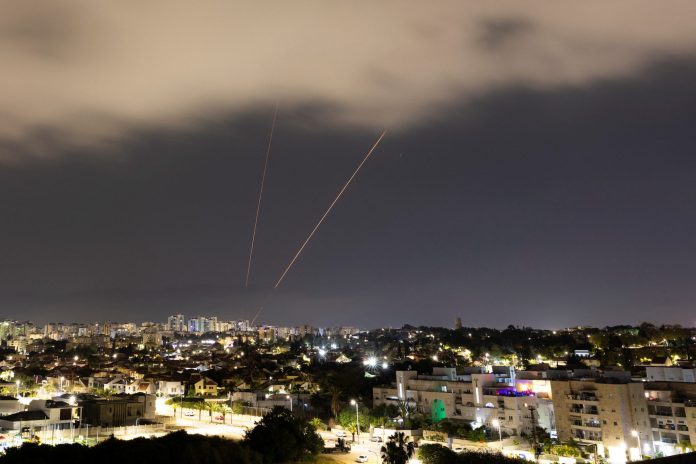
During the weekend, Iran exercised its right of self-defense under Article 51 of the UN Charter and conducted a retaliatory operation that involved firing over 300 missiles and drones at military sites in the occupied lands.

Iran hit a large intelligence base in the occupied lands and Israel’s Nevatim Airbase, from where an F-35 jet took off to target Iran’s consulate in Damascus.

Some European countries made irresponsible statements regarding Iran’s legitimate response to the Israeli crime in Syria that violated all international obligations and conventions.

Toeing the US’s sanction line against Iran, the EU has over the past years imposed several packages of illegal bans on Iranian individuals and entities under different guises.

This adds to the 400-plus sanctions already imposed on Iran. In 2023 alone, the UK made 154 new designations.

They consist of an asset freeze, a travel ban to the EU and a prohibition to make funds or economic resources available to those listed.

“Insidious campaign” underway to end UNRWA operations: UN agency chief

UNRWA

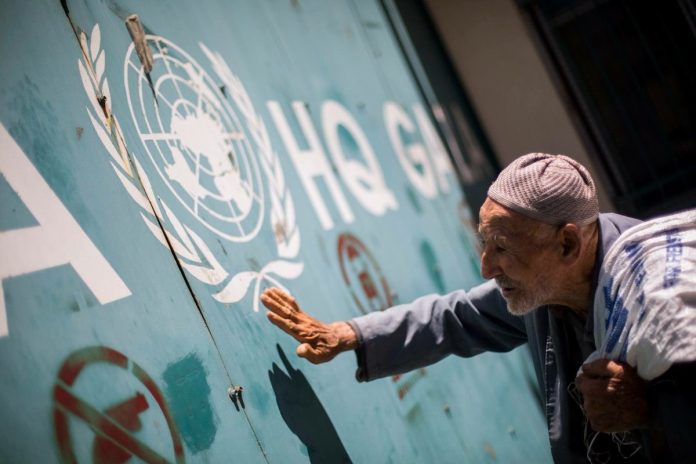
UNRWA Commissioner-General Philippe Lazzarini told the UN Security Council that the agency was being “denied permission to deliver this aid and save lives”.

UNRWA has been under fire since Israel alleged that some of its employees were involved in the October 7 Hamas attack. Israel has long campaigned for UNRWA, the main distributor of aid in Gaza, to be disbanded. Israel has also banned UNRWA from operating in Gaza’s north.

More than a dozen countries pulled funding for UNRWA after the allegations, some of which have resumed donations.

“Dismantling UNRWA will have lasting repercussions. In the short-term, it will deepen the humanitarian crisis in Gaza and accelerate the onset of famine,” Lazzarini said.

“In the longer-term, it will jeopardize the transition from ceasefire to ‘day after’ by depriving a traumatized population of essential services.”

Lazzarini added children were “bearing the brunt of this war”, with more than 17,000 separated from their families and “left to face the horror of Gaza alone.”

He also warned that “a man-made famine is tightening its grip” across Gaza.

“Across the border, food and clean water wait. But UNRWA is denied permission to deliver this aid and save lives,” Lazzarini said.

“This outrage is occurring despite consecutive orders by the International Court of Justice to increase the flow of aid into Gaza – which can be done if there is sufficient political will,” he added, calling on the council to “make a difference”.

President Raisi: Iran has a lot to say in advanced military industries

Ebrahim Raisi

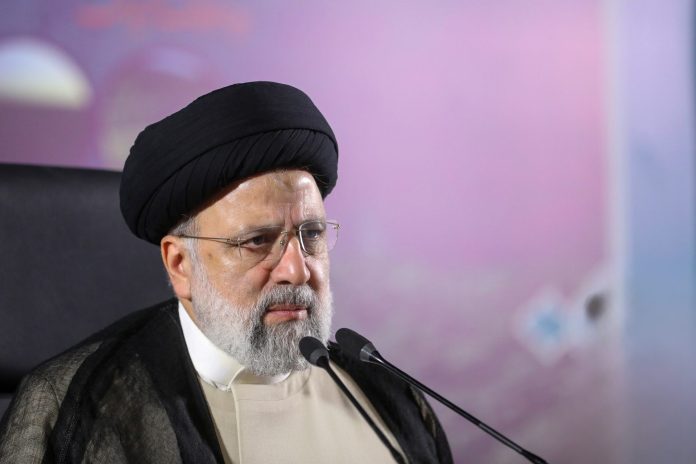
The president, who is on a tour of the central Iranian province of Semnan, said on Thursday, “In advanced military industries, we have a lot to say and all saw the outcome of it,” referring to Iran’s operation on Saturday that targeted specific Israeli military and intelligence centers following the Israeli regime’s strike on the Iranian diplomatic mission in Damascus on April 1.

The Iranian president also rebuked Israeli allies, including Jordan, for siding with the occupying regime in Iran’s retaliatory operation. President Raisi noted, “More than 10 countries used all their facilities to neutralize our forces, but they failed.”

President Raisi also revealed that some officials from other countries called the Iranian Foreign Ministry before the operation, expressing doubt that the Iranian missiles and drones could even reach the Israeli-occupied territories.

Iran used hundreds of drones as well as ballistic and cruise missiles in the Operation True Promise, which laid bare the Israeli regime’s much-touted Iron Dome’s vulnerabilities and left the regime officials in disarray.

The president embarks on provincial tours mainly to overhaul the development plans across Iran.

He called on all officials to assess their performance in order to improve the situation in various fields amid the US-led Western sanctions against Iran.