Monday, December 22, 2025
Home Blog Page 947

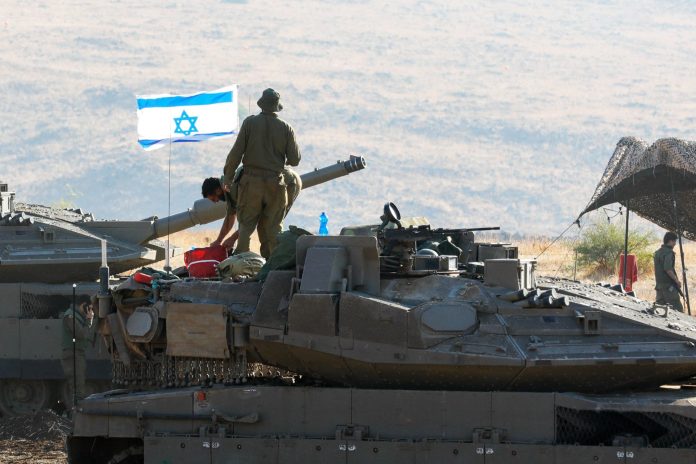
Israel claims can handle any Iran scenario

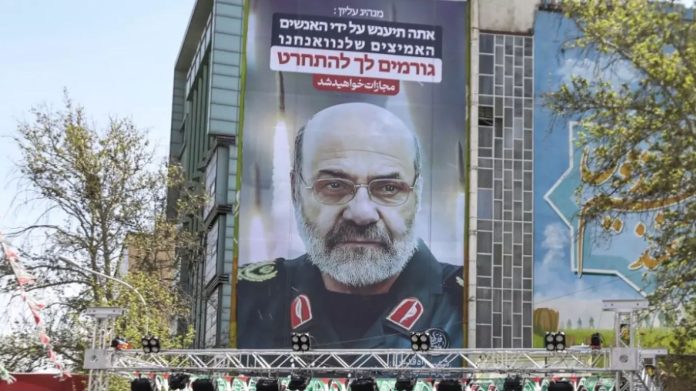
An Iranian official said Sunday that Israeli embassies were not safe, and a semi-official news agency published a graphic showing weapons it said would be capable of striking Israel.

Gallant’s office issued the statement about Israel’s preparedness after he held an “operational situation assessment” with senior military officers.

“Upon completing the assessment, Gallant emphasised that the defence establishment had completed preparations for responses in the event of any scenario that may develop vis-a-vis Iran,” his office said.

Chief of General Staff Herzi Halevi added Israel “knows how to deal with Iran – offensively and defensively”.

“We know how to act forcefully against Iran in both near and distant places. We are operating in cooperation with the USA and strategic partners in the region,” he stated in televised remarks.

Tal Heinrich, a spokesperson for Israeli Prime Minister Benjamin Netanyahu, has also emphasized Israel is not seeking a war with Iran but will do “whatever it takes” to defend itself.

Iran has threatened to respond to the Israeli strike in Damascus last week that killed seven Islamic Revolutionary Guard Corps members, among them a senior commander.

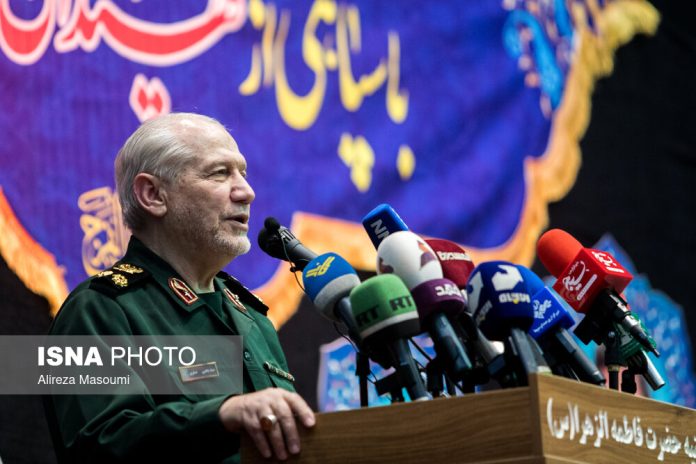
Brigadier General Seyed Yahya Rahim Safavi, an advisor to the Supreme Leader of Iran’s Islamic Revolution, warned on Sunday that none of Israel’s embassies were safe any more and that Tehran viewed confrontation with Israel as a “legitimate and legal right”.

ISNA news agency has also published a graphic on Sunday that it said showcased nine different types of Iranian missiles it said could hit Israel.

The United States is also on high alert and preparing for a possible attack by Iran targeting Israeli or American assets in the region.
FSB reveals Moscow concert hall attackers’ plan to escape to Ukraine

Moscow Terror Attack

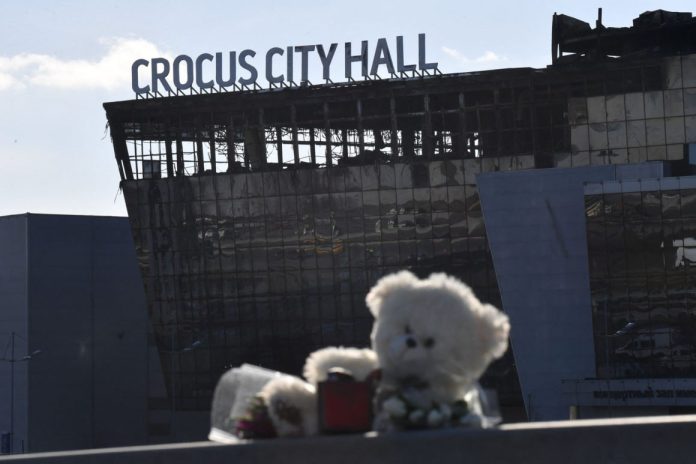
On March 22, four Tajik nationals opened fire inside the Crocus City Hall music venue and then set the building on fire.

A total of 145 people were killed and more than 500 were injured in the attack.

The suspected assailants were detained the next day while trying to flee to Ukraine by car, the authorities said. More suspects were arrested in the following days, most of them of Tajik origin.

The Islamic State Khorasan Province (ISIS-K) has claimed responsibility for the attack. FSB chief Aleksandr Bortnikov, however, suggested that the US, UK, and Ukraine may also be linked to the attack, possibly using terrorists as proxies. Ukraine and its Western backers have denied any involvement.

In the interrogation videos aired on Russian TV, the suspects said that they were following instructions from the handler they knew as Sayfullo. The authorities are currently working to determine his identity.

The handler told the suspects to escape to Ukraine where they expected to receive 1 million rubles each ($11,000), they said.

“Sayfullo told us that guys would wait for us at the Ukrainian border and that they would help us to cross the border and arrive in Kiev,” suspect Muhammadsobir Fayzov told his interrogator.

According to investigators, the suspects took the M3 highway that leads to the border with Ukraine, but were eventually intercepted about 140 kilometers (87 miles) from Ukraine’s Sumy region.

Suspect Shamsidin Fariduni said that they were told to “abandon the car near the border” and then call their handler for further instructions on how to cross into Ukraine.

Russian officials said previously that a “window” for crossing the border had been arranged on the Ukrainian side.The FSB said on Sunday that the Ukrainians were conducting “demining activities” near the villages of Chuykovka and Sopych, which points to two possible escape routes. According to investigators, the suspects were expected to destroy their vehicle and cross the border on foot, using woodlands as cover.

Russia’s Investigative Committee said earlier this week that pro-Ukrainian images were discovered on the phone of one of the suspects.

Ukraine ‘hostage’ to US politics: Zelensky

Russia Ukraine War

Zelensky expressed hope that the US Congress would eventually approve a supplemental aid package for Kiev which has been in limbo for months worth of tens of billions of dollars.

Describing the long-awaited assistance as critical, Zelensky said he believes that “we can get a positive vote from the US Congress”.

“Unfortunately, we are hostage to the fact that this is the electoral process… Russia’s war against Ukraine has today become an internal political issue in the United States,” he complained, rebuking US lawmakers for what he called an “immature approach” to the conflict and global security as a whole.

The Ukrainian president also signaled that Kiev would accept assistance from the US in the form of a loan.

“You know, one senator was recently there, and he asked: would you agree to loan money? Let’s be frank: we will agree to any option,” he continued, adding that Ukraine’s fate is hanging in the balance.

Zelensky was referring to senior Republican Senator Lindsey Graham, who traveled to Kiev last month to promote the loan idea first put forward by GOP presidential frontrunner Donald Trump. Graham claimed at the time to have been direct with Zelensky, telling him, “it’s not unfair for me to ask you and other allies: Pay us back down the road, if you can.”

Later, Politico reported that while Kiev is ready to consider the proposal, some Ukrainian officials find it “somewhat offensive”.

US President Joe Biden has been urging Congress for several months to approve his aid package which would earmark $60 billion for Ukraine. Many Republicans have opposed the measure, demanding more efforts to strengthen security on the Mexican border.

However, House Speaker Mike Johnson signaled earlier this month that the package could come up for a vote soon with “some important innovations”, including a proposal to extend a loan to Ukraine, as well as seizing frozen Russian sovereign assets and transferring them to Kiev. Moscow has described the blocking as “theft” and warned of retaliation if the funds are seized.

Israel says has withdrawn soldiers from Gaza’s Khan Younis

Israel Army

The Israel Defense Forces (IDF) said on Sunday that its 98th division had “concluded its mission” in Khan Younis. The division left the Gaza Strip to “recuperate and prepare for future operations,”, it announced.

A “significant force led by the 162nd division and the Nahal brigade continues to operate in the Gaza strip”, the IDF added.

The move raises questions over Israel’s much-touted plan to invade Rafah, the heavily populated area of southern Gaza that has so far escaped on the ground fighting.

The Israeli military ground operation began in Khan Younis on Dec. 3 with the aim of recovering Israeli hostages held by the Hamas movement. However, based on the army’s claims, the Israeli forces left the city without achieving its goals.

Israel has waged a deadly military offensive on the Gaza Strip since a cross-border attack in early last October by the Palestinian group, Hamas, killed less than 1,200 people.

Nearly 33,200 Palestinians have since been killed and almost 75,900 injured amid mass destruction and shortages of necessities.

Israel has also imposed a crippling blockade on the Gaza Strip, leaving its population, particularly residents of northern Gaza, on the verge of starvation.

The Israeli war has pushed 85% of Gaza’s population into internal displacement amid acute shortages of food, clean water, and medicine, while 60% of the enclave’s infrastructure has been damaged or destroyed, according to the UN.

Israel is accused of genocide at the International Court of Justice, which last week asked it to do more to prevent famine in Gaza.

Survey: Vast majority of Israelis unhappy with current progress in Gaza war

Israeli Settlers

Less than a third of Israelis said they are satisfied with the results achieved so far in the war, which crossed its six-month mark on Sunday, half a year after Hamas’s attack on October 7.

More than half (62%) of respondents said that they are dissatisfied with the results achieved so far, and 9% said they don’t know.

Respondents who support the current government are more likely to say that they are satisfied with the results so far: this was the response given by 61% of government supporters, compared to just 33% who said they don’t know, and a mere 6% who said they were dissatisfied.

In contrast, only 17% of those who oppose the government responded that they were satisfied with the outcome of the war, compared to a large majority of 79% who said they were dissatisfied, and only 4% who said they didn’t know.

Israel has waged a deadly military offensive on the Gaza Strip since a cross-border attack in early last October by the Palestinian group, Hamas, killed less than 1,200 people.

Nearly 33,200 Palestinians have since been killed and almost 75,900 injured amid mass destruction and shortages of necessities.

Israel has also imposed a crippling blockade on the Gaza Strip, leaving its population, particularly residents of northern Gaza, on the verge of starvation.

The Israeli war has pushed 85% of Gaza’s population into internal displacement amid acute shortages of food, clean water, and medicine, while 60% of the enclave’s infrastructure has been damaged or destroyed, according to the UN.

Israel is accused of genocide at the International Court of Justice, which last week asked it to do more to prevent famine in Gaza.

No Israeli embassy safe following Syria strike: Iran Leader’s aide

Yahya Rahim Safavi

Speaking in a ceremony on Sunday to mark the martyrdom of the Iranian military advisors in the Israeli regime’s attack in Damascus, Brigadier General Seyed Yahya Rahim Safavi said the missile attack on the consulate and the martyrdom of the Iranian military advisors violate all international law.

He added the presence of the Iranian advisors in Syria was legal and upon a formal invitation by the Syrian government.
The advisor to Iran’s Leader referred to the closure of 28 Israeli embassies worldwide, adding the Israeli regime does not feel safe following its raid on the Iranian mission in the Syrian capital.

Rahim Safavi went on to say the martyrdom of the Iranian military advisors has paved the way for the Islamic Republic and the Resistance Front fighters to further struggle against the US and the world arrogance.

He pointed to the regional developments particularly in Palestine, and said the Resistance Axis, led by Iran, will decide the fate of the region.

Rahim Safavi said the US and the Israeli regime which sought to change the face of the Middle East and pushed for normalization with Israel have failed in their strategy.

Touching upon the Israeli onslaught on Gaza, the Iranian General added these crimes are being perpetrated by the US support and some other Western states, and the inaction of some Arabic countries.

950% more Israelis seek psychological help since October 2023: Report

Israel Hostages

The Israeli organization’s findings indicate a surge in inquiries to their call center, Middle East Monitor reported, citing a report by the Israeli Public Broadcasting Corporation.

The number of inquiries reached approximately 172,000, with around 33,000 requests per month, including 44,000 in the initial month, the report said.

Israel’s Walla website also quoted a statement by the organization that the number of daily inquiries has surged to 920 since the start of the war.

The organization has also enlisted over 150 volunteers to provide much-needed psychological support to those seeking help.

Moreover, in another report by the Eran mental health crisis hotline, a sharp increase of 950% in calls involving depression, acute mental distress and loneliness was reported.

On October 7 alone, the organization dealt with more than 3,500 incoming calls. This compares to 500 calls on a routine day.

Also the number of children and teenagers under the age of 17 phoning in has surged by 125% compared to last year, with a significant rise observed during the initial weeks of the conflict.

In late February, the Israeli minister for military affairs, Yoav Gallant, highlighted the heavy toll the war was inflicting on the regime’s military.

“We are paying a very high price in our ranks…The costs we incur in terms of the numbers of deaths and injuries are very high,” he said.

The latest statistics revealed by the ministry’s rehabilitation department shows that more than 11,000 Israeli forces and veterans deal with psychological injury (which is 1 in 5 wounded soldiers) and about 8,000 of them are dealing with post-traumatic stress disorder.

On Friday, the Israeli military admitted that 600 of its forces had been killed since the onset of Operation Al-Aqsa Storm.

Reporting the casualties, Daniel Hagari, the Israeli military spokesman, said 3,193 forces had also been injured since then, of whom 268 are still under treatment and the condition of 26 is critical.

Since the Tel Aviv regime launched the war on October 7 last year in response to Operation Al-Aqsa Storm, around 33,200 Palestinians, most of them women and children, and injured more than 75,800 others.

Israel says completed preparations for potential war with Iran

Israeli strike on Iranian consulate in Syria

“The defense system has finished preparations for a response against any scenario that may develop with Iran,” Gallant stated at an assessment conducted at the headquarters of the Defense Ministry in Tel Aviv.

Tel Aviv has recently withdrawn its ambassadors and evacuated embassies in multiple countries amid concerns over attacks that may take place as part of an Iranian retaliation for the Israeli raid on Tehran’s diplomatic mission in Damascus.

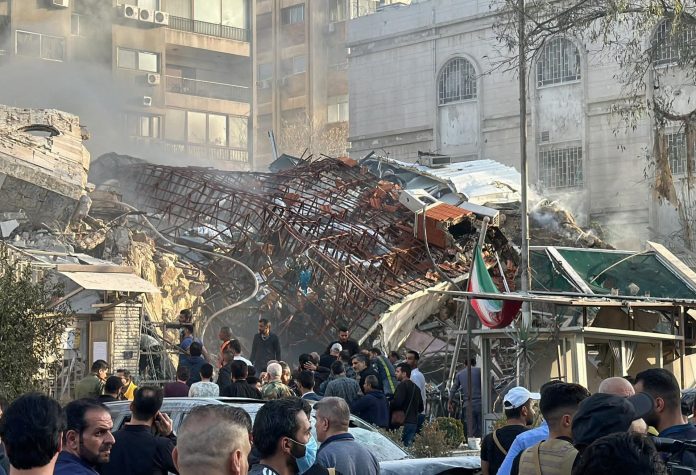
On Monday, Israeli warplanes bombed the Iranian consulate in Damascus, located next to the embassy building in Damascus’s Mezzeh district.

The attack killed two senior Iranian military personnel who were on an advisory mission to Syria as well as five of their accompanying officers.

Iran’s Islamic Revolution Guards Corps said Brigadier General Mohammad Reza Zahedi, a commander of the IRGC’s Quds Force, and his deputy General Mohammad Hadi Haji Rahimi were among the seven martyrs of the terrorist attack.

Leader of the Islamic Revolution Ayatollah Seyyed Ali Khamenei has vowed that Iran will “punish” Israel and make the evil regime “regret” its crime of assassinating the country’s military advisors in Syria.

Iran’s President Ebrahim Raisi has also stated Israel had resorted to indiscriminate assassinations after back-to-back failures in the face of the resistance, warning that the regime’s latest crime against Iranian military advisers in Syria “will not go unanswered”.

NATO chief: Iran, Russia, China and N. Korea aligned against west

NATO Secretary General Jens Stoltenberg

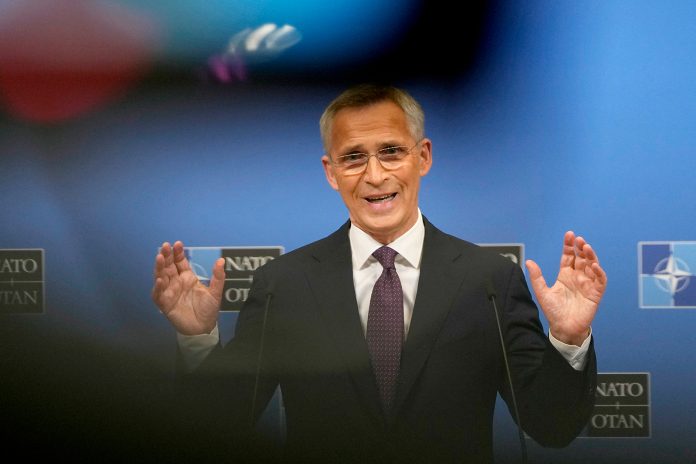
Stoltenberg told the BBC that Russia, Iran, China and North Korea are increasingly aligned.

On the Middle East conflict, he stated it was “very important” that the US and other NATO countries conveyed “a very clear message to Israel” that they have to do “significantly more” to protect civilians and aid workers after the World Central Kitchen convoy attack in the Gaza Strip.

On Russia-Ukraine war, he said Ukraine may ultimately have to agree to some kind of compromise with Russia to end the conflict.

The NATO chief reiterated that the West must support Ukraine in the long term “even if we believe and hope that the war will end in the near future”. He added that Western countries should invest in Kiev’s defense capabilities to make it more resilient in the event of future hostilities.

At the same time, he signaled that it was up to Ukraine to choose when and under what conditions to seek peace with Russia.

“At the end of the day, it has to be Ukraine that decides what kind of compromises they’re willing to do,” Stoltenberg said, adding that the West’s role is to help Kiev reach a negotiating position that could produce an “acceptable result”.

That said, Stoltenberg emphasized that he was not pushing Kiev toward any concessions, adding that “real peace” can only be achieved with a Ukrainian victory.

Earlier this week, the NATO boss made a strong plea to support Kiev in the long term, urging the bloc’s members to “rely less on voluntary contributions and more on NATO commitments”. According to several reports, Stoltenberg proposed a five-year €100 billion ($107 billion) package of military aid to Ukraine. The exact details of the initiative are reportedly now under discussion.

Throughout the conflict, Russia has maintained it is open to talks with Ukraine. However, Ukrainian President Volodymyr Zelensky banned any negotiations with the current leadership in Moscow after four former Ukrainian territories overwhelmingly voted to join Russia in the autumn of 2022.

The Ukrainian leader has also promoted a ten-point ‘peace formula’ demanding that Moscow withdraw its troops from territory Kiev claims as its own, as well as for a tribunal to be established to prosecute Russian officials for alleged war crimes. Moscow has dismissed the initiative as “detached from reality”.

In an interview with Politico on Saturday, Zelensky’s chief of staff, Andrey Yermak, claimed that while Ukrainians were tired of the conflict, they would vehemently oppose any compromise with Russia.

However, last month Zelensky suggested that a return to Ukraine’s 1991 borders was no longer a precondition for negotiations with Russia. Nevertheless, he still insisted that Kiev must regain the territory it lost to Moscow in 2022.

Moscow has announced Ukraine must take into account the fact that its borders have changed drastically since the start of the hostilities.

Probes show recent terror attack in southeast Iran supported by Western intel services

Iran Police

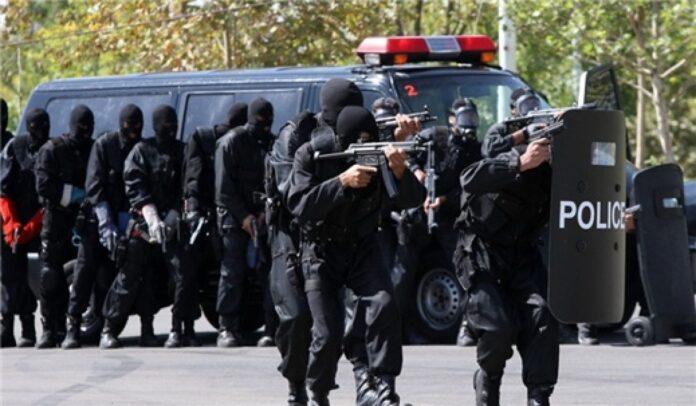
According to Fars, investigations show 29 seasoned operational members of the terror group Jaish al-Adl carried out the criminal attacks, 18 of whom were killed by the Iranian forces.

Those members had been trained to conduct suicide operations after firing all of their bullets.

The terrorists were trying to carry out a large-scale massacre in the area similar to the one which happened in Russia by taking local citizens hostage and using them as human shields, Fars added.

Fars reported the equipment and bullet-proof vests used by the terrorists were modern ones, suggesting intelligence services of countries hostile to Iran were supporting them.

The weapons and bullets used in the operation had high destruction power and were modern ones similar to those used by terrorist groups operating under the auspices of western intelligence services.

Terrorists staged a multi-pronged attack in the cities of Rask and Chabahar early on Thursday.

After an hours-long conflict, the armed militants failed in their attempt to seize the strategic locations in the cities and had to flee.