Saturday, December 27, 2025
Home Blog Page 933

Russia warns New US aid package will just kill more Ukrainians

Russia Ukraine War Weapons Arms

The US House of Representatives approved a $95 billion foreign aid package, almost two thirds of which would be spent on Ukraine-related programs. The Kremlin, however, doesn’t appear the slightest bit alarmed.

“Fundamentally, this will not change the situation on the battlefield,” Peskov told reporters on Monday.

Pointing to the steady Russian advances along the front, Peskov said the dynamics of the conflict are now “absolutely clear to everyone,” and that the money and weapons the US will allocate to Ukraine “will not lead to a change in this dynamic.”

“They will lead to new casualties among Ukrainians, more Ukrainians will die, Ukraine will suffer major losses,” the presidential spokesman added.

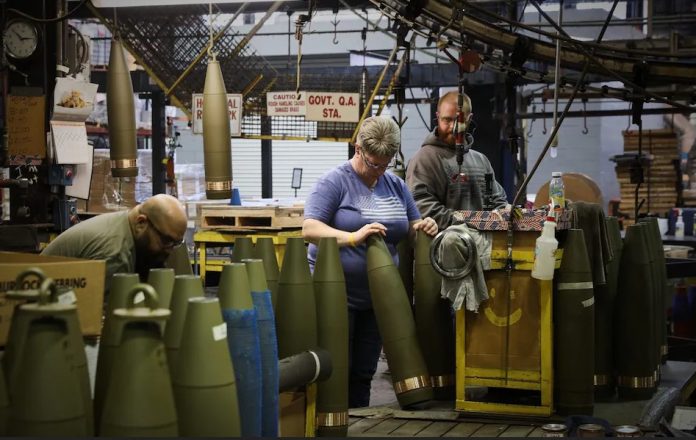
Moreover, he noted, the bulk of the aid money is supposed to stay in the US, one way or another. The White House itself argued this to Congress as one of the selling points, saying that the package was a stimulus for the US military-industrial complex and manufacturing base.

“In principle, nothing has changed,” Peskov added, noting that Russian President Vladimir Putin fully expected the US lawmakers to vote the way they did.

Reacting to the vote on Saturday, Russian Foreign Ministry spokeswoman Maria Zakharova said the US was using Ukrainians as “cannon fodder” and hoping to keep Kiev on life support until after the November presidential election. In the end, she said, the US will end up facing a “loud and humiliating fiasco on a par with Vietnam or Afghanistan.”

The newest batch of US aid might help slow down the Russians but won’t stop them, several Ukrainian officers have told Financial Times. No amount of weapons and ammunition from the West can solve Kiev’s biggest problem: the lack of manpower, the outlet noted.

Kirill Budanov, the head of Ukraine’s military intelligence, also predicted “a rather difficult situation” on the battlefield for the Kiev government in the coming months.
Iranian FM says EU sanctions ‘regrettable’

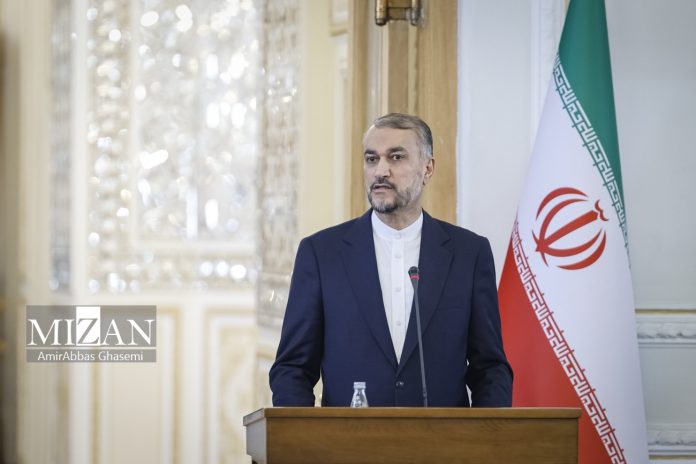
Hossein Amirabdollahian

Hossein Amirabdollahian took on Tuesday to his account on X social media platform to react to the sanctions, writing “It is regrettable that the EU quickly decided to create more illegal restrictions for Iran just because Iran exercised its right to self-defense in the face of Israel’s reckless aggression.”

The Iranian foreign minister advised the EU not to follow in the footsteps of the US to take measures in order to appease the Israeli regime.

The 27-member European bloc on Monday introduced new sanctions against Iran after it launched more than 300 drones and missiles at Israeli-occupied territories in retaliation for an Israeli strike on its embassy compound in Damascus on April 1. Seven Iranian military advisors were killed in the Israeli attack.

The sanctions extend restrictions on Iran’s weapons exports of drones and missiles.

UK announces largest-ever aid package for Ukraine

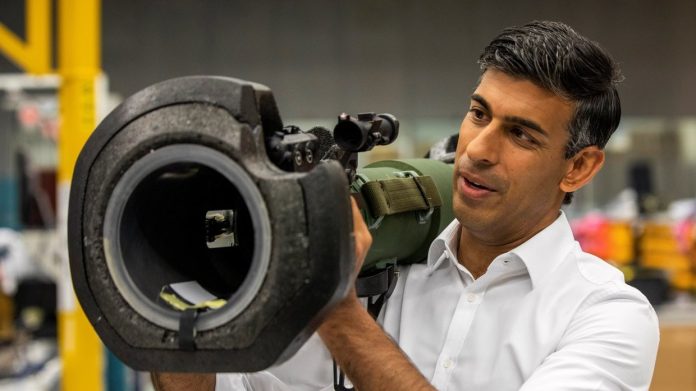
Rishi Sunak

UK Prime Minister Rishi Sunak will officially announce the new aid plan when he travels to Warsaw on Tuesday for talks with his Polish counterpart, Donald Tusk. The package is valued at £500 million ($617 million) and will include more than 400 vehicles, 60 boats and an undisclosed number of long-range Storm Shadow missiles, Sunak’s office said in a statement, calling it the “largest-ever provision of vital munitions”.

“Defending Ukraine against Russia’s brutal ambitions is vital for our security and for all of Europe,” Sunak claimed.

“If [Vladimir] Putin is allowed to succeed in this war of aggression, he will not stop at the Polish border.”

The latest round of weaponry will bring London’s military aid to Kiev to £3 billion this year alone. It will also include 1,600 strike and air defense missiles and nearly 4 million rounds of small arms ammunition.

“Today’s package will help ensure Ukraine has what they need to take the fight to Russia,” Sunak said, adding, “The United Kingdom will always play its part at the forefront of European security, defending our national interest and standing by our NATO allies.”

The statement comes two days after the US House of Representatives approved a long-stalled emergency spending bill that includes $61 billion in additional Ukraine aid. US President Joe Biden pledged on Monday to quickly ramp up weapons shipments to Kiev once the spending legislation is approved by the Senate, which could happen as soon as Tuesday.

Joe Biden’s administration ran out of Ukraine funding earlier this year, after using up $113 billion in congressionally approved aid packages. Disruptions in support from Washington, by far Kiev’s biggest benefactor, led to ammunition shortages that were blamed for battlefield setbacks in recent months. Other NATO members and the EU responded by boosting their aid commitments, such as a €500 million ($533 million) package given by Germany last month.

UK defense chief Grant Shapps hailed the fact that London was the first ally to give Ukraine long-range missiles and “modern” tanks.

“Now, we are going even further,” he said in the statement.

“We will never let the world forget the existential battle Ukraine is fighting, and with our enduring support, they will win.”

He added that the latest round of aid will give Ukraine what it needs to push back Russian forces and “restore peace and stability in Europe”.

Ukrainian leaders are reportedly less sanguine about the potential impact of additional Western weaponry. The $61 billion US aid bill – nearly 100 times the scale of the UK’s latest gift – is unlikely to “dramatically alter Kiev’s situation on the frontline”, the Financial Times reported on Monday, citing unidentified Ukrainian officials and military analysts.

US says looking into alleged Israeli human rights abuses in Gaza

Gaza War

Unveiling the State Department’s annual human rights report, Blinken denied the US has double standards when it comes to Israel and human rights.

“Do we have a double standard? The answer is no,” Blinken told reporters.

Israel has waged a brutal offensive on the Gaza Strip since a cross-border attack by the Palestinian group Hamas on Oct. 7 last year, which Tel Aviv claims killed nearly 1,200 people.

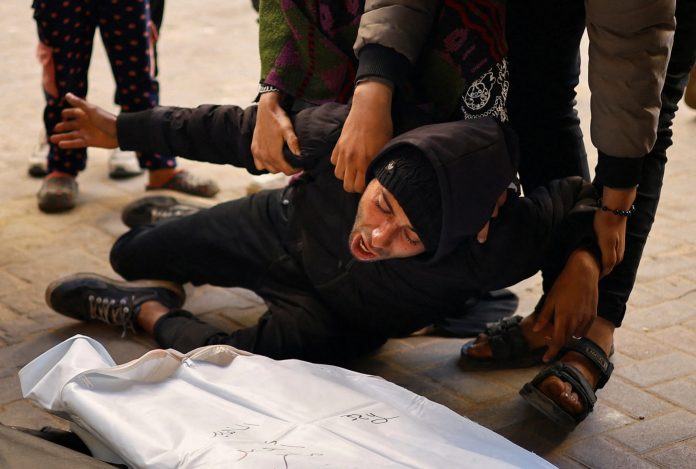
At least 34,150 Palestinians have since been killed, mostly women and children, and 77,000 others injured amid mass destruction and severe shortages of necessities.

The Israeli war has pushed 85% of Gaza’s population into internal displacement amid acute shortages of food, clean water and medicine, while 60% of the enclave’s infrastructure has been damaged or destroyed, according to the UN.

Israel stands accused of genocide at the International Court of Justice. An interim ruling in January ordered Tel Aviv to stop genocidal acts and take measures to guarantee that humanitarian assistance is provided to civilians in Gaza.

The US State Department said in its annual report Israel’s assault on the besieged enclave, which has killed tens of thousands of Palestinians and resulted in a severe humanitarian crisis, has had “a significant negative impact” on the human rights situation.

Significant human rights issues include credible reports of arbitrary or unlawful killings, enforced disappearances, torture and unjustified arrests of journalists, added the State Department’s 2023 Country Reports on Human Rights Practices.

Rights groups have flagged numerous incidents of civilian harm during Israel’s offensive in Gaza and have raised alarm about rising violence in the occupied West Bank, where Palestinian Health Ministry records show Israeli soldiers or settlers have killed nearly 500 Palestinians since October 7.

Despite the many reports, the Joe Biden administration announced it has not found Israel in breach of international law so far.

Ukraine believes US assistance won’t stop Russian army

Russia Ukraine War

The US House of Representatives approved a $61 billion security package for Kiev on Saturday, following months of congressional squabbling over Republican demands for the White House to boost security on the Mexican border. The bill still needs to be approved by the Democratic-majority Senate and signed by US President Joe Biden.

Although the new package has prompted Ukrainian President Volodymyr Zelensky to claim that his country could still defeat Russia, many officials in Kiev are less enthusiastic, arguing it “is unlikely to dramatically alter Kiev’s situation on the frontline”, according to the FT.

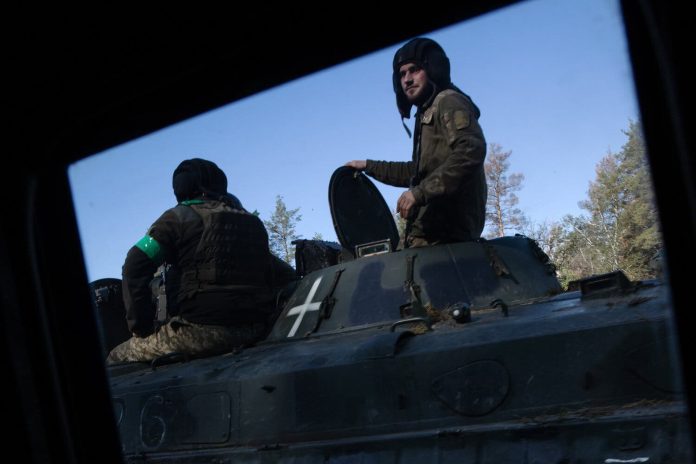
Several Ukrainian frontline troops told the newspaper that they are barely holding on under relentless Russian attacks, while suffering from acute ammunition shortages. Some soldiers said they hoped an influx of US-made equipment would improve their situation, although one senior Ukrainian official told the daily that it “will help to slow down the Russian advance, but not stop it”.

Another Ukrainian source echoed that assessment, noting that while the assistance would reduce the ammo deficit, it “does not contain a silver bullet”.

One Ukrainian military analyst remarked that the $61 billion assistance could be the last of its kind this year, adding that “there is a fairly high probability that all subsequent aid packages for Ukraine will be much smaller in size”.

An ammunition deficit is not the only problem facing Ukraine. Rob Lee, a senior fellow in the Foreign Policy Research Institute’s Eurasia Program, pointed out that manpower is another major challenge for Kiev. The issue of recruiting more troops to the front line “may be the key to how the war unfolds in 2025”, he assessed.

In February, Russian Defense Minister Sergey Shoigu estimated Ukraine’s losses since the start of the conflict at more than 444,000 troops. Earlier this month, he said Kiev had lost more than 80,000 soldiers this year alone.

In recent weeks, Ukrainian authorities have embarked on a flurry of legislative activity to replenish battlefield losses. Zelensky has signed two bills in April, one of which lowers the age of conscription for men from 27 to 25, while the other significantly tightens mobilization rules.

Biden assures Zelensky US will ‘quickly provide’ security package

Zelensky and Biden

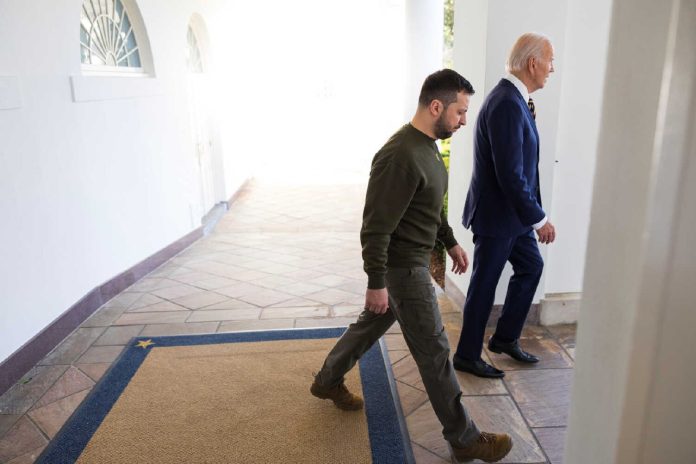
Biden on Monday told Zelensky the U.S. has a “lasting commitment to supporting Ukraine as it defends its freedom against Russian aggression” and that “his administration will quickly provide significant new security assistance packages to meet Ukraine’s urgent battlefield and air defense needs as soon as the Senate passes the national security supplemental and he signs it into law”.

The president also told Zelensky that economic assistance from the U.S. aims to help Ukraine maintain financial stability, build infrastructure following attacks from Russia and support reform while Ukraine moves toward Euro-Atlantic integration.

The Senate is set to vote Tuesday to advance a $95 billion foreign aid package that includes $61 billion for Ukraine, which the House passed over the weekend.

The Senate is widely expected to approve the foreign aid package this week after 22 of 49 Senate Republicans voted for it when it passed the Senate in February.

Zelensky claimed in an interview with NBC on Sunday Ukraine has a chance of victory in the conflict with Russia now that the US House of Representatives has approved more weapons for Kiev.

Iranian daily censures ‘disregard for widespread corruption’ in Iran

Ebrahim Raisi

In a scathing article published in Johmuri-e Eslami’s Tuesday edition, the author has written even the culprits who have been charged with corruption do not receive punishment based on the same set of rules, explaining some are “treated leniently. ”

“In a society where perpetrators of economic corruption are not treated in the same way, in a way that for some no stone is left unturned to find special reasons in order to grill them, the others who have committed even more serious corruption are honored and placed in the best positions, how can you believe that justice prevails?” the daily asks.

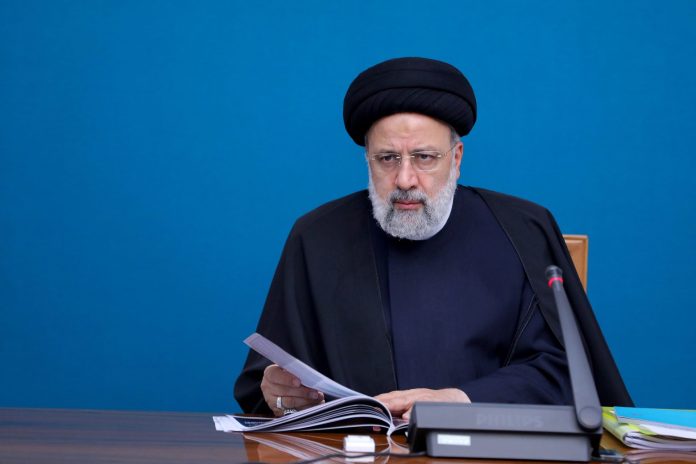
In a thinly-veiled reference to the administration of President Ebrahim Raisi’s handling of a $3.5bn fraud case by the Debsh Tea Company, Johmuri-e Eslami noted it is hard to believe that “justice is being implemented while the officials are seeking to silence the case. ”

“The country’s wealth is not distributed fairly among the people, clients are not treated equally in offices, favoritism is very common in most institutions, salaries, fringes and amenities are not paid according to merits or real needs,” the newspaper added, noting that such cases are in contradiction with both the “Islamic” and “Republic” nature of Iran.

Israel gave no evidence UNRWA staff linked to Hamas: Report

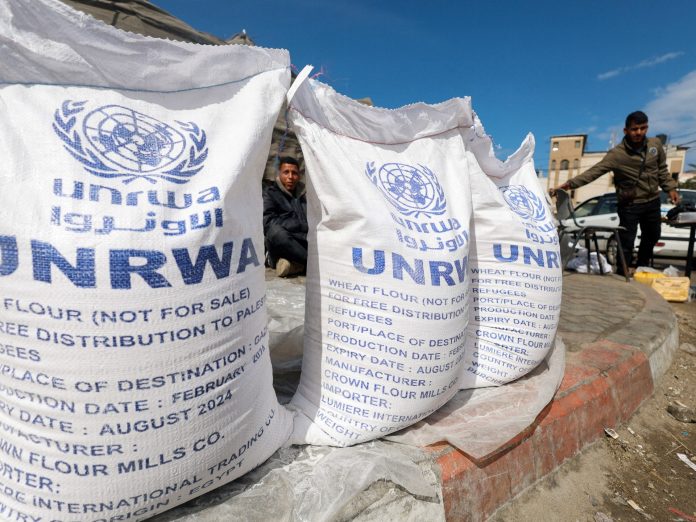
UNRWA

The Colonna report, which was commissioned by the UN to look at UNRWA’s operations and policies in the wake of Israel’s allegations and released on Monday, said Israeli authorities have not responded to letters from UNRWA in March and April requesting names and evidence in order to open an investigation.

The Israeli government, according to the independent review, “has not informed UNRWA of any concrete concerns relating to UNRWA staff since 2011”.

In late January, Israel accused 12 UNRWA employees of participating in the 7 October attack on Israel in which 1,200 people were killed and over 240 were taken back to Gaza as hostages.

As a result of the allegations, UNRWA terminated the contracts of 10 of the employees (two were confirmed dead) and 16 countries paused or froze their financial contributions to the agency, amounting to around 50 percent of the agency’s budget for the year.

Several countries that froze their contributions, including Australia, Canada and Finland, have since lifted those suspensions, with some citing a lack of evidence.

The UK government, which froze its funding, has said it would await the findings of the report before deciding whether to restore its contribution.

Meanwhile, in the US, UNRWA’s largest donor, Congress passed legislation last month that cuts off funding to the agency for the next year.

At the time the funding was cut, UNRWA stressed the decision would force the agency, the largest organisation operating in Gaza, into a dire situation with lives hanging in the balance.

In addition to its efforts in Gaza, UNRWA delivers essential services including education and healthcare to 5.9 million Palestinian refugees overall across the region, described in Colonna’s report as “indispensable”.

A UN spokesperson on Monday stated UN Secretary General Antonio Guterres had accepted the review’s recommendations and called on “all stakeholders to actively support UNRWA as it is a lifeline for Palestine refugees in the region”.

Israel has been pressing for UNRWA to be disbanded. At a press conference on Monday, Colonna responded to Israeli criticism of her report by saying: “We know the Israeli government has publicly strong views on UNRWA. The vast majority of the international community doesn’t share these views”.

However, she noted “really well-documented areas” where UNRWA’s neutrality position was violated, including in teaching material that she said was “antisemitic”.

Colonna also appeared to downplay the text in the report that said Israel had not provided evidence of its allegations, adding, “We have written… that UNRWA hasn’t received evidence by Israel, not that there is no evidence. That’s very different.”

While the review said it had found that since 2017, UNRWA had established and updated “a significant number” of policies and procedures to ensure its neutrality, it also offered a series of recommendations.

These include the establishment of an executive board and other governance “to support the agency’s strategic direction and external communication”.

A working group on neutrality and integrity could be set up with host countries, including Israel, invited to participate, the review suggested.

The review also notes that while UNRWA has a “due diligence duty” to ensure neutrality through both prevention and prompt investigations of alleged breaches, host countries are responsible for policing, security and intelligence in relation to UNRWA’s premises and staff.

“In particular, UNRWA does not have the permission, equipment, capacity or authority to identify people who are members of militant groups,” the review added.

“This is the responsibility of the host state. However, UNRWA has an obligation to act when made aware of such breaches of neutrality.”

US forced Israel to abandon larger-scale attack on Iran: Report

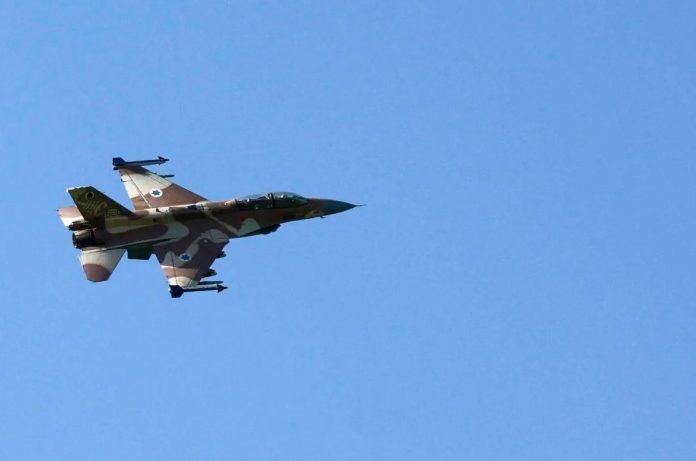
Israeli Fighter Jet

Israel targeted Iran with a handful of drones and air-launched missiles on Friday, according to US officials and anonymous Israeli sources who spoke to the newspaper. While Western officials believe that an Israeli missile hit an Iranian airbase, Tehran has only acknowledged being attacked with small quadcopter drones, with Foreign Minister Hossein Amirabdollahian describing the aircraft as “children’s toys” that were easily shot down.

Tel Aviv initially intended a much wider wave of strikes targeting military sites across the country, including near Tehran, anonymous Israeli officials told the outlet. However, the US, UK, and Germany exerted “concerted diplomatic pressure” on Israeli Prime Minister Benjamin Netanyahu and forced him to settle for a more limited response, the officials added.

Such a response “avoided significant damage, diminishing the likelihood of an escalation”, the daily reported.

The Israeli military has not commented on the report, and has stuck to its usual policy of refusing to confirm or deny strikes on foreign soil.

The latest round of escalation between Israel and Iran began on April 1, when an Israeli airstrike hit the Iranian consulate in the Syrian capital of Damascus. The strike killed seven officers of the Islamic Revolutionary Guard Corps (IRGC) Quds Force, including two high-ranking generals.

Tehran warned that it would retaliate, and two weeks later launched multiple waves of missiles and kamikaze drones at Israel.

Prime Minister Benjamin Netanyahu initially planned immediate retaliatory strikes, but was talked out of it during a phone call with US President Joe Biden, the New York Times reported last week. In both last week’s report and Monday’s, Israeli and American officials stressed that Washington wanted Tel Aviv to avoid provoking Iran into an escalating series of tit-for-tat strikes and counterstrikes.

The plan appears to have succeeded.

“As long as there is no new adventurism by Israel against our interests, then we are not going to have any new reactions,” Amirabdollahian stated on Saturday.

With some of Netanyahu’s hardline political allies criticizing the supposedly “lame” response, the officials who spoke to the New York Times insisted that the strikes demonstrated “the breadth and sophistication of Israel’s military arsenal”, the paper paraphrased.

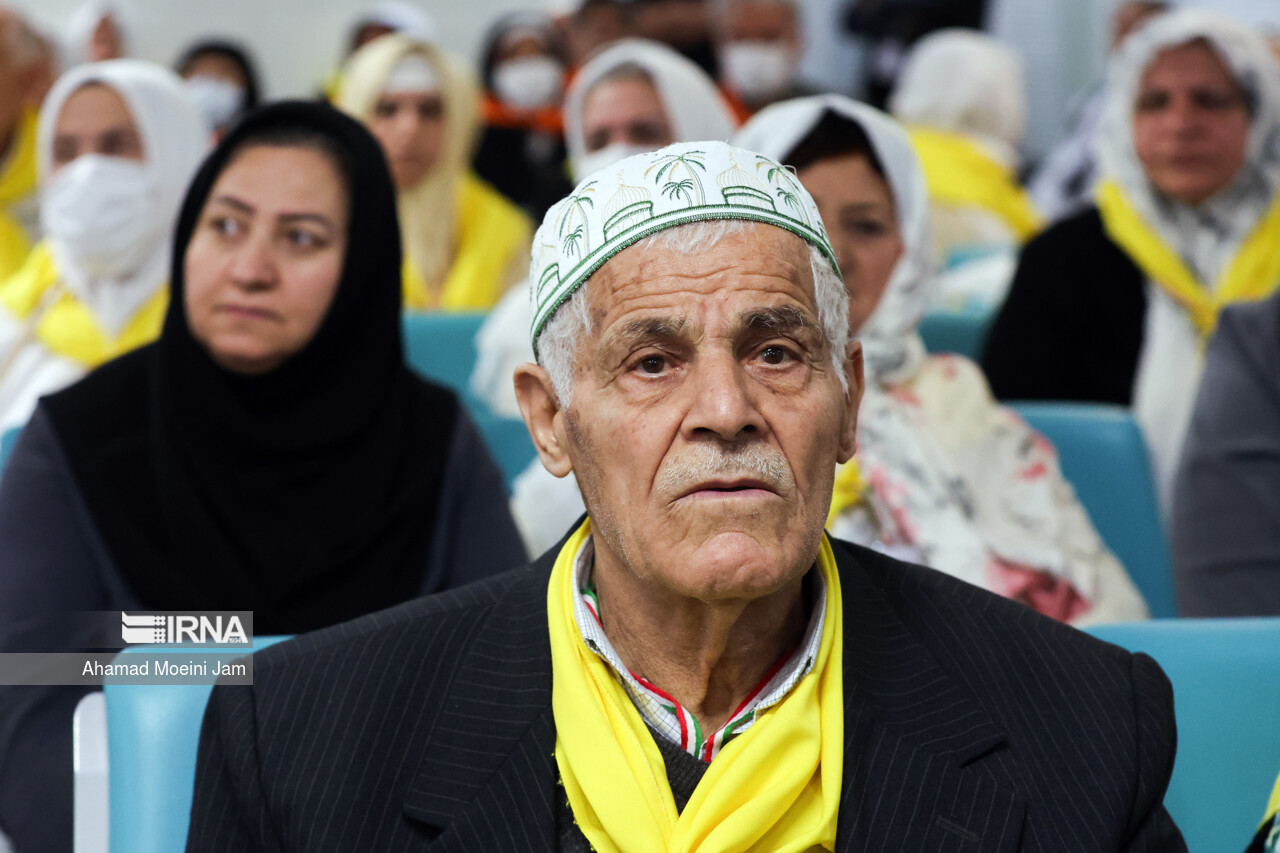
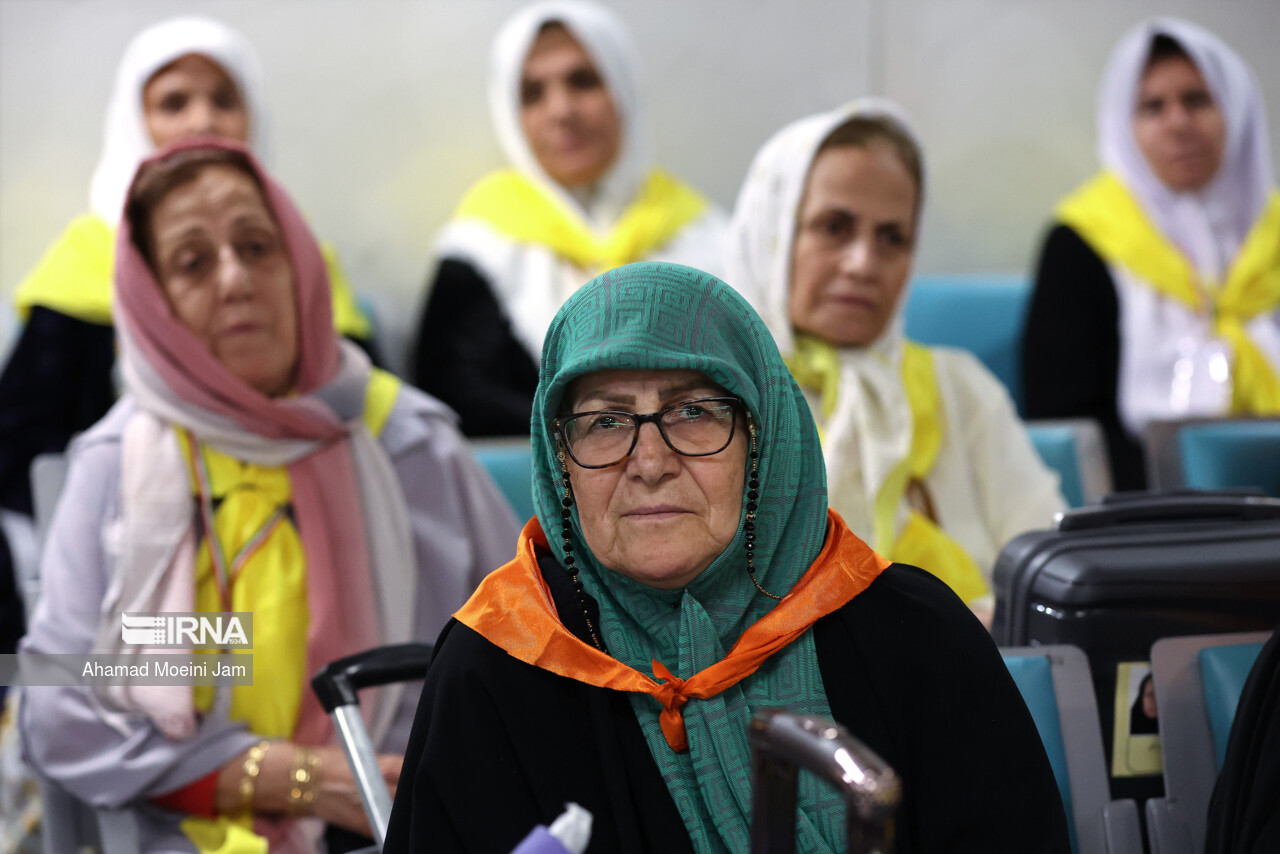
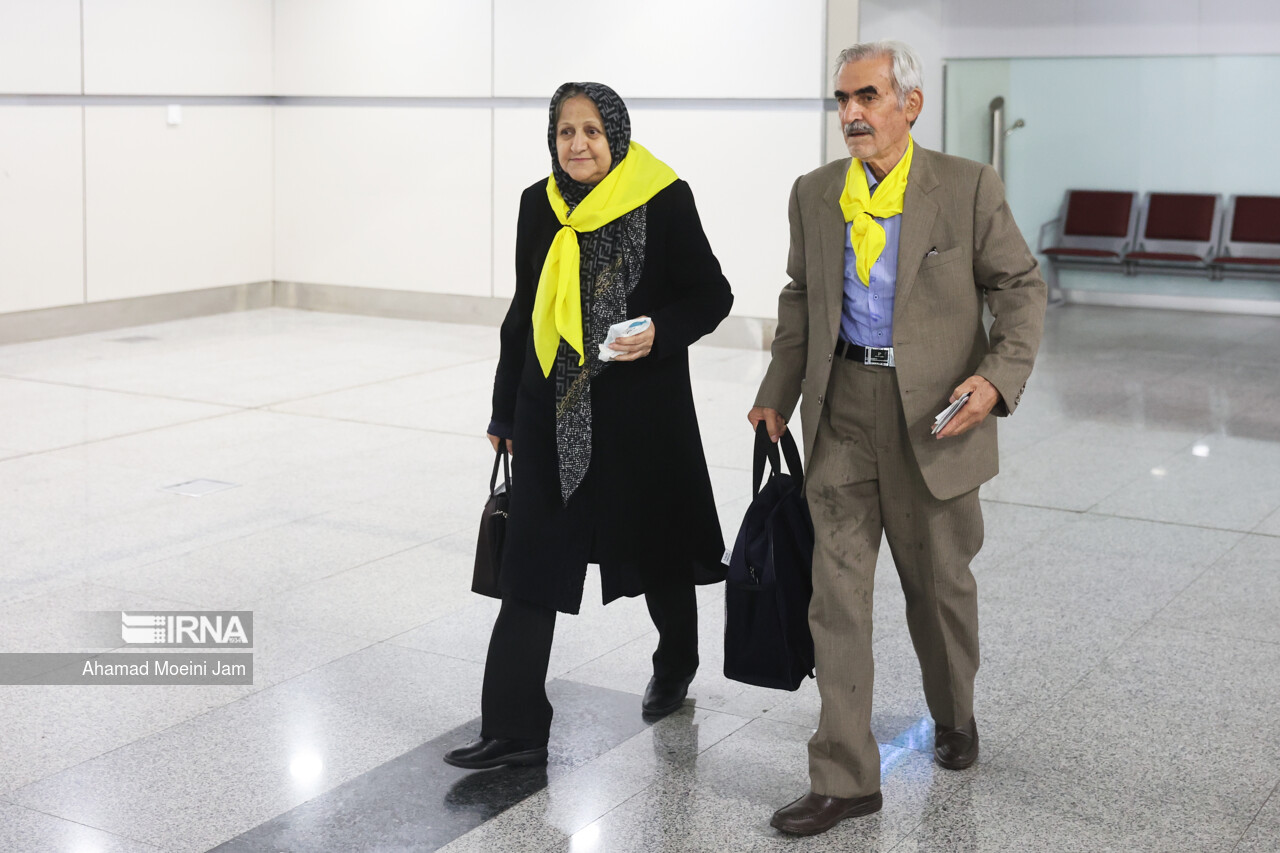
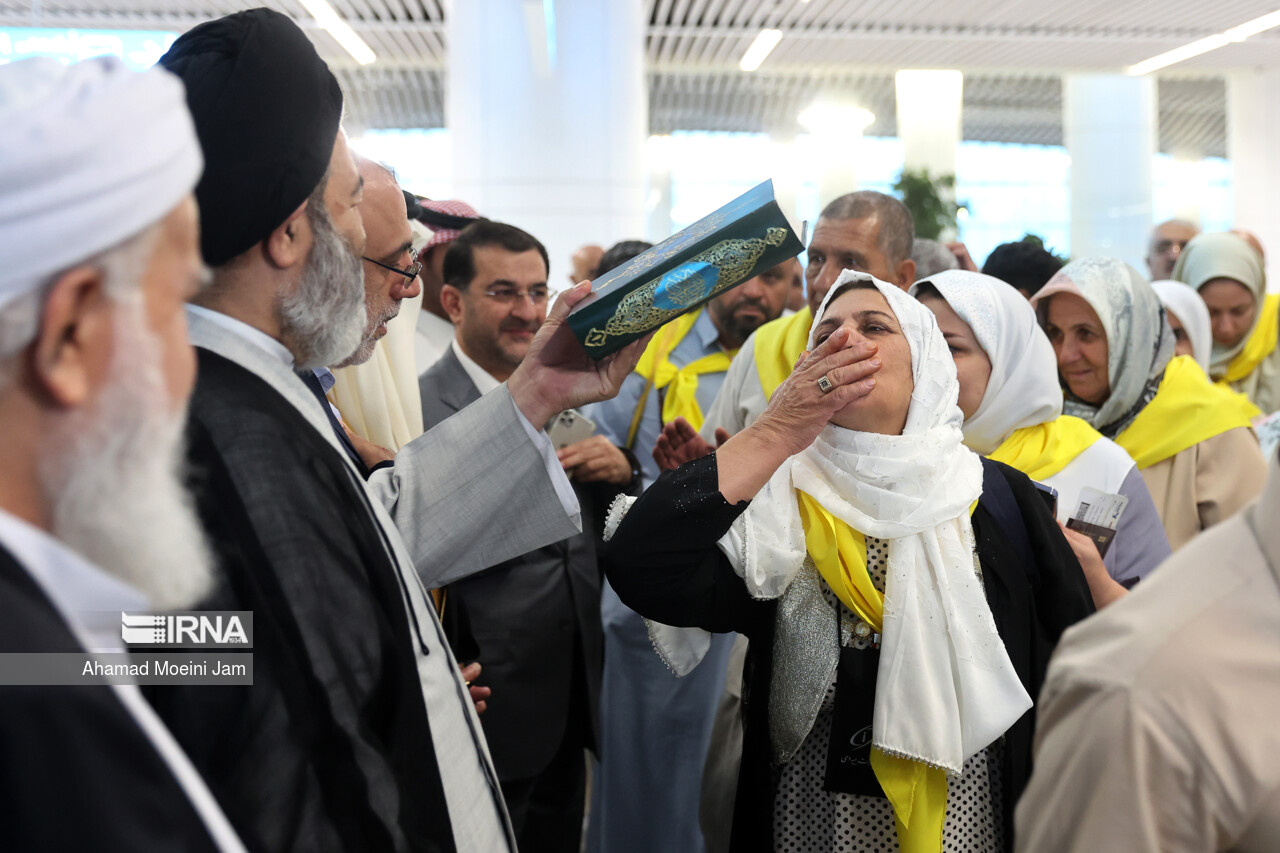
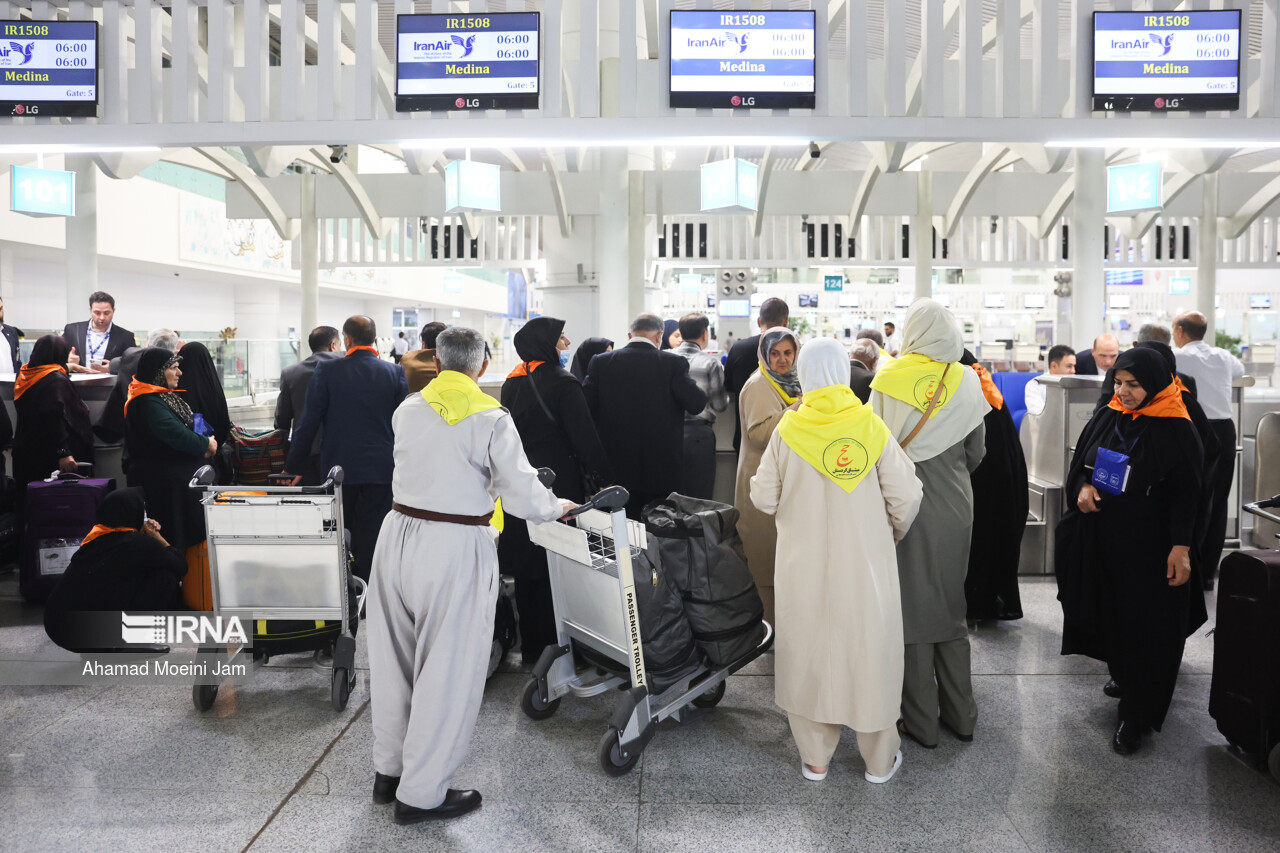
First batch of Iranian hajj pilgrims leaves for Saudi Arabia after decade of hiatus

Iran Hajj

Seyyed Abdol-Fattah Navvab, the Iranian Leader’s representative in hajj and pilgrimage affairs, and Abdullah Bin Saud al-Anzi, Saudi ambassador to Tehran, saw the pilgrims off from Tehran’s Imam Khomeini International Airport.

Other Iranian cities, including Zahedan, Ahvaz, Tabriz, Yazd, Kerman, Bandar Abbas, Sari, Isfahan, and Shiraz, are also set to resume the hajj flights.

Here are some pictures of the departure of the pilgrims from Tehran: