Sunday, December 21, 2025
Home Blog Page 930

Residents: Iranian cities of Tabriz, Isfahan completely calm following blasts sound

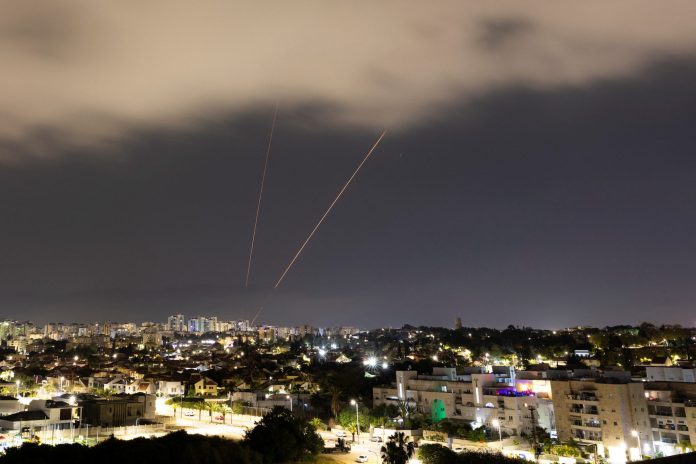
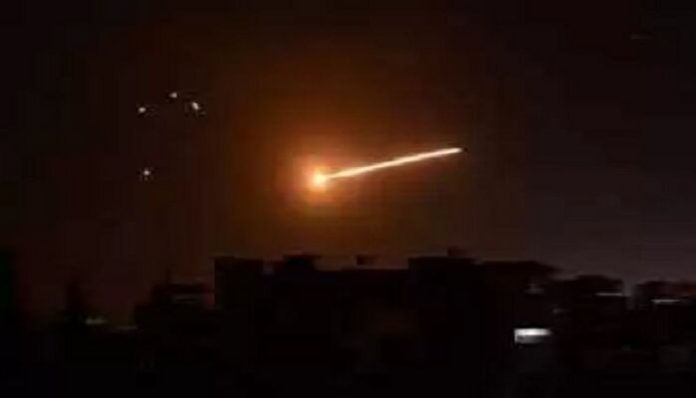
A senior army commander in Isfahan said the sound heard in Isfahan was due to the activation of air defenses in the central city.

General Siavash Mihandoost said air defenses in Isfahan targeted ‘suspicious objects,’ adding no damage was caused.

Informed sources said Iran’s air defenses shot down three quadcopters over Isfahan, asserting that the nuclear facilities in the city are safe.

Meanwhile, the airports across Iran have resumed their normal schedule after flights were temporarily suspended as a security precaution.

The developments come as speculations are rife that Israel might launch an attack on Iran following a retaliatory operation by the Iranian Armed Forces on Sunday on occupied territories. The attack was provoked by an Israeli strike on the Iranian consular affairs building in Damascus earlier this month that killed seven Iranian military advisors.

Iran has warned any Israeli threat and action will face an immediate and heavier response.

Iranian FM says UN inaction prompted Tehran retaliatory measure against Israel

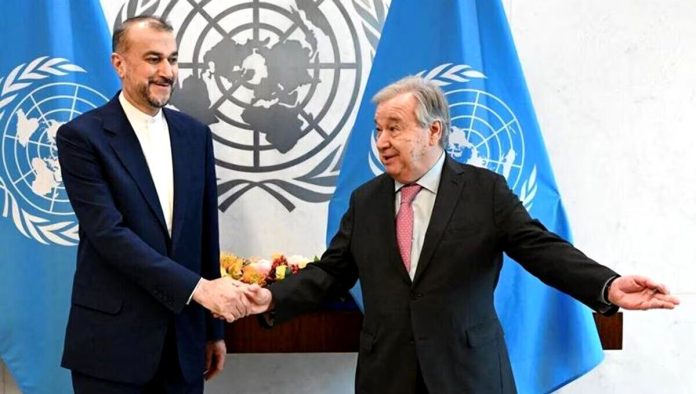
Iran’s Foreign Minister Hossein Amirabdollahian met with UN Secretary General Antonio Guterres on Thursday amid a flurry of diplomatic talks and meetings in New York.

The Iranian foreign minister said the operation by the Iranian armed forces that hit the aggressor Zionist regime’s military positions was within the framework of legitimate defense and international law.

He said, “Although Iran could stage the operation in a wider scope, it targeted only that part of the Zionist regime’s military positions from where the strike on our country’s embassy in Damascus had been initiated.”

Amirabdollahian hailed the UN secretary general for his efforts to help the Palestinian people, but added, “The Security Council’s inefficiency and its failure to condemn the Israeli regime’s attack on the Iranian Embassy in Damascus made legitimate self-defense and punishment of the Zionist regime the only option left for my country.”

The Iranian foreign minister reiterated that the security of the region is of paramount importance for Iran, but noted that the Zionist regime, with the support by the US and its other allies, has waged a killing and genocidal campaign against the defenseless Palestinian children and women in Gaza.

Amirabdollahian lauded the UN secretary general for his ‘positive’ approach and efforts to cease the Gaza war and deliver humanitarian aid to the Palestinian people, stressing that Iran welcomes any initiative or effort by the UN secretary general that can help bring about lasting security in the region.

For his part, touching on Iran’s recent operation against the Israeli regime, the UN secretary general called on the parties to the conflict in the region to show continued restraint.

The UN secretary general once again flatly condemned any aggression against diplomatic missions and stressed that diplomatic premises should enjoy immunity.

Meanwhile, Guterres recalled the risks involved in expanding the scope of tensions in the region and asserted that the UN seeks to de-escalate the tension in the region and will do its utmost to help establish peace and security.

The UN secretary general pointed out, “Currently, the international community has focused on an immediate ceasefire in Gaza and a quick end to the war.”

Senior commander: Iran may review nuclear doctrine amid Israeli threats 

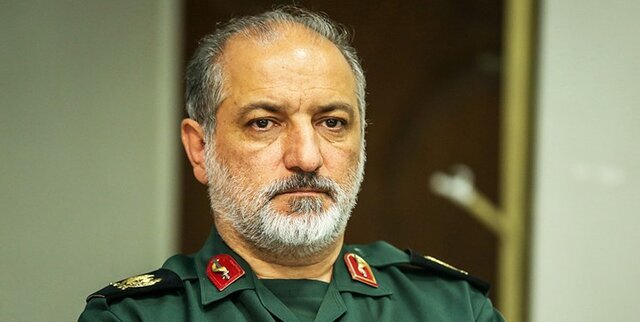
Brigadier General Ahmad Haghtalab said, “If Israel attempts to use the threat of attacking nuclear facilities to put pressure on Iran, a revision of the nuclear doctrine and a departure from the previously announced considerations is likely.”

He noted that Israel has a history of sabotage against Iran’s nuclear industry, “Although according to international protocols and standards and the International Atomic Energy Agency (IAEA) regulations, all countries are advised to refrain from attacking nuclear facilities.”

Despite the Israeli threats, however, the Iranian commander sought to dismiss concerns over the risks posed against the country’s nuclear sites amid tensions, saying all atomic facilities in the country are “completely safe.”

Iran and Israel have been at loggerheads with attacks and counterattacks since earlier this month when Tel Aviv launched a lethal strike on Iran’s diplomatic mission in Syria, and Tehran retaliated with a massive drone and missile operation on the Israeli-occupied territories.

General Haghtalab warned if Israel seeks to escalate the tensions, “our fingers are on the trigger of powerful missiles to destroy the specified targets in response to their possible action.”

US, UK impose new sanctions on Iran over military operation against Israel

Iran Attack Israel

UK Foreign Secretary David Cameron announced the sanctions at a meeting of the Group of Seven (G7) foreign ministers in Italy on Thursday, days after Iran launched hundreds of missiles and drones at the occupied territories in response to Israel’s attack on the Islamic Republic’s diplomatic premises in Syria.

The sanctions target Iran’s defense minister and other military figures and organizations including the Armed Forces General Staff and the Islamic Revolution Guards Corps (IRGC) Navy.

Britain’s sanctions, amounting to 13 in total, also target individuals whom it described as key actors within Iran’s drone and missile industries.

Washington’s sanctions target 16 people and two companies involved in Iran’s unmanned aerial vehicle (UAV) program, as well as components for the drones used in the Saturday attack, according to the Treasury Department.

Alongside its sanctions against Iran’s UAV program, the US also targeted five companies providing parts for Iran’s steel industry, and an automaker involved in providing “material support” to the IRGC.

In a coordinated package with the US, the European Union has also sanctioned leading Iranian military figures in response to Iran’s direct attack on Israel.

During the weekend, Iran exercised its right of self-defense under Article 51 of the UN Charter and conducted a retaliatory operation that involved firing over 300 missiles and drones at military sites in the occupied lands.

Iran hit a large intelligence base in the occupied lands and Israel’s Nevatim Airbase, from where an F-35 jet took off to target Iran’s consulate in Damascus.

Some European countries made irresponsible statements regarding Iran’s legitimate response to the Israeli crime in Syria that violated all international obligations and conventions.

Toeing the US’s sanction line against Iran, the EU has over the past years imposed several packages of illegal bans on Iranian individuals and entities under different guises.

This adds to the 400-plus sanctions already imposed on Iran. In 2023 alone, the UK made 154 new designations.

They consist of an asset freeze, a travel ban to the EU and a prohibition to make funds or economic resources available to those listed.

“Insidious campaign” underway to end UNRWA operations: UN agency chief

UNRWA

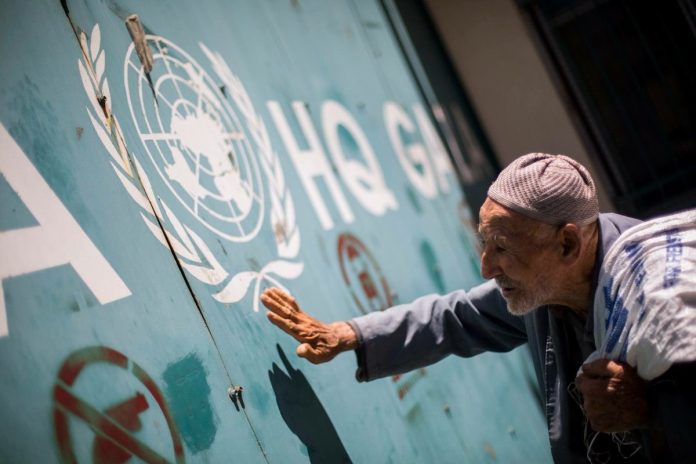
UNRWA Commissioner-General Philippe Lazzarini told the UN Security Council that the agency was being “denied permission to deliver this aid and save lives”.

UNRWA has been under fire since Israel alleged that some of its employees were involved in the October 7 Hamas attack. Israel has long campaigned for UNRWA, the main distributor of aid in Gaza, to be disbanded. Israel has also banned UNRWA from operating in Gaza’s north.

More than a dozen countries pulled funding for UNRWA after the allegations, some of which have resumed donations.

“Dismantling UNRWA will have lasting repercussions. In the short-term, it will deepen the humanitarian crisis in Gaza and accelerate the onset of famine,” Lazzarini said.

“In the longer-term, it will jeopardize the transition from ceasefire to ‘day after’ by depriving a traumatized population of essential services.”

Lazzarini added children were “bearing the brunt of this war”, with more than 17,000 separated from their families and “left to face the horror of Gaza alone.”

He also warned that “a man-made famine is tightening its grip” across Gaza.

“Across the border, food and clean water wait. But UNRWA is denied permission to deliver this aid and save lives,” Lazzarini said.

“This outrage is occurring despite consecutive orders by the International Court of Justice to increase the flow of aid into Gaza – which can be done if there is sufficient political will,” he added, calling on the council to “make a difference”.

President Raisi: Iran has a lot to say in advanced military industries

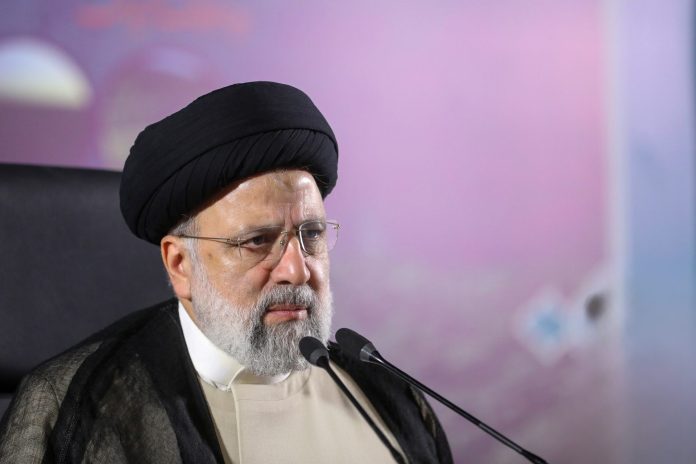
Ebrahim Raisi

The president, who is on a tour of the central Iranian province of Semnan, said on Thursday, “In advanced military industries, we have a lot to say and all saw the outcome of it,” referring to Iran’s operation on Saturday that targeted specific Israeli military and intelligence centers following the Israeli regime’s strike on the Iranian diplomatic mission in Damascus on April 1.

The Iranian president also rebuked Israeli allies, including Jordan, for siding with the occupying regime in Iran’s retaliatory operation. President Raisi noted, “More than 10 countries used all their facilities to neutralize our forces, but they failed.”

President Raisi also revealed that some officials from other countries called the Iranian Foreign Ministry before the operation, expressing doubt that the Iranian missiles and drones could even reach the Israeli-occupied territories.

Iran used hundreds of drones as well as ballistic and cruise missiles in the Operation True Promise, which laid bare the Israeli regime’s much-touted Iron Dome’s vulnerabilities and left the regime officials in disarray.

The president embarks on provincial tours mainly to overhaul the development plans across Iran.

He called on all officials to assess their performance in order to improve the situation in various fields amid the US-led Western sanctions against Iran.

Over 70% of Israelis oppose strike against Iran if it undermines security alliances: Poll

Israeli Settlers

26% were in favor of an attack even if it were to damage ties with allies.

The Hebrew University survey also found that over half the public believes Israel “respond[s] positively” to the military and political demands of allies.

The survey was conducted April 14-15 by internet and telephone, and sampled 1,466 men and women representing adult Israelis, both Jews and Arabs, the university said in a statement. The margin of error was given as 4.2 percentage points.

56% of respondents believe Israel “should respond positively to political and military demands from its allies” in order to “ensure a sustainable defense system over time”, the statement read. Of the remainder, 32% were undecided, and 12% disagreed.

Also, 59% believe that the US assistance to Israel against the Iranian attack obliges the Israeli government to coordinate future security actions with Washington, while 26% were undecided on the matter and 15% disagreed.

On April 1, the Israeli regime committed a terrorist attack against Iran’s diplomatic premises in the Syrian capital Damascus.

The Israeli attack resulted in the martyrdom of Brigadier General Mohammad Reza Zahedi, a commander of the Quds Force of Iran’s Islamic Revolution Guards Corps (IRGC), his deputy, General Mohammad Hadi Haji Rahimi, and five of their accompanying officers.

In retaliation, the IRGC targeted the occupied territories late on Saturday and early on Sunday with a barrage of drones and missiles. The retaliatory strikes – dubbed Operation True Promise – have inflicted damage on Israeli military bases across the Palestinian occupied territories.

Following Iran’s attack, Israel announced it must retaliate to preserve the credibility of its deterrence. This is while Iran has already warned Israel against taking any retaliatory actions and also advised the United States to keep away from involvement in the conflict and signaled that it viewed the matter as “concluded”.

Hours after Iran’s unprecedented attack on Israel on Sunday, Iranian President Ebrahim Raisi warned Tel Aviv in a statement, saying “If the Zionist regime or its supporters demonstrate reckless behavior, they will receive a decisive and much stronger response.”

Ukraine demands Israel-style security guarantees

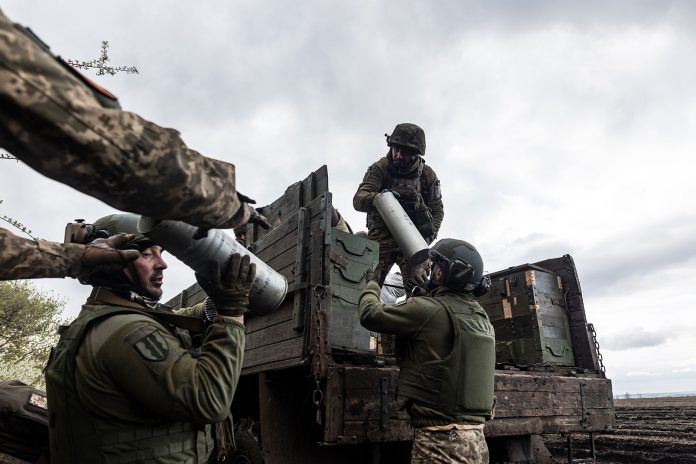
Russia Ukraine War

The Ukrainian government is negotiating a series of treaties intended to seal the country’s pro-Western alignment until it is granted full NATO membership. Officials in Kiev say the deals will secure long-term military assistance from the US and its allies, regardless of political changes that might otherwise prompt donors to cut the aid.

“An agreement between the US and Ukraine must work no worse than the American memorandum with Israel, the effectiveness of which was confirmed by joint actions of the allies during the deflection of the mass attack on Israel by Iran,” Yermak wrote on social media on Wednesday.

Tehran launched a barrage of drones and missiles at Israel last weekend in retaliation for the April 1 airstrike on its consulate in Damascus.

The long-anticipated move resulted in only “minor damage”, Israel claimed, as the US, UK and France used their military assets to help stop most of the Iranian projectiles. The interceptions cost Israel $550 million, according to local defense experts.

Western officials have made it clear that Kiev should not expect the kind of intervention that Israel enjoyed last week.

“Putting NATO forces directly in conflict with Russian forces – I think that would be a dangerous escalation,” British Foreign Secretary David Cameron said on Monday. Instead of “Western planes over [its] skies trying to shoot things down”, Ukraine requires air defense systems, he explained.

Kiev has been urging the US for months to move forward with the appropriation of over $60 billion in aid, which is being blocked by House Speaker Mike Johnson. The discussions that Yermak participated in covered “the action plan right after the US Congress takes a decision on military aid for Ukraine”, he stated.

Some US media have speculated that Johnson may yield to pro-Kiev pressure and submit the Senate-approved bill to a vote following the Iranian attack. The bill includes funds for Ukraine, Israel and Taiwan.

EU foreign policy head Josep Borrell has also stated Kiev should not request the same kind of support that the West provided to Tel Aviv during the Iranian attack because the two situations cannot be compared.

Answering a reporter’s question after Tuesday’s meeting of EU foreign ministers, Borrell said the two situations were “different things that cannot be compared”.

“Iran’s attacks flew over air bases of the armies of France, the US, the UK and Jordan. They have gone over their bases, which then acted in self-defense,” Borrell added.

“There are no air bases of the UK, or the US, much less Jordan of course, on Ukrainian territory or in the territory Russian missiles fly over. Therefore, the same answer cannot be given because the circumstances are not the same.”

Israel has also spent a lot of time and money to build the Iron Dome air defense system, which the EU couldn’t build overnight in Ukraine “even if we had money in the box”, the Spanish diplomat continued. The bloc is nevertheless trying to provide Kiev with additional air defense capabilities, he added.

When asked if the EU was involved in defending Israel, Borrell stated that the bloc was not directly involved, because it is not a state and does not have an army, but some of its members are.

“From that point of view I can say that the Union, or the member states of the Union that have the capabilities to do it, have done it,” he said, adding, “We have participated, of course, in [passing along] the information that the intelligence services had about how imminent the attack was. We were warned, like so many others.”

Israel has speeded up settlement expansion since outbreak of Gaza war: Report

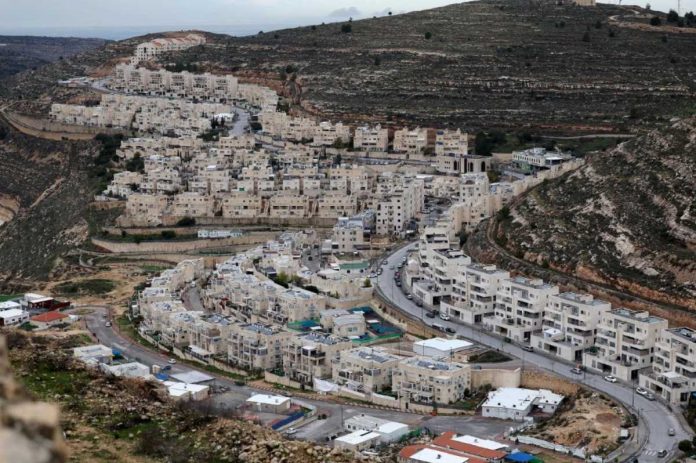
Israeli settlements

The Guardian, citing the most recent official planning documents, reported on Wednesday that Israel has approved or advanced more than 20 projects – totaling thousands of settler units.

At least two new settlement projects were approved in the immediate aftermath of hostilities in Gaza – only 48 hours. The expansion of a high-security gated settlement called Kidmat Zion in the heart of the Palestinian neighborhood of Ras al-Amud on the eastern periphery of the city was soon set to go ahead.

The second project is known as Givat Shaked and will be built on the northwestern side of Beit Safafa on a plot of grass and trees.

Two major projects now flank the Palestinian community of Beit Safafa, most of which is in East al-Quds. One, known as Givat Hamatos, was frozen for a decade due to international opposition.

A third settlement project, also near Beit Safafa, is known as Lower Aqueduct and involves the construction of a large settlement adjacent to a Palestinian neighborhood. The Lower Aqueduct plan was fully approved on December 29. The site straddles the line between East al-Quds and the western part of the city.

Sari Kronish, with the Israeli rights organization Bimkom – Planners for Planning Rights, has said, “The fast-tracking of these plans has been unparalleled in the last six months.”

Kronish added the construction plans continued to advance “at unprecedented speed”, notwithstanding the shutdown of many activities due to the military campaign in Gaza.

Ahmed Salman, 71, the chair of Beit Safafa’s community council, stated, “Our family has been here for 250 years … Now I have a black hole in my heart because I can’t see how my children and grandchildren can spend their lives here.”

In a report to the Human Rights Council in March, the United Nations High Commissioner for Human Rights, Volker Turk, said the Israeli regime was going on with its settlement expansion in the occupied Palestinian territories by unprecedented amounts, posing a significant threat to the viability of a future Palestinian state.

The high commissioner added the expansion involved the transfer of settlers into occupied territories.

Former Iranian vice president Davoudi passes away at 72

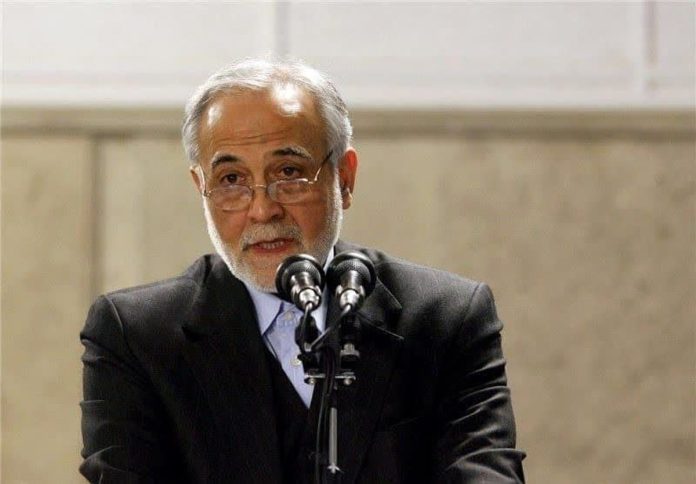
Parviz Davoudi

The cause of his death was not revealed.

Davoodi, an Iowa State University graduate, served under former president Mahmoud Ahmadinejad from 2005 to 2009.

Davoudi was also a member of the Expediency Council and a tenured professor of the Tehran-based Shahid Beheshti University.

Despite being affiliated with the principlist government of Ahmadinejad, he was an advocate of free markets in economy.