Monday, December 29, 2025
Home Blog Page 912

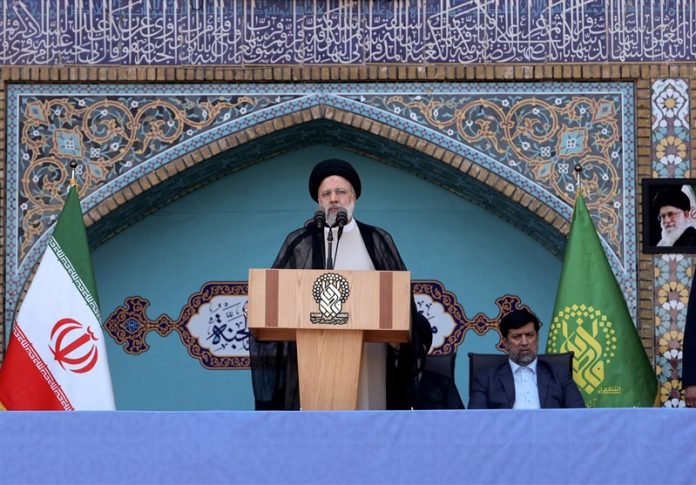
President Raisi: Iran’s missile, military capabilities not negotiable 

Raisi made the assertion on Thursday addressing a gathering of people on a trip to the shrine city of Qom in southern Tehran.

Referring to the 2022 unrest and deadly riots in Iran, the president said the enemies sought to ignite chaos and riots in the country but failed to block Iran’s path of progress.

He stated, “Some people said that the country might get stuck in a war and we should remove the specter of war from the country and the way to do that is to trade off our military and missile capabilities and they put the JCPOA 2 and 3 on the table,” alluding to the dormant 2015 nuclear deal with the West, known as the Joint Comprehensive Plan of Action.

He also noted Iran’s military might was manifested in its recent operation against Israel, dubbed True Promise, carried out last month in retaliation for the Israeli strikes on the Iranian consulate in the Syrian capital, Damascus

Iran Leader: High election turnout can form stronger parliament 

https://www.leader.ir/fa/pictures/album/2694/grid?img=81913_486.jpg

Casting his vote after the polling stations opened on Friday morning, Ayatollah Khamenei noted a high voter participation would lead to the emergence of a stronger parliament, noting runoff vote is as important as the first round.

“Elections are a sign of people’s presence and their determination in decision-making,” the Leader said, adding, “It’s a national duty to take part in the elections if they want progress.”

Ayatollah Khamenei cast his vote electronically in a polling station in Tehran.

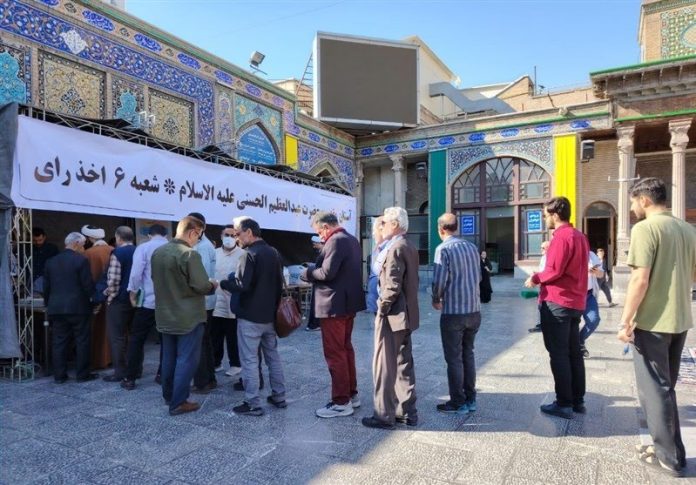
The elections got underway at 8 am (04:30 GMT) and will continue for 10 hours, with the possibility of voting period extension in case of a high turnout.

Over 61 million people are eligible in the country to elect the parliamentarians for the 45 remaining seats in the 290-seat assembly across 22 constituencies nationwide.

Parliamentary elections runoff kicks off in Iran

Polling stations opened at 8 am local time (04:30 GMT) and will continue for 10 hours, but the interior ministry can extend the voting period depending on the voter participation rate.

90 candidates, who failed to receive an absolute majority of more than 50 percent of votes during the first round held on March 1, are running for the remaining seats.

The result will shape the trajectory of a myriad of issues facing the new parliament.

In the capital Tehran, whose lawmakers have historically played a key role in shaping Iran’s political landscape, 16 remaining seats are up for grabs.

Over 61 million people from Iran’s 85 million-strong population were eligible to vote on March 1 to choose the new members for the 290-seat parliament for a 4-year term.

In the first round of the election, the participation rate was around 41 percent, or 25 million people.

Iran’s Atomic Energy Organization spokesman: Israel undermining ties

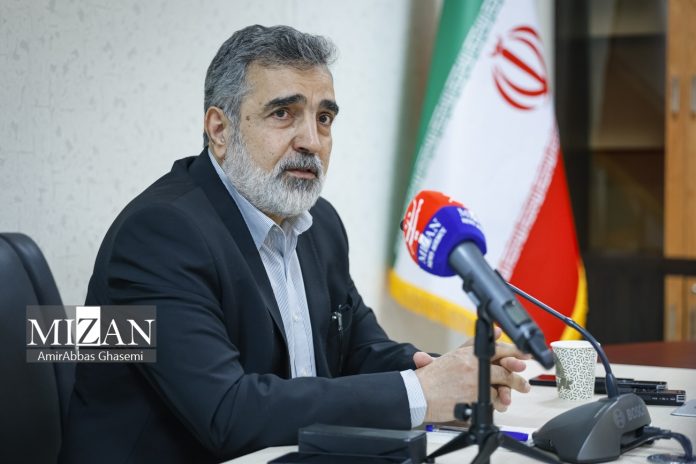
Behrouz Kamalvandi

Kamalvandi stressed that the Israeli regime aims to sabotage Tehran’s international relations.

The spokesperson of the Iranian Atomic Energy Organization emphasized the robust cooperation between Iran and Russia, lamenting the interference of certain Western countries and Israel in fostering closer ties between Tehran and Moscow.

Highlighting Israel’s purported efforts to disrupt Iran’s diplomatic outreach, Kamalvandi reiterated Iran’s stance on its nuclear program, affirming that the country’s objectives do not include the development of nuclear weapons.

Israel abandoning hostages to hunt Hamas leaders: Military officers

Israel Army

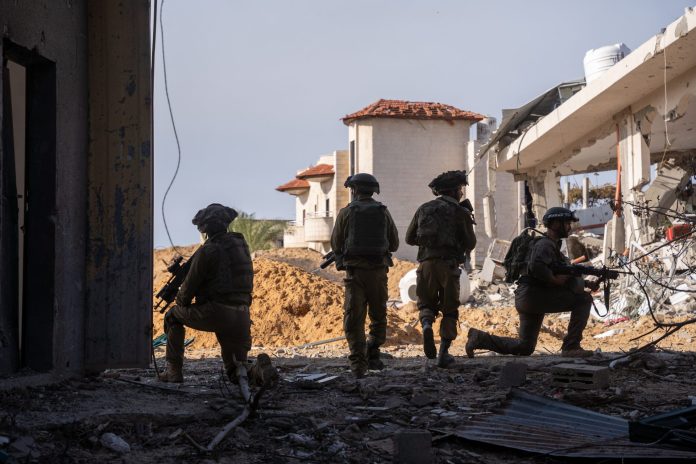
Speaking on condition of anonymity, three officers, one of whom is serving in Gaza, questioned Prime Minister Benjamin Netanyahu’s strategy in the ongoing war on Gaza, which has killed at least 34,900 Palestinians and failed to return captives taken by Hamas on 7 October.

One officer told MEE the government’s aims were unclear and the objective of rescuing captives and destroying Hamas had “collapsed”.

“Netanyahu’s operations in Gaza are fundamentally aimed at … hunting down Yahya Sinwar,” said the officer in Gaza, adding that the war had become “personal” for the Israeli premier.

Sinwar, Hamas’s leader in the enclave, is Israel’s number one target and has not been seen in public since the war began.

The officer told MEE that Israel’s military had become “obsessed” with Sinwar and the upper echelons of the Qassam Brigades, the armed wing of Hamas.

Last month, a Hamas official stated Sinwar had visited combat zones above the ground and held deliberations with the group’s leadership abroad.

Speaking to the pan-Arab news outlet Al-Arabi Al-Jadeed (or The New Arab), the Hamas official added Sinwar was not always staying in tunnels, as claimed by Israel, but also performing his duties in the field.

The military officer in Gaza said that conducting special operations targeting high-ranking individuals in a densely populated area risked making the conflict “perpetual”, and would be impossible without Israeli casualties and subsequent “retaliations” by the army.

“The army and intelligence are unable to make the right decisions in this respect,” one source added.

An officer not currently serving in Gaza stated a “new phase” of the war was being planned involving a long-term military presence through special operations.

“This plan has been partially approved by the US,” the officer told MEE, adding, “It’s all part of a plan agreed upon by the two countries for a Hamas-free Gaza.”

The US has previously announced it opposes the re-occupation of Gaza or re-establishing a permanent Israeli presence there.

Israel has repeatedly said its main war objectives remain “returning our hostages and eliminating Hamas”.

According to the source, the planned long-term presence includes a ground invasion of Rafah, which Israel launched earlier this week.

Israeli forces captured the Palestinian side of the Rafah crossing between Gaza and Egypt on Tuesday, hours after its troops had disconnected a major road in eastern Rafah from the crossing.

The capture came after several days of deadly heavy air raids and shelling of Rafah, where around 1.5 million displaced Palestinians have been sheltering for months.

It also followed an announcement by Hamas that it accepts a US-mediated ceasefire proposal that leads to the release of all captives in exchange for Palestinian prisoners, the end of the war and the full withdrawal of Israeli troops.

Everything that Israeli leaders had “discussed for a while” was currently taking place, according to one of the military sources, who added that a temporary truce was likely to follow in order to quell anti-government protests in Israel.

Hamas has repeatedly stressed it will not agree to a temporary truce.

“A few hostages might be exchanged. However, hostages are no longer of concern to anyone,” the source said.

Israel estimates that 128 of around 250 captives taken to Gaza during Hamas’s surprise attack on Israel in October remain there, including 35 who the military says are dead. Hamas says at least 70 captives have been killed in Israeli air strikes.

Protests in Israel led by the families of captives have called on the government to end the war on Gaza and bring their loved ones home.

Responding to Hamas’s agreement to the US-mediated ceasefire proposal on Monday, Netanyahu’s office announced the Palestinian group’s stance was “far from meeting Israel’s core demands”.

However, he said that Israel “will dispatch a ranking delegation to Egypt in an effort to maximise the possibility of reaching an agreement on terms acceptable to Israel”.

Another round of indirect talks reportedly began on Tuesday in Cairo, with the presence of delegations from Hamas, Israel, the US, Qatar and Egypt.

CIA director William Burns, who is leading the talks, is set to arrive in Israel and meet with Netanyahu.

Majority of US Democrats say Israel committing genocide in Gaza Strip

Gaza War

The US has repeatedly dismissed South Africa’s case at the International Court of Justice accusing Israel of genocide as “meritless”, while US lawmakers recently threatened the International Criminal Court over issuing any arrest warrants for Israeli leaders.

But according to findings, 56 percent of Democratic voters disagree with the US administration’s stance while just 22 percent believe that Israel is not committing genocide.

Republican voters find themselves on the same page as the Biden administration, with 58 percent disagreeing with the genocide accusation and 23 percent agreeing. Nineteen percent say they do not know.

Among “all likely voters”, 39 percent think Israel is committing genocide, with 38 percent disagreeing and 23 percent saying that they do not know.

The poll was conducted by Data Progress – a progressive think tank, advocacy group, and polling firm – between 26-29 April, and published on Wednesday.

Another issue that the Biden administration has been at odds with is the US public calling for a ceasefire in Gaza. The US has dithered on this issue over time.

For months, the administration said that a ceasefire would only benefit Hamas, even when two-thirds of US voters supported a ceasefire as early as February. Later, the US negotiated a temporary ceasefire but avoided calling for a permanent one.

In recent days, the US has more forcefully called for an immediate ceasefire, most notably after the killing of aid workers from World Central Kitchen by an Israeli strike in April. The latest ceasefire proposal that Hamas announced it was accepting but was rejected by Israel – which was negotiated with the Qataris, Egyptians and the CIA’s William Burns – has however paved a roadmap to a permanent ceasefire.

The latest polling shows that an overwhelming 70 percent of all likely voters want a permanent ceasefire and de-escalation of violence in Gaza. A whopping 83 percent of Democrats and 56 percent of Republicans support a ceasefire, with third-party and independent voters coming in at 65 percent in support of one.

The Biden administration announced this week that it was halting a weapons shipment to Tel Aviv over concerns over Rafah, and is also considering reviewing other arms packages to Israel.

But over the last seven months of the war, the US has provided Israel with uninterrupted arms shipments. The recent shift by the administration better reflects voter sentiment across party lines, according to the new polling.

A plurality of voters, 46 percent, disapprove of Congress’ authorisation of $4bn in aid to replenish Israel’s missile systems while 37 percent think military aid to Israel should decrease.

Among Democrats, 52 percent disapprove of the authorisation and 42 percent think overall military aid to Israel should decrease. Among Republicans, 37 percent disapprove of the Congressional authorisation and 28 percent want to see aid decreased.

The war in Gaza could have an outsized impact on the US general election scheduled for November this year. Young Americans have been especially vocal about the war, earning the US president the pejorative moniker “Genocide Joe” among young progressives.

At least 90 universities across the country have experienced sustained protests against Israel’s war on Gaza.

Protests have been regularly met with violence from law enforcement agencies after university administrations have called police forces on their students to break up encampments and sit-ins. The repression of university protests has been another polarising force among the US public.

The latest poll shows 46 percent of all likely voters disapprove of “limiting students’ rights and abilities to protest Israel’s military operations”. The split among party lines once again finds greater disapproval among Democrats (55 percent), when compared to Republicans (36 percent).

Iran FM calls on US to pressure Israel into accepting ceasefire in Gaza

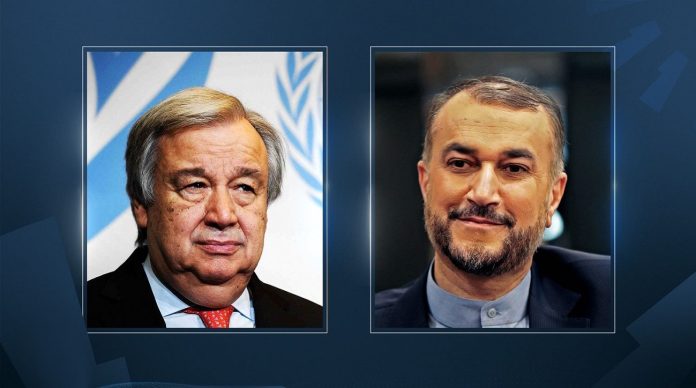
Antonio Guterres and Hossein Amir Abdollahian

Amirabdollahian raised the issue in a phone conversation on Thursday with UN Secretary General Antonio Guterres.

The top Iranian diplomat praised Guterres for his efforts to stop the Israeli regime’s war and genocide in Gaza.

Amirabdollahian urged the US to put pressure on Israeli prime minister Benjamin Netanyahu to accept a ceasefire deal, warning if Washington appeases the regime while it is perpetrating new crimes in Gaza’s Rafah, the repercussions on the supporters of the war will be severe.

“Now, it is the White House that has to choose between showing the determination to put pressure on the Israeli regime to stop the war, or dragging the region into a whole new and different level of crisis and tension,” he added.

Amirabdollahian noted, “The Zionist regime, in line with its policy of terror and genocide, is now seeking to cause another humanitarian disaster in the region by shutting off the Rafah and Karem Abu Salem border crossings to render international efforts to cease the war ineffective.”

The top Iranian diplomat seriously warned the Zionist regime against going ahead with its dangerous approach, and demanded piled-up pressure on the Israeli regime, especially from the UN.

For his part, the UN secretary general said, “We will continue to put pressure on Israel and actively hold talks with the US and other influential countries to establish truce and immediately end to the conflict in Gaza and the region, and especially to swiftly reopen the Rafah border crossing and other crossings that serve as the lifelines for the people in Gaza.”

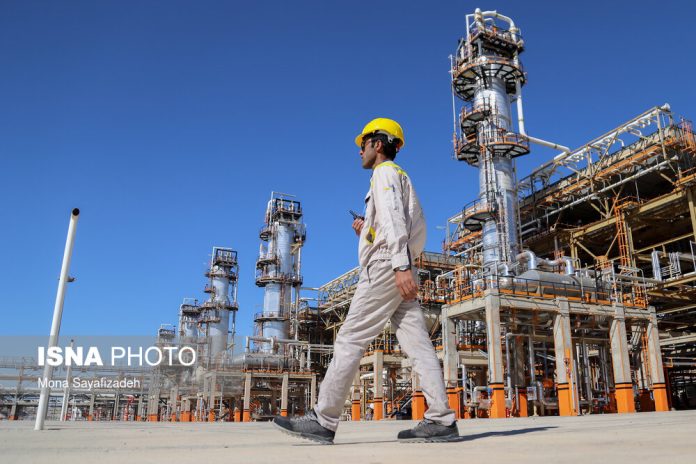
Foreign investors win bid to develop seven oil fields in Iran

Iran Gas

Mohsen Khojasteh Mehr said on Thursday, “As the minister of economy and finance pointed out, the oil sector has a significant track record with 4.8 billion dollars of foreign investment, and currently, seven oil fields are being developed with foreign investment.”

Undermining the Western sanctions spearheaded by the US, Khojasteh Mehr said Iran has signed oil contracts with different countries and is negotiating to sign new agreements.

Considering Iran’s potentials in investment capacities, he said the prospects for new agreements, with both domestic and foreign companies, are high.

The remarks came a day after the 28th Iran International Oil, Gas, Refining and Petrochemical Exhibition, also known as the Iran Oil Show 2024, kicked off in the Iranian capital Tehran.

Over 250 firms from 12 countries, including Argentina, Austria, Belarus, China, France, India, Japan, and Russia, besides 1,500 domestic companies, have taken part in the event.

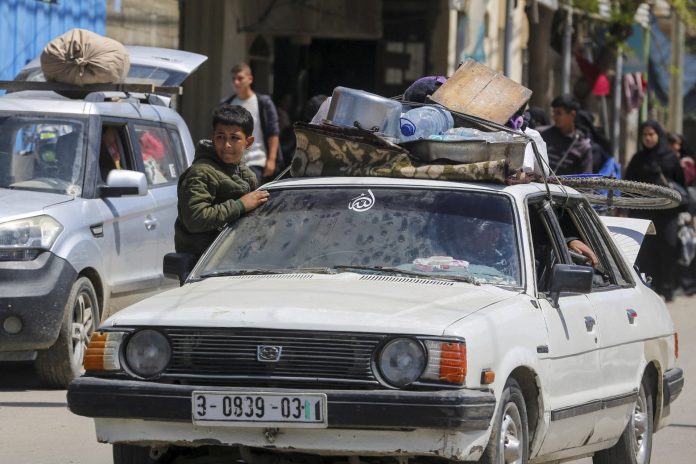
Gaza death toll nears 35,000, thousands flee Rafah

Gaza War

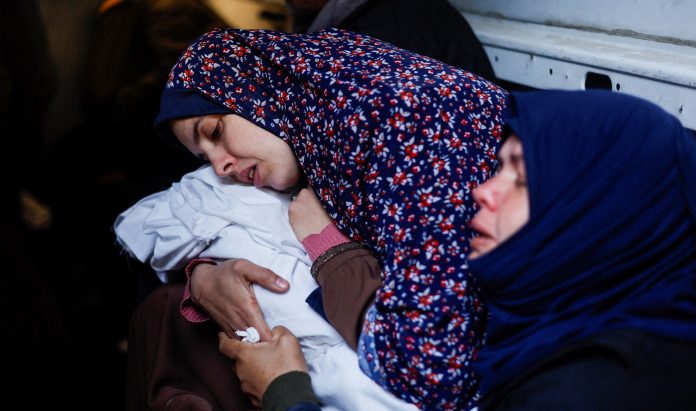
A ministry statement said that 78,514 other people have been injured in the onslaught.

“At least 60 people were killed and 110 others injured in Israeli attacks in the last 24 hours,” the statement read.

“Many people are still trapped under rubble and on the roads as rescuers are unable to reach them,” it added.

The Israeli army launched an offensive on Tuesday on the southern city of Rafah, where some 1.5 million displaced Palestinians have sheltered, as part of its deadly offensive on the territory following a Hamas attack that killed nearly 1,200 on Oct. 7, 2023.

Over seven months into the Israeli war, vast swathes of Gaza lay in ruins, pushing 85% of the enclave’s population into internal displacement amid a crippling blockade of food, clean water, and medicine, according to the UN.

Israel stands accused of genocide at the International Court of Justice. An interim ruling in January said it is “plausible” that Israel is committing genocide in Gaza and ordered Tel Aviv to stop such acts and take measures to guarantee that humanitarian assistance is provided to civilians in Gaza.

The UN agency for Palestinian refugees (UNRWA) said on Thursday around 80,000 Palestinians have fled Rafah since the start of an Israeli attack on the city on Monday.

“People are facing yet another forced displacement in the Gaza Strip,” UNRWA announced in a statement.

“The toll on these families is unbearable. Nowhere is safe. We need a cease-fire now,” it added.

The Israeli army has also seized control of the Palestinian side of the Rafah crossing on the border with Egypt, a vital route for humanitarian aid into the besieged territory.

EU agrees to arm Ukraine using profits from Russian assets

European Parliament

The proposal targets the proceeds from €191 billion ($205 billion) in Russian funds currently held in Belgian clearinghouse Euroclear. In total, Western states froze an estimated $300 billion of Moscow’s sovereign capital abroad after the start of the Ukraine conflict in February 2022.

“EU ambassadors agreed in principle on measures concerning extraordinary revenues stemming from Russia’s immobilized assets,” the Belgian presidency announced on X (formerly Twitter) on Wednesday.

Euroclear generates €2-3 billion in profits annually from the Russian money, depending on the interest rates, according to CEO Valerie Urbain.

Under the proposal, the EU hopes to send 90% of the profits towards purchasing armaments for Ukraine, and 10% towards non-military aid, with the first tranche expected in July.

“There could be no stronger symbol and no greater use for that money than to make Ukraine and all of Europe a safer place to live,” European Commission President Ursula von der Leyen stated.

Belgium will continue levying a 25% corporate tax on the revenue, while Euroclear will keep 10% before the money is sent to the EU, to provide the clearinghouse a buffer against ongoing and future litigation by Russia. Euroclear will also keep 0.3% of future profits as an incentive fee.

The move follows months of deliberation among Ukraine’s Western backers on how best to utilize Russia’s frozen funds. The US – Kiev’s biggest war sponsor – had proposed seizing the assets entirely, but has faced pushback from the EU thus far.

Euroclear’s CEO likened the confiscation of frozen Russian funds to “opening Pandora’s box”. Speaking to L’Echo on Tuesday, she warned it could cause “major international investors to turn away from Europe”, as they could no longer trust that their own assets would not be confiscated.

Russia stressed that seizing its sovereign capital or any similar action would not only amount to theft and violate international law, but undermine trust in both Western currencies and the global financial system.

If the frozen Russian assets are seized, Moscow will retaliate in kind, Finance Minister Anton Siluanov warned in February. Total foreign direct investments in the Russian economy by the EU, G7, Australia, and Switzerland were estimated to be around $288 billion at the end of 2022.