Monday, December 29, 2025
Home Blog Page 913

Foreign investors win bid to develop seven oil fields in Iran

Iran Gas

Mohsen Khojasteh Mehr said on Thursday, “As the minister of economy and finance pointed out, the oil sector has a significant track record with 4.8 billion dollars of foreign investment, and currently, seven oil fields are being developed with foreign investment.”

Undermining the Western sanctions spearheaded by the US, Khojasteh Mehr said Iran has signed oil contracts with different countries and is negotiating to sign new agreements.

Considering Iran’s potentials in investment capacities, he said the prospects for new agreements, with both domestic and foreign companies, are high.

The remarks came a day after the 28th Iran International Oil, Gas, Refining and Petrochemical Exhibition, also known as the Iran Oil Show 2024, kicked off in the Iranian capital Tehran.

Over 250 firms from 12 countries, including Argentina, Austria, Belarus, China, France, India, Japan, and Russia, besides 1,500 domestic companies, have taken part in the event.

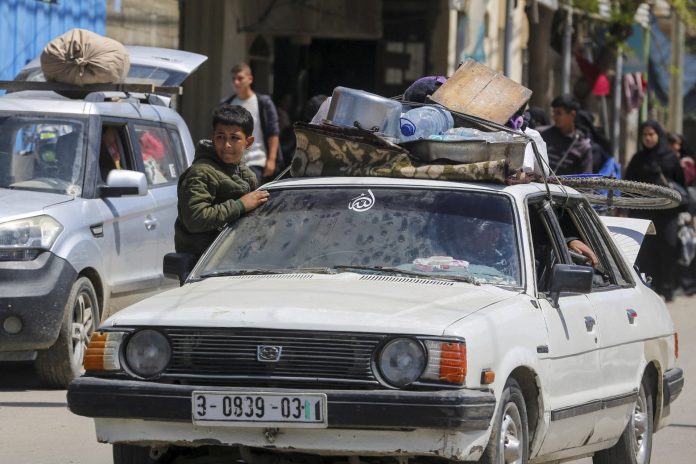
Gaza death toll nears 35,000, thousands flee Rafah

Gaza War

A ministry statement said that 78,514 other people have been injured in the onslaught.

“At least 60 people were killed and 110 others injured in Israeli attacks in the last 24 hours,” the statement read.

“Many people are still trapped under rubble and on the roads as rescuers are unable to reach them,” it added.

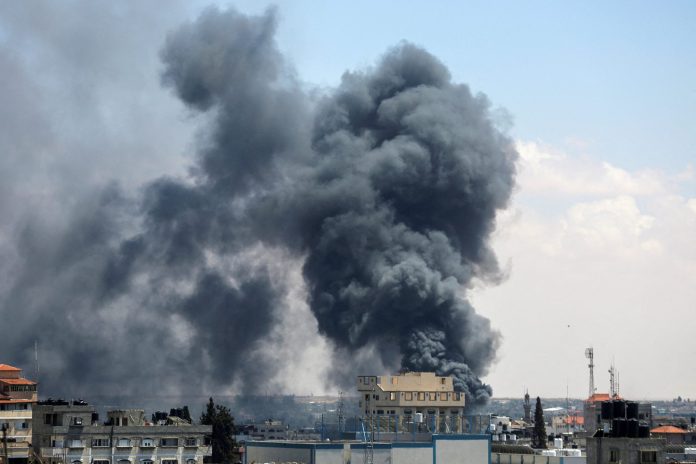
The Israeli army launched an offensive on Tuesday on the southern city of Rafah, where some 1.5 million displaced Palestinians have sheltered, as part of its deadly offensive on the territory following a Hamas attack that killed nearly 1,200 on Oct. 7, 2023.

Over seven months into the Israeli war, vast swathes of Gaza lay in ruins, pushing 85% of the enclave’s population into internal displacement amid a crippling blockade of food, clean water, and medicine, according to the UN.

Israel stands accused of genocide at the International Court of Justice. An interim ruling in January said it is “plausible” that Israel is committing genocide in Gaza and ordered Tel Aviv to stop such acts and take measures to guarantee that humanitarian assistance is provided to civilians in Gaza.

The UN agency for Palestinian refugees (UNRWA) said on Thursday around 80,000 Palestinians have fled Rafah since the start of an Israeli attack on the city on Monday.

“People are facing yet another forced displacement in the Gaza Strip,” UNRWA announced in a statement.

“The toll on these families is unbearable. Nowhere is safe. We need a cease-fire now,” it added.

The Israeli army has also seized control of the Palestinian side of the Rafah crossing on the border with Egypt, a vital route for humanitarian aid into the besieged territory.

EU agrees to arm Ukraine using profits from Russian assets

European Parliament

The proposal targets the proceeds from €191 billion ($205 billion) in Russian funds currently held in Belgian clearinghouse Euroclear. In total, Western states froze an estimated $300 billion of Moscow’s sovereign capital abroad after the start of the Ukraine conflict in February 2022.

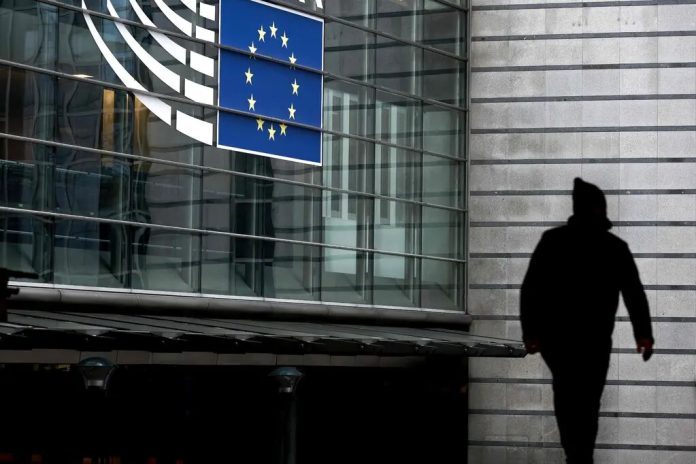
“EU ambassadors agreed in principle on measures concerning extraordinary revenues stemming from Russia’s immobilized assets,” the Belgian presidency announced on X (formerly Twitter) on Wednesday.

Euroclear generates €2-3 billion in profits annually from the Russian money, depending on the interest rates, according to CEO Valerie Urbain.

Under the proposal, the EU hopes to send 90% of the profits towards purchasing armaments for Ukraine, and 10% towards non-military aid, with the first tranche expected in July.

“There could be no stronger symbol and no greater use for that money than to make Ukraine and all of Europe a safer place to live,” European Commission President Ursula von der Leyen stated.

Belgium will continue levying a 25% corporate tax on the revenue, while Euroclear will keep 10% before the money is sent to the EU, to provide the clearinghouse a buffer against ongoing and future litigation by Russia. Euroclear will also keep 0.3% of future profits as an incentive fee.

The move follows months of deliberation among Ukraine’s Western backers on how best to utilize Russia’s frozen funds. The US – Kiev’s biggest war sponsor – had proposed seizing the assets entirely, but has faced pushback from the EU thus far.

Euroclear’s CEO likened the confiscation of frozen Russian funds to “opening Pandora’s box”. Speaking to L’Echo on Tuesday, she warned it could cause “major international investors to turn away from Europe”, as they could no longer trust that their own assets would not be confiscated.

Russia stressed that seizing its sovereign capital or any similar action would not only amount to theft and violate international law, but undermine trust in both Western currencies and the global financial system.

If the frozen Russian assets are seized, Moscow will retaliate in kind, Finance Minister Anton Siluanov warned in February. Total foreign direct investments in the Russian economy by the EU, G7, Australia, and Switzerland were estimated to be around $288 billion at the end of 2022.

French forces to be targeted if deployed to Ukraine: Moscow

Maria Zakharova

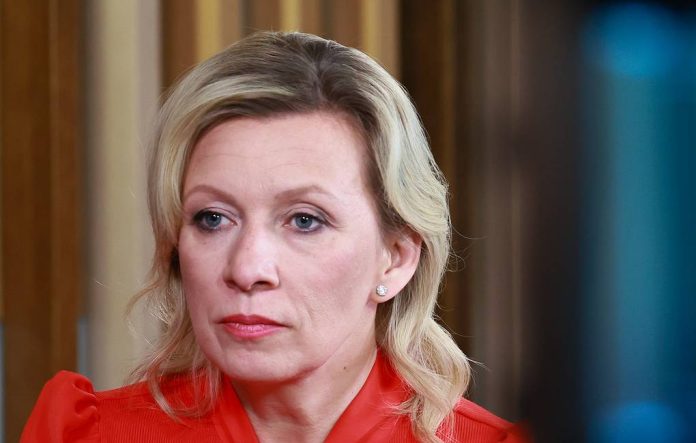
“If the French end up in the conflict zone, they will inevitably become a target for the Russian Armed Forces. I believe Paris understands that this will be the case,” she noted.

According to the diplomat, French President Emmanuel Macron’s bellicose rhetoric “is being rejected not only by many European Union and NATO allies”, but also – most importantly – “by the vast majority of French citizens”.

“I think they have fallen victim to Macron’s strategic uncertainty as they are at a loss as to what he is talking about. However, they realize that all this rhetoric is very dangerous and aggressive, and now, it is directly affecting French nationals,” Zakharova emphasized.

“We are not at all surprised at how Paris is manipulating this tired story about Russia being a threat to France and the entire Europe or how attempts are being made to justify multi-billion-euro spending on the West’s hybrid war against Russia in Ukraine,” the Russian spokeswoman pointed out.

In an earlier interview with The Economist, French leader Emmanuel Macron speculated that troops could be sent to Ukraine if Kiev asked for them or if Russian forces broke through the front lines.

Kremlin Spokesman Dmitry Peskov told reporters that those remarks marked an unprecedented round of tensions.

More than 15,000 children killed in Gaza since outbreak of war

Gaza War

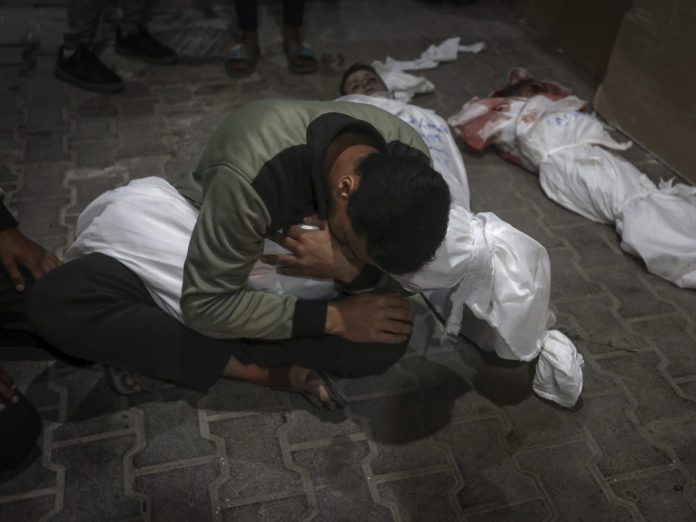
At least 15,002 children have died in the Gaza Strip since another round of escalation in the Israeli-Palestinian conflict broke out on October 7, 2023, the press service of the enclave’s authorities said on their Telegram channel.

According to the press service, at least 30 children died of malnutrition. In addition, about 17,000 minors have been orphaned or have lost one of their parents as a result of the fighting.

Israel has pounded Gaza in retaliation for Oct. 7, 2023 attack by Hamas which killed less than 1,200 people.

More than 34,800 Palestinians have since been killed in Gaza, mostly women and children, and 78,100 injured, according to Palestinian health authorities.

Nearly seven months into the Israeli onslaught, vast swathes of Gaza lay in ruins, pushing 85% of the enclave’s population into internal displacement amid a crippling blockade of food, clean water and medicine, according to the UN.

Israel is accused of genocide at the International Court of Justice. An interim ruling in January said it is “plausible” that Israel is committing genocide in Gaza and ordered Tel Aviv to stop such acts and take measures to guarantee that humanitarian assistance is provided to civilians in Gaza.

Former foreign minister: Iran to change nuclear doctrine in case of existential threat

Kamal Kharazi

Former top Iranian diplomat Kamal Kharrazi, in an interview with ISNA, said on Thursday, “If the Zionist regime dares to damage Iran’s nuclear facilities, our level of deterrence will be different.”

“We have no decision to produce a nuclear bomb, but if the existence of Iran is threatened, we will have to change our nuclear doctrine,” Kharrazi, who is an adviser to Iran’s Leader, explained.

The comments by Kharrazi echo his remarks in 2022 that Iran is technically capable of making a nuclear bomb but had not yet decided whether to build one.

Based on a Fatwa (religious order) by the Leader of Islamic revolution, Ayatollah Seyyed Ali Khamenei, producing nuclear bombs has been designated as Haram (banned).

Also discussing the regional fallout of the Israeli carnage in the Gaza Strip since October 7 last year, Kharrazi said Iran is determined to support the axis of resistance in the region, stressing that each member of this axis acts independently and makes decisions based on the conditions on the ground.

Biden says will stop sending bombs and artillery shells to Israel if it launches major invasion of Rafah

Gaza War

“Civilians have been killed in Gaza as a consequence of those bombs and other ways in which they go after population centers,” Biden told CNN’s Erin Burnett in an exclusive interview, referring to 2,000-pound bombs that Biden paused shipments of last week.

“I made it clear that if they go into Rafah – they haven’t gone in Rafah yet – if they go into Rafah, I’m not supplying the weapons that have been used historically to deal with Rafah, to deal with the cities – that deal with that problem,” Biden added.

The president’s announcement that he was prepared to condition American weaponry on Israel’s actions amounts to a turning point in the 7-month conflict between Israel and Hamas.

His acknowledgement that American bombs had been used to kill civilians in Gaza was a stark recognition of the United States’ role in the war.

The president has come under extraordinary pressure, including from members of his own party, to limit shipments of arms amid a humanitarian crisis in the besieged enclave.

The US has already paused a shipment of “high-payload munitions” due to Israel’s possible operations in Rafah without a plan for the civilians there, according to the Pentagon, though it announced a final decision on that shipment hadn’t been made. The administration has stated it is reviewing the potential sale or transfer of other munitions.

Testifying before a US congressional subcommittee on Wednesday, Defense Secretary Lloyd Austin said the Biden administration had paused “one shipment of high payload munitions” amid concerns about the Israeli military’s push to invade Rafah.

“We’ve been very clear … from the very beginning that Israel shouldn’t launch a major attack into Rafah without accounting for and protecting the civilians that are in that battlespace,” Austin told US lawmakers.

The Biden administration has faced months of criticism over its “iron-clad” support for Israel amid the Gaza war, which has killed nearly 35,000 Palestinians and plunged the enclave into a dire humanitarian crisis.

But Washington has largely continued to provide military and diplomatic backing to Israel as the war grinds on.

Israel stepped up its bombardment of Rafah on Monday, killing dozens of people after ordering about 100,000 residents in the city’s eastern areas to evacuate.

Israeli troops also stormed the Palestinian side of the Rafah border crossing between the Gaza Strip and Egypt, which serves as a major gateway for humanitarian aid.

EU member states considering jointly recognizing Palestinian state in coming weeks

European Parliament

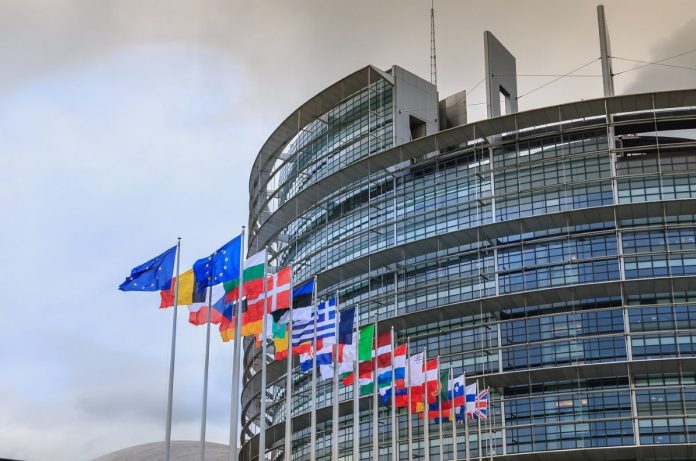
RTE reported Ireland, Spain, Slovenia and Malta have recently intensified contacts with a view to jointly recognizing Palestinian statehood on that day.

In a joint statement on March 22, former Taoiseach (Prime Minister) Leo Varadkar and his Spanish, Maltese and Slovenian counterparts said they had discussed their “readiness to recognize Palestine and said that we would do so when it can make a positive contribution and the circumstances are right”.

On May 6, Taoiseach Simon Harris spoke to his Spanish counterpart Pedro Sanchez, which a government spokesperson called “a good and thorough call” regarding the “grave situation in the Middle East”.

Tanaiste (Deputy Prime Minister) Micheal Martin said during a meeting of his Green Party that Ireland will intervene in the genocide case at the International Court of Justice (ICJ) soon after South Africa has filed its substantive case, which he expects to happen by October, according to the broadcaster.

He also added that Ireland is pushing the European Commission for a response to a letter sent by Ireland and Spain seeking a review of the EU-Israel Association Agreement.

Israel has pounded the Gaza Strip in retaliation for an Oct. 7 attack by the Palestinian group Hamas which killed about 1,200 people.

More than 34,800 Palestinians have been killed in Gaza, mostly women and children, and 78,100 others injured since Oct. 7 last year, according to Palestinian health authorities.

Over seven months into the Israeli war, vast swathes of Gaza lay in ruins, pushing 85% of the enclave’s population into internal displacement amid a crippling blockade of food, clean water and medicine, according to the UN.

Israel stands accused of genocide at the International Court of Justice. An interim ruling in January said it is “plausible” that Israel is committing genocide in Gaza and ordered Tel Aviv to stop such acts and take measures to guarantee that humanitarian assistance is provided to civilians.

American support for NATO, Ukraine declining: Poll

NATO Ukraine

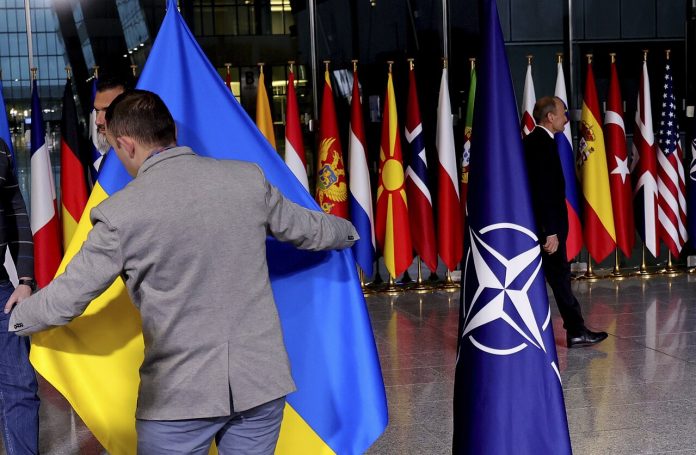
The Pew survey puts hard numbers behind divides playing out on Capitol Hill over support for Ukraine and attacks by former President Donald Trump, the presumptive Republican presidential nominee, criticizing NATO countries as failing to share the burden of the security alliance.

“We saw in the last election, something that will be on the mind of both voters, as well as the candidates and then part of the debate ahead of the elections, is the U.S. role in the world, whether that’s on its own, or as a NATO member,” said Moira Fagan, research associate with Pew.

“And so these numbers really speak to that moment.”

While the Pew survey found that most Americans support NATO (58 percent), that number has dropped by 4 percentage points since 2023, marking a statistically significant decline, the authors wrote.

The partisan divides are sharper: Three-quarters of Democrats rated the organization favorably, compared to only 43 percent of Republicans. That number is down from 55 percent in March 2022, one month after Russia launched its full-scale invasion of Ukraine.

“These numbers have flipped,” Fagan explained, pointing to changing support among Republicans toward Ukraine.

“When the war broke out in the spring of 2022, we saw about half of Republicans saying the U.S. was not providing enough support to Ukraine, versus too much, only 9 percent said that at the time.”

Now, about half of Republicans say the U.S. is providing too much support to Ukraine, while 13 percent say not enough is being provided, Fagan continued.

“Democrats have remained largely stable in saying a mix that support is not enough, or about right.”

The numbers speak to deep divisions among Republicans in Congress, with the majority of House GOP members voting against a $61 billion security assistance package related to Ukraine in April that was delayed for months amid Republican opposition. The bill passed with support from Democrats.

The Pew poll took place April 1-7, shortly before the House passed assistance for Ukraine. It surveyed 3,600 U.S. adults who are members of the center’s American Trends Panel, and respondents are recruited through national, random sampling of residential addresses.

Pew added the survey is weighted to be representative of the U.S. adult population by gender, race, ethnicity, partisan affiliation, education and other categories.

The survey also tested Americans’ knowledge of NATO, with a little more than half (56 percent) correctly identifying Europe and North America as the two regions from which the alliance draws membership. Although, Americans were confused over Ukraine’s relationship to the alliance, with 41 percent correctly identifying it as a nonmember.

“Those who have more knowledge of NATO are more inclined to see the organization favorably,” the report’s authors wrote.

Fagan said the numbers demonstrate that there’s no partisan divide on knowledge of NATO, showing that Americans are generally well-informed about the substance of current affairs and hot-button debate issues.

In July, President Joe Biden is set to host the annual NATO summit in Washington, marking the alliance’s 75th anniversary. NATO allies view the summit as a critical opportunity to express the alliance’s solidarity in support for Ukraine, even as members are divided over Kyiv’s future in the alliance.

And while most Democrats and Republicans in Congress support U.S. participation in NATO, the alliance is a fixation for former President Trump, who has threatened to withdraw America from the alliance, held back from committing to the mutual-defense pact of the treaty, and criticized member states who have not yet increased their defense spending to the alliance’s goal of 2 percent of gross domestic product.

Trump’s potential for victory in the 2024 presidential election prompted lawmakers to pass legislation in December seeking to bar any president from withdrawing from NATO, although skeptics view the law’s provisions as weak.

Trump’s antagonism toward NATO feeds into a general isolationism of his “Make America Great Again” movement, which critics fear will withdraw the U.S. from its position as a global leader and embolden Russian President Vladimir Putin. Trump has boasted about negotiating with Putin an end to his war in Ukraine, raising fears among Kyiv and its supporters that any deal would undermine Ukraine’s sovereignty and security.

The Pew survey found that Americans overwhelmingly hold negative views of Putin, with 88 percent saying they do not have confidence in the Russian president to do the right thing regarding world affairs.

But there are partisan divides on American favorability toward Ukrainian President Volodymyr Zelensky. In the beginning of Russia’s full-scale invasion, the Ukrainian president was held up as a courageous, wartime leader leading a hard-scrabble defense against Russia.

But after two years of war, Americans’ favorability — especially among Republicans — is waning.

While 48 percent of Americans said they have some or a lot of confidence in Zelensky to do the right thing regarding world affairs, that number represents an 8 point decrease since 2023. And only 34 percent of Republicans supported Zelensky, compared to 65 percent of Democrats.

“Since the war has broken out, we’ve seen that negative views of Russia, a lack of confidence in Putin, has really been quite stable,” Fagan added.

“But we do kind of see … views of NATO have dropped slightly over the past few years. In general, the public is less likely to be supportive of Ukraine aid … There’s a partisan divide: Democrats are more likely to say that helping Ukraine helps U.S. national security, Republicans say that hurts national security.”

“Some of this movement that we see is driven just by the declining support for NATO and Ukraine among Republicans, typically, while the Democratic numbers have remained a little bit more stable,” she continued.


Americans concerned US campus protests will lead to violence: Poll

Protest US Universities

The survey, released Wednesday by USA Today and Suffolk University, found that nearly 32 percent of Americans said they are “very concerned” the protests will end up in violence, while just more than 35 percent said they are “somewhat concerned”.

Nearly 15 percent of respondents said they are “not very concerned”, and 14 percent said they are “not at all concerned”. About 3 percent were undecided, per the poll.

Protests calling for a cease-fire in the ongoing Israel-Hamas war in Gaza have roiled college campuses across the nation for nearly three weeks as demonstrators call on universities and the U.S. to sever ties with Israel. More than 2,500 people — students, faculty and others — have been arrested since the first major encampment began at Columbia University about three weeks ago.

While many of the protests have been reported to be peaceful, tensions have recently escalated between protesters, law enforcement and counterprotesters. A series of colleges have called in law enforcement to disassemble encampments or building takeovers, arguing they are a disruption to college campus activities.

Last week, protesters seized control of Hamilton Hall on Columbia University’s campus, prompting New York police officers to enter the building through a window, carrying riot shields and zip ties. Several people were arrested.

The violence escalated last Wednesday at the University of California, Los Angeles (UCLA) after counterprotesters assaulted a pro-Palestinian encampment for hours without police intervention. The counterprotesters threw fireworks and tried to take away the metal fencing and plywood from the encampment, resulting in a series of overnight skirmishes. Police later fired rubber bullets at the protesters while making arrests.

More than 200 UCLA students were arrested last week, California Highway Patrol announced.

President Joe Biden criticized the vandalism and trespassing occurring at some of the demonstrations earlier this month, while defending the right to peacefully protest.

“In moments like this, there are always those who rush in to score political points. But this isn’t a moment for politics,” Biden said in prepared remarks from the White House last week.

“It’s a moment for clarity. So let me be clear … Violent protest is not protected. Peaceful protest is.”

“Destroying property is not a peaceful protest, it’s against the law,” he continued, adding, “Vandalism, trespassing, breaking windows, shutting down campuses, forcing the cancellation of classes and graduation. None of this is a peaceful protest, threatening people, intimidating people.”

Concerns have been raised over the proliferation of antisemitic rhetoric and the safety of Jewish students, though several protest groups have pushed back against these characterizations.

Republicans and Democrats differed significantly when it came to how they view the protesters’ motives and beliefs, USA Today reported. About 64 percent of Republicans said the demonstrations reflect antisemitism, while only 22 percent of Democrats said the same, per the survey.

About 57 percent of Democrats and 26 percent of Republicans said the protesters’ motives do not reflect antisemitism, the poll found.

The USA Today/Suffolk University survey was conducted April 30 to May 3, among 1,000 registered voters. It has a margin of error of plus or minus 3.1 percentage points.