Monday, December 29, 2025
Home Blog Page 879

Iran opens registration for presidential election hopefuls

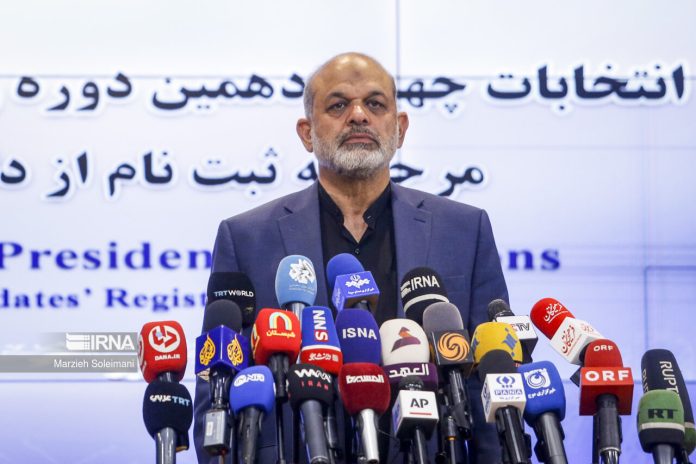
Ahmad Vahidi

The registration period will last for five days for hopefuls seeking to run in the June 28 presidential election.

Prospective candidates need to meet several criteria, including having a minimum of four years of experience in significant political or administrative roles.

They also need to be between 40 and 75 years old, possess at least a master’s degree or equivalent, and demonstrate the health and capability to fulfill presidential duties.

Neither of the main two reformist or principlist camps in the country have revealed their candidates yet.

Extreme-right politician Saeed Jalili and former parliament speaker Ali Alrijani have announced they are among the contenders.

Several top figures, including former foreign minister Mohammad Javad Zarif, have officially ruled out candidacy in the election.

All presidential hopefuls must be vetted by the Guardian Council before officially running for the vacancy.

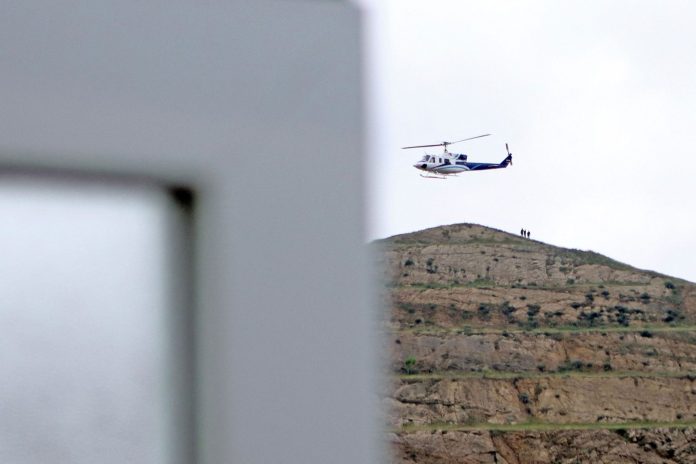
President Raisi died in a helicopter crash along with his entourage, including Foreign Minister Hossein Amirabdollahian, earlier this month, leaving the void.

Israel expects “another seven months” of conflict in Gaza

Gaza War

In a radio interview on the Israeli station Reshet bet on Wednesday, Tzachi Hanegbi said: “It was honestly stated in the first days of presenting the plans to the cabinet that the war would be long”.

“It is built on a staged basis, with the year 2024 defined as a year of combat. We are now in the fifth month of 2024, which means we expect another seven months of fighting to deepen our achievements and achieve our goal of destroying the military and governmental capabilities of Hamas and Islamic Jihad.”

“You need to have patience and know how to stand strong. This resilience is what has allowed this nation to survive for 75 years, and even for 3,000 years before that. Just don’t use a stopwatch on ourselves or set ultimatums,” he added.

Later on Wednesday, an Israeli military spokesman claimed the army had gained “operational control” over the narrow Philadeplhi Corridor, a buffer zone between Egypt and Gaza that was created as part of the 1979 peace treaty between Israel and Egypt.

“In recent days, our forces have taken operational control of the Philadelphi Corridor,” army spokesman Daniel Hagari stated in a televised address.

Hanegbi’s remarks raise questions about the future of Gaza and what kind of role Israel will play in it. Already, top ally the US has demanded that Israeli Prime Minister Benjamin Netanyahu produce a postwar vision for the Palestinian territory, and his defence minister and a top governing partner have warned that he must take steps to ensure that Israel does not remain in Gaza indefinitely.

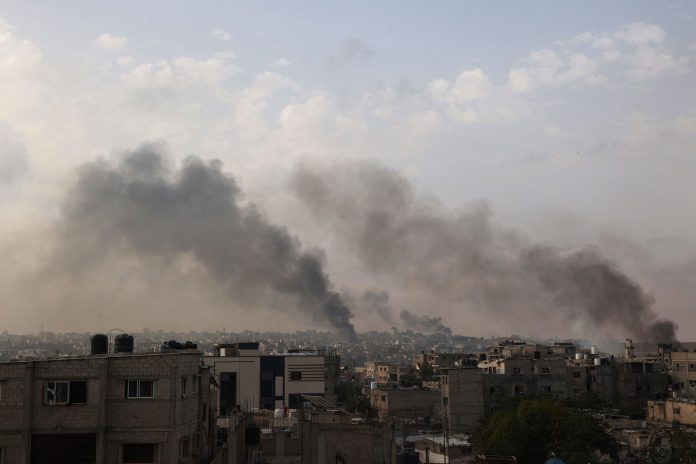
Israel’s assault has already devastated Gaza’s urban landscape, displaced most of the territory’s population and sparked a humanitarian catastrophe and widespread hunger. Israel claims it must dismantle Hamas’s last remaining battalions in Rafah and also announced it will seek indefinite security control over the Gaza Strip.

Hamas has rejected any postwar plan that excludes the group, reiterating that it will remain in Gaza.

More than 36,000 Palestinians have been killed in Israel’s Gaza aggression, according to health officials.

Yemen’s Houthis say downed another US MQ-9 drone

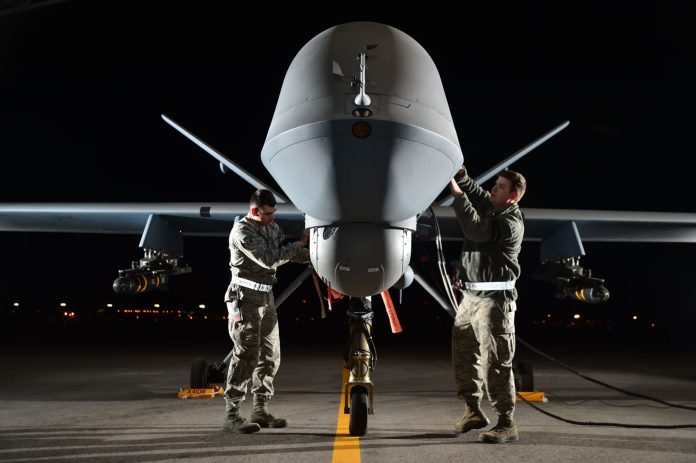
US MQ-9 drone

The group issued a statement on Wednesday saying its Air Defense Forces had shot down an MQ-9 Reaper drone earlier in the day as it was flying in the skies of the central province of Marib.

“The targeting operation was carried out with a locally-made surface-to-air missile,” added the statement.

It was a second time in days that the Yemenis downed an MQ-9 Reaper, a heavy and modern aircraft which is worth around $30 million.

A total of six drones of this type have been dismantled by Yemen since last year when the Arab country launched a military campaign in support of Palestine.

Yemen started targeting Israeli-linked ships in November, a month after the regime invaded Gaza.

Attacks later expanded to cover ships linked to the United States and Britain after the two launched airstrikes on the Arab country to force it to halt its anti-Israeli operations.

The Yemenis have insisted that maritime operations and drone and missile attacks on Israeli-occupied ports will continue until the regime completely stops its attacks on Gaza.

“The Yemeni Armed Forces, by the grace of Allah, continue to develop their defensive capabilities to confront the American-British aggression and all hostile forces,” according to the statement by Yemen’s armed forces on Wednesday.

Iran’s Leader thanks pro-Palestinian students in US for ‘standing on right side of history’

Ayatollah Khamenei

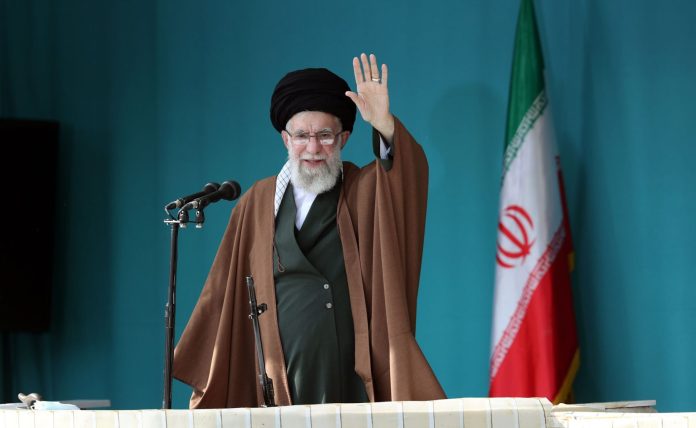
Ayatollah Khamenei addressed the thousands-strong students, who have been rallying and setting up tents across their schools’ campuses in protest at the Israeli regime’s ongoing genocidal war against the Gaza Strip and the US’s untrammeled support for the brutal military onslaught.

“This is our message of empathy and solidarity with you. You are standing on the right side of history — whose pages are being turned,” the letter read.

“You have now formed part of the resistance movement, and have begun an honorable struggle [despite being] under the cruel pressure of your government — which openly defends the usurping and ruthless Zionist regime,” it added.

“The great resistance movement has been waging [a similar] struggle at a distant spot for years [while being affected] with the same understanding and emotions as those of yours today.”

The Leader specified the purpose behind this struggle to be cessation of the “blatant oppression” that a “terrorist and cruel network titled ‘Zionists’” has been imposing on Palestinians for decades.

The oppression has seen Zionists seizing Palestinians’ country and then subjecting them to “the harshest of pressures and tortures,” Ayatollah Khamenei noted.

“The genocide [that is being exercised] by the apartheid Zionist regime today serves as the continuation of [the same] severely oppressive behavior,” the Leader stated, referring to the Israeli regime’s genocidal war against Gaza that has claimed the lives of more than 36,000 Palestinians since its onset in October last year.

Describing the process of usurpation of the Palestinian land, Ayatollah Khamenei noted how Zionist capitalists, who were being aided by the British government, gradually transferred “thousands of terrorists” to Palestine following the World War. Those, the Leader added, killed and displaced tens of thousands of Palestinians before forming the Israeli regime there.

Ayatollah Khamenei, however, described the United States as “the greatest supporter of the usurping regime” following the initial patronage that was provided for the regime by the British.

The American administration, the Leader said, had been providing the regime with continual political, economic, and arms support, and had even “recklessly” paved the way for its production of nuclear weapons.

“The American administration and its partners have not even as much as frowned upon this state terrorism and incessant oppression,” the letter read.

“The ‘resistance front,” it added, “rose amid this dark and bleak atmosphere, and the formation of ‘the Islamic Republic’ in Iran contributed to its expansion and strength.”

Nevertheless, American and European media agencies, which were being influenced by Zionist money and bribery, have been introducing this “human and courageous resistance as terrorism,” the Leader stressed.

Ayatollah Khamenei then asked whether a nation, which was fending for itself against Zionist occupiers inside its own land, was to be considered as “terrorist”.

This situation, though, was changing and a different fate awaited the sensitive West Asia region, the Leader asserted.

“Many consciences have been awakened on the international scale and the truth is being revealed. The resistance front too has become strong and will become [even] stronger,” read the letter by Ayatollah Khamenei.

“The pages of history are being turned,” it added, noting how universities and peoples had joined the protest campaign throughout other countries too.

“I sympathize with you, youths, and value your steadfastness,” the Leader said, and urged the American students to acquaint themselves with the Holy Qur’an, which has promoted steadfastness and discouraged oppression.

Probe rejects sabotage in President Raisi’s copter crash

President Raisi Helicopter Crash

A second report by Iran’s General Staff of Armed Forces, which is investigating the crash, said there’s no evidence that the helicopter had been sabotaged during the flight.

“Considering the sampling and tests conducted on the remains and parts of the helicopter and the pattern of their dispersion and the distance of the parts separated from the main body, the occurrence of an explosion due to sabotage during the flight and moments before the impact on the mountain slopes is ruled out.”

The report also added “no traces of electronic warfare were observed on the crashed helicopter.”

It said the examination of documents related to the maintenance and repair of the crashed helicopter showed no issues that could have contributed to the accident.

The report also ruled out any communication system malfunction or frequency interference preventing the presidential helicopter from contacting the flight group.

The report added the examination of tests and analysis of data will continue until the main cause of the incident is discovered.

The General Staff of Armed Forces issued its preliminary report on the incident on May 24, saying the wreckage did not bear any bullet holes or signs of similar impact.

Late president Raisi along with Amirabdollahian and other dignitaries lost their lives after their helicopter crashed into the mountains and caught fire on May 19.

The crash site was located by Iranian unmanned aerial vehicles at 05:00 a.m. (local time) on May 20, and reached by search teams shortly afterwards.

Iran’s top military chief urges Iraq to disarm terror groups in Kurdistan region

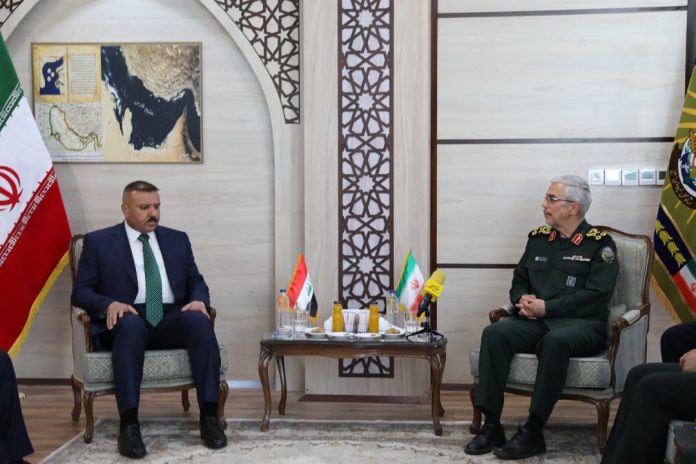
In a meeting with Iraq’s Interior Minister Abdul Amir al-Shamri in Tehran on Wednesday, General Mohammad Bagheri said Iraq must disarm those terrorist groups under a treaty with Iran. He added that the treaty must be fully implemented.

General Bagheri said what is more important is that the expansion of relations with Iraq is a strategic decision in Iran that has been approved by the Leader of Islamic Revolution.

He said the change of administrations in Iran including the tragic passing of president Ebrahim Raisi in a copter crash will not affect relations with Baghdad.

While noting that the position of Iraq’s Ministry of Interior is of great importance in this regard, Iran’s top military chief said fortunately, thanks to efforts by the Iraqi side, security is being strengthened daily, and Iran is ready to share its security experiences with Iraq.

He then spoke about the security of Iranian pilgrims visiting Iraq during the Arbaeen ceremonies that mark the 40th day after the martyrdom of Imam Hussein (PBUH), the third Shia Imam. Bagheri said this is a key issue for Iran.

He further thanked Iraq for its hospitality toward Iranian pilgrims.

The Iraqi interior minister said for his part that during his visit to Tehran, due to the importance of the Arbaeen ceremonies, he has started discussions with his Iranian counterpart and the Iranian police chief.

Shamri added that given Iran’s level of education, Iraq wants to send police officers to study in various military colleges in the Islamic Republic.

He also voiced hope that this interaction will strengthen ties and help both sides share experiences.

Pentagon says aid deliveries into Gaza by sea suspended after damage to US-built pier

US-built pier Gaza

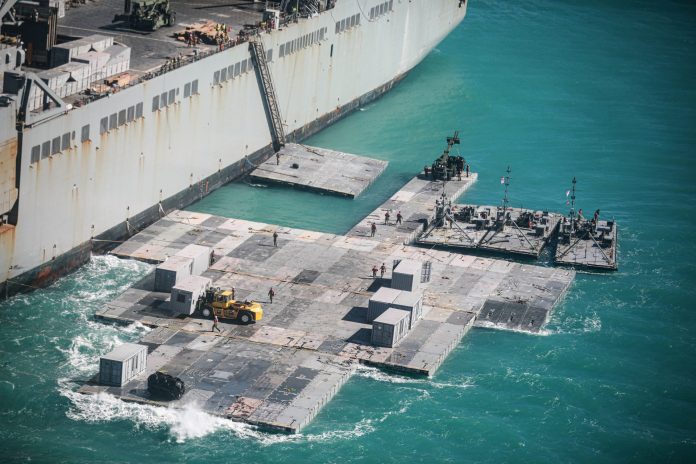
“Due to high sea states and the North African weather system earlier today, a portion of the Trident pier separated from the pier that is currently anchored into the coast of Gaza,” spokeswoman Sabrina Singh told reporters.

“As a result, the Trident pier was damaged and sections of the pier need rebuilding and repairing. Therefore, over the next 48 hours the Trident pier (will) be removed from its anchored position on the coast and towed back to Ashdod where US central command will conduct repairs,” she said.

Work on the pier will take at least a week and following its completion, it will need to be reanchored to the coast of Gaza and humanitarian aid can resume “to the people who need it most,” she added.

US Central Command (CENTCOM) announced Saturday that heavy sea states affected four US Army vessels supporting the maritime humanitarian aid mission in Gaza.

US President Joe Biden ordered in March the establishment of a sea route to deliver food and other aid to Palestinians amid Israeli restrictions and months of conflict in the enclave.​​​​​​​

Israel’s nearly eight-month war on Gaza has led to more than 36,000 deaths in the war-torn coastal enclave and has injured over 81,100 victims.

A Hamas-led cross-border attack that precipitated the current conflict left less than 1,200 people dead, with hundreds more taken to Gaza as hostages.

Israel’s military campaign has turned much of the enclave of 2.3 million people into ruins, leaving most civilians homeless and at risk of famine.

An attack Sunday that killed at least 45 victims, mostly women and children, came despite a ruling by the International Court of Justice last week that ordered Israel to halt its offensive in Rafah where more than 1 million Palestinians had sought refuge from the worsening conflict.

US says G7 can’t agree on confiscating Russian money

Ruble

Washington and its allies froze around $300 billion in Moscow’s assets in February 2022. The US Congress recently granted President Joe Biden the authority to outright confiscate that money, according to Daleep Singh, the deputy national security adviser for international economics.

“That would be the most efficient and potent option for all of us in the G7,” Singh stated on Tuesday, speaking at an event hosted by the Brookings Institution think tank.

“But seizing [the] principal is a red line for many of our G7 partners,” Singh said, adding that “we don’t have consensus as a G7” on taking that step.

In addition to the US, the G7 includes Canada, France, Italy, Japan, the UK and the EU. More than 80% of the frozen Russian assets are held by the EU, which is reluctant to expose its clearinghouse to Moscow’s retaliation. Russia has vowed a reciprocal response to any “theft” from the West.

Arguing in favor of the move, Singh told the audience at Brookings that the “historic decision” to freeze the sovereign funds “did not lead to an appreciable shift away from G7 currencies,” so seizing the interest on it – as both the US and the EU have already agreed on doing – was merely factoring in “the risk already taken.”

The West can’t afford to sit and wait, Singh said, because Ukraine is in a “dire” situation on the battlefield.

“If we have a way to act with solidarity, and with speed, and at appreciable scale – which I would define as at least $50 billion – that’s what you’re supposed to do,” Singh said.

He added that the White House hoped this would happen at the upcoming summit in Italy, not just to fund Ukraine but to send “a signal to [Russian President Vladimir] Putin that we’re not going to fatigue and he’s not going to outlast us, regardless of what happens in the remainder of the year.”

In his Brookings presentation, Singh also revealed that Volodymyr Zelensky’s speech in February 2022 created the “emotional valence” for the EU to agree to the “shock and awe phase of the sanctions campaign,” which had the goal of crashing the Russian currency.

Singh admitted that this objective was not achieved, but insisted that the sanctions worked because the current situation was better than the “counterfactuals” – things that could have possibly happened otherwise, but did not.

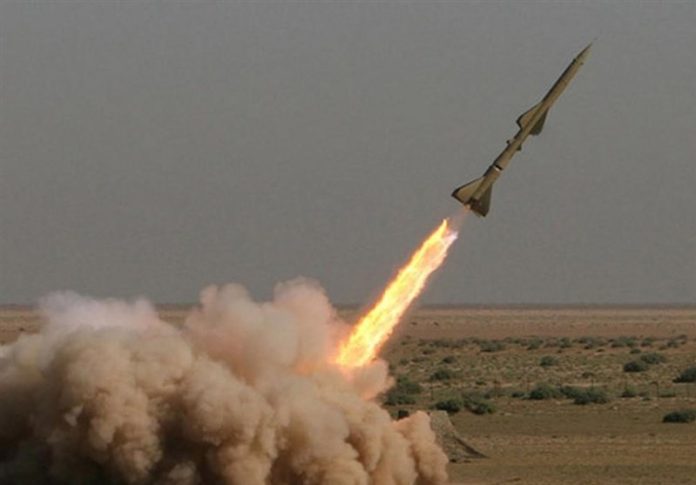
Report: Iran provides Yemen’s Ansarullah with anti-ship ballistic missile

The missile was developed by top Iranian commander Brigadier General Hassan Tehrani Moghaddam, known as the father of Iran’s missile technology, before his death in 2011.

Moreover, the Yemeni military forces now have the technology to manufacture the missile.

The Yemeni forces were already in possession of surface-to-surface and surface-to-air missiles.

The recent knowhow gives the Yemen’s military an edge in its confrontations with the Israeli-linked or Israeli-possessed ships in support of Palestine.

The ballistic missile, which has a liquid-fuel first stage and a solid-fuel second stage, has a range of 1,800 to 2,000 km.

Iranians join ‘All Eyes on Rafah’ campaign

The worldwide campaign kicked off to voice support for the Palestinians, especially amid the ongoing Israeli genocide in the Gazan city of Rafah with over 1.4 million population.

Like many other countries, a large number of Iranian artists, political activists and lay people, regardless of their political affiliations have expressed unanimous support for the Palestinians.

The campaign calls on the international community to take measures in order to stop Israel’s carnage that has so far killed over 36,000 Palestinians since October 7 last year, a vast majority of them women and children.