Monday, December 29, 2025
Home Blog Page 878

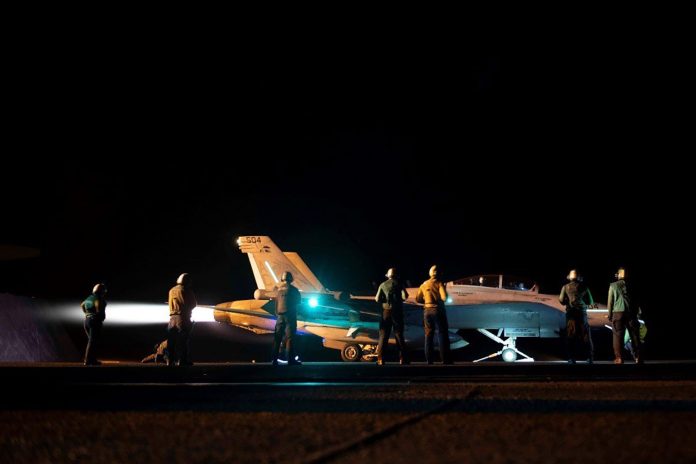
Yemen’s Houthi vows ‘very painful’ response to US-UK deadly strikes

US-led coalition Yemen

“Yemen will definitely respond to the American and British acts of aggression against our country and the American-British coalition will not be able to ward off our responses,” Ali al-Qahoum, a member of the political bureau of Yemen’s Ansarullah resistance movement, told Lebanon’s al-Mayadeen television.

“The Americans and Britons must have understood how powerful Yemeni strikes will be. Our ballistic missiles can target desired targets in the sea and in the occupied Palestinian territories,” he said.

Qahoum suggested that the US, as the top ally of Israel and supporter of the regime’s expansion of an ongoing invasion of the Gaza Strip, had no interest in a de-escalation in the region.

“If the United States does not seek to expand the scope of the war, it should then end its support for the invasion of Gaza and its siege. Yemeni attacks will otherwise continue and its scope will also expand,” Qahoum pointed out.

Nasruddin Amer, another member of the political bureau of Ansarallah movement, also said Yemeni and Palestinian nations will definitely emerge triumphant and achieve victory.

“This is a divine promise and it will definitely come true. Even if the whole world attacks Sana’a, we will never abandon Gaza,” he pointed out.

The remarks came hours after Yemen’s official Saba news agency, citing a security source speaking on condition of anonymity, reported that a US-British airstrike hit the radio station building in the al-Hawak district of Yemen’s strategic western province of Hudaydah early on Friday.

The source noted that two people were killed and ten others injured as a result.

US and British forces also conducted strikes against the communications network in an area of the Hayfan district in Yemen’s southwestern province of Ta’izz, and on several buildings in the capital province of Sana’a.

Yemen’s al-Masirah television channel said 16 people were killed and tens of others were wounded in the strikes.

The Yemeni Armed Forces have staged numerous pro-Palestinian strikes since October 7, when the Israeli regime began the Gaza war.

American and British warships have been carrying out attacks against the Arab Peninsula nation to force Yemen to stop its operations against Israeli vessels or those heading towards the ports lying in the occupied Palestinian territories.

At least 36,224 Palestinians have been killed and 81,777 others wounded in the brutal Israeli military onslaught that was launched following Al-Aqsa Storm, a retaliatory operation staged by Gaza’s resistance groups.

The US has been the main supporter of Israel, providing it with munitions and political support in its brutal war on Gaza. Washington has also used its veto power to protect Israel against UN resolutions.

US allows Ukraine use its weapons against targets in Russia

Russia Ukraine War

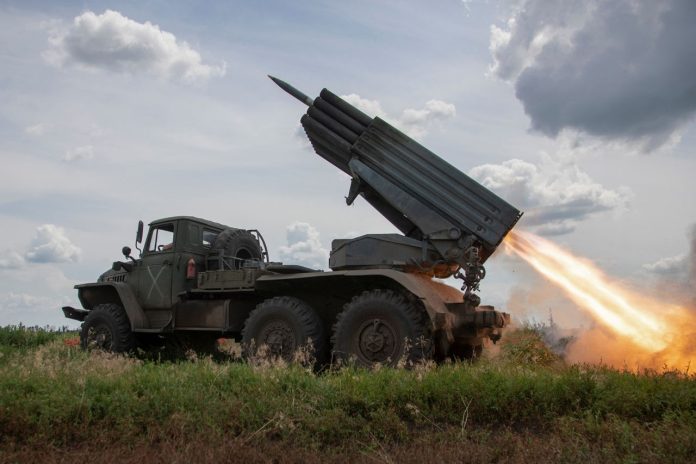
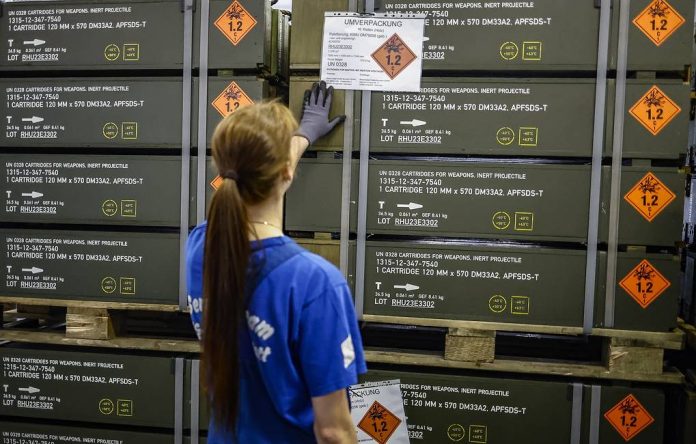
“The President recently directed his team to ensure that Ukraine is able to use US-supplied weapons for counter-fire purposes in the Kharkov region so Ukraine can hit back against Russian forces that are attacking them or preparing to attack them,” the official said.

“Our policy with respect to prohibiting the use of ATACMS or long range strikes inside of Russia has not changed,” he added.

The Politico newspaper reported on Thursday, citing four unnamed individuals including two US officials, that Biden gave the Kiev government a secret permission to use US-supplied weaponry for attacking targets in the Russian territory. According to the report, the permission applies to Russian regions that border Ukraine’s northeastern region of Kharkov.

In an interview with the Economist, NATO Secretary General Jens Stoltenberg suggested NATO allies should reconsider whether Ukraine could use Western-supplied weapons to carry out strikes on military facilities inside Russia’s internationally recognized borders. However, Stoltenberg said at a session of the NATO Parliamentary Assembly that there should be no NATO troops on the ground in Ukraine because otherwise, it would be difficult to keep the bloc out of the conflict.

In late May, Russian President Vladimir Putin stated that when speaking about strikes inside Russia, representatives of NATO countries, “should be aware of what they are playing with”.

According to Putin, Russia is closely monitoring such a discussion. Once Ukraine’s military uses long-range weapons, Moscow will once again have to decide on ‘a sanitary zone’, Putin added.

UN General Assembly honors late Iran President Raisi

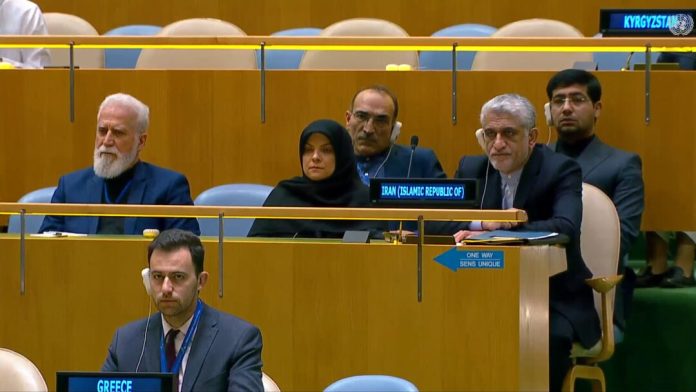
The session, attended by representatives from various countries and organizations, paid tribute to the significant contributions of the late Iranian officials.

In his opening remarks, the President of the UN General Assembly, Dennis Francis, expressed condolences to Iran, stating, “We have gathered today to extend our deepest sympathies to Iran following the passing of President Raisi.” 

He also praised the diplomatic skills of the late Iranian Foreign Minister, describing them as remarkable. 

The representative of Haiti, speaking on behalf of Latin American and Caribbean nations, noted, “The death of the President of Iran was a shock to the international community.” 

Also the Non-Aligned Movement’s representative highlighted Iran’s pivotal role in promoting cooperation among developing countries during the tenures of Raisi and Amirabdollahian. 

Addressing the session, Saeed Iravani, the Iranian Ambassador and Permanent Representative to the UN, described Raisi as a respected leader committed to fostering good neighborly relations and prioritizing global diplomatic ties during his exceptional presidency. 

Iravani also lauded late Foreign Minister Amirabdollahian as a distinguished diplomat known for his mutual respect in both international and regional arenas.

Iran acting president meets Syria’s Assad in Tehran

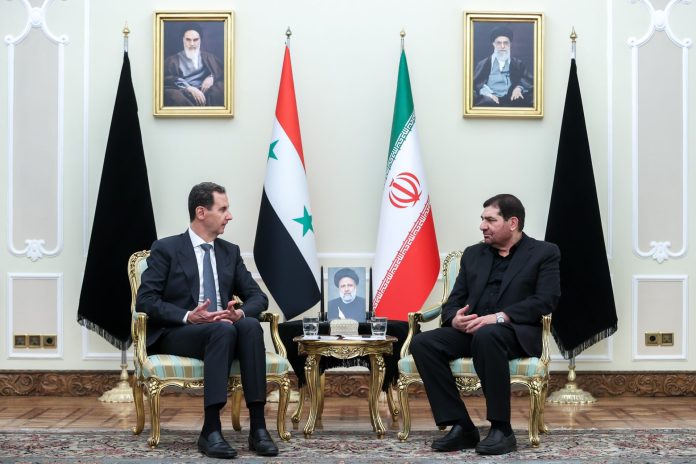
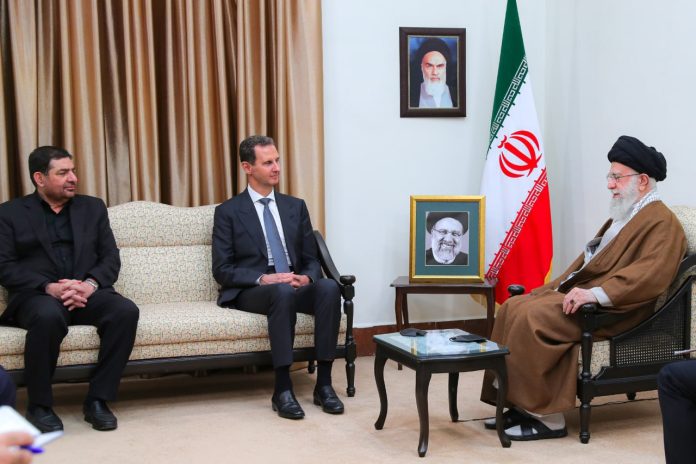
The two top officials met on Thursday morning as Mokhber hosted the Syrian president who visited Tehran to pay respect to the late President Ebrahim Raisi and his entourage martyred in a helicopter crash in northwest Iran on May 19.

Mokhber expressed gratitude to the Syrian president and government for their sympathy with the Iranian nation over the demise of President Raisi, Foreign Minister Hossein Amirabdollahian, and their companions.

Iran’s acting president said that the strengthening of relations between Iran and countries in the region and beyond was among the achievements of president Raisi and his foreign minister Amirabdollahian, adding that Iran’s extensive interactions with its neighbors, Islamic countries as well as like-minded nations have changed the equation of power in the world.

Mokhber also referred to a key strategy pursued by Iran and Syria in supporting the resistance front, saying that enemies’ plot to harm the resistance as well as Tehran-Damascus friendly relations has already been foiled, with the climax of their failure being visible in Gaza where the Zionist regime has failed to achieve its goals despite being backed by world powers.

President Assad, for his part, underscored that Iran-Syria relations are strategic and based on unalterable principles.

Pointing to the demise of President Raisi, he said that the Islamic Republic of Iran has become strong in the face of different crises over the past 44 years, adding that enemies’ plots or losses such as the president’s demise are not able to adversely affect the country.

Saudi textbooks remove Palestine from most maps: Report

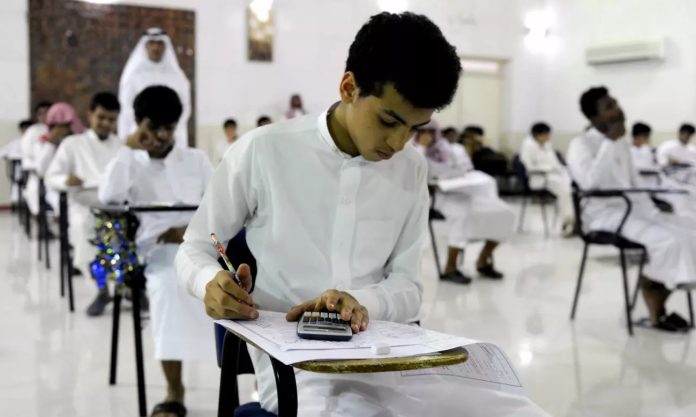
The study, conducted by the NGO Impact-se, tracks changes in Saudi school textbooks over the past five years, as reflected in the 2023-24 academic year.

It reviews 371 textbooks published between 2019 and 2024, and highlights content removed, altered or that which remained unchanged.

A social studies textbook for grade 12 defining Zionism as a racist movement was no longer taught from 2023, while another textbook still taught has removed the chapter about the Palestinian cause, the study revealed.

According to the study, the social studies textbooks for grades five and nine consistently don’t name Palestine or Israel on maps, which is an omission from the 2022 versions which only named Palestine on the map.

“Most maps removed the names of all countries not bordering Saudi Arabia, including Palestine, and in some cases all country names were removed,” the report added.

Likewise, two maps in a geography textbook for grades 10-12, which previously named Palestine, now do not display the names of any country bordering Saudi Arabia. The same omission took place in social studies textbooks for grades six and seven.

Islamic studies and geography textbooks for grades 10-12 also removed maps that previously displayed historic Palestine instead of Israel.

A reference to Israel as “the Zionist entity” in the 2021 social studies textbook for grades 10-12 was removed in the 2022 edition, and the entire textbook that included a lesson on Arab and Saudi support for the Palestinian cause was discontinued in 2023.

The report also documented some alterations in textbooks that now refer to Israel in a less hostile tone.

For example, the 2022 version of a high school social studies textbook replaced references to Israel as “the Zionist enemy” with “the Israeli occupation army”. The same textbook edited “the Israeli enemy” to “the Israeli occupation”, and “the Zionists” to “the Israelis”, or “the Israeli occupation army”.

Saudi Arabia has not formally recognised Israel since its creation in 1948, but there has been persistent speculation that the kingdom would normalise relations with the state as its Persian Gulf neighbours Bahrain and the United Arab Emirates have in recent years.

These rumours, however, were disrupted following the 7 October Hamas-led attack on Israel and the subsequent Israeli war on Gaza that has killed more than 36,000 Palestinians.

Saudi Arabia has been a strong opponent and critic of Israel’s onslaught.

The Saudi foreign ministry announced in February that no normalisation would take place without a ceasefire and progress toward Palestinian statehood.

Russia warns F-16 supplies to Ukraine would signal NATO ‘ready for anything’

F-16 jet fighter

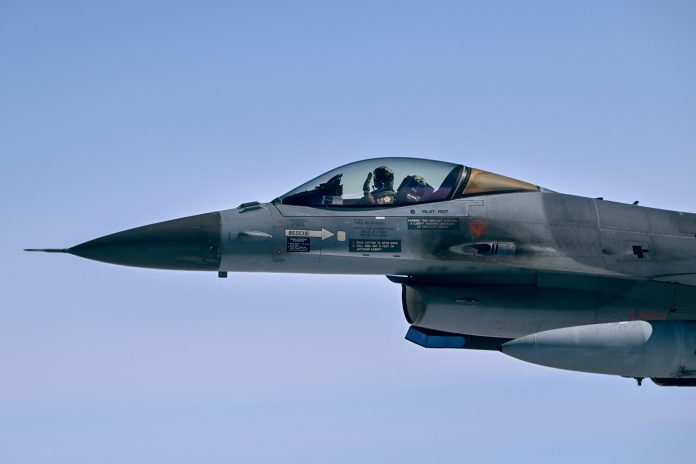
According to Lavrov, F-16 fighter jets have long been used as part of NATO’s joint nuclear missions. Russia has warned repeatedly that it would regard the jets sent to Ukraine as a nuclear threat because of their capacity to carry atomic weapons.

The fourth-generation fighter planes have been at the forefront of Kiev’s demands for military aid from the West in an effort to challenge Russia’s airpower advantage.

In an interview with Rossiya Segodna published on Thursday, Lavrov said that NATO was trying to signal it is “literally ready for anything” in Ukraine.

“We cannot help but consider the supply of these systems to the Kiev regime as a deliberate signaling action by NATO in the nuclear sphere,” he explained.

Belgium, Denmark, the Netherlands, and Norway have all pledged to supply Ukraine with US-made F-16 fighters, although none have so far been delivered. However, earlier in May, Danish Prime Minister Mette Frederiksen announced that the first planes would arrive in Ukraine “in the coming month”.

Ukrainian pilots are currently training on F-16s in Romania, where a NATO-backed flight school for this purpose was opened late last year.

Lavrov emphasized his view that furnishing Kiev with increasingly destructive weapons indicated the West’s reluctance to end the Ukraine conflict.

The foreign minister stated that F-16s would not change the situation on the battlefield, as they would be destroyed like other types of weapons supplied by NATO countries to Ukraine. In March, Russian President Vladimir Putin warned that the jets would be targeted by Russia at airfields in NATO countries if they operate from there.

Lavrov also cautioned the West against nuclear escalation, which could result in “catastrophic consequences”, adding that he hopes Russia’s recent nuclear exercise conducted jointly with its ally Belarus will “bring some sense” to NATO.

Putin ordered a drill earlier this month to test Russia’s ability to use non-strategic nuclear weapons. The move was described as a reaction to hostile statements by the West.

Iran’s Leader meets with Syrian pres., says resistance key to Syria’s unique identity

Ayatollah Khamenei noted that special position of Syria in the region is also due to this unique identity.

The Leader expressed gratitude for President Assad’s presence in Tehran to offer condolences to the Iranian nation, noting the significant role of late President Raisi in strengthening the Iran-Syria relations.

Ayatollah Khamenei assessed the enhancement of the Iran-Syria relations as crucial, given that both countries are pillars of the Axis of Resistance.

He recalled that Syria’s unique identity, which is resistance, was established during the era of the late Hafez al-Assad and the foundation of the “Front of Resistance and Steadfastness.”

The Leader emphasized the necessity of maintaining this identity, pointing out that Western powers and their regional proxies aimed to overthrow Syria’s political system and eliminate it from regional equations through war but failed.

Praising President Assad’s firm stance, Ayatollah Khamenei stated that everyone should witness the Syrian government’s special advantage, which is resistance.

He highlighted the political and economic pressures exerted by the US and Europe on Iran and Syria and stressed the need for increased and organized cooperation to overcome these challenges.

During the meeting, President Bashar al-Assad also extended condolences to the Leader, the government, and the people of Iran on the demise of late President Raisi and his companion.

Addressing Ayatollah Khamenei, he described the Iran-Syria relations as strategic, guided by the Leader’s directives.

President Assad also discussed the resistance in the region, stating that after more than 50 years, the resistance movement has advanced and become both a political and ideological approach.

He stressed that any retreat in the face of the West leads to their advancement, reiterating that the cost of resistance is less than the cost of compromise.

He noted that such a truth is now clear to the Syrian people, and the recent events in Gaza and the victories of the resistance have proven this to the people of the region, demonstrating that resistance is fundamental.

White House signals openness to letting Ukraine strike Russia with US weapons

Russia Ukraine War Weapons Arms

The move, if made, would come as European allies, lawmakers and Ukrainian officials exert pressure on the White House to lift the restrictions, and as Russia has made major advances on the battlefield. It also suggests that President Biden and his team are increasingly worried about Kyiv’s ability to fend off Russia’s attacks, especially its latest advance in Ukraine’s second-largest city of Kharkiv.

Secretary of State Antony Blinken signaled the possible change during a visit to Moldova when pressed by reporters. A “hallmark” of the Biden administration’s approach toward Ukraine since Russia launched its full-scale invasion two years ago “has been to adapt as the conditions have changed, as the battlefield has changed, as what Russia does has changed.”

“We’ve adapted and adjusted, too, and we’ll continue to do that,” he continued.

Shortly afterward, National Security Council spokesperson John Kirby, while stating that there’s “no change” in the current policy that says Ukraine can’t use U.S.-supplied weapons to strike inside Russian territory, also noted that America’s “support to Ukraine has evolved appropriately.”

Two other Biden administration officials cautioned that no final decision has been made and that Blinken and Kirby were describing a general trend of American support for Ukraine during the war — one of initial caution followed by permission. They were not necessarily guaranteeing a forthcoming shift.

The topic is “under consideration,” a U.S. official familiar with the issue said. Both were granted anonymity to speak about sensitive internal deliberations.

Kyiv hasn’t seen concrete movement on the matter from the Biden administration, according to a person close to Ukraine President Volodymyr Zelensky’s office. Zelenskyy, during a visit to Belgium on Tuesday, begged Western governments to “please give us permission” to use their weapons to strike targets in Russia’s sovereign territory.

The U.S. restrictions “significantly reduce the effectiveness of partners’ assistance and neutralize the efforts made,” according to an internal Ukrainian government document on Wednesday setting out talking points for Ukrainian officials, obtained by POLITICO.

Biden has faced mounting pressure at home to lift the restriction, including from Democrats, and foreign allies’ decisions to give Ukraine the go-ahead to use their transferred weapons on Russian soil have added to that pressure.

This month, U.K. Foreign Minister David Cameron said Kyiv could use British weapons to strike sovereign Russian territory. Then on Monday, NATO’s parliamentary assembly adopted a resolution calling on Western countries to allow Ukraine to use weapons to strike military targets inside Russia.

The issue gathered momentum on Tuesday, when French President Emmanuel Macron opened the door to Ukraine using donated weapons to “neutralize” Russian military sites.

“We’re not being escalatory by doing this,” Macron continued during a joint press conference alongside German Chancellor Olaf Scholz, arguing that Ukraine should be allowed to hit targets in Russian territory where missiles are being shot from. Scholz didn’t go as far but still signaled his openness to the idea, stating Ukraine’s use of Western weapons “must always be within the framework of international law.”

Also this week, NATO Secretary General Jens Stoltenberg stressed: “By having too many restrictions we are tying one hand of the Ukrainian armed forces on their back.”

The Biden administration has changed other Ukraine policies after allies have done so, namely sending long-range missiles after London and Paris delivered their versions to Kyiv.

Many top U.S. lawmakers are publicly supportive of the idea.

On Wednesday, 60 former officials and scholars sent Biden a letter, obtained by POLITICO, demanding that he lift the restriction because it could help Ukraine fend off the attack on Kharkiv and prevent other large-scale Russian offensives elsewhere.

“We must finally learn from Ukraine’s successes at calling out Russian bluster that it is not escalatory for Ukraine to defend itself. The past two years have shown that if we allow the U.S. to be held hostage to the Kremlin’s threats of escalation, Russia gains the upper hand and Ukrainian civilians pay the price,” wrote the group.

The letter’s signatories include retired Gen. Philip Breedlove, the former top U.S. commander in Europe, and multiple former American ambassadors to Ukraine.

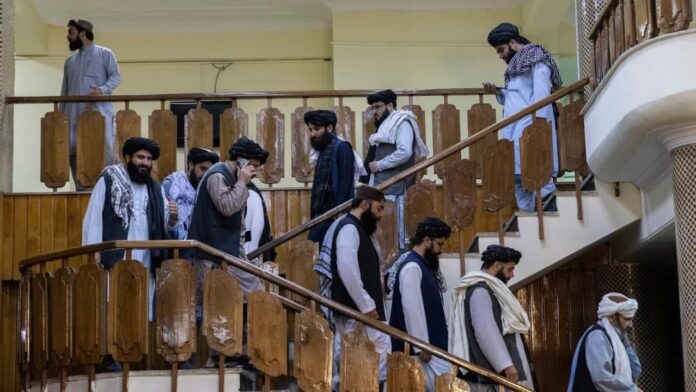
Taliban praise Russia stance on relations with Afghanistan

Taliban

“Recently, Russian officials’ words have been positive. This shows that they want to keep interaction with the Islamic Emirate of Afghanistan (the name of the state used by the Taliban),” he stated.

Mujahid added that the Taliban government has “extremely positive diplomatic and trading relations” with Russia.

“With more trust and interaction, we will remove some obstacle [in relations]. The Islamic Emirate of Afghanistan aims to develop good relations with countries, including Russia,” the Afghan official pointed out.

On May 27, Zamir Kabulov, the director of the Russian Foreign Ministry’s Second Asia Department, told TASS that the Russian Foreign Ministry and Justice Ministry had reported to President Vladimir Putin the Taliban could be removed from the list of terrorist organizations. Russian Foreign Minister Sergey Lavrov said that the initiative “reflects the awareness of reality”.

On May 28, Putin noted that it was necessary to build relations with the Taliban because they controlled Afghanistan and were the current authorities in that country.

Russian Security Council Deputy Chairman Dmitry Medvedev told TASS on Tuesday that Moscow was close to establishing full-fledged relations with the Taliban government. He emphasized that a great deal had changed in recent years: whereas earlier the Taliban were considered terrorist, now the US authorities can be called terrorists’ accomplices.

Zakir Jalali, an adviser to the Taliban foreign minister, noted on May 28 that Russia’s possible removal of the movement from the list of terrorist organizations would dismantle obstacles to formal relations between Moscow and Kabul, which had already made remarkable progress since 2021. Jalali confirmed that the Taliban have been invited to the St. Petersburg International Economic Forum in June.

Hamas says to express ‘flexibility’ over Gaza future after war

Gaza War

The source, speaking on condition of anonymity due to the sensitive nature of the topic, also said that Hamas felt the balance of power was “tilting” in its favour as Israel grapples with mounting political divisions over the future of post-war Gaza.

“Hamas is confident that it is deeply rooted in the region and nobody can bypass it,” the source added.

“Nevertheless, Hamas has the political flexibility to accept several formulas… for the future of Gaza. [It is] open to a nationally agreed formula for the good of its people.”

“[But] any settlement that has a chance of being agreed upon nationally should not be imposed by America or Israel. They can not bargain with a weak Palestinian state,” the source continued.

Talks on a ceasefire were due to resume this week, but Hamas told international mediators on Tuesday that it was ending its participation following Sunday’s “massacre” in Rafah by Israel.

At least 45 people were killed and dozens more wounded, most of them women and children, when Israel struck a camp housing displaced Palestinians in the Tel al-Sultan neighbourhood of western Rafah.

The air strikes, which resulted in some Palestinians being burned alive, came just two days after the International Court of Justice (ICJ) ordered Israel to “immediately halt its military offensive in Rafah”.

“Hamas does not have to sit down for negotiations while the Israelis continue killing,” a second source close to the organisation told MEE.

“Continuing negotiations while massacres [still happen] provide cover for the massacres and even led to the killing of an Egyptian soldier. This will not happen again.”

The source stated that Hamas would only resume negotiations if Israel stopped the massacres and left Rafah. The Rafah crossing must return to its previous administration, he added, referring to the pre-7 October arrangement.

Speaking on Saturday before the strikes on the refugee camps, the first source said negotiations had been effectively deadlocked, after the failure of the last round in Cairo and Doha.

He noted that negotiations following Israel’s assault on Rafah were now “at an impasse” and the US needed to address issues with Israel over a permanent ceasefire.

“For Hamas, it is clear that the US has to deal with this negotiation. They [Israel] should respect the document that Hamas accepted, without playing silly games and trying to bypass Hamas’s basic demands.”

Earlier this month, Hamas publicly declared its acceptance of a ceasefire deal put forward by mediators Qatar and Egypt, but Israel said the proposal fell way short of its demands.

After the collapse of the talks in Cairo, US sources blamed Egypt for amending the offer to Hamas in its favour. The claim was greeted with fury in Cairo.

The Palestinian source backed Egypt’s version of events. He said that Egypt had not amended the document and that the US was fully aware of any and all amendments, as CIA chief Bill Burns was present in both Cairo and Doha where the document was being discussed.

“Hamas announced its amendments and they were accepted by the negotiators,” the source continued, adding, “The American side were informed and accepted the document. It’s not the mistake of Egypt.

“The Israelis backed away from the deal and the US did not force them to accept something that would have been in their favour.”

As the war in Gaza grinds on for an eighth month, Israeli Prime Minister Benjamin Netanyahu has vowed that Israel will maintain security control over Gaza and has been criticised by the US for failing to come up with a credible post-war plan for who governs the shattered enclave.

When he last spoke about the issue in February, he suggested replacing Hamas with local representatives “who are not affiliated with terrorist countries or groups, and are not financially supported by them”.

In reality, the attempt to replace a central government with a network of clan leaders had already run into the ground.

Weeks earlier, tribal leaders in Gaza denounced Israeli army proposals to divide Gaza into areas ruled by tribes or clans rather than a single political entity.

A month later reports emerged that Israel was considering installing Majed Faraj, the head of the PA’s intelligence apparatus, as the administrator of Gaza. But that too failed. An attempt by Faraj to infiltrate a group of armed men posing as protection to an Egyptian aid convoy was rumbled and the group was arrested.

Since then, Hamas has denounced manoeuvres undertaken by the PA, including what it called the “unilateral” appointment of Mohammad Mustafa as prime minister. Hamas announced the decision was taken without consulting it, despite the group taking part in a meeting in Moscow attended by Fatah to end divisions.

Since assuming office, Mustafa has outlined in a mission statement that he wants to reform the PA, reunify the West Bank and Gaza, and oversee the enclave’s reconstruction.

The Palestinian source said despite Netanyahu’s declared aim of destroying Hamas, Israel was now recalculating its position on how to deal with the day-after scenario given that Hamas could not be dislodged.

Militarily, the armed wing of Hamas, the Qassam Brigades, have shown their ability to re-emerge in areas cleared by the Israelis and engage soldiers in close-quarter combat, an issue that has been noted with some frustration by top US generals.

Last week, General Charles Brown, the chairman of the joint chiefs of staff, criticised Israel’s strategy in Gaza in a rare public rebuke.

“Not only do you have to actually go in and clear out whatever adversary you are up against, you have to go in, hold the territory, and then you’ve got to stabilise it,” Brown stated, referencing that monumental task Israeli forces face in Gaza.

Only a few days later Hamas claimed to have captured a group of Israeli soldiers in an ambush in a tunnel complex amid heavy fighting in Jabalia refugee camp in the north, which the Israeli army claimed to have cleared in December.

The claim was denied by Israel, but the Qassam Brigades later released a video showing fighters pulling a man inside a tunnel who appeared to be unconscious. He was pulled alongside military gear.

The video separately showed three semi-automatic rifles and other military gear that Hamas said were taken from the captured Israelis.

A third source with knowledge of the situation on the ground in Gaza told MEE that they estimated only 20 percent of the tunnel network had been destroyed by Israel and that the subterranean complex continued to provide shelter, transport, and a venue for weapons and missile manufacturing.

Apart from recycling high explosives from Israeli bombs and missiles that failed to go off, Hamas seized a substantial quantity of small arms and equipment during the recent Israeli offensive in Khan Younis. After each day of fighting, units manned by young reservists would reportedly abandon their positions at night leaving much of their equipment behind, the source added.

The Palestinian source with knowledge of Hamas’ policies said the group was confident about its support base in Gaza, and said despite the widespread destruction, there were greater divisions in Israel over the direction of the war.

“Despite the imbalance of power between Hamas and Israel, Hamas has learned the lessons of previous wars,” the source said.

“The image of resistance [Palestinian groups such as Hamas] among our people in Gaza is that the resistance is fighting on their behalf, whilst the Israelis think that Netanyahu is fighting for his personal interest.”

The source added that despite Israel throwing everything behind its war effort in Gaza, the strategy had failed and so too would the assault on Rafah.

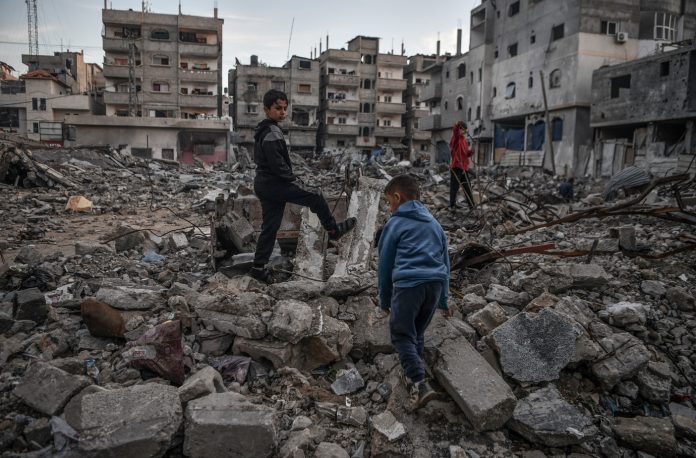
The Israeli army’s eight-month aerial and ground offensive has turned much of the territory that is home to 2.3 million Palestinians into an uninhabitable hellscape.

Whole neighbourhoods have been erased. Homes, schools, and hospitals have been decimated by air strikes and scorched by tank fire. Some buildings are still standing, but most are battered shells.

Nearly the entire population is reported to have fled their homes and those who remained in northern Gaza are on the verge of famine.

“The carpet bombing failed. Creating chaos [in a bid] to turn the people against Hamas failed and using starvation as a means to crush the will of the people failed,” the source said, adding, “They thought eight months ago that Gaza would be easy to crush. It has no neighbours to help it. It has no mountains to protect the people. But Gaza has steadfastness.”