Monday, December 29, 2025
Home Blog Page 87

Iran starts test flights of home-made cargo plane

Iran transport plane Simorgh

Simorgh’s test flights began in an airfield in the city of Shahin Shahr in central Iran on Tuesday after a ceremony attended by deputy heads of Iran’s ministries of defense and transportation.

The plane has to carry out 100 hours of test flights in various circumstances to get a final permit to join Iran’s aviation fleet, according to a statement from Iran’s Civil Aviation Organization (CAA).

CAA chief Hossein Pourfarzaneh said on Tuesday that Simorgh, whose indigenization process has taken more than 15 years, ranks Iran among fewer than 20 countries in the world that have the capability to design and manufacture aircraft.

Simorgh, named after a mythical bird in Persian mythology and literature, is equipped with two 2,500-horsepower engines that can carry 6 metric tons (mt) of cargo over a distance of 3,900 kilometers, while its maximum takeoff weight is 21.5 mt.

The plane carried out a fast-taxi test in May 2022, a year before it conducted its maiden flight.

Since then, the Iranian defense ministry, which is in charge of manufacturing Simorgh, has been trying to receive a test certificate for the plane from the CAA, a process that has involved obtaining a type certificate, a document that signifies the plane’s airworthiness.

Experts say Simorgh is a modified version of IrAn-140, an Iranian-Ukrainian joint project which is itself based Antonov An-140. However, former CAA officials have disputed that view, saying it is quite a different plane as it enjoys a modified engine and fuselage.

Simorgh has been described as an agile, light, and quick plane with a high cargo carriage capacity that is compatible with Iran’s weather conditions, making it a perfect choice for critical services like medical flights.

Authorities say the aircraft will boost the capacity of Iranian ground and navy forces to transport troops or equipment between their bases across the country.

They also believe that Simorgh can join Iran’s fleet of short-haul passenger jets in the future.

Reports in recent years have pointed to major achievements in Iran’s aircraft production and maintenance industry.

That has come against the backdrop of sanctions imposed on Iran, which prevent airlines in the country from purchasing new planes or aircraft parts.


Trump says ‘timing’ didn’t work out To meet N. Korea’s leader

Trump said on Wednesday he would aim to “straighten out” tensions between North Korea and South Korea as he met Seoul’s President Lee Jae Myung for a summit.

“I know Kim Jong Un very well… we really weren’t able to work out, timing,” Trump added.

Trump met Kim three times during his previous term as president but failed to reach accord on ending Pyongyang’s nuclear program because of differences on lifting sanctions and over how to scrap the North’s nuclear facilities.

US govt. shutdown could threaten American nuclear weapons production: CNN

Hundreds of thousands of federal employees have been furloughed after the US government shut down on October 1. The Democrats have reportedly said they will not greenlight a new spending bill in the Senate unless the Republicans fulfill all their demands, including extending subsidies under the Affordable Care Act.

The National Nuclear Security Administration (NNSA), which makes nuclear weapons and safeguards the existing stockpile, had asked the White House to take money from previously passed spending bills to keep the agency running during the shutdown, but the request has not been fulfilled, CNN reported on Monday, citing informed sources.

Last week, the NNSA announced it had to furlough most of its full-time staff, some 1,400 people, engaged in supervising the development of weapons and nuclear non-proliferation activities. The administration of US President Donald Trump was only able to keep the NNSA’s key weapons labs and plants operating by using contractors.

According to CNN, NNSA officials fear the shutdown could significantly undermine the output of nuclear weapons in the US. Even a brief pause in production could lead to lengthy delays as safely stopping work on nuclear materials is a complicated process that takes weeks, the sources explained.

The report comes on top of existing concerns about the depletion of US arsenals of conventional weapons.

Trump earlier complained that the administration of his predecessor, Joe Biden, had “emptied out our whole country” by giving weapons to Ukraine during the conflict with Russia.


Iran offers online education to Afghan students who returned home

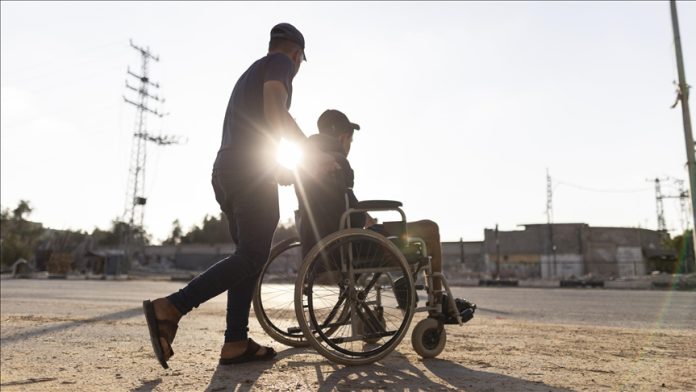
Nader Yarahmadi, head of the Bureau for Foreign Nationals and Immigrants’ Affairs at the Ministry of Interior, said that around 280,000 Afghan students left Iran after the enforcement of new migration regulations earlier this year.

“We are fully prepared to offer distance education to those who have returned to Afghanistan and can even provide our registration platform free of charge,” he stated, adding that families would only need to cover internet costs.

Yarahmadi noted that about 300,000 legally registered Afghan students have already enrolled for the new academic year in Iran.

He attributed the lack of response to the distance-learning initiative to families’ preference to keep their children studying in Iran rather than returning home.

He emphasized that Iran remains committed to ensuring that Afghan children who have returned to their country do not miss out on education and is ready to cooperate with private and international organizations to support the program.

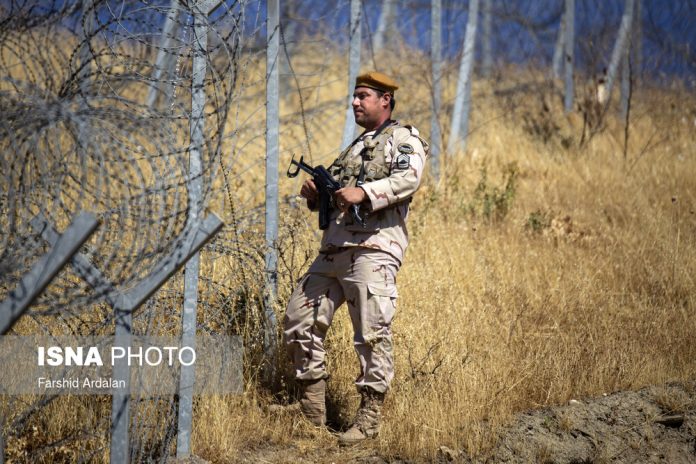
Iranian forces eliminate Jaish al-Adl terrorist cell behind attack in southeast

Iran Police

According to local authorities on Wednesday, the operation was described as “swift and complex,” leading to the capture of several members of the group in their hideout.

The detainees confessed to receiving training in Pakistan and participating in the ambush that targeted two police patrols returning from a mission.

Officials said the attackers planted an explosive trap and opened fire on the vehicles, resulting in the deaths of ten officers, including Colonel Nematollah Nouri, the Goharkuh station commander.

One arrested member, identified as Younes Dahmarde, said the nine-member team used two vehicles to carry out the assault. Investigators confirmed that the group had been in contact with handlers abroad via encrypted communications.

The operation’s success, officials added, was made possible by intelligence provided by local residents, underscoring the region’s determination to resist terrorist activity and maintain security.

China: Xi, Trump to have ‘in depth’ negotiations on ‘major issues’

Trump Xi

Trump has stressed he expected their first face-to-face meeting of his second term to result in the United States lowering tariffs imposed on China in relation to fentanyl.

Beijing confirmed the face-to-face meeting on the sidelines of a summit of Asia-Pacific Economic Cooperation (APEC), which is taking place in the city of Gyeongju.

The Chinese foreign ministry announced that the talks would take place in Busan, a short flight from Gyeongju.

“During this meeting, the two leaders will have in depth communication on strategic and long-term issues concerning China-US relations, as well as major issues of mutual concern,” foreign ministry spokesman Guo Jiakun told a regular news conference on Wednesday.

“We are willing to work together with the US side to ensure that this meeting yields positive outcomes, provides new guidance, and injects new momentum into the stable development of China-US relations,” Guo added.

The US president stated Wednesday he was not sure whether he would discuss the sensitive topic of self-ruling Taiwan during his meeting with Xi.

“I don’t know that we’ll even speak about Taiwan. I’m not sure. He may want to ask about it. There’s not that much to ask about. Taiwan is Taiwan,” Trump told reporters aboard Air Force One.

The American leader added he expected a “lot of problems” to be solved in his upcoming meeting with Chinese leader Xi Jinping.

“I think we’re going to have a great meeting with President Xi of China, and a lot of problems are going to be solved,” Trump told reporters.

Iranian deputy FM urges use of cross-border provincial capacities in talks with Herat governor

According to Iran’s Foreign Ministry, Gharibabadi described his meetings in Kabul as “constructive and forward-looking,” noting that the policy of good neighborliness holds a special place in both countries’ foreign relations.

He called for strengthening collaboration based on shared religious and cultural ties and addressing outstanding bilateral issues through provincial-level initiatives.

Governor Islamjar welcomed the visit and highlighted growing economic cooperation between the two nations, citing joint projects such as the Khaf-Herat railway.

He expressed Afghanistan’s interest in extending the railway to Mazar-e-Sharif and proposed joint ventures in cross-border agriculture, whereby Afghan farmers could cultivate water-intensive crops under Iranian standards and deliver produce at the border.

Islamjar also invited Iranian cooperation in developing industrial livestock projects to help supply a significant portion of Iran’s meat demand.
Gharibabadi and his delegation later toured border areas to review ongoing issues and cooperation opportunities.

Persepolis sinking by 30 centimeters annually amid 5,000 illegal wells

Experts warn that land subsidence in the region, driven by the over-extraction of groundwater, has reached critical levels.

Behnaz Bazoubandi, a cultural heritage activist, said around 5,000 illegal wells operate in the Marvdasht Plain, many of which continue to pump water despite closure orders.

“Every cultivation season, massive amounts of groundwater are drawn from around Persepolis, endangering the site’s stability,” she said.

Bazoubandi cautioned that continued subsidence could cause cracks in the western section of the Apadana Palace and other monuments. Unregulated urban expansion in the protected zone also threatens the area, she added.

Ali Nik-Ahd, Director of the Geological Survey of Southern Iran, emphasized that subsidence is not a natural phenomenon but a result of human mismanagement.

He noted that data from radar imaging software “GAMMA” shows land in Marvdasht sinking between two and 30 centimeters annually. Experts urge immediate groundwater management and aquifer recharge to prevent irreversible damage to Iran’s ancient heritage.

Trump supports renewed Israeli attacks in Gaza

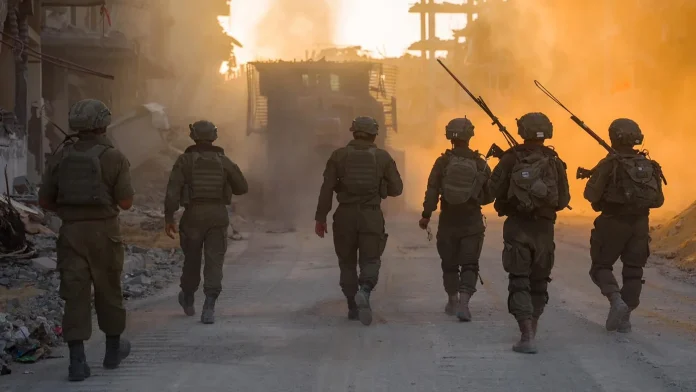
Israeli Prime Minister Benjamin Netanyahu ordered “immediate and powerful strikes” on Tuesday evening, citing Hamas attacks on Israeli soldiers still holding parts of the Palestinian enclave. Dozens of Palestinians were killed in the action, according to Gaza’s Hamas-run government.

“As I understand it, they took out an Israeli soldier,” Trump told reporters aboard Air Force One on Wednesday en route from Japan to South Korea.

“They killed an Israeli soldier. So the Israelis hit back – and they should hit back. When that happens, they should hit back,” he added.

Trump argued that “nothing is going to jeopardize” the ceasefire. He insisted that Hamas was “a very small part of peace in the Middle East, and they have to behave,” otherwise “their lives will be terminated.”

US Vice President J.D. Vance earlier said the ceasefire was holding despite “little skirmishes here and there.”

Axios cited unnamed senior US officials as saying the White House had urged Israel not to take “radical measures” that could collapse the truce.

According to the Israel Defense Forces (IDF), last week two of its soldiers were attacked and killed by Hamas in Rafah, southern Gaza, and more soldiers came under fire in the same area on Tuesday. Hamas denied involvement in both incidents, accusing Israel of “a blatant ceasefire violation.”

The Palestinian armed group warned that the escalation “will lead to a delay” in recovering and returning the bodies of the 13 remaining Israeli hostages in Gaza. Israeli officials earlier accused Hamas of dragging its feet in handing over all the remains, as agreed under the ceasefire mediated by the US, Egypt, Qatar, and Türkiye, which took effect on October 10.


Iran-Pakistan relations can evolve into strategic partnership: Security chief

Speaking in Tehran during a Tuesday meeting with Pakistan’s Interior Minister Syed Mohsin Naqvi, Ali Larijani stressed the geopolitical importance of both countries in regional equations.

He pointed to the recent strategic agreement between Pakistan and Saudi Arabia, describing it as “a wise and positive step in the face of common threats.”

Larijani said today’s regional environment is marked by shared challenges and adversaries, requiring “tangible, coordinated, and comprehensive action among Muslim nations.”

Larijani, who also serves as an advisor to Leader of the Islamic Revolution Ayatollah Seyyed Ali Khamenei, emphasized the need to deepen cooperation in security, defense, political, and especially economic fields.

He also thanked the Pakistani government for its stance during the 12‑day US-Israeli aggression of June against Iran, calling it evidence of a shared understanding of the region’s strategic realities.

For his part, Naqvi highlighted the deep historical, cultural, and security ties between the two nations.

He described Iran as a “friend, brother, and partner” for Pakistan, adding that Islamabad seeks a strong, stable, and progressive Iran.

At the conclusion of the talks, both sides reviewed the latest regional developments and underscored the importance of enhancing strategic coordination and relying on political and diplomatic solutions to address regional and security issues.

Expanding trade exchanges and strengthening economic cooperation were also among the key topics discussed.