Wednesday, January 14, 2026
Home Blog Page 865

Egypt revokes licenses for several tourist agencies following Hajj deaths

Hajj

AFP cited an Arab diplomat as saying that more than 658 of the total who died in Mecca were from Egypt, with an estimated 630 of them unregistered pilgrims.

Pilgrims who are not registered usually travel with a tourist or work visa, paying significantly lower fees to travel agencies, and do not benefit from Hajj packages that have become increasingly costly.

Egyptian Prime Minister Moustafa Madbouli ordered the withdrawal of the “licences of these companies, to refer their managers to the public prosecutor and to impose a fine on them for the benefit of the families of the pilgrims who died because of them”, his office indicated in a statement on Saturday.

Around 1.8 million pilgrims performed the Hajj this year, of whom 1.6 million were from abroad, according to Saudi authorities.

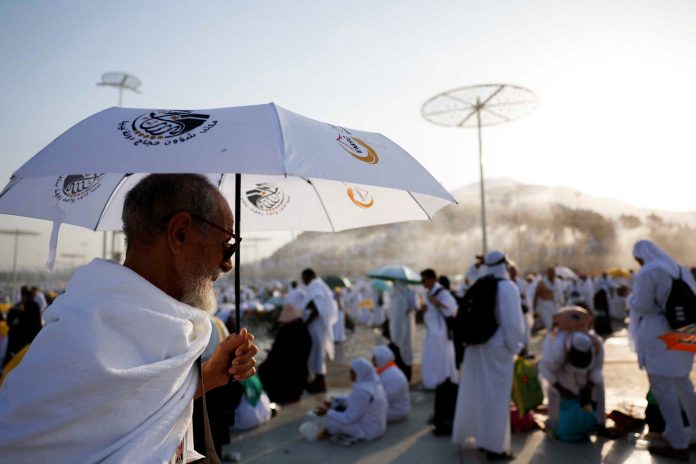
On the Day of Arafat, pilgrims spent the whole day near a hill known as Mount Arafat (the Mount of Mercy), where the Prophet Muhammad (PBUH) delivered his final sermon.

Saudi officials advised pilgrims to use umbrellas, stay hydrated and avoid exposure to the sun during the hottest hours.

The annual pilgrimage, which is one of the five pillars of Islam, is increasingly being affected by climate change. A recent Saudi study found that temperatures in areas where Hajj rituals are performed are rising by 0.4 degrees celsius each decade.

A senior Saudi official on Friday defended the kingdom’s handling of the pilgrimage, which officially ended on Wednesday.

“The state did not fail, but there was an error of judgement on the part of people who did not measure the risks incurred,” the official told AFP.

“This happened against a backdrop of difficult weather conditions and very severe temperatures.”
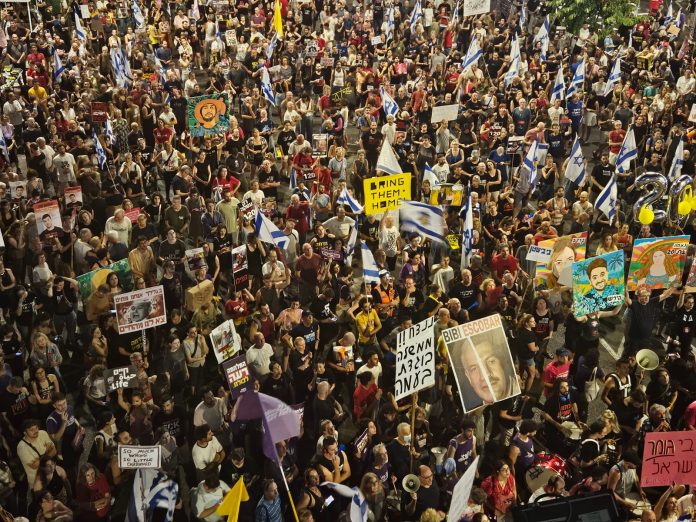
Tens of Thousands rally against Netanyahu amid Gaza war

Israel Protest

Large protests have occurred in the city on a weekly basis over Netanyahu’s handling of the nearly nine-month-old war in Gaza started by Hamas’s October 7 attack on southern Israel.

Many protesters held signs reading “Crime Minister” and “Stop the War” as people poured into the biggest Israeli city’s main thoroughfare.

“I am here because I am afraid of the future of my grandchild. There will be no future for them if we don’t go out and get rid of the horrible government,” said contractor Shai Erel, 66.

“All of the rats in the Knesset … I wouldn’t let any one of them be a guard of a kindergarten.”

Antigovernment protest organisation Hofshi Israel estimated more than 150,000 people attended the rally, calling it the biggest since Israel’s war on Gaza.

Some demonstrators lay on the ground covered in red paint in the city’s Democracy Square to protest what they say is the death of democracy under Netanyahu.

In an address to the crowd, a former head of Israel’s domestic Shin Bet security agency, Yuval Diskin, condemned Netanyahu as Israel’s “worst prime minister”.

Many are frustrated with Israel’s right-wing coalition, which includes Security Minister Itamar Ben-Gvir and other far-right ultranationalists, accusing it of prolonging the war in Gaza and putting Israel’s security and captives at risk.

Yoram, a 50-year-old tour guide who declined to give his last name, stated he was attending every weekly protest as Israel needed elections “yesterday” because of Netanyahu.

“I really hope the government collapses. If we go to the original date of elections in 2026, it is not going to be a democratic election.”

A separate Tel Aviv rally on Saturday night drew thousands of relatives and supporters of the captives.

Palestinian death toll surges past 37,500

Gaza War

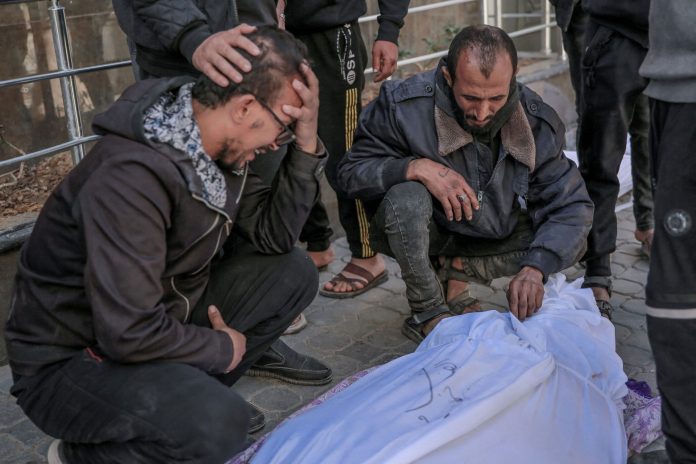
A ministry statement said that 85,911 other people have also been injured in the onslaught, most of them – like those killed – women and children.

“Israeli attacks killed 101 people and injured 169 others in the last 24 hours alone,” the statement read.

Many people are still trapped under rubble from over eight months of Israeli attacks and on the roads as rescuers are unable to reach them, it added.

Flouting a United Nations Security Council resolution demanding an immediate cease-fire, Israel has faced international condemnation amid its continued brutal offensive on Gaza since an Oct. 7 attack by Hamas.

More than eight months into the Israeli war, vast tracts of Gaza lie in ruins amid a crippling blockade of food, clean water and medicine.

Israel is accused of genocide at the International Court of Justice, whose latest ruling ordered Tel Aviv to immediately halt its operation in Rafah, where more than 1 million Palestinians had sought refuge from the war before it was invaded in early May.

Firefighters struggling to put out huge fire in Iran’s Lorestan Province

Iran Firefighters

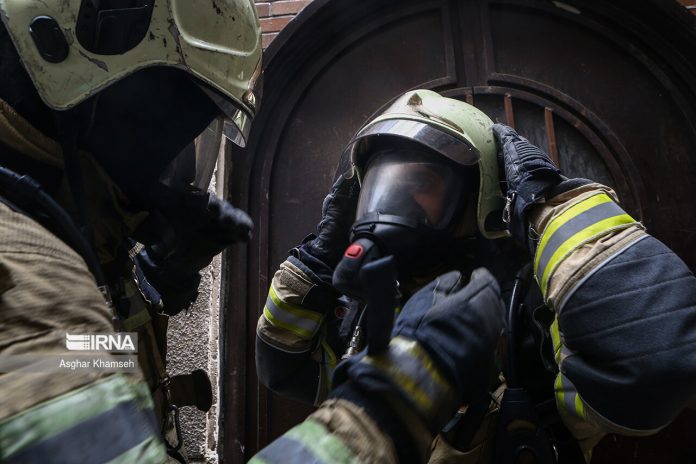
Mehdi Pazoki added that high temperatures of over 50° Celsius and the rugged terrain of the Seyed Soheileddin and Khers region in Poldokhtar have made it difficult for the firefighters to extinguish the blaze.

He also said two helicopters have been dispatched and eight sorties of flights have been carried out in the area so far to dispatch firefighters to put the fire out.

There are no reports of casualties from the blaze thus far.

Iran’s Leader calls on presidential candidates to avoid comments pleasing enemies

Ayatollah Khamenei

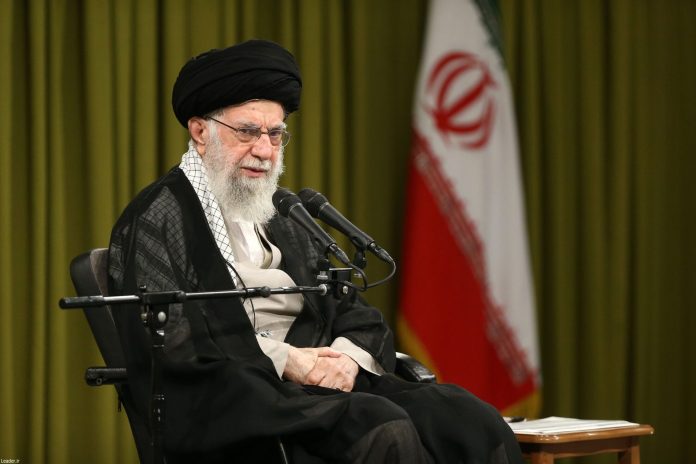
Ayatollah Khamenei made the remarks on Saturday morning in a meeting with the country’s judicial officials, after Iranians watched overnight the third of five debates planned in the days before the vote to replace President Ehrahim Raisi who lost his life in a helicopter crash.

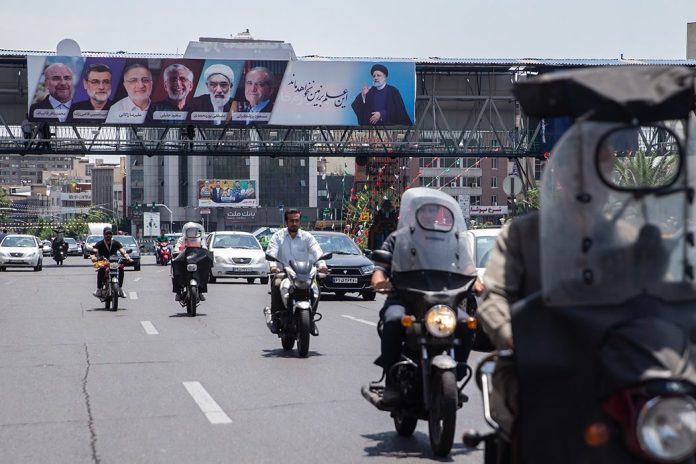
He hailed televised debates among presidential candidates ahead of Iran’s June 28 election, stressing they give people familiarity with the opinions of the six contenders.

Ayatollah Khamenei, however, cautioned the candidates against making statements that could delight Iran’s enemies.

“My advice is that these discussions that the candidates have together on TV or the statements they make either in public or individually in order to overcome the rival should not contain anything that makes our enemies happy,” the Leader stated.

“The words that are uttered should not please the enemy of the country, the nation and the system. This is not permissible,” he added.

“The assumption is that all the candidates love Iran and the Islamic Republic, since they want to become president in this system and to serve the people. Therefore, they should not speak in such a way that pleases the enemy.”

In their third debate, the candidates presented their blueprints on the country’s cultural and social issues. It followed the first held on Monday and the second staged on Thursday, which centered on economic and socio-economic issues respectively.

Poll: 45.5% of eligible voters will vote in Iran’s Friday presidential election

Iran Presidential Election

According to the survey, 21.4 percent of the Iranians said they would not vote at all.

Meantime, 20.7 percent of those polled said they would vote for Mohammad Baqer Qalibaf, the current parliament speaker, 18.9 percent for Masoud Pezeshkian the reformist candidate, and 18.2 percent for Saeed Jalili, from the principlist camp.

This comes as 20.5 percent of the possible voters would choose Mohammad Baqer Qalibaf, 19.3 percent Masoud Pezeshkian and 17.2 Saeed Jalili.

The presidential election is scheduled for Friday, June 28.

US offers assurances to Israel in the event of full-blown war with Lebanon

Lebanon Israel

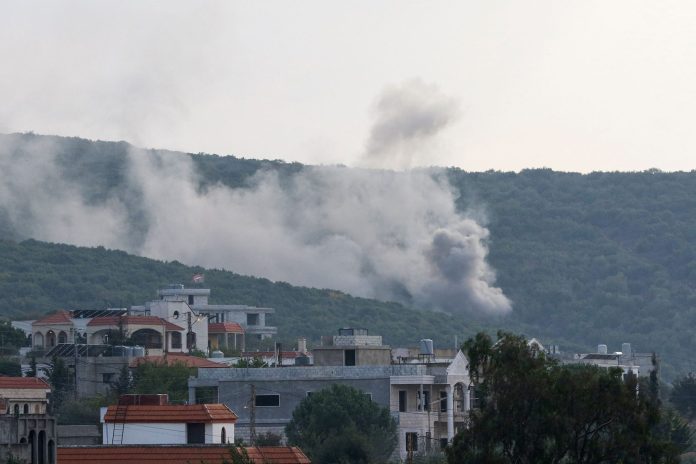
The in-person assurances came as an increase in cross-border attacks in recent weeks between Israel and the Iran-backed group Hezbollah have intensified concerns about the possible outbreak of another full-fledged conflict in the Middle East – and also as Israeli Prime Minister Benjamin Netanyahu has publicly accused the US of withholding weapons and ammunition from Tel Aviv, touching off a tense back-and-forth between Israeli and US officials.

Top Israeli officials including Minister of Strategic Affairs Ron Dermer and national security adviser Tzachi Hanegbi participated in a series of meetings with Biden administration officials like national security adviser Jake Sullivan, Secretary of State Antony Blinken and White House Middle East affairs coordinator Brett McGurk in Washington this week.

They discussed a wide range of topics including the situation on Israel’s northern border, Iran and the ceasefire and hostage negotiations, sources said.

When discussing the issue of “Hezbollah’s provocations”, US officials made clear this week that the Biden administration would offer Israel the security assistance it needs, the senior administration official stated, though the US would not deploy American troops to the ground in such a scenario.

Since Hamas’ attack on Israel on October 7, Hezbollah’s attacks against Israel have continued – and escalated in recent weeks.

Biden administration has repeatedly stated that it does not wish to see yet another war break out on the northern front, urging diplomatic de-escalation. This week, US envoy Amos Hochstein was dispatched to the region to try to help de-escalate the conflict.

Still, with Hezbollah’s attacks across the border into Israel continuing in the absence of a ceasefire in the Israel-Hamas war, US officials are on heightened alert about the eruption of a full-blown conflict in the region. If Hezbollah were to significantly expand the scale of its attacks on Israel, resulting in the deaths of Israelis, US officials expect Israel to respond with full force.

US officials have serious concerns that in the event of a full-blown war between Israel and Hezbollah, the Iran-backed group could overwhelm Israel’s air defenses in the north — including the much-vaunted Iron Dome air defense system. That reality would make the US’ full support of Israel all the more critical.

In this week’s meetings, US and Israeli officials discussed possible “off-ramps” to try to lower the temperature along the so-called Blue Line that separates Lebanon and Israel, the senior administration official stressed. Those talks touched on ways of returning Israelis and Lebanese people who have been displaced from the border back to their homes, they added.

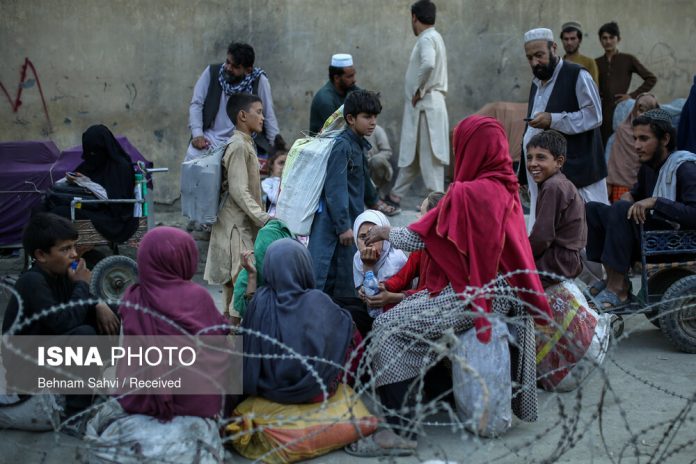
Envoy says Iran hosting over 6mn Afghan refugees

Afghan Refugees in Iran

Iravani made the remarks at a UN Security Council meeting on the situation in Afghanistan and the urgency of providing humanitarian aid to the conflict-ridden country.

“Afghanistan continues to face severe economic and humanitarian crises, worsened by a significant reduction in international aid. This situation is profoundly affecting many people, particularly women and children,” Iravani stated.

UN estimates show 23.7 million Afghans will need humanitarian assistance in 2024, he added.

Afghanistan is still reeling from a decades-long US occupation and its hasty withdrawal which resulted in the country’s lightning takeover by the Taliban.

Iravani asserted that any “politicization of aid” will harm the Afghan people. “Iran advocates for addressing extremism, terrorism and underdevelopment in Afghanistan, and stands ready to play an active role in its reconstruction.”

He said Tehran continues economic and commercial ties with Afghanistan to promote peace and stability and strengthen the Afghan economy.

“Terrorist threats from within Afghanistan continue to pose significant concerns. Iran doubts the de facto authorities’ ability to combat these threats effectively,” Iravani continued, adding, “Continuous international engagement with De facto authorities is crucial for regional peace and stability.”

The Iranian envoy also noted that instability affects neighboring countries and highlighted the need for regional and international cooperation and engagement.

“Iran remains committed to supporting Afghanistan, keeping its borders open to Afghan displaced and refugees during critical times and challenges the Afghan people faced, and hosting more than six million Afghans at an annual cost of 10 billion dollars despite sanctions,” Iravani said, adding that Iran has provided education to 700,000 Afghan students residing in Iran.

He said due to the challenging economic conditions caused by US illegal sanctions and the lack of international aid, Iran cannot manage the influx of Afghan refugees and drugs alone, which impacts the entire region.

“The international community must provide swift, sufficient, and continuous support to host countries like Iran.”

The Iranian envoy stated Afghanistan’s assets frozen by the West should be returned unconditionally, and sanctions should not hinder economic revitalization efforts.

“Western countries, having occupied Afghanistan for over 20 years, must honor their commitments to the country’s reconstruction and the fight against terrorism,” he added.

Lawyer: Iranian rapper Salehi’s death sentence overturned

Toomaj Salehi

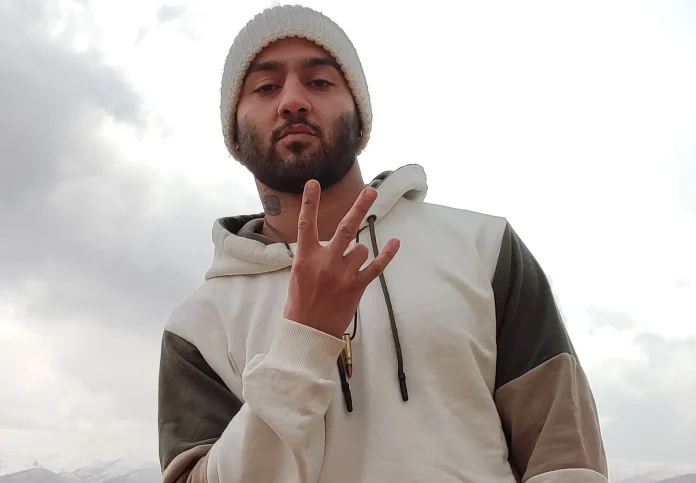
Mostafa Nili told ILNA news agency, “The Supreme Court overruled the death sentence of Toomaj Salehi and referred the case for reconsideration.”

Salehi has been arrested for “provoking violence” during 2022 anti-government protests and deadly riots in Iran.

He was briefly released and rearrested earlier this year following a Supreme Court decision to re-examine his case within the Judiciary on charges of spreading falsehoods and causing public unrest.

Protests erupted in Iran after the death of 22-year-old woman Mahsa Amini in the custody of police for not wearing a proper hijab in September 2022.

Salehi was arrested while attempting to flee the country at a border site, according to reports.

Iranian police summon individuals for manipulating presidential election polls

Iran Presidential Election

Col. Davoud Moazzami Goudarzi, the head of the Iranian cyber police FATA, told ISNA news agency on Saturday that the individuals changed the results of polls by using bots on the internet.

He warned spreading false information about candidates or hurling insults, smear campaigns, fake polls, and calling on people to boycott the elections are instances of crimes that can lead to arrest.

Col. Goudarzi did not specify in favor of which candidates the individuals were tampering the results, but some opinion polls have surfaced on the internet claiming to be conducted by the state television, the Islamic Republic of Iran’s Broadcasting (IRIB). The IRIB, however, has denied the veracity of the polls.

Iranians will go to the polls on Friday, June 28, to elect one of the six presidential hopefuls to succeed the late President Ebrahim Raisi who died in a helicopter crash along with his accompanying delegation on May 19.