Wednesday, December 31, 2025
Home Blog Page 864

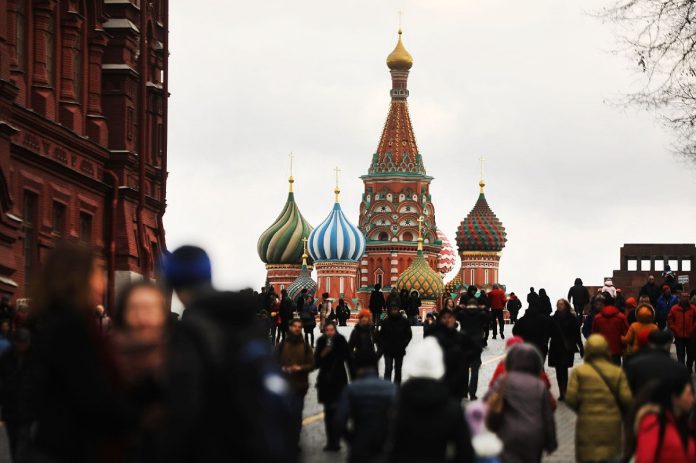
US announces 300 new sanctions against Russia

Kremlin

The announcement comes as President Biden is set to meet with Ukrainian President Volodymyr Zelensky at a leader’s summit of the Group of Seven (G7) nations this week. The global grouping has been at the forefront of working to financially choke off Russian President Vladimir Putin’s ability to wage war.

“We are increasing the risk for financial institutions dealing with Russia’s war economy and eliminating paths for evasion, and diminishing Russia’s ability to benefit from access to foreign technology, equipment, software, and IT services,” Treasury Secretary Janet Yellen said in a statement.

“Every day, Russia continues to mortgage its future to sustain its unjust war of choice against Ukraine.”

Still, it’s unclear the impact the sanctions will have on harming Russia’s capability to wage war.

Independent analyses of Russia’s wartime economy have found that President Vladimir Putin has managed to implement deft policies to circumvent the punishment of sanctions.

High revenue from continued, and some illicit, oil sales is a major financial stream. Putin’s focus on domestic production and trade with countries like China, and others that have not joined sanctions, are key avenues for Russia to circumvent sanctions on certain blocked materials.

The Treasury Department and State Department announced Wednesday about 300 sanctions were issued on individuals and entities whose products and services enable Russia to sustain its war effort and evade sanctions, according to a statement from Treasury.

The sanctions target individuals and entities in Russia and across the world, including in Asia, the Middle East, Europe, Africa, Central Asia and the Caribbean.

The actions taken Wednesday also include new guidelines for foreign financial institutions, warning them of the risk of being sanctioned for transacting with Russia’s war economy. The Treasury identified foreign branches of Russian banks as sanctioned — citing branches in China, India and Kyrgyzstan.

The Treasury Department is also taking steps to impede the Russian government’s ability to employ IT consultancy services and design services, with these restrictions taking effect in September. The measures are meant to target the Russian government specifically, and not individuals, the agency added in its statement.

“Despite the new prohibitions, OFAC [Office of Foreign Assets Control] continues to maintain authorizations for certain telecommunication and internet-related transactions, as well as humanitarian transactions,” the Treasury announced in a statement.

Further sanctions target Russia’s pursuit of liquified natural gas exports. The sanctions also seek to disrupt Russia’s efforts to circumvent sanctions, by designating 90 individuals and entities across the world that are identified as part of the supply chains fueling the Russian military. The individuals and entities are identified as being located in Russia, Belarus, the British Virgin Islands, Bulgaria, Kazakhstan, Kyrgyzstan, the People’s Republic of China, Serbia, South Africa, Turkey and the United Arab Emirates.

Washington has sanctioned more than 4,000 Russian individuals and companies since February 2022, aiming to harm the country’s military efforts against Kiev. The move by the US comes before the G7 summit in Italy, where Washington had hoped to announce progress on the confiscation of frozen Russian sovereign assets. However, the US and its EU allies have reportedly been unable to agree on the next step.

Moscow “will not leave the aggressive actions of the US unanswered”, Russian Foreign Ministry spokeswoman Maria Zakharova stated in response to Washington’s announcement.

Armenia says to leave Russia-led security bloc

Armenian Prime Minister Nikol Pashinyan

Pashinyan, who has tried to cultivate closer ties with the United States and European Union, said in March that Armenia, traditionally a close Russian ally, would leave the CSTO unless the security bloc detailed its commitment to uphold his country’s security in a satisfactory way.

Pashinyan’s comments to parliamentarians – reported by the Armenpress news agency – suggest he feels he has not received such a commitment and is resolved to quit the CSTO.

“We will leave. We will decide when to exit… Don’t worry, we won’t return,” said Pashinyan, an ex-journalist who came to power in 2018 on the back of street protests that swept away Russia-friendly politicians.

The CSTO, headquartered in Moscow, also includes Russia, Kazakhstan, Kyrgyzstan, Tajikistan and Belarus. It had announced it was waiting for Yerevan to clarify its stance.

Pashinyan is under pressure from protesters unhappy about what they say are unacceptable land concessions made to try to secure an elusive peace deal with Azerbaijan, which Pashinyan said on Wednesday was close to completion despite a remaining sticking point.

Ties between Russia and Armenia, host to various Russian military facilities, have become increasingly rancorous since Azerbaijan retook its breakaway region of Nagorno-Karabakh in September last year by force despite the presence there of Russian peacekeepers.
The CSTO did not intervene and Azerbaijan’s military action prompted a mass exodus of the region’s more than 100,000 ethnic Armenian population to Armenia.

Pashinyan has since made a series of statements voicing his disenchantment with the CSTO and Russia, saying he feels his South Caucasus country can no longer rely on Moscow to guarantee its security.

He has also accused at least two unnamed CSTO members of apparent collusion with Azerbaijan over a 44-day war between Azerbaijan and Armenia in 2020 and has asked some Russian personnel stationed in Armenia to leave.

“It turned out that the members of the (CSTO) alliance are not fulfiling their contractual obligations, but were planning a war against us with Azerbaijan,” Armenpress quoted Pashinyan as saying on Wednesday.

Russian peacekeeping troops who were deployed in Karabakh after that 44-day conflict completed their full withdrawal on Wednesday, Azerbaijan’s defence ministry noted.

The Russian foreign ministry said in March it was alarmed by the way Armenia’s political leadership was making public statements about the CSTO, which it said it believed were best made within the confines of the CSTO.

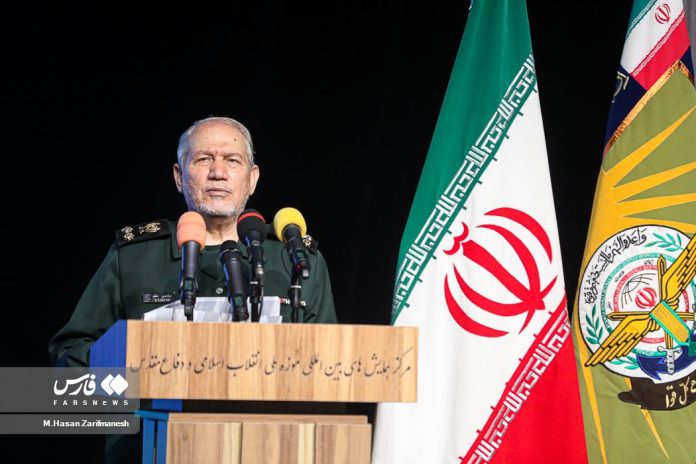
Advisor to Iran’s Leader: Russia and China care about their own interests 

Rahim Safavi

Safavi added that Iran has good ties with Russia and China but it also has relations with European states and other countries as well.

China and Russia have angered many people in Iran on several occasions recently including by supporting the UAE’s claim to the three Iranian islands of the Lesser Tunb, the Greater Tunb and Abu Moussa in the Persian Gulf.

The critics of the Iranian government’s foreign policy toward Russia and China say the policy is too soft on the two countries, which has emboldened them into siding with Iran’s adversaries at times.

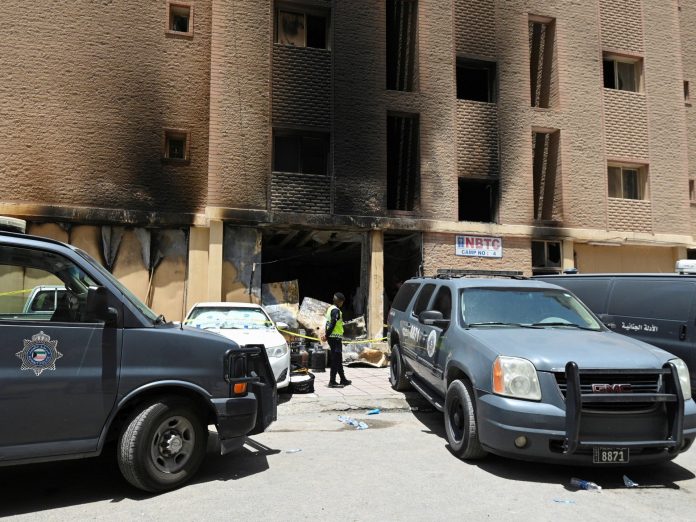
Dozens killed in fire at building housing workers in Kuwait

Fire at building housing workers in Kuwait

Deputy prime minister Sheikh Fahad Yusuf Saud Al-Sabah accused real estate owners of violations and greed, saying those factors contributed towards the incident.

“Unfortunately, the greed of real estate owners is what leads to these matters,” added Sheikh Fahad, who also runs the interior and defense ministries.

He ordered the arrest of the building’s owner during a visit to the site.

The fire was reported to authorities at 6:00 a.m. local time, Major General Eid Rashed Hamad said.

“The building in which the fire occurred was used to house workers, and there was a large number of workers there. Dozens were rescued, but unfortunately there were many deaths as a result of inhaling smoke from the fire,” another senior police commander told state TV.

“We always alert and warn against” cramming too many workers into housing accommodation, he added, without providing details on the workers’ type of employment or place of origin.

The fire was contained and authorities were investigating its cause, officials stated.

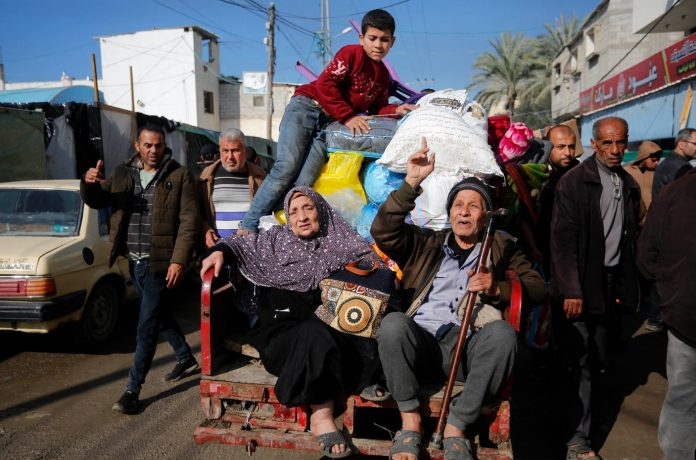
UN says almost all displaced people left Gaza’s Rafah

Gaza War

“They have been forced to vacate all UNRWA shelters there,” the agency wrote on X.

For months, Israel had encouraged Palestinian refugees to go to Rafah, touting it as a “safe zone”, and over a million took refuge there. But in May, ignorning international warnings of a humanitarian crisis, it launched an offensive into Rafah, galvanizing an exodus from the city.

Living conditions in Gaza in general are “unspeakable,” it said, adding that according to the UN humanitarian affairs office over 96% of women and children aged 6 to 23 months lack access to their fundamental nutritional necessities.

Since Oct. 7, 2023 more than 37,100 Palestinians have been killed in Gaza, most of them women and children, and vast tracts of the territory lie in ruins amid a crippling blockade of food, clean water, and medicine.

Israel also stands accused of genocide at the International Court of Justice, whose latest ruling ordered Tel Aviv to immediately halt its operation in Rafah.

Armenia to become ‘strategic partner’ of US

US Armenia Flags

The landlocked Caucasus country has long been a member of the Collective Security Treaty Organization (CSTO), a military alliance led by Russia. Prime Minister Nikol Pashinyan, however, froze Yerevan’s membership in CSTO after blaming Russia for not stopping Azerbaijan from reclaiming the long-disputed region of Nagorno-Karabakh.

Russian peacekeepers had been deployed to the region in 2020, after Azerbaijan reclaimed parts of Nagorno-Karabakh in a conflict with the local Armenian militia. Pashinyan himself recognized Baku’s sovereignty over the region and argued that its loss had long been inevitable.

Armenian Foreign Minister Ararat Mirzoyan hosted US Assistant Secretary of State for Europe and Eurasia James O’Brien in Yerevan on Tuesday. A joint statement issued on the occasion “noted Armenia’s aspirations for closer cooperation with Euro-Atlantic institutions and the West”.

“The United States and Armenia reaffirmed their commitment to shared democratic values and to the goal of an Armenia that is democratic, prosperous, and peaceful,” the communique declared.

Relations between the two countries should be upgraded in the coming year, O’Brien and Mirzoyan said. Both sides will continue to expand commercial and trade ties, along with “increasing cooperation on sanctions and export controls”.

The US will offer “commercial solutions in nuclear energy and renewables” to promote Armenia’s “food security and energy independence”, according to the communique.

Washington has also promised to continue Armenia’s “defense transformation” through a long-standing partnership with the Kansas National Guard, while helping Armenian police “increase accountability and sustainability”.

Yerevan acknowledged “significant US contributions to Armenia’s justice sector reform efforts”, while the US said it would continue supporting Armenian “efforts aimed at fostering judicial impartiality, integrity and independence”, as well as institutions “focused on preventing and combating corruption and transnational organized crime”.

The US likewise pledged more funding for “a robust civil society and independent media environment” in Armenia.

Pashinyan’s government has also made overtures to France for military technology and reportedly offered his country as a possible destination for asylum-seekers turned away by the UK.

Last month, O’Brien visited Armenia’s neighbor Georgia in an effort to stop the government in Tbilisi from adopting a “foreign agents” law. His threats of sanctions and withholding funding for “supporting democracy” were ultimately unsuccessful.

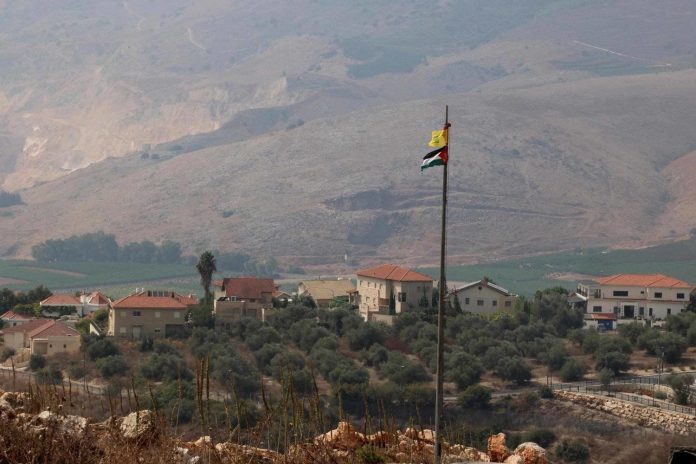
Hezbollah fires over 100 rockets at occupied territories

Lebanon Hezbollah

The Israeli military said in a statement that the group launched more than 100 rockets from southern Lebanon towards the Galilee region on Wednesday, stressing it marks one of the largest barrages carried out by Hezbollah.

The statement added that the barrage saw the city of Tiberias targeted for the first time.

It went on to assert that several rockets were intercepted by the regime’s so-called Iron Dome systems, while others impacted at several locations.

As a result of the rocket impacts, several fires were sparked, according to the Israeli army.

Israeli media outlets reported that some rockets had slammed into a factory at Sassa kibbutz in the Upper Galilee area, causing damage.

There were also reports of power outage in Safed city in the northern sector of the 1948 occupied territories as a result of the Hezbollah rocket strike.

The massive attack was in response to the death of a high-ranking Hezbollah field commander in Israeli airstrikes against a house in southern Lebanon.

Hezbollah announced in a statement that Sami Abdallah, better known by the nom the guerre Abu Taleb, born in 1969, was killed in the air raids that targeted a residential building in the town of Jwaya, located 95 kilometers (59 miles) south of the capital Beirut, early on Wednesday.

The Lebanese group later added the deaths of three other resistance fighters, identifying them as Mohammad Hussein Sabra, also known as Baqer, Ali Salim Soufan, and Qassem Hmayyid, also known as Sajed, respectively.

On Tuesday night, Israel’s army said a barrage of “50 launches” had been fired by Hezbollah at the strategic Golan Heights, sparking fires.

The occupying Israeli regime has repeatedly launched attacks on southern Lebanon since October 7, after commencing a genocidal war in Gaza that has killed almost 37,200 Palestinians, predominantly women and children so far.

As a retaliatory measure, Hezbollah has been carrying out almost daily rocket attacks on Israeli positions.

At least 455 people have been killed on the Lebanese border, including more than 80 civilians, according to reports.

Two Israeli wars waged against Lebanon in 2000 and 2006 were met with strong resistance from Hezbollah, resulting in the retreat of the regime in both conflicts.

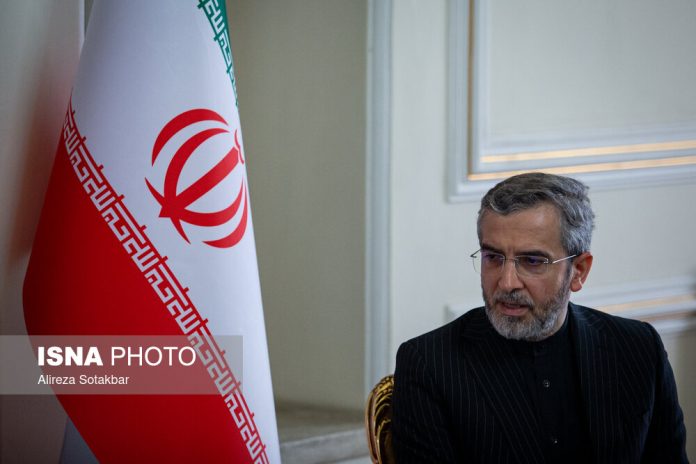
Acting FM: Iran still committed to JCPOA, acts based on nuclear deal

Ali Bagheri Kani

In an interview with Russia’s RT news network on Tuesday that touched on several subjects, Ali Bagheri Kani said, “The actions Iran takes to develop its nuclear activities, and will definitely develop these activities in the upcoming period, are within the framework of the nuclear Non-Proliferation Treaty (NPT) and under the supervision of the International Atomic Energy Agency (IAEA), and therefore Iran is not committing any violation of the obligations.”

Russian President Vladimir Putin has stated that friendly countries could receive weapons systems from Moscow amid the war on Ukraine.

Asked whether Iran will be among the recipients of the weapons, Bagheri said, “Iran and Russia cooperate in various fields to secure the national interests of their countries, but the important point is the cooperation has always promoted stability and security in the region and the world.”

The months-long Israeli aggression on Gaza and the response by resistance groups in support of Palestine were also discussed in the interview.

The Iranian diplomat clarified, “What is going on in Gaza is not a conflict but a flagrant war crime and an open genocide. The oppressed Palestinian nation is the victim and the Zionists are the invaders and criminals. The occupiers are the main perpetrators of the crime and the Americans are the main supporters of the Zionists in these crimes.”

He also said that the resistance movements in Iraq, Syria, Lebanon and Yemen rose up to defend Palestinian rights after the start of the Israeli genocidal campaign on Oct 7 last year, explaining, “The secret of their steadfastness in Yemen, even in the face of the Western coalition led by the US and UK, is that they are rooted in the people.”

US Congress seeking to deepen Israel ‘anti-tunnel’ defence capabilities

Hamas

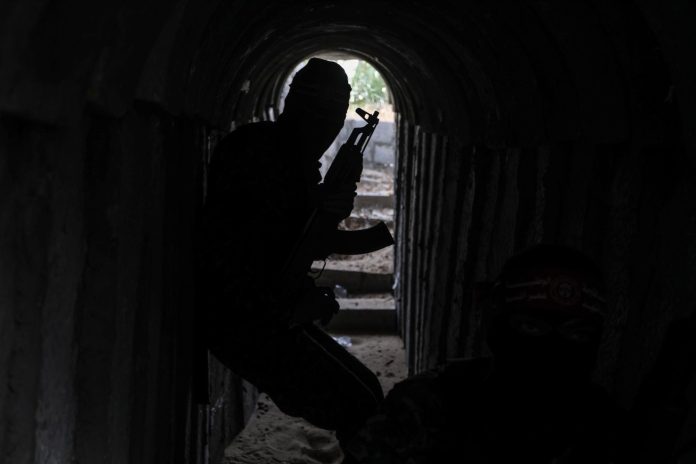
In a proposed amendment to the fiscal 2025 National Defense Authorization Act (NDAA), a bipartisan group of lawmakers aim to improve cooperation between the United States and Israel on anti-tunnel defence capabilities.

The legislation has been proposed by Republican Congressmen Joe Wilson, Don Bacon and Doug Lamborn, alongside Democrats Ruben Gallego, Brad Schneider and Seth Moulton.

In addition to enhancing cooperation, the lawmakers are calling on the US to provide an additional $30m to Israel to detect, map and fight in underground tunnels. Last year the US provided $47.5m for the efforts.

“Israel is an international leader in developing innovative defence technologies, including pioneering efforts to map, detect, destroy and maneuver through terror tunnels,” the legislation says.

“Such an increase in joint United States-Israel cooperation will not only benefit Israel but will also help the United States and allies across the globe that face similar challenges from subterranean tunnels.”

The NDAA is an annual piece of legislation that sets the budget for the Pentagon. The House of Representatives is slated to consider the amendment along with hundreds of others in the coming days, as is the Senate. A final version of the NDAA is passed by both bodies and signed into law by the US president.

President Joe Biden’s administration has faced some criticism among progressive lawmakers for its unconditional support of Israel’s war on Gaza. Since 7 October, US lawmakers on both sides of the political aisle have moved to enhance cooperation.

Despite tensions between the Biden administration and Israeli Prime Minister Benjamin Netanyahu over differences on post-war Gaza governance and civilian Palestinian casualties, the Israeli leader is set to address US lawmakers in Washington on 24 July. He received the invitation from Senate Majority Leader Chuck Schumer and Speaker of the House Mike Johnson.

Hamas has been able to withstand Israel’s deadly bombardment thanks to its massive tunnel infrastructure below Gaza. Israel’s assault on the enclave has killed at least 37,164 people, mainly women and children.

US officials have been working with Israel to try to cut off Hamas’s access to tunnels. In May, Israel seized Gaza’s border with Egypt, saying the move was necessary to prevent smuggling arms into Gaza.

In a bid to avert the assault and smooth over tensions between Israel and Egypt over allegations of Hamas tunnel smuggling in the Sinai, the US deployed technical teams to Egypt’s side of the border earlier this year to address the allegations of tunnel smuggling, MEE previously reported.

The 2025 NDAA is being hashed out at a time when the Biden administration itself is reviewing the US’s military approach to Gaza and the occupied West Bank, two theaters that US officials had paid little attention to before 7 October.

The Biden administration is also weighing a plan to bring cooperation with the Palestinian Authority’s security forces under the purview of Centcom, a potential reshuffle that some US officials say could advance plans for post-war Gaza governance, MEE reported on Friday.

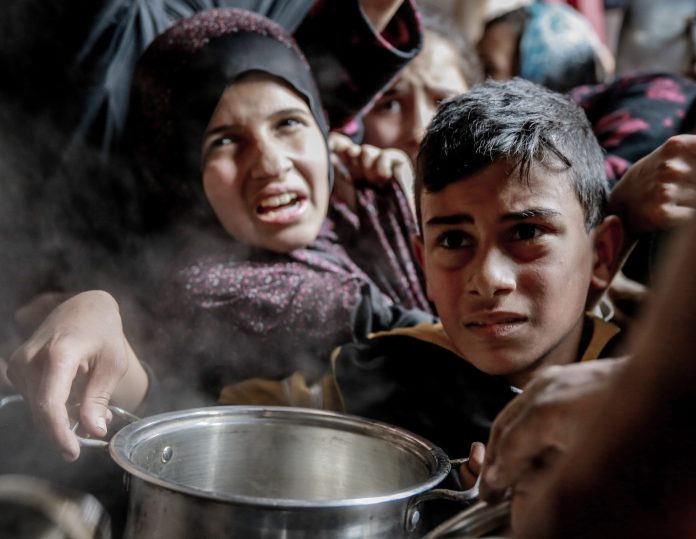
3,000 malnourished children in Gaza at risk of ‘dying before their families’ eyes’: UNICEF

Gaza War

This number, based on reporting from UNICEF’s nutrition partners, equates to approximately three-quarters of the 3,800 children who were estimated to be receiving life-saving care in the south ahead of the escalating conflict in Rafah.

“Horrific images continue to emerge from Gaza of children dying before their families’ eyes due to the continued lack of food, nutrition supplies, and the destruction of healthcare services,” said UNICEF Regional Director for the Middle East and North Africa Adele Khodr.

“UNICEF has more nutrition supplies prepositioned to arrive in the Gaza Strip, if access allows,” she added.

The Palestinian Ministry of Education has recently reported more than 15,000 Palestinian children have been killed since October 2023, when Israel launched its genocidal war against the Gaza Strip.

In early June, the UNICEF warned of severe child food poverty amid world crises, including in Gaza.

“Five rounds of data collected between December 2023 and April 2024 have consistently found that 9 out of 10 children in the Gaza Strip are experiencing severe food poverty, surviving on two or fewer food groups per day,” UNICEF said in a report.

It noted months of hostilities and restrictions on humanitarian aid have collapsed food and health systems, resulting in “catastrophic consequences” for children and their families in Gaza.

“This is evidence of the horrific impact the conflict and restrictions are having on families’ ability to meet children’s food needs – and the speed at which it places children at risk of life-threatening malnutrition,” it added.

Israel is deliberately blocking and delaying the flow of food and basic supplies into Gaza and using starvation of civilians as a method of warfare.