Wednesday, December 31, 2025
Home Blog Page 865

Biden viewed more positively than Trump in global poll

Biden Trump

The new survey from the Pew Research Center found that a median of 43 percent of respondents across 34 nations have confidence that Biden will do the right thing in global affairs, while 28 percent had the same confidence in Trump.

The poll also found that eight countries, including Ghana, Greece, Nigeria, Israel, Malaysia, India, Bangladesh and Turkey, had no statistically significant difference in respondents’ ratings of Biden and Trump. Trump, meanwhile, received higher ratings than Biden in just Tunisia and Hungary.

Pew noted that the gap is more prominent in European countries, with Biden’s confidence rating at least 40 percentage points higher than Trump’s in Germany, the Netherlands, Poland and Sweden.

The poll also included questions on how Biden is handling major global issues, including climate change, economic problems, China and the wars in Gaza and Ukraine.

Respondents were split on how Biden is handling climate change and global economic problems, with about 44 percent saying they disapprove of how he is addressing those issues and 43 percent saying they approve.

Forty-five percent disapproved of how Biden is handling China, while 39 percent said they approved. The president got his most negative ratings in response to how he is addressing the Israel-Hamas war, with 57 percent saying that they disapprove.

The poll also found that a median of 4 in 10 people across the 34 countries say that the U.S. used to be a good example of democracy. Twenty-two percent said it was never a good example and 21 percent said it was still a good example, according to the median of the 34 countries.

The poll was conducted using telephone, face-to-face and online interviews with help from Gallup, Langer Research Associates, Social Research Centre and Verian. Pew noted that the results are based on national samples.
Hamas delivers response to Gaza ceasefire proposal

Gaza War

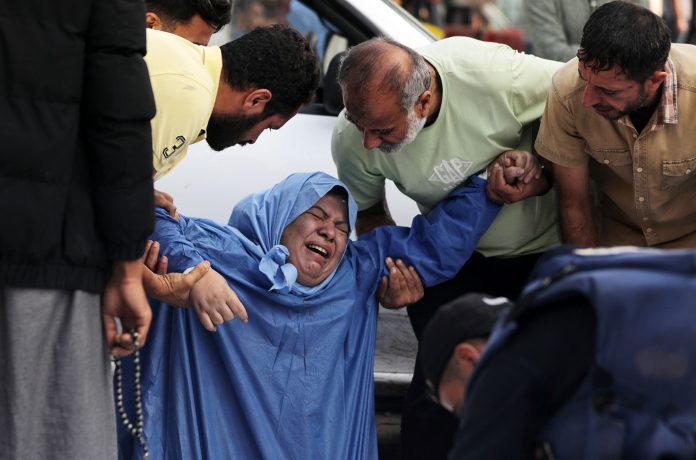
“The state of Qatar and the Arab Republic of Egypt announce that they have received today a response from [Hamas] and the Palestinian factions regarding the most recent proposal for a ceasefire deal and the exchange of prisoners and detainees,” a statement from Qatar’s Ministry of Foreign Affairs read.

White House Spokesperson John Kirby stated the US had received the response Hamas delivered to the mediators, and that the US was “working its way” through it.

“The response prioritises the interests of the Palestinian people and emphasises the need for a complete halt to the ongoing aggression in Gaza,” Hamas and Islamic Jihad announced in a joint statement.

They added they were ready to “engage positively to reach an agreement that puts an end to this war”.

According to Reuters, Hamas’s response includes a counter-proposal for a new timeline for the permanent ceasefire and withdrawal of Israeli troops from Gaza.

Qatar said in its statement that it would study the response with Egypt and coordinate with the parties.

Hamas’s official response comes a day after the UN Security Council voted 14 to 0 in support of a US-backed resolution calling for a ceasefire in Gaza and hostage exchange.

The Palestinian group stated after the vote that it “welcomed” the resolution and expressed “readiness” to implement its principles through indirect talks with Israel.

US Secretary of State Antony Blinken stated Hamas’s statement was a “hopeful sign” but he continued to pressure the group, suggesting that the public comments didn’t amount to an official response delivered via mediators Qatar and Egypt.

“Everyone’s vote is in, except for one vote, and that’s Hamas,” Blinken added.

Blinken himself appeared to express frustration with Hamas’s decision-making process. The group’s top political officials are based outside Gaza, but the military leaders and head of the besieged enclave, Yahya Sinwar, are inside Gaza.

Analysts say Sinwar likely has the final say on a deal given his control of captives as necessary to start phase one of the staged ceasefire agreement and influence over fighters in the field.

Talks between Hamas and Israel have been ongoing for months.

Biden cast them into an unprecedented public view on 31 May, when he laid out the details of a three-phase agreement that he characterised as an Israeli proposal for a permanent cessation of hostilities in Gaza.

Despite an immediate positive response to Biden’s speech, the group soon expressed doubts about the deal.

Israeli Prime Minister Benjamin Netanyahu repeatedly rejected Biden’s suggestion that the deal would lead to an end of the war, stating that Israel would continue fighting in Gaza until it eliminates Hamas’s governing and military capabilities.

In response, Hamas sought written guarantees from mediators that a ceasefire would follow the hostage exchange.

Last week, Middle East Eye reported the latest Israeli proposal received by Hamas did not guarantee a permanent cessation of hostilities as described by Biden in his speech announcing the proposal.

The US’s move to put the ceasefire plan Biden verbally outlined in May to a vote at the UN Security Council appeared designed to force Hamas’s hand. Only Russia abstained from voting in favour of it.

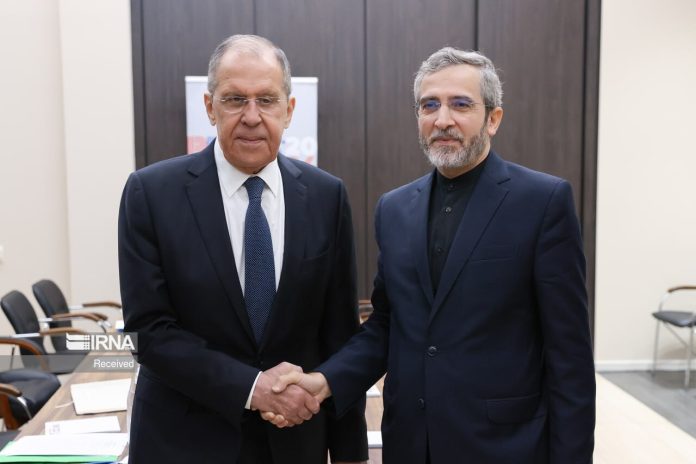
Top diplomat says Russia and Iran fully agree on text of state treaty

Lavrov Bagheri Kani

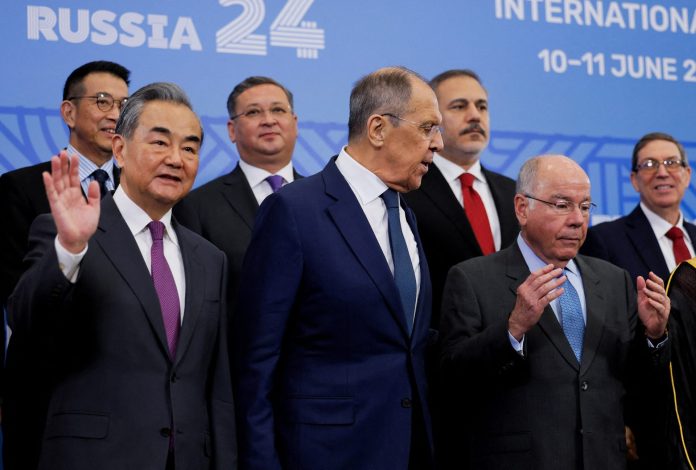
Lavrov said on Tuesday that Russia and Iran have yet to put their final signatures on the state treaty, adding that Moscow is waiting for the Iranian side to settle procedural issues needed for the agreement to be signed.

“As for work on a state treaty on cooperation between the Russian Federation and the Islamic Republic of Iran, yes, it cannot be signed yet even though the text has been fully coordinated,” he added.

The remarks were made at a press conference after a ministerial meeting of the BRICS group of developing economies in the Russian city of Nizhny Novgorod. They came after Russian diplomatic sources said that works on the Russia-Iran state treaty had been suspended because of certain issues in Iran.

Iranian ambassador to Russia Kazem Jalali rejected the notion that the deal had been suspended, saying it could become finalized after Iran elects a new president in late June.

Speaking to reporters on Tuesday, Kremlin Spokesman Dmitry Peskov confirmed that deadlines for finalizing the deal had been pushed back after Iranian President Ebrahim Raisi died in a helicopter crash last month.

“…given the current period in Tehran when preparations for a presidential election are underway, the deadlines have been slightly pushed back. Because it is the presidential election, as a rule, later staff reshuffle is possible and so on,” Peskov stated.

Lavrov noted he had told Iranian Acting Foreign Minister Ali Bagheri Kani on Monday that Russia is committed to the state treaty with Iran which he said “is meant to take Russia-Iran relations to a completely different level”.

Saudi FM lauds late Iran’s president, FM’s roles in promoting Riyadh-Tehran ties

Bagheri Kani and Faisal Bin Farhan

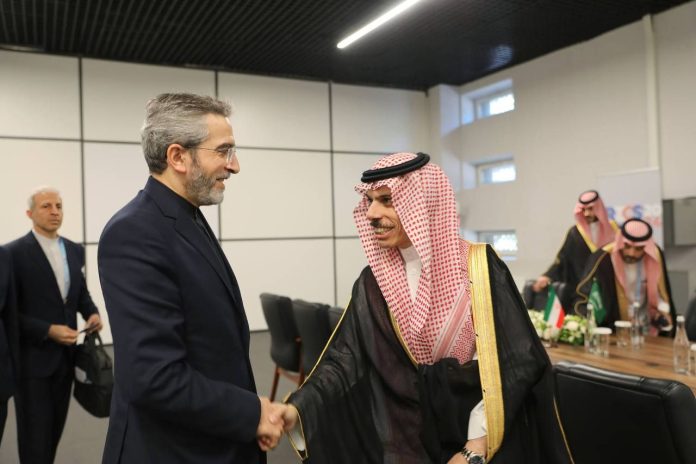
The Saudi diplomat met Iran’s Acting Foreign Minister Ali Bagheri Kani on the sidelines of the BRICS foreign ministerial meeting in the Russian city of Nizhny Novgorod on Tuesday, discussing bilateral, regional and international issues.

Bagheri Kani described the trajectory of relations between the two countries during the period of Raisi and Amirabdollahian as forward-moving.

He emphasized: “We are confident that the will of Iran and Saudi Arabia is to strengthen and enhance comprehensive relations, and this will has cast its shadow over all aspects of the two countries’ relations.”

Referring to the encounters of the two countries with various developments and phenomena at the regional and global levels, Bagheri stressed: “The interaction and solidarity between Iran and Saudi Arabia not only benefit the two countries but also ensure stable and lasting security in the region.”

The Iranian diplomat also pointed to the intensification of Zionist crimes against the Palestinian people, including the recent horrific crime in Rafah, and highlighted the necessity of coordinated and united action by Islamic countries to demonstrate their vigilance and sensitivity.

“Israel must face a serious and effective response from Islamic countries for every aggression and crime.”

Iran’s acting foreign minister also expressed appreciation for Saudi Arabia’s efforts in hosting pilgrims of the Holy Kaaba, especially Iranian pilgrims, and called for the strengthening of necessary facilities for Iranian pilgrims to perform the Hajj rituals.

Prince bin Farhan, for his part, expressed satisfaction with his renewed meeting with the Acting Foreign Minister of Iran, and emphasized the role of late President Raisi and Foreign Minister Amirabdollahian in transforming the relations between Tehran and Riyadh.

He stated: “During President Raisi’s term and my brother Mr. Amirabdollahian, not only were relations resumed, but we also reached a stage of strong cooperation and interaction between the two countries. We remain seriously determined to continue dialogue and cooperation between the two countries.”

The Saudi Foreign Minister added: “Efforts to pursue and strengthen robust relations between the two countries guarantee stability and security in the region.”

He also expressed satisfaction with the presence of Iranian pilgrims at this year’s Hajj rituals and wished them an accepted pilgrimage. He emphasized that his country will utilize all its capacities to hold the Hajj ceremonies in an atmosphere of tranquillity and health.

Russia claims Kiev’s intelligence involved in Moscow terror attack

Moscow Terror Attack

Aleksandr Bortnikov made the statement during a virtual meeting of the National Anti-Terrorism Committee (NAC) on Tuesday.

“The Ukrainian and Western intelligence services are expanding the circle of possible perpetrators, recruited to commit high-profile crimes inside Russia,” Bortikov said. Kiev and its foreign backers are also assisting “international terrorist organizations,” which train and provide equipment to those people, he added.

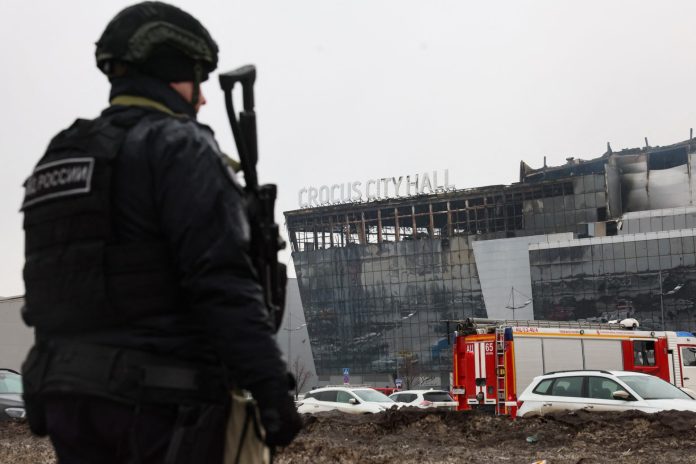
“A vivid example [of such activities] is the involvement of Ukrainian military intelligence in the terrorist attack at Crocus City Hall near Moscow that was established by us,” the FSB chief stressed.

The main targets of recruitment by Ukrainian and Western agencies are younger people including migrant workers, he stated.

The attack on the concert venue on March 22 claimed 145 lives and left over 550 injured. Four gunmen stormed the building ahead of a rock concert, shooting everyone in sight before setting it on fire.

The suspected perpetrators – all citizens of Tajikistan – were detained shortly after the attack while fleeing in a car towards the Ukrainian border. Almost a dozen of their accomplices have been arrested since then.

A terrorist organization known as Islamic State-Khorasan (ISIS-K) claimed responsibility for the attack. However, Moscow has suggested that Kiev had used the Islamist group as a proxy. Ukraine has denied any involvement, while the West has insisted that all evidence points to ISIS-K as the sole culprit.

Since the outbreak of the Ukraine conflict in February 2022, a total of 134 terrorist and sabotage acts have been prevented in central Russia, according to Bortnikov.

Russian security agencies have also intercepted the activities of 32 international terrorist cells, which were composed of migrants from Central Asia, and prevented attacks on key infrastructure and areas of mass gatherings, the FSB chief continued.

China says BRICS should prevent new ‘Cold War’

BRICS

Speaking at the BRICS foreign ministers’ meeting in the Russian city of Nizhny Novgorod, Wang said that some major powers still harbor a “Cold War mentality”. According to the diplomat, this attitude directly contradicts UN Security Council resolutions and undermines the authority of multilateral mechanisms.

China is willing to work with Russia to maintain strategic cooperation, respond to external pressures, and promote the sustained progress of bilateral relations, he added.

Describing BRICS as an important platform for unity and cooperation among emerging markets and developing countries, Wang stressed the expanded BRICS mechanism will play a crucial role in creating a more just and reasonable global governance system.

He accused the West of the “politicization and excessive securitization” of economic issues, which has resulted in “rampant” unilateral sanctions and technological barriers for countries such as Russia and China. Wang urged the “big BRICS to “leverage” its political significance and transform the group into a new type of multilateral cooperation mechanism.

The BRICS grouping of Brazil, Russia, India, China and South Africa was joined by Iran, Ethiopia, Egypt, and the United Arab Emirates in early 2024.

“By expanding our membership, we have ushered in a new era of joint self-reliance for the Global South, with the influence and appeal of BRICS continually rising.”

He added that in a “contest” where some forces promote global multipolarity while others maintain a “unipolar hegemony,” the BRICS countries should “stand on the side of fairness and justice, and make the right choices.”

Russian Foreign Ministry spokeswoman Maria Zakharova claimed last week at the St. Petersburg International Economic Forum that Western governments are “obsessed” with the idea of global dominance.

She argued that Western leaders continue to adopt “exceptionalism” at the expense of other ethnic and cultural identities. However, the “collective West” is a minority whose worldview is not shared by the global majority, which has already embraced the concept of multipolarity, Zakharova insisted.

Gazans killings during Israel’s freeing of captives could be war crimes: UN

Gaza War

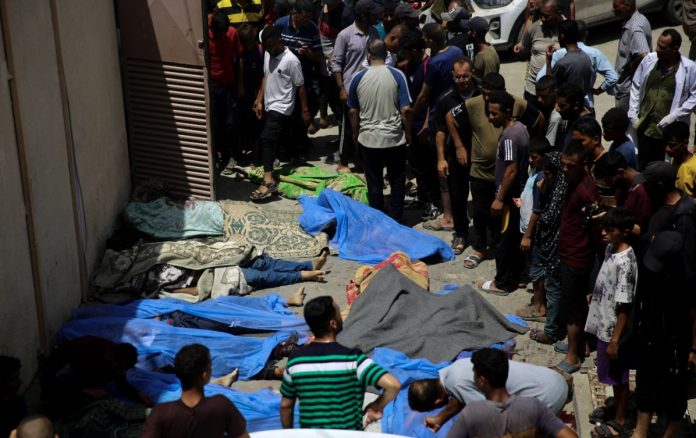
Israel said the operation, accompanied by an air assault, took place on Saturday in the heart of a residential neighbourhood in central Gaza’s Nuseirat area where Hamas had kept the hostages in two separate apartment blocks.

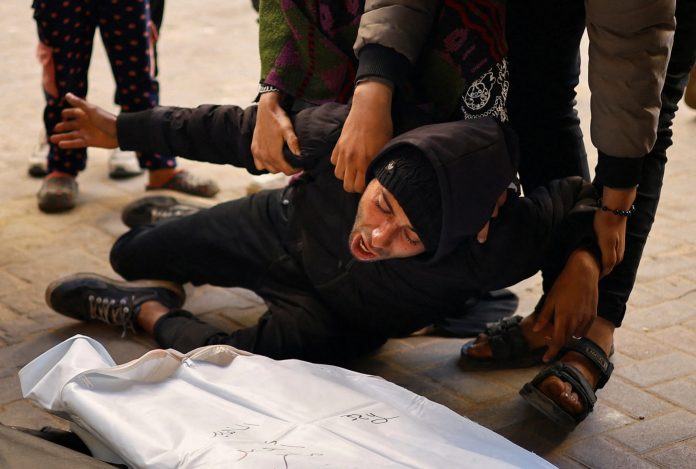
The operation killed more than 270 Palestinians, according to Gazan health officials.

“The manner in which the raid was conducted in such a densely populated area seriously calls into question whether the principles of distinction, proportionality and precaution – as set out under the laws of war – were respected by the Israeli forces,” Jeremy Laurence, spokesperson for the UN human rights office, said.

Laurence added that the holding of hostages in such densely populated areas by armed groups was “putting the lives of Palestinian civilians, as well as the hostages themselves, at added risk from the hostilities”.

“All these actions, by both parties, may amount to war crimes.”

The conflict in Gaza was triggered when Hamas fighters charged into Israel on Oct. 7 and killed some 1,200 people, according to Israeli tallies. Israel’s subsequent bombardment and invasion of Gaza has killed more than 37,000 Palestinians, according to health authorities in the Hamas-run enclave.

Gunmen took around 250 hostages back to Gaza on Oct. 7, more than 100 of whom were released in exchange for about 240 Palestinians held in Israeli jails during a week-long truce in November.

There are 116 hostages left in the coastal enclave, according to Israeli tallies, including at least 40 whom Israeli authorities have declared dead in absentia.

UK approved over 100 military export licences to Israel since Gaza war

UK military aircraft

No licences were revoked after the Hamas-led attacks on 7 October, nor have any been refused with 185 applications, including some made before the attacks, still pending, according to the Department for Business and Trade.

The data, released on Tuesday, shows that more than 300 licences, including those permitting the export of UK arms and military equipment to Israel, were in place at the end of May.

Military equipment covered under those licences include components for military aircraft, vehicles and combat naval vessels, the department added.

The data comes after months of pressure from MPs for greater transparency from the government about its decision-making process on arms exports to Israel with many calling for an immediate suspension.

The department announced on Tuesday it had chosen to release the information “given the exceptional circumstances, and the significant Parliamentary and public interest”.

Campaigners told Middle East Eye said the fact that not a single licence had been rejected since 7 October was “shocking”, with some raising concerns that the data released was too sparse and will only leave the politicians and public it was meant to serve with more questions.

Neil Sammonds, senior campaigner for the UK-based War On Want, stated: “It should be shocking that the UK has not revoked any arms licences to Israel given the clear risk they might be used in violations of international law, let alone in multiple war crimes and genocide.”

Tim Bierley, campaigner for UK-based Global Justice Now, added the government’s figures “show they’ve given Israel the key to the weapons factory, underlining the severity of British complicity in the war crimes being committed by Israel”.

“As Israel flagrantly disregards humanitarian law, carrying out brutal attacks on civilians, aid workers and hospitals, any government with a shred of moral fibre would have stopped sending arms long ago.”

Emily Apple, media coordinator at the Campaign Against Arms Trade, said while the data showed it was “business as usual for arms dealers to break international law”, she was alarmed by the lack of transparency and accountability in the figures provided.

“This data release was supposed to address the political and public interest in arms sales to Israel. The figures released do not do this as they do not give any details of the equipment exported or its value,” Apple added.

“If and when we have a new Labour government, it is vital that they not only impose an arms embargo but address the lack of transparency in our export licensing system.”

UN chief: Speed and scale of carnage in Gaza beyond any imagination

Gaza War

Guterres stated in a statement to an emergency aid conference in Jordan that at least 1.7 million people – 75 percent of Gaza’s population – have been displaced many times over by Israeli military attacks.

“Nowhere is safe, conditions are deplorable, public health situation is beyond crisis level. Gaza’s hospitals lie in ruins, medical supplies and fuel are scarce or non-existent,” he said.

“More than one million Palestinians in Gaza do not have enough drinking water and face desperate levels of hunger. Over 50,000 children require treatment for acute malnutrition,” he added.

“The only way forward is through a political solution that opens a path to sustained peace based on two states – Palestine and Israel, living side by side in peace and security … with Jerusalem as capital of both states”.

“Let us keep working to keep that a reality as we work to answer today’s call to action for Palestinians in Gaza in such a profound and immediate need,” Guterres stressed.

Describing conditions in Gaza as “deplorable”, the UN chief called for all parties to reach an agreement on the latest ceasefire plan.

“I welcome the peace initiative recently outlined by President [Joe] Biden and urge all parties to seize this opportunity and come to an agreement.”

Guterres also urged parties to respect their obligations under international humanitarian law.

“This includes facilitating the delivery of humanitarian aid both into and inside Gaza as they have committed. All available routes into Gaza must be operational and the land routes are absolutely crucial,” he said.

He called for safe routes for humanitarian aid delivery and for the protection of UNRWA workers who “need unimpeded access”.

“Civilians must be allowed to seek safety and civilians and the infrastructure they rely on must never be militarised or targeted,” he added.

More than 37,100 Palestinians have since been killed in Gaza, most of them women and children, and nearly 84,700 others injured, according to local health authorities.

Eight months into the Israeli war, vast tracts of Gaza lay in ruins amid a crippling blockade of food, clean water, and medicine.

Iran Judiciary provides update on Dariush Mehrjui murder case

Dariush Mehrjui

The first defendant has been sentenced to two counts of qisas (retribution-in-kind), the second defendant to 20 years in prison and lashes, the third defendant to 20 years in prison, and the fourth, being a juvenile, to 5 years in a juvenile correctional facility.”

He added, “An appeal has been filed against the issued verdict, and the case has been sent to the Supreme Court and is currently under review.

A final ruling has not yet been issued, and therefore, we refrain from disclosing further details about the case.”

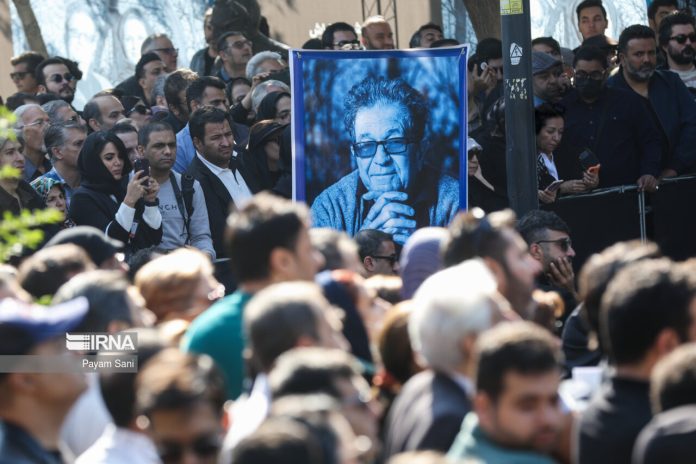
Daryoush Mehrjui and his wife, Vahideh Mohammadifar, were found stabbed to death on 14 October 2023, in their villa in Meshkin Dasht, Karaj. Prior to this incident, Vahideh had posted on her social media page about anonymous personal threats, including threats from a non-Iranian individual with a knife.

On October 17 Iranian police arrested ten individuals suspected of being involved in the murders, including “the main killer”.

Four people were arrested by police days after the killing for their alleged involvement. One of them later confessed to being the killer, saying that he was a former employee of Mehrjui who harbored a grudge against him “due to financial issues”.