Monday, December 29, 2025
Home Blog Page 854

Iran rejects E3 statement on its nuclear program as invalid

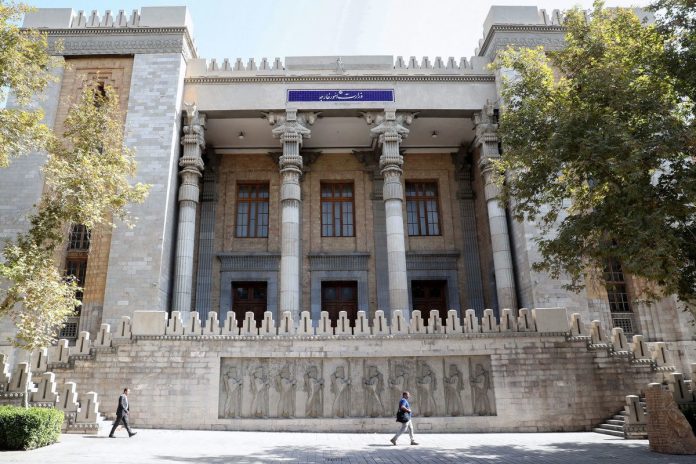
Iranian Foreign Ministry

The Ministry of Foreign Affairs of the Islamic Republic of Iran condemned the joint statement of the three European countries—Germany, the United Kingdom, and France—regarding Iran’s nuclear program as baseless, invalid, and containing false claims.

“As it has been repeatedly stated, Iran’s nuclear program has always been entirely peaceful, and nuclear weapons have no place in Iran’s military and defense doctrine,” it said.

“The bitter irony of the situation is that the countries with a political and non-constructive approach, who themselves are responsible for and the architects of the current situation regarding the JCPOA, accuse Iran of emptying the JCPOA of its content.”

“The Islamic Republic of Iran is committed to continuing constructive interaction and technical cooperation with the International Atomic Energy Agency (IAEA) within the framework of its rights and obligations. It has implemented and will continue to implement its peaceful nuclear projects and plans in accordance with the Non-Proliferation Treaty (NPT) and the Comprehensive Safeguards Agreement,” it added.

“It is emphasized that Iran’s peaceful nuclear activities are not reactive but are based on the national nuclear development program and will continue within the framework of its international rights and obligations. The incorrect speculations of the Westerners in this regard, like their other errors, will lead nowhere.”

“The Islamic Republic of Iran has always been ready for constructive interaction and dialogue and believes that goodwill, avoidance of fruitless and failed politicized actions of the past, along with demonstrating seriousness and a pragmatic approach, are necessary to address the issues and concerns of all parties,” the statement read.

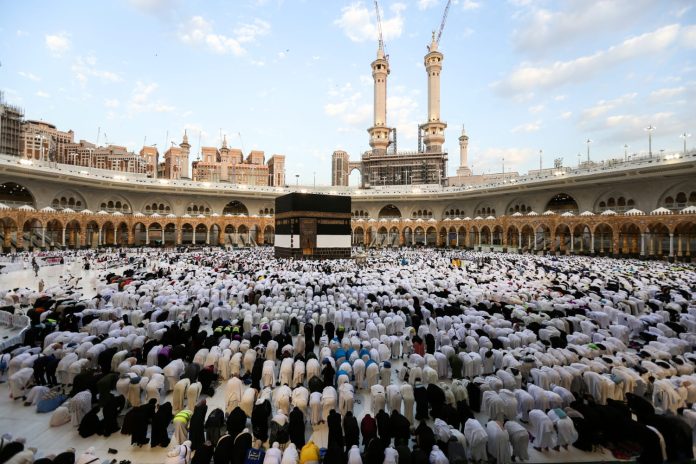
Iran says Hajj pilgrimage is an opportunity for Muslims to renounce Israel, US amid Gaza war

Hajj

In a message on X on Sunday, Kanaani said, “The philosophy of the Abrahamic Hajj and its rituals and practices teach Muslims and believers everywhere in the world how to declare their renunciation of Satan and those with satanic traits in the real world.”

As Supreme Leader of the Islamic Revolution Ayatollah Seyyed Ali Khamenei has declared in his annual Hajj message, he added, the issue of bara’at (renunciation of the polytheists) this year should go beyond just a Hajj ritual and extend to all Muslim nations of the world.

Muslims from around the world have converged in Mecca, Saudi Arabia, to perform Hajj rituals as Israeli attacks have killed more than 37,000 Palestinians in the war-ravaged Gaza Strip.

“The renunciation of the Zionist regime and its supporters, especially the US government, must be manifested in the words and actions of nations and governments, and it should tighten the leash on the executioners,” the spokesperson continued.

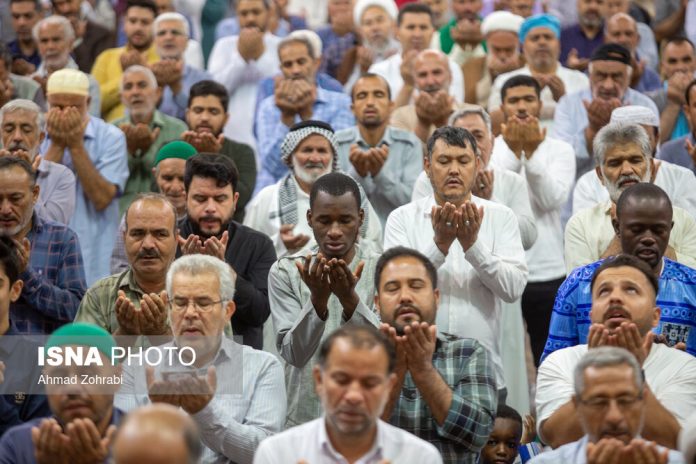
Iran’s acting president, FM congratulate Muslims on Eid al-Adha

Eid Al-Adha

Mokhber issued his congratulatory message on Sunday, expressing hope that the religious event serves as an opportunity that will bring an end to the genocide in Gaza while it will foster unity in the Islamic Ummah and help promote global peace.

The Iranian acting president said that Eid Al-Adha is celebrated this year at a time when the Islamic Ummah is facing a big crisis in occupied Palestine but Western countries take no action while the innocent people of Gaza are being slaughtered by the Zionist regime.

Bagheri Kani also congratulated Eid al-Adha to Islamic countries’ foreign ministers and Muslims worldwide through separate messages.

In his messages on Sunday, Bagheri Kani viewed Eid al-Adha as a significant chance to bolster unity among Islamic nations, emphasizing the collective duty of these countries to advance shared values and achieve justice and global peace.

Referring to Eid al-Adha as an auspicious day for all Islamic countries, he highlighted that for over eight months, the Muslim people of the occupied Palestinian territories have been victims of oppression, injustice, and severe assaults by the Zionist regime. This has occurred amidst the international community’s silence and the backing of Western nations.

The people of the Gaza Strip are offering Eid prayers while the oppressive Zionist regime has turned homes and mosques into ruins, he stated, adding that the residents of this area are living under the constant threat of martyrdom or the loss of family members at any moment.

The top Iranian diplomat emphasized the importance of standing with the oppressed people of Palestine against the crimes of the child-killing regime and the Zionist apartheid.

He called for Muslim and freedom-loving countries to unite in boycotting and condemning the atrocities committed by the racist Zionist regime, putting an end to the cruel massacre and genocide.

At the end of his message, Bagheri Kani prayed for the health, success, prosperity, and happiness of Muslim nations under the auspices of global peace.

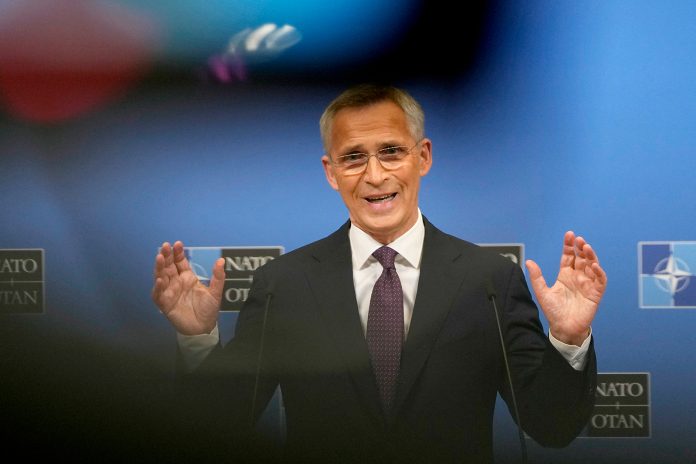
NATO says military alliance holds consultations on putting nuclear weapons on alert

NATO Secretary General Jens Stoltenberg

“I won’t go into operational details about how many nuclear warheads should be operational and which should be stored, but we need to consult on these issues. That’s exactly what we’re doing,” he said.

The NATO chief added that transparency on the issue “helps to communicate the direct message” that NATO is a “nuclear alliance”.

“NATO’s aim is, of course, a world without nuclear weapons, but as long as nuclear weapons exist, we will remain a nuclear alliance, because a world where Russia, China and North Korea have nuclear weapons, and NATO does not, is a more dangerous world,” Stoltenberg emphasized.

He said that he was particularly concerned about China, which is investing heavily in advanced weapons and will increase the number of its nuclear warheads to 1,000 by 2030.

“And that means that in a not-very-distant future NATO may face something that it has never faced before, and that is two nuclear-powered potential adversaries – China and Russia. Of course, this has consequences,” the NATO chief opined.

Stoltenberg added that the US and its European allies are currently modernizing their nuclear arsenals.

“The US is modernizing their gravity bombs for the nuclear warheads they have in Europe and European allies are modernizing the planes which are going to be dedicated to NATO’s nuclear mission,” he continued..

According to the newspaper, the UK has deployed about 40 of its 225 nuclear warheads, while the US has 1,700 warheads (and another 3,700 in reserve). At the same time, the daily emphasized that France “does not make its atomic arsenal available to the alliance because of a long-held decision to maintain independence over its own deterrence.”

Nuclear powers are increasingly developing their arsenals as the geopolitical situation deteriorates, according to a report by the Stockholm International Peace Research Institute (SIPRI).

“The nine nuclear-armed states – the United States, Russia, the United Kingdom, France, China, India, Pakistan, the Democratic People’s Republic of Korea (North Korea) and Israel – continued to modernize their nuclear arsenals and several deployed new nuclear-armed or nuclear-capable weapon systems in 2023,” the report said. One of SIPRI’s key findings is that the number and types of weapons are increasing as countries rely more and more on nuclear deterrence.

In January 2024, there were some 12,121 nuclear warheads in the world, of which 9,585 were on alert. According to the report, 3,904 of these were deployed on missiles or aircraft, a 60% increase over estimates for the previous January. About 2,100 deployed warheads were on high alert on ballistic missiles. According to the research institute, almost all of the warheads belonged to Russia or the United States, but China is believed to have placed some of them on high alert for the first time.

India, Pakistan, and North Korea, in turn, are looking for a way to put multiple warheads on ballistic missiles. The United Kingdom, China, Russia, the United States and France already have such capabilities, according to the institute.

Commenting on the situation in Ukraine, Stoltenberg urged Western countries to continue supporting Kiev.

“I strongly believe that if [Russian President Vladimir] Putin prevails in Ukraine, we will become more vulnerable, and then we will need to invest even more in our defense,” he pointed out.

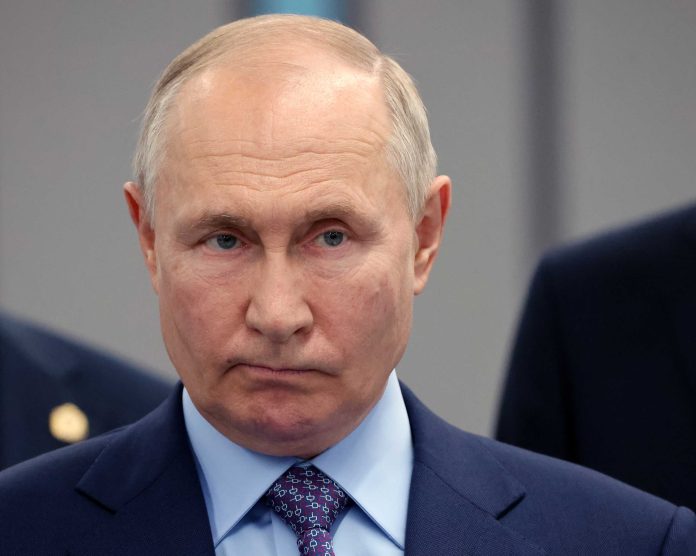
Zelensky should think about Putin’s peace proposal, Kiev’s situation worsening: Moscow

Vladimir Putin

“At one time, Zelensky came to power under the banner of peace and the intention to establish peace, to save Ukraine. He always said that he did not hold on to the chair, he always said that he was ready to do anything for the sake of his Motherland. Let’s see if he is ready for anything so as not to further worsen the situation,” Peskov said an interview with VGTRK journalist Pavel Zarubin.

Peskov stressed that “every time Putin voices peace initiatives and when attempts are made to enter the political and diplomatic channel, there are certain conditions on the ground, each time they worsen for Ukraine”.

“The current dynamics of the state of affairs on the fronts clearly shows us that it will continue to worsen for Ukrainians. Probably, a politician who puts the interests of the Motherland above his own and even above his masters would think about such a proposal. Let’s see what happens,” the Kremlin official added.

Peskov noted that negotiations with Ukraine are possible, but their outcome must be approved by the legitimate Ukrainian authorities. Zelensky does not belong to this category, Peskov stated. According to him, Zelensky is “not the person with whom you can record an agreement in writing, because de jure this recording will be illegitimate”.

“Nevertheless, Putin does not reject anything. He does not reject the possibility of negotiations. There are legitimate bodies there in accordance with the country’s constitution,” Peskov stated.

He also added that “negotiations are usually carried out by expert people, but the results of negotiations are recorded by legitimate authorities.

Speaking about the results of possible negotiations with Kiev, Peskov drew attention to the fact that they will require a system of guarantees for trust.

“Agreements on paper are the result of very complex expert negotiations, this is a balance of interests and, of course, taking into account the realities on the ground. And this time this will also be the case,” the Kremlin official said. This is how he answered the question of journalist Pavel Zarubin about trust in the agreements that could be reached with the Kiev authorities.

Peskov pointed out that “there is a system of guarantees in the field of security and on all other issues”.

“It is a very complex system to develop this system of guarantees in order to ensure the implementation of agreements, but nevertheless, if the Kiev regime somehow shows sobriety, then this will have to be done,” the press secretary of the Russian President stressed.

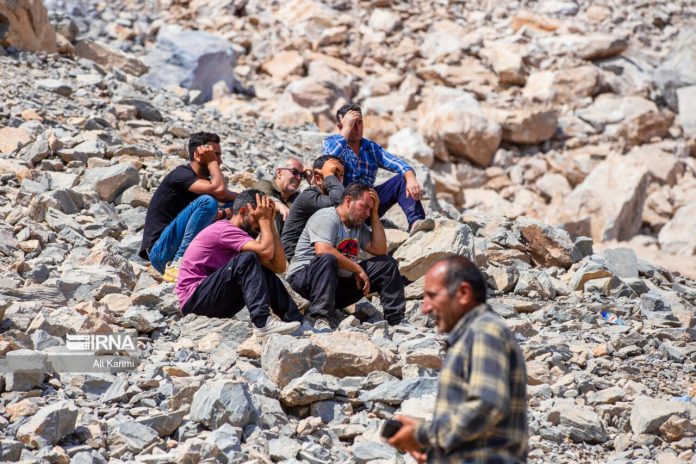
Body of second missing person found after mine collapse in Iran’s Shazand

Iran Rescue Operation Mine

The mine collapsed at around 10:00 am local time (0630 GMT) on Sunday and trapped four mining vehicles and the drivers.

An explosion at the mine and the rainfall the day before reportedly caused a landslide at the mine.

Considering the huge pile of rubble, search and rescue dog were immediately deployed to the scene and search is underway for the other two individuals.

The owner of the mine has been arrested upon a judicial warrant issued by the attorney general of Shazand County.

Iran’s caretaker President Mohammad Mokhber has called on rescue teams to speed up the operations.

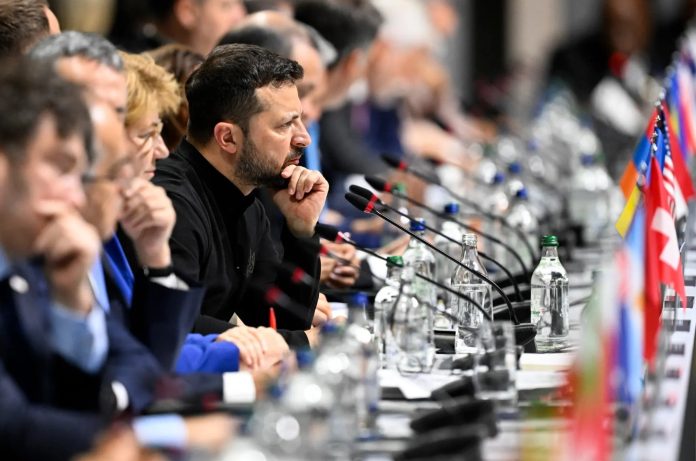
Zelensky says would hold peace talks if Russian soldiers leave Ukraine territory

Ukraine Zelensky

The two-day summit was held to accelerate efforts to end the war in Ukraine, and came to a close on Sunday with dozens of countries committing to Ukraine’s territorial integrity.

War analysts have called President Vladimir Putin’s purported interest in peace negotiations merely a hollow attempt to “seduce” the West.

Putin mocked the summit as “just another ploy to divert everyone’s attention, reverse the cause and effect of the Ukrainian crisis [and] set the discussion on the wrong track”.

China, the country’s biggest ally, declined to attend, which assured the summit would fail to achieve Ukraine‘s goal of persuading major countries from the “global South” to join in isolating Russia.

Despite 90 countries attending the two-day conference, they failed to persuade major non-aligned states to join their final statement, and no country came forward to host another meeting.

Still, the conference provided Kyiv with a chance to showcase the support from Western allies that it says it needs to keep fighting against a far bigger enemy.

“We are responding to Russia‘s full-scale invasion of Ukraine not only with a full-scale defence of human life, but also with full-scale diplomacy,” Zelensky stated.

He told the BBC: “Russia can start negotiations tomorrow if they pull out of our territories.”

The event included presidents and prime ministers from France, Germany, Britain, Japan, Poland, Argentina, Ecuador, Kenya and Somalia. The Vatican was also represented, and vice president Kamala Harris spoke for the United States.

India, Mexico, Saudi Arabia, South Africa, Thailand and the United Arab Emirates – which were represented by foreign ministers or lower-level envoys – were among countries that did not sign the final document, which focused on issues of nuclear safety, food security and the exchange of prisoners. Brazil, an “observer”, did not sign on, but Turkey did.

Ursula von der Leyen, the president of the European Union’s executive Commission, said the conference was rightly titled “Path to Peace” because peace won’t be achieved in a single step.

“It was not a peace negotiation because Putin is not serious about ending the war. He is insisting on capitulation. He is insisting on ceding Ukrainian territory – even territory that today is not occupied by him,” she added.

“He is insisting on disarming Ukraine, leaving it vulnerable to future aggression. No country would ever accept these outrageous terms.”

It comes after Putin promised on Friday to “immediately” order a ceasefire in Ukraine and start negotiations if Kyiv began withdrawing troops from the four regions annexed by Moscow in 2022 and renounced plans to join NATO.

Zelensky rejected what he called an ultimatum by Putin to surrender more territory.

The summit’s final declaration called for Ukraine‘s control over the Zaporizhzhia nuclear plant and its Azov Sea ports to be restored.

But in line with the conference’s more modest stated aims, it omitted tougher issues of what a post-war settlement for Ukraine might look like, whether Ukraine could join the NATO alliance or how troop withdrawals from both sides might work.

Netanyahu announces opposition to Israeli military ‘tactical pauses’ for Gaza aid

Gaza War

The military had announced the daily pauses from 05:00 GMT until 16:00 GMT in the area from the Karem Abu Salem (Kerem Shalom) crossing to the Salah al-Din Road and then northwards.

“When the prime minister heard the reports of an 11-hour humanitarian pause in the morning, he turned to his military secretary and made it clear that this was unacceptable to him,” an Israeli official told the Reuters news agency.

The military clarified that normal operations would continue in Rafah, the main focus of its ongoing assault in southern Gaza, where eight soldiers were killed on Saturday.

Israel forces razed homes in the area and attacks there continued on Sunday, despite it being the first day of Eid al-Adha, the most important Muslim celebration of the year.

An Israeli attack on two homes in the Bureij refugee camp in central Gaza killed nine people, including six children, according to the Palestinian state news agency Wafa.

Meanwhile, at least two Palestinians in Rafah’s western Tal as-Sultan neighbourhood were killed in another Israeli attack, which the military followed up by targeting an ambulance trying to reach the victims, according to Al Jazeera Arabic’s correspondents on the ground.

The Israeli military also announced the death of three soldiers, two of them reservists, in fighting on Sunday.

Netanyahu’s opposition to the tactical pauses underlined political tensions over the issue of aid coming into Gaza, where international organisations have warned of a growing humanitarian crisis and looming famine.

National Security Minister Itamar Ben-Gvir, who leads one of the far-tight nationalist religious parties in Netanyahu’s ruling coalition, denounced the idea of a tactical pause, saying whoever decided it was a “fool” who should lose their job.

Far-right government ministers want to slash aid coming into Gaza further, even though it has been largely cut since Israel took over the vital Rafah border crossing. And for months, right-wing Israelis have been protesting and blocking roads to prevent aid shipments from reaching Gaza, further straining the flow of desperately needed aid to the territory.

Prior to the May 6 seizure of the crossing, there was already an inadequate flow of humanitarian aid into Gaza, especially into northern Gaza where famine has already taken hold.

The spat was the latest in a series of clashes between members of the coalition and the military over the conduct of the assault on Gaza, now in its ninth month.

It came a week after centrist former general Benny Gantz quit the government, accusing Netanyahu of having no effective strategy in Gaza.

The divisions were laid bare last week in a parliamentary vote on a law on conscripting ultra-Orthodox Jews into the military, with Defence Minister Yoav Gallant voting against it in defiance of party orders, saying it was insufficient for the needs of the military.

Religious parties in the coalition have strongly opposed conscription for the ultra-Orthodox, drawing widespread anger from many Israelis, which has deepened as the war has gone on.

Lieutenant-General Herzi Halevi, the head of the military, stated on Sunday that there was a “definite need” to recruit more soldiers from the fast-growing ultra-Orthodox community.

Despite growing international pressure for a lasting ceasefire, an agreement to halt the fighting still appears distant, more than eight months since October 7, when Israel unleashed its most ruthless offensive in Gaza following Hamas attacks into southern Israel.

Israel’s military campaign has killed more than 37,300 Palestinians, according to Palestinian health ministry figures, and destroyed much of the enclave.

Although opinion polls suggest most Israelis support the government’s aim of destroying Hamas, there have been widespread protests attacking the government for not doing more to bring home around 120 captives who have been held by Hamas in Gaza since October 7.

As fighting in Gaza has continued, a lower-level conflict across the Israel-Lebanon border is now threatening to spiral into a wider war as near-daily exchanges of fire between Israeli forces and the Iran-backed Hezbollah group have escalated.

In a further sign that fighting in Gaza could drag on, Netanyahu’s government announced on Sunday that it was extending until August 15 the period it would fund hotels and guest houses for residents evacuated from southern Israeli border towns.

Israeli soldiers violently block Palestinians from Al-Aqsa Mosque on Eid

Aqsa Mosque

Hundreds of people, mainly young men, were prevented at checkpoints in the Old City from reaching the religious site, with some being beaten by batons, pushed and shoved by Israeli officers.

Ahead of the prayer to mark Eid al-Adha, which is celebrated by Muslims worldwide at the end of Hajj, the Islamic pilgrimage to Mecca, Israeli troops also stormed the courtyard of Al-Aqsa Mosque.

The Islamic Waqf, or religious endowment, announced that only around 40,000 Palestinians managed to pray inside Al-Aqsa Mosque.

Eid prayers often draw hundreds of thousands of Palestinians from East Jerusalem and the West Bank.

However, Israeli authorities have increased their restriction on Muslims’ access to the Jerusalem site since 7 October, severely limiting the number of people allowed inside.

Similar restrictions were also placed on Palestinians in Hebron’s Ibrahimi Mosque, where Israeli soldiers allowed only 8,000 people to pray there, according to local media.

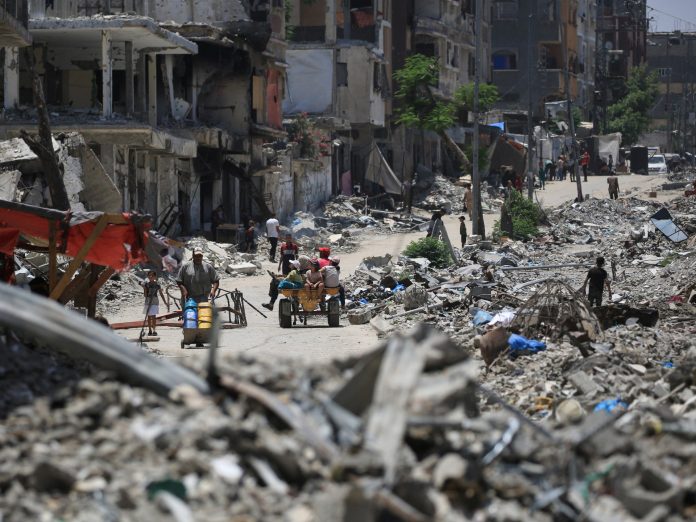
In war-torn Gaza, Palestinians held Eid al-Adha prayers next to ruins of destroyed homes and mosques.

The Israeli war on the besieged strip, now in its ninth month, has distorted most residential buildings and mosques, turning the 365 sqkm enclave into a hellscape.

More than 800 mosques have been damaged, including 600 fully destroyed, according to the Gaza-based government media office.

Among them is the Great Omari Mosque, in the Old City, which is Gaza’s oldest mosque.

In total, at least 137,297 structures, more than half of all buildings in the Gaza Strip, have been destroyed by Israel’s bombing campaign, according to satellite imagery analysed by the United Nations Satellite Centre.

The UN agency for Palestinian refugees (UNRWA) stressed the destruction in Gaza was “indescribable” and clearing the rubble would take years.

Iran, Russia reaffirm opposition to foreign meddling in Caucasus

Bagheri and Khovayev

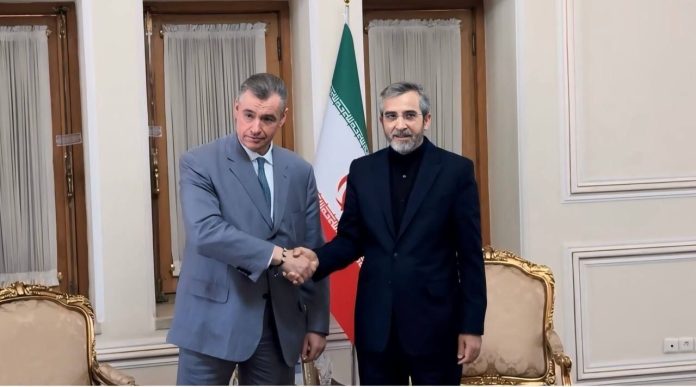
Igor Khovayev, the Special Representative of the Russian Foreign Minister for the Settlement of Issues between Azerbaijan and Armenia, who is visiting Tehran for discussions on the latest developments in the Caucasus region, met on Sunday with Bagheri.

Bagheri, noting the alignment of the two countries’ positions on important regional and international issues, referred to the Caucasus region as an area of national interest and security for both countries, and emphasized the necessity of bilateral cooperation in this domain.

Iran’s Acting Foreign Minister, highlighting the principled stance of the Islamic Republic of Iran on the peaceful resolution of regional issues, stated that the importance and sensitivity of the current developments in the Caucasus region, especially the increasing foreign interventions, necessitate strategic coordination and continuous consultation between Iranian and Russian officials.

In this regard, he stressed the importance of maximizing the use of regional mechanisms such as the 3+3 structure to resolve regional issues, expand regional cooperation and convergence, and ensure the security, stability, and collective interests of the countries in the Caucasus region.

Khovayev, for his part, conveyed the warm greetings of Sergey Lavrov, the Russian Foreign Minister, and provided a report on his country’s diplomatic efforts to establish peace and tranquility in the Caucasus region.

He emphasized Russia’s view on the need for a joint and strategic assessment by both countries regarding the developments in the Caucasus region, and the necessity for close and continuous interaction and coordination between officials of the two countries to counter the interference of external actors in the region.