Tuesday, December 30, 2025
Home Blog Page 842

Time up for presidential campaign in Iran

Iran Presidential Election

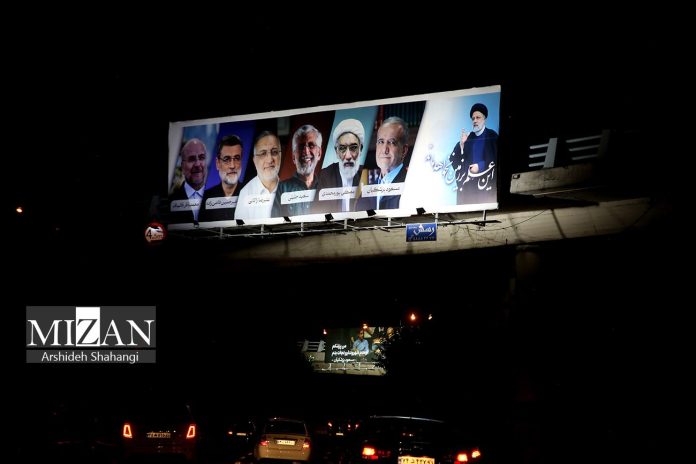
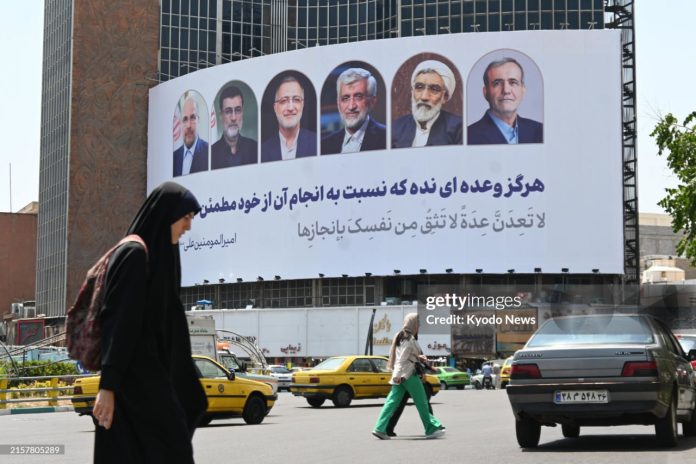
The Elections Headquarters announced that any election campaign is forbidden as of 8 am Thursday, June 27, based on the election law.

As expected, Amirhossein Ghazizadeh Hashemi withdrew his candidacy and called on the other right-wing candidates to follow suit “so that Revolution front will be strengthened.”

According to opinion polls, the main contenders are reformist Massoud Pezeshkian, Parliament Speaker Mohammed Baqer Qalibaf, and principlist Saeed Jalili.

Tehran Mayor Alireza Zakani’s campaign spokesman has announced in case either Qalibaf or Jalili drops out in favor of the other, he would do the same to unite the principlist camp.

Although many opinion polls show that former justice and interior minister Mostafa Pourmohammadi has slim chances of winning the office, analysts believe he outshone in the five rounds of televised presidential debates with his sound argument and verbal communication.

Opinion polls say Pezeshkian, who has the backing of many heavyweights including former presidents Mohammad Khatami and Hassan Rouhani, is leading the race and in case his rivals do not form a united front, his chances of winning in the first round are high.

People will go to the polls on Friday in the snap election to pick a successor to the late President Ebrahim Raisi who died in a helicopter crash last month.

French court upholds arrest warrant for Syria’s Assad

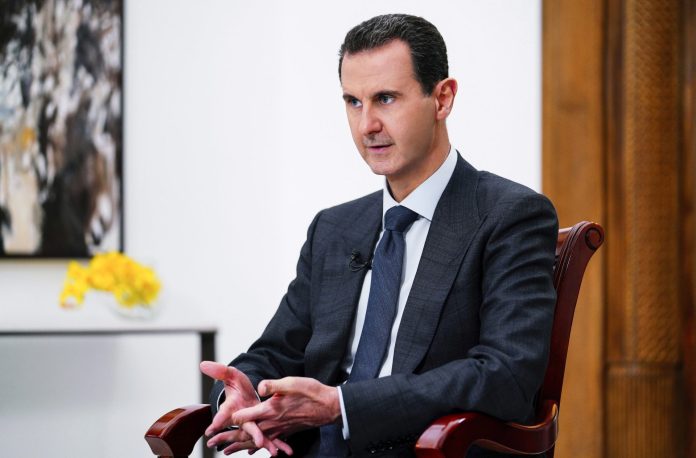
Bashar Assad

The judges ruled on Wednesday that the warrant, which French anti-terrorism prosecutors had sought to annul on the grounds that al-Assad enjoys immunity as a serving head of state, remains in force.

“This is a historic decision. It’s the first time a national court has recognised that a sitting head of state does not have total personal immunity” for their actions, said plaintiffs’ lawyers Clemence Bectarte, Jeanne Sulzer and Clemence Witt.

Mazen Darwish, director of the Syrian Center for Media and Freedom of Expression, stated the decision “shows that there is no immunity when we are talking about crimes against humanity and using chemical weapons against civilians”.

The case against al-Assad is a particularly high-profile example of victims of the country’s devastating war seeking accountability for government troops that took part in atrocities.

An arrest warrant was issued for al-Assad, his brother Maher, and two Syrian generals in November for alleged complicity in war crimes, including chemical weapons attacks on the cities of Douma and East Ghouta in 2013.

With al-Assad maintaining a large degree of control over Syria, devastated by years of fighting during which his forces were accused of atrocities against civilians, Syrians who fled the country and settled in Europe have launched legal efforts to hold members of the Syrian military and government to account.

The August 2013 chemical attacks killed more than 1,000 people and injured thousands more, but international condemnation produced little change in the Assad government’s prosecution of the war.

Syria has denounced repeated accusations against the Arab country by the United States and its European allies over the false-flag chemical attack on the outskirts of the capital Damascus.

In May, anti-terror prosecutors contested the arrest warrant against al-Assad, maintaining that acting heads of state enjoy absolute immunity. The prosecutors did not challenge the arrest warrant for al-Assad’s brother or the Syrian generals Ghassan Abbas and Bassam al-Hassan.

Those named in the warrants can be arrested and brought to France for the investigation, an unlikely outcome that advocates nonetheless say sends a message of accountability at a time when the Assad government has begun to come back in from the cold after years of being shunned by regional governments and organisations.

Canadian university sues  own students over encampment for Gaza

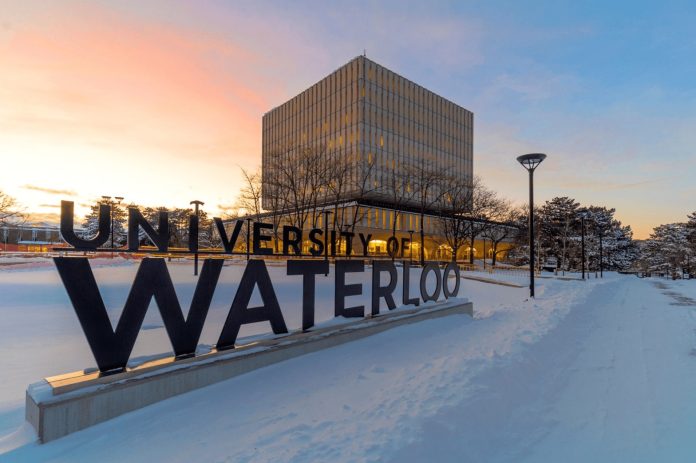
The University of Waterloo in Canada

According to reports in the Canadian press, administrators were suing the encampment for $1.5m in damages including “trespass[ing], damage to property, intimidation and ejectment”.

The university alleges the student encampment has damaged the school’s reputation, driven up administrative and operational costs for the university and depreciated the university’s property values.

Protesters are being urged to disband the camp and vacate immediately, as well as return school property to its original state before the encampment.

The legal injunction was filed on Tuesday and comes several days after administrators issued a trespassing notice to the encampment.

It also comes two weeks after the university agreed to be more transparent about companies it invests in as part of the disclose and divest demands made by the student movement.

But students said they wouldn’t vacate until the university moved to divest from companies profiteering from Israel’s occupation.

“Unfortunately, the encampment remains in place in violation of Waterloo policies and the law,” Vivek Goel, the university president, said in a statement on Tuesday.

“We have said repeatedly… the right to protest does not mean people have the right to endlessly occupy a shared university space,” Goel’s statement added.

“The behaviour of encampment members has crossed the line to intimidation and harassment, making their ongoing presence untenable.”

The school had formally asked the students to end the encampment on 23 May.

In statement released by organisers of the encampment, Occupy UWaterloo, the student group said it was “incredibly shameful” that the university adminstration had decided “to sue their own student body that’s protesting the university’s complicity in a genocide that’s almost nine months in and has claimed the lives of over 40,000”.

“We remain undeterred and committed to our cause and people. History will absolve us. But you admin, how will you be remembered?”

The university announced it was pursuing the action based on the findings made by the Task Force on Free Expression and Inclusive Engagement.

But Emmett Macfarlane, one of the members of the taskforce, said on X he was “deeply troubled by the reliance on our report to justify the violation of the very principles it outlines”.

Macfarlane, a professor in the department of political science, said the university had alluded to incidents of harassment and intimidation in its decision to sue, but “it offers no specifics, and does not even clearly state whether the university has made a legal judgement that a law has been broken (for example criminal harassment) or if is merely responding to complainants’ perception”, Macfarlane.

The move has also drawn widespread ridicule from other scholars and academics.

“I’m still blown away by the audacity of these administrators to actually make a formal argument that it is the protesters’ demands that their institutions act to prevent and avoid complicity in genocide, rather than their staunch refusal to act, which causes reputational harm,” Vincent Wong, an assistant professor at Windsor Law, in Ontario, wrote on X.

The Gaza solidarity encampment at University of Waterloo began on 13 May.

In a statement at the time, Occupy UWaterloo stressed they “refused to sit idly by and watch our university support genocide with our tuition dollars!”

“For seven months the university has lied to, dismissed and surveilled students calling for divestment and an end to UW’s financial and academic ties to the genocidal and apartheid state of Israel.”

The University of Waterloo, like many universities across North America, has been accused of double standards when it comes to Israel’s war on Gaza.

In October, following the Hamas-led attacks on southern Israel, the university president condemned the incident as a terror attack that “targeted innocent civilians because of their identity and because of where they live. These deaths were unacceptable and heartbreaking”.

In a subsequent statement, Goel described the Israeli government’s decision to cut, food, electricity and water from Gaza as having “horrific consequences”.

But he stopped short of condemning Israel for their continued actions in Gaza that has killed tens of thousands of Palestinians since October.

There are still several high profile encampments maintaining their presence in Canada, including at the University of Toronto and McGill University in Montreal.

Both universities have indicated that it would be pushing for those to be dismantled, too.

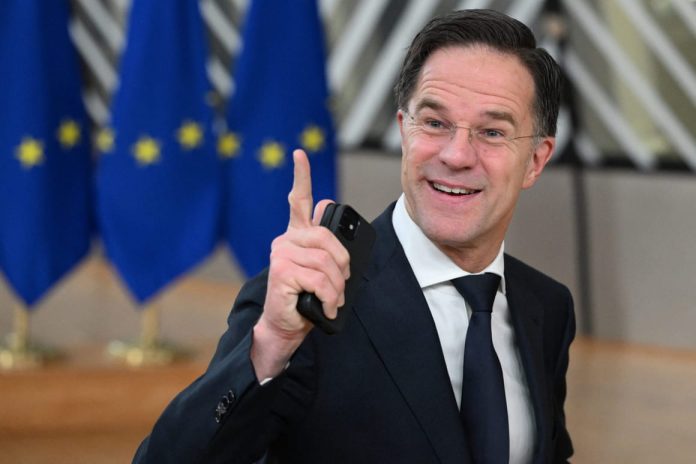
NATO picks Mark Rutte as new Secretary General

Mark Rutte

His appointment comes after Romanian President Klaus Iohannis – his only rival for the position – announced last week that he had withdrawn from the running.

“It is a tremendous honour to be appointed Secretary-General of NATO. The Alliance is and will remain the cornerstone of our collective security,” Rutte said in a post on X Wednesday.

The Dutch leader, 57, stated he was grateful to the NATO allies for placing their trust in him.

“Leading this organization is a responsibility I do not take lightly,” he added.

Rutte is set to start his new position on October 1 when incumbent NATO chief Jens Stoltenberg’s 10-year tenure comes to an end, according to a statement from the alliance.

Commenting on Rutte’s appointment, Russian Foreign Ministry Spokeswoman Maria Zakharova pointed out that NATO countries, and the Secretary General in particular, do not make decisions in the alliance because the United States dominates the organization.

“In this structure, not even the member states decide anything, let alone the Secretary General. The Americans run everything,” she stated.

Rutte’s appointment as NATO’s secretary general will not “change anything” for Russia, which still sees the alliance as an enemy, the Kremlin also announced.

“It is unlikely that this choice can change anything in the general line of NATO,” Kremlin spokesman Dmitry Peskov said on Wednesday, adding, “At the moment, this is an alliance that is an enemy for us.”

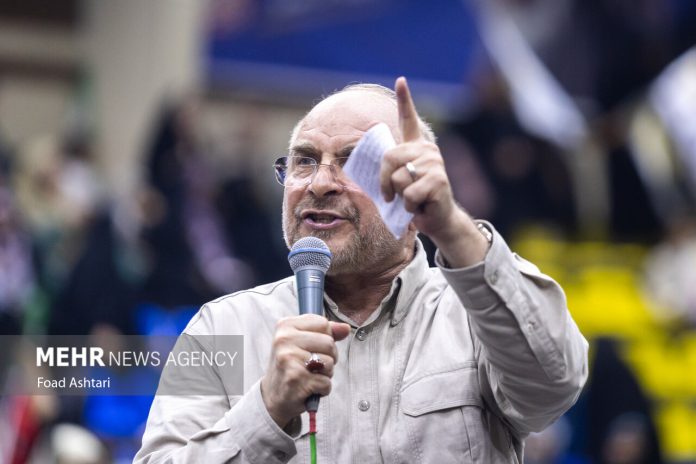
Presidential candidate Qalibaf: Iranians will no longer tie their life to JCPOA 

Mohammad Baqer Qalibaf

Qalibaf was speaking at Shahid Shiroudi Stadium in central Tehran during a rally of his supporters on Wednesday.

“People will not allow everything to be kept stagnant and waiting for a decade”, he said, referring to efforts by ex-president Hassan Rouhani’s administration to keep Iran’s economy afloat amid heavy Western sanctions through resolving differences with the West over Iran’s nuclear program.

Qalibaf also warned against moves to cause tensions in Iran where presidential candidates are campaigning ahead of the Friday voting.

He said some quarters are trying to cause divisions in the country.

The principlist presidential candidate further described Friday as an important day, saying that he is confident that the people will make the right choice as they go to the polls to elect a new president.

Iranians will go to the polls to elect a successor to late President Raisi who died in a copter crash on May 19.

Six candidates are vying for the top executive post.

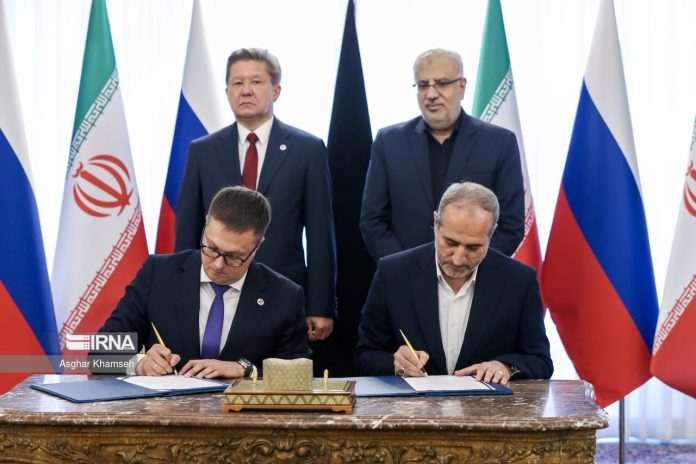
Iran and Russia sign strategic partnership deal for gas

Iran Russia Gas Deal

Iran’s oil minister says in the previous quarter, the Iranian National Gas Company held negotiations with Russia’s Gazprom, and the two sides signed a memorandum of understanding for the transfer of Russian gas to Iran.

Javad Owji added that this happened thanks to efforts by late President Ebrahim Raisi who pursued the issue in his repeated meetings with Russian President Vladimir Putin.

While noting that Iran and Russia sit on more than 60% of the world’s gas reserves, Owji described the agreement with Russia as a big step.

He also said this will undoubtedly result in positive developments in the energy balance in the region with Iran being fully ready to receive this amount of gas given that the Islamic Republic has the necessary infrastructure and gas transmission lines for this purpose.

The Iranian oil minister stressed the MoU will shortly become a contract, which will be a huge development for both Iran and Russia.

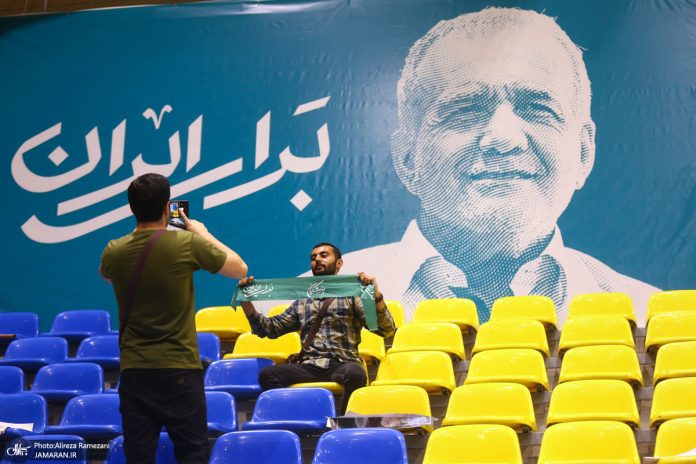
Research Center: Reformist candidate Pezeshkian front-runner in Iran presidential polls

Massoud Pezeshkian

Parliament Speaker Mohammed Baqer Qalibaf and principlist Saeed Jalili are trailing with 16.9 percent and 16.3 percent respectively, according to the survey.

Amir-Hossein Ghazizadeh Hashemi, with 3.2 percent, Alireza Zakani, 1.2 percent, and Mostafa Pourmohammadi, 0.5 percent, have slim chances of gaining the votes, the research center predicted.

However, the possible game changer is that 28.5 percent of the respondents are still undecided and have not chosen their favorite candidate, the results showed, adding 3 percent said that they will vote blank.

50.3 percent of the respondents in the survey were male and 49.7 percent were female. 40.1 percent were in the 18 to 35 year-old age category, 46.1 percent were between 36 and 60 years old, and 13.8 percent were above 60 years of age.

Meanwhile, 40.3 percent of the respondents live in provincial capitals, 9.36 percent live in towns, and 8.22 percent in rural areas.

The research center used simple random sampling and a pool of 1100 pollsters to gather the data. The results have a 95 percent accuracy with a 3 percent margin of error.

Iranians will go to the polls on Friday to elect a successor to the late President Ebrahim Raisi who died in a helicopter crash on May 19 along with his accompanying delegation.

WHO warns one in five Gazans facing extreme lack of food

Gaza War

“A high risk of famine persists across Gaza as long as the conflict continues. One in five people in Gaza experience an extreme lack of food. Almost all people in the Strip face high levels of acute food insecurity,” he wrote on the X social media platform.

The WHO chief emphasized that “only an end to the hostilities and immediate, unimpeded and sustained humanitarian access can reduce the risk of a famine occurring in the Gaza Strip”.

The latest food security assessment in Gaza has revealed that 96% of people face “extreme levels of hunger”, while nearly half a million people are in catastrophic conditions.

In its latest figure on Tuesday, the Integrated Food Security Phase Classification (IPC) report indicated that 96% of the population faces extreme levels of hunger in the Gaza Strip where more than 37,600 Palestinians have been killed in Israeli attacks since October last year.

The report revealed that about 2.13 million people across the Gaza Strip faced high levels of acute food insecurity classified in IPC Phase 3 or above (crisis or worse) between May 1 and June 15, including nearly 343,000 people who experienced catastrophic food insecurity (IPC Phase 5).

In its response to these figures, the World Food Program stated that it shows the critical importance of sustained access to all areas of Gaza.

“The Integrated Food Security Phase Classification (IPC) report on Gaza paints a stark picture of ongoing hunger, finding that 96 percent of the population is facing acute food insecurity at crisis level or higher (IPC Category 3+), with almost half a million people in catastrophic conditions (IPC Category 5),” the UN agency said in a statement.

The report noted that a high risk of famine persists across the whole Gaza Strip as long as the conflict continues and humanitarian access is restricted.

“While the whole territory is classified in Emergency (IPC Phase 4), over 495,000 people (22 percent of the population) are still facing catastrophic levels of acute food insecurity (IPC Phase 5),” added the the IPC which is a collaborative initiative involving over 20 partners, including governments, UN agencies and NGOs.

The report indicated that renewed hostilities since the beginning of Israel’s Rafah offensive and repeated displacement continue to erode people’s ability to access humanitarian assistance and increase the overall fragility of communities.

Israel, flouting a United Nations Security Council resolution demanding an immediate cease-fire, has faced international condemnation amid its continued brutal offensive on Gaza since an Oct. 7 attack last year by Hamas.

More than 37,600 Palestinians have since been killed in Gaza, most of them women and children, and nearly 86,100 others injured, according to local health authorities.

More than eight months into the Israeli war, vast tracts of Gaza lay in ruins amid a crippling blockade of food, clean water, and medicine.

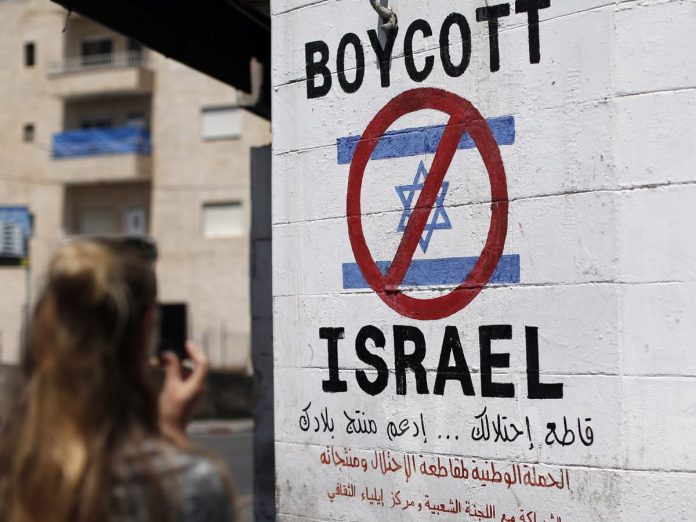
Over 60 percent of Europeans support suspending free trade with Israel: Poll

Israel Boycott, Divestment and Sanctions

The polling, which was conducted by YouGov from 5 to 10 June, found broad public support for the idea in all surveyed countries.

Even in Hungary, Israel’s staunchest European ally, only 39 percent of respondents opposed the suspension of trade with Israel. The results are even lower in France (29 percent), the Netherlands (27 percent) and Belgium (23 percent).

Israel, flouting a United Nations Security Council resolution demanding an immediate cease-fire, has faced international condemnation amid its continued brutal offensive on Gaza since an Oct. 7 attack last year by Hamas.

More than 37,600 Palestinians have since been killed in Gaza, most of them women and children, and nearly 86,100 others injured, according to local health authorities.

Over eight months into the Israeli war, vast tracts of Gaza lay in ruins amid a crippling blockade of food, clean water, and medicine.

Human rights organizations have warned that thousands of people in the besieged enclave are facing the risk of famine amid ongoing Israeli devastating onslaught.