Wednesday, December 31, 2025
Home Blog Page 832

Hamas rejects non-Palestinian plans for Gaza’s future

Gaza War

In a statement, the movement declared its refusal of “any plans, projects, or proposals that aim to bypass the Palestinian will regarding the future of Gaza, and any statements or positions that support plans to bring foreign forces into the region under any pretext or justification”.

“Ruling Gaza after repelling the (Israeli) aggression is a purely Palestinian matter, to be agreed upon by all sectors of our people, who will not allow any guardianship or the imposition of external solutions that undermine our fundamental rights to freedom and self-determination,” the statement added.

In June, The Washington Post daily reported that Israeli Defense Minister Yoav Gallant discussed a “day after” plan for Gaza with US officials during his visit to Washington.

According to the plan, “a steering committee headed by the United States and moderate Arab partners. An international force – potentially including troops from Egypt, Jordan, the United Arab Emirates and Morocco – would oversee security, with U.S. troops providing command and control and logistics from outside Gaza probably in Egypt.”

“Gradually, a Palestinian force would take responsibility for local security,” the newspaper added.

Hamas’ statement came as indirect negotiations between Israel and the movement resumed, mediated by Egypt, Qatar, and the US, to reach a prisoner exchange agreement and a cease-fire in Gaza.

Additionally, Israeli Mossad chief David Barnea headed to Doha on Friday for meetings on a prisoner exchange agreement and the Gaza cease-fire.

Egypt, Qatar, and the US have been trying for months to secure a truce and the release of the 120 remaining hostages in Gaza, but to no avail.

Hamas says any deal must end the war and bring a full Israeli withdrawal from Gaza. Israel, however, argues it will accept only temporary pauses in the fighting and wants to end the governance capabilities of the resistance group.

Israel, flouting a United Nations Security Council resolution demanding an immediate cease-fire, has faced international condemnation amid its continued brutal offensive on Gaza since an Oct. 7, 2023 attack by Palestinian group Hamas.

More than 38,000 Palestinians have since been killed, mostly women and children, and over 87,000 others injured, according to local health authorities.

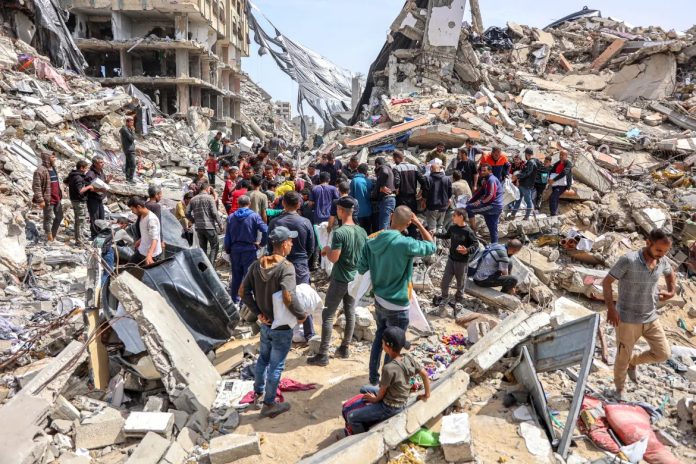
Nearly nine months into the Israeli war, vast tracts of Gaza lie in ruins amid a crippling blockade of food, clean water, and medicine.
NATO says wants Ukraine able to ‘deter’ Russia

Russia Ukraine War

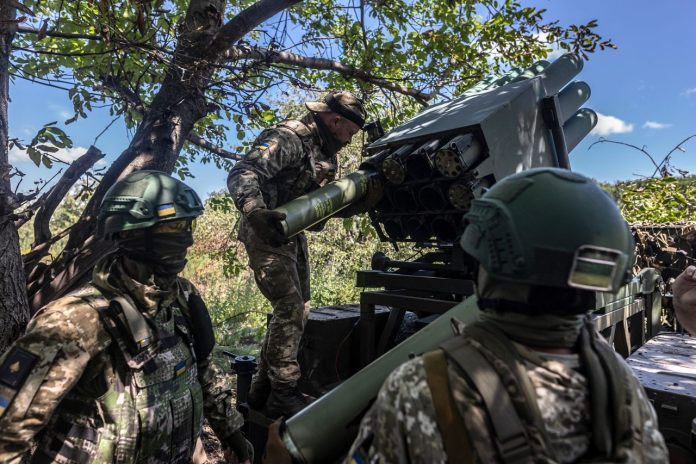
The outgoing NATO chief delivered the remarks during a press conference on Friday ahead of the bloc’s summit in Washington, which is scheduled for next week. Enduring support for Ukraine remains the bloc’s “most urgent task,” the official said, stating that NATO is also looking forward to continuing to prop up Kiev in the future.

“I expect allies will agree that we must sustain our support, our economic as well as military support—to Ukraine in a way that ensures that Ukraine prevails, that they’re able to defend against Russian aggression today and deter it in the future,” Stoltenberg stated.

The NATO boss also spoke against reaching a temporary settlement to end the hostilities, citing the 2014–2015 Minsk Agreements, which ultimately flopped. The deal provided a roadmap out of the civil conflict in then-Ukrainian Donbass, yet it was never implemented by Kiev.

Stoltenberg squarely blamed the failure of the Minsk Agreements on Russia, despite both Western guarantors and top Ukrainian officials openly admitting the whole deal was a mere ruse to buy time and bolster Kiev’s armed forces.

“The West agreed to Minsk-2, waited for seven years, and then [Russia] launched a full-scale attack and took even more. We cannot have Minsk-3. What we need now is something that is actually credible, something that actually stops the war and Russia stops its aggression,” he asserted.

Stoltenberg also addressed the surprise visit of Hungarian Prime Minister Viktor Orban to Moscow to meet Russian President Vladimir Putin, in an apparent attempt to downplay its importance.

“Hungary informed us about this upcoming visit. And I expect that when Victor Orban is in Washington at the NATO summit next week, there will be opportunities to discuss and address the discussions he had in Moscow. This is something that takes place on a regular basis between allies,” he added.

The NATO chief also claimed that Hungary, as a member of the bloc, fully agrees with its stance that “Russia is the aggressor and Russia is responsible for the war”. The assessment appears to contradict statements made by Orban and other top Hungarian officials, who had repeatedly suggested that Western “instigators of war” were to blame for sparking and prolonging the hostilities.

Chinese president congratulates Pezeshkian for winning Iran presidential polls

Xi Jinping

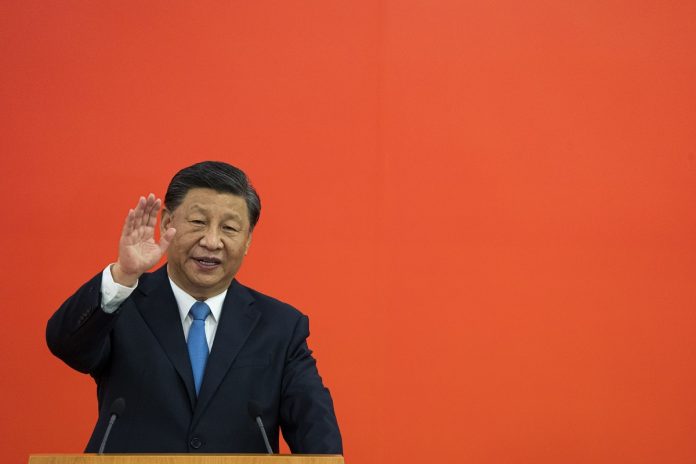
Xi Jinping said in a message, “I am willing to work with the president to lead the China-Iran comprehensive strategic partnership towards deeper advancement.”

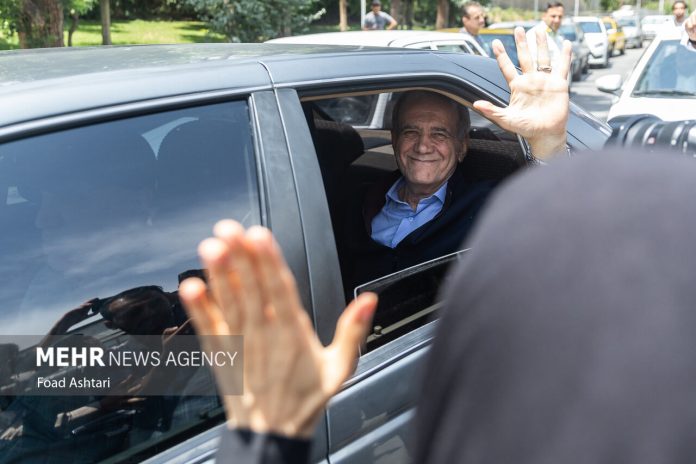
Pezeshkian won the presidential runoff vote and was picked as the president-elect after getting the majority of the votes against hisxrival Saeed Jalili.

Iran Leader hails successful presidential election

Ayatollah Khamenei

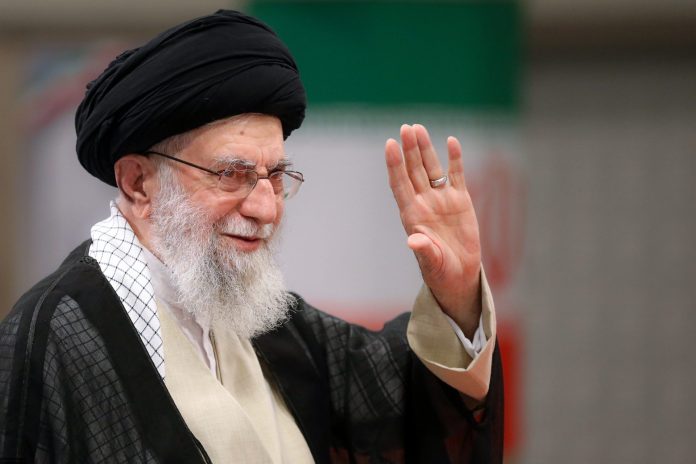
In a message on Saturday following the approval of the final results which declared Pezeshkian as the next president, Ayatollah Khamenei said people’s participation in the polls, despite calls for sanctions, was “brilliant and unforgettable.”

The Leader said, “This great move in confronting the artificial uproar of boycotting the elections, which the enemies of the Iranian nation had launched to induce despair and deadlock, is brilliant and unforgettable.”

Ayatollah Khamenei praised the late president Raisi for his efforts during his tenure, and called on president-elect Pezeshkian to use the country’s capacities in order to create comfort for people and bring about progress for the nation.

He added the candidates and all those who worked hard for weeks for the victory of their favotire candidates share the honor and reward.

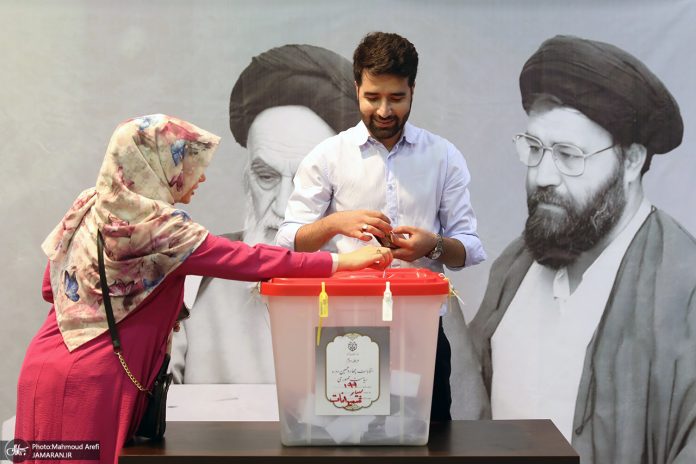
Over 30.5 million people went to polls in the runoff election across Iran on Friday. Pezeshkian got over 16.3 million of the votes and was propelled to the presidency in a tight race against former nuclear negotiator Saeed Jalili.

Iran’s currency strengthens after Pezeshkian wins presidential election

Dollar Rial

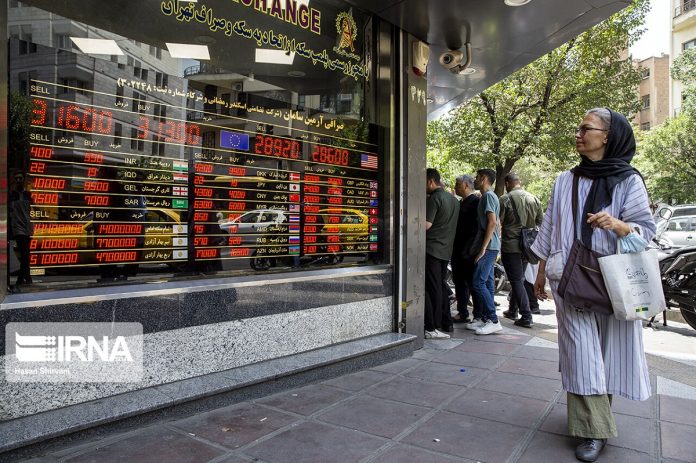
The US dollar is changing hands for about 590,000 rials in Tehran right now, whereas it was priced at about 615,000 rials before the run-off.

Iran has experienced multiple major currency freefalls in the past 15 years on the back of local mismanagement and sanctions.

The exchange rate of the US dollar was below 40,000 rials before the US unilaterally withdrew from the nuclear deal in 2018.

Pezeshkian defeated Jalili by a margin of 2.7 million votes in results announced early Saturday. With all ballots counted, Pezeshkian secured 16.4 million votes, while Jalili received 13.5 million votes. Turnout was 30.5 million, or 49.8% of the 61 million eligible voters.

The snap election was called after the death of President Ebrahim Raisi in a helicopter crash in Iran’s East Azerbaijan Province on May 19. According to Iranian law, a candidate needs to garner at least 50% plus one vote; thus, after no candidate achieved this in the first round on June 28, the election headed into a runoff between the top two candidates.

Pezeshkian, 69, is a heart surgeon-turned-politician who served as health minister in the 2000s and as first deputy speaker of parliament from 2016 to 2020. Jalili, 58, was Tehran’s negotiator during nuclear talks with world powers.

Ukraine bemoans ‘slow’ US military aid

Ukraine's President Volodymyr Zelensky

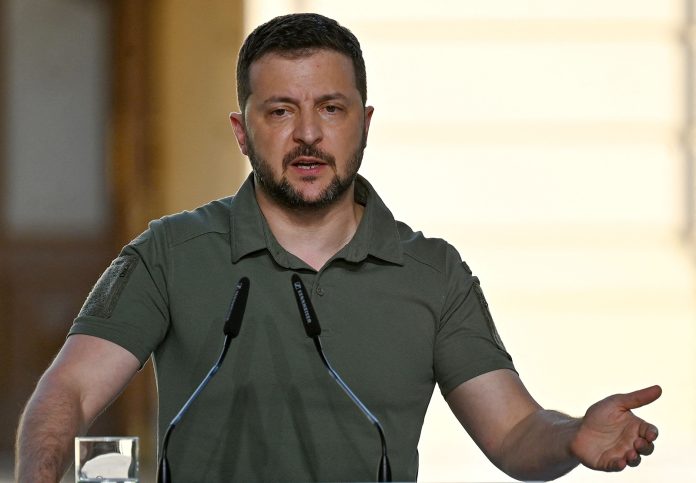
Speaking to Bloomberg, Zelensky refused to describe the frontline situation as a “stalemate”, stating instead that it remains “problematic”. Ukraine, however, is lacking enough tools to solve the cited “problems”, staying focused on defensive operations rather than launching a new counteroffensive push against Russia.

“We have the desire [to launch a counteroffensive], but the tools have not arrived. That is, we have brigades without weapons, we have reserves, we have 14 under-armed brigades that do not have the appropriate weaponry,” Zelensky claimed.

While the Ukrainian leader did not give exact numbers, he was apparently talking of at least 40,000-strong forces in reserve.

Zelensky then complained about the “slow” delivery of Western-made hardware to fill in the equipment shortages, claiming that already-pledged systems were not getting delivered swiftly enough.

“The packages that have already been voted-on and talked-about must arrive but, unfortunately, they’re coming slowly. We are grateful to the [US] Congress for their support and all, but everything must be delivered.”

Ukraine launched its long-heralded counteroffensive push against Russia early last June upon receiving a lot of sophisticated hardware from its Western backers. The push flopped, yielding minor territorial gains coupled with heavy personnel and hardware losses.

Ukraine’s subpar battlefield performance during the ultimately disastrous counteroffensive was followed by a months-long deadlock in the US Congress. Last October, the White House requested $61 billion for Ukraine as part of a national security funding bill.

The bill has been left in limbo, falling victim to domestic political struggles and getting through the legislature only in late April. Ukraine has openly blamed the lack of US funding for a string of defeats on the battlefield.

US President Joe Biden has repeatedly scolded the lawmakers over their inability to approve the package, offering his apology to Zelensky last month.

“I apologize for those weeks of not knowing what’s going to happen in terms of funding,” Biden stated at the time, blaming the delay of half a year on “some of our very conservative members” of Congress.

Saudi King, Crown Prince offer congratulations to Iran president-elect

MbS King Salman

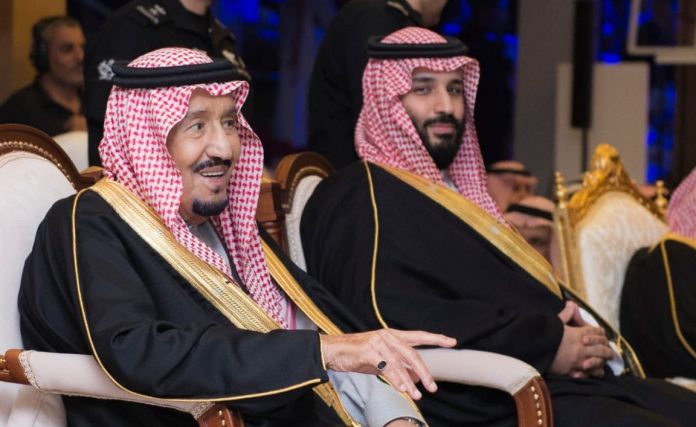
In a message on Saturday, the Saudi king said, “On the occasion of your victory in the presidential elections in the Islamic Republic of Iran, we are pleased to send you our sincere congratulations and best wishes for the success.”

The monarch also said Riyadh is “looking forward to continuing to develop relations between our two brotherly countries and peoples, and continuing coordination and consultations in order to enhance regional and international peace and security.”

King Salman also wished for “further progress and prosperity” of Iran in Pezeshkian’s term in office.

Meanwhile, the Saudi crown prince also expressed his “sincere congratulations and best wishes for success and further progress” of Iran.

Bin Salman expressed Saudi Arabia’s keenness to develop and deepen relations between the two countries and peoples, the Saudi news agency SPA reported.

Reformist candidate Pezeshkian defeated principlist Saeed Jalili and won Iran’s runoff presidential election on a campaign trail of reaching out to the West as well as social and economic reforms.

Pezeshkian, a heart surgeon and longtime lawmaker, received 16.3 million votes against Jalili’s 13.5 million.

Iran Interior Ministry hails presidential election as ‘safe, healthy’

Iran presidential election

Addressing a press conference at the Election Headquarters in Tehran, Vahidi said, “The election was held in complete health. Everything that happened surrounding the election will lead to cooperation and efforts for the progress of our dear country and achieving new heights.”

The interior minister congratulated Pezeshkian for winning the election as well as the other candidates who helped create a heated atmosphere for the elections.

He also praised over 30 million voters inside the country and abroad for taking part in the polls.

“There had been ungracious comments and incorrect analyses, whereby some tried to portray the election as being tampered but they were proven wrong,” Vahidi said.

The runoff for snap polls was held on Friday to find a replacement for the late president Ebrahim Raisi who died along with his companions in a helicopter crash on May 19.

Veteran MP Pezeshkian, 69, won over 16.3 million of the votes and his principlist rival Saeed Jalili got 13.5 million.

Israel sees 74.9% decline in tourist arrivals in six months of 2024: Report

Al-Quds

In January-June, the number of tourist arrivals in Israel amounted to 495,300, seeing a sharp decline from the record of about 1.97 million in the first six months of 2023.

According to the data, since the outbreak of the ongoing Israeli-Palestinian conflict in the Gaza Strip in early October last year, the monthly number of tourist arrivals in Israel has been below 100,000, except for May.

Israel’s economy has faced one of the biggest contractions in the its history in the fourth quarter of last year due to the ongoing war in the Gaza Strip, a report from the Central Bureau of Statistics revealed in late February.

Israel’s GDP slumped by a seasonally adjusted 19.4% in the final three months of 2023, which was the first quarterly drop in Israel’s economy in two years.

The contraction was significantly worse than both the Bloomberg and Reuters consensus forecast of a 10% decline. The hostilities paralyzed businesses, prompted evacuations and a record call-up of reservists, which removed roughly 8% of Israel’s workforce, according to economists.

The war caused a severe disruption to Israel’s $520 billion economy, leading to “restrictions comparable to shutdowns imposed during the Covid-19 pandemic, causing a sudden crash in manufacturing, jolting consumption and briefly emptying schools, offices and construction sites”, Bloomberg wrote.

Investment in Israel took the biggest blow, plunging by 70%, while private consumption, a major driver of economic growth, dropped by 27% in the fourth quarter. Public consumption plummeted by almost 90%, data showed.

Meanwhile, government spending skyrocketed by 88.1%, according to the statistics. Increased military spending played a large role in the surge.

For the full year, Israel’s GDP expanded by 2%, down from 6.5% growth in 2022. The Bank of Israel maintained its growth estimate for 2024 at 2%, while the Finance Ministry sees it at 1.6%.

The international ratings agency Moody’s has lowered Israel’s credit rating, which was Israel’s first-ever sovereign downgrade. Israel’s rating was lowered from A1 to A2 and its outlook kept at ‘negative’ due to what the ratings agency believes are the political and fiscal risks stemming from Israel’s continuing war against the Gaza Strip.

Iran president-elect extends ‘friendship hand to everyone’

Masoud Pezeshkian

The veteran lawmaker and former health minister said, “All of the supporters are from this country and we need to get help from all of them for the promotion of our country.”

In a message on X social media platform, Pezeshkian wrote, “Dear people of Iran, the elections are over and this is just the beginning of our companionship. The difficult path ahead will not be smooth except with your companionship, empathy, and trust.”

“I extend my hand to you and I swear on my honor that I will not leave you alone on this path. Don’t leave us alone,” he added.

Pezeshkian, 69, won the tight race to become the 9th president of Iran since the 1979 victory of the Islamic Revolution.

He secured over 16.3 million of the total 30.5 million votes, 49.61 percent, and his rival principlist Saeed Jalili got 13.5 million, or 48.86 percent.

“Even those who did not vote for us are our brothers,” Pezeshkian said.

Although Pezeshkian has a strong reformist base and support, he refuses to call himself a reformist, saying, “I had no party or support. People helped me out of love and I am grateful to all of them.”