Thursday, January 1, 2026
Home Blog Page 819

Inter reposts Taremi’s introduction video after ‘Persian Gulf’ outcry

Mehdi Taremi

However, the removal triggered yet stronger protests from Iranian fans who demanded restoration of the video.

Inter decided to post the video again but this time after removing the logo of the Qatar Airways.

Taremi, 31, joined the Serie A champions Inter on a three-year contract from Portuguese side FC Porto as the first Iranian in the Italian club’s history.

There are many historical accounts that the body of water has been referred to as the Persian Gulf throughout history despite recent efforts by Arab states to use a misnomer for the strategic water body.

According to the historical accounts, the Persian Gulf got its name from the Achaemenid Persian Empire, also known as Persian Hakhamanishiya, around 330 BC.

Iran Denies CNN allegations about involvement in Trump Assassination Attempt

Donald Trump

Nasser Kanaani said the Islamic Republic of Iran strongly rejects any involvement in the recent armed attack on Trump or claims about Iran’s intention for such an action, considering the allegations to have malicious political motives and objectives.

Referring to Trump’s direct role in the 2020 assassination of Brigadier General Qassem Soleimani, the former commander of the Quds Force of Iran’s Islamic Revolution Guard Corps (IRGC), Kanaani emphasized the Islamic Republic of Iran is determined to pursue legal action against Trump.

Meanwhile the Iranian Representative Office in New York denied the CNN claim describing it as being biased and baseless.

In a statement released on Tuesday evening, the Iranian representative office pointed out from the viewpoint of the Islamic Republic of Iran, Trump is a criminal offender for ordering the assassination of General Soleimani and must be put on trial for that.

However, it said, Iran is pursuing the legal path for holding Trump accountable.

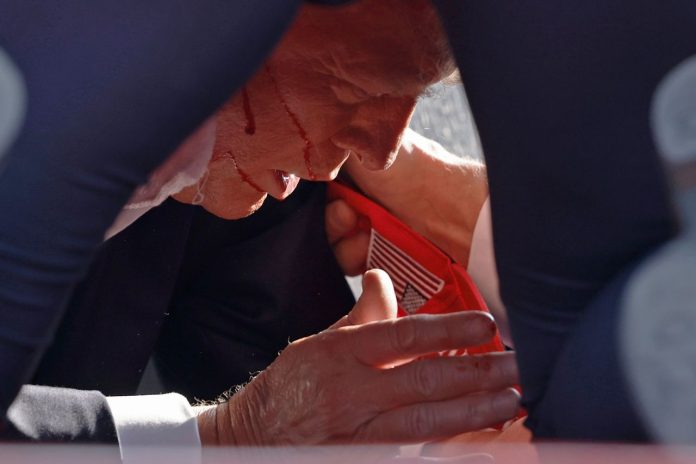
Trump was injured in a shooting incident during a rally speech in Pennsylvania. The attacker, a 20-year-old man, was shot dead by security forces.

Groups blocking Gaza aid receive donations from US and Israel: Report

Gaza Humanitarian Aid

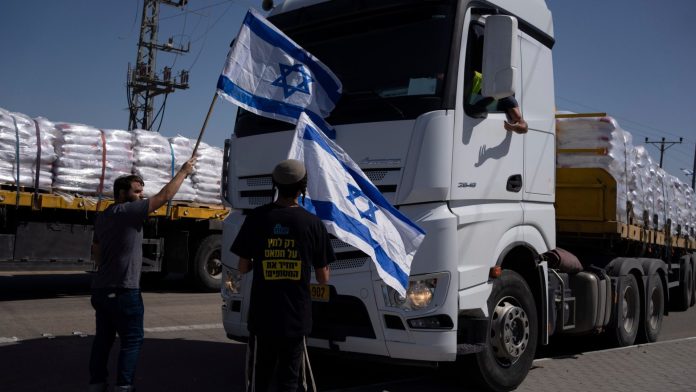
The three organizations described as ‘far-right’ have reportedly slowed down aid supplies by either blocking trucks on their way to Gaza, or by causing traffic jams and even standing in front of Kerem Shalom, the main crossing into the Palestinian enclave.

According to inquiries into crowdfunding websites and other public records conducted by the news agency and the Israeli investigative site Shomrim, three groups, including one accused of looting or destroying supplies, have raised over $200,000 via contributions from the US and Israel.

Mother’s March has reportedly raised the equivalent of over $125,000 through the Israeli crowdfunding site Givechack, the AP and Shomrim found. The group also raised some $13,000 via JGive, a US and Israeli crowdfunding site.

The report claims that the organization doesn’t not raise money directly, but works via an allied group called Torat Lechima, which says its goal is to “strengthen the Jewish identity and fighting spirit” among Israeli soldiers. A third group, Tzav 9, raised over $85,000 from just under 1,500 donors in the US and Israel via JGive.

The report alleges that the donations have been incentivized by making them tax-deductible. It noted that practices of this kind contradict a pledge by the US and Israel to allow unlimited flows of food and medicine into war-ravaged Gaza. Donations continued even after Washington introduced sanctions against Tzav 9.

“If you’re on the one hand saying you’re allowing aid in but then also facilitating the actions of groups that are blocking it, can you really say you’re facilitating aid?” Tania Hary, executive director of Israeli nonprofit Gisha, told AP. She added Israel has shown a “lack of coherence” in its Gaza aid policy.

Сommenting on the report, the US State Department told the news agency that Washington was committed to ensuring the delivery of humanitarian aid to Gaza. Neither US nor Israeli officials commented on the fundraising efforts by the far-right groups.

Nine months into the war in Gaza, the issue of humanitarian aid deliveries to the territory is of increasing importance. Earlier this month, a group of independent UN human rights experts accused Israel of conducting a “targeted starvation campaign”, saying that 34 people, most of them children, had died of malnutrition in the enclave since October 7.

EU refutes attempts to label UNRWA as ‘terrorist organization’

UNRWA

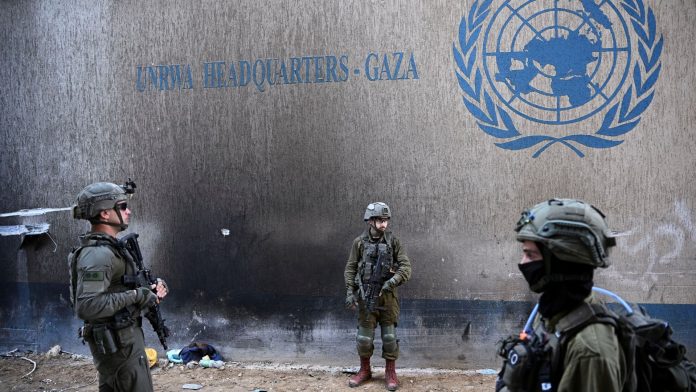
“We reject any attempts to label UNRWA as a ‘terrorist organization’. How can a United Nations agency be considered a terrorist organization?” Borrell said at a joint press conference with Jordanian Foreign Minister Ayman Safadi in Brussels on the sidelines of the 15th meeting of the EU-Jordan Association Council.

He stated the EU along with other international donors will continue to support and fund UNRWA.

“We agreed that it is critical to preserve UNRWA’s irreplaceable role throughout the region, certainly including in Jordan,” Borrell added.

Late in May, the Knesset (Israel’s parliament) passed a preliminary motion to approve a bill designating UNRWA as a “terrorist organization”.

The bill also mandates that the Israeli “Anti-Terrorism Law” be applied to the UN agency and ceases all communications and relations between Israel and the agency.

Israel has lobbying hard to have UNRWA closed as it is the only UN agency to have a specific mandate to look after the basic needs of Palestinian refugees.

UNRWA was established by a UN resolution in 1949 and is mandated to provide assistance and protection to refugees in its five areas of operation: Jordan, Syria, Lebanon, the West Bank, and the Gaza Strip.

Saudi Arabia executes a person every two days this year: Report

Execution in Saudi Arabia

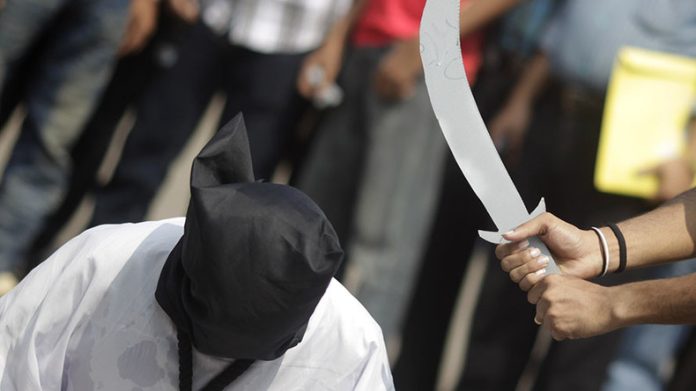
According to the rights group, which monitors executions in the kingdom, the rate amounts to an execution nearly every two days, representing a 42 percent increase compared to the same period in 2023, which recorded 172 executions.

ESOHR said that the surge indicates an “insistence on using the death penalty extensively, in violation of international laws and its official commitments”.

Despite the rise in execution numbers, the group noted that they had identified only three individuals facing imminent execution, indicating that many executions are taking place in secret.

According to Reprieve, which documents death penalty cases in the kingdom, in many cases the families of the victims are not aware they were on death row.

ESOHR noted that in 19 of the cases they monitored, the type of sentence and the court that issued it are often concealed in official reporting.

They added that this lack of transparency is “a new form of manipulation by Saudi Arabia to evade its commitments and continue using the death penalty as a tool”.

In 2023, a joint report by ESOHR and Reprieve revealed that Riyadh’s execution rate has almost doubled since King Salman and his son Mohammed bin Salman came to power in 2015. Between 2015 and 2022, executions surged by 82 percent.

In February this year, seven Saudi men were killed in a mass execution, the highest number put to death in one day since 81 were killed in March 2022.

According to the report, Saudi authorities routinely used the death penalty to quash political dissidents, in contravention of international law which stipulates it should only be used for the most serious crimes.

According to Reprieve, foreign nationals, including female domestic workers and drug offenders, are “disproportionately” targeted.

Despite the crown prince’s pledge in a 2018 interview that he would minimise executions, the country remains one of the world’s most prolific executioners.

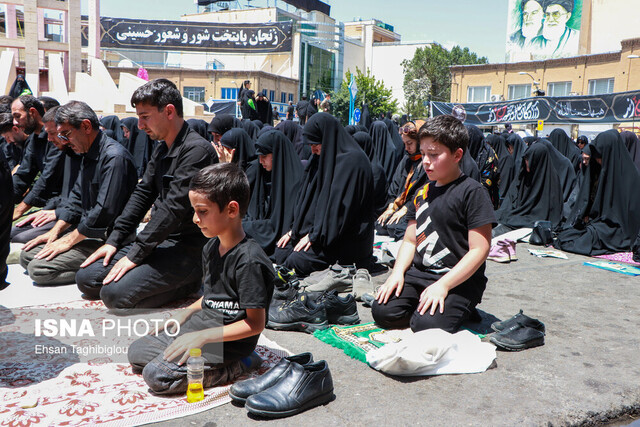
Iranians commemorate Ashura with nationwide noon prayers

Iranians commemorate Ashura with nationwide noon prayers

Mosques, religious centers, martyr cemeteries, and shrines were filled with worshippers who, with fervor and reverence for Imam Hussein, both mourned and prayed to demonstrate their love and devotion to the martyr of Karbala and his companions.

Following the call to prayer at noon, large groups of mourners and Imam Hussein devotees immediately paused their mourning activities to perform the obligatory prayer in streets, sidewalks, and wherever they were, emphasizing the significance of prayer as a core aspect of Imam Hussein’s movement.

From the early hours of the morning on Tuesday, people across Iran’s cities and villages mourned and wept for the heroes of Karbala.

They later joined congregational prayers, showcasing their deep affection and respect for the holy family.

Iran’s President-elect, Masoud Pezeshkian, also participated in the noon prayer in Tehran, held on Jomhouri Street in downtown the capital.

Shia Muslims across Iran and worldwide marked on Tuesday the martyrdom anniversary of the third Shia Imam and the Prophet’s grandson, Imam Hussein.

Imam Hussein and 72 of his companions were martyred on Ashura the in 680 AD in Karbala, southern Iraq, in a battle against the much larger army of the then ruler Yazid I.

Shias in Iran and other parts of the world have kept the rituals alive for centuries to relay Imam Hussein’s message of courage and fight against oppression, injustice, and tyranny to the next generations.

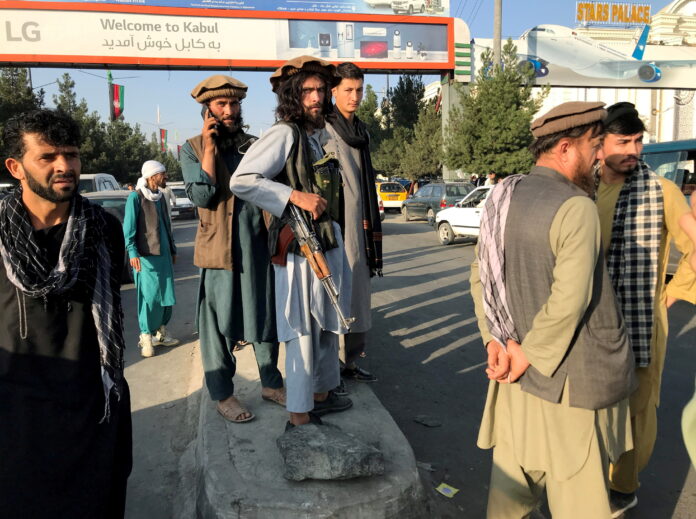
Several European countries mull reopening embassies in Afghanistan: Report

Taliban

In a sign of potential interest, Italy conducted a reconnaissance mission with its intelligence services in Kabul in the past few weeks, said some of the people, who were granted anonymity to discuss sensitive plans.

Foreign Minister Antonio Tajani confirmed Rome’s ambassador, currently posted to Doha, Qatar, had visited Kabul.

“We are working on it. There has been a mission by our ambassador,” he said in an interview on the sidelines of the NATO summit in Washington last week.

“There are human rights problems. The solution is very complicated, it will take time.”

Western nations, including the US, left Afghanistan after hastily evacuating nationals and security personnel in 2021, as Kabul fell to the Taliban, who had mounted a decades-long insurgency after being toppled from power in 2001. At least 70,000 civilians are estimated to have been killed in the war, according to the Watson Institute at Brown University.

French, German and UK officials, however, announced they had no immediate plans to reopen their missions in Kabul.

No European embassy is currently present on the ground, although the European Union has a delegation in the country and the US maintains an interest section at the Qatari representation. The only Group of Seven country with an embassy is Japan.

An EU spokesman stated its mission was the only presence from the 27-member bloc so far, but declined to comment on the possible return of individual member states, adding it was a decision for those governments.

The EU’s “presence is calibrated to the policies and actions of the Taliban de facto authorities, and does not bestow any legitimacy on it”, according to the website of the bloc’s diplomatic service.

“As soon as there are minimum security conditions, we’ll send our ambassador back,” Spain’s Foreign Minister José Manuel Albares said in an interview last week.

“We were ready a month ago. Unfortunately three Spaniards were killed by a Daesh terrorist attack in Afghanistan,” he added.

Albares stated Spain’s ambassador had moved to Kabul for some days in the wake of the attack.

“What we are looking for, because we have an ambassador to Afghanistan, although he lives for security reasons in Doha — as soon as it’s possible, we’ll want him back.”

A senior European diplomat noted the view among officials in Brussels had shifted to recognizing the necessity of a physical presence in the country to conduct development projects, protect women’s rights, and establish a strategic presence.

In Germany, authorities are publicly debating how to return Afghan asylum seekers who committed crimes or are convicted terrorists. Currently, such individuals cannot be deported back to the country because Germany has no diplomatic relations with the Taliban regime.

A French official confirmed there were no current plans to reopen the embassy but said that question would need to be addressed eventually. The current situation, with zero presence on the ground, can’t be maintained indefinitely, the person added.

The UK’s Foreign and Commonwealth and Development office announced it would “consider establishing a diplomatic presence in Afghanistan as soon as the security and political situation allows”.

A senior US administration official said the US had no intention of politically recognizing the Taliban or re-opening an embassy in Kabul. The official added the US had been clear with the Taliban that there were still concerns — primarily fair treatment for women and girls — that prevented it from moving in that direction.


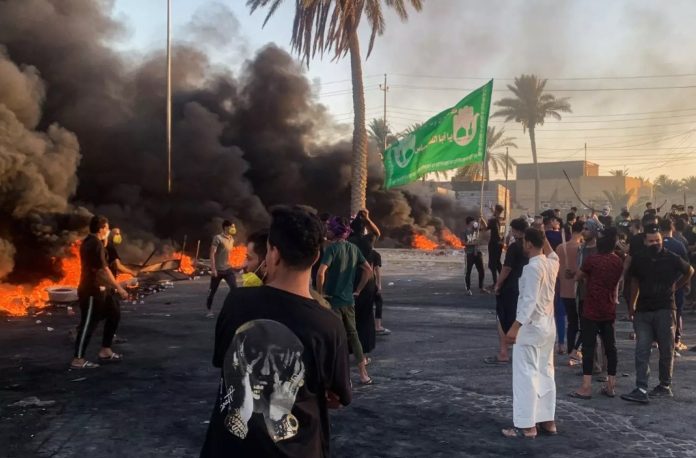
Iraq rocked by another summer of widespread power cuts

Iraq Protest

There have been days of demonstrations, primarily in the cities of Diwaniyah and Najaf in south-central Iraq, with activists burning tyres and police reportedly firing tear gas and live ammunition to disperse the crowds.

According to independent Iraqi TV station Al-Sumaria, hundreds of locals took part in protests on Sunday evening in Diwaniyah, complaining of “unfairness” and “favouritism” in distribution of power in the area.

“The demonstration began in the Shamiya district and the demonstrators blocked the Diwaniyah-Najaf road in protest against the deterioration of services and the power outage,” a security source told the Iraqi outlet.

There were further demonstrations in Diwaniyah’s Shafiiyya district on Monday, with tyres again being burned.

Ammar al-Khazaaly, an activist who took part in the Diwaniyah protests, told Middle East Eye that Monday’s protests were ongoing and were facing “repression” by the security forces who fired tear gas and live bullets, leaving campaigners with “minor injuries”.

He stated that the numbers were lower than the Tishreen demonstrations that rocked Iraq after October 2019, but that the anger was still palpable.

“These protests are regional – in each region there are their own protests,” he explained, adding that they included veterans of the Tishreen protests as well as newly angry locals.

“The numbers are lower than in previous protests, but they are also large in number.”

Other demonstrations were held in the Haidariya district of Najaf on Sunday, and the Ghamas district that lies between Diwaniyah and Najaf on Saturday, which saw protesters injured by live fire.

Al-Sabah daily newspaper cited a statement from the Diwaniyah governorate office in which they said they were trying to achieve a “reliable” electricity supply.

Diwaniyah requires 850 megawatts of electricity, but currently experiences four hours of power outages with only two hours of electricity supply, the report added.

Protests against power cuts have become a regular feature in the country during the summer months, especially since the end of the war against the Islamic State (IS) terror group has made public gatherings less dangerous.

Although Iraq is a resource-rich country, a combination of corruption and crumbling infrastructure has left many without access to electricity, vital for keeping cool in one of the hottest places on Earth.

Rights and environmental groups have warned that climate change means that much of Iraq will likely be uninhabitable in the coming years and that demand for infrastructure investment to cope with rising temperatures will only increase.

In October 2019, mass demonstrations broke out across the country against corruption, poor public services, unemployment and foreign intervention in Iraqi politics.

However, they were met with brutal police repression, kidnappings by shadowy armed groups and mass arrests.

The Covid-19 pandemic also dampened much of the revolutionary fervour that the protests sparked and the anti-government movement has struggled to regain momentum since.

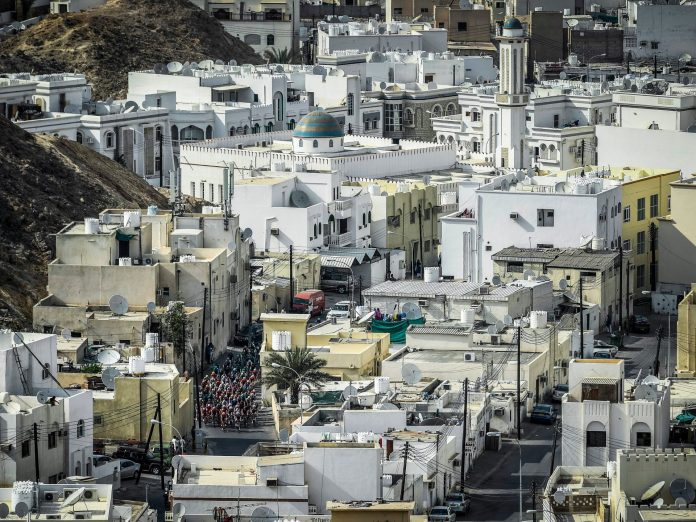
Omani police say gunfire near mosque killed four

Oman Mosque

The attack early on Tuesday took place in Wadi al-Kabir, a district east of the capital city, Muscat.

Omani police announced they’re taking “all necessary security measures and procedures … to handle the situation”. They gave an initial casualty toll of four killed and “several” injured.

“The authorities are continuing to gather evidence and conduct investigations to uncover the circumstances surrounding the incident,” police said on social media platform X.

No motive or potential suspects were identified in the attack. A state of emergency was declared in the area.

The Pakistani foreign ministry also said in a statement the “terrorist attack” in Wadi al-Kabir, in the governorate of the capital city Muscat, had caused the deaths of four Pakistani nationals.

Describing the incident in the Wadi al-Kabir district of Oman’s capital Muscat as a “terrorist” attack, the Pakistani ministry added 30 injured people were in hospital.

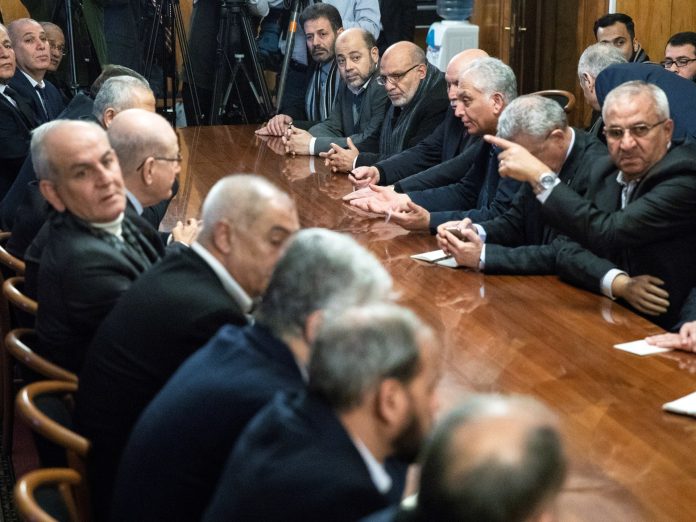
Hamas, Fatah to meet in Beijing within days

Hamas Fatah

“China hosts a meeting that includes all Palestinian groups as part of the exerted efforts to end the internal division, and will be preceded by a meeting between Hamas and Fatah groups,” Abdel Fattah Dawla, a Fatah senior leader, told Anadolu.

He added that the meetings will start on July 20, and will extend over three days.

“We in the Fatah Movement are open to solve and dismantle all obstacles in the way of reconciliation under the difficult conditions the Palestinian cause is going through along with the genocidal war on Gaza,” Dawla added.

For his part, Azzam Al-Ahmad, a member of Fatah’s Central Committee, stressed that his movement will participate in the Beijing meeting with openness aimed at ending the state of division.

The Hamas group is yet to comment on the upcoming meeting.

In Beijing, Foreign Ministry spokesman Lin Jian said Tuesday China has “consistently supported Palestinian factions in achieving reconciliation and unity through dialogue and consultation”.

“China provides a platform and creates opportunities for Palestinian factions to engage in a dialogue of reconciliation,” Lin stated, reacting to the possible meeting in China between the Palestinian factions.

In April, Lin noted representatives of Fatah and Hamas held “consultations on advancing intra-Palestinian reconciliation and for in-depth and candid dialogue” in Beijing.

Before the Beijing talks in April, the groups also held talks in Moscow in February.

Similar rounds of talks took place in the past years in Türkiye, Algeria, and Egypt, but all failed to bring a breakthrough in the Palestinian reconciliation file.

The Palestinian Territories of the West Bank and Gaza Strip have been politically divided since June 2007 due to sharp disagreements between the Fatah and Hamas movements.

Hamas won a majority in the legislative elections of 2006. Since then, it has controlled the Gaza Strip, and Fatah has governed the West Bank.