Sunday, December 21, 2025
Home Blog Page 8

Ukraine ‘already lost territory’: US

Russia Ukraine War

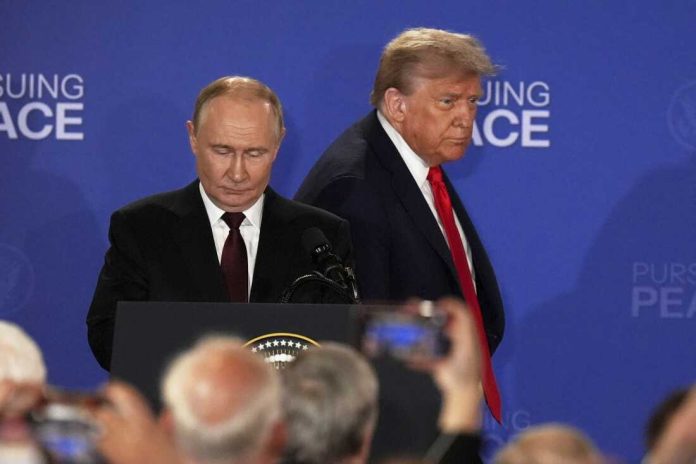
Last month, the Trump administration put forth a framework for a peace plan aimed at ending the Ukraine conflict. The proposals, which have since been revised multiple times, envisage Kiev renouncing its NATO aspirations, as well as its claims to Crimea and the Donbass regions of Lugansk and Donetsk, all of which joined Russia after referendums, among other points. In return, it would receive unspecified security guarantees.

Asked on Monday what “incentive” Ukraine has to give up territory, Trump suggested it may already be a settled issue.

“Well, they’ve already lost the territory, you know, to be honest. I mean, the territory is lost,” Trump told reporters at the White House.

“But in terms of security guarantee… We’re working on the security guarantees so the war doesn’t start up again.”

Trump said he recently held direct talks with Putin and believes Russia is serious about ending the conflict.

“At this moment, Russia wants to get it [ended]. And the problem is they’ll want to get it ended, and then all of a sudden they won’t. And Ukraine will want to get it ended, and all of a sudden they won’t. So we have to get them on the same page,” he added.

Following talks in Berlin on Monday between Trump’s envoys Steve Witkoff and Jared Kushner and a Ukrainian delegation, Trump said he had “a very good conversation” with European and NATO leaders, as well as Ukraine’s President Volodymyr Zelensky.

“We had very long and very good talks. I think things are going along pretty well,” Trump stated.

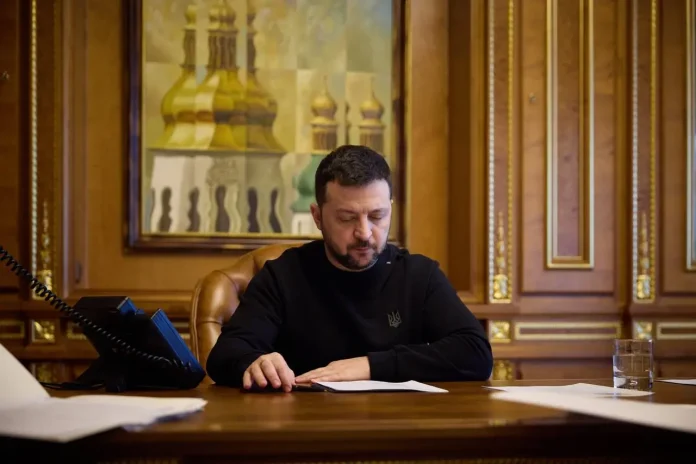
Zelensky, however, stated after the meeting that although some progress had been made, “the issue of concessions is definitely not relevant.” He recently floated the idea of a referendum on territorial concessions but insisted that Western security guarantees must be secured beforehand, along with the holding of a long-delayed presidential election.

Moscow has called it a ploy to prolong the conflict and regroup the Ukrainian military. Russia has consistently maintained that Crimea and Donbass, which voted to join the Russian Federation in 2022, are its sovereign territory, and Ukrainian troops will be pushed out of the region one way or the other.


Ukraine ready to hold elections, renounce NATO aspirations: Bild

According to the newspaper’s sources, “Ukraine would be prepared to accept both points [of the US plan on holding elections and renouncing a NATO membership bid] under certain conditions.”

Moreover, Kiev is allegedly also ready to “freeze” the current line of engagement but refuses to withdraw its troops from the entire Donbass territory.

On December 9, US President Donald Trump said it was time for elections to be held in Ukraine, arguing that Kiev was using the conflict as a pretext to delay the process.

On the same day, President Volodymyr Zelensky said he was ready to hold presidential elections but stressed that this would require legislative amendments and additional security measures to ensure that members of the military could vote. He called on lawmakers to prepare the necessary legal changes and urged the US and Europe to guarantee the security of the voting process.

On Sunday, US and Ukrainian delegations met at the Federal Chancellor’s Office in Berlin to discuss a possible settlement of the conflict. The US delegation included Special Envoy Steve Witkoff and President Trump’s son-in-law, businessman Jared Kushner. Ukraine was represented by Zelensky, National Security and Defense Council Secretary Rustem Umerov, and Chief of the General Staff of the Ukrainian army Andrey Gnatov. German Chancellor Friedrich Merz left the negotiating room after delivering a brief welcoming address.

The talks are expected to continue on Monday. According to Bild, Catholic Christmas has been set as the new deadline for a potential agreement.


Afghanistan’s neighbors refute foreign intervention, sanctions

In a statement released by Iran’s Ministry of Foreign Affairs at the conclusion of the meeting of special representatives of Afghanistan’s neighbors in Tehran, Iran said that the representatives emphasized regional integration and the centrality of the region in resolving existing issues and challenges, including some issues related to Afghanistan.

The Tehran meeting brought together officials from Iran, Pakistan, Russia, Uzbekistan, China, Tajikistan, and Turkmenistan on Sunday to exchange views on the latest developments in Afghanistan and the broader South Asian and Central Asian regions.

According to the statement, participants emphasized strengthening stability in Afghanistan and expressed their readiness to help achieve it if the Afghan side declares a need.

They underlined the importance of continuing economic and trade relations with Afghanistan with the aim of improving the livelihoods of the people of that country and pointed out the need for the country’s integration into the political and economic trends of the region.

Expressing security concerns, they announced and emphasized their readiness to assist Afghanistan in combating terrorism, drug trafficking, and human trafficking.

The representatives further highlighted the international community’s responsibility to lift sanctions and release Afghanistan’s frozen assets, support the return of Afghan citizens from neighboring countries, and provide conditions for their dignified return.

They supported all ongoing efforts to reduce tensions between Afghanistan and Pakistan, expressed readiness to help strengthen these initiatives, and called on both countries to return to the negotiating table to resolve their differences through diplomatic channels.

On Sunday, Iran’s Foreign Minister Abbas Araghchi, during a high-level meeting titled “Afghanistan Developments Review,” attended by special representatives, said Afghanistan’s stability depends on its integration into regional political and economic frameworks, urging cooperation among neighboring countries instead of reliance on outside interventions.

The high-stakes meeting comes as relations between Pakistan and Afghanistan have sharply deteriorated in recent months, amid escalating border tensions and mutual accusations of harboring militants.

Kabul accused Islamabad of carrying out drone strikes on October 9 that killed several people in the Afghan capital, vowing retaliation in response.

The following days saw heavy cross-border clashes that left dozens of soldiers, civilians, and militants dead on both sides before Qatar brokered a ceasefire on October 19.

However, the deal has since been followed by several rounds of fruitless negotiations hosted by Qatar, Turkey, and Saudi Arabia in an effort to secure a more lasting peace.


Iran, Belarus sign cooperation agreements during Minsk talks

The agreements included joint declarations on opposing unilateral coercive measures and on strengthening the role of international law in global affairs, as well as a foreign ministry cooperation program covering 2026–2030. Araghchi, who arrived in the Belarusian capital early Monday, also met President Alexander Lukashenko during the visit.

Speaking at a joint news conference, he described the talks as constructive and said relations between Iran and Belarus had remained friendly and mutually beneficial since Belarus gained independence.

The Iranian foreign minister said the two countries share similar positions on regional and international issues and cooperate closely in multilateral forums.

He thanked Belarus for condemning U.S. actions against Iran and for expressing solidarity with the Iranian people. Araghchi said recent reciprocal visits by senior officials had accelerated political and economic ties, citing meetings held over the past year.

He added that Tehran and Minsk intend to expand cooperation through regional groupings including the Eurasian Economic Union, the Shanghai Cooperation Organization and BRICS.

Both Iran and Belarus are subject to Western sanctions, and Araghchi said the two governments would continue coordinating efforts in international organizations to counter what they consider illegal and unjust measures.

New MI6 head warns of growing Russian threat

Kremlin

Blaise Metreweli, giving her first speech in the job, is expected to say the UK faces a new “age of uncertainty” where the rules of conflict are being rewritten, particularly in light of wider Kremlin aggression after the invasion of Ukraine.

“The export of chaos is a feature, not a bug, in the Russian approach to international engagement,” the agency’s first female chief will argue, and “until [President Vladimir] Putin is forced to change his calculus” it is expected to continue.

Similar comments about the scale of the threat, particularly from Russia, are expected to be made by Air Chief Marshal Richard Knighton, the chief of the defence staff, who is due to say in a separate speech that “the situation is more dangerous than I have known during my career” and call for the country as a whole to be “stepping up”.

Their pre-released remarks come as Prime Minister Keir Starmer is due to fly to Berlin for an emergency summit with European leaders, including Ukraine’s President, Volodymyr Zelensky, as well as President Donald Trump’s special envoy Steve Witkoff in an effort to persuade the US to accept an alternative European peace plan for Ukraine.

Russia is identified as an acute threat by Metreweli in her speech, due to be released in full on Monday afternoon, with an “aggressive, expansionist, and revisionist” mindset that has led to Vladimir Putin ordering the invasion of its neighbour, and deploying aggressive supporting tactics across Europe.

“Putin should be in no doubt: our support is enduring. The pressure we apply on Ukraine’s behalf will be sustained,” the spy chief is expected to say, though the diplomatic reality of the past month is that the US position is uncertain, with Trump and Witkoff previously favouring Russian demands.

Threats faced by the UK include the attempt to kill Sergei and Yulia Skripal in Salisbury in 2018 with a nerve toxin, which led to the death of the British woman Dawn Sturgess. A public inquiry into the death of Sturgess, who accidentally picked up the poison bottle, concluded this month that the Russian president was “morally responsible”.

They also include Russian efforts to use artificial intelligence to create disinformation on a vast scale, to create online videos aimed at undermining public support for Ukraine or spreading false rumours about the health of the Princess of Wales, as highlighted in a recent speech by the foreign secretary, Yvette Cooper.

Six Bulgarians living in the UK were jailed in May for their part in a spy plot, which included the hostile surveillance of an investigative journalist known for Kremlin exposés across Europe and an attempt to retrieve the phone numbers of Ukrainian soldiers thought to be training in Germany.

However, in the advance excerpts, there was no explicit mention of China, other than to refer to last week’s sanctioning of two companies based in the country accused of engaging in indiscriminate hacking against the UK and its allies.

Ministers are still grappling with whether to allow China to build a new super-embassy at Royal Mint Court in London, while the prime minister is hoping to visit Beijing in January before Trump goes there in April.

Knighton, the country’s top military officer since September, is also expected to emphasise the threat from Russia to both the UK and the NATO military alliance, in his first annual lecture at the Royal United Services Institute thinktank.

“The war in Ukraine shows Putin’s willingness to target neighbouring states, including their civilian populations,” he is expected to say, arguing that Moscow wants to “challenge, limit, divide and ultimately destroy NATO”.

He will argue the long-term success of the armed forces relies on reconnecting with society so that defence becomes “a higher national priority for all of us”, with more Britons becoming involved.

Metreweli took over from Richard Moore as the chief of MI6, or C, in October. Previously she was MI6’s head of its technology and innovation department, or Q, and spent most of her career in the Middle East and Europe.

The new leader will also emphasise that the international spy agency has to remain on top of trends in computing, traditionally the domain of its sister agency GCHQ, as well as maintain the effective use of human sources of intelligence, its traditional trade.

“Mastery of technology must infuse everything we do. Not just in our labs, but in the field, in our tradecraft, and even more importantly, in the mindset of every officer. We must be as comfortable with lines of code as we are with human sources, as fluent in Python as we are in multiple languages,” she is expected to say.

The pre-released excerpts highlighted more general reference to the moral dimension of high-tech power, though allies said this was not a coded criticism of Donald Trump’s White House, but rather a call for a whole of society approach to technological development.

“The defining challenge of the 21st century is not simply who wields the most powerful technologies, but who guides them with the greatest wisdom. Our security, our prosperity, and our humanity depend on it,” the new chief will add.

The spy chief is expected to state that “we all have choices to make ahead” and that “it will be our rediscovery of our shared humanity, our ability to listen, and our courage that will determine how our future unfolds”.


Italy calls on Europe to strengthen defence as US signals pullback

Giorgia Meloni

Speaking at Castel Sant’Angelo in Rome, Meloni said Trump had made clear that the US intends to disengage from Europe and that Europeans must organise their own defence.

“Trump has said most emphatically that the US intends to disengage and Europeans must organise to defend themselves: hello Europe,” Meloni stated.

“For eighty years we outsourced our security to the US pretending it was free, but there was a price to pay and that price is called conditioning. Freedom has a price.”

Meloni’s comments come amid tensions between the EU and the Trump administration.

She called for a stronger European defence structure capable of engaging with global powers on equal terms.

“We have spoken in unsuspected times of the need to strengthen our defence and security capacity and claimed when no one else did the need to finally create a European NATO norm of equal strength and respect to the American one,” she added.


Iran calls on IAEA to clarify inspection protocols for facilities damaged by military attacks

Mohammad Eslami

Speaking to IRNA on the sidelines of an event unveiling new achievements at Iran’s Nuclear Science and Technology Research Institute, Eslami was responding to recent remarks by IAEA Director General Rafael Grossi about resuming inspections in Iran.

He said inspections had already been carried out at facilities that were not attacked, but stressed that sites hit by US military strikes in June require a clear and specific protocol.

“The agency has neither issued a condemnation nor presented any inspection guidelines for such cases, yet it claims it wants to inspect,” Eslami said, adding that external pressure from Israel, European countries and the US would not affect Iran’s position.

Eslami noted that Iran’s nuclear facilities are fully registered with and monitored by the IAEA, arguing that the current situation could affect any country.

He said now is the time for the agency to explain its responsibilities and procedures, rather than raising new questions.

Separately, Eslami said Iran’s nuclear products, including radiopharmaceuticals and heavy water derivatives, are exported to dozens of countries and hold a competitive position in global markets.

Ayatollah Khamenei’s adviser reaffirms Iran’s firm support for Lebanon’s Hezbollah

Ali Akbar Velayati

During a meeting in Tehran with Seyyed Abdullah Safi al-Din, Hezbollah’s representative in Iran, Velayati highlighted the movement’s strategic standing, saying Hezbollah, as one of the most important pillars of the Resistance Front, plays a fundamental role in confronting Zionism.

He added that the Islamic Republic of Iran, under the leadership and directives of the Supreme Leader of the Islamic Revolution, will steadfastly continue its support for this valuable and self-sacrificing force on the front lines of resistance.

For his part, Safi al-Din presented an overview of the situation in Lebanon, Hezbollah, and the Axis of Resistance, stressing that Hezbollah today is stronger than ever and fully prepared to defend Lebanon’s territorial integrity and its people, and will by no means lay down its arms.

Referring to repeated violations of the ceasefire, he said the Zionist regime and its supporters should know that whenever Hezbollah decides, it will respond decisively.

The Hezbollah representative also expressed gratitude for the comprehensive support of the Islamic Republic of Iran, particularly that of the Suprene Leader of the Islamic Revolution, for Hezbollah.


Germany says decades of ‘Pax Americana’ over

The term ‘Pax Americana’ (American Peace) describes the transatlantic order that emerged after 1945 and was institutionalized through NATO, with the US as Europe’s primary security guarantor and leading military power.

Speaking at the Christian Social Union (CSU) party convention in Munich, Merz urged Europeans to prepare for a “fundamental change in the transatlantic relationship.”

“The decades of the Pax Americana are largely over for us in Europe and for us in Germany as well. It no longer exists in the way we knew it,” he continued, adding, “Americans are now very, very firmly pursuing their own interests.”

The chancellor pointed to changes in tariff policy under US President Donald Trump, which led to a trade deal between Brussels and Washington that many criticized as disadvantageous for the EU.

Merz said shifting US priorities mean the EU must focus more on its own competitiveness and defense. He reiterated claims of the “Russian threat,” arguing that continued support for Ukraine and deeper European unity – which includes former EU member the UK – should remain central to foreign and security policy.

Relations between the US and EU have been strained since Trump’s return to office, with disputes over trade, defense spending, digital regulation, and the Ukraine conflict.

Merz’s remarks followed the release of Trump’s new National Security Strategy, which criticizes the EU’s political and cultural direction, embraces an ‘America First’ doctrine, calls for an end to NATO expansion, and urges “strategic stability” with Russia through a Ukraine ceasefire. The response in the EU was largely negative, with Merz calling the document’s statements on Europe “unacceptable.”

Russia has long dismissed claims that it is a threat to the EU as “nonsense” used to distract Europeans from domestic problems and justify inflated military budgets. Foreign Minister Sergey Lavrov has warned that Germany under Merz is showing “clear signs of re-Nazification.”


Iran traffic police warn of ‘human tragedy’ as road deaths reach 20,000 annually

Iran Road

Speaking at a technology exchange event focused on entrepreneurship and smart traffic management, Brigadier General Hassan Momeni, deputy head of Iran’s Traffic Police (Rahvar), said no level of road fatalities is acceptable and stressed the need for urgent action.

“These figures represent a human disaster. None of us is willing to see even a single drop of blood shed due to traffic accidents,” General Momeni said.

He noted that more than 30 organizations are involved in traffic safety and accident prevention, adding that meaningful reductions in crashes require full coordination and shared responsibility among all relevant bodies.

General Momeni emphasized the importance of moving away from traditional methods toward intelligent traffic management, saying current efforts remain insufficient.

AHe called for expanded use of modern technologies and closer cooperation with knowledge-based and technology firms.

Iran’s traffic police, he said, are committed to smart policing despite existing challenges and will continue to work with private-sector innovators to reduce accidents and save lives.