Friday, April 10, 2026
Home Blog Page 79

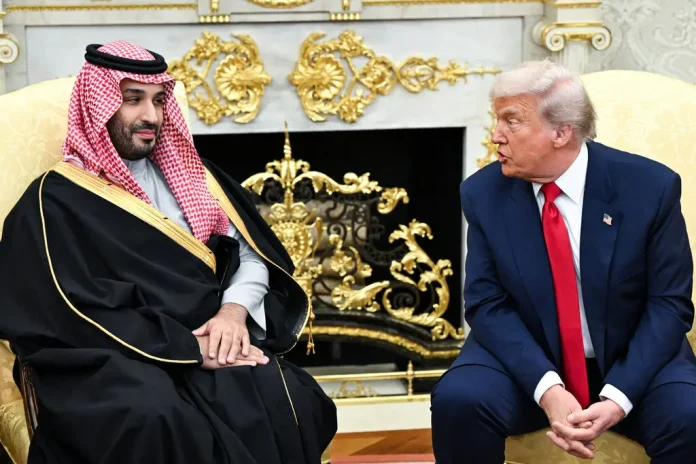
Trump hosts Saudi Arabia’s crown prince at White House

The White House rolled the literal red carpet out for Prince Mohammed, known as MBS, on Tuesday. Trump greeted him with a ceremony that featured marching bands, flag-carrying horsemen and a military flyover.

The opulent display of hospitality signalled Trump’s embrace of what he sees as a new Middle East driven by financial investments and US partnerships with allies in the region, chiefly Saudi Arabia.

After Prince Mohammed’s arrival through the South Portico, he and Trump took questions from journalists in the Oval Office. The two leaders spoke of business opportunities, peace, artificial intelligence and the tech business.

The Trump-MBS meeting also led to major announcements, including in the already strong defence relationship between the US and Saudi Arabia.

Here are the key takeaways from the meeting:

‘Good talks’ on Saudi Arabia-Israel ties

In recent months, Trump has repeatedly said he would like Saudi Arabia to join the so-called Abraham Accords, which established formal relations between Israel and several Arab countries.

On Tuesday, Prince Mohammed and Trump signalled possible progress on the issue without providing details or a timeline for a potential deal. The crown prince, however, did reiterate that Riyadh wants to advance the establishment of a Palestinian state as part of a potential agreement.

“We believe having a good relation with all Middle Eastern countries is a good thing, and we want to be part of the Abraham Accords,” Prince Mohammed told reporters.

“But we want also to be sure that we secure a clear path [to a] two-state solution. And today we have a healthy discussion with Mr President that we’ve got to work on that, to be sure that we can prepare the right situation as soon as possible to have that.”

Saudi officials have previously stressed that Riyadh is committed to the Arab Peace Initiative, which conditions the recognition of Israel on the establishment of a Palestinian state.

Trump stated that he had “good talks” with Prince Mohammed about the issue.

“We talked about one state, two states. We talked about a lot of things. In a short period of time, we’ll be discussing it further too,” the US president added.

Major non-NATO ally status for Saudi Arabia and a defence deal

At a black-tie dinner he hosted at the White House for the Saudi leader, Trump announced the US has decided to recognise Riyadh as a “major non-NATO ally”.

That status allows a country expedited access to US military hardware, sales and other cooperation without some of the elaborate licensing protocols that other buyers of advanced American weapons systems need to go through.

Saudi Arabia joins 19 other countries that are major non-NATO allies of the US: Argentina, Australia, Bahrain, Brazil, Colombia, Egypt, Israel, Japan, Jordan, Kenya, Kuwait, Morocco, New Zealand, Pakistan, the Philippines, Qatar, South Korea, Thailand and Tunisia. The US also treats Taiwan at par with major non-NATO allies.

Separately, the White House announced that Trump and MBS signed a strategic defence agreement “that strengthens our more than 80-year defense partnership and fortifies deterrence across the Middle East”. Details of the agreement are unclear, but the White House said it would secure “new burden-sharing funds from Saudi Arabia to defray US costs” and would affirm that the “Kingdom views the United States as its primary strategic partner”.

The agreement comes weeks after Saudi Arabia signed a mutual defence agreement with Pakistan following Israel’s September attack on Qatar, which had sparked concerns across the region over whether the US could be trusted by its Gulf allies as a security partner.

On Monday, Trump confirmed that he will authorise the sale of F-35 fighter jets to Saudi Arabia.

During the meeting with MBS, he stated the jets would not be downgraded to ensure Israel’s military superiority in the region, a departure from a US policy known as “qualitative military edge”.

“They’d like you to get planes of reduced calibre. I don’t think that makes you too happy,” he told the Saudi crown prince.

“They’ve been a great ally. Israel has been a great ally, and we’re looking at that exactly right now. But as far as I’m concerned, I think they are both at a level where they should get top of the line.”

Trump says Iran wants deal

Trump once again expressed pride in the US strikes against Iran’s nuclear facilities in June.

“We did that on behalf of everybody, and the outcome was extraordinary because we have the best pilots, the best equipment, the best planes, the best everything,” he said.

The US president later shifted to a softer tone on Iran, claiming Tehran is seeking a diplomatic resolution with Washington, which has sought the dismantlement of its nuclear programme.

“I am totally open to it, and we’re talking to them,” Trump added.

“And we start a process. But it would be a nice thing to have a deal with Iran. And we could have done it before the war, but that didn’t work out. And something will happen there, I think.”

Saudi Arabia’s official news agency, SPA, had reported that MBS had received a handwritten letter addressed to him from Iranian President Masoud Pezeshkian before his trip to Washington. No details were available about its content.

On Tuesday, Prince Mohammed said Saudi Arabia would back a US-Iran deal.

“We will do our best to help to reach a deal between the United States of America and Iran,” he told reporters.

“And we believe it’s good for Iran’s future to have a good deal that would satisfy the region and the world and the United States of America,” he added.

$1 trillion in investments?

At the outset of the two leaders’ public remarks, Trump expressed gratitude for anticipated Saudi investments in the US, which he said will be in the hundreds of billions of dollars.

“I want to thank you because you’ve agreed to invest $600bn into the United States. And because he’s my friend, he might make it $1 trillion, but I’m going to have to work on him,” Trump said.

He added that the Saudi funds will create jobs and resources for US companies and Wall Street investment firms.

For his part, MBS said the Saudi investments in the US will likely rise to $1 trillion.

“The agreement that we are signing today in many areas – in technology and AI, in rare materials, magnet, etc – that will create a lot of investment opportunities,” he added.

The crown prince echoed Trump’s assessment that the US is now the “hottest country” in the world, adding that the kingdom wants to be part of the “foundation of emerging technologies” in the US.

Praise and smiles

Trump and MBS were all smiles as they exchanged flattering comments from the moment the crown prince arrived at the White House.

At one point, Trump reached for Prince Mohammed’s hand and held it as he criticised former US President Joe Biden for giving MBS only a fist bump when he visited Riyadh during the COVID-19 pandemic in 2021.

“I grabbed that hand. I don’t give a hell where that hand’s been,” Trump said.

The US president described the Saudi crown prince as “fantastic” and “brilliant”.

“We have an extremely respected man in the Oval Office today, and a friend of mine for a long time – very good friend of mine,” Trump added.

“I’m very proud of the job he’s done. What he’s done is incredible in terms of human rights and everything else.”

The US president went on to rebuke an ABC News reporter for asking a challenging question of Prince Mohammed, accusing her of disrespecting his guest.

When the same journalist later asked Trump why he would not voluntarily release government files related to sex offender Jeffrey Epstein, Trump said ABC News’s broadcasting licence should be revoked.

“You’re a terrible person and a terrible reporter,” he added.
 

US, Russia in talks over potential prisoner swap: Axios

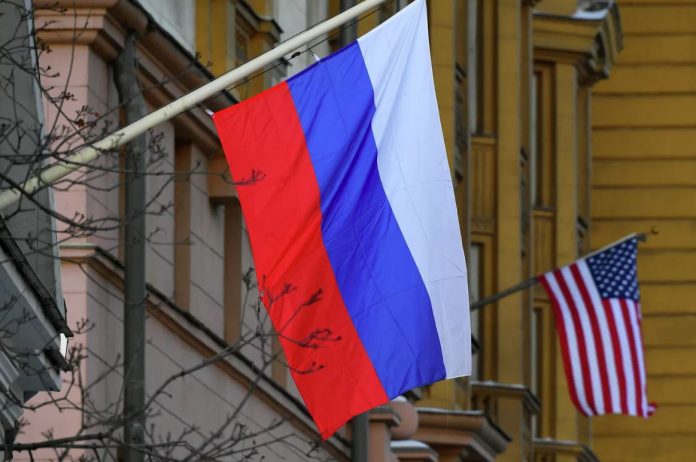
Russia US Flags

Prisoner swaps, the latest of which took place in April, were part of US President Donald Trump’s effort to stabilize relations with Russia after years of diplomatic friction. Kirill Dmitriev, an aide to Russian President Vladimir Putin, told Axios that the prospect of another exchange was raised during his trip to Washington in late October.

“I met some US officials and members of the Trump team on some issues that are humanitarian in nature, such as possible exchanges of prisoners that the US side has been working on,” Dmitriev told the outlet in a phone interview.

US officials confirmed that Dmitriev discussed the idea with special envoy Steve Witkoff and other members of the Trump administration, but no agreement has been reached and no names have been publicly identified, according to Axios.

The Trump administration has rejected the previous White House’s strategy of isolating Moscow over the Ukraine conflict, promoting instead what it calls a pragmatic normalization process. Officials have described prisoner exchanges as a confidence-building element meant to repair bilateral ties damaged under President Joe Biden.

In May, Washington reportedly provided Moscow with a list of nine people whose release it wanted. One of them, Joseph Tater, reportedly left Russia in June, after a court overturned his involuntary psychiatric commitment stemming from a brief altercation with police during an apparent mental health episode.

Witkoff, who has been handling several sensitive negotiations for Trump, was personally involved in arranging prisoner exchanges with Russia. This week he is expected to meet Ukraine’s President Volodymyr Zelensky in Türkiye.


Israeli settler killed, 3 injured in West Bank attack

Israeli Police

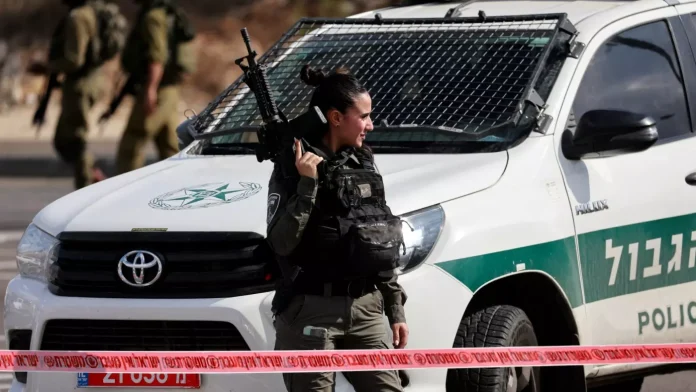
Israel’s national ambulance service MDA said an Israeli man was stabbed and killed near the Gush Etzion settlement, south of East Jerusalem, in the southern West Bank.

MDA added three other settlers were moderately injured in the attack.

Israel’s public broadcaster KAN reported that attackers armed with knives drove their car into pedestrians near the settlement, with one getting out and stabbing settlers.

An Israeli army statement noted two attackers were killed near Gush Etzion, and searches were launched in the area.

There was no claim of responsibility for the attack.


Syria launches first trial over violence that killed hundreds

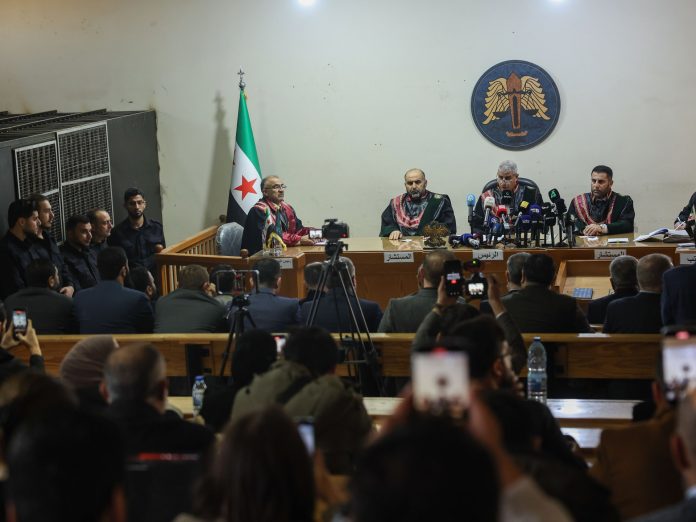
Syrian state media reported on Tuesday that 14 people were brought before Aleppo’s Palace of Justice following a months-long, government-led investigation.

Hundreds of people from the Alawite religious minority, to which ousted President Bashar al-Assad belonged, were killed in the massacres in March.

The violence erupted after attacks on the new government’s security forces by armed groups aligned with the deposed autocrat. Counterattacks soon spiralled out of control to target civilians in the coastal regions that host the Alawite population.

Seven of the defendants in the court on Tuesday were al-Assad loyalists, while the other seven were members of the new government’s security forces.

Charges against the suspects could include sedition, inciting civil war, attacking security forces, murder, looting and leading armed gangs, according to state media.

The seven accused from government forces are being prosecuted for “premeditated murder”.

The public and the international community have put pressure on the country’s new rulers to commit to judicial reform.

“The court is sovereign and independent,” said Judge Zakaria Bakkar as the trial opened.

The proceedings are important for President Ahmed al-Sharaa, the leader of forces that formerly had links to al-Qaeda, who since coming to power in December has scrambled to step out from diplomatic isolation. He is working to convince the United States to drop more of its crippling sanctions against Syria and to boost trade to rebuild the war-torn country.

However, despite initial reports by the state media that charges could quickly be brought against the defendants, the judge adjourned the session and rescheduled the next hearing for December.

The National Commission of Inquiry announced in July that it had verified serious violations leading to the deaths of at least 1,426 people, most of them civilians, and identified 298 suspects.

It claimed 238 members of the security forces and army had been killed in attacks attributed to al-Assad’s supporters. The authorities then sent reinforcements to the region, with the commission estimating their number at 200,000 fighters.

The commission added there was no evidence that Syria’s new military leaders had ordered attacks on the Alawite community.

A United Nations probe, however, found that violence targeting civilians by government-aligned factions had been “widespread and systematic.”

A UN commission said that during the violence, homes in Alawite-majority areas were raided and civilians were asked “whether they were Sunni or Alawite.”

It added: ”Alawite men and boys were then taken away to be executed.”


Iran’s parliamentary security chief: IAEA’s report deliberate act against natl. interests

IAEA

Ebrahim Azizi, reacting to the report circulated ahead of the upcoming meeting of the IAEA Board of Governors in Vienna, said that Grossi’s “hostile behavior and malicious actions can no longer be addressed with mere warnings.”

Azizi argued that the tone and content of the report fit into a broader Western political campaign.

“What we are witnessing today from Grossi and Western institutions is a coordinated and intentional effort against Iran’s national interests,” he said, warning that Europe and the United States “will not be able to achieve in Vienna what they failed to accomplish through political pressure in New York or during recent regional tensions.”

He stressed that the Islamic Republic “will neither remain silent nor passive” in the face of what Tehran views as one-sided demands and politicized pressure.

Referring to Iran’s earlier suspension of voluntary cooperation measures with the Agency, Azizi said Parliament will again adopt “firm and proportionate measures” in response to the “blatant political manipulation by the Agency and its Western backers.”

The comments come as the Associated Press reported that it had reviewed a confidential IAEA assessment stating the Agency has been unable to verify Iran’s stockpile of 60-percent enriched uranium since Israel’s attack on Iranian nuclear facilities earlier this year.

According to AP, the report warns that the status of the accumulated material “requires urgent clarification.”

Russia slams France’s warplanes deal with Ukraine as ‘fuelling’ the war

“Paris is in no way contributing to peace, but rather fuelling militaristic and pro-war sentiment,” Kremlin spokesman Dmitry Peskov told reporters.

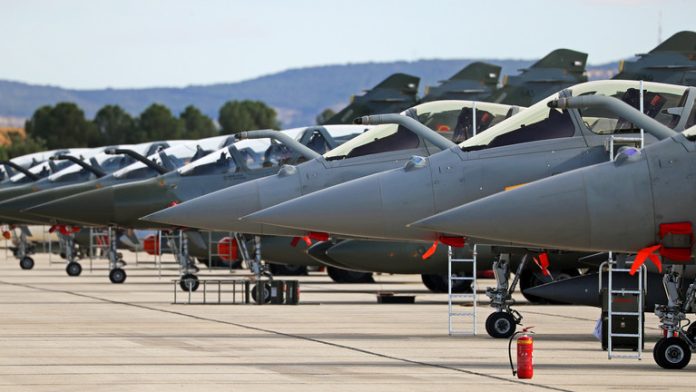
Ukraine plans to acquire up to 100 French-made Rafale fighter jets over the next decade, along with other weapons, including air defense systems, the leaders of the two countries have announced. Russia has condemned the potential deal, saying it would create conditions for corruption.

French President Emmanuel Macron and Ukraine’s President Volodymyr Zelensky signed a letter of intent on the purchase during the Ukrainian leader’s visit to Paris on Monday.

Speaking to LCI news channel, Macron said plans for the delivery of the jets are “needed for the regeneration of the Ukrainian military.” Zelensky touted the plan as a “strategic agreement” and “a historic deal.”

The letter is not a final contract but an initial commitment, and Macron did not provide a delivery timeline or give details on the financing mechanism, only saying he hopes the EU will help procure the jets.

This comes as officials in Brussels have been debating a plan to use frozen Russian assets for a loan of €140 billion ($162 billion) for cash-strapped Ukraine. Moscow has condemned the asset freeze as “theft.”

The Rafale, France’s most advanced multirole jet, is estimated at more than $90 million each. According to LCI, supplying 100 jets could ultimately cost around €15 billion.

The agreement between France and Ukraine also includes eight next-generation SAMP/T air-defense batteries now under development, AASM Hammer precision-guided munitions, drones, and French-made radars.

Former Russian President Dmitry Medvedev, currently the deputy chair of Russia’s Security Council, warned that France and its EU partners are assuming major risks by dealing with “corrupt” Zelensky, adding that Western governments will later claim ignorance if wrongdoing is uncovered.

“Maybe they took part in the graft with Rafale fighter jets, too. What say you, people of France?” he wrote on X.

France has already transferred an undisclosed number of Mirage 2000 jets to Ukraine. Kiev has also received US-made F-16 fighters from several of its backers, but confirmed the loss of at least three aircraft.

Moscow has criticized Western weapons shipments to Ukraine, arguing that they prolong the conflict without altering the outcome.


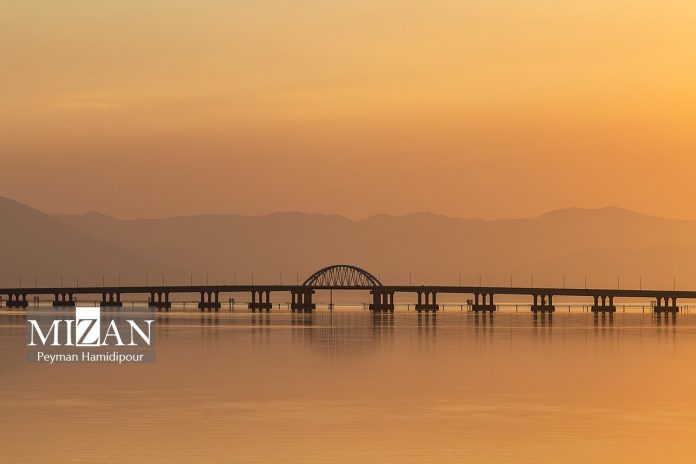
Lake Urmia officials warn of “unprecedented crisis” as water volume falls below 40 million cubic meters

Lake Urmia

Prolonged drought has worsened water shortages across West Azarbaijan Province, but experts stress that reduced rainfall accounts for only 20-30 percent of the crisis.

The main drivers, they say, are decades of over-extraction for agriculture and extensive dam construction across the basin.

According to provincial water authorities, rainfall in the Lake Urmia watershed is down 81 percent compared with last year and 86 percent below long-term averages.

Storage levels in the basin’s dams have fallen by 46 percent, while underground aquifers are rapidly declining, contributing to severe land subsidence in plains such as Salmas and Kahriz.

Saeed Issa-Pour, planning director at the Restoration Headquarters, said the lake’s annual environmental water right is around 3.2 billion cubic meters, but last year only 470 million cubic meters, less than 10 percent, was delivered.

He noted that more than 100 large and small dams now intercept water flowing toward the lake.

Officials warn that even a return of normal rainfall will not save Lake Urmia without major changes in water management and agricultural consumption.

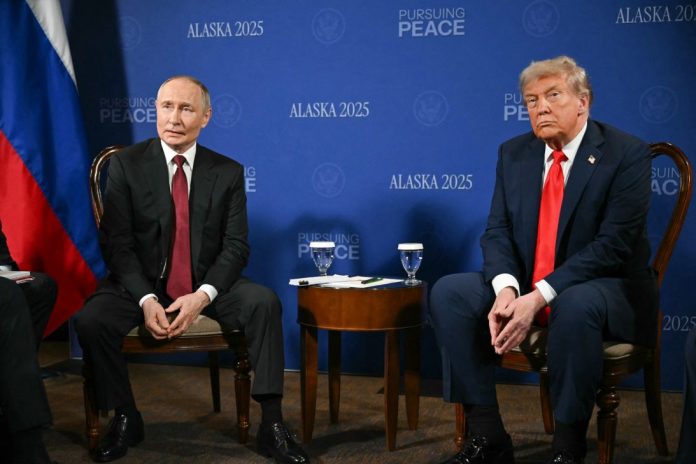
Trump would support Russia sanctions bill if he retains final authority: White House

Trump and Putin

Trump told reporters late on Sunday that it was “OK with me” that Republicans were working on legislation to impose sanctions on countries doing business with Russia over Moscow’s failure to negotiate a peace deal with Ukraine.

Trump said lawmakers may take his suggestion to add Iran to the sanctions measure.

Senator Lindsey Graham and U.S. Representative Brian Fitzpatrick, both Republicans, sponsored the legislation to impose sanctions on countries doing business with Russia, including buyers of its energy exports.

Trump’s comments on Sunday could clear the way for the legislation to move forward in Congress.

Leaders in the Senate and House of Representatives have held off bringing the legislation to a vote as Trump has preferred instead to impose tariffs on goods imported from India, the world’s second-leading buyer of Russian oil after China.

Asked if Trump was now ready to back the legislation, the official stated, “He would sign it. He signaled that last night.”

But the White House will insist on specific language ensuring that Trump retains control over the sanctions, the official continued.

“It’s always been important to the White House and the president that there’s a carve-out in the sanctions package that ensures the president has the ultimate decision-making authority on the sanctions,” the official added.

“So as long as that is included, I think the president would entertain signing the bill.”

The official said the White House was continuing to work on negotiations with Russia on ending the war, adding, “We’re definitely still working it. It just hasn’t been the center of the news because we have so much going on.”


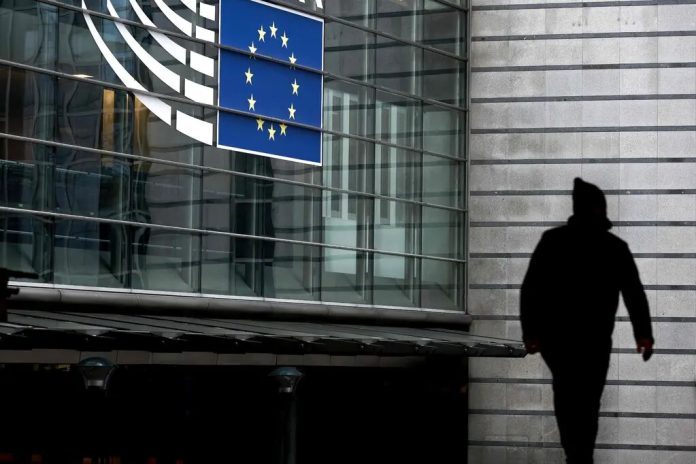
EU to spread legal costs of attacking Russian frozen assets: Politico

European Parliament

The European Commission is seeking to issue a €140 billion ($160 billion) loan secured against the immobilized sovereign assets held at the Euroclear clearing house in Belgium. The scheme is based on the assumption that Moscow will eventually pay reparations to Ukraine, an outcome widely seen as unlikely. Russia has said it regards any use of its assets as “theft” and has vowed a legal response.

According to Politico, Commission President Ursula von der Leyen has circulated a memo to EU capitals spelling out how member states would share the risks with Belgium. The document says the bloc is prepared to cover potential legal and financial fallout even if disputes arise years later.

Belgium, which has a bilateral investment treaty with Russia dating back to 1989, has warned it could face lengthy and costly litigation if Moscow mounts a legal challenge. Von der Leyen said the guarantees would also cover obligations stemming from bilateral investment treaties.

Around $200 billion of the roughly $300 billion in Russian sovereign reserves frozen by the West since 2022 are held at Euroclear. The clearinghouse has threatened to sue the EU if the bloc attempts to confiscate the assets.

The memo reportedly also set out two fallback options should governments ultimately decide against using the Russian funds. Both alternatives would require the EU to pony up its own resources to support Kiev, thus shifting the burden onto European taxpayers.

European Commissioner for Economy Valdis Dombrovskis said last week that the bloc cannot continue providing loans to Ukraine in light of growing concerns over Kiev’s ability to repay them.

The Kremlin has warned that channeling Russian funds to Ukraine would “boomerang,” and threatened to target up to €200 billion in Western assets held in Russia in retaliation.


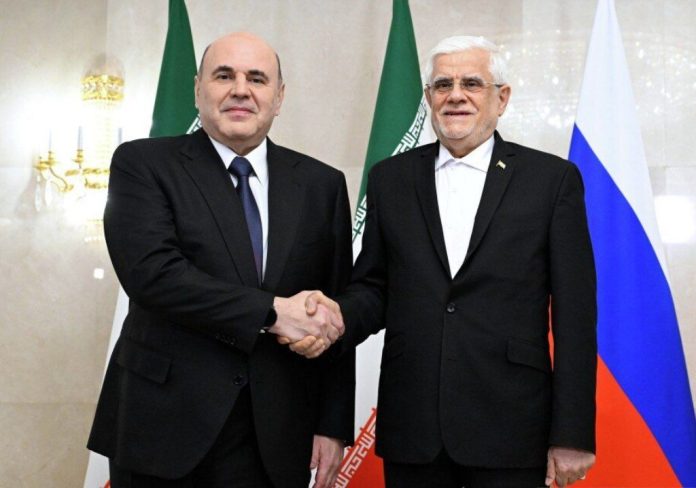
Iranian VP says Tehran determined to strengthen ties with Moscow

Aref, who traveled to Moscow to attend the 24th Meeting of the Shanghai Cooperation Organization (SCO) Council of Heads of Government, met and held talks with Russian Prime Minister Mikhail Mishustin on Monday.

Aref expressed his satisfaction with the development of bilateral relations between the Islamic Republic of Iran and the Russian Federation, appreciating Moscow’s positions, particularly regarding recent issues related to the snapback mechanism in international forums.

He highlighted the significance of Tehran and Moscow’s joint membership and cooperation in regional and international organizations such as BRICS, the SCO, and the Eurasian Economic Union, adding, “These organizations possess extraordinary capacities, and cooperation between the two countries within this framework can add further momentum to collaborations.”

Pointing to the Iran-Russia Comprehensive Strategic Partnership Treaty, he said, “This document serves as a guide for advancing our relations to the highest level.”

Additionally, Aref addressed the finalization of the law for the agreement on cooperation in the field of information security between the governments of the Islamic Republic and the Russian Federation, pointed to the common threats against the two countries in cyberspace, and emphasized the necessity of facilitating the current process to protect the two countries’ critical infrastructure.

For his part, Mishustin said that Russia aims to strengthen its relations with Iran based on the principles of good neighborliness.

Referring to the enforcement of the free trade agreement between Iran and the Eurasian Economic Union, he said, “The implementation of this agreement provides an opportunity to enhance bilateral exchanges.”

The vice-president departed for Moscow earlier on Monday at the official invitation of Russian Prime Minister Mikhail Mishustin.

During his stay in the Russian capital, the Iranian VP is also scheduled to meet with officials from other participating countries.