Thursday, December 25, 2025
Home Blog Page 754

Aliyev’s party wins Azerbaijan’s parliamentary election, opposition cries foul

Aliyev had called Sunday’s snap legislative election ahead of schedule to avoid the poll coinciding with the COP29 climate conference that Baku is to host on November 11-22.

None of the elections held in Azerbaijan under Aliyev’s two-decade rule have been recognised as free and fair by international observers.

The electoral commission said Aliyev’s Yeni Azerbaijan party won 68 seats in the 125-member legislature.

Another 45 seats were won by independent candidates as well as 12 seats by candidates from nine political parties — all of them widely believed to be pro-government.

Only one opposition candidate from the Republican Alternative Party made it to parliament.

The opposition Musavat party stated there were “mass violations,” including multiple voting.

International observers from the Organisation for Security and Cooperation in Europe are set to hold a press conference later Monday to present their findings following the vote.

Baku has faced strong Western criticism for persecuting political opponents and suffocating independent media.

Aliyev, 62, has ruled the ex-Soviet republic with an iron fist since 2003, after the death of his father, Azerbaijan’s Soviet-era Communist leader and former KGB general Heydar Aliyev.

He enjoys widespread popularity due to Azerbaijan’s military victory over Armenian separatist forces that had controlled the Armenian-populated Nagorno-Karabakh region for three decades.

Last year, Baku’s troops recaptured the mountainous enclave in a lightning offensive, after which its entire ethnic Armenian population — more than 100,000 people — fled to Armenia.

With power concentrated in the presidency, Azerbaijan’s parliament has a limited role in shaping affairs in the Caspian Sea nation.
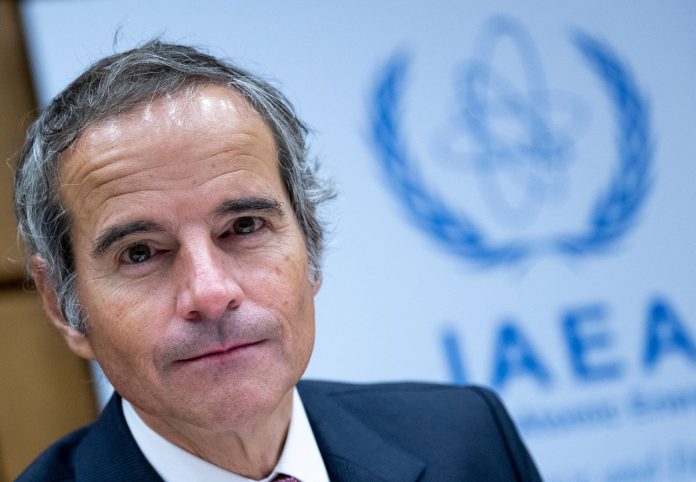

IAEA chief says he received a response from Iran President Pezeshkian

Rafael Grossi

In an interview with Al Arabiya, Grossi expressed his willingness to visit Tehran and engage with Iran’s new government

He said he has received a response from President Pezeshkian, confirming his earlier message calling for swift interaction to establish a constructive, smooth, and tangible dialogue to reach credible guarantees about the peaceful nature of Iran’s nuclear program.

The IAEA head noted that “there are still points that need to be clarified and answers that need to be provided to the agency, which have not been given yet”.

He added that the international community has certain expectations, and he is pleased to have received a letter from the new president agreeing to meet and work together.

“I hope the right time for him will be soon; otherwise, it will be pointless.”

The IAEA chief announced his readiness to travel to Iran, stating, “I am ready to come to Tehran, continue the conversation, and interact with the new president as I did with his predecessors.”

When asked if the pause in communication with Iran was requested by Tehran or a decision made by the nuclear agency, Grossi explained that the outcome of the recent developments was due to the absence of a president and foreign minister, with whom he had been in direct and regular contact.

Grossi, who has visited Tehran and met with the foreign minister and the late Iranian president, said, “Given the transition of power in Iran, I thought it logical to wait until the new government took office before resuming talks to achieve tangible results.”

He added, “Now that the new cabinet has been confirmed, and we have a foreign minister I respect and know well, Dr. [Abbas] Araghchi, who was previously a nuclear negotiator. As I said, I am seeking to re-engage with them as soon as possible, now that the new government is in place.”

Iran has proved the peaceful nature of its nuclear program to the world by signing the 2015 nuclear deal with six world powers.

The Joint Comprehensive Plan of Action was a multilateral international agreement signed between Iran and five permanent members of the United Nations Security Council plus Germany in 2015, which required Iran to scale back some of its nuclear activities in return for the lifting of cruel sanctions imposed on the country, especially by the United States.

However, former US President Donald Trump pulled Washington out of the UNSC-endorsed agreement in May 2018, imposing severe economic sanctions against Tehran while Iran was adhering to its commitments under the deal and even continued to do so for a year after the US withdrawal.

Tehran started to reduce its commitments under the deal in a series of pre-announced and clear steps after witnessing the other parties’ failure to secure its interests under the agreement.

Senior Iranian producer says feels betrayed by BBC Persian after over 3 decades

BBC

Behzad Bolour released a video, implying that he left “betrayed” by the Persian-language London-based television and radio channel after his name as the producer and host was removed from Bolour-e Banafsh, Persian for Purple Crystal, a series that introduces Iranian and West Asian music, art, and culture through interviews with immigrants in different parts of the world.

“I served in BBC Persian for 33 years and went to the smallest cities to look for different artists and Iranian culture, but the network deleted my name from its archives… as if I never existed at all,” a disappointed Blour said.

The 59-year year old producer and musician’s main areas of interest, besides Iran, are the Persian-speaking communities in Afghanistan and Tajikistan and the countries that have common cultural features with Iran, including the Azerbaijan Republic, and the Iraqi Kurdistan region.

Reports say that the BBC has stopped some of its programs due to financial constraints.

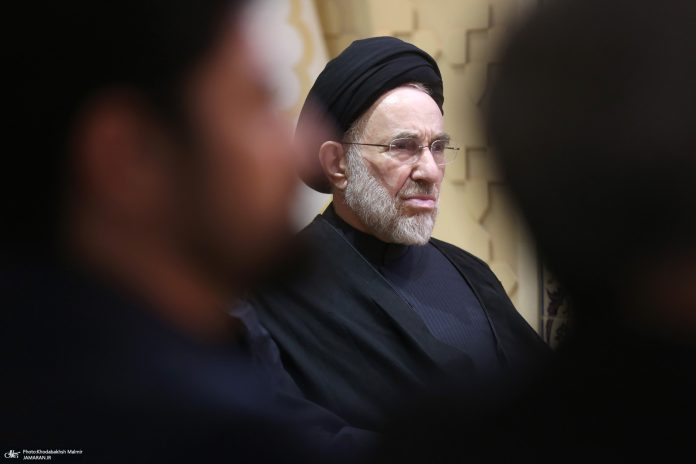
Iran dismisses reports ex-president Khatami’s son arrested over espionage accusations

Seyed Mohammad Khatami

The report refuted as ‘rumors’ the reports on social media that Khatami’s only son, Emadeddin, 36, was in contact with the Israeli spy agency, the Mossad, to advance its terrorist operations in Iran.

The social media is also abuzz with claims that Emadeddin had been involved in the Israeli assassination of the head of the political bureau of the Palestinian resistance movement Hamas, Ismail Haniyeh, in Tehran on July 31, and the assassination of senior Iranian commander Brigadier General Razi Mousavi in an Israeli strike in Syria in December last year.

The ‘rumors’ also go as far as blaming Khatami’s son in a helicopter crash earlier this year in northwestern Iran that led to the death of former president Ebrahim Raisi and his accompanying delegation, claiming Emadeddin had secret meetings with Mossad agents before all of the incidents.

However, Fars has stressed that no Iranian security or intelligence official has issued any statement to confirm his arrest and that the claims circulate on ‘hostile media.’

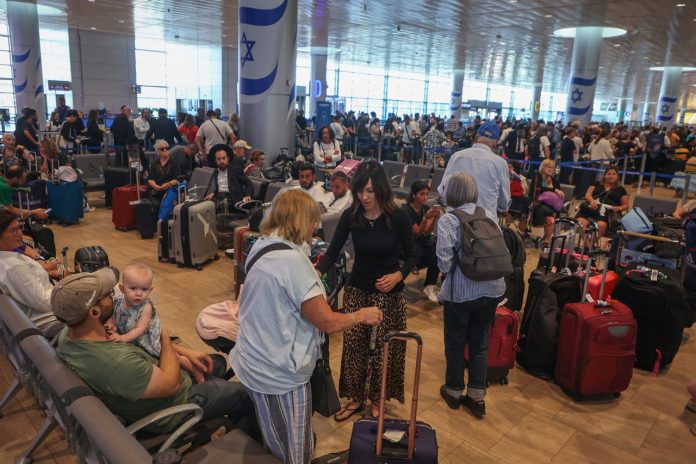
Israel general strike begins; flights canceled, trains delayed

Israel’s largest labor union, known as Histadrut, has threatened to shut down the “entire” economy, with its chairman Arnon Bar-David warning on Sunday that Israel was “in a downward spiral, and we don’t stop receiving body bags”.

Tel Aviv’s Ben Gurion International Airport confirmed that it will halt departures and arrivals of flights for two hours from 8 a.m. (1 a.m. ET).

The general strike, which began Monday morning, reflects growing anger toward Netanyahu – who has been accused by critics of stalling efforts for a deal by some hostage families and their supporters.

It aims to put pressure on the government to secure an agreement that would ensure the return of more than 100 hostages, including 35 believed to be dead, being held in Gaza. The vast majority of those hostages were taken during Hamas’ October 7 attack on Israel, when some 1,200 people were killed and nearly 250 taken captive.

Tens of thousands of Israelis took to the streets in multiple cities on Sunday in one of the biggest nationwide protests since the outbreak of Israel’s war on the besieged strip.

Supporters have vowed a national response, and some protesters returned to the streets in Tel Aviv Monday morning, blocking a major avenue.

Three of the six hostages found dead, including Israeli-American Hersh Goldberg-Polin, had been expected to be released in an eventual ceasefire. Israel announced the recovery of their bodies from an underground tunnel in Rafah on Sunday. The discovery of the six hostage bodies has thrown negotiations for a ceasefire and hostage agreement into question.

As well as an impact on flights, some Israeli municipalities have said they’ll join the strike, including Tel Aviv and Haifa, according to a list from the Histadrut outlining who has joined the action as well as statements from some of the cities.

The list also includes government ministries that impact a wide range of public services, the document shows, including parts of the Prime Minister’s Office, the Interior Ministry, and others.

Hospitals and healthcare facilities could also be impacted, with both working on a weekend schedule and on an emergency basis, according to the statement.

Israel’s teachers union has announced it will not join the strike, according to a statement from the union, though support staff at schools will, which may impact education institutions.

However, Israel’s biggest universities will all join the strike, including the Hebrew University of Jerusalem and Tel Aviv University.

Israel’s medie also reported disruptions to light rail services in Tel Aviv and West Jerusalem as workers joined the general strike.

Tevel, the company that operates light rail services in the Tel Aviv metropolitan area, said train services will “operate in a reduced format” and that there may be disruptions and delays, according to Ynet.

In West Jerusalem, operator Cfir stated the city’s light rail system will not operate until 12pm local time (09:00 GMT) because of the strike called by Histadrut, the country’s largest labour union.

Services will return to normal once the strike ends, Cfir added.

Ahead of Monday’s strike, Israel’s far-right Finance Minister Bezalel Smotrich asked the attorney general to request urgent injunctions to prevent the planned action.

In a letter addressed to Attorney General Gali Baharav-Miara, Smotrich argued that a strike would hurt the economy during wartime and set a dangerous precedent.

A hearing is set to be held Monday morning.

Relations with US at a historic low: Russia

In an interview with national broadcaster, Russia 1, the top official emphasized that Washington has been consistently trampling on Moscow’s interests and exerting pressure for several decades.

Ties between the two states have reached “a cracking-up point” during Joe Biden’s presidency, according to Peskov, who stressed that the US administration is demonstrating an openly hostile position towards Russia by supporting Ukraine.

“Right in the middle of Mr. Biden’s presidency all these processes have culminated […] Bilateral relations are now at probably their historical low point with no prospects for entering a growth trajectory to be seen,” he said.

“The US, despite many statements to the contrary, is directly involved in the Ukraine conflict,” Peskov concluded.

Bilateral ties between Russia and the US took a nose-dive in 2022 when Washington and its allies attacked Moscow with a barrage of economic sanctions following the escalation of the Ukrainian conflict. Moreover, the White House has been providing Kiev with substantial economic and military aid, drawing reprobation from Russian officials, who have accused Washington of playing a direct role in the conflict.

In addition, the US withdrew from two security treaties, the Intermediate-Range Nuclear Forces treaty and the Open Skies treaty, under the administration of Donald Trump. While the White House under President Joe Biden has extended the Strategic Arms Reduction Treaty (New START) through 2026, last year Moscow suspended its participation, citing the US role in the Ukraine conflict.

Peskov also cast doubt on statements made by former US President Donald Trump, who has repeatedly pledged to resolve the Ukraine conflict within 24 hours if elected a second time. The Republican presidential frontrunner has also claimed that he had an excellent relationship with Russian President Vladimir Putin while in office, adding that the conflict would have never started on his watch.

“I don’t think there is a magic wand, it is impossible to do anything in a day,” Peskov stated.

“Although, if we assume that the next US president will make a statement during his inauguration speech that the US stands for peace and is therefore ending its support for Ukraine […], then something in someone’s brain will change.”

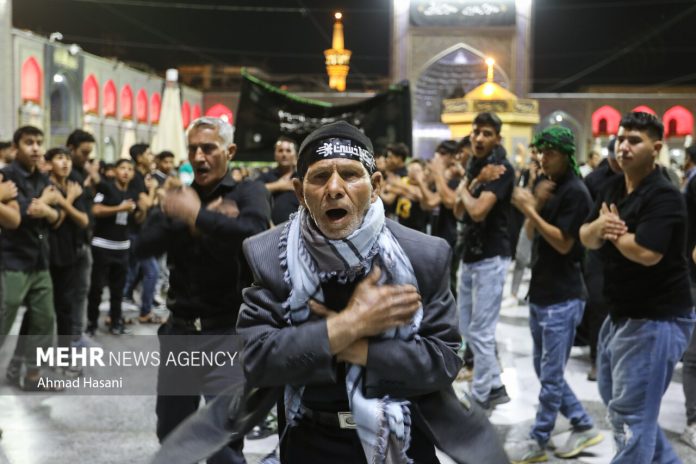
Iranians hold ceremonies to mourn Imam Hassan’s martyrdom, Prophet’s demise

Millions gathered in holy shrines in the country, including in Imam Reza’s shrine in the northeastern city of Mashhad as well his sister Hazrat Fatima al-Massoumeh’s shrine in Qom, to hold mourning ceremonies.

The Prophet of Islam passed away in 11 AH (632 AD) at the age of 62 in Medina, Saudi Arabia. Thanks to his teachings and his legacy, Islam is now the fastest-growing major religion in the world.

Muslims praise Prophet Muhammad as the harbinger of peace, ethics, friendship, freedom, and life for all of humanity.

Imam Hassan Mojtabi was poisoned to death and martyred by his wife, ordered by then despot Muawiya, in 50 AH (670 AD) at the age of 47.

He was the brother of Imam Hussein and the son of Imam Ali and Hazrat Fatimah, the Prophet’s daughter.

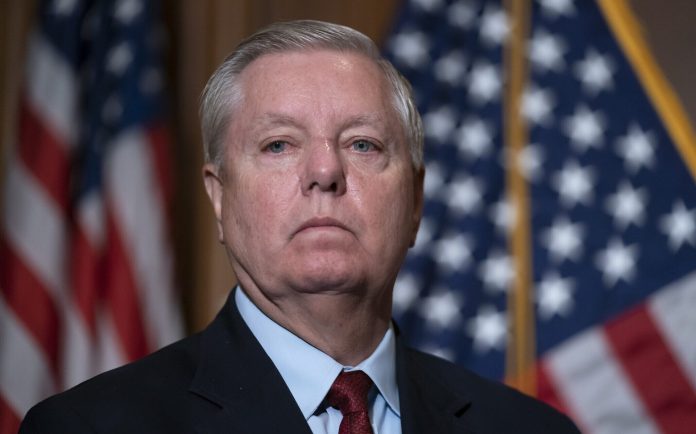
US Senator blames Iran for Israeli captive deaths

“If you want the hostages home, which we all do, you have to increase the cost to Iran. Iran is the Great Satan. Hamas is the junior partner,” Graham told the ABC news programme This Week.

“I would urge the Biden administration and Israel to hold Iran accountable for the fate of [the] remaining hostages, and put on the target list oil refineries in Iran if the hostages are not released.”

Graham told Biden and Israeli Prime Minister Benjamin Netanyahu to “tell the Ayatollah [Seyed Ali Khamenei] what he values is on the target list. Until that happens, nobody is coming home”.

Israel’s military has announced that its troops have recovered the bodies of six captives, including a dual US national, from a tunnel in southern Gaza, as it continued its 11-month long military onslaught on the besieged strip.

Iranian officials have slammed the Israeli regime and its atrocities as the main factor behind expansion of tensions and conflict across West Asia. They considered the regime as the major obstacle in the way of establishing ceasefire in the Gaza Strip.

Tehran has also stressed that Washington is complicit in the ongoing Zionist regime’s atrocities in the besieged enclave. The US has given military aid to Israel throughout the months-long war on Gaza.

In July, the Gaza-based Palestinian movement Hamas agreed to a deal featuring withdrawal of the Israeli soldiers, return of the displaced people, an end to the siege that has been imposed by Tel Aviv on Gaza, and initiation of the territory’s reconstruction process. The regime, however, rejected the proposal before coming up with “new conditions,” including its keeping its forces inside Gaza along the coastal sliver’s border with Egypt.

More than 40,700 Palestinians have been killed since Israel launched war on Gaza on October 7 following an attack led by Palestinian group Hamas that left more than 1,200 people dead. The Palestinian fighters took about 250 captives in the wake of the attack.

The coastal enclave has since been turned into rubble amid non-stop bombardment as Israel has been accused of stalling a ceasefire deal to free the captives.

Israel has been accused of war crimes and atrocities against Palestinians. The International Criminal Court persecutor has sought arrest warrants against Netanyahu and his Defence Minister Yoav Gallant for war crimes.

Tens of thousands of Israelis protest to demand hostage swap deal with Palestinians

Scuffles between the protesters and security forces were reported on Sunday night in one of the largest anti-government demonstrations in Israel since the Gaza war began nearly 11 months ago.

The protesters chanted “Now! Now!” and demanded that Israeli Prime Minister Benjamin Netanyahu reach a ceasefire with Palestinian group Hamas to bring the remaining captives home.

Many Israelis blocked roads in Tel Aviv and demonstrated outside Netanyahu’s office in West Jerusalem.

In a statement, the Hostages and Missing Families Forum, which represents the families of captives held in Gaza, said the death of the six hostages was the direct result of Netanyahu’s failure to secure a deal to halt the fighting and bring their loved ones home.

“They were all murdered in the last few days, after surviving almost 11 months of abuse, torture and starvation in Hamas captivity,” the forum announced.

Meanwhile, in a first since October 7, Israel’s largest trades union federation, the Histadrut, has called for a general strike to pressure the government into signing a ceasefire deal.

The union said Ben Gurion Airport, Israel’s main air transport hub, would be closed from 8am (05:00 GMT) on Monday, as it aimed to shut down or disrupt major sectors of Israel’s economy, including banking and healthcare.

Municipal services in Israel’s economic hub Tel Aviv will also be shut for part of Monday.

The Manufacturers Association of Israel noted it backed the strike and accused the government of failing in its “moral duty” to bring the captives back alive.

“Without the return of the hostages, we will not be able to end the war, we will not be able to rehabilitate ourselves as a society and we will not be able to begin to rehabilitate the Israeli economy,” stressed association head Ron Tomer.

Israeli opposition leader and former Prime Minister Yair Lapid said he supported the strike.

But Finance Minister Bezalel Smotrich has asked Attorney General Gali Baharav-Miara to submit an urgent request to courts to block the planned nationwide strike.

In his letter, Smotrich argued that a strike had no legal basis since it aimed to improperly influence significant policy decisions of politicians on issues related to state security.

He also said that a broad strike – which would shut Israel including outgoing flights – has significant economic consequences which would cause unnecessary economic damage in wartime.

Truce negotiations between Israel and Hamas have dragged on for months, and many blame Netanyahu for failing to reach a deal.

The Israeli military has killed at least 40,738 people and wounded 94,154 in its war on Gaza since October 7. An estimated 1,200 people were killed in Israel during the Hamas-led attacks on October 7, with some 250 people seized by the group.

Israel’s army has acknowledged the difficulty of rescuing dozens of remaining captives and said only a deal can bring a large-scale return.

Final report says late President Raisi’s helicopter crashed due to bad weather, sabotage ruled out

President Raisi Helicopter Crash

The helicopter carrying 63-year-old Raisi and his entourage came down on a fog-shrouded mountainside in northern Iran, killing the president and seven others, including his Foreign Minister Hossein Amirabdollahian, leading to snap elections.

The main cause of the helicopter crash was the “complex climatic and atmospheric conditions of the region in the spring”, said the final report of the Supreme Board of the General Staff of the Armed Forces.

The report added that “the sudden emergence of a thick mass of dense and rising fog” caused the helicopter’s collision into the mountain.

According to the report, there were no signs of sabotage in parts and systems.