Saturday, December 27, 2025
Home Blog Page 730

Wireless devices used in Lebanon attack made by European distributor: Taiwanese manufacturer

Gold Apollo

The New York Times has reported that Israel hid explosives inside a batch of pagers ordered from Gold Apollo and destined for Hezbollah.

Multiple images from Lebanon shared on social media appear to show damaged Gold Apollo pagers.

But Gold Apollo founder and chairperson Hsu Ching-kuang told reporters on Wednesday that his firm had signed a contract with a European distributor to use the Gold Apollo brand.

Hsu added the distributor, which he later named as BAC in a company statement, established a relationship with Gold Apollo about three years ago.

At first, the European company only imported Gold Apollo’s other pager and communication products, he said. Later, the company told Gold Apollo they wanted to make their own pagers and asked for the right to use the Taiwanese company’s brand, he said.

Hsu said Gold Apollo had encountered at least one anomaly in its dealings with the distributor, citing a wire transfer that took a long time to clear.

Taiwan has no record of Gold Apollo pagers being shipped to Lebanon or the Middle East, a senior Taiwanese security official told CNN on Wednesday.

Gold Apollo shipped about 260,000 pagers from Taiwan, mostly to the United States and Australia, the official told CNN.

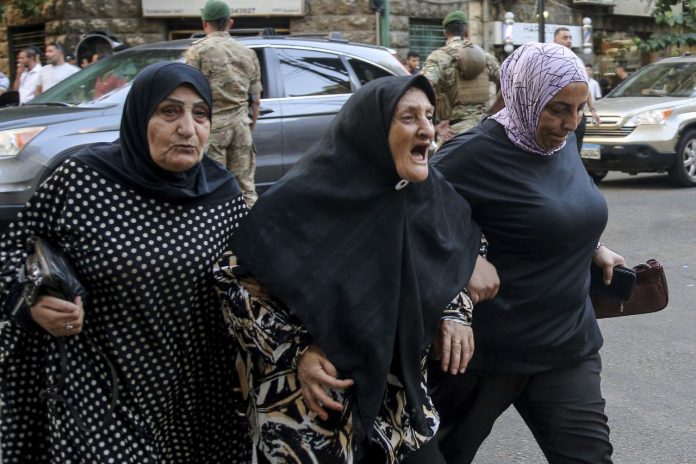
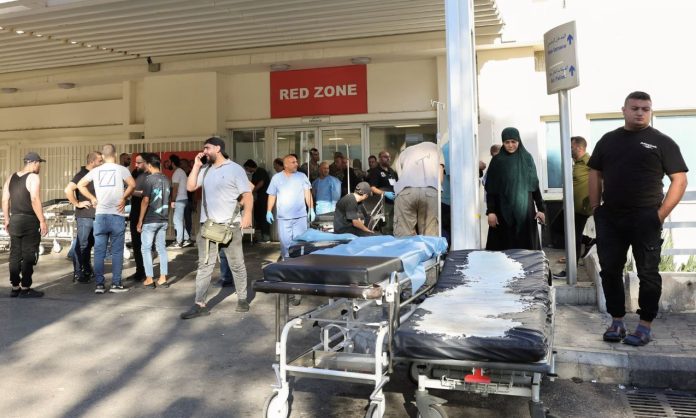
A number of the Lebanese resistance movement Hezbollah as well as civilians were killed and thousands more wounded after wireless communication devices, known as pagers, exploded in different locations across the country on Tuesday.

The Lebanese Health Ministry said at least nine people were killed and 2,800 others wounded in the explosions that were first reported in the southern suburbs of Beirut.

Most of the injuries from Tuesday’s pager explosions in Lebanon have been to the face and hands, the ministry added.

The Reuters news agency, citing informed sources, reported that Israel’s Mossad spy agency planted explosives inside 5,000 pagers imported by Hezbollah before the detonations on Tuesday.

The sources told Reuters that the plot appears to have been many months in the making. The beepers were brought into the country earlier this year.

Reuters quoted a senior Lebanese source as saying that the devices had been modified by Israel’s spy service “at the production level”.

“The Mossad injected a board inside of the device that has explosive material that receives a code. It’s very hard to detect it through any means. Even with any device or scanner,” the source noted.

They added that 3,000 of the pagers exploded when a coded message was sent to them, simultaneously activating the explosives.

Another security source told Reuters that up to three grams of explosives were hidden in the new pagers and had gone “undetected” by Hezbollah for months.
Over 1,150 health workers killed by Israeli army in Gaza: Report

Gaza War

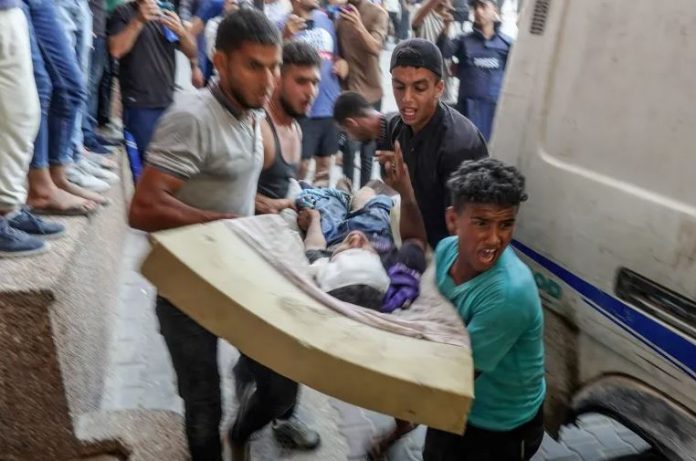
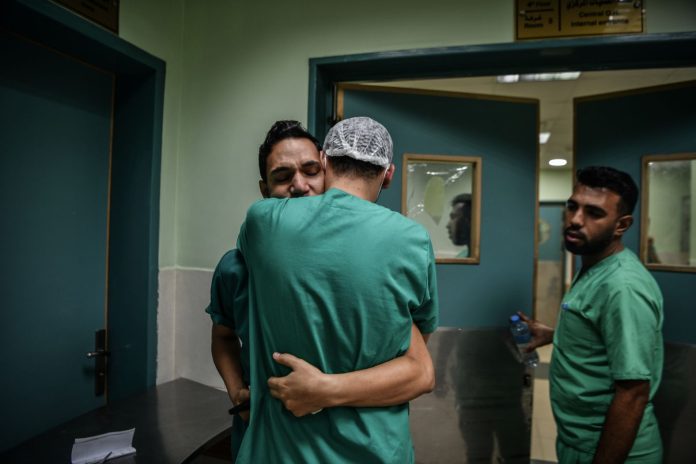
A total of 986 were named in a new report published by the ministry, while personal data for the remaining 165 was still being verified.

The delay in the verification process was due to Israeli authorities withholding the victims’ bodies or their remains being buried under rubble.

At least 165 of those killed were doctors, 260 nurses, 300 management and support personnel, 184 health associate professionals, 76 pharmacists and 12 other health workers.

“The Palestinian sector has been subjected to a systematic attack by the occupation forces that has affected all its components,” the ministry said.

Health facilities were the target of direct and repeated Israeli raids and air strikes, it added, which has crippled the health system and left hundreds of thousands of war victims facing “imminent death”.

Health workers have been arrested, brutally interrogated and assassinated, it added.

“The data included in this report… reflects the effects of the systematic and deliberate Israeli aggression against the health sector.”

The Israeli military has been accused of deliberately destroying Gaza’s health system through constant attacks on hospitals, ambulances and doctors, including by air strikes, detentions and denial of medical equipment, since the 7 October Hamas-led attack on Israel.

In June, it was revealed that Dr Iyad Rantisi, who was the director of Kamal Adwan hospital’s maternity department, died “under torture” in Israeli custody after he was detained by invading troops from Gaza in November.

He was the second Palestinian physician from the Gaza Strip to die from torture in Israeli detention since the beginning of the war, after prominent surgeon and professor of orthopaedic medicine Dr Adnan al-Bursh was killed in Israeli detention in April.

More than 300 health workers were detained by Israeli forces during the assault.

Former prisoners say doctors are singled out for cruel treatment by Israeli forces in detention, where torture and abuse of Palestinian prisoners is widespread and systematic.

The Tuesday report comes a day after the health ministry published the names of 34,344 people who were killed in the Gaza Strip by Israeli forces up to 31 August.

The Palestinian health ministry has recorded more than 41,200 Palestinian deaths in total as a result of Israeli attacks since the war began, but the process to collect data for nearly 7,000 more people has not yet been completed.

The Monday list included the names of 11,355 children out of 16,700 estimated by officials to have been killed.

Among them were 710 babies aged zero on the list, meaning they were under the age of one when they were killed.

The majority of them were born and killed during the war.

Since the early days of the war, international bodies and human rights groups repeatedly raised alarm over the high death toll among Palestinian civilians, especially children, doctors, journalists, aid workers and others.

The death toll among each of those categories is one of the highest in modern conflicts.

At least 220 UN aid workers were killed in Israeli air strikes, the highest staff death toll in UN history.

The Committee to Protect Journalists (CPJ) also said the death toll among media workers in Gaza is the highest since they began recording data in 1992, with over 170 journalists killed according to the Gaza-based government media office.

Top MP asks President Pezeshkian to facilitate Iran’s accession to FATF

Iranian Parliament

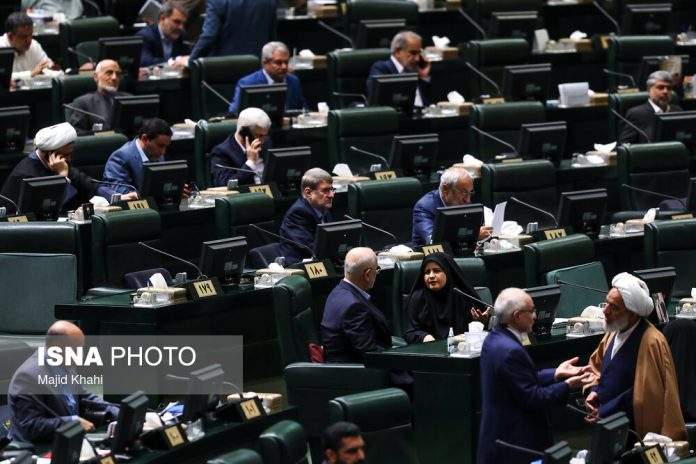
In an interview with IRNA news agency on Wednesday, Gholamreza Tajgardoon said he believes that the accession to the Paris-based Western-dominated watchdog can facilitate Iran’s international trade, which is currently on life support amid harsh sanctions.

“Our joining the FATF will make our banking transactions easier, and as a result, our businessmen will experience better conditions in this regard,” he said.

Iran’s relationship with the FATF has been complex and politically sensitive due to internal and external pressures.

Rightist politicians in Iran believe that adopting FATF standards, that “develop policies to combat money laundering and terrorist financing,” will hand over a considerable part of the country’s financial system to the West.

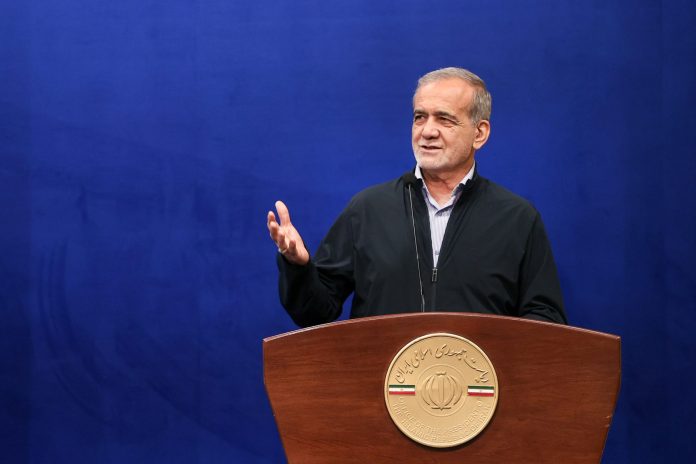
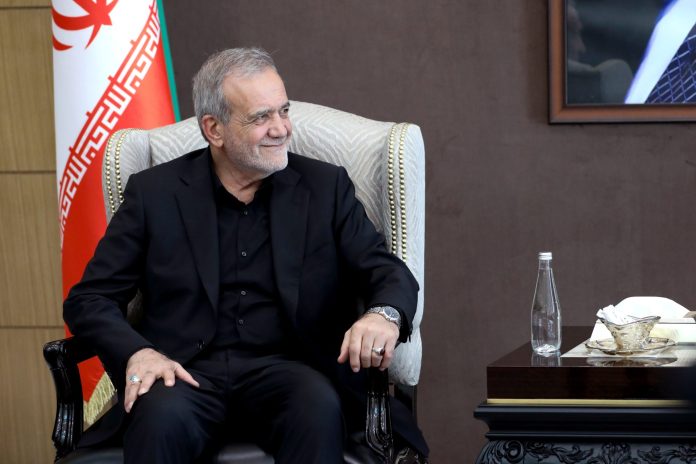
Pezeshkian, who won the presidential office on a reformist platform, stressed in his first press conference on Monday that Iran has no choice but to join the task force.

“I will definitely write a letter to the Expediency Council to raise the issue of the FATF again so that we can solve it and it must be solved,” he told domestic and foreign reporters.

President Pezeshkian says attending UNGA session to defend Iran’s rights

Masoud Pezeshkian

The Iranian president is scheduled to leave Tehran for New York on Sunday to take part in the 79th session of the UNGA and will deliver his speech in the assembly on Tuesday.

During a meeting with lawmakers at the Iranian parliament on Wednesday, President Pezeshkian asserted that Iran is not a warmonger nation and condemned the West for painting a dark image of the country.

“In the past 200 years, you have not seen Iran invade a country even once in history, but they have shown an unfair image of us,” he regretted.

He also slammed the West for providing the Israeli regime with state-of-the-art weapons systems, while blocking other countries’ access to defense systems.

The Iranian president stated, “They have imposed all kinds of problems on us. They created the Zionist regime in the region and armed it to the teeth, and then they tell us that we should not have any weapons so the Zionists can bomb us whenever they want.”

He said the US and Western approach in the developments “violates human rights and international laws, fairness and humanity, from whatever aspect you view it,” but added Iran will not give in in the face of bullying powers.

Pager blasts in Lebanon instance of ‘mass killing’: Iran

Lebanon Pager Attack

Kanaani emphasized: “Today’s terrorist operation in Lebanon was carried out as a continuation of the Zionist regime’s combined operations and their mercenary agents. It contravenes all moral and human principles, international law, especially international humanitarian law, and warrants international criminal prosecution, trial, and punishment.”

The spokesperson added: “This combined terrorist act, which is, in fact, a form of mass killing, once again clearly proves that the Zionist regime, in addition to committing war crimes and genocide against the Palestinian people, has placed regional and international peace and security in serious jeopardy. Accordingly, confronting the regime’s terrorist actions and the threats arising from it is an evident necessity, and the international community must act promptly to combat the impunity of the Zionist criminal officials.”

Kanaani, while expressing sympathy and solidarity with the government, people, and resistance of Lebanon and the families of the martyrs and wounded of this terrorist operation, prayed for the swift recovery of all the injured in this incident, including our country’s ambassador in Lebanon.

He emphasized that the Islamic Republic of Iran is ready to provide any necessary assistance to the government and people of Lebanon.

Earlier, Iranian Foreign Minister Abbas Araghchi blamed Israel for the deadly pager detonations in Lebanon, calling it “Israeli terrorism”, in a phone call with Lebanese Foreign Minister Abdallah Bou Habib.

Araghchi posted to X offering condolences to the families of the victims and the injured, pledging to provide necessary medical assistance.

President Pezeshkian vows Tehran-Moscow relations will continue to expand

Pezeshkian Shuigo

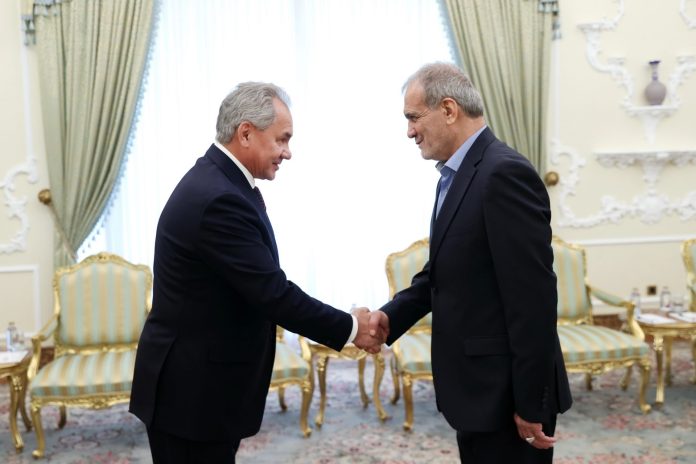
Pezeshkian made the remarks in a meeting with Shoigu in the capital Tehran on Tuesday afternoon, emphasizing the history of constructive relations between the two sides.

The president said boosting cooperation between Tehran and Moscow will undermine the effectiveness of sanctions and the unjust actions against both countries.

“The fourteenth government will seriously pursue the ongoing cooperation and efforts aimed at enhancing the level of relations between the two countries,” he added.

Referring to Shoigu’s comments about the preparations for a meeting between presidents of the two countries on the sidelines of the BRICS summit in Kazan, Pezeshkian expressed hope that such a meeting would lead to fruitful discussions and agreements on bilateral, regional, and international cooperation between Iran and Russia, including within the frameworks of BRICS, Shanghai, and the Eurasian Economic Union.

Shoigu, for his part, emphasized that Russian President Vladimir Putin had asked him to convey to the senior Iranian officials that Russia’s position on cooperation with Iran on regional issues has not changed.

“Mr. Putin is eagerly looking forward to meeting with you on the sidelines of the BRICS summit in Kazan, Russia,” Shoigu told Pezeshkian.

Earlier in the day, Shoigu also met with Secretary of Iran’s Supreme National Security Council (SNSC) Ali Akbar Ahmadian and reviewed the agreements reached between the two countries, reiterating support for Iran’s policy regarding corridors and transportation routes with the Republic of Azerbaijan.

Shoigu arrived in Tehran based on Putin’s order to follow up on the agreements made during the visit of Ahmadian to St. Petersburg.

11,000 students in Gaza, West Bank killed by Israel since start of war: Education ministry

Gaza War

More than 17,224 students have also been wounded in the regime’s genocidal war on the Palestinian territory, according to the ministry figures.

In the West Bank, 113 students were killed and 548 injured. About 429 students have also been kidnapped by the regime’s troop in the occupied city.

The Education Ministry released the figure more than a week after the school year officially began, while all schools in the besieged territory shut.

Israel’s military forces have so far destroyed 123 schools and universities in Gaza, according to the Gaza government media office.

The United Nations Relief and Works Agency for Palestine Refugees in the Near East (UNRWA), which runs around half of Gaza’s schools, warned earlier that “the longer the children stay out of school the more difficult it is for them to catch up on their lost learning and the more prone they are to becoming a lost generation.”

When the regime launched its savage offensive on Gaza almost one year ago, UNRWA transformed its schools into emergency shelters for families forced to flee their homes.

The vast majority of the Gaza’s 2.4 million people have been displaced at least once by Israel’s genocidal war.

Lebanon says at least 9 killed, 2,800 wounded by exploding pagers

Lebanon Pager Attack

Firass Abiad said more than 200 people are in critical condition after the communication devices exploded on Tuesday, and more than 150 hospitals are treating the victims, with injuries mostly reported to the face, hands and stomach.

Lebanon’s Hezbollah blamed Israel for the spree of pager blasts, stressing it will get “its fair punishment”.

Hezbollah urged people to be “cautious of rumours and false, misleading information being circulated by certain parties”, which it said “serve the psychological warfare of the Zionist enemy”.

“This comes especially in light of the enemy’s threatening rhetoric about changing the situation in the north,” it added.

“We affirm that the resistance, at all its levels and various units, is at the highest level of readiness to defend Lebanon and its steadfast people,” the group noted.

A Hezbollah official, who spoke on condition of anonymity, told The Associated Press the new brand of handheld pagers used by the group first heated up, then exploded.

A source close to the group, requesting anonymity to discuss sensitive matters, told AFP news agency the blasts were an “Israeli breach” of its communication system. He didn’t elaborate.

A senior Hezbollah source also told Reuters the leader of Hezbollah, Sayyed Hassan Nasrallah, was not harmed in the pager blasts.

There has been no immediate comment from the Israeli military on Tuesday’s attacks although some reports suggest that the regime officials have been advised to remain tight-lipped about it.

Israel has been regularly exchanging fire with Hezbollah since last October, shortly after the regime launched its genocidal war on Gaza.

Iranian daily defends presence of Afghan nationals in Iran amid growing calls for expulsion

Afghan Refugee in Iran

In an article, Kayhan argued that foreign adversaries are deliberately fueling anti-Afghan sentiment in an effort to undermine the powerful Fatemiyoun brigade, which has been a key player in regional resistance efforts.

Fatemiyoun brigade consists of Shia Afghans and partcif the Resistance Front.

According to the article, the enemies aim to create discord between the Shia communities of Iran and Afghanistan, which could result in the separation of the Fatemiyoun brigade from the Resistance Front.

The newspaper warned that such a division would significantly weaken the Resistance during these critical times when unity is essential.

At the same time, the debate over the presence of Afghan nationals in Iran, particularly those residing illegally, has intensified. Many within the public and political circles are calling for stricter immigration controls and the deportation of illegal immigrants.

The Iranian Ministry of Interior recently announced that it would take concrete steps to address the issue, confirming that illegal Afghan immigrants will be sent back to Afghanistan. The ministry emphasized the importance of upholding the country’s laws while maintaining humanitarian principles.

Unofficial sources put the number of Afghan migrants in Iran at 10 million.

Iran ministry of health announces return of expelled students after presidential directive

Masoud Pezeshkian

Habibi stated that rulings against protesting students from 2022 and 2023 have been suspended.

This decision aligns with the Supreme Leader’s approach of maximum inclusion, the President’s focus on national unity, and aims to inspire hope and motivation among students as the new academic year begins, said the official.

After the university protests, disciplinary rulings were issued by committees. However, following the easing of tensions, the Supreme Leader emphasized treating students with Islamic leniency.

President Masoud Pezeshkian also instructed a review of these rulings to ensure students’ return to academic life, addressing grievances regarding the lack of appeals or defense opportunities.

Under new guidelines, university presidents can request reviews of even final rulings, and the Health Minister has the authority to suspend or reduce penalties.

All rulings, including expulsions and suspensions, are reportedly under review, and affected students will resume their studies in the upcoming term.

Habibi expressed hope for leniency and forgiveness in the re-evaluation process.