Thursday, January 15, 2026
Home Blog Page 698

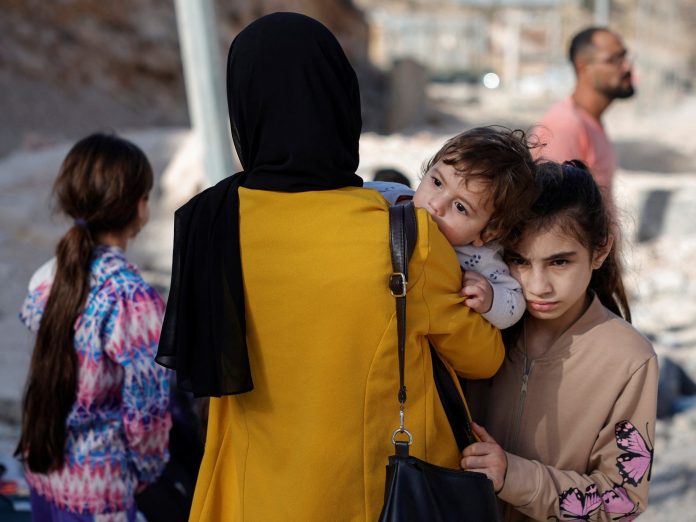
25% of Lebanon under Israeli expulsion orders: UN

The figures stress the heavy price Lebanese are paying as Israel steps up its war on the country.

The UN refugee agency’s Middle East Director Rema Jamous Imseis told a press briefing in Geneva that new Israeli orders to several villages in southern Lebanon meant that over a quarter of the country was now affected.

“People are heeding these calls to evacuate, and they’re fleeing with almost nothing.”

In recent weeks, Israel has mounted its bloody aerial assaults on Lebanon, causing the displacement of at least 1.3 million people, more than a fifth of the country’s population.

More than 2,300 people have been killed and over 10,700 others injured in Israeli aggression on Lebanon since early October 2023, according to Lebanon’s Public Health Ministry.

American officials attend meetings at Israeli prison accused of ‘horrific’ torture: Report

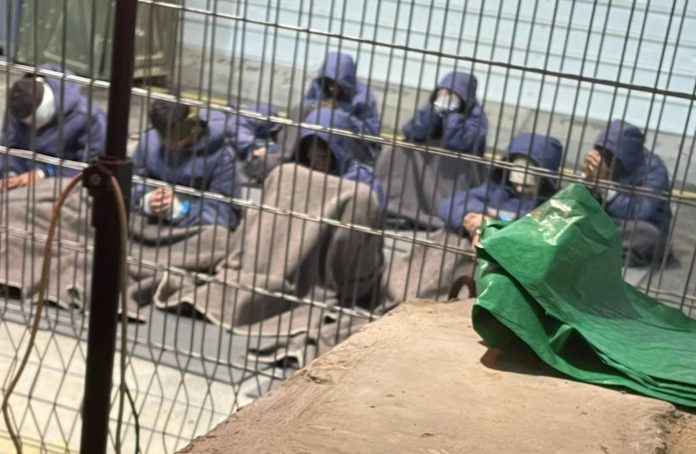
According to three officials with the US Agency for International Development (USAid), Israel’s humanitarian relief hub began operating at the desert military base Sde Teiman on 29 July, with a regular US presence. USAid is tasked with facilitating urgently needed humanitarian assistance to the Gaza Strip.

Sde Teiman was set up as a temporary holding facility for detainees from Gaza after last year’s 7 October attack and the ensuing war. Human rights groups and released detainees say the thousands of of Palestinians who have been through the facility have been subjected to severe abuse and torture.

In July, Israel consolidated the various mechanisms approving aid operations in Gaza into one body, the Joint Coordination Board. The JCB sits at Sde Teiman and coordinates logistics with the US, the United Nations and a number of international NGOs.

The Guardian daily viewed an internal USAid document that referred to “the present JCB location on Sde Teiman IDF base”, located outside of Be’er Sheva in southern Israel. In the document, the base’s name links to its Wikipedia entry, which features photos of blindfolded Palestinian prisoners and details their mistreatment.

The sources, who spoke on condition of anonymity, told the newspaper that two USAid officials travel to Sde Teiman daily for JCB meetings with Israeli and UN officials.

“I can’t sleep at night knowing that it’s going on,” one US official told the Guardian, adding, “It’s another form of psychological torture to make someone work there.”

The IDF confirmed the location of the JCB but did not respond to questions about the prison.

It is not clear whether USAid officials have seen the part of the base where Palestinian prisoners reside. The IDF division that oversees the entry of humanitarian aid works out of “a handful of makeshift trailers” on the base, Jewish Insider has reported.

“USAid is working closely to ensure more effective dialogue between humanitarian partners and the Israeli government to improve the safety, efficiency, and effectiveness of humanitarian movements into and throughout Gaza,” a USAid spokesperson wrote by email.

“Due to security considerations, we do not comment on the specific locations of our staff.”

Human rights groups, whistleblowers and prisoners released from Sde Teiman have described severe violence meted out by Israeli soldiers in the facility, including rape, beatings, electrocutions and force feedings. An Israeli doctor who worked at the camp reported prisoners “routinely” had limbs amputated as a result of prolonged handcuffing.

In May, the New York Times reported that 4,000 Palestinians had been through the prison since 7 October. At least 35 died, either at the site or nearby hospitals.

“The situation there is more horrific than anything we’ve heard about Abu Ghraib and Guantánamo,” Khaled Mahajneh, a lawyer who visited Sde Teiman, told +972 Magazine.

In a lawsuit surrounding the conditions in Sde Teiman, the Israeli government reported to the country’s high court of justice that 24 prisoners remain there and that conditions were set to improve with the opening of a new wing.

“We have no indication that the living conditions in the camp have indeed been improved, as our lawyers have still not had access to the camp to assess that,” Tal Steiner, executive director of the Public Committee Against Torture in Israel, told the Guardian.

The Israeli human rights organization B’Tselem reports that Sde Teiman is part of a network of detention facilities where torture has become widespread in the last year.

Israel is investigating 10 IDF soldiers and reservists who were posted at the prison for sexual violence, after one prisoner was hospitalized in critical condition. The investigations sparked violent far-right attacks on two military bases in support of the soldiers under investigation. State department spokesperson Matt Miller called the allegations of sexual abuse “horrific” and said those involved “ought to be held accountable”.

Israel previously coordinated humanitarian operations out of site 61 on Hatzor airbase near Ashdod, north of Gaza. Weeks before the operation moved to Sde Teiman, Samantha Power, the USAid administrator, visited site 61.

“I think what’s happening in this room is incredibly important,” she stated.

Israel’s Coordinator of Government Activities in the Territories (Cogat), which oversees the JCB, holds daily meetings at the Sde Teiman base with USAid and UN representatives, the American officials told the Guardian.

“It’s a very big base,” a Cogat spokesperson noted.

The sources say that the relocation of the humanitarian operations center to Sde Teiman has been a closely guarded secret, and that USAid documents and internal correspondence list the location as Be’er Sheva.

An Israeli military factsheet confirms the consolidation of the JCB at the end of July without naming its location. “Members meet every morning to discuss the day’s planned activities in detail,” the factsheet said, adding, “These efforts underscore Israel’s commitment to work in close collaboration with humanitarian actors and constantly improve existing mechanisms so that humanitarian teams can operate effectively, and that aid reaches those in need.”

But the officials who spoke with the Guardian said that the Israeli military has undermined coordination with the UN and humanitarian organizations over the past year, and the relocation of the JCB to Sde Teiman reflected that.

“It seems like trolling,” one of them told the Guardian.

Power, the administrator of USAid, established herself two decades ago one of America’s most prominent advocates for a foreign policy that centers human rights. But over the past year, she has come under fire from her own staff for not getting Israel to allow more aid into Gaza.

USAid staff have coordinated dissent memos on private group chats, held vigils for slain aid workers outside of the Washington office, and confronted USAid leadership in meetings. Seventy-six staffers sent a letter in March to the leadership of the agency’s Bureau for Resilience, Environment, and Food Security criticizing USAid’s “silence on the suffering of Gaza”.

In a separate open letter from January, 128 USAid officials wrote to the agency’s global health leader Atul Gawande seeking “greater advocacy for the protection of civilian life and to salvage the little that remains of the health care system in Gaza”.

Gawande responded by saying he and USAid leadership are “pressing for Israel to restore water, food, fuel, communications, and electricity in Gaza and to adhere to international humanitarian law”. But USAid staffers question the efficacy of their efforts without a sustained ceasefire.

Power has been actively involved in the US’s response to the humanitarian crisis in Gaza. On 6 September, she and Israeli Maj Gen Ghassan Alian, the head of Cogat, “discussed immediate actions that can be taken to improve the operation of the Joint Coordination Board”, according to a USAid statement.

Netanyahu made Iran attack promise to Biden: Report

Biden Netanyahu

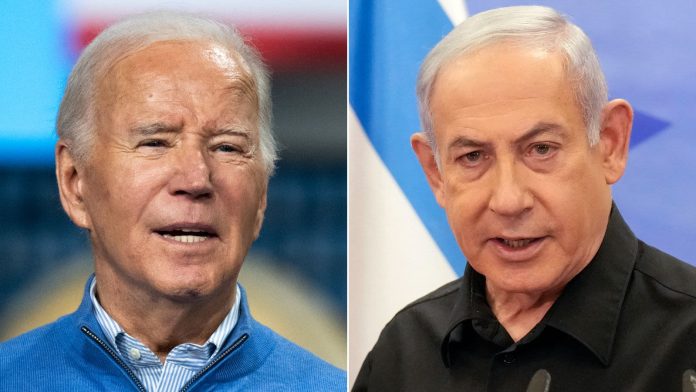
The message was delivered during a phone call between the two leaders on Wednesday last week, which was the first in more than seven weeks, the newspaper said on Monday. Details about the top-level conversation were provided by two anonymous sources: a US official and an “official familiar with the matter”, who described the Israeli position.

Iran fired 200 missiles at Israel on October 1, stating that it was a reprisal for the regime’s assassinations of Ismail Haniyeh, the political leader of the Palestinian group Hamas, who was killed in Tehran in late July, and Seyyed Hassan Nasrallah, the leader of the Lebanon-based group Hezbollah, who was killed in an Israeli airstrike in Beirut in late September. The Netanyahu government announced it would choose how to respond.

Biden has publicly urged Netanyahu to refrain from striking oil or nuclear infrastructure in Iran. Washington reportedly offered Israel a “compensation package” in exchange for following the request.

According to the daily sources, Netanyahu was in a “more moderated place” during the conversation with Biden, which prompted the US leader to authorize the deployment to Israel of a THAAD anti-ballistic missile system and about 100 associated US military personnel. The Pentagon announced the move on Sunday.

The official familiar with the matter stated Israel intended to launch a series of attacks on Iran and that the first of them would come before the November 5 presidential election in the US. But the strike would be calibrated in a way that Israel hopes will prevent it from being taken as an attempt to influence the outcome of the vote.

Netanyahu discussed the situation with his security cabinet on Thursday night, but did not seek their approval to keep the timing open-ended, the source added.

Israel has announced it will consider US opinions but ultimately decide its response to Iran’s October 1 attack based on its own national interests, following reports that Netanyahu informed the US that Israel may avoid targeting Iranian nuclear and oil sites.

“We listen to the opinions of the United States, but we will make our final decisions based on our national interests,” Netanyahu’s office wrote on X, responding to the Washington Post report.

UNICEF warns situation for Gaza children getting worse daily

Gaza War

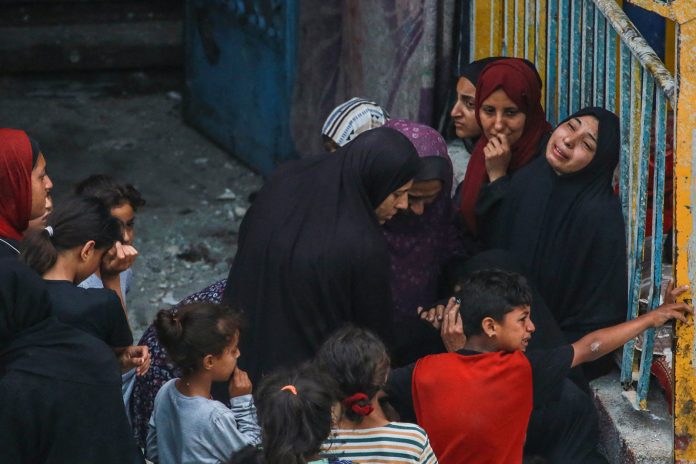
James Elder told a United Nations press briefing in Geneva that many Gaza children have been displaced multiple times since the outbreak of war over a year ago.

“Every single day, those deprivations increase,” Elder said, emphasizing the dire conditions faced by families in the region as “85% of the Gaza Strip” is under some form of evacuation order and “unlivable” conditions.

He highlighted the sharp decline in humanitarian aid delivery, particularly in August, which saw the “lowest amount of aid” entering Gaza since the conflict began.

He also noted that in recent days, no commercial trucks were allowed to enter Gaza, further exacerbating the situation.

Elder issued a stark warning that unless restrictions on aid are lifted and bombardments are ceased, the already dire situation for children will only worsen.

“Day after day, the situation for children becomes worse than the day before, and that’s going to continue so long as we see ongoing strikes and so long as we see now what is probably the worst restrictions we’ve seen on humanitarian aid,” he continued, adding, “As hard as is to imagine, tomorrow will be worse for children than today.”

Save the Children International also described the Occupied Palestinian Territories (OPT) as “now the deadliest place in the world for children”.

“At least 3,100 children under 5 have been killed in Gaza and thousands are at risk of severe malnutrition as famine looms,” it said Tuesday on X.

Israel has continued a brutal offensive on Gaza following a cross-border attack by the Palestinian group Hamas on Oct. 7 last year, despite a UN Security Council resolution calling for an immediate cease-fire.

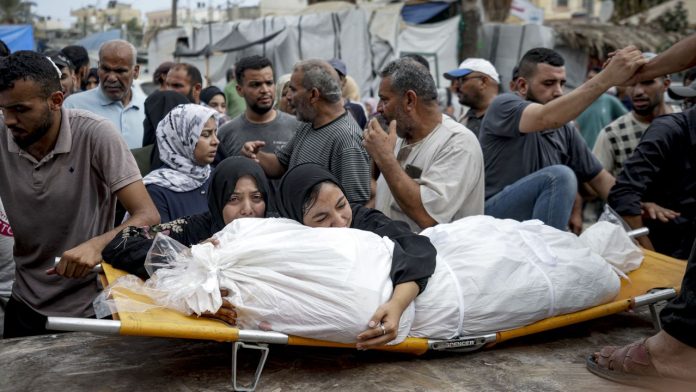
Nearly 42,300 people have since been killed, mostly women and children, and over 98,600 injured, according to local health authorities.

The Israeli onslaught has displaced almost the entire population of the Gaza Strip amid an ongoing blockade that has led to severe shortages of food, clean water, and medicine.

Mediation efforts led by the US, Egypt, and Qatar to reach a Gaza cease-fire and prisoner swap agreement between Israel and Hamas have failed over Israeli Prime Minister Benjamin Netanyahu’s refusal to halt the war.

400k children displaced in Lebanon in less than a month: UN

Israel has escalated its military campaign against the Lebanon-based Hezbollah group, including launching a ground invasion, after a year of exchanges of fire during its war with Hamas in the Gaza Strip.

The fighting in Lebanon has driven 1.2 million people from their homes, most of them fleeing to Beirut and elsewhere in the north over the past three weeks since the escalation.

Ted Chaiban, UNICEF’s deputy executive director for humanitarian actions, has visited schools that have been turned into shelters to host displaced families.

“What struck me is that this war is three weeks old and so many children have been affected,” Chaiban told The Associated Press in Beirut.

“As we sit here today, 1.2 million children are deprived of education. Their public schools have either been rendered inaccessible, have been damaged by the war or are being used as shelters. The last thing this country needs, in addition to everything else it has gone through, is the risk of a lost generation.”

While some Lebanese private schools are still operating, the public school system has been badly affected by the war, along with the country’s most vulnerable people such as Palestinian and Syrian refugees.

″What I’m worried about is that we have hundreds of thousands of Lebanese, Syrian, Palestinian children that are at risk of losing their learning,” Chaiban added.

More than 2,300 people in Lebanon have been killed in Israeli strikes, nearly 75% of them over the last month, according to the Health Ministry. In the last three weeks, more than 100 children were killed and over 800 were wounded, Chaiban noted.

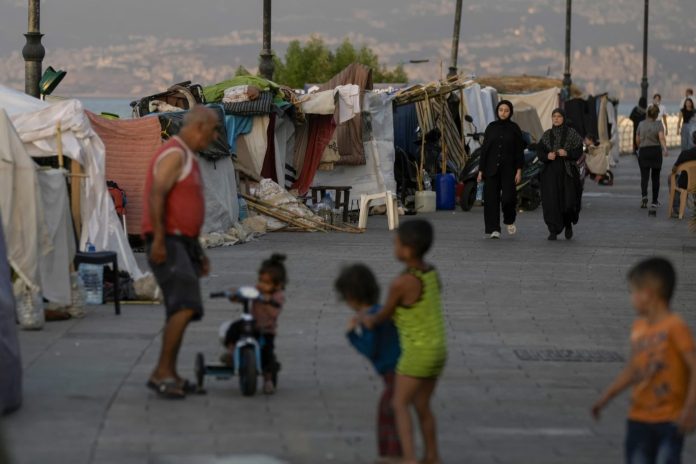
He stated displaced children are crammed into overcrowded shelters where three or four families can live in a classroom separated by a plastic sheet, and where 1,000 people can share 12 toilets. Not all of them work.

Many displaced families found have set up tents along roads or on public beaches.

Most displaced children have experienced so much violence, including the sounds of shelling or gunshots, that they cower at any loud noise, Chaiban said.

Then there is “evacuation orders upon evacuation orders. We’re at the beginning, and already there’s been a profound impact”, he added.

The escalation has also put over 100 primary health care facilities out of service, while 12 hospitals are either no longer working or partially functional.

Water infrastructure has also come under attack. In the last three weeks, 26 water stations providing water to almost 350,000 people have been damaged, Chaiban continued. UNICEF is working with local authorities to repair them.

He called for civilian infrastructure to be protected. And he appealed for a cease-fire in Lebanon and in Gaza, saying there needs to be political will and a realization that the conflict cannot be resolved through military means.

“What we must do is make sure that this stops, that this madness stops, that there’s a cease-fire before we get to the kind of destruction and pain and suffering and death that we’ve seen in Gaza.”

With so many needs, he added, the emergency response appeal for $108 million in Lebanon has only been 8% funded three weeks into the escalation.

Lebanon lodges complaint against Israel over targeting UNIFIL

UNIFIL

According to the official Lebanese National News Agency, Lebanon’s mission to the UN in New York filed the complaint under the instructions of Foreign Minister Abdullah Bou Habib to both the UN Security Council and Secretary-General Antonio Guterres.

The Lebanese diplomatic mission said the Israeli attack on UNIFIL is “a dangerous precedent and a blatant violation of the international law”, that comes to jeopardize UNIFIL’s mission.

It urged for “a decisive and firm stance” against those attacks that “mount to war crimes”, and hold Israel accountable for its violations to prevent their repetition.

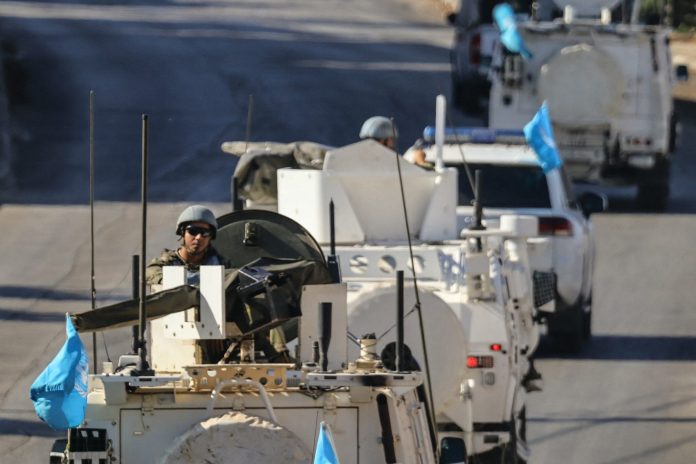
Israeli tanks on Sunday forced entry into one of UNIFIL’s positions, latest in a series of violations and attacks by the Israeli military, which injured several peacekeeping troops.

Last week, four UNIFIL peacekeepers were injured by Israeli army’s shelling on their posts in southern Lebanon.

UNIFIL was established as interim force in 1978 to help restore peace in the region and as a confirmation of Israeli withdrawal from Lebanon.

Israel has mounted massive airstrikes across Lebanon against what it claims are Hezbollah targets since Sept. 23, killing at least 1,550 people, injuring over 4,555 others, and displacing more than 1.34 million people.

The aerial campaign is an escalation from a year of cross-border warfare between Israel and Hezbollah since the start of its offensive on the Gaza Strip, in which Israel has killed nearly 42,300 people, most of them women and children, since a Hamas attack last year.

Despite international warnings that the Mideast was on the brink of a regional war amid Israel’s relentless attacks on Gaza and Lebanon, it expanded the conflict on Oct. 1 by launching a ground incursion into southern Lebanon.

Former IRGC official: Iran possesses weapons stronger than nuclear bombs

Iran Missile Attack Israel

Brigadier General Ebrahim Rostami, the former head of the International Relations and former secretary of the Development and Equipment Commission of the IRGC, revealed the news on Tuesday in an interview with Dide Ban Iran (Iran Watch) news and analysis website.

“We have equipment far superior to nuclear weapons,” he said, while supporting a recent demand by Iranian members of parliament to change the country’s ‘no nuclear weapons’ doctrine.

He explained, “Some aspects are unknown to them because these are highly classified and top-secret information.”

Rostami hinted at past tactical operations, referencing incidents where oil tankers were targeted in the Sea of Oman and the Port of Fujairah, the UAE.

He also noted, “When (former US president Donald) Trump aimed to bring our oil exports to zero, several tactical operations occurred.”

“I won’t say who carried them out, but five tankers exploded in the highly secure Port of Fujairah. They don’t even know where the hit came from,” he stated.

He also mentioned attacks on two Japanese tankers in the Sea of Oman during the visit by former Japanese prime minister Shinzo Abe to Iran in 2019 as Trump’s envoy.

“They don’t know what hit them; otherwise, they would have proven it. They even filed a case at the UN. Initially, the UAE blamed us, but they couldn’t provide evidence,” Rostami added.

Rostami underlined that Iran possesses advanced equipment that surpasses nuclear capabilities.

“Some things must remain known only to this extent for now. These are part of the examples I can mention, and we have equipment far superior to nuclear weapons,” he concluded.

Iran urges expulsion of Israel from IPU, trial of regime’s officials at Nuremberg Court, citing region wars

Manouchehr Mottaki, head of the Iranian delegation at the IPU assembly, responded to the claims made by the representative of the Israeli regime in a brief speech on Monday, October 14, and emphasized that given the crimes committed by the Zionists in Lebanon and Palestine, the Israeli regime’s delegation should not be given a platform to speak and they should be expelled from the IPU.

Mottaki expressed hope for the victory of the resistance against the Zionists, stating that the leaders of this regime, along with Israeli military commanders and child-killing pilots, should be tried and punished at the Nuremberg Court.

The Nuremberg trials were a series of military tribunals held after World War II to address war crimes.

On Monday, during a moment when the Israeli regime’s representative intended to speak at the IPU in Geneva, the Iranian parliamentary delegation left the meeting in protest. Representatives from Algeria, Jordan, Tunisia, Turkey, and the Arab Parliament also left the hall in protest.

Since early October 2003, more than 42,000 Palestinians, mostly women and children, have been massacred by the Zionists in Gaza, with around 100,000 others wounded. Tens of thousands of Palestinians remain buried under the rubble of Gaza.

In the Israeli war on Lebanon, at least 2,300 people have been killed, more than 10,000 wounded, and hundreds of thousands displaced.

Iran says impunity encouraging Israel to commit further crimes in West Asia

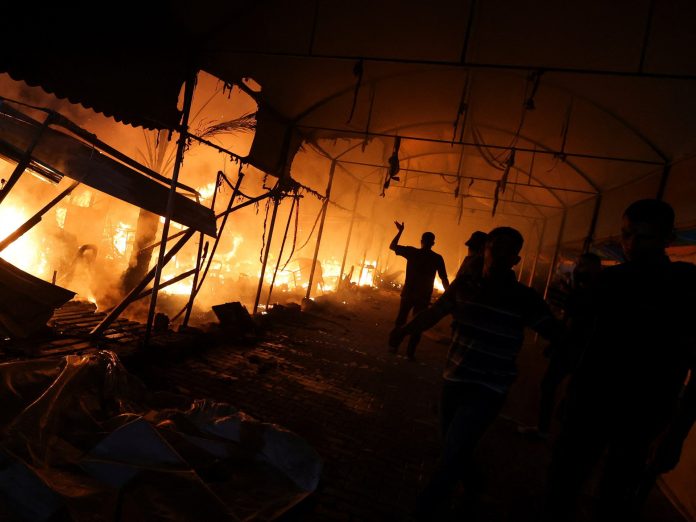
The Monday raid on the Al-Aqsa Martyrs Hospital in Central Gaza, which involved incendiary bombs, caused a massive fire and resulted in the martyrdom and injury of a large number of innocent people.

Baghaei also expressed deep regret over the obstruction by the regime’s supporters, particularly the US and the UK, of any international actions, including by the International Criminal Court (ICC), to hold the regime’s leaders accountable for such crimes.

He stated that Israel’s repeated and deliberate attacks on hospitals, and the killing of patients, the injured, doctors, and medical staff are enough to prosecute and try the regime’s leaders for war crimes.

The foreign ministry spokesman reminded that international law prohibits attacks on civilian sites, especially hospitals, and medical centers, adding that the Monday incident is a clear example of war crime and part of a broader plan of genocide against the Palestinians.

Mass funeral held in Tehran for Iranian commander killed by Israel in Lebanon

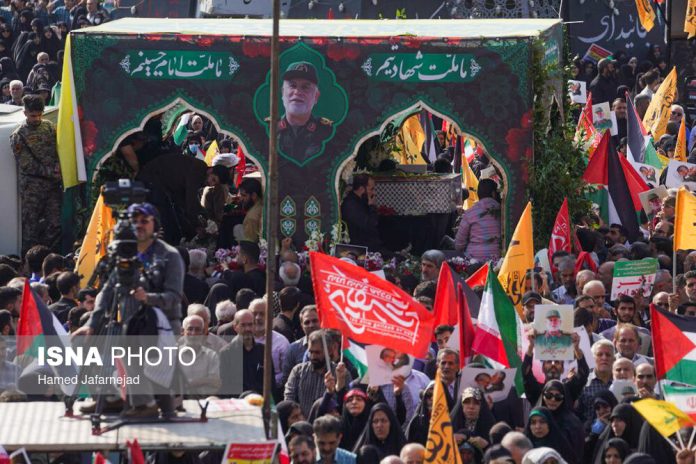
The ceremony took place on Tuesday, with mourners carrying Nilforoushan’s coffin, draped with the national Iranian flag, in Tehran’s iconic Imam Hussein Square.

Nilforoushan was pronounced martyred in the Israeli attack that targeted a number of residential buildings in Beirut’s southern suburb of Dahiyeh on September 27. He was assassinated along with Nasrallah.

The body of the Iranian commander was taken from Beirut to the holy Iraqi city of Karbala, where a large crowd attended his funeral, including representatives of Iraqi political groups.

Nilforoushan’s funeral prayers were led by a representative of Iraq’s top cleric, Grand Ayatollah Ali al-Sistani.

Another funeral procession was held in Najaf, an Iraqi city that houses the holy shrine of Imam Ali (AS), the first Shia Imam.

Nilforoushan’s body was transferred to Tehran on Tuesday.

More ceremonies are planned in the Iranian cities of Mashhad and Qom before the martyred commander’s burial in Isfahan on Thursday.