Tuesday, December 30, 2025
Home Blog Page 697

Italy says imposed strict restrictions on arms exports to Israel amid regional tensions

“After the start of the Israeli operation in the Gaza Strip, the government immediately suspended the issuance of all new licenses for the export of military materials to Israel. Thus, all contracts signed after October 7 were not executed. All export licenses issued before October 7 were analyzed on a case-by-case basis,” Meloni said in the Italian parliament on Tuesday.

Italy’s position of a complete block on all new export licenses is much stricter than that of France, Germany and the United Kingdom, the prime minister added.

Meloni noted that Italy is assessing licenses issued before October 7 and taking action if there is a risk that military “material could be used in the current crisis”.

Israel has continued a brutal offensive on Gaza following a cross-border attack by the Palestinian group Hamas on Oct. 7 last year, despite a United Nations Security Council resolution calling for an immediate cease-fire.

Nearly 42,400 people have since been killed, mostly women and children, and over 99,000 injured, according to local health authorities.

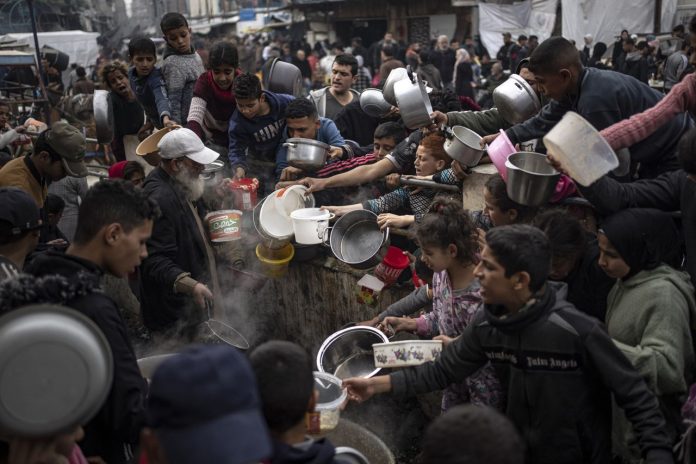
The Israeli onslaught has displaced almost the entire population of the Gaza Strip amid an ongoing blockade that has led to severe shortages of food, clean water, and medicine.

Israel faces a genocide case at the International Court of Justice for its actions in Gaza.

UN agencies warn of humanitarian catastrophe in Lebanon

UNICEF and the World Food Programme (WFP) warned in a joint statement on Tuesday that the fighting, which has displaced hundreds of thousands in Lebanon, has “triggered a catastrophe”.

“We are preparing for the reality that the needs are increasing. We need additional funding, without conditionalities,” the agencies said.

Lebanese officials have said 1.2 million people have been affected by the conflict, in which Israel has conducted air attacks on Beirut and many other parts of Lebanon, as well as sending ground troops into the south.

“Around 1.2 million people have been affected, with a significant impact on vulnerable communities,” the statement cautioned.

“Nearly 190,000 displaced individuals are currently sheltered in over 1,000 facilities, while hundreds of thousands more are seeking safety among family and friends.”

In addition, hundreds of thousands have crossed into Syria, the statement notes, further complicating the humanitarian response.

The UN agencies added they are working to deliver vital support. WFP is meeting the needs of approximately 200,000 people daily with ready-to-eat food and cash.

There is growing concern regarding the effects of Israeli attacks, which its military insists targets Hezbollah facilities, on civilians.

Israel has mounted a huge air campaign in Lebanon against Lebanon since Sept. 23, killing more than 1,500 people and displacing hundreds of thousands.

The aerial campaign is an escalation from a year of cross-border warfare between Israel and Hezbollah since the start of its offensive on the Gaza Strip, in which Israel has killed nearly 42,500 people, most of them women and children, since a Hamas attack last year.

An official from the UN Refugee Agency said new Israeli evacuation orders to several villages in southern Lebanon meant that more than a quarter of the country was affected.

“People are heeding these calls to evacuate, and they’re fleeing with almost nothing,” she added.

Meanwhile, the fighting shows little sign of abating.

Hezbollah’s acting chief has warned the group plans to fire rockets into more areas of Israel until the government of Prime Minister Benjamin Netanyahu stops its air strikes and ends its ground invasion of Lebanon.

“I am telling the Israeli home front: The solution is a ceasefire,” Naim Qassem said in a speech broadcast live on Tuesday, adding that the group would not be defeated by the ongoing bombardment of its strongholds as well as the killing of its leadership.

He said Hezbollah is focused on “hurting the enemy”, signalling that it would ramp up attacks further south in Israel. He added that a ceasefire in the besieged and bombarded Gaza Strip is the “solution” to end the escalating conflict.

Iran shrugs off dispatching US-made anti-missile shield to Israel

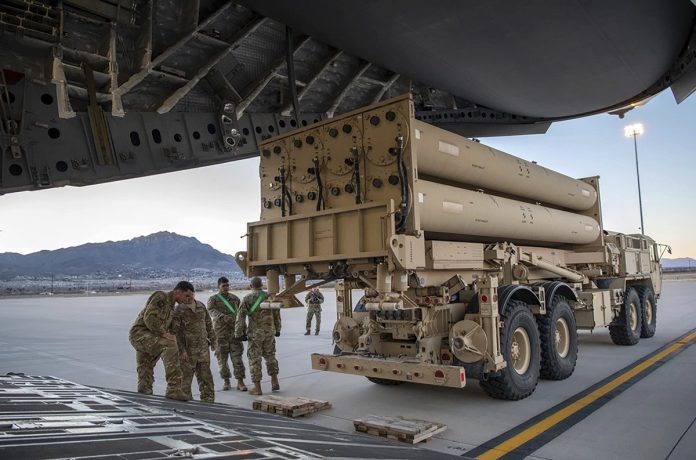
Asked about the US’ decision to deploy a THAAD missile battery and its associated American military crew to Israel, Nasirzadeh said on Wednesday, “THAAD is an ant-ballistic system. It is not anything new and had been in place previously.”

“We consider such measures of the enemy as part of a psychological war. There is no specific problem,” he told reporters on the sidelines of a weekly cabinet session in Tehran.

The Iranian defense minister added that none of the threats issued by the Zionist regime is new.

On October 1, Iran responded to the Israeli assassination of Hamas political bureau chief Ismail Haniyeh, Hezbollah Secretary General Seyyed Hassan Nasrallah, and IRGC general Abbas Nilforoushan by launching as many as 200 ballistic missiles toward the Zionist regime’s military and intelligence bases all over the occupied Palestinian territories.

While the Zionist regime has threatened to retaliate, Iranian officials have warned that Tehran’s reciprocal response to any Israeli action will be harsh, proportional and well-calculated.

Hungarian envoy summoned to Iran’s Foreign Ministry over EU’s new sanctions

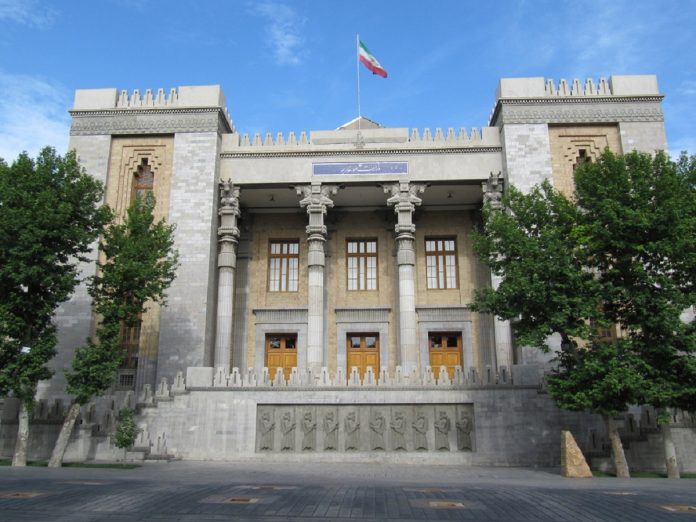
Ministry of Foreign Affairs of the Islamic Republic of Iran

Giola Peto was summoned by Iranian Deputy Foreign Minister for Political Affairs on Tuesday. Hungary holds the presidency of the Council of the European Union.

On Monday, the EU approved new sanctions against seven Iranian individuals and seven entities, including flagship carrier Iran Air, under the pretext of the alleged transfer of ballistic missiles to Russia for use in the Ukraine war.

The Iranian official denounced as “unacceptable” resorting to illegal and coercive methods such as sanctions, stressing that such moves will lead to nowhere.

He said the defense and military cooperation of Iran with other countries is “legal” and aimed at protecting the interests and national security of the country, and that it is not a matter third parties can interfere in.

The Iranian official condemned as “a clear violation of international law” the sanctions against Iranian passenger airlines, describing the EU’s latest move as contradictory and inconsistent with the claims of European countries.

He also advised the EU “not to fall into the trap of anti-Iranian circles, particularly the Zionist apartheid regime, and not to sacrifice their long-standing interests and relations with Iran for the ill-wishers of the Iran-Europe relations.”

Earlier in the day, Iran’s Foreign Ministry spokesman Esmaeil Baghaei denounced the move as an unjustifiable action that violates the international law, especially human rights.

Iran and Russia, both hit by Western sanctions, have maintained close ties over the past years.

The two countries have traditionally had close military ties, notably with Iran receiving the Russian-made S-300 anti-missile system in 2015.

Iranian officials have declared that the country will not hesitate to strengthen its military capabilities, including its missile and drone power, which are entirely meant for defense, and that Iran’s defense capabilities will be never subject to negotiation.

Iran warns of ‘decisive’ response to any Israeli attack

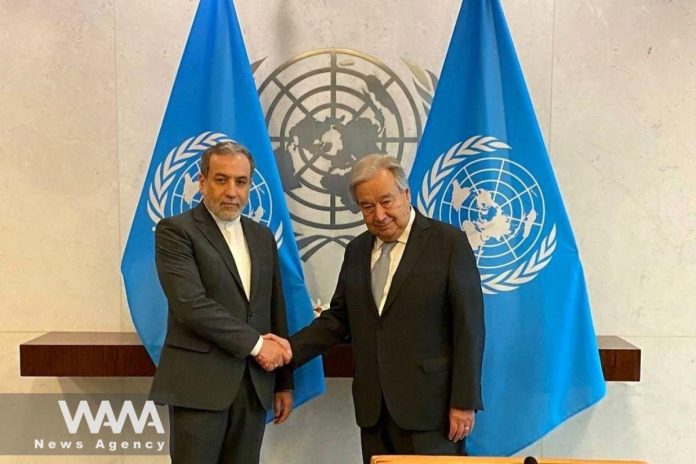
Araghchi and Guterres discussed the latest regional developments in a phone call on Tuesday evening.

During the conversation, the Iranian foreign minister highlighted the catastrophic humanitarian situation emanating from the Zionist regime’s ongoing genocide in Gaza and aggression in Lebanon.

Araghchi urged the UN chief to utilize all capacities of the international body to stop the Israeli regime’s crimes and aggressions and to deliver humanitarian aid to Lebanon and Gaza.

The top Iranian diplomat reiterated Iran’s principled stance on the need to maintain peace and stability in the region.

He stressed that while the Islamic Republic of Iran is making all-out efforts to safeguard regional peace and security, it is fully prepared to deliver a decisive and regretful response to any adventurism by the Zionist regime.

He stressed that the responsibility for the consequences of increasing insecurity in the region lies with the Israeli regime and its main supporter, the US.

The UN secretary general expressed concern over the escalating tensions in the region due to Israel’s continued attacks on Gaza and Lebanon.

He emphasized the need for a political solution to end the war and the importance of providing aid to the victims and displaced persons affected by the conflicts in Gaza and Lebanon.

Guterres also underscored the importance of protecting Lebanon’s sovereignty, adding the continued deployment of UN peacekeeping forces in southern Lebanon, despite the threats they face, is part of this effort.

The two sides also exchanged views on the situation in Yemen, discussing the severe humanitarian conditions in the country.

UK sanctions seven groups supporting West Bank settlers

Cameron told the BBC on Tuesday that he had intended to impose sanctions on Israel’s finance minister, Bezalel Smotrich, and the national security minister, Itamar Ben-Gvir, and said he was concerned that the Labour government had not adopted his proposal. He added he had only held back from taking the step in the spring because he had been advised that it would be too political during the general election.

The Foreign Office announced its latest sanctions had been in preparation for weeks and were not a kneejerk response to Cameron’s disclosure.

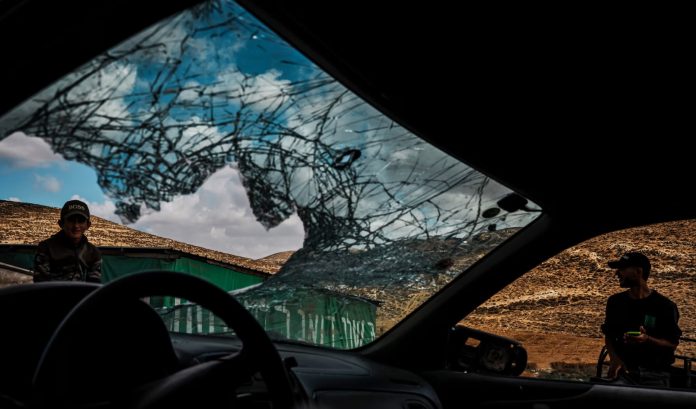
The sanctions are against three illegal settler outposts and four organisations the Foreign Office said had “supported and sponsored violence against communities in the West Bank”. It added there had been an unprecedented rise in settler violence, with 1,400 attacks on Palestinians recorded by the UN since October 2023.

The current Foreign Secretary, David Lammy, stated: “When I went to the West Bank earlier this year I met Palestinians whose communities have suffered horrific violence at the hands of Israeli settlers.

“The inaction of the Israeli government has allowed an environment of impunity to flourish where settler violence has been allowed to increase unchecked. Settlers have shockingly even targeted schools and families with young children.”

He vowed further asset freezes would be imposed to stop “these heinous abuses of human rights”.

The outposts under sanctions are Tirzah Valley Farm, Meitarim and Shuvi Eretz. Among the organisations affected is Amana, considered a central arm of the Israeli settler movement and already under sanctions by the Canadian government.

Amana has been involved in the establishment of many settlements and unauthorised outposts through its Binyanei Bar Amana subsidiary. Its goal is to introduce 1 million settlers to the West Bank.

It is the third sanctions package against settlers that the Foreign Office has imposed, and it was announced an hour after the development minister, Anneliese Dodds, endured a torrid hour in the Commons faced with angry backbenchers, mainly from her own party, who demanded the government impose more sanctions on Israel for its repeated breaches of international humanitarian law.

Cameron earlier told BBC Radio 4’s Today programme: “Smotrich and Gvir had said things like encouraging people to stop aid convoys getting into the Gaza Strip and encouraging extreme settlers in the West Bank with the appalling things they have been carrying out”.

He added it was necessary to tell the Israeli Prime Minister, Benjamin Netanyahu, “when ministers in your government who are extremists and behave in this way we are prepared to use our sanctions regime to say this is simply not good enough and simply has to stop”.

In December last year Cameron announced on social media that a travel ban was being imposed against a small group of illegal settlers, saying: “We are banning those responsible for settler violence from entering the UK to make sure our country cannot be a home for people who commit these intimidating acts.”

In his BBC interview Cameron continued to defend the thrust of Israel’s policy to eradicate the threat posed by Hamas and Hezbollah.

He added: “On 7 October Israel was not just attacked in the south by Hamas but then continually with rockets by Hezbollah in the north. We all want this conflict to end but it has to end in a way that is sustainable so that it does not restart. That is why it is right to back Israel’s right of self-defence. But it is not a blank cheque, it’s not unconditional. We do want to see aid get through to Gaza and we do want the role of the UN in Lebanon to be respected.”

US threatens Israel with military aid suspensions over Gaza

Secretary of State Antony Blinken and Secretary of Defense Lloyd Austin wrote to senior Israeli officials warning that continued US military assistance is in jeopardy over the spiraling humanitarian condition in the Gaza Strip, urging the Israeli government to take “urgent and sustained action” to reverse course, in a letter first reported by Axios.

National Security Communications Advisor John Kirby said the letter follows a “relatively recent decrease in humanitarian assistance reaching the people of Gaza, which is obviously something we’ve been very, very concerned about since the beginning of the conflict”, in a call with reporters on Tuesday.

Kirby added the Biden administration’s aim is to get more concrete measures in place to increase humanitarian assistance.

The letter, dated Sunday, is addressed to Israel’s Minister of Defense Yoav Gallant and Ron Dermer, senior adviser to Israeli Prime Minister Benjamin Netanyahu. The top Biden officials warn against the Israeli government restricting US humanitarian assistance to the Gaza Strip.

“The Departments of State and Defense must continually assess your government’s adherence to your March 2024 assurances that Israel would ‘facilitate and not arbitrarily deny, restrict, or otherwise impede, directly or indirectly, the transport or delivery of United States humanitarian assistance’ to and within Gaza,” the letter states.

“The Department of State will need to conduct a similar assessment under section 620I of the Foreign Assistance Act in order to provide additional Foreign Military Financing assistance to Israel. We are now writing to underscore the US government’s deep concern over the deteriorating humanitarian situation in Gaza, and seek urgent and sustained actions by your government this month to reverse this trajectory.”

The letter’s public release sheds more light on increased tensions between the US and the Netanyahu government over the conduct of Israel’s war against Gaza.

Pentagon deputy press secretary Sabrina Singh said the letter was “personal, private correspondence” and expressed frustration that “someone obviously felt the need to get out this private correspondence”.

Blinken and Austin raise alarm in the letter that the amount of aid entering Gaza has dropped by 50 percent compared to assurances provided in March and April.

The top Biden officials call for Israel to take 15 immediate steps to surge all forms of humanitarian assistance within 30 days or risk delivery of US-provided weapons.

Among the actions include enabling a minimum of 350 trucks per day to enter the strip; instituting “adequate” humanitarian pauses to allow for distribution of humanitarian assistance; enhancing security for fixed humanitarian sites; and allowing the movement of people inland from a tent camp in the coastal enclave of al-Muwasi before winter. The letter also calls for the Israeli military to “end isolation of northern Gaza”.

“Lastly, it is vitally important that our governments establish a new channel through which we can raise and discuss civilian harm incidents. Our engagements to date have not produced necessary outcomes. We ask that the initial virtual meeting of this channel be held by the end of October,” Blinken and Austin added.

“We again ask for your urgent intervention and leadership to address this situation.”

The United Nations, aid groups and other governments have raised alarm that the delivery of humanitarian assistance is being throttled as Israel has stepped up its military campaign in northern Gaza in recent weeks, following the collapse of cease-fire negotiations.

Vice President Kamala Harris, who has publicly rejected limiting weapons support to Israel, raised alarm in a post on social platform X, citing the UN reporting that no food had entered northern Gaza in nearly two weeks, and called for Israel to “do more to facilitate the flow to those in need”.

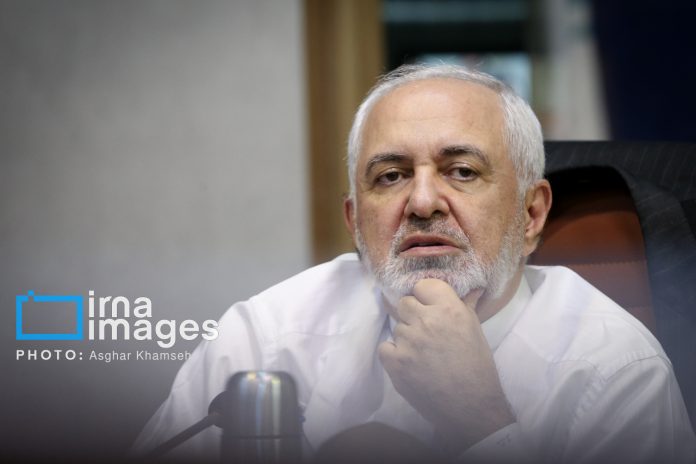
Zarif discusses calls for revising Iran’s defensive doctrine amid regional tensions

Zarif acknowledged that discussions around deterrence, particularly nuclear deterrence, have long existed among scholars and officials.

He noted that while some believe nuclear weapons could enhance security, others argue that such weapons create widespread insecurity.

Zarif pointed out that since the issuance of a fatwa (religious decree) by the Supreme Leader, declaring nuclear weapons as religiously forbidden, Iran’s strategic and religious approach has aligned with this position.

“The Supreme Leader’s stance on this issue has been clear, both from a religious and strategic perspective,” he said.

He emphasized that the debate between proponents and opponents of nuclear deterrence is not new, recalling discussions in the 1990s following India and Pakistan’s nuclear tests.

Zarif noted that these two perspectives—whether atomic weapons enhance security or foster insecurity—have coexisted both in Iran and globally for decades.

Recently, Iranian lawmaker Hassanali Akhlaghi Amiri stated that 39 members of Parliament had written to the Supreme National Security Council, urging a reconsideration of Iran’s defensive doctrine in light of regional developments.

25% of Lebanon under Israeli expulsion orders: UN

The figures stress the heavy price Lebanese are paying as Israel steps up its war on the country.

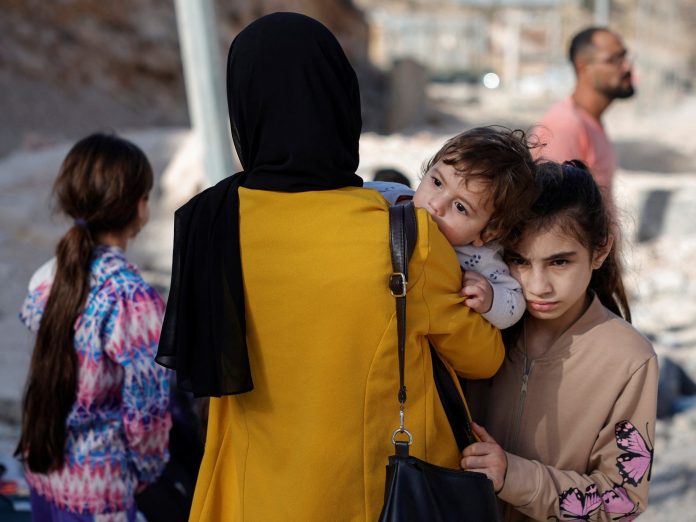
The UN refugee agency’s Middle East Director Rema Jamous Imseis told a press briefing in Geneva that new Israeli orders to several villages in southern Lebanon meant that over a quarter of the country was now affected.

“People are heeding these calls to evacuate, and they’re fleeing with almost nothing.”

In recent weeks, Israel has mounted its bloody aerial assaults on Lebanon, causing the displacement of at least 1.3 million people, more than a fifth of the country’s population.

More than 2,300 people have been killed and over 10,700 others injured in Israeli aggression on Lebanon since early October 2023, according to Lebanon’s Public Health Ministry.

American officials attend meetings at Israeli prison accused of ‘horrific’ torture: Report

According to three officials with the US Agency for International Development (USAid), Israel’s humanitarian relief hub began operating at the desert military base Sde Teiman on 29 July, with a regular US presence. USAid is tasked with facilitating urgently needed humanitarian assistance to the Gaza Strip.

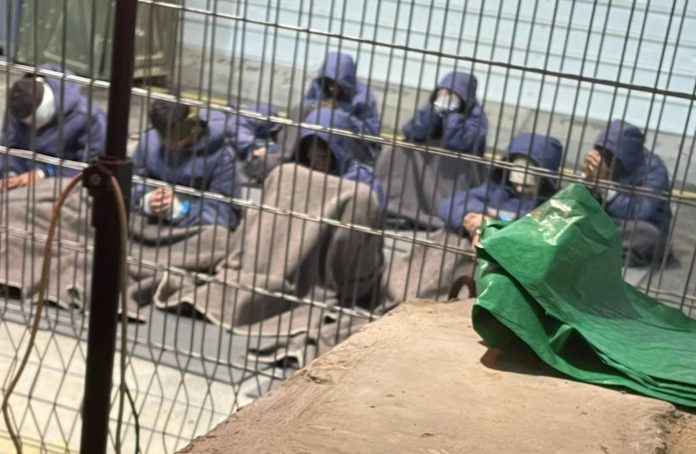
Sde Teiman was set up as a temporary holding facility for detainees from Gaza after last year’s 7 October attack and the ensuing war. Human rights groups and released detainees say the thousands of of Palestinians who have been through the facility have been subjected to severe abuse and torture.

In July, Israel consolidated the various mechanisms approving aid operations in Gaza into one body, the Joint Coordination Board. The JCB sits at Sde Teiman and coordinates logistics with the US, the United Nations and a number of international NGOs.

The Guardian daily viewed an internal USAid document that referred to “the present JCB location on Sde Teiman IDF base”, located outside of Be’er Sheva in southern Israel. In the document, the base’s name links to its Wikipedia entry, which features photos of blindfolded Palestinian prisoners and details their mistreatment.

The sources, who spoke on condition of anonymity, told the newspaper that two USAid officials travel to Sde Teiman daily for JCB meetings with Israeli and UN officials.

“I can’t sleep at night knowing that it’s going on,” one US official told the Guardian, adding, “It’s another form of psychological torture to make someone work there.”

The IDF confirmed the location of the JCB but did not respond to questions about the prison.

It is not clear whether USAid officials have seen the part of the base where Palestinian prisoners reside. The IDF division that oversees the entry of humanitarian aid works out of “a handful of makeshift trailers” on the base, Jewish Insider has reported.

“USAid is working closely to ensure more effective dialogue between humanitarian partners and the Israeli government to improve the safety, efficiency, and effectiveness of humanitarian movements into and throughout Gaza,” a USAid spokesperson wrote by email.

“Due to security considerations, we do not comment on the specific locations of our staff.”

Human rights groups, whistleblowers and prisoners released from Sde Teiman have described severe violence meted out by Israeli soldiers in the facility, including rape, beatings, electrocutions and force feedings. An Israeli doctor who worked at the camp reported prisoners “routinely” had limbs amputated as a result of prolonged handcuffing.

In May, the New York Times reported that 4,000 Palestinians had been through the prison since 7 October. At least 35 died, either at the site or nearby hospitals.

“The situation there is more horrific than anything we’ve heard about Abu Ghraib and Guantánamo,” Khaled Mahajneh, a lawyer who visited Sde Teiman, told +972 Magazine.

In a lawsuit surrounding the conditions in Sde Teiman, the Israeli government reported to the country’s high court of justice that 24 prisoners remain there and that conditions were set to improve with the opening of a new wing.

“We have no indication that the living conditions in the camp have indeed been improved, as our lawyers have still not had access to the camp to assess that,” Tal Steiner, executive director of the Public Committee Against Torture in Israel, told the Guardian.

The Israeli human rights organization B’Tselem reports that Sde Teiman is part of a network of detention facilities where torture has become widespread in the last year.

Israel is investigating 10 IDF soldiers and reservists who were posted at the prison for sexual violence, after one prisoner was hospitalized in critical condition. The investigations sparked violent far-right attacks on two military bases in support of the soldiers under investigation. State department spokesperson Matt Miller called the allegations of sexual abuse “horrific” and said those involved “ought to be held accountable”.

Israel previously coordinated humanitarian operations out of site 61 on Hatzor airbase near Ashdod, north of Gaza. Weeks before the operation moved to Sde Teiman, Samantha Power, the USAid administrator, visited site 61.

“I think what’s happening in this room is incredibly important,” she stated.

Israel’s Coordinator of Government Activities in the Territories (Cogat), which oversees the JCB, holds daily meetings at the Sde Teiman base with USAid and UN representatives, the American officials told the Guardian.

“It’s a very big base,” a Cogat spokesperson noted.

The sources say that the relocation of the humanitarian operations center to Sde Teiman has been a closely guarded secret, and that USAid documents and internal correspondence list the location as Be’er Sheva.

An Israeli military factsheet confirms the consolidation of the JCB at the end of July without naming its location. “Members meet every morning to discuss the day’s planned activities in detail,” the factsheet said, adding, “These efforts underscore Israel’s commitment to work in close collaboration with humanitarian actors and constantly improve existing mechanisms so that humanitarian teams can operate effectively, and that aid reaches those in need.”

But the officials who spoke with the Guardian said that the Israeli military has undermined coordination with the UN and humanitarian organizations over the past year, and the relocation of the JCB to Sde Teiman reflected that.

“It seems like trolling,” one of them told the Guardian.

Power, the administrator of USAid, established herself two decades ago one of America’s most prominent advocates for a foreign policy that centers human rights. But over the past year, she has come under fire from her own staff for not getting Israel to allow more aid into Gaza.

USAid staff have coordinated dissent memos on private group chats, held vigils for slain aid workers outside of the Washington office, and confronted USAid leadership in meetings. Seventy-six staffers sent a letter in March to the leadership of the agency’s Bureau for Resilience, Environment, and Food Security criticizing USAid’s “silence on the suffering of Gaza”.

In a separate open letter from January, 128 USAid officials wrote to the agency’s global health leader Atul Gawande seeking “greater advocacy for the protection of civilian life and to salvage the little that remains of the health care system in Gaza”.

Gawande responded by saying he and USAid leadership are “pressing for Israel to restore water, food, fuel, communications, and electricity in Gaza and to adhere to international humanitarian law”. But USAid staffers question the efficacy of their efforts without a sustained ceasefire.

Power has been actively involved in the US’s response to the humanitarian crisis in Gaza. On 6 September, she and Israeli Maj Gen Ghassan Alian, the head of Cogat, “discussed immediate actions that can be taken to improve the operation of the Joint Coordination Board”, according to a USAid statement.