Wednesday, December 24, 2025
Home Blog Page 64

US govt. shutdown stalls arms deliveries to Ukraine: Axios

A budget standoff between Democrats and Republicans in Congress has dragged the shutdown out for 40 days, making it the longest in US history.

“This is actually really harming both our allies and partners and US industry to actually deliver a lot of these critical capabilities overseas,” Axios cited a senior State Department official as saying.

More than $5 billion in arms exports – including AMRAAM air-to-air missiles, HIMARS, and other weapons for European NATO members – have been affected, the outlet added.

The source did not specify the final destination of the arms, but US exports to NATO countries are often transferred to Ukraine, Axios added.

The delay stems from a lag in congressional approval, as the State Department bureau that normally briefs lawmakers on arms exports is operating with only a quarter of its usual staff, according to the outlet.

The shutdown has also frozen talks between Washington and Kiev on future arms shipments, The Telegraph reported last month.

US President Donald Trump has increasingly pushed European NATO states to take over the burden of supporting Ukraine by buying American-made armaments.

“We send weapons to NATO, and NATO is going to reimburse the full cost of those weapons,” Trump stated earlier this year, shortly after European members of the US-led military bloc committed to a 5% of GDP military spending target.

Russia has long condemned the supply of weapons to Ukraine by Western nations, arguing it makes them party to the conflict, which Moscow sees as a NATO-led proxy war. Such supplies only prolong the fighting but cannot change its outcome, Russia has announced.


Ukraine attacks leave at least 20,000 without power in Russia

Russia Ukraine War

Belgorod Governor Vyacheslav Gladkov said the “electricity and heating supply network has suffered severe damage” in the regional capital of the same name.

“Several streets are affected by power issues… More than 20,000 residents are without electricity,” he wrote on Telegram.

In the western Kursk region, “a fire broke out at one of the power plants in the village of Korenevo,” cutting power to 10 localities, Governor Alexander Khinshtein announced on Telegram.

A fire also broke out at a heating facility in the southern Voronezh region, according to Governor Alexander Gusev.

Russia’s defence ministry, for its part, reported having shot down 44 drones over the border Bryansk region.

On Saturday, Russian attacks on energy infrastructure left Ukraine scrambling to turn light and heating back on, with the state’s power provider saying its generating capacity was reduced to “zero” on Sunday.

The attack caused significant damage to Ukrainian power plants and resulted in at least four deaths.

Moscow, which has escalated attacks on Ukraine’s infrastructure in recent months, launched 69 drones at energy facilities across the country overnight into Sunday, of which 34 were shot down, according to the Ukrainian air force.

London says British anti-drone unit deployed to Belgium

London confirmed the deployment, citing several drone sightings reported over Belgium last week. Sir Richard Knighton, head of the British Armed Forces, acknowledged that the origin of the unmanned aerial vehicles (UAVs) spotted over the area remains unknown.

Francken recently caused a stir by threatening to “wipe Moscow off the map” in an interview with Belgian outlet De Morgen last month. He later sought to clarify his remarks, claiming that they had been made in the context of NATO’s principle of deterrence. He maintained that the bloc was “not at war with Russia,” but added that he would not “take back a single word” from the controversial interview.

Moscow condemned his remarks as “irresponsible” and called them an example of “military psychosis.”

Several Western officials have recently accused Russian aircraft and drones of violating EU airspace, labeling the incidents part of an alleged “hybrid war” by Moscow. The Kremlin has denied the allegations and accused the West of fostering anti-Russia “hysteria.”

The EU has increasingly used anti-Russian rhetoric to justify massive military expenditures. The ReArm Europe package, presented in March, aims to mobilize up to €800 billion ($933 billion) to expand the EU’s military under the pretext of countering the alleged “Russian threat.”

The bloc also unveiled a plan to create a “drone wall,” prompted by UAV sightings in several member states. The incidents were immediately blamed on Russia. Moscow dismissed the claims as false accusations.

Last month, the EU Commission also revealed plans to establish a ‘space shield’ to protect its satellites from an alleged Russian threat, but have not disclosed a budget.

Hamas hands over remains of another Israeli captive under ceasefire deal

An Israeli military statement said army forces received the body from Red Cross teams in southern Gaza.

The army confirmed that the remains belonged to soldier Hadar Goldin after identification at the National Institute of Forensic Medicine in Tel Aviv.

Hamas has announced that it would hand over the remains of Goldin, who was captured by Palestinian fighters in 2014 during the group’s war with Israel in Gaza.

Hamas has already released 20 Israeli captives alive and handed over the remains of 26 out of 28, most of them Israelis, since the ceasefire between Israel and Hamas took effect on Oct. 10. Israel, however, claimed that one of the bodies received did not match any of its listed captives.

Phase one of the ceasefire deal includes the release of Israeli hostages in exchange for Palestinian prisoners. The plan also envisages the rebuilding of Gaza and the establishment of a new governing mechanism without Hamas.

Since October 2023, Israel’s genocidal war has killed more than 69,000 people and injured more than 170,600, according to the Gaza Health Ministry.

Iran deputy FM: ‘If U.S. enters talks with genuine will, everything is achievable’

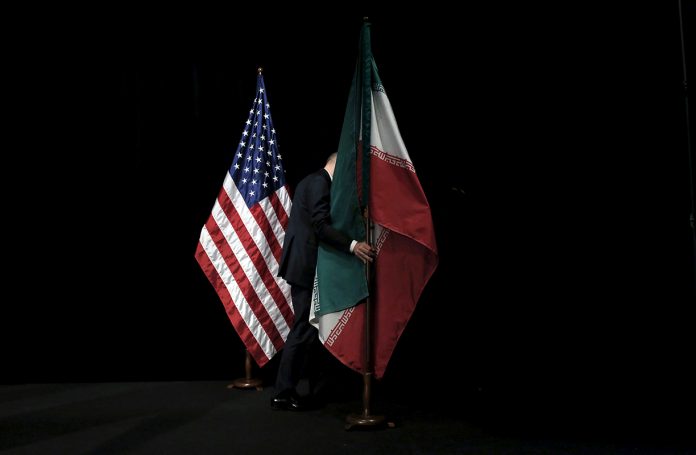
Iran US Flags

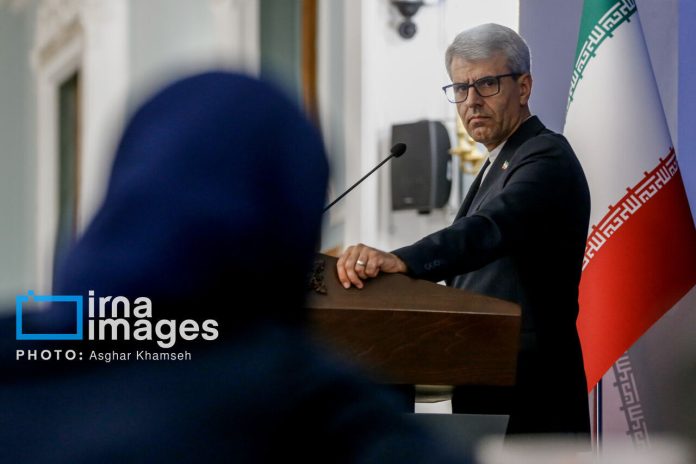
Khatibzadeh stated, “If the United States enters negotiations with a genuine will to reach an agreement, speaks with respect, and abandons its illusions, everything will be achievable.”

Addressing recent developments in Iran’s foreign relations, Khatibzadeh condemned the “aggressive and terrorist acts of the Zionist regime coordinated with the United States,” saying that such actions, carried out amid diplomatic negotiations, expose Washington’s double standards.

He emphasized that the “honorable resistance of Iran’s defense forces and the unprecedented unity of the Iranian people have nullified decades of anti-Iranian propaganda.”

Khatibzadeh also criticized the recent decision by the United Kingdom, France, and Germany to trigger the so-called “snapback” mechanism under the JCPOA, describing it as “a grave strategic and legal mistake that discredits the Europeans and removes them from the realm of diplomacy.”

He reiterated that, from a legal standpoint, UN Security Council Resolution 2231 expired on October 18, 2025, and noted that 121 member states of the Non-Aligned Movement, along with two permanent members of the Security Council, had affirmed this position as the voice of the international community.

The deputy foreign minister underscored Iran’s readiness to defend its sovereignty and national interests while maintaining its commitment to multilateralism.

“We will not be caught off guard by any future scenario,” he said, adding that the only way to overcome “hegemony and coercion in international relations” is through strengthened multilateral cooperation.

UK behind anti-Iran moves at Manama conference: Leader’s advisor

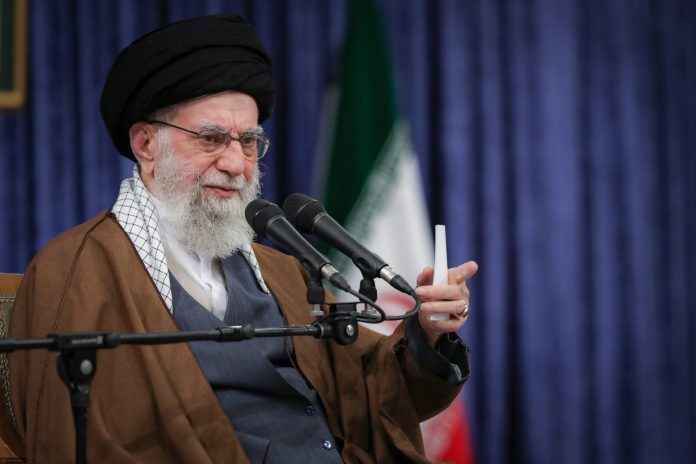
Ali Akbar Velayati

Velayati made the remarks in an interview with Tasnim in response to questions about controversies and anti-Iran statements at the Manama conference, which was held on October 31–November 2 in Bahrain.

He emphasized that Iran has never treated its neighbors with hostility throughout its long history, adding that “Iran has always maintained friendly relations with the Arab sheikhdoms of the Persian Gulf, and the smaller states have always received Iran’s support.”

Velayati stated that whenever the neighboring and Persian Gulf countries have faced difficulties, Iran has stepped in to help.

He noted that Iranians, with their several-thousand-year history and civilization influential in human development, have a long-standing record of good neighborliness, and many historical examples exist to demonstrate this.

Regarding the Manama conference itself, he said the meetings were first held in 2004 in Manama and organized by the UK-based International Institute for Strategic Studies. He added that the forum generally addresses West Asian issues and that this year it was attended by officials from countries including Jordan, the UK, Bahrain, Oman, Greece, the Czech Republic, Germany, the Netherlands, Syria, Palestine, Cyprus, Singapore, Saudi Arabia, Romania, a European Union representative, several US officials, and a NATO representative.

He said that the focus of the speakers this year was on Sudan, Iran, and the axis of resistance. While some states criticized Iran’s regional policies, others, such as Oman, defended Iran.

Velayati stressed that the UK was behind the events at the Manama conference.

He described Britain as a country in the last breaths of its former power, once claiming that “the sun never set on its dominions,” but now living in humiliation, lamenting the loss of its previous influence.

Referring to Britain’s role in the Russia-Ukraine war, Velayati described London as an instigator whose main goal was to prevent Russia from gaining strength as a principal European rival.

According to Velayati, Britain supplied Ukraine with initial military equipment, acted as a motivator for NATO intervention, and was the main driver behind Ukraine’s push for NATO membership, with some European countries following Britain’s lead.

Velayati said that Britain effectively led Ukraine into a deep pit and did nothing to help it. He added that during the Biden administration, Britain tried to force the US to join the conflict and compelled European countries to follow suit. As an example, he cited Ukrainian President Volodymyr Zelensky’s request for Leopard 2 tanks from Germany, which Germany initially refused, but Britain, with US support, pressured Berlin to comply.

He also commented on Donald Trump’s second term, noting that the US acted more independently of Britain on Western matters. He said that America had humiliated Britain, citing the Sharm el-Sheikh summit as an unprecedented example.

Under Trump, NATO’s capabilities were weakened because he refused to support it without European financial contributions, and European countries were required to bear the costs themselves, Velayati explained.

Britain, which had previously encouraged Europe to pursue its goals at the expense of the US, lost political and financial backing for its schemes after Trump’s arrival, including in cases like the Gaza ceasefire, which Trump implemented against Britain’s advice, he noted.

Velayati said that Britain is now attempting to restore its political prestige through any means, including actions at the Bahrain conference.

He criticized some Western and Arab officials for ignoring continuing Israeli crimes, breaches of ceasefires, and the unprecedented genocide of the Palestinian people in Gaza while instead criticizing Iran, which he described as the main supporter of Palestine and resistance movements and the region’s largest advocate for peace.

He further said that some governments that spoke against Iran at Manama support division, killing, and criminal terrorist operations in Sudan and Yemen, causing the displacement and starvation of thousands, creating situations worse than Gaza. He also noted that some of these governments admitted at the conference that their actions had been mistaken.

Velayati emphasized that a number of countries and individuals armed with British weapons who support massacres in Sudan and elsewhere have no authority to comment on Iran’s peaceful presence in the region.

He underlined that statements made by Britain and its allies against Iran are baseless and futile, because Iran is a powerful country with thousands of years of history and recently demonstrated strength that simultaneously forced the Zionist regime, the US, and NATO to accept defeat and surrender.

He concluded by saying that Iran’s pride today lies in being the axis of support for the oppressed.

As long as “this nest of corruption –the child-killing Zionist regime– continues its aggression against Muslims in Gaza and the resistance in Lebanon and Yemen, Iran will provide them with resolute support, he stated, warning that those who ignore these unprecedented crimes and cooperate with the occupying Israeli regime, Britain, and the US “will be recorded in history as enemies of Islam and partners in the killing of Muslims.”


Ukraine facing widespread power cuts after generating capacity reduced to ‘zero’ by Russian strikes

Moscow, which has escalated attacks on Ukraine’s infrastructure in recent months, launched hundreds of drones at energy facilities across the country from Friday into Saturday, which killed at least seven people, according to Ukrainian officials.

The Russian attacks have disrupted electricity, heat and water supplies in several Ukrainian cities, with state power firm Centerenergo warning generating capacity “is down to zero”.

Ukrenergo has announced repairs were carried out and energy sourcing diverted.

While the situation had somewhat stabilised, regions including Kyiv, Dnipropetrovsk, Donetsk, Kharkiv, Poltava, Chernigiv and Sumy could continue to experience regular power cuts, Ukraine’s energy minister said on Saturday night.

“The enemy inflicted a massive strike with ballistic missiles, which are extremely difficult to shoot down. It is hard to recall such a number of direct strikes on energy facilities since the beginning of the invasion,” Svitlana Grynchuk told local broadcaster United News.

Russian drones had targeted two nuclear power substations deep in western Ukraine, Kyiv’s foreign minister Andrii Sybiha stated, calling on the UN’s nuclear watchdog to respond.

The substations powered the Khmelnytskyi and Rivne nuclear plants, about 120km and 95km (75 miles and 59 miles) respectively from Lutsk, he added.

“Russia is deliberately endangering nuclear safety in Europe. We call for an urgent meeting of the IAEA Board of Governors to respond to these unacceptable risks,” he wrote on Telegram late Saturday, referring to the International Atomic Energy Agency.

Sybiha also urged China and India – traditionally large buyers of Russian oil – to pressure Moscow to cease its attacks.

Experts say the strikes on energy infrastructure put Ukraine at risk of heating outages before winter. Russia has targeted the power and heating grid throughout its almost four-year invasion, destroying a large part of the key civilian infrastructure.

This weekend’s attack was the ninth massive attack on gas infrastructure since early October, Ukraine’s energy company Naftogaz announced.

Kyiv’s School of Economics estimated in a report that the attacks have shut down half of Ukraine’s natural gas production.

Ukraine’s top energy expert, Oleksandr Kharchenko, told a media briefing Wednesday that if Kyiv’s two power and heating plants went offline for more than three days when temperatures fall below minus 10C, the capital would face a “technological disaster”.

Ukraine has in turn stepped up strikes on Russian oil depots and refineries in recent months, seeking to cut off Moscow’s vital energy exports and trigger fuel shortages across the country.

Iran facing severe drought and water supply crisis, officials warn

According to recent climate data, rainfall from April to November has been significantly below average, placing the country in a state of “severe drought,” “water stress,” and “crisis in supply,” particularly affecting Tehran, Karaj, Tabriz, Mashhad and Arak.

Officials say that this year is the driest year recorded in Tehran in over 60 years.

The sharp decline in surface water levels has pushed consumption toward groundwater sources, although these reserves are not sustainable for long-term use.

The official noted that water storage in several reservoirs has dropped to critically low levels, with some dams reporting single-digit capacity.

Short-term forecasts indicate no significant rainfall over the next ten days across Iran and much of the Middle East. However, rainfall systems are expected to strengthen in the second half of December and potentially return to near-normal levels during winter.

Authorities emphasized that the water crisis is no longer a temporary challenge and requires long-term national planning in agriculture, urban development and industry.

MbS doubles down on terms for Israel ties before talks with Trump: Reuters

The establishment of diplomatic relations between Israel and Saudi Arabia after decades of enmity could shake up the political and security landscape in the Middle East, potentially strengthening U.S. influence in the region.

Trump said last month he hoped Saudi Arabia would “very soon” join other Muslim countries that signed the 2020 Abraham Accords normalising ties with Israel.

But Riyadh has signalled to Washington through diplomatic channels that its position has not changed: it will sign up only if there is agreement on a roadmap to Palestinian statehood, two sources told Reuters.

The intention is to avoid diplomatic missteps and ensure alignment of the Saudi and U.S. positions before any public statements are made, they stated. One noted the aim was to avoid any confusion at or after the White House talks on November 18.

The Crown Prince, widely known as MbS, “is not likely to entertain any possible formalising of ties in the near future without at least a credible pathway to a Palestinian state,” said Jonathan Panikoff, former deputy U.S. national intelligence officer on the Middle East.

MbS is likely to try to use his influence with Trump to seek “more explicit and vocal buy-in for the establishment of a sovereign Palestinian state,” added Panikoff, who is now at the Atlantic Council think tank in Washington.

Next week’s visit is the Crown Prince’s first to Washington since the 2018 killing of Washington Post columnist Jamal Khashoggi, an MbS critic whose murder in the Saudi consulate in Istanbul caused global outrage. MbS denied direct involvement.

The United Arab Emirates, Bahrain and Morocco have already normalised ties with Israel under the Abraham Accords, and Trump has said he expects an expansion of the accords soon.

The agreement signed by the United Arab Emirates, Bahrain and Morocco sidestepped the issue of Palestinian statehood.

The two sources stated that Riyadh had signalled to Washington that any move to recognise Israel must be part of a new framework, not just an extension of any deal.

With Israeli Prime Minister Benjamin Netanyahu staunchly opposed to Palestinian statehood, Saudi Arabia sees no immediate prospect to satisfy Trump’s demand that it normalise ties with Israel, the sources told Reuters.

Saudi officials say progress on that front depends on concessions neither Washington nor Israel is currently prepared to make.


Iran FM says no basis for resuming talks with US

Abbas Araghchi

His remarks came in an interview published by the Iranian government’s official information platform.

Araqchi stated that Tehran sees “no positive or constructive approach” from the US that could justify restarting diplomatic talks.

According to him, any future negotiations would require the US to demonstrate readiness for “equal and mutually beneficial discussions.”

He emphasized that Iran is not rejecting diplomacy in principle, but conditions are not in place.

“Whenever they are prepared for negotiations on an equal basis and for a beneficial agreement for both sides, talks could become possible, and Iran can consider them,” he said.
“However, the approach we see from the Americans does not indicate such readiness.”

Relations between the two countries remain strained amid ongoing disputes over sanctions, regional policies, and Iran’s nuclear activities.

The US withdrew from the 2015 nuclear agreement in 2018, reimposed sanctions, and launched strikes on Iran’s nuclear and civilian targets in June in collaboration with Israel.