Thursday, December 25, 2025
Home Blog Page 62

Ukrainian soldiers pull back under fierce Russian pressure in Zaporizhia

Russia Ukraine War

News of the setback in Zaporizhia in southeastern Ukraine comes as Russia said earlier on Tuesday that its forces had pushed deeper into the eastern Ukrainian cities of Pokrovsk and Kupiansk.

Video footage published by Russian war bloggers shows Moscow’s troops riding motorcycles, travelling in battered cars and sitting on top of military vehicles as they poured into Pokrovsk, which Russian media has dubbed “the gateway to Donetsk” due to its strategic location.

“Using its numerical superiority in personnel and materiel, the enemy advanced in fierce fighting and captured three settlements,” the commander-in-chief of the Ukrainian Armed Forces, Oleksandr Syrskii, said of the fighting in Zaporizhia on Tuesday.

“The situation has significantly worsened in the Oleksandrivka and Huliapole directions,” Syrskii added in a statement.

The Ukrainian Army said earlier that orders to withdraw from five villages in Zaporizhia were given after the “de facto destruction of all shelters and fortifications” following intensive Russian artillery strikes. An estimated 2,000 shells were launched at the Ukrainian positions.

Control of three other villages is also being hotly contested between Russian and Ukrainian forces northeast of the town of Huliapole in Zaporizhia, according to the Ukrainian Army.

Syrskii said that Russian forces in Zaporizhia had used poor weather conditions to their advantage, advancing under heavy fog to infiltrate between Ukrainian positions in the region. But he added that Russian forces suffered heavy losses during their attacks.

“Every metre of our land costs Russia hundreds of military lives,” he added.

Ukrainian President Volodymyr Zelenskyy, who was visiting the parts of the southern Kherson region not occupied by Russia on Tuesday, described the situation in Pokrovsk and Zaporizhia as “difficult, in part because of weather conditions that favour the attacks”.

The battlefield situation in Kupiansk was “somewhat easier”, he said, adding that Ukrainian forces had “achieved results there”.

Russia has been threatening Pokrovsk for more than a year, using a pincer movement to attempt to encircle it and threaten supply lines.

Syrskii told US media that Russia has concentrated an estimated 150,000 troops in a drive to take Pokrovsk.

Russia and Ukraine have given conflicting accounts of the battle in recent days, with Moscow claiming for days that it had encircled Pokrovsk, while Kyiv has denied the claims and asserted that it still had supply lines to neighbouring Myrnohrad.

Russia also said its forces have taken full control of the eastern part of Kupiansk in Ukraine’s Kharkiv region, located to the northeast of Zaporizhia and Pokrovsk.

Military observers have noted a thinning of Ukraine’s front lines due to a severe shortage of soldiers and massive Russian drone superiority, which has led to advances in several locations along the front line in the more than three and a half years of war.

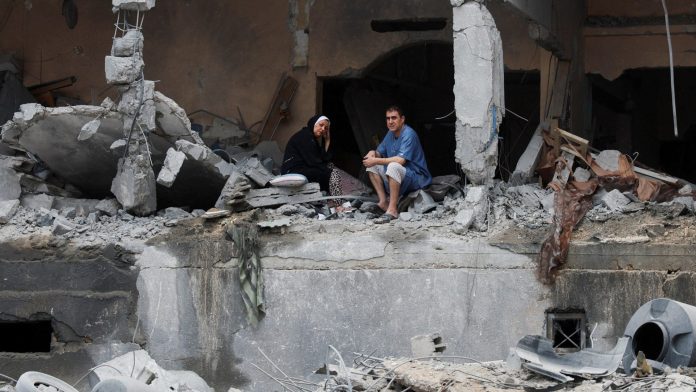
6,000 Gazans amputated since onset of Israeli war: Health Ministry

A ministry statement said that children account for 25% of the total amputations, and women make up 12.7%.

“The shortage of medical supplies and assistive devices exacerbates the suffering of the wounded and amputees,” it added.

“These figures reflect the profound humanitarian suffering experienced by thousands of the wounded and their families,” the ministry noted, calling for urgent rehabilitation and psychological and social support services, especially for children who now face permanent disabilities at an early age.

In attacks in Gaza since October 2023, Israel has killed more than 69,000 people, most of them women and children, injured over 170,600 others, and left about 9,500 missing – many believed to be trapped under destroyed homes or still unaccounted for.

The brutal Israeli war came to a halt under a ceasefire agreement that took effect on Oct. 10 under a 20-point plan by US President Donald Trump.

Iran’s Army chief inspects construction of border wall in northeast

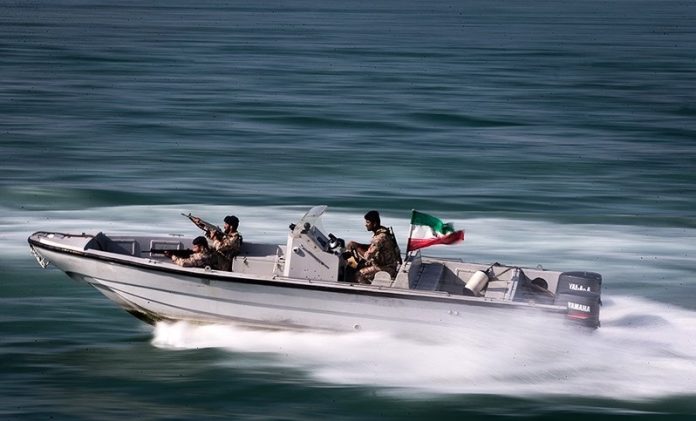
Iranian Border Guards

During the visit, General Hatami toured several military installations, including combat battalions, mobile assault brigades, engineering workshops, and operational headquarters of the Army.

He evaluated the preparedness and operational capabilities of the deployed units and reviewed the ongoing construction of reinforced concrete structures forming the new border wall.

General Hatami praised the continuous efforts of army personnel to safeguard Iran’s borders, emphasizing that the Army’s primary mission remains the defense of national sovereignty and territorial integrity.

He described the wall as a “significant measure” to enhance security along Iran’s eastern frontier, particularly with Afghanistan, addressing longstanding border management challenges.

The commander also commended the high morale and dedication of the soldiers deployed in these remote areas, noting their determination to ensure the safety and peace of Iranian citizens through constant vigilance and readiness.

Iran releases first Hebrew-language documentary highlighting 12-day conflict

The film presents a fresh perspective on the 12-day conflict between Iran and Israel in June, marking a notable step in Iranian media efforts directed at Israeli audiences.

The documentary explores the hidden confrontation between Iran and Israel in the oil and gas infrastructure sector, an episode that reportedly influenced the course of the conflict and shifted regional power dynamics.

Through analytical storytelling, expert interviews, intelligence data, and visual reconstructions, the film aims to provide a realistic portrayal of Iran’s strategic decision-making and military capabilities, countering narratives commonly presented by Western and Israeli media.

“Missiles Over Bazan” is intended to communicate directly with the Israeli public from a position of strength, revealing aspects of the conflict that have remained largely unknown to Hebrew-speaking audiences.

Iran’s Supreme Council of the Cultural Revolution has instructed the Islamic Republic of Iran Broadcasting (IRIB) to establish an international Hebrew-language television channel.

The network will serve as a platform to respond to Israeli media campaigns and promote Iran’s perspective in the region, according to an official resolution under the country’s national cultural, social, media, scientific, and technological policies.

Turkey confirms military plane crash in Georgia killed all 20 onboard

“Our heroic comrades-in-arms were martyred on 11 November 2025 due to the crash of our C-130 military cargo aircraft, which had taken off from Azerbaijan to return to Turkey,” Defence Minister Yasar Guler said in a statement posted on his X account alongside 20 photographs of those who died.

The crash, Turkiye’s deadliest military incident since 2020, happened about 5km (3.1 miles) from the Georgian-Azerbaijani border.

Dramatic footage published by Azerbaijani media appeared to show the aircraft sending a large cloud of black smoke into the sky after it crashed, leaving debris strewn across the ground.

Turkish President Recep Tayyip Erdogan said he was “deeply saddened” by the crash and expressed his condolences.


Iraq vote turnout over 55%

The figure is based on the results in most of the polling stations, the commission said.

It added that more than 12 million people voted out of over 21 million eligible voters.

The unexpected turnout is a sharp jump from the record low of 41 percent in 2021, despite this year’s vote being boycotted by influential Shiite cleric Moqtada Sadr.

Deputy FM says Iran will not compromise on national security in potential negotiations with US

Khatibzadeh made the remarks during a speech at the 12th Abu Dhabi Strategic Debate on Tuesday, where he outlined Iran’s positions on regional and international developments.

In response to a question about the prospects for nuclear talks with Washington, the senior diplomat noted that the US has undermined previous negotiations through “aggressive actions” and contradictory behavior.

“The US has, in fact, done everything it can to make any negotiations impossible through its aggressive measures against Iran and subsequent actions,” Khatibzadeh said.

“Given Washington’s actions against Iran, we are not currently at the point of negotiation,” he added.

Khatibzadeh stressed that any engagement with the US would take place under the guidance of Leader of the Islamic Revolution Ayatollah Seyyed Ali Khamenei.

“Any negotiations in the future can only be possible within the framework of the Leader’s directives and after the US abandons its illusions.”

Elsewhere in his remarks, Khatibzadeh stressed that Iran is not seeking nuclear weapons, asserting that Tehran’s nuclear program is peaceful and based entirely on domestic capabilities.

“Nuclear weapons are not part of Iran’s program,” he said, adding that Iran remains committed to the principles of the Nuclear Non-Proliferation Treaty (NPT).”

However, he criticized Washington for sending “contradictory messages” regarding nuclear negotiations through third parties.

“Reaching an agreement with the US is only possible when there is mutual respect and genuine intent,” the senior diplomat continued.

Khatibzadeh’s remarks come amid a prolonged deadlock in indirect Iran–US nuclear diplomacy, which was last disrupted following Israel’s aggression in mid-June– just days before a planned sixth round of negotiations mediated by Oman.

The onslaught killed more than a thousand people, including a number of the Islamic Republic’s top military officials and commanders.

On Monday, Iranian Foreign Ministry spokesman Esmaeil Baghaei echoed similar sentiments, describing Iran’s ties with the US as defined by “long historical experience.”

He dismissed suggestions that Tehran should take unilateral “bold steps,” saying, “The US attacked Iran, boasts about it, and then claims readiness for negotiations.”

Baghaei also pointed out that US President Donald Trump’s claim of wanting an agreement with Iran is contrary to reality, emphasizing that the Americans pretend to seek negotiations but, in truth, they do not.

He added this behavior is deceptive, noting that in practice, they have repeatedly shown that “they do not have any good intentions or seriousness in this regard.”

Despite tensions, Iranian officials maintain that the country continues to uphold its nuclear obligations under the NPT while defending its uranium enrichment.


Syria’s national museum robbed: Report

Turmoil in Syria following years of war culminated last year in the ouster of longtime leader Bashar Assad, plunging the country into months of clashes between the new government’s forces and rival factions.

The break-in reportedly took place on Sunday evening and was discovered early Monday. The Associated Press reproted the thieves stole several ancient statues dating back to the Roman era, while other outlets reported that six gold ingots were among the missing items. An investigation is underway.

The theft followed warnings from international organizations. In June, the Paris-based International Council of Museums (ICOM) reported that an active black market for cultural objects had emerged in Syria with looting and illicit trafficking of artifacts being on the rise. Two months later, the Syrian antiquities agency and UNESCO launched a project to upgrade the museum’s security systems.

Founded in 1919, the National Museum in Damascus is one of the oldest and most important museums in the Arab world, housing collections that span thousands of years of Syrian history. Closed in 2012 during the war, it partially reopened in 2018 and resumed full public access in January 2025.

Assad’s fall followed a surprise offensive by the militant group Hayat Tahrir al-Sham (HTS), an al-Qaeda offshoot, which captured Damascus in late 2024. HTS leader Ahmed al-Sharaa became Syria’s president. On Monday, he met US President Donald Trump in Washington after being removed from the US State Department’s ‘global terrorist’ list. Following the meeting, Syria pledged to join the US-led coalition against terror organization Islamic State (IS).

IS devastated Syria’s cultural heritage in 2015, when its militants seized the ancient Syrian city of Palmyra, a UNESCO World Heritage site, and blew up some of its monuments, including the 2,000-year-old Temple of Bel. The group looted countless artifacts and executed the site’s chief archaeologist.


Top adviser to Israeli PM resigns

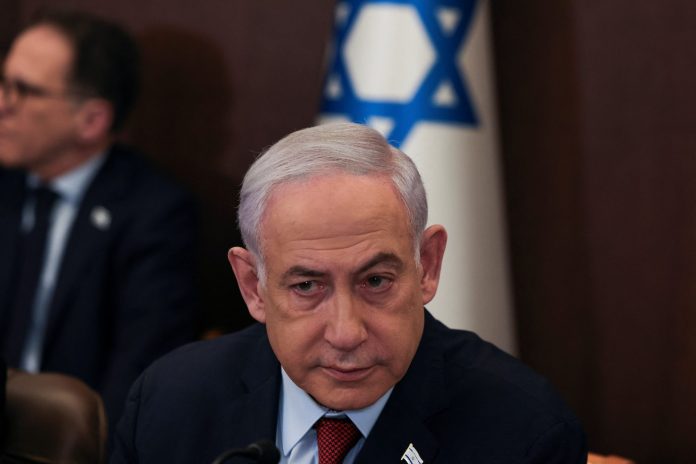
In a letter to Netanyahu, Dermer stated that he had promised his family to serve only two years in office, the daily newspaper Yedioth Ahronoth reported.

Dermer, a former Israeli ambassador to the US, was one of Netanyahu’s senior envoys in laying the groundwork for the US-sponsored normalization agreements known as Abraham Accords and played a major role in countering the Iranian nuclear program.

In February, he was asked by Netanyahu to lead Israel’s negotiating team for a Gaza ceasefire and hostage swap deal with Hamas.

US plans ‘temporary housing’ in Gaza behind Israeli lines: The Atlantic

Israeli Army

The US and Israeli officials working on the plan termed them as “Alternate Safe Communities”. Palestinians would be screened for “anti-Hamas” sentiment before being granted entry into the compounds.

The proposal was discussed in an email by US Lieutenant General Patrick Frank, who is heading the civil-military coordination centre overseeing the Gaza ceasefire, which has been marred by regular Israeli violations.

In an email reported by The Atlantic, Frank said that each settlement should include a medical centre, a school, an administrative building, and temporary housing for about 25,000 people. But the Atlantic reported that the plan is constantly shifting, and the number of occupants slated to live in the developments changes “almost by the day”.

“A team of US, UK, and Israeli military officials working on the project has already revised the intended occupancy of each community down to about 6,000, from an original estimate of 25,000,” the Atlantic reported.

President Donald Trump’s son-in-law and advisor, Jared Kushner, publicly floated the idea of the US and its partners reconstructing parts of Gaza occupied by Israeli troops, while leaving the war-ravaged enclave’s core, which is governed by Hamas, destroyed.

The idea of dividing Gaza has plenty of pitfalls, but in recent weeks, two Arab diplomats familiar with the US peace plan said they were taking the US push seriously.

The Financial Times reported that the proposed plans have alarmed Arab states and European countries as potentially being the first step in a permanent occupation of a portion of Gaza.

According to the Atlantic, less than two percent of Gaza’s two million-strong population lives behind the so-called yellow line. This barrier is supposed to be temporary.

Trump’s 20-point peace plan envisions Israel eventually withdrawing all of its troops from Gaza with the exception of a small security perimeter. Israeli troops are supposed to move out as an Arab peacekeeping force enters. Eventually, that force is envisioned to hand security over to a “reformed” Palestinian Authority.

The US plan provides no timeline for Israel’s withdrawal.

At its core, the plan would require Palestinians in central Gaza to willingly accept living under territory controlled by Israeli troops.

The plan also needs money. The Trump administration has not pledged any US sovereign funds for Gaza’s reconstruction. Trump says he wants Persian Gulf states to invest.

The Atlantic reported that a senior administration official said at least one pilot city would be built in southern Gaza near Rafah, which is home to the enclave’s border with Egypt.

Of course, one of many elephants in the room is Palestinian ownership of the land on which the sites will be built. The Gaza Strip has a formal land registry. The registry was run by Hamas but followed the basic institutional framework of the Palestinian Authority’s system.

Israel has reduced most of Gaza to rubble. The United Nations estimates that the enclave’s reconstruction will cost roughly $70bn. In the West Bank, which Israel has occupied since 1967, the government and settlers have seized swaths of Palestinian land and evicted thousands of Palestinian families from their homes.

The Atlantic said that Israel’s Shin Bet would scan applicants to live in the housing complexes. One criterion would not only be whether an individual had ties to Hamas, but their wider family’s ties to the group.

Hamas has governed Gaza since 2007. After winning Palestinian legislative elections, it clashed with secular rival Fatah, which exercises limited control of the occupied West Bank through the Palestinian Authority.

According to The Atlantic, a US-based engineering and consulting firm that works with the US military, Tetra Tech Solutions, has already been awarded a State Department contract to clear unexploded ordinance and rubble from the site of the first Alternate Safe Community.