Thursday, December 25, 2025
Home Blog Page 617

Iran urges intl. collaboration to enforce ICC arrest warrants for Israeli officials

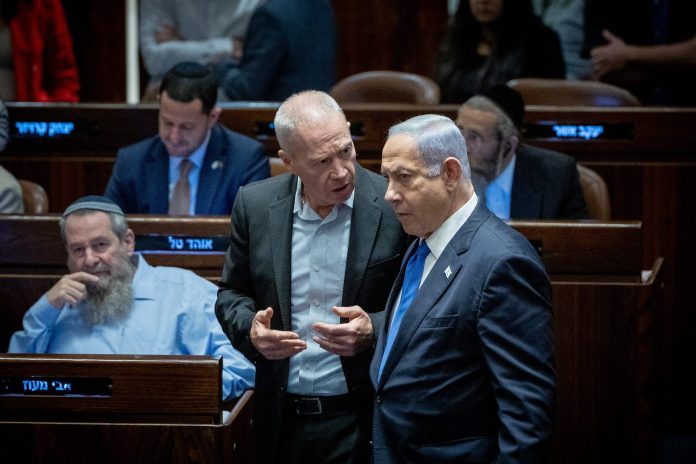
Netanyahu Gallant

In a letter to the Iranian top diplomat, Mohammad Movahedi Azad described the ICC’s decision as a commendable, albeit insufficient, step toward justice for crimes against humanity and genocide committed in Gaza.

Highlighting over seven decades of occupation, aggression, and atrocities by the Zionist regime, the Prosecutor General noted the devastating toll on Palestinians, including civilians, women, and children.

He underscored the need for robust international legal actions against those responsible for ongoing violence and illegal blockades affecting civilians in Gaza and Lebanon.

The letter also emphasized the Foreign Ministry’s duty to engage international legal bodies to expedite the arrests and trials of the accused. Movahedi Azad affirmed Iran’s readiness to provide full legal and judicial cooperation under Article 290 of Iran’s Criminal Procedure Code.

In separate letters to his counterparts in Russia, Turkey, the UAE, and Saudi Arabia, Movahedi Azad reiterated Iran’s commitment to fostering judicial collaboration to enforce the ICC’s ruling. He stressed that prosecuting and holding war criminals accountable serves as an essential deterrent against future violations of international humanitarian law.

The Prosecutor General called on these nations to leverage their legal frameworks to support the ICC’s decision, asserting that collective international action is crucial to preventing further war crimes and genocide.
More Palestinian detainees from Gaza die in Israeli prisons: Rights groups

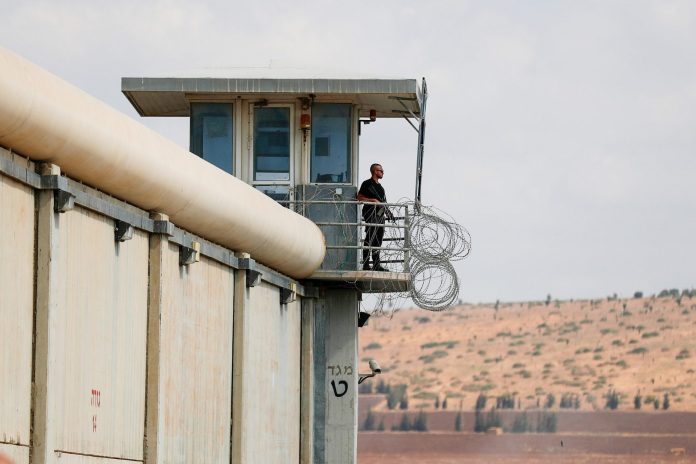
Israel Prison

Mohammad Abdel Rahman Idrees, 35, died in Ofer Prison, west of Ramallah on Friday, after he was reported missing on Aug. 25, 2024, said a joint statement by the Palestinian Commission of Detainees’ Affairs, the Palestinian Prisoner Society, and the Addameer Prisoner Support and Human Rights Association.

The second detainee was identified as Muaz Khaled Rayan, 31, without giving details about where he died. The statement added Rayan, who suffered from complete paralysis before his arrest on Oct. 21, 2024, had died on Nov. 2.

According to the statement, at least 47 detainees have died in Israeli custody since Oct. 7, 2023.

“The catastrophic conditions facing detainees, especially the sick and injured, will cause more to die in Israeli prisons and camps,” the statement read.

The Israeli army has detained over 11,900 Palestinians since last October, according to Palestinian figures. The figure, however, doesn’t include those arrested from the Gaza Strip whose numbers are estimated to be in the thousands.

Israel has launched a genocidal war on the Gaza Strip following a cross-border attack by the Palestinian group Hamas in October last year, killing nearly 44,400 people, most of them women and children, and injuring over 105,000.

On Nov. 21, the International Criminal Court (ICC) issued arrest warrants for Israeli Prime Minister Benjamin Netanyahu and former Defense Minister Yoav Gallant for war crimes and crimes against humanity in Gaza.

Israel also faces a genocide case at the International Court of Justice for its deadly war on Gaza.

Iranian speaker warns terrorism to boomerang on plotters

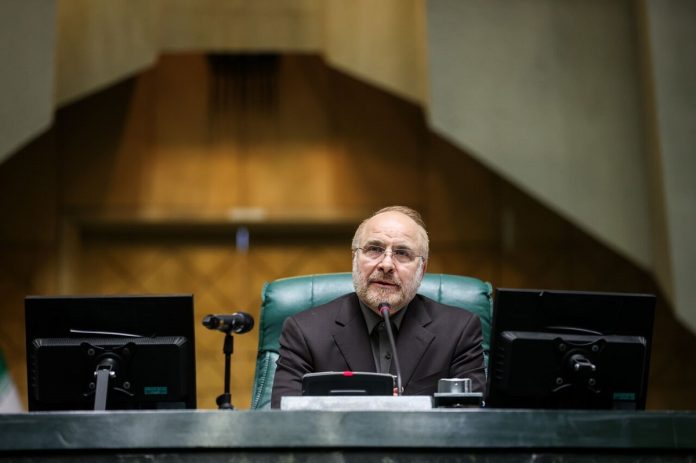
Iranian parliament speaker Mohammad Baqer Qalibaf

Speaking at a parliamentary meeting on Sunday, Mohammad Baqer Qalibaf condemned the attacks that terrorist groups have launched on Aleppo and other areas of northwestern Syria in recent days immediately after the establishment of a ceasefire in Lebanon.

He said the timing of the terrorist moves in Syria indicates a “Zionist-America plot” to make the region insecure.

Qalibaf stressed the need for regional parties to step in to thwart the “perilous plot” and counteract the terrorist moves in Syria and the region.

Reaffirming Iran’s resolute support for Syria’s national sovereignty and territorial integrity in the fight against terrorist groups, the speaker added, “The plotters of these measures (in Syria) must bear in mind that playing with the black card of terrorism will one day backfire on them on their own land.”

Terrorists led by the Hay’et Tahrir al-Sham armed group on Wednesday launched an offensive, capturing a dozen towns and villages in the northwestern province of Aleppo.

Syria’s military has announced a “temporary troop withdrawal” in Aleppo, saying dozens of its soldiers had been killed or wounded in fierce battles with “armed terrorist organizations” in the governorates of Aleppo and Idlib over the previous few days and that it was now regrouping, redeploying troops to strengthen its defense lines as it prepared a “counterattack”.

The army announced the terrorists had entered large parts of Aleppo but army bombardment had stopped them from establishing fixed positions. It promised to “expel them and restore the control of the state… over the entire city and its countryside”.

Nearly a thousand foreign-backed Takfiri terrorists have been killed in Aleppo and Idlib in the past three days, according to Syrian media outlets. The terrorists have been killed by Syrian troops with Russian air support.

Russia president approves budget with record spending on national defense

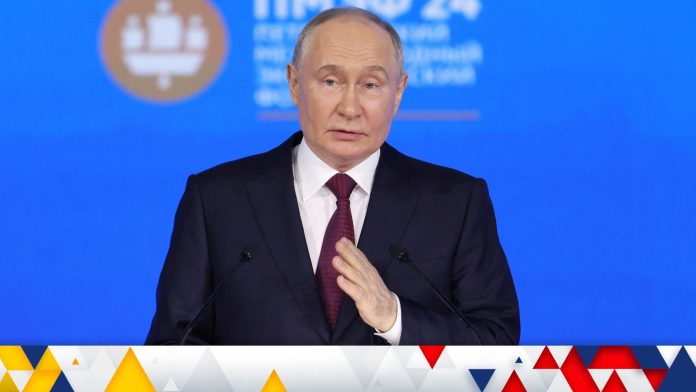
Vladimir Putin

The Russian State Duma, the lower house of Russia’s parliament, passed the law on the federal budget for 2025 and the planning period of 2026-2027 in November.

According to the law signed by Putin, in 2025, national defense spending will reach a record 13.5 trillion rubles ($126 billion), more than 6% of Russia’s GDP.

Spending on war and law enforcement agencies exceeds expenditures on education, healthcare, social policy, and the national economy combined.

The new three-year budget envisages that military spending will be slightly lower in 2026-2027: 12.8 trillion rubles ($114.9 billion) in 2026 and 13.1 trillion rubles ($122.4 billion) in 2027.

The total expenditures of the Russian budget next year are planned at 41.47 trillion rubles ($387.3 billion), accounting for 19.3% of GDP. This is 1.17 trillion rubles ($15.9 billion) more than the expected revenues.

The budget deficit is expected to be 2.18 trillion rubles ($20.3 billion) and 2.76 trillion rubles ($25.8 billion), respectively, in 2026 and 2027.

In late November, President Volodymyr Zelensky signed law on Ukraine’s own state budget for 2025.

The budget for 2025 envisages spending Hr 2.2 trillion ($53 billion) on Ukraine’s defense, which is 26.3% of the country’s projected gross domestic product (GDP).

In mid-November, Strategic Industries Minister Herman Smetanin said the budget envisages Hr 55 billion ($1.3 billion) for weapons production.

Some Hr 54.55 billion ($1.3 billion) will be directly allocated for the development and implementation of new technologies and the expansion of defense production capacity, according to Smetanin.

The minister added that the 2025 figure is almost Hr 3.5 billion ($84.4 million) more than in 2024.

Trump threatens BRICS with 100% tariffs

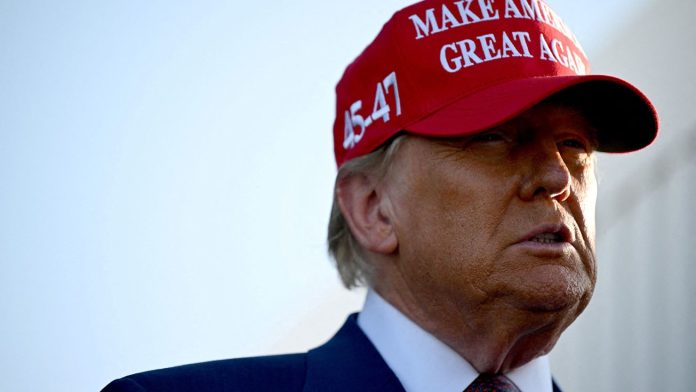
Donald Trump

”The idea that the BRICS Countries are trying to move away from the Dollar while we stand by and watch is OVER,” Trump wrote on his Truth Social platform on Saturday.

Trump went on to say that he would ask the BRICS nations to promise not to create a common currency, “nor back any other currency to replace the mighty US dollar”, or they will face 100% tariffs.

”They can go find another ‘sucker!’” he continued, adding, “There is no chance that the BRICS will replace the US Dollar in International Trade, and any Country that tries should wave goodbye to America.”

BRICS previously comprised Brazil, Russia, India, China, and South Africa, and was expanded in January to include Egypt, Iran, Ethiopia, and the United Arab Emirates. Around 30 other nations have expressed interest in joining the group of emerging economies.

Russia, which currently holds the group’s rotating presidency, floated the idea of introducing a BRICS currency in 2022. Brazilian President Luiz Inacio Lula da Silva echoed Moscow’s proposal last year, arguing that having the option of trading in another reserve currency would reduce the BRICS countries’ “vulnerability” to fluctuations in the dollar’s exchange rate.

BRICS leaders stopped short of announcing plans for such a currency at their summit in the Russian city of Kazan last month. Instead, the group pledged to set up a cross-border payment system to function alongside the Western SWIFT network, and to increase their use of local currencies in international trade.

”Cooperation within BRICS is not directed against anyone or anything – neither against the dollar nor against other currencies,” Kremlin spokesman Dmitry Peskov stated in October.

“It pursues the main goal of ensuring the interests of those countries that participate in this format.”

Using local currencies to settle bilateral trade bills “helps to keep economic development free from politics,” Russian President Vladimir Putin stated at the time.

Trump has vowed to use tariffs to settle US trade deficits, force offshore manufacturers to return, and achieve a range of geopolitical goals. In addition to proposing a blanket tariff of 20% on all incoming goods, Trump has threatened Canada and Mexico with additional 25% tariffs if they fail to reduce the flow of migrants and drugs into the US. Trump also declared this week that “we will be charging China an additional 10% tariff, above any additional tariffs”, until Beijing “follows through” on punishing the producers and smugglers of fentanyl, a powerful synthetic opioid.

Iran president urges Islamic countries to intervene in Syria, stop insurgency

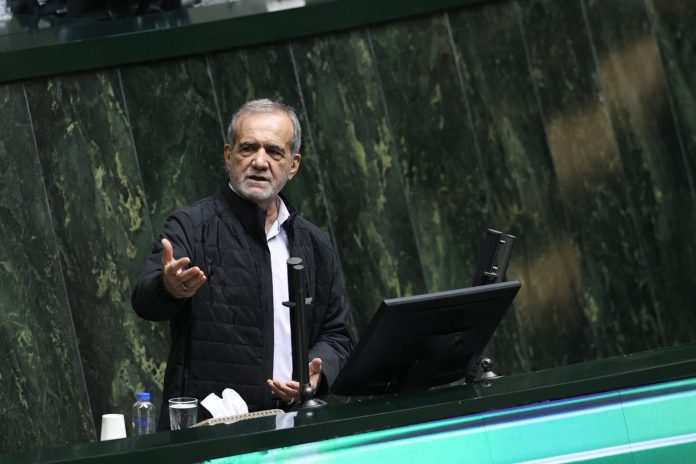
Masoud Pezeshkian

Speaking at a parliamentary session on Sunday, Massoud Pezeshkian condemned the aggression by Takfiri terrorists’ attacks in Syria and expressed hope that Islamic nations would step in to resolve the crisis.

He attributed the support for extremist terrorists in the Arab country to the backing of the US and European countries, stressing that the atrocities are carried out with their weapons.

President Pezeshkian criticized the West for claiming to advocate for peace and human rights while perpetuating violence.

The president reaffirmed Iran’s stance of non-interference in the territorial integrity of other nations and encouraged regional countries to resolve their issues independently without foreign intervention.

He expressed gratitude to neighboring countries for condemning Israeli aggression against Iran and called for continued dialogue to resolve misunderstandings and strengthen regional cooperation.

Regarding the wider regional conflicts in Lebanon and Gaza, he stated, “As a human being, independent of my position as a country’s president, it is shameful to imagine a country using science and technology to bomb innocent women, children, and people.”

Israeli attacks kill two, injure six in Lebanon despite ceasefire

Lebanon War

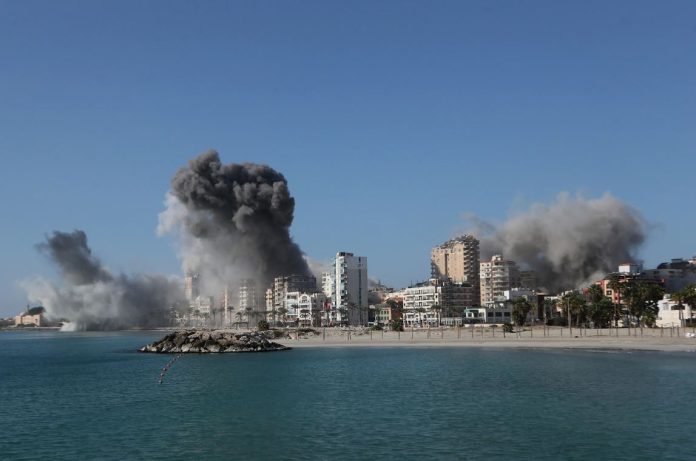
An Israeli drone attack on the village of Rab el-Thalathine in southern Lebanon killed two people and injured two others on Saturday, according to the Lebanese National News Agency (NNA).

An Israeli drone attack also hit a car in the town of Majdal Zoun in the Tyre district of the South Governorate, injuring three people, including a child, Lebanon’s Ministry of Public Health said.

Israeli warplanes carried out two air attacks on the Tibnah area in the town of Beisariyah in the Sidon district of the South Governorate, injuring at least one person, according to the ministry.

Israel carried out the attacks despite the current Israel-Lebanon ceasefire that ended more than 13 months of fighting between the Israeli military and Hezbollah.

Both sides have accused each other of breaching the terms of the ceasefire since it came into effect on Wednesday.

Under the terms of the truce, Hezbollah is meant to withdraw its forces north of the Litani River, approximately 30km (20 miles) north of the border, and dismantle its military infrastructure in southern Lebanon.

Israel is to withdraw its troops south of the Blue Line, the de facto border, in a phased manner, while the Lebanese army and UN peacekeepers will deploy in southern Lebanon as the Israeli army withdraws over a period of 60 days.

Israel has insisted on its “full military freedom of action” in Lebanon if Hezbollah violates the ceasefire agreement or attempts to rearm.

Since October 2023, Israeli attacks on Lebanon have killed at least 3,961 people, wounded more than 16,500 others, and displaced more than one million people, according to the Lebanese Health Ministry.

Israeli authorities have confirmed that Hezbollah attacks in northern Israel and the Israeli-occupied Golan Heights have killed 45 civilians and at least 73 Israeli soldiers.

Iranian envoy: Region undergoing transformation, new order to emerge with Iran-Saudi collaboration

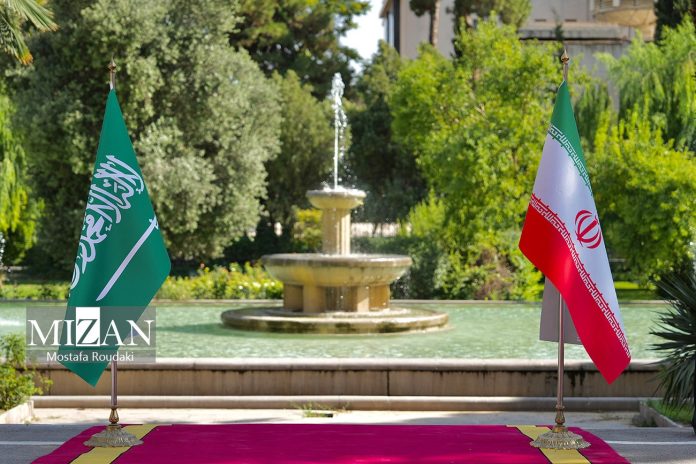
Iran and Saudi Arabia Flags

Discussing the evolving dynamics of Iran-Saudi ties and the broader regional transformation in an exclusive interview with Khabar Online, Alireza Enayati noted that following recent discussions between the Saudi Crown Prince and Iranian officials, the expansion of relations is irreversible.

Addressing the impact of Donald Trump’s return to the the White House, Enayati pointed out while Trump 2.0 will mirror some aspects of his first term, the geopolitical landscape has significantly shifted.

He explained, “Regional countries are now seeking multifaceted relations with international powers while maintaining their ties with the West.”

The Iranian ambassador highlighted the new regional order is being shaped through dialogue and cooperation, particularly between Iran and Saudi Arabia.

Meanwhile, Enayati underscored the recent emergency summit of the Organization of Islamic Cooperation (OIC), where Iran played a vital role in addressing key issues such as Israeli crimes in Gaza and Lebanon.

He praised the summit’s outcomes, which included calls for international action against Israeli occupation and support for Palestinian rights.

Despite the ongoing challenges, Enayati expressed optimism about the future, stating that the evolving dynamic, will pave the way for a more stable and prosperous West Asia.

Iran FM: Diplomacy without military power is ineffective

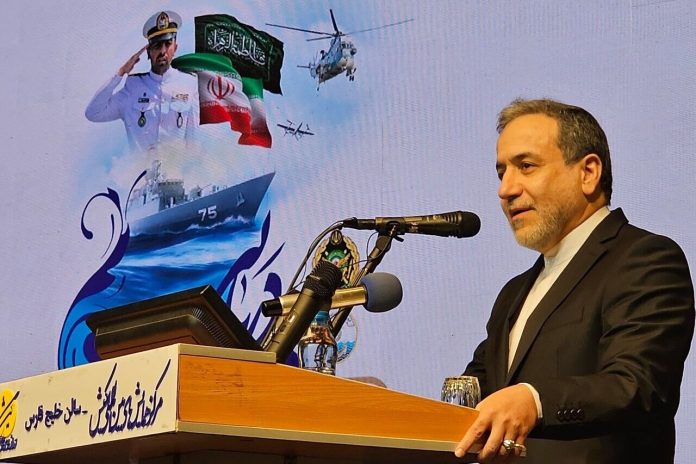
Abbas Araghchi

Speaking at a ceremony on Sunday commemorating the Navy Day on Kish Island in south of Iran, Araghchi honored the Iranian martyrs, and expressed “pride and tranquility in witnessing the vibrant and powerful Iranian armed forces and the capabilities in defending Iran’s maritime security.”

Araghchi highlighted that the armed forces have successfully ensured Iran’s security, adding that diplomacy is a low-cost way to achieve goals.

He noted that diplomacy relies on a country’s power to advance, and without national power elements, diplomacy cannot succeed.

In light of the escalating regional tensions, Araghchi asserted that the Islamic Republic of Iran’s armed forces will thwart any conspiracy at its inception.

Touching on the recent militancy in Syria, the foreign minister pinned the blame on the US and Israel, saying they “move in alignment with terrorist groups.”

He stated, “Today, Takfiri terrorist forces stand alongside the US, but they will not succeed and will face defeat.”

France claims Iran close to nuclear weapons

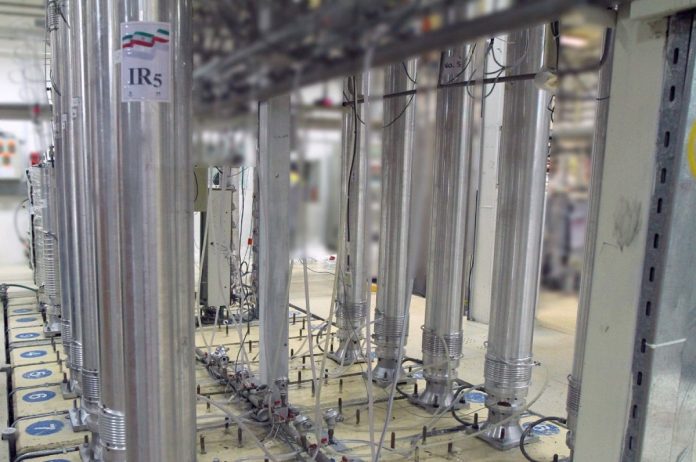
Iran nuclear program

Lerner made the remarks while speaking to reporters in Paris alongside Richard Moore, the head of the British Secret Intelligence Service. He described Tehran’s nuclear program as one of the greatest concerns for Paris and London.

“Our services are working side by side to face what is undoubtedly one of the threats, if not to say the most critical threat, in the coming months – the possible atomic proliferation in Iran,” he said, as quoted by Reuters.

Echoing those concerns, Moore claimed that Iran’s “nuclear ambitions continue to threaten all of us”.

Tehran has repeatedly declared that its nuclear program remains purely peaceful as always and that the Islamic Republic had no intention of developing nuclear weapons as a matter of an Islamic and state principal.

Leader of the Islamic Revolution Ayatollah Seyyed Ali Khamenei has issued an official fatwa (religious decree) clearly establishing that any form of acquisition, development, and use of nuclear weapons violate Islamic principles and are therefore forbidden.

Tehran has proved the peaceful nature of its nuclear program to the world by signing the 2015 nuclear deal. However, Washington’s exit in May 2018 and its subsequent re-imposition of sanctions against Tehran left the future of the agreement in limbo.

Iran started to reduce its commitments under the Joint Comprehensive Plan of Action (JCPOA) in a series of pre-announced and clear steps after witnessing the other parties’ failure to secure its interests under the accord.

Earlier this month, Kamal Kharrazi, a senior aide to Ayatollah Khamenei, confirmed that Tehran has “the technical capabilities necessary to produce nuclear weapons.”

He stressed that while the country has no plans to do so, “if the survival of Iran comes under serious threat, we reserve the right to reconsider”.