Thursday, January 1, 2026
Home Blog Page 610

Earthquakes in Iran’s Khuzestan injure 29, cause damage

Earthquake Iran

Mohammad Reza Mavali said among the injured, 28 were treated as outpatients, while one person was hospitalized.

The earthquakes and aftershocks, with a magnitude of around 5 on the Richter scale, started at 7:32 am local time, with the epicenter between Haftgel and Masjed Soleyman, at a depth of 10 kilometers.

Following the earthquakes, a crisis management team was established, and all evaluation, rescue, and operational teams were deployed to assess the damage and assist on-site, the governor said.

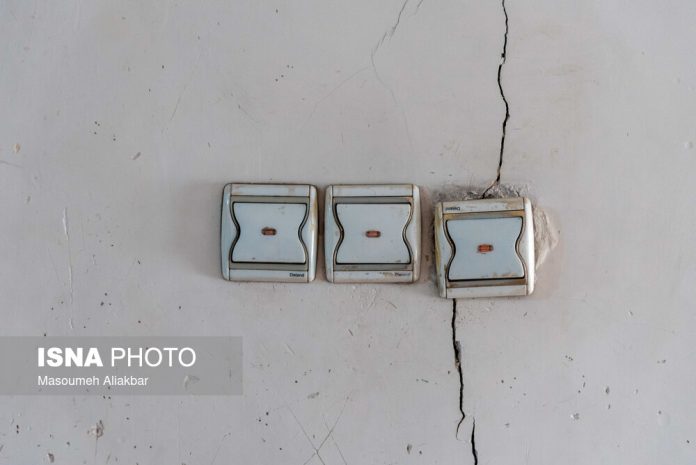
The quakes caused cracks and damages to residential buildings in rural and urban areas. Teams are still assessing the damage in the affected regions.

Mavali said that there were no damage to the water, electricity, and gas networks.

Russia-North Korea strategic agreement comes into force

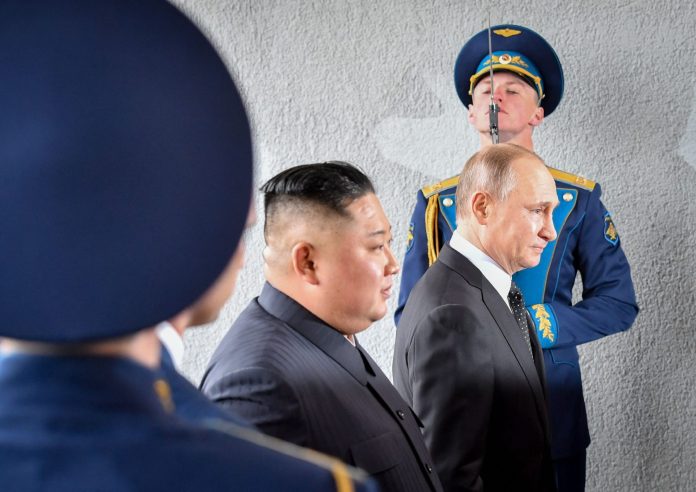
Putin Kim

The treaty was signed during Russian President Vladimir Putin’s visit to Pyongyang in June and a summit with North Korea’s Kim Jong Un, and includes a mutual defence pact for immediate military assistance if either faces armed aggression.

It “will serve as a strong driving force accelerating the establishment of independent and just multi-polarized world order without domination, subjugation and hegemony”, KCNA added.

Putin’s visit and the agreement on furthering military cooperation between the two countries came amid Pyongyang’s escalating involvement in the conflict in Ukraine, with more than 10,000 North Korean troops deployed to fight with Russia.

Neither country has acknowledged the deployment or the shipments of thousands of containers of ammunition from the North as well as mobile howitzers and rocket launchers.

Executions in Saudi Arabia in 2024 surpass 300 in record tally

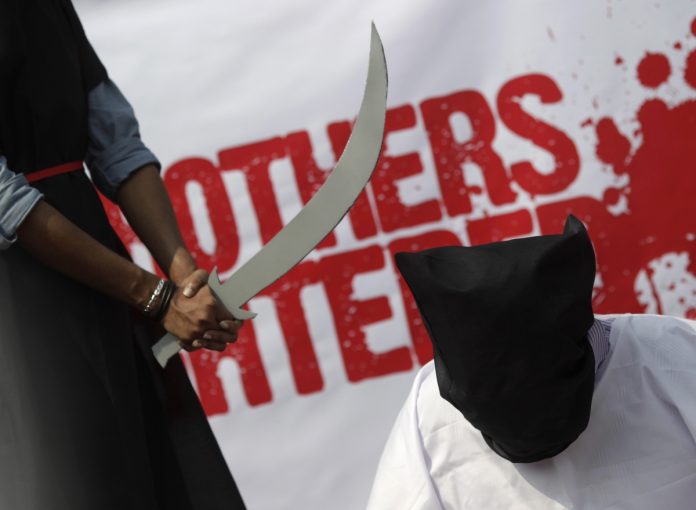
Saudi Execution

Saudi media reported the executions of three people convicted of drug smuggling and murder, bringing the figure to 303 people executed so far this year.

The tally – which is based on state media reports – found a surge in executions in recent weeks, with 200 people executed in September alone.

The toll includes 103 people convicted on drug-related charges and 45 individuals sentenced on terror-related charges.

In 2022, Saudi Arabia ended a three-year moratorium on the execution of drug offenders, accelerating executions for drug-related offences.

In September, rights group Amnesty International warned that the number of executions by Saudi authorities already stood at 196 – the highest figure in a decade. The report found that a surge in executions for drug-related offences drove the uptick, with an average of one execution every two days alone – up from just two drug-related executions in 2023.

The curtailing of the moratorium also appears to have prompted a spike in executions of women.

Citing the official Saudi press agency, the Berlin-based European-Saudi Organisation for Human Rights (ESOHR) reported that 2024 saw a record number of executions of women, with seven put to death this year so far – three of them on drug-related charges.

The rights group noted that this was up from one execution in 2022, and that previously, women were only executed for murder, with the first drug-related execution of a woman carried out in 2019.

The group further reported that most of the women executed during Crown Prince Mohammed bin Salman’s reign were foreign, most of them migrant workers from Africa and Asia. Of the four women executed this year, three were from Africa, according to ESOHR.

In November, another AFP tally found that the kingdom executed over 100 foreigners in 2024 – the highest total of foreigners executed in one year, almost triple the figures for 2023 and 2022.

Saudi human rights defenders and lawyers have accused MbS of overseeing a crackdown on freedom of expression since he came to power, including the introduction of a counterterrorism law that Human Rights Watch has criticised for its broad definition of terrorism.

“These numbers reflect the escalating bloodshed since King Salman and his crown prince, Mohammed bin Salman, came to power. They also confirm the falsity of all the claims of reform and change that bin Salman has raised for years,” Duaa Dhainy, senior researcher at ESOHR, told Middle East Eye.

“What is also worrying is the use of this punishment against political opponents, and for crimes that are not the most serious,” she added.

In 2023, Amnesty International ranked Saudi Arabia the third most prolific executioner after China and Iran.

At least 1,115 executions have been carried out under bin Salman’s rule between 21 June 2017 and 9 October 2024.

Additionally, according to rights NGO Reprieve, Saudi Arabia has repeatedly lied to the UN about its use of the death penalty.

Amnesty International concludes Israel committing genocide in Gaza

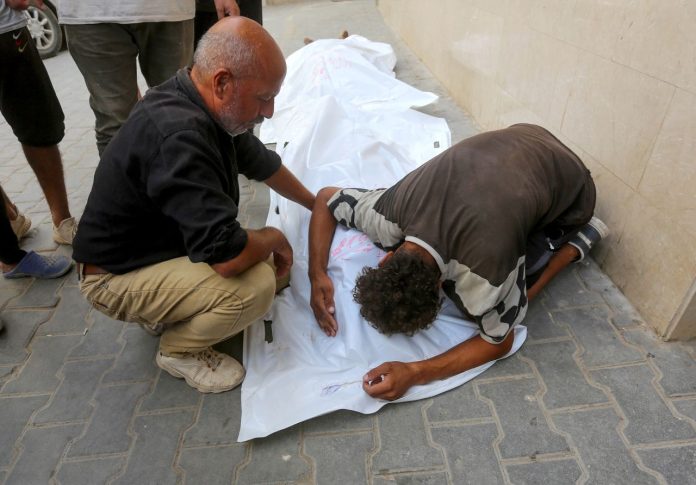
Gaza War

The report published on Thursday, titled, “You Feel Like You Are Subhuman”: Israel’s Genocide Against Palestinians in Gaza, is the culmination of months of research by Amnesty, including extensive witness interviews, analysis of “visual and digital evidence”, including satellite imagery, and statements made by senior Israeli government and military officials.

Amnesty said the Israeli military has committed at least three of the five acts banned by the 1948 Genocide Convention, including indiscriminate killings of civilians, causing serious bodily or mental harm, and “deliberately inflicting on Palestinians in Gaza conditions of life calculated to bring about their physical destruction”.

“Month after month, Israel has treated Palestinians in Gaza as a subhuman group unworthy of human rights and dignity, demonstrating its intent to physically destroy them,” stated Agnes Callamard, secretary-general of Amnesty International.

“Our research reveals that, for months, Israel has persisted in committing genocidal acts, fully aware of the irreparable harm it was inflicting on Palestinians in Gaza,” Callamard added.

“It continued to do so in defiance of countless warnings about the catastrophic humanitarian situation and of legally binding decisions from the International Court of Justice [ICJ] ordering Israel to take immediate measures to enable the provision of humanitarian assistance to civilians in Gaza,” she continued.

“Our damning findings must serve as a wake-up call to the international community: this is genocide. It must stop now.”

Callamard said that taking into “account the pre-existing context of dispossession, apartheid and unlawful military occupation” in which the Israeli military’s crimes against the civilian population of Gaza have been committed, “we could find only one reasonable conclusion: Israel’s intent is the physical destruction of Palestinians in Gaza”.

The Israeli military’s argument that it is lawfully targeting Hamas and other fighters who are located among the civilian population of Gaza – and that it is not deliberately targeting the Palestinian people – does not stand up to scrutiny, Amnesty announced.

“The presence of Hamas fighters near or within a densely populated area does not absolve Israel from its obligations to take all feasible precautions to spare civilians and avoid indiscriminate or disproportionate attacks,” the rights group added.

“Regardless of whether Israel sees the destruction of Palestinians as instrumental to destroying Hamas or as an acceptable by-product of this goal, this view of Palestinians as disposable and not worthy of consideration is in itself evidence of genocidal intent.”

Amnesty also noted that it found “no evidence” that the reported diversion of humanitarian aid by armed groups in Gaza “could explain Israel’s extreme and deliberate restrictions on life-saving humanitarian aid” to the civilian population of the war-torn territory.

Israeli authorities have yet to respond to the Amnesty report.

Officials in Israel have consistently rejected allegations of committing genocide in Gaza, claiming they are acting in self-defence following the Hamas-led October 7 attacks and that criticising their war is anti-Semitic.

The Amnesty report, however, also states that the crimes documented in Gaza were often “preceded by officials urging their implementation”.

More than 100 statements by Israeli military and government officials were reviewed in the report that “dehumanised Palestinians, called for or justified genocidal acts or other crimes against them”.

Of those statements, 22 were made by senior officials in charge of managing the war on Gaza and “appeared to call for, or justify, genocidal acts, providing direct evidence of genocidal intent”.

“This language was frequently replicated, including by Israeli soldiers on the ground” who made calls to “erase” Gaza and celebrated “the destruction of Palestinian homes, mosques, schools and universities”, Amnesty said.

Callamard stressed that the international community was also guilty of a “seismic, shameful failure” in Gaza by failing to “press Israel to end its atrocities”.

By delaying calls for a ceasefire in Gaza and continuing to send weapons to Israel, the international community’s failure “will remain a stain on our collective conscience”, Callamard added.

“Governments must stop pretending they are powerless to end this genocide, which was enabled by decades of impunity for Israel’s violations of international law,” she continued.

“States need to move beyond mere expressions of regret or dismay and take strong and sustained international action, however uncomfortable a finding of genocide may be for some of Israel’s allies.”

Iranian vice president: Hijab law faces implementation challenges

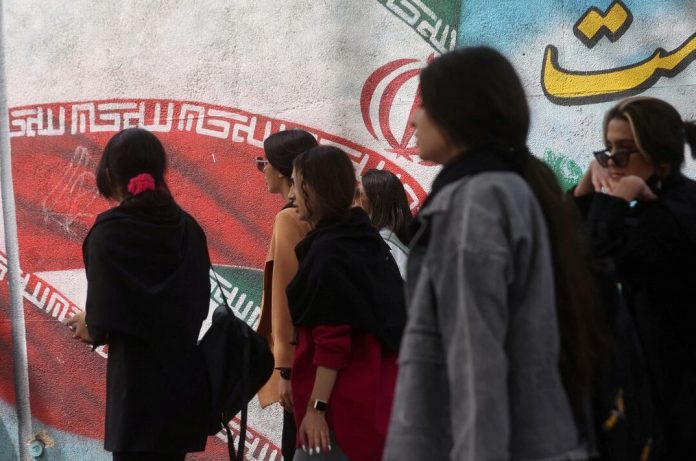
Hijab

In a televised interview with the IRIB on Wednesday night, Majid Ansari pointed out that the law criminalizes officials of centers where hijab is not observed, making enforcement difficult.

He said the ministry responsible for implementing the Chastity and Hijab Law has declared the law “unimplementable in its current form.”

Ansari, stressing that while hijab is fundamental under the Islamic codes, urged for legal amendments to address the concerns and enable effective implementation.

The controversial law, which harshly penalizes those who breach the mandatory hijb, has driven a wedge in Iranian society between the rightist proponents, who demand an immediate enforcement, and those who are strictly opposed, citing the tensions it can create nationwide.

Ansari also discussed the need to ensure citizens’ rights as outlined in the Constitution and emphasized the necessity for transparency and legal reforms to allow open expression and improve citizens’ rights.

“Social restrictions, such as stringent selection processes for professors and university students, also need addressing,” he stated.

The vice president also added, “Efforts continue to address issues like internet filtering and sanctions, which complicate daily life and security.”

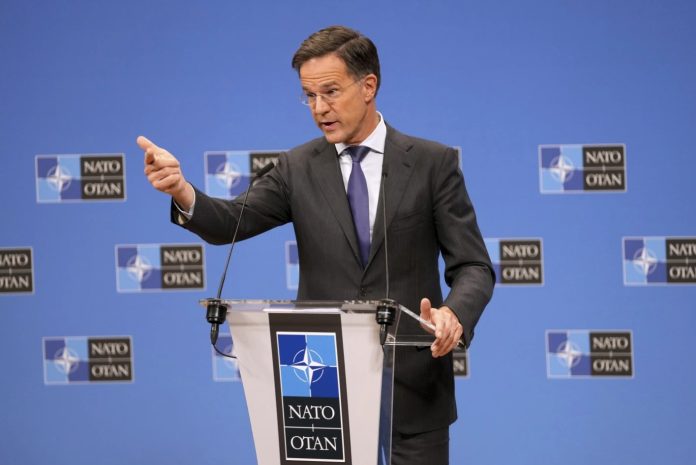
NATO head urges European allies to ramp up defense spending as Trump presidency looms

NATO Secretary-General Mark Rutte

After Russia annexed Ukraine’s Crimean Peninsula a decade ago, NATO leaders agreed to halt the defense cuts that began when the Cold War ended and move toward spending 2% of GDP on their military budgets.

Since Russia launched its full-fledged invasion almost three years ago, the leaders have agreed that the 2% target should be the floor rather than the ceiling for defense spending. On average, U.S. allies combined meet that figure, but around a third of the members still do not individually.

Trump, who takes office on Jan. 20, threatened not to defend “delinquent” countries. NATO is founded on the principle that an attack on any member must be considered an attack on them all. Trump’s remarks undermined confidence that the U.S. could be counted on in a crisis.

“If you want to keep the deterrence at the present level, 2% is not enough,” Rutte told reporters after chairing a meeting of NATO foreign ministers in Brussels.

“We can now defend ourselves and nobody should try to attack us. But I want that to stay the same in 4 or 5 years.”

In July, U.S. President Joe Biden and his NATO counterparts endorsed the biggest shakeup of the way the military alliance would respond to any attack on its territory by Russia since the Cold War. It was meant to deter Moscow from targeting any of the 32 allies.

Under highly secret new plans, NATO intends to have up to 300,000 troops ready to move to its eastern flank within 30 days. The plans lay out which allies would respond to an attack anywhere from the Arctic and Baltic Sea region through the Atlantic and east to the Black Sea.

But senior NATO officials concede that countries might have to spend up to 3% of GDP to execute the security blueprint successfully. A new spending target is likely to be announced next year. Rutte also said NATO might set specific targets for member countries to fill military equipment gaps.

U.K. Foreign Secretary David Lammy insisted that “the time to act is now.”

“We’re living in very dangerous times,” he stated, singling out Russia and its role in conflicts in the Middle East and Africa, on top of its war on Ukraine.

“We urge all allies across the NATO family to get serious about defense spending.”

On his last visit to Brussels for a NATO meeting, the U.S. Secretary of State Antony Blinken said that “this is a time for every ally to lean in, not lean back”. The United States is by far the organization’s most powerful member country.

“A stronger NATO means more capabilities to deter aggression, more effective allies to meet more complex challenges, and the peace and stability that allows our people to pursue fuller lives,” Blinken said.

Rutte also underlined the importance of expanding Europe’s defense industry, with incentives to drive companies to set up more production lines and hire more workers to staff them, as Western support for Ukraine drains armament stocks.

“We are producing not enough at too high prices, and the delivery is too slow,” he continued, adding, “We cannot have a situation where we just pay more for the same, and we see large kickbacks to the shareholders.”

Rutte urged the allies “to work closely together to make sure that we produce at a much higher rate and acceptable prices”. He noted “a number of countries who are now buying South Korean (equipment) because our own defense companies are not producing at a rate we need.”

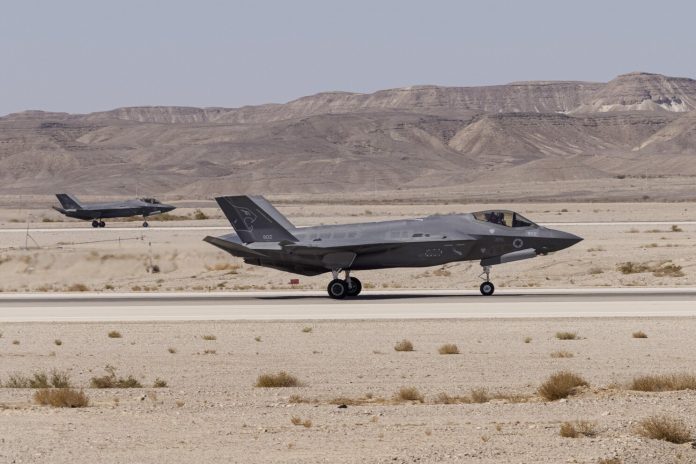
Britain ‘reviewing F-35 warplane and Israel arms licences’ amid Gaza war: Campaigners

F-35

In a statement on Wednesday, two campaign groups taking legal action against the government said it had written to them to confirm that it is reviewing both the export of the fighter jet parts to a global supply pool and continuing direct arms export licences to Israel.

It comes after the two groups, the UK-based Global Legal Action Network (Glan), and Al-Haq, a Palestinian human rights organisation, last week threatened to seek an emergency court injunction to stop all arms exports to Israel over concerns that British-made weapons could be used by Israeli forces in Gaza in violation of international humanitarian law.

“In response to our pre-action letter sent last week, the UK government has said it is reviewing its decision to allow the export of components for the F-35 warplane to a global pool which serves Israel and other direct arms export licences,” the two groups said.

The UK government in September suspended 30 arms export licences to Israel after a review found there was a clear risk they could be used in violations.

But hundreds of arms export licences remain in place.

The government also announced in September that it would not suspend the export of F-35 components to a global pool, even though Israel could then access those parts, because, it said, the F-35 programme was “integral to international security”.

As part of legal action brought by Glan and Al-Haq, the government last month revealed it had assessed that suspending F-35 exports would “undermine US confidence in the UK and NATO” and would have “a profound impact on international peace and security”.

The campaign groups say that F-35 jets have played a key role in Israel’s war against Hamas in Gaza, in which almost 45,000 people have been killed, according to the Palestinian health ministry.

Arms control experts and researchers say Israel has relied on F-35s for a high volume of air strikes in Gaza and, more recently, in Lebanon over the past 13 months. UK-made parts make up 15 percent of the jets.

Last month, the International Criminal Court issued arrest warrants for Israeli Prime Minister Benjamin Netanyahu and former Defence Minister Yoav Gallant on war crimes charges.

Israel is also accused of genocide in an ongoing case at the International Court of Justice, and Glan and Al-Haq have warned that continuing weapons exports risks leaving British officials exposed to accusations of complicity in genocide.

Shawan Jabarin, Al-Haq’s general director, said: “Every day, our people are being killed by F-35s in Gaza. This must stop. The UK has international obligations to stop supplying arms and parts to Israel used to commit international crimes including genocide.”

Dearbhla Minogue, senior lawyer with Glan, said, “We welcome the fact that the government has been compelled to reconsider this F-35 ‘carve-out’. The position they took is, in our estimation, legally untenable and we hope they will finally do the only reasonable thing – stop the transfer of any British weapons for use by Israel against Palestinians.”

In September, Jonathan Reynolds, the secretary of state for business and trade, told MPs that exports to the global F-35 programme would be kept under review.

Last month, Angela Eagle, a defence minister, told MPs that the US government controlled the global distribution of F-35 components.

Asked by Independent MP Zarah Sultana about F-35 components exported from the UK to Israel via the US since October 2023, Eagle stated: “The government does not have visibility of F-35 components distributed by the programme to each F-35 nation and is unable to provide an estimate.”

Eagle separately added there had been 14 transfers of F-35 components from an RAF base to Israel between October 2023 and August 2024 “at the request of the US-led F-35 Programme”.

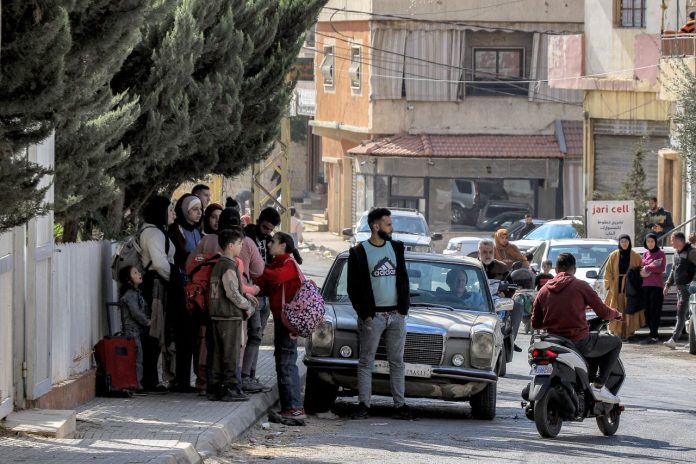
Lebanon reports 12 more ceasefire violations by Israel

Lebanon War

It said that the Israeli violations were documented in the districts of Tyre, Marjayoun and Bent Jbeil in southern Lebanon and also in Beirut.

The violations included the destruction of homes, artillery shelling, warplane overflights over Lebanese territory, gunfire and incursions.

An Israeli drone struck a vehicle in Majdalzoun town in Tyre district, while the Israeli artillery shelled the Marjayoun Plain at least three times over the past day, according to the news agency.

The Israeli gun machines opened fire toward neighborhoods in Bent Jbeil town. The Israeli army also destroyed homes in the Khiyam town and conducted artillery shelling on Kfarkela, according to the news agency.

Israeli warplanes were also seen flying over the capital Beirut and over southern areas at a low altitude, according to an Anadolu reporter.

Lebanon has reported 129 violations of the cease-fire since the deal came into force last week in the hope of ending 14 months of fighting between the Israeli army and Hezbollah.

According to an Anadolu tally based on Health Ministry figures, at least 14 people were killed and 13 others injured in Israeli attacks since last week.

Under the terms of the cease-fire, Israel is to withdraw its forces south of the Blue Line de facto border in a phased manner while the Lebanese army deploys its forces in southern Lebanon within a maximum of 60 days.

Implementation of the agreement is to be overseen by the US and France, but details on enforcement mechanisms remain unclear.

Over 4,000 people have been killed and more than 16,500 injured in Israeli attacks in Lebanon and over 1 million others have been displaced since October 2023, according to Lebanese health authorities.

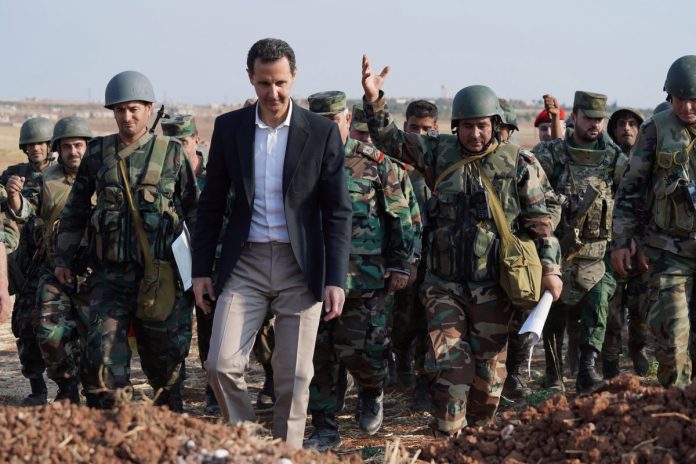
MP: Iran will definitely intervene to fight terrorists in Syria

Syrian Army

Abbas Golroo, who accompanied Iranian Foreign Minister Seyed Abbas Araghchi on the trip to Syria earlier this week, emphasized that Iran has consistently supported Syria against terrorist groups, which “have been backed by some regional countries.”

He noted that the Astana process, involving Iran, Turkey, and Russia, aimed to bring warring parties to the negotiating table and establish de-escalation zones, but recent support for terrorist groups has reignited devastating conflict.

Golroo criticized the violation of the Astana agreement, which stipulated that armed groups should remain in their locations, with checkpoint oversight by the guarantor countries.

The lawmaker called on Syria, Russia, and their allies to decisively address the situation in the northern Syrian city of Idlib, which has become a hub for dangerous multinational terrorists.

The militants, believed to be supported by several countries, have been engaged in deadly armed conflict with the Syrian army since last Wednesday.

Germany rules out sending forces to Ukraine

German Army

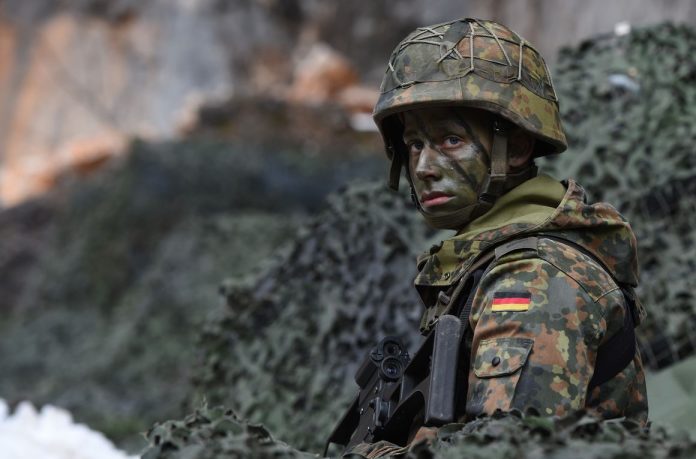
Scholz made the remarks on Wednesday while addressing the German parliament about remarks made earlier this week by the country’s Foreign Minister, Annalena Baerbock.

Speaking on the sidelines of a meeting of NATO’s top diplomats on Tuesday, Baerbock signaled that Berlin was open to the idea of sending a peacekeeping force into Ukraine.

“The German side will support everything that serves peace in the future,” she said, adding that the country’s soldiers “could be deployed only under the condition of a real ceasefire”.

The remarks prompted widespread speculation on how exactly such a deployment could flesh out, yet Scholz cautioned against drawing any conclusions from Baerbock’s statement, insisting she had worded it in extremely vague terms on purpose.

“She was asked what could happen in a peace phase, and actually she tried to answer this without saying yes or no. Because it’s quite inappropriate to speculate now about what would happen later in the event of a negotiated cease-fire,” Scholz told the parliament.

The chancellor ruled out any possibility of sending troops to Ukraine before a lasting ceasefire between Moscow and Kiev was established.

“We are in agreement with the minister of defense and the foreign minister that we must do everything to ensure that this war does not become a war between Russia and NATO. And that is why sending ground troops is out of the question for me in this war situation,” he explained.

The mixed messages from German leadership come amid a string of media reports that suggested France and the UK have been considering deploying their troops to the front line in Ukraine as a peacekeeping force to observe a ceasefire in the event of Russia and Ukraine actually engaging in negotiations.

An unnamed high-ranking NATO official, who spoke to state-funded news outlet Radio Free Europe/Radio Liberty, suggested the true goal of the potential deployment was ensuring that European NATO members still have a say in the conflict’s resolution after US President-elect Donald Trump takes office in January.

Meanwhile, Russia’s Foreign Intelligence Service has reported that Western nations are considering sending as many as 100,000 “so-called peacekeepers” to Ukraine. That sizable force would effectively amount to an occupation and would only serve the purpose of buying time for Kiev to rebuild its military strength before renewing hostilities with Moscow, it warned.