Saturday, December 27, 2025
Home Blog Page 590

Iran should withdraw from NPT, says Kayhan newspaper’s editor-in-chief

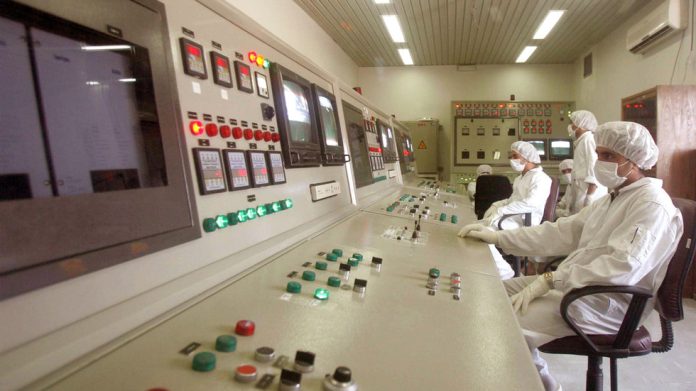
Iran nuclear program

The statement came in response to recent comments by the Director General of the International Atomic Energy Agency (IAEA), Rafael Grossi, who claimed that “Iran is currently enriching uranium to 60%, which can easily be converted to military-grade 90%,” and warned that “Iran is rapidly approaching the status of a nuclear-armed state.”

Shariatmadari dismissed Grossi’s remarks as baseless, stating, “The 60% uranium enrichment has been repeatedly addressed and is not prohibited under the NPT.”

He accused Grossi of using Iran’s nuclear program as a pretext for broader anti-Iranian propaganda driven by the US and its allies.

The veteran journalist argued that the long-standing nuclear challenge is not about preventing Iran from acquiring nuclear weapons but about hindering Iran’s scientific progress.

“The only way to counter this tactic is for Iran to withdraw from the NPT,” he asserted, noting that Western countries are deeply concerned about the possibility.

Shariatmadari questioned the benefits of Iran’s NPT membership, citing the assassination of nuclear scientists, sabotage of nuclear facilities, exposure of military and industrial secrets, severe economic sanctions, and significant financial losses as the primary outcomes.

He concluded the article by rhetorically asking, “What other achievements has our NPT membership brought us?”

UN urges ‘free and fair’ elections in Syria

Assad fled Syria following a lightning offensive spearheaded by Hayat Tahrir al-Sham (HTS) earlier this month.

He left behind a country scarred by decades of “torture, disappearances and summary executions”, and the collapse of his rule on December 8 stunned the world and sparked celebrations around Syria and beyond.

Years of war have also left the country heavily dependent on aid, deeply fragmented and desperate for justice and peace.

Addressing reporters in Damascus, UN special envoy Geir Pedersen said “there is a lot of hope that we can now see the beginning of a new Syria”.

“A new Syria that… will adopt a new constitution… and that we will have free and fair elections when that time comes, after a transitional period,” he added.

Calling for immediate humanitarian assistance, he also stated he hoped to see an end to international sanctions levied against Syria over Assad’s abuses.

UN humanitarian chief Tom Fletcher also called for a massive aid boost by donor countries to respond to “this moment of hope” for Syria.

“Across the country, the needs are huge. Seven in 10 people are needing support right now,” Fletcher told AFP in a telephone interview as he visited Syria.

Pedersen noted a key challenge was the situation in Kurdish-held areas in Syria’s northeast, amid fears of a major escalation between the US-backed, Kurdish-led Syrian Democratic Forces (SDF) and Turkey-backed groups.

Turkey accuses the main component of the SDF, the People’s Protection Units (YPG), of being affiliated with Kurdistan Workers’ Party (PKK) militants at home, whom both Washington and Ankara consider a “terrorist” group.

The United States announced Tuesday it had brokered an extension to a fragile ceasefire in the flashpoint town of Manbij and was seeking a broader understanding with Turkey.

But later on Wednesday, a Syria war monitor claimed 21 pro-Turkey fighters had been killed after they attacked a Kurdish-held position near Manbij despite the ceasefire extension.

Turkish Foreign Minister Hakan Fidan later warned Syria’s new rulers to address the issue of Kurdish forces in the country.

He was responding to a question on Al Jazeera about rumours that Turkey could launch an offensive on the Kurdish-held border town of Kobane, also known as Ain al-Arab.

“There is a new administration in Damascus now. I think, this is primarily their concern now,” he said.

“So, I think if they are going to, if they address this issue properly, so there would be no reason for us to intervene,” Fidan added.

He rejected US President-elect Donald Trump’s claim that the ouster of Assad amounted to an “unfriendly takeover” of Syria by Ankara.

Rooted in Syria’s branch of Al-Qaeda and proscribed as a terrorist organisation by several Western governments, HTS has sought to moderate its rhetoric by assuring protection for the country’s many religious and ethnic minorities.

It has appointed a transitional leadership that will run the country until March 1.

Fidan stressed in his interview that it was time for the international community to take HTS off its terror watchlists.

HTS has vowed justice for the crimes committed under Assad’s rule, including the disappearance of tens of thousands of people into the complex web of detention centres and prisons that was used for decades to silence dissent.

According to the Syrian Observatory for Human Rights, more than 100,000 people died or were killed in custody from 2011.

Iran dismisses Canada-sponsored UNGA resolution as politically-motivated

Esmael baghaei

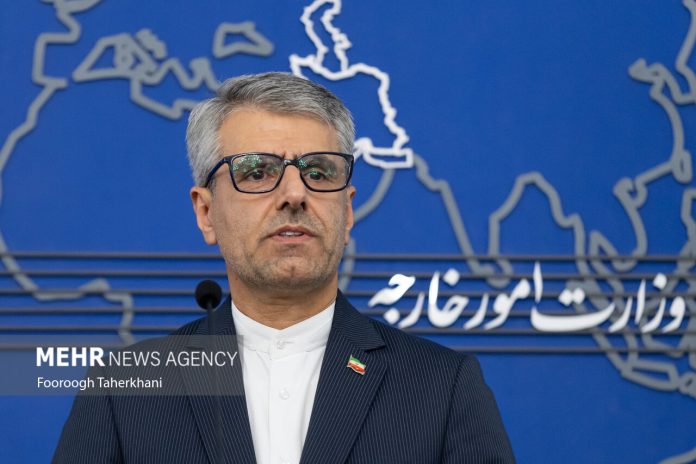
Esmaeil Baqaei made the remarks in reference to a UNGA resolution accusing Iran of human rights violations, which was adopted on Tuesday with only 80 votes in favor, while 27 nations rejected it and 68 abstained from voting.

He noted that the majority of UN member states expressed dissatisfaction with the misuse of the UN General Assembly and the instrumentalization of human rights by voting against, abstaining from, or being absent during the resolution.

He stated that such unjustified measures, sponsored by certain players who themselves have a long history of gross human rights violations—particularly through their military and political support for occupation and genocide in Palestine—fail to promote the global status of human rights.

Instead, these actions reduce the noble concept of human rights to a tool for exerting political pressure on nations, the spokesman said.

Baqaei pointed out that the sponsors of the anti-Iranian resolution, including the Zionist regime, the United States, the United Kingdom, and Canada, are among the most prominent violators of human rights, and this is a source of shame.

He urged Canadian authorities, who initiate such measures against Iran every year, to address their own domestic and international misconduct, including systematic policies aimed at the colonial eradication of Indigenous populations and complicity in genocide committed by Israel against the Palestinian people.

Baqaei emphasized Iran’s commitment to upholding and safeguarding human rights as a legal, religious, and ethical imperative under the country’s constitution, statutory laws, and the principles of Islam.

Israel launches air strikes on several regions in Yemen

“Following the approval of attack plans by Defence Minister Israel Katz, Air Force fighter jets, under the direction of the Intelligence and Navy branches, recently attacked military targets of the Houthi terrorist regime in the western coastal strip and deep inside Yemen,” the Israeli military said in a statement on Thursday morning.

“The targets attacked are used by the Houthi forces for their military operations,” the military added.

Al Masirah TV, the main news outlet run by Yemen’s Houthi movement controlling much of the country, said seven people were killed in an Israeli attack on the port of as-Salif and the rest in two strikes on the Ras Isa oil facility; both are located in the western province of Hodeidah.

“The enemy launched four aggressive raids targeting the port … and two raids targeting” an oil facility, Al Masirah reported.

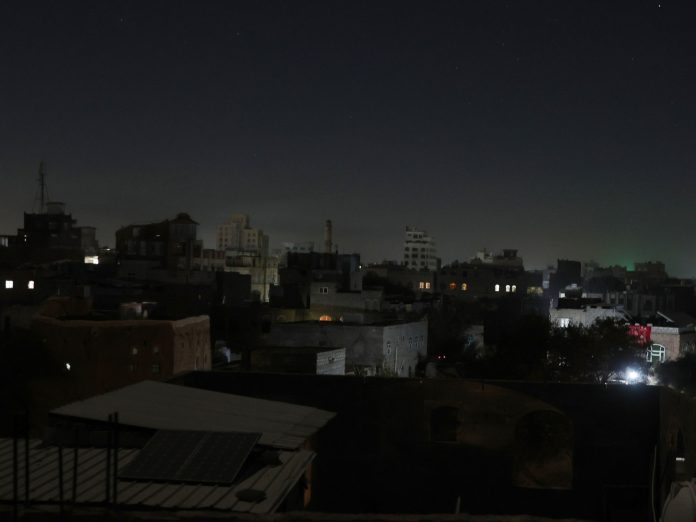
The series of “aggressive raids” also targeted two central power stations south and north of the capital, Sanaa, it added.

Yemen’s SABA news agency also reported that four raids targeted Hodeidah, with two hitting the Ras Isa oil facility, killing and injuring some of its employees.

Israel’s military spokesman Daniel Hagari stated Israeli forces had carried out strikes on Houthi military sites, including ports and energy infrastructure in Yemen’s capital Sanaa, following the firing of a Houthi missile towards Israel overnight – which was destroyed – and repeated attacks over the past 14 months.

Houthi fighters in Yemen have carried out months of attacks on Israel, and shipping linked to the regime in the Red Sea and Gulf of Aden, in what it says is a campaign of solidarity with Palestinians amid Israel’s war on the Gaza Strip, which has killed more than 45,000 people – the majority being women and children.

First flight since Assad’s overthrow takes off from Damascus Airport

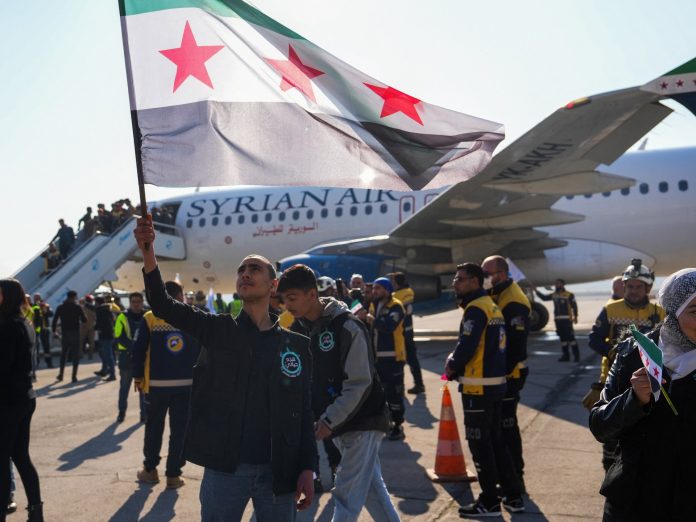
The first commercial flight in Syria since the toppling of al-Assad earlier this month has taken off from Damascus airport.

The flight landed in Aleppo, in the country’s north, on Wednesday with 43 people on board including a group of journalists.

Pro-Assad forces abandoned the airport in the capital on December 8 as opposition fighters closed in on the city following a lightning offensive that began on November 27. Since then, no flights had taken off or landed due to security reasons.

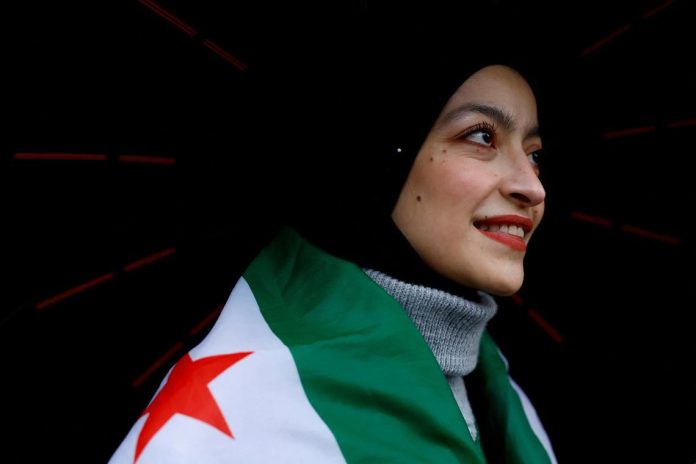
Earlier this week, airport staff painted the pro-opposition three-star flag on aeroplanes, a symbol of the 2011 uprising now adopted by the transitional authorities. Inside the terminal, the new flag has also replaced the one associated with the government of al-Assad, who fled to Russia.

An airport official told the AFP news agency on condition of anonymity that international flights would resume on December 24, following maintenance work.

Meanwhile, neighbouring Jordan has reopened the Jaber border crossing with for trade, resuming the flow of goods and freight traffic between the two countries.

More than 13 years after a brutal crackdown on anti-government protests morphed into a multisided war that killed hundreds of thousands and displaced millions, Syria is struggling to get back on its feet as it comes to terms with the scars of torture, disappearances and summary executions.

The group at the helm of Syria’s new ruling coalition, Hayat Tahrir al-Sham (HTS), has sought to keep its institutions going and kickstart its economy. Once rooted in Syria’s branch of al-Qaeda and designated a “terrorist” organisation by several Western governments, HTS has softened its rhetoric and pledged to protect the nation’s diverse religious and ethnic communities.

While the new caretaker administration in Damascus has set out few details on its thinking for the next steps for the country, newly appointed Prime Minister Mohammed al-Bashir, who formerly led an HTS-affiliated government in Idlib province, has said he will remain in office until March.

On Wednesday, a day after meeting HTS leader Ahmed al-Sharaa in Damascus, United Nations Special Envoy Geir Pedersen called for “free and fair elections” in Syria after the transition and urgent humanitarian assistance for the country.

Pedersen, who on Tuesday warned that the war has not yet ended, told reporters in Damascus that “there is a lot of hope that we can now see the beginning of a new Syria”.

He also expressed hope for a “political solution” in the Kurdish-held northeast, where the US-backed, Kurdish-led Syrian Democratic Forces (SDF) are battling Turkish-backed groups who have captured several Kurdish towns since the offensive began in the rest of the country last month.

Speaking to AFP, HTS military chief Murhaf Abu Qasra said Kurdish-held areas would be integrated under the country’s new leadership, adding that the group rejects federalism and that “Syria will not be divided”.

“The Kurdish people are one of the components of the Syrian people … Syria will not be divided and there will be no federal entities,” he continued.

Abu Qasra, known by his nom de guerre Abu Hassan al-Hamawi, also said the group would be “the first” to dissolve its armed wing and integrate into the armed forces.

Meanwhile, Hadi al-Bahra, head of the Syrian National Coalition that grouped opponents of al-Assad during the war, stated on Wednesday that Syria’s transitional government should be credible and not exclude any Syrian party or be based on sectarianism.

The Turkiye-based Syrian National Coalition would return to Syria and set up headquarters there, al-Bahra told journalists at a news briefing, adding that he intended to return as well.

“Logistics should be worked out and freedom of speech should be guaranteed,” he added.

His comments came a day after members of the UN Security Council in a statement called for the implementation of “an inclusive and Syrian-led and Syrian-owned political process” that they said should meet the legitimate aspirations of all Syrians, protect all of them and “enable them to peacefully, independently and democratically determine their own futures”.

The 15-member body also emphasised battling “terrorism” across the country, stressing that Syria must abide by council resolutions on non-conventional weapons and reiterating support for UN peacekeepers and the inviolability of diplomatic premises.

US imposes sanctions on several individuals, entities over links to Iranian military

United States Department of the Treasury

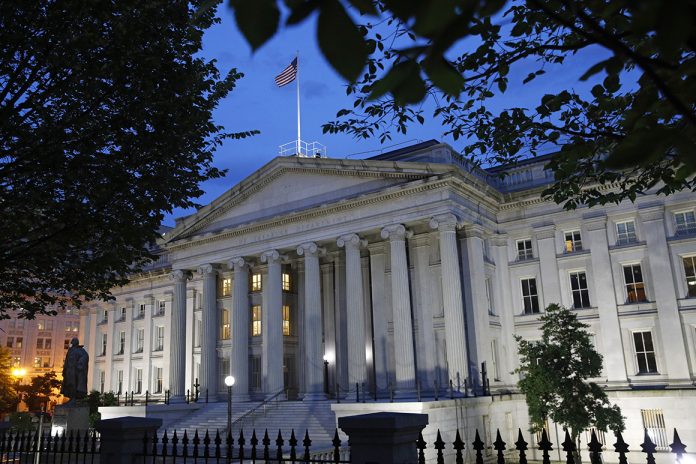
The US Departments of State and Treasury on Wednesday announced separate sanctions related to Iran’s production of unmanned aerial vehicles (UAVs) and missiles.

A total of three individuals and four entities, one of them based outside Iran, were targeted by the sanctions.

The US Department of State said on its website that it had targeted Islamic Revolution Guards Corps Aerospace Force (IRGC ASF) Deputy Commander Brigadier General Majid Mousavi for engaging in activities that have “materially contributed” to Iran’s ballistic missile program.

It also imposed sanctions on two entities, which it did not name, but said had assisted Iran’s production of Shaheed-136 one-way attack UAVs.

The Department repeated its previous claims that Iran had supplied Shaheed-136 UAVs to Russia for use in its war with Ukraine.

Meanwhile, the Office of Foreign Assets Control (OFAC) also released a statement on the Treasury’s website saying that it had imposed sanctions on the Iran-based Sanat Danesh Rahpuyan Aflak Company, its CEO Mohammed Abedini Najafabadi and Chief Technology Officer Kaveh Merat as well as on the Switzerland-based Illumove SA, which it said was directly controlled by the Iranian company and its CEO.

OFAC added the two companies and the managers had been sanctioned because of their role in developing and procuring components for sensitive navigational systems for the Self-Sufficiency Jihad Organization, an entity run by the IRGC ASF.

Iran has repeatedly rejected accusations about its missile and UAV production programs, including claims it has been supplying the weapons to Russia for use in the Ukraine war.

Iranian authorities say Washington’s sanctions are solely aimed at forcing Iran to accept a series of political and military concessions.

Former Iranian diplomat urges restraint on hardliners in Iran regarding renewal of ties with Egypt

Pezeshkian and Sisi

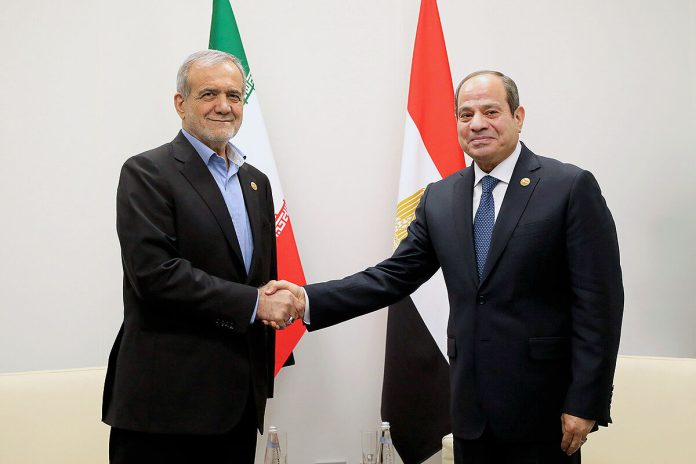
In an interview with Entekhab news outlet, Joudaki said that the recent visit of Iranian officials to Egypt does not signify a transformation in bilateral ties.

He likened the relationship dynamics to those between Iran and the US, suggesting that deeper discussions are required at higher levels.

Joudaki pointed out that Iran, being under siege, views any opportunity to break this isolation as crucial, particularly with regard to ties with neighboring and Islamic countries.

Referring to the Iranian president’s trip to Egypt, he said it is vital to mend old friendships and diminish enmities.

Reflecting on historical tensions, Joudaki recounted past attempts at rapprochement that were undermined by hardline factions within Iran.

He believes that for relations to improve, extremist forces must be restrained and efforts must be made to adopt a new mindset.

Iranian President Massoud Pezeshkian has departed for Cairo to attend the summit meeting of the eight developing Muslim countries (D-8) in the Egyptian capital on Thursday.

Iran’s president: Aid routes to Gaza must not be blocked

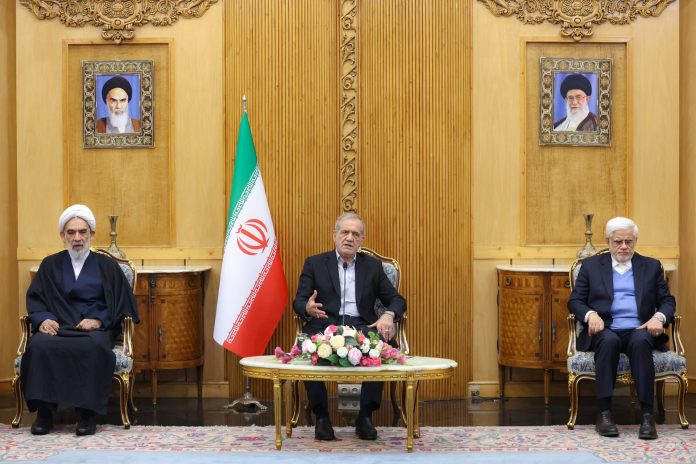
On Wednesday, before departing for Cairo, the capital of Egypt, to participate in the D-8 summit, President Pezeshkian told reporters that discussions would take place at the summit regarding the regional developments  , with the aim of defending the rights of the people of Gaza, Palestine, Lebanon, and Syria.

Pezeshkian pointed to the severe restrictions on the delivery of food and medicine to Gaza, adding that efforts would be made at the summit, with the presence of the leaders of participating countries, to reach agreements for coordinated and effective diplomacy.

He emphasized that aid routes to Gaza must not be blocked under any circumstances.

He stressed that Islamic countries must defend the rights of the oppressed people of Gaza, Palestine, and Lebanon against the oppression, crimes, and killings by the Zionists with a unified voice and perspective, and they should resolve their differences through dialogue as much as possible.

Pezeshkian also highlighted the importance of the Cairo summit in expanding economic, political, cultural, and social cooperation among D-8 members.

The President of the Islamic Republic of Iran also emphasized that Egypt is a country with a long history and a significant civilization that has a major impact in the Islamic world.

The summit meeting of the D-8 Organization for Economic Cooperation, which includes Iran, Turkey, Egypt, Pakistan, Indonesia, Nigeria, Malaysia, and Bangladesh, will be held on Thursday in Cairo.

Zelensky admits impossibility of reclaiming Ukraine’s Donbass, Crimea

Russia Ukraine War

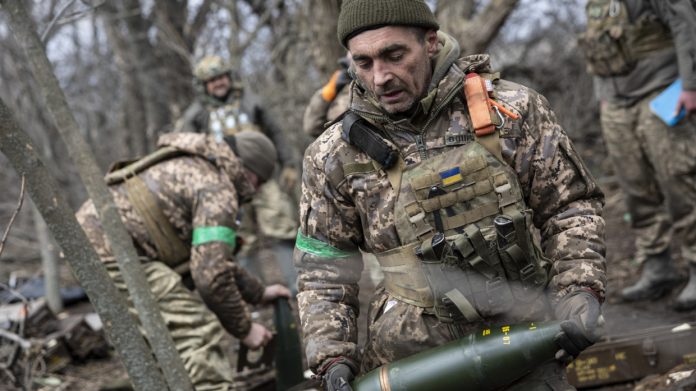
“De facto, these territories are currently under Russian control. We don’t have the resources to regain them. We can only rely on diplomatic pressure from the international community to compel [Russian President Vladimir] Putin to engage in negotiations,” he told Le Parisien in a video interview.

Zelensky was asked about the compromises Ukraine is willing to make “to end the war”.

However, he responded negatively when asked whether Kiev could temporarily abandon its claims to Crimea or Donbass.

Previously, former NATO Secretary General Jens Stoltenberg, now head of the Munich Security Conference, acknowledged the possibility of temporary territorial concessions by Ukraine to secure peace.

He suggested that the ceasefire line should encompass the Russian-controlled regions of Donbass and Novorossiya, which Ukraine still considers its own, “though this is not entirely realistic in the near future”. He added that NATO membership for Ukraine could be considered only for the territories it currently controls, provided Ukraine permanently renounces claims to the disputed areas.

Russian President Vladimir Putin previously outlined the conditions for resolving the conflict in Ukraine, which include the withdrawal of Ukrainian forces from Donbass and Novorossiya, Kiev’s refusal to join NATO, the lifting of Western sanctions against Russia, and the establishment of a neutral, non-nuclear status for Ukraine.

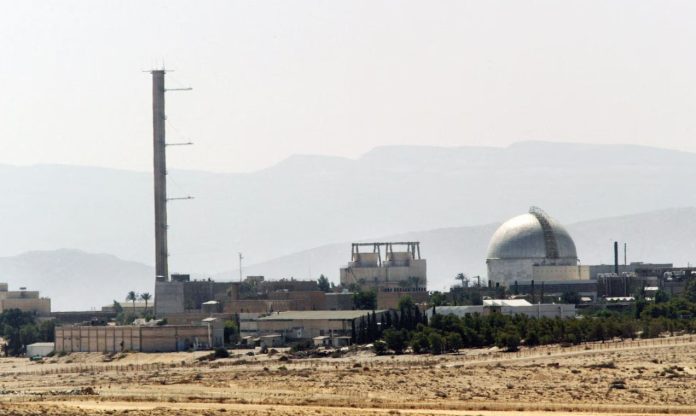
US ‘aware’ of Israel’s nuclear weapons production for decades: Declassified doc.

The newly released Joint Atomic Energy Intelligence Committee (JAEIC) report from December 1960, published by the National Security Archive on Tuesday, is the first and only known US intelligence report to explicitly and unequivocally state that Israel’s Dimona nuclear facility would include a reprocessing plant for plutonium production and was weapons related.

Subsequent US intelligence products treated the reprocessing issue as unsettled until the late 1960s, when Israel reached the threshold of a nuclear weapons capability and the United States and Israel reached a secret agreement to accommodate its status as an undeclared nuclear power.

Declassified US intelligence analysis also revealed that several Israeli sources had informed the US embassy in February 1967 that Israel “either has or is about to complete” a reprocessing plant at Dimona, and that “the Dimona reactor has been operated at full capacity”. The bottom line was that Israel was “6-8 weeks” from the bomb.

The State Department’s Bureau of Intelligence and Research’s (INR) evaluated some of the statements as “plausible” and urged the next inspection team in April 1967 to explore them.

This is the first known document that treated the possibility that Israel was systematically deceiving the United States about Dimona as a factual claim.

The newly released intelligence report is the latest in a series of declassified documents concerning US policy toward the Israeli nuclear weapons program.

Israel, which pursues a policy of deliberate ambiguity about its nuclear weapons, is estimated to possess 200 to 400 nuclear warheads in its arsenal, making it the sole possessor of non-conventional arms in West Asia.

It has, however, refused to either allow inspections of its military nuclear facilities or sign the Nuclear Non-Proliferation Treaty (NPT) with the invariable support of Washington.