Saturday, December 27, 2025
Home Blog Page 591

Moscow says arrested Uzbek national behind assassination of Russian general

The detainee is a 29-year-old Uzbek citizen who was recruited by Ukraine’s intelligence services and promised a $100,000 reward and a trip to an EU country, according to the press office of Russia’s Federal Security Service (FSB).

“The FSB, in collaboration with the Russian Interior Ministry and the Russian Investigative Committee, conducted joint operational and investigative actions. As a result, they identified and detained a 1995-born Uzbek national who detonated a homemade explosive device near a residential building on Ryazansky Avenue in Moscow, killing Lieutenant General Igor Kirillov, born in 1970, and his assistant, Major Polikarpov, born in 1983,” the press office said.

“The terrorist confessed to being recruited by Ukrainian intelligence. He was sent to Moscow on their orders, where he received a powerful improvised explosive device and placed it on an electric scooter, which he parked near the entrance to Kirillov’s residence. To monitor the address, he rented a car-sharing vehicle and installed a Wi-Fi video camera, which broadcasted live to organizers in Dnepr (formerly Dnepropetrovsk),” the FSB explained.

After receiving a video feed showing the officers leaving the building, the explosive device was remotely detonated.

“The Ukrainian intelligence services promised the Uzbek citizen $100,000 and a trip to a European Union country for the assassination of the Russian defense official,” the press office added.

The detainee has been transferred to the Russian Investigative Committee to document his criminal actions within the framework of the criminal case, which includes charges under Article 205 of the Russian Criminal Code (Terrorist Act), Article 105 (Murder), Article 222.1 (Illegal Storage of Explosives and Explosive Devices), and Article 223.1 (Illegal Manufacture of Explosives and Explosive Devices). “He faces potential life imprisonment for these crimes,” the FSB stated. “Employees of the Ukrainian intelligence services involved in organizing the terrorist attack will also be located and punished,” the press office concluded.

Iran’s ex-president Rouhani says shocked by hijab law, cites “contradictions with Qur’an, Constitution”

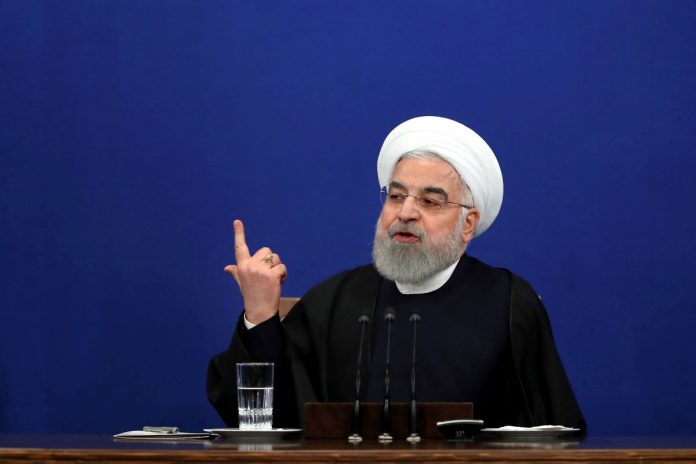
Hassan Rouhani

Rouhani, in a meeting on Wednesday with ministers and vice presidents from his cabinets, stated that the controversial law “contradicts the Qur’an and the Constitution.”

The former president noted that the 2021 protests and deadly unrest in Iran that began with an incident involving a woman over her hijab, and now the issue has resurfaced.

Rouhani pointed out the weakening of social capital and national cohesion in recent years, noting that elections, which should boost national unity, have instead highlighted internal problems.

He mentioned that the recent presidential elections saw low participation, with only 40% in the first round and 50% in the second, due to public distrust.

Many officials, experts and even religious authorities have expressed outrage over the law. Opponents of the law also believe its implementation will lead to social unrest in Iran. This is while those supporting the Hijab law says it aligns with the Islamic teachings.

Rouhani also commented on the recent events in Syria, stating that they were planned months in advance, not just a few weeks ago.

He noted that the war against Daesh and other militants in Syria remained incomplete, with many terrorists fleeing or gathering in Idlib in Syria.

Turkey, the US, Israel, and Qatar took advantage of the situation to topple Bashar al-Assad, he pointed out.

US lawmakers call on Biden to halt offensive weapons to Israel

Gaza War

In a letter addressed to Secretary of State Antony Blinken on Tuesday, the Congress members called on Washington to uphold its own laws that restrict military aid to countries that commit war crimes and block US-backed humanitarian assistance.

“We believe continuing to transfer offensive weapons to the Israeli government prolongs the suffering of the Palestinian people and risks our own national security by sending a message to the world that the US will apply its laws, policies, and international law selectively,” the letter said.

It added that failure to act would prolong Israeli Prime Minister Benjamin Netanyahu’s war on Gaza, “isolating Israel on the international stage and creating further instability in the region”.

The letter was led by Summer Lee and Greg Casar, who was recently elected to lead the Congressional Progressive Caucus next year, succeeding Pramila Jayapal.

The push is unlikely to convince Biden and Blinken, who have repeatedly pledged their “ironclad” support for Israel, to change course. But it underscores the persisting progressive pressure on the US administration over its Middle East policy.

It also highlights Casar as a critic of Israel before he becomes the chair of the influential Progressive Caucus.

The congressional statement focuses on the Biden administration’s ultimatum to Israel in October, when US officials warned Israel in a letter to enable the flow of humanitarian aid into Gaza within 30 days or face consequences.

Although several humanitarian groups have said that Israel failed to meet the conditions outlined by Washington to improve the situation in Gaza, the Biden administration said after the deadline that it would continue to provide weapons to Israel.

“While Israel made nominal progress in some areas, it overwhelmingly failed to meet the minimum standards laid out in the Administration’s own letter,” the lawmakers wrote.

For example, US officials demanded allowing 350 aid trucks to the besieged Palestinian territory. But an average of 42 trucks were allowed into Gaza daily during the 30-day period.

In fact, humanitarian groups – including the Norwegian Refugee Council, Oxfam, Refugees International and Save the Children – accused Israel of taking “actions that dramatically worsened the situation on the ground, particularly in northern Gaza” after the US warning.

“Israel has failed to comply with its ally’s demands – at enormous human cost for Palestinian civilians in Gaza,” the groups announced in a joint statement last month.

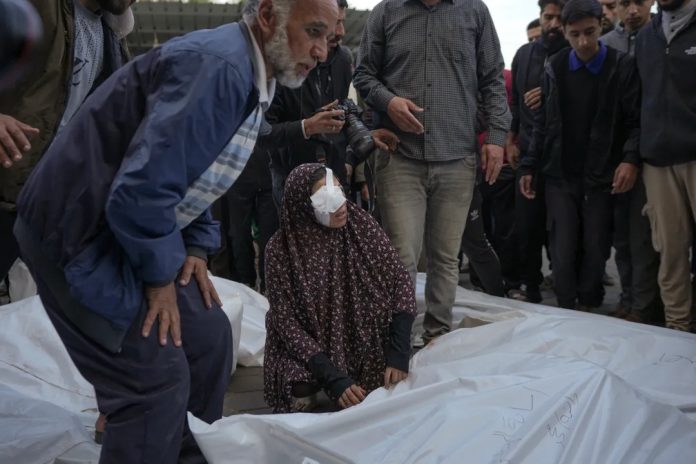
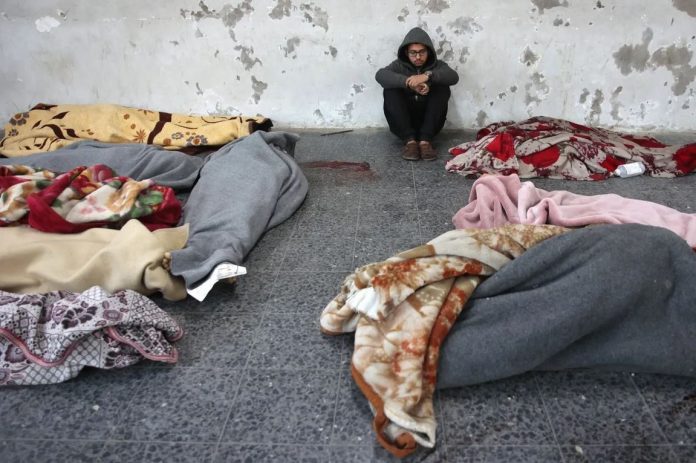
A suffocating Israeli blockade has brought deadly hunger to Gaza. The war, which has destroyed large parts of Gaza, has killed more than 45,000 people, according to local health authorities.

United Nations experts and several rights groups have accused Israel of committing genocide in Gaza – an effort to destroy the Palestinian people in part or in full.

The International Criminal Court last month issued arrest warrants for Netanyahu and his former Defence Minister Yoav Gallant over suspected war crimes in Gaza, including using hunger as a weapon of war.

But the US has remained unflinching with its support for its ally. A recent Brown University study estimated that the Biden administration provided $17.9bn to Israel to help fund the first year of the war on Gaza.

Tuesday’s congressional letter coincided with the filing of a lawsuit by Palestinians in Gaza, the West Bank and the US aiming to compel Washington end military support to Israeli army units engaging in human rights violations.

Assailant of women in Tehran executed

Iran Prison

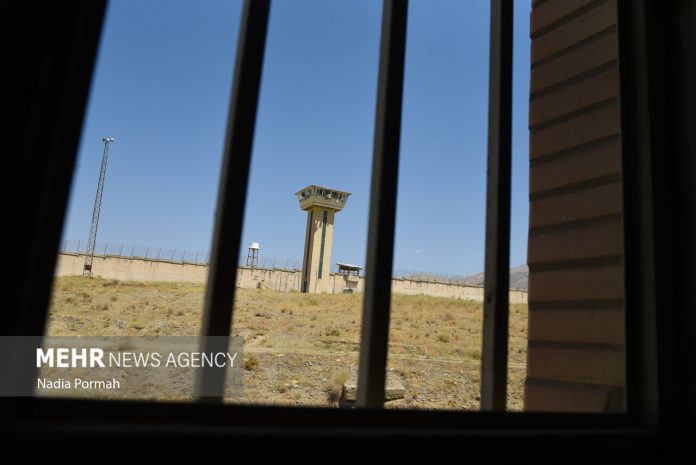
The execution of the assailant, identified as Rastgooyi Kondelaj, took place on Wednesday, the judiciary’s Mizan news agency reported.

In November 2018, multiple complaints from women across Tehran reported a motorcyclist attacking them. Kondelaj, who concealed his identity, approached women from behind on his motorcycle, injuring them with an awl before fleeing.

The case was prioritized by law enforcement and judicial authorities.

Following extensive police and judicial efforts, the culprit was arrested and the court confirmed the injuries following several sessions.

He was convicted of “spreading corruption on earth through terrorizing women in various parts of Tehran and injuring them” and sentenced to death and compensation for the victims.

Kondelaj appealed the verdict, but the Supreme Court upheld the death sentence. His request for a retrial was also denied.

UN special envoy warns war in Syria ‘has not ended’, citing clashes between various armed groups

Syria War

“There have been significant hostilities in the last two weeks, before a ceasefire was brokered,” Geir Pedersen told the UN Security Council in New York on Tuesday, warning that a military escalation could be “catastrophic”.

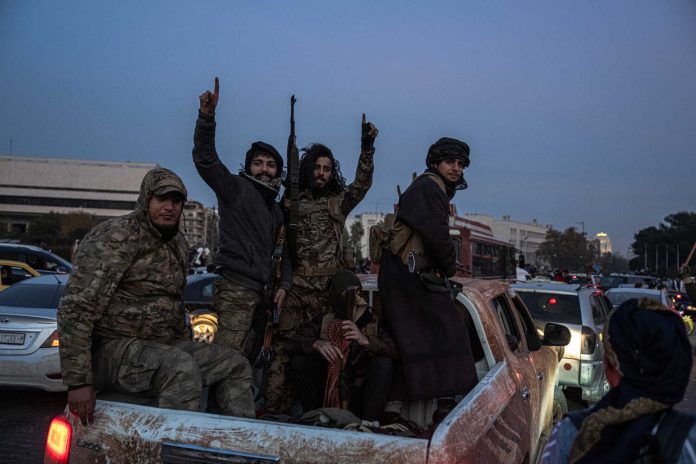
The remarks come after the Syrian National Army (SNA), a group of fighters backed by Turkiye, has battled with the Kurdish-led Syrian Democratic Forces (SDF) in the wake of al-Assad’s removal.

The SDF is the main ally in a United States-led coalition against ISIS (ISIL). It is spearheaded by the People’s Protection Units (YPG), which Ankara sees as an extension of the Kurdistan Workers’ Party (PKK) armed group that it outlaws and that has fought the Turkish state for 40 years.

Last week, SNA fighters seized the northern city of Manbij from the SDF, which then headed east of the Euphrates river as a US-mediated ceasefire came into effect.

Meanwhile, the members of the UNSC in a statement called for the implementation of “an inclusive and Syrian-led and Syrian-owned political process” that they said should meet the legitimate aspirations of all Syrians, protect all of them and “enable them to peacefully, independently and democratically determine their own futures”.

They emphasised battling “terrorism” across the country, stressed that Syria must abide by council resolutions on non-conventional weapons, and reiterated support for UN peacekeepers and the inviolability of diplomatic premises.

Separately, a US State Department spokesman said the ceasefire in northern Syria had been extended until the end of this week.

“We continue to engage with the SDF, with Turkey about a path forward,” State Department spokesperson Matthew Miller said, adding it was not in the interest of any party to see increased conflict in Syria.

Later on Tuesday, SDF commander Mazloum Abdi said in a post on X that the group was ready to present a proposal for a “demilitarised zone” in the northern city of Kobane, with the redeployment of security forces under US supervision.

He said the proposal aims to address Turkiye’s security concerns and ensure permanent stability in the area.

There was no immediate comment from Turkiye, the SNA or the US.

Pedersen also called on the UNSC to ensure that Israel “cease all settlement activity in the occupied Syrian Golan”.

Pedersen noted Israel has conducted more than 350 strikes on Syria following the departure of the former government, including a major strike on Tartous.

“Such attacks place a battered civilian population at further risk and undermine the prospects of an orderly political transition,” he said.

The UN envoy warned against plans announced by Israel’s cabinet to expand settlements inside the Golan, occupied by Israel since 1967 and annexed in 1981.

On Tuesday, Israeli Prime Minister Benjamin Netanyahu held a security briefing inside the UN-patrolled buffer zone in the Golan Heights that Israel seized earlier this month.

“Israel must cease all settlement activities in the occupied Syrian Golan, which are illegal. Attacks on Syria’s sovereignty and territorial integrity must stop,” said Pedersen.

Pederson also called for “broad support” to end the Western-backed sanctions imposed on Syria in order to allow for reconstruction in the war-ravaged country.

“Concrete movement on an inclusive political transition will be key in ensuring Syria receives the economic support it needs,” Pedersen stated.

“The needs are immense and could only be addressed with broad support, including a smooth end to sanctions, appropriate action on designations, too, and full reconstruction.”

Western countries are wrestling with their approach to Hayat Tahrir al-Sham (HTS), which spearheaded the takeover of Damascus and is a former al-Qaeda affiliate.

Despite moderating its rhetoric in recent months, HTS has been designated as a “terrorist” group by many Western governments.

Israeli PM says to occupy Syria buffer zone until ‘another arrangement’

Netanyahu made the comments on Tuesday from the summit of Mount Hermon, known as Jabal al-Shaykh in Arabic, the highest peak in the area — inside Syria, about 10 kilometers (6 miles) from the border with the strategic Golan Heights.

He was joined by the Israeli minister for military affairs, Israel Katz, Chief of Staff Lieutenant General Herzi Halevi, head of the so-called internal security service Shin Bet, Ronen Bat, and Northern Command chief Major General Uri Gordin.

Netanyahu reiterated that Israel would remain in the area “until another arrangement can be found that guarantees Israel’s security”.

The prime minister added he had been on the same mountaintop 53 years ago as a soldier, but the summit’s importance to the Tel Aviv regime’s security has only increased given recent events.

It appeared to be the first time a sitting Israeli leader had set foot that far into Syrian territory.

For his part, Katz said Israeli forces would remain on the Syrian summit of Mount Hermon for “as long as necessary”.

He added, “We will stay here for as long as necessary,” asserting that deployment of Israeli troops to the strategically significant summit “strengthens security.”

“Mount Hermon’s summit is Israel’s eyes for identifying near and distant threats. From here, we can see Hezbollah positions in Lebanon to the right, and Damascus to the left.”

Israeli military forces captured the UN-patrolled buffer zone in the Golan Heights hours after armed groups took control of the Syrian capital of Damascus on December 8.

Israel has been widely and vehemently condemned over termination of the 1974 ceasefire agreement with Syria, and exploiting the chaos in the Arab nation in the wake of Assad’s downfall to make a land grab.

The buffer zone in the Israeli-occupied Golan Heights was created by the United Nations after the 1973 Arab-Israeli War. A UN force of about 1,100 troops had patrolled the area since then.

Stephane Dujarric, spokesman for UN Secretary General Antonio Guterres, stated on Tuesday that the presence of Israeli soldiers, however long it lasts, violates the deal that established the buffer zone.

That agreement “needs to be respected, and occupation is occupation, whether it lasts a week, a month or a year, it remains occupation,” Dujarric pointed out.

Iran defends nuclear enrichment program against IAEA criticism

IAEA

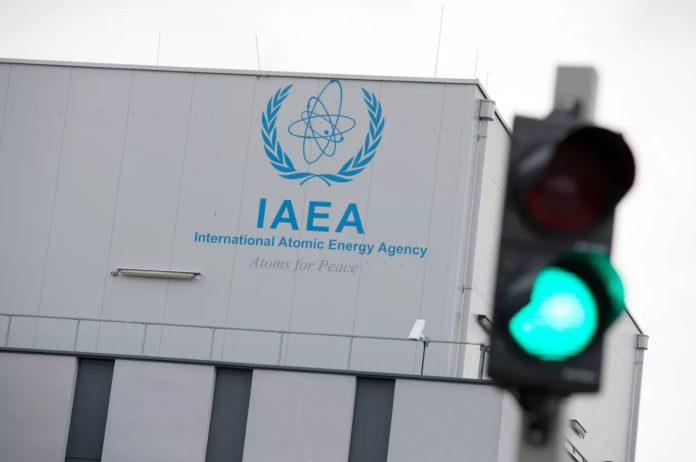
The assertion by Kazem Gharibabadi came on Tuesday night in response to remarks made by the IAEA Director General Rafael Grossi, who claimed that “Iran is enriching uranium close to military levels and is rapidly moving towards becoming a nuclear state.”

Grossi also suggested that the Joint Comprehensive Plan of Action (JCPOA) nuclear agreement is no longer relevant and requires a new framework.

In a tweet on X, Gharibabadi countered, stating that the IAEA chief should rely on factual and technical reports from agency inspectors rather than hypothetical scenarios.

The Iranian deputy foreign minister emphasized that Iran’s peaceful use of nuclear energy, including enrichment, is recognized internationally.

Criticizing Grossi’s remarks as politically charged, Gharibabadi highlighted that the failure of JCPOA parties to meet their commitments and the US’s unilateral withdrawal from the deal are the root causes of the current situation.

He stressed that constructive dialogue based on mutual respect and balanced commitments, including lifting sanctions, is the sustainable solution.

Israeli DM wants control over Gaza amid ceasefire deal push

Israeli Army

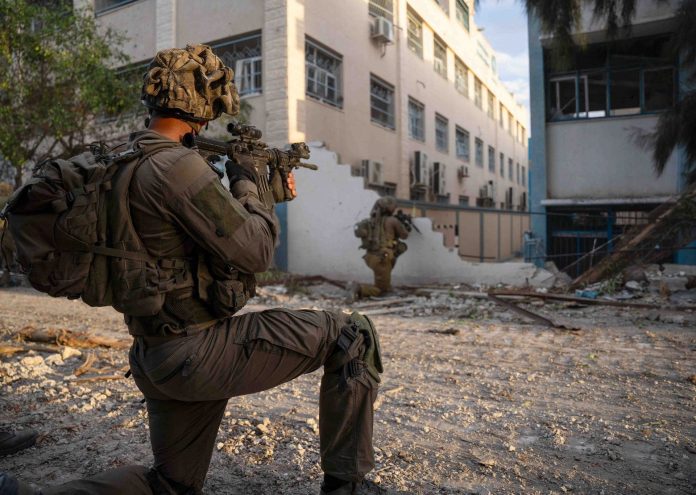
In a post made on X on Tuesday, Israel Katz said his government would “have security control over Gaza with full freedom of action just as it did in Judea and Samaria”, using the Israeli name for the occupied West Bank.

“We will not allow a return to the reality of before 7 October,” he added.

His comments came as Israeli daily newspaper Ynet reported that the military plans to maintain a presence in areas it currently occupies to prevent displaced Palestinians from returning to their homes in northern Gaza.

The report added that this meant that Israel was adopting the controversial “Generals’ Plan”, also known as the Eiland Plan, which would leave the area’s security under Israeli military control.

Human rights activists and experts have warned against the Israeli onslaught in northern Gaza, saying that it is “genocidal” and a “perversion of law”.

Proposed and promoted by a group of senior Israeli army reservists, the scheme involves forcibly displacing the entire population of northern Gaza and then besieging the area, including blocking the entry of humanitarian supplies, to starve out anyone left.

The plan’s stated aim is to defeat Hamas in the north, but it views civilians who choose to stay as legitimate military targets. Since 5 October, northern Gaza has been subject to a brutal siege, barring all humanitarian aid from entering.

Meanwhile, talks to secure a ceasefire and a prisoner exchange deal between Israel and Hamas have been progressing, according to several reports.

Hamas announced on Tuesday that it believes ceasefire negotiations have been productive enough for a ceasefire to be agreed, but only if Israel does not impose further conditions.

“The Islamic Resistance Movement, Hamas, confirms that in light of the serious and positive discussions taking place in Doha today, under the auspices of the Qatari and Egyptian mediators, reaching an agreement on a ceasefire and prisoner exchange is possible if the occupation stops adding new conditions,” the group said in a statement.

White House National Security Council spokesperson John Kirby also told Fox News on Tuesday that the deal is “getting closer”.

“We believe – and the Israelis have said this – that we’re getting closer, and no doubt about it, we believe that,” he added.

“But we also are cautious in our optimism,” he continued, stating, “We’ve been in this position before where we weren’t able to get it over the finish line.”

Israel’s war on Gaza has killed more than 45,000 people, most of the population has been driven from their homes multiple times and hundreds of thousands are at risk of famine.

Israel planning to conduct military operation against Yemen: KAN

Yemen Houthi

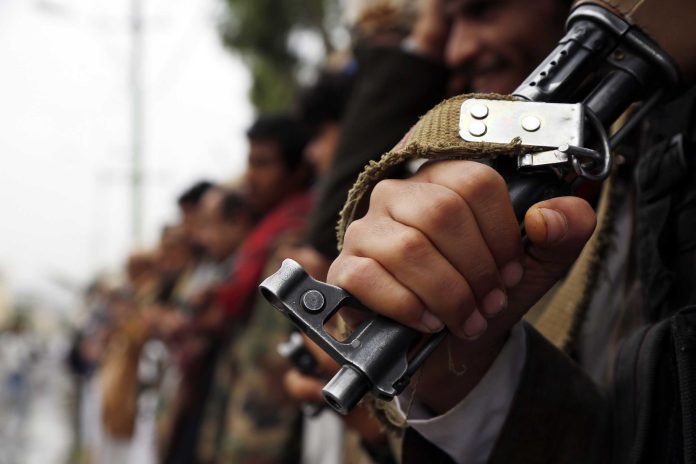
The Houthi movement, known officially as Ansar Allah, claimed to have struck a “military target” near Tel Aviv on Monday with a hypersonic ballistic missile.

The group’s military spokesman Yahya Saree declared in a televised address that the operation was a success, though Israeli media reported intercepting the missile before it entered its airspace.

The Houthis have been launching attacks against Israel since the outbreak of the war in Gaza last year. They say the attacks are in solidarity with Palestinians.

The Yemeni group has also targeted shipping lanes in the Red Sea, describing these operations as part of their efforts to pressure Israel into halting the war on Gaza.

Kan reported that the Israeli army recognised the escalating attacks from Yemen, claiming that it is “being orchestrated by Iran”.

“They are trying to promote significant damage to Israeli assets such as the seaports of Ashdod and Haifa, the power plants of the Israel Electric Corporation, and the gas rigs off the coast of Israel,” the broadcaster reported.

“The IDF (Israeli army) and the Air Force claim that it is necessary to act against the threat from Yemen, and this requires diverting intelligence attention and preparing operational arrays for this purpose,” it added.

Kan news has also indicated that such attacks from the Houthis were the group’s attempt at seizing “the lead in what remains of Iran’s evil axis in the region”.

“Iran is activating the Houthis, among other things, due to the availability of their capabilities,” the report noted.

The Houthi attacks against Israeli targets began on 19 October, 2023 and a month later they seized the Galaxy Leader carrier in the Red Sea off the coast of Hodeidah.

Galaxy Leader is owned by Tel Aviv-based Ray Shipping, and is registered in the UK’s Isle of Man, according to Lloyd’s List. Twenty five of the vessel’s crew members have been detained on board since then.

Israel called the capture of the Israel-owned ship an “act of terrorism”, while the United States and nine of its allies launched a naval task force to tackle Houthi attacks on western and Israeli-linked shipping last October.

The Houthis have continued their Red Sea attacks despite a campaign of air raids by the US-led military coalition since January to repel them.

Palestinians sue US gov’t over assistance to Israel’s military

The lawsuit, announced on Tuesday, accuses the Department of State of failing to implement a federal law that prohibits the transfer of funds to foreign military units engaged in gross violations such as extrajudicial killings and torture.

“The State Department’s calculated failure to apply the Leahy Law is particularly shocking in the face of the unprecedented escalation of Israeli [gross violations of human rights] since the Gaza War erupted on October 7, 2023,” the lawsuit reads.

Israel’s bombardment and ground operations in Gaza have killed more than 45,000 Palestinians since early October 2023, and the United Nations and the world’s leading rights groups have accused the Israeli military of carrying out war crimes, including genocide.

The lead plaintiff in the case, a Gaza teacher referred to by the pseudonym Amal Gaza, has been forcibly displaced seven times since the war began and 20 of her family members have been killed in Israeli attacks.

“My suffering and the unimaginable loss my family has endured would be significantly lessened if the US stopped providing military assistance to Israeli units committing gross violations of human rights,” she said in a statement accompanying the lawsuit.

The case centres around what’s known as the Leahy Law, a federal regulation that bars the US government from providing funds to foreign military units when there is “credible information” implicating them in gross violations of human rights.

Those violations include torture, extrajudicial killings, enforced disappearances and rape, the US State Department says in a factsheet explaining the law.

“We’re asking the government to obey the law,” Raed Jarrar, advocacy director at DAWN, a US nonprofit that campaigns for democracy and human rights in the Arab world and is supporting the plaintiffs in the case, told Al Jazeera.

For months, lawyers and human rights advocates have urged President Joe Biden’s administration to restrict assistance to the Israeli military amid multiple reports of violations against Palestinians in Gaza and the West Bank.

Rights groups have documented Israel’s use of US-made weapons in several deadly attacks in Gaza, including indiscriminate strikes that killed dozens of Palestinian civilians.

Palestinians in the West Bank have also experienced a surge in deadly Israeli military and settler violence since the Gaza war began with the UN’s humanitarian office reporting that 770 Palestinians were killed there from October 7, 2023, to the end of November 2024.

The US provides Israel with at least $3.8bn in military assistance annually, and researchers at Brown University in Providence, Rhode Island, recently estimated that the Biden administration provided an additional $17.9bn since the start of the Gaza war.

Observers said that if the US were to cut off that assistance, Israel would not be able to continue with its war effort.

“The violations committed by Israel are so widespread – very severe – that most if not all Israel’s [army] units will actually be deemed ineligible for US military assistance” if the Leahy Law were applied, Jarrar stated.

“If the US were to stop sending weapons, there is no way for Israel to continue its military operations,” he added.

But efforts to pressure Washington to apply the Leahy Law to Israel have largely failed.

This year, the Biden administration considered cutting off assistance to an Israeli army unit notorious for its use of violence against Palestinians in the West Bank as well as its involvement in the death of an elderly Palestinian American.

However, the State Department ultimately determined that the Netzah Yehuda Battalion could continue to receive American military aid after it said allegations of abuse had been “effectively remediated”.

The Leahy Law includes an exception that allows the US to resume assistance if the secretary of state determines – and reports to Congress – that the foreign government has taken “effective steps to bring the responsible members of the security forces unit to justice”.

State Department spokesman Matthew Miller said in August that Israel had provided new information in the Netzah Yehuda case, but he did not provide details. The decision to continue funding the unit fuelled widespread criticism.

While the Leahy Law should be applied equally to countries around the world, experts say Washington has created a specific set of procedures – via what’s known as the Israel Leahy Vetting Forum (ILVF) – that benefits the top US ally.

The US applies “a unique, complex, time-consuming, high-level Leahy process” for Israel, Charles Blaha, a former State Department official who was responsible for implementing the Leahy Law, explained in a June column on the website Just Security.

For example, while Leahy Law decisions are typically made by lower-level US government experts, in the case of Israel, the vetting involves higher-level, in-person meetings as well as formal requests for information to the Israeli government that slow down the process.

Blaha also explained that “information that for any other country would without question result in ineligibility is insufficient for Israeli security force units”.

As a result, in the four years since the ILVF held its first meeting, the process “has failed to approve the identification of a single ineligible Israeli unit”, Blaha noted.

Ahmed Moor, a Palestinian American plaintiff in the case, said he got involved in the proceedings over fears for his loved ones in the Gaza Strip.

“My surviving family members in Gaza have been forcibly displaced four times, … living in constant fear of indiscriminate Israeli attacks carried out with American weapons,” Moor said in a statement.

“The US government’s military assistance to these abusive Israeli forces, which our own laws prohibit, is enabling these Israeli harms to me and my family.”

Ultimately, the lawsuit is asking a US federal court judge to declare the State Department’s actions as well as its ILVF procedures “arbitrary, capricious, an abuse of discretion” and not in accordance with the law.

It is also asking the judge to order the US government to send Israel a list of military units that are not eligible to receive American assistance and issue an injunction prohibiting Washington from providing aid to units that have committed rights violations.

While other legal attempts to end US support for Israel have been blocked by the courts on the grounds that the judicial branch has no say over foreign policy decisions, Jarrar noted that the case is asking for an administrative law to be applied.

Tuesday’s lawsuit was filed under what’s known as the Administrative Procedure Act. “This is not an issue of foreign policy. It’s not an issue of politics,” Jarrar said.

“We’re just asking the judge to instruct the State Department to obey the law.”