Tuesday, December 23, 2025
Home Blog Page 58

Iran FM urges UN to hold US, Israel accountable for ‘crime of aggression’ against Tehran

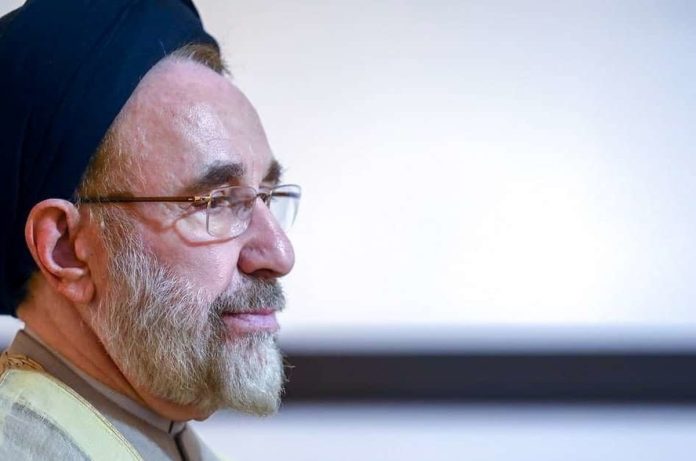
Abbas Araghchi

The Iranian foreign minister described the aggressive moves by the Zionist regime and the US against Iran, which resulted in the martyrdom of more than 1,100 innocent people, the injury of many others, and extensive material damage, as a flagrant violation of the principles of the UN Charter and the fundamental rules of international law.

Referring to the unlawful and criminal attacks against Iran’s peaceful nuclear facilities under the safeguards of the International Atomic Energy Agency (IAEA), Araghchi also considered them a clear violation of the UN Charter, the final documents of the Review Conferences of the Treaty on the Non-Proliferation of Nuclear Weapons (NPT), IAEA resolutions (including Resolutions 444 and 533), and Security Council Resolution 487 (1981).

In his letter, Araghchi explained that the international responsibility for the violations lies not only with the Israeli regime but also with the US, due to its direct participation and leadership in the attacks. He stressed that the US is obliged to fully compensate for the material and moral damages caused by the violations against Iran and its citizens.

The Iranian foreign minister further noted that the admission of the US president to participation and leadership in the crime of aggression by the Zionist regime against Iran entails individual criminal responsibility for the US president and any other American officials or individuals involved in these gross violations of international law.

He stated that, through committing the crime of aggression, directing attacks against Iranian citizens, including women and children, scientists, university professors, journalists, and prisoners, and deliberately targeting civilian objectives such as hospitals and ambulances, the Iranian national broadcasting center, a prison, and energy infrastructure including peaceful nuclear facilities, they have committed war crimes.

Araghchi emphasized in the letter the inherent right of the Islamic Republic of Iran to pursue accountability through all legal channels against responsible states and individuals, as well as to seek compensation for the damages incurred.

Iranian and Russian FMs discuss issues of mutual interest on the phone

Araghchi and Lavrov discussed the state of bilateral relations, reaffirming the firm determination of their countries to expand cooperation in all areas of mutual interest.

Araghchi expressed concern over the recent clashes between Afghanistan and Pakistan. He stressed the importance of constructive regional efforts to safeguard peace and stability, and called for enhanced dialogue and cooperation among regional countries in this regard. Araghchi also underlined the need for continued consultations between Iran and Russia, as well as with other regional partners, to explore ways of preserving peace and stability.

The top Iranian diplomat referred to the recent moves by the US and certain European countries at the UN Security Council regarding Palestine, including a draft resolution that would impose an international trusteeship over Gaza and Palestine. Araghchi warned that such initiatives contradict the Palestinian people’s right to self-determination and are doomed to fail.

For his part, Lavrov underscored the importance of strengthening cooperation among regional countries to maintain collective security. He further reaffirmed Moscow’s readiness to continue bilateral and regional consultations toward this goal.

The two foreign ministers also pointed to the upcoming meeting of the IAEA Board of Governors, exchanging views on Iran’s cooperation with the International Atomic Energy Agency. Araghchi and Lavrov underlined the need to maintain coordination and cooperation among Tehran, Moscow, and Beijing in this regard.

Official: Around 500 Afghan nationals caught and repatriated daily from Iran’s border

Afghan Refugee in Iran

Speaking to IRNA news agency on Thursday, Shamaghdari said tighter visa regulations for Afghan citizens have led to a sharp rise in illegal border crossings, with the number of unauthorized entries into Khorasan Razavi, bordering Afghanistan, more than doubling in recent months.

He noted that border guards apprehend these individuals, record their biometric data, and then repatriate them to Afghanistan.

“Thanks to the vigilance of our border forces, those who attempt to enter illegally are quickly identified and returned,” he added.

According to the official, over one million Afghan citizens have been repatriated through the Dogharoon border crossing since the beginning of the current Iranian year, in mid-March.

Shamaghdari also reported significant progress in fortifying and modernizing the province’s borders, including the installation of night-vision cameras, radar systems, and other surveillance technologies, which have enhanced security and reduced human resource risks.

Khorasan Razavi shares 835 kilometers of border with Turkmenistan and Afghanistan, including 297 kilometers under the Taybad border regiment’s jurisdiction.

US knew Israeli officials discussed use of human shields in Gaza: Reuters

Israel Army

The information was shared with the White House and analysed by the intelligence community in the final weeks of former President Joe Biden’s administration, the officials said.

International law prohibits the use of civilians as shields during military activity.

Israel’s use of Palestinians as human shields in Gaza and the occupied West Bank has been documented on multiple occasions, but Wednesday’s Reuters report is a rare acknowledgement that Washington collected its own evidence on the subject.

The officials, who spoke on condition of anonymity to discuss sensitive national security information, did not provide details on whether the Palestinians referenced in the intelligence were prisoners or civilians.

In May this year, seven Palestinians who had been used as human shields in Gaza, as well as the occupied West Bank, shared testimonies in a report published by The Associated Press.

In June 2024, video footage verified by Al Jazeera showed Israeli soldiers tied a wounded Palestinian man, Mujahed Azmi, to the front of a military jeep and drove him past two ambulances during a raid on the city of Jenin, in the occupied West Bank.

Israel was questioned at the United Nations on Tuesday and Wednesday over multiple reports alleging the torture of Palestinian detainees, in particular since the Hamas attacks of October 7, 2023.

Twenty-eight Israeli officials appeared in front of a panel of 10 UN experts on torture in Geneva.

Israel has repeatedly been accused of using torture during its two-year war on Gaza.

In one instance, a video leaked from its infamous Sde Teiman military prison appeared to show Israeli soldiers raping a Palestinian detainee.

In addition, dozens of dead bodies of Palestinian detainees that have been returned to Gaza since the start of a ceasefire have exhibited signs of torture.

The UN Committee Against Torture will issue a non-binding summary of its findings on the allegations against Israel at the end of November.

US issues Iran-related missile and drone sanctions

Iran US Flags

A total of 32 individuals and entities based in Iran, the United Arab Emirates, Turkey, China, Hong Kong, India, Germany and Ukraine that operate multiple procurement networks are being targeted in Wednesday’s designations, the Treasury Department said in a statement.

“These networks pose a threat to U.S. and allied personnel in the Middle East and to commercial shipping in the Red Sea,” the department added.


Iran urges UN action after Trump acknowledges role in Israeli attacks

Abbas Araghchi

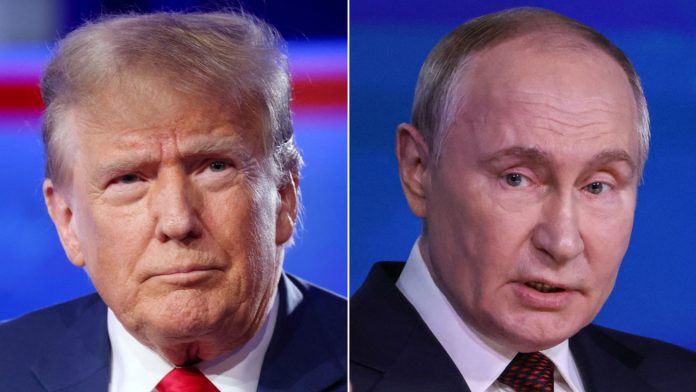
Araghchi’s letter, addressed to the world body’s secretary-general on Tuesday, cited a remark by Trump on November 6, in which the latter had said, “Israel attacked [Iran] first. That attack was very, very powerful. I was very much in charge of that.”

The top diplomat then asserted that under the international law, this constituted clear evidence of US direction and control over the military strikes carried out by the Israeli regime.

The letter referenced prior communications sent by the Islamic Republic to the Security Council on June 13, 22, and 28, in which Tehran had likewise protested the “brazen acts of aggression” committed by Washington and Tel Aviv from June 13 to 24 against the Iranian soil.

According to Araghchi, the attacks targeted Iranian civilians, infrastructure, and facilities, including peaceful nuclear sites under the International Atomic Energy Agency (IAEA)’s safeguards, resulting in the martyrdom of more than 1,100 people and injuries to many others.

The official stressed that the strikes violated multiple international legal frameworks, including Article 2(4) of the UN Charter, IAEA resolutions, and UN Security Council Resolution 487 (1981).

He held that responsibility for these violations rested not only with the regime, but also with the US, which – in line with Trump’s admission – directed and controlled the Israeli aggression.

Araghchi’s letter called on the US to provide full reparation for the damages caused, including both material and moral compensation, under established international law.

The correspondence further asserted that Trump and other US officials bore individual criminal responsibility for war crimes, including the crime of aggression, deliberate attacks on civilians, targeting of senior military officers, and assaults on hospitals, media centers, prisons, and energy infrastructure.

The letter also emphasized that accountability extended to Israeli officials involved in commanding, ordering, or assisting in the war crimes.

“The Islamic Republic of Iran reserves its full and unimpeachable right to pursue, through all available legal means, the establishment of accountability for the responsible States and individuals and to secure compensation for the damages sustained,” Araghchi wrote.

He concluded by urging the UN secretary-general and Security Council to take appropriate measures to ensure accountability for both the United States and the regime, underscoring the need to bring the perpetrators of these crimes to justice.

The foreign minister requested that the letter be circulated as an official Security Council document, reinforcing Iran’s call for international recognition and response to the violations.


Mohammed Shia al-Sudani’s coalition comes first in Iraqi parliamentary election

The Independent High Electoral Commission said on Wednesday that al-Sudani’s Reconstruction and Change coalition received 1.3 million votes in Tuesday’s election, about 370,000 more than the next closest competitor.

Speaking after the initial results were announced, al-Sudani hailed the voter turnout of 56 percent, saying it was “clear evidence of another success” that reflected the “restoration of confidence in the political system”.

However, while al-Sudani, who first came to power in 2022, had cast himself as a leader who could turn around Iraq’s fortunes after decades of instability, the poll was marked by disillusionment among weary voters who saw it as a vehicle for established parties to divide Iraq’s oil wealth.

Turnout was lower in areas like Baghdad and Najaf after populist Shia leader Muqtada al-Sadr, leader of the Sadrist Movement, called on his vast numbers of supporters to boycott the “flawed election”.

As expected, Shia candidates won seats in Shia-majority provinces, while Sunni candidates secured victories in Sunni-majority provinces and Kurdish candidates prevailed in Kurdish-majority provinces.

But there were some surprises, notably in Nineveh, a predominantly Sunni Arab province, where the Kurdistan Democratic Party (KDP) secured the highest number of seats.

Meanwhile, in Diyala province, which has a significant Kurdish minority, no Kurdish candidates won seats for the first time since 2005.

No party can form a government on its own in Iraq’s 329-member legislature, so parties build alliances with other groups to become an administration, a fraught process that often takes many months.

Back in 2021, al-Sadr secured the largest bloc before withdrawing from parliament following a dispute with Shia parties that refused to support his bid to form a government.

The poll marked the sixth election held in Iraq since a United States-led invasion in 2003 toppled longtime ruler Saddam Hussein and unleashed a sectarian civil war, the emergence of the Daesh group and the general collapse of infrastructure in the country.

The next premier must answer to Iraqis seeking jobs and improved education and health systems in a country plagued by corruption and mismanagement.

He will also have to maintain the delicate balance between Iraq’s allies, Iran and the US, a task made all the more delicate by recent seismic changes in the Middle East.


Trump formally asks Israel’s president to pardon Netanyahu after Gaza ceasefire

Trump Netanyahu

Trump’s letter on Wednesday comes a month after the US-brokered ceasefire came into effect in Gaza, ushering in a fragile truce amid daily Israeli attacks and aid restrictions.

In his letter, the US president cited Netanyahu’s leadership in the war, an assault that killed more than 69,000 Palestinians, including at least 20,000 children, and which United Nations investigators have described as a genocide.

“I hereby call on you to fully pardon Benjamin Netanyahu, who has been a formidable and decisive War Time Prime Minister, and is now leading Israel into a time of peace, which includes my continued work with key Middle East leaders to add many additional countries to the world changing Abraham Accords,” Trump wrote.

Several Israeli media outlets posted a copy of the letter on Wednesday.

With the letter, Trump inserts himself further into domestic Israeli politics, appearing to push to reward the Israeli prime minister for agreeing to the ceasefire.

The call also highlights Trump’s growing support for fellow right-wing leaders internationally. Earlier this year, the US bailed out the Argentinian economy under President Javier Milei with $40bn.

In Wednesday’s letter, Trump reiterated the false notion that he secured peace in the region for “at least 3,000 years”.

The US president made a similar call for ending the corruption case against Netanyahu when he spoke to the Israeli parliament, the Knesset, last month.

But he was more direct in addressing the Israeli president in the letter.

“Isaac, we have established a great relationship, one that I am very thankful for and honoured by, and we agreed as soon as I was inaugurated in January that the focus had to be centred on finally bringing the hostages home and getting the peace agreement done,” Trump wrote.

“Now that we have achieved these unprecedented successes, and are keeping Hamas in check, it is time to let Bibi unite Israel by pardoning him, and ending that lawfare once and for all.”

The Israeli presidency is mostly a ceremonial post, but the president retains the power to grant pardons.

However, with Netanyahu’s trial ongoing, Herzog cannot issue a pardon until a verdict is reached.

Herzog responded to Trump’s letter on Wednesday, saying that a pardon must be requested through a designated process.

“The president holds great respect for President Trump and repeatedly expresses his appreciation for Trump’s unwavering support of Israel and his tremendous contribution to the return of the hostages, the reshaping of the Middle East and Gaza, and the safeguarding of Israel’s security,” the Israeli president’s office announced.

“Without detracting from the above, as the president has made clear on multiple occasions, anyone seeking a pardon must submit a formal request in accordance with the established procedures.”

Trump himself has faced criminal charges, including over election interference, after his first presidency, which he has described as a “witch hunt”.

Israel-backed militia to oversee ‘rehabilitation’ of Rafah city in Gaza: Report

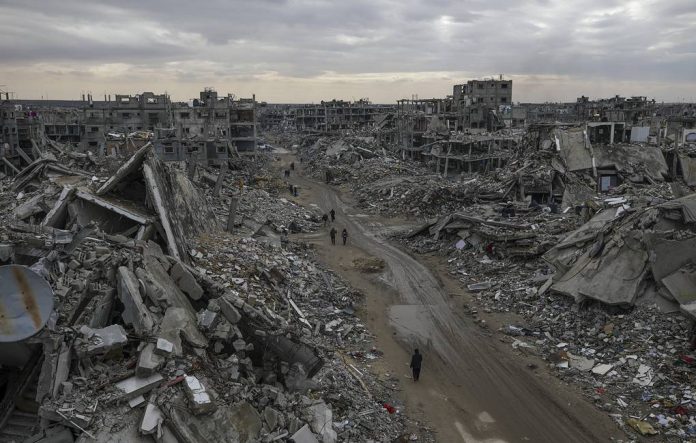
Gaza War

Kan News reports that the Popular Forces – a militia led by former smuggler Yasser Abu Shabab – have been given the go-ahead by Israel to facilitate the work in areas it controls.

Two Israeli sources, speaking to the outlet, confirmed the plan while adding that the Israeli government did not have a wider plan for the anti-Hamas militias operating in Gaza following the army’s long-mooted withdrawal from the enclave.

Abu Shahab has characterised the Popular Forces as a group of Palestinians opposed to Hamas’s rule in the Gaza Strip.

However, there have been numerous reports of the group engaging in extortion, looting of humanitarian aid and coordinating with the US-backed Gaza Humanitarian Fund (GHF), which has been accused of overseeing the deaths of hundreds of Palestinians at aid sites.

Some members of the group also reportedly have links to the Islamic State group.

Israel has provided support for the Popular Forces alongside a range of other militias that have increasingly sprung up across Gaza as part of an attempt to undermine Hamas’s hegemony over the enclave.

A Palestinian source familiar with the matter told Kan that associates of Abu Shabab also took part in meetings with senior American officials.

Areas of Gaza controlled by the Popular Forces have enjoyed access to aid and resources that have been otherwise denied to the starvation-stricken enclave.

This is largely due to theft of aid, with an internal 2024 UN report identifying the group as “the most influential stakeholders behind the systematic and massive looting of convoys”.

Despite the announcement of a ceasefire in October, Israel has carried out repeated attacks in Gaza, leaving at least 242 dead, according to the Palestinian health ministry.

Since October 2023, Israel has killed more than 69,179 people, including over 20,000 children, in the Gaza Strip, in a military campaign that has been widely characterised as a genocide.


Afghanistan economic recovery buckles as 9 in 10 families go hungry or into debt: UNDP

A United Nations Development Programme report said nearly one in 10 overseas Afghans has been forced back home, with more than 4.5 million returnees since 2023, mainly from Iran and Pakistan, swelling the population by 10%. On top of that, earthquakes, floods and drought have destroyed 8,000 homes and strained public services “beyond their limits.”

A survey of more than 48,000 households found that more than half of Afghanistan’s returnees have skipped medical care to buy food and 45% rely on open springs or unprotected wells for water.

Nearly 90% of returning Afghan families are in debt, owing $373 to $900, up to five times the average monthly income of $100 and nearly half of annual per-capita gross domestic product, the UNDP added.

In areas with high numbers of returnees, one teacher serves 70 to 100 students, 30% of children work and joblessness among returnees reaches 95%. The average monthly income is 6,623 Afghanis ($99.76), while rents have tripled.The UNDP warned that without urgent support to strengthen livelihoods and services in high-return areas, overlapping crises of poverty, exclusion and migration will deepen.

It said sustaining aid is critical as donor pledges have plunged since 2021, covering only a fraction of the $3.1 billion that the UN sought for Afghanistan this year.

The Taliban government appealed for international humanitarian assistance after a deadly quake struck eastern Afghanistan in September and it has formally protested Pakistan’s mass expulsion of Afghan nationals, saying it is “deeply concerned” about their treatment.

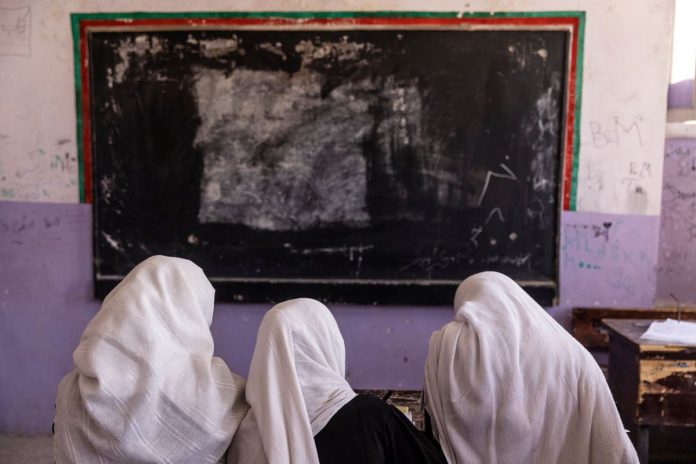
Participation by women in Afghanistan’s labour force has fallen to 6%, one of the lowest globally, and restrictions on movement have made it nearly impossible for women who head households to access jobs, education or healthcare.

Kanni Wignaraja, UN assistant secretary-general and UNDP regional director for Asia and the Pacific, stated, “In some provinces one in four households depend on women as the main breadwinner, so when women are prevented from working, families, communities, the country lose out.”

Households headed by women, accounting for as many as 26% of returnee families in some districts, face the highest risk of food insecurity and secondary displacement.

The UNDP urged Taliban authorities to allocate more resources and called on donors to lift restrictions on female aid staff.

“Cutting women out of frontline aid work means cutting off vital services for those who need them most,” Wignaraja added.