Saturday, January 17, 2026
Home Blog Page 554

Trump redesignates Yemen’s Houthis as foreign terrorist organization

Yemen Houthi

Trump signed an executive order that starts the process to relist the group as an FTO in the coming weeks. The White House cited “Houthi rebels’ attacks on U.S. Navy ships, commercial vessels and civilian infrastructure in the Middle East”.

The move puts back in place the designation that Trump imposed on the Houthis, officially known as Ansar Allah, during his first term. The action was reversed by the Joe Biden administration over concerns that blacklisting the militant group would prevent aid from getting into Yemen.

The designation is intended to disrupt financial support to such a group, giving the Treasury Department more latitude to issue sanctions and signal to other foreign governments, people or businesses that they could lose access to the U.S. financial system if they engage with the sanctioned group.

Wednesday’s order also directed the U.S. Agency for International Development (USAID) and the secretary of State to review any United Nations affiliates, contractors and nongovernmental organizations operating in Yemen. The White House announced Trump would direct USAID to end its relationship with any groups that make payments to the Houthis following that review.

Trump’s designation of the Houthis as an FTO during his first term drew rare pushback from Republicans in Congress, largely over humanitarian concerns.

The Biden White House last week in one of its final foreign policy actions designated the Houthis as a specially designated global terrorist group. The move was not set to take effect for 30 days, but it was touted as a way to restrict the Houthis’ funding and access to financial markets.

The Houthis have stressed their attacks are in support of the Palestinian people in the Gaza Strip.

Iran’s Interests Section Office prioritizes assistance to Los Angeles Iranians

US Fire

Expressing sympathy for those impacted by the fires in an exclusive interview with IRNA, Abolfazl Mehrabadi stated that the office has communicated various means of assistance to the affected individuals.

He emphasized that many Iranians who lost their documents and passports in the initial fires received expedited, cost-free replacements.

Highlighting the significant losses faced by many Iranians in Los Angeles, particularly those in the real estate and car dealership industries, Mehrabadi noted that some individuals lost multiple residential units.

Despite this, there is no precise data on the number of affected individuals or the extent of the damages at this time, he added.

According to latest figures, over 500,000 Iranians live in Los Angeles.

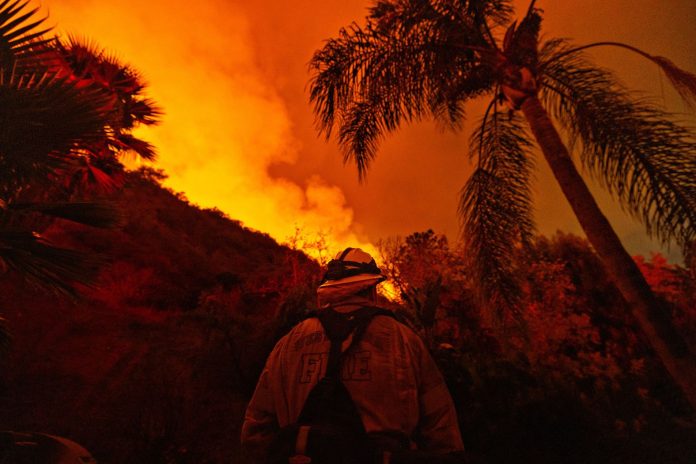
The recent fire incident in Los Angeles, known as the Hughes Fire, started on January 22. Fueled by strong winds and severe drought conditions, the fire rapidly grew from 500 acres to over 9,000 acres in just a few hours.

IAEA chief says Atomic agency has no evidence of Iran’s ‘building a nuclear weapon’

Rafael Grossi

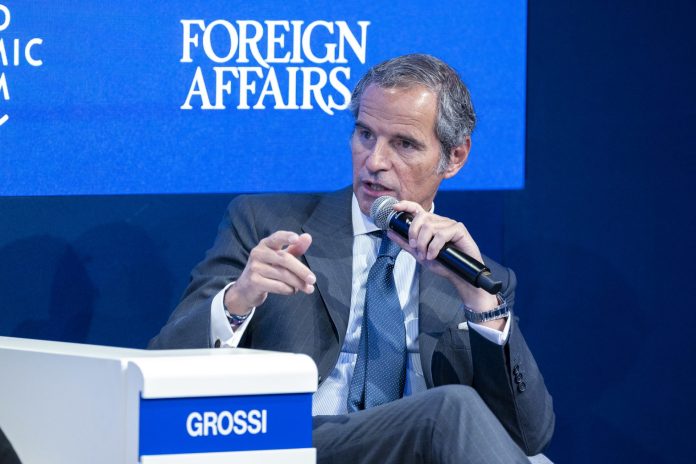
Rafael Grossi made the remarks on Wednesday on the sidelines of the World Economic Forum in Davos, Switzerland.

The remarks verified the nuclear body’s record of invariably verifying non-diversion and peaceful nature of the Islamic Republic’s nuclear energy program.

Grossi, however, reiterated the body’s apparently-Western-driven propaganda claiming that the country had accumulated a vast amount of enriched uranium, which was “very, very close” to weapon-grade.

The allegations, however, run directly counter to Iran’s insistence of implementing its doctrine of non-pursuance of non-conventional arms as per religious concerns and a relevant fatwa (religious decree) issued by Leader of the Islamic Revolution Ayatollah Seyyed Ali Khamenei.

In December, the country’s security chief asserted that the Islamic Republic’s nuclear doctrine of pursuing peaceful energy and opposing pursuance of atomic weapons had remained “unchanged.”

“Based on the relevant observation of Iran’s Leader Seyyed Ali Khamenei, the country’s nuclear doctrine has remained unchanged,” said Ali-Akbar Ahmadian, head of Iran’s Supreme National Security Council (SNSC).

Grossi also repeated other Western claims about Iran’s alleged insufficient cooperation with the IAEA.

“We have not been having the full cooperation of Iran in clarifying a few important things about the past and perhaps the present activities,” he added.

Back in November, the United States and its allies pushed the IAEA’s Board of Governors into passing a resolution, which repeated the unfounded accusations against the Islamic Republic of such alleged insufficient cooperation.

The accusations fly in the face of the actual level of Tehran’s cooperation with the body, which has increased in frequency and quality over the past years.

Responding to such hostile claims and measures, the Islamic Republic has advised the nuclear watchdog towards preserving its impartiality.

Grossi concluded his remarks by saying that with Donald Trump being sworn in as the US president, “there is expectation that things may be moving again…,” apparently referring to the prospect of Washington’s returning to the negotiation table with the aim of restoring the 2015 nuclear deal between Tehran and world countries.

The US left the deal in a unilateral and illegal step in 2018, prompting Iran to initiate a set of legitimate countermeasures after a period of strategic patience.

The Islamic Republic has repeatedly stressed that it has never functioned as the side to leave negotiations, while declaring it would respond positively to any potential positive steps by the counterparty.

President Pezeshkian emphasizes national unity in face of enemies

Masoud Pezeshkian

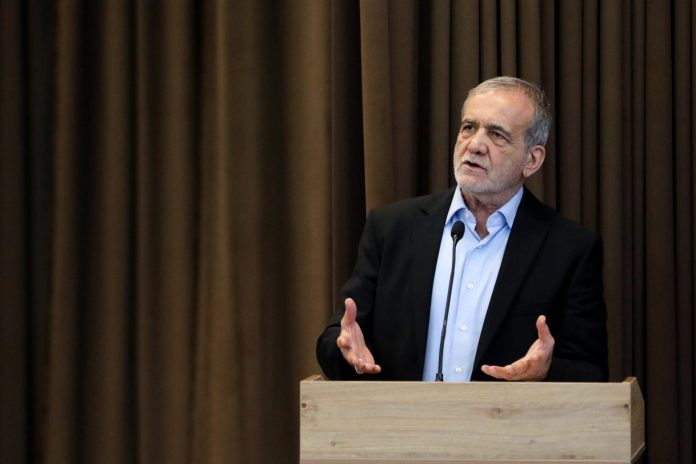
Speaking in a meeting with political, social and cultural activists in the city of Ahvaz, southwestern province of Khuzestan, on Wednesday evening, Pezeshkian called on the Iranian people to enhance unity and join hands to build their country in order to disappoint enemies who seek to take advantage of internal disputes in Iran.

He arrived in the province earlier in the day on the third provincial trip since taking office in late July.

The enemies analyze that Iran is in its weakest status, and seek to take advantage of disputes and division inside the country, he said, stressing, “We should join hands and build Iran with unity and cohesion in order to disappoint the enemy.”

Pezeshkian added that disputes and egotism are the root causes of many problems and lack of success in the country, adding that people should accept that they are all part of a group, and that success is achieved in light of cooperation and empathy.

The president warned that if the problems remain unresolved and persist, “enemies would take every opportunity to harm us”, and they would be able to protect their own interests through disunity in Iran.

“This is the only result that comes from internal disputes and lack of empathy,” Pezeshkian continued, warning that this is a serious threat endangering “our ethnic and cultural identities” and all of the things that enhance cohesion across the country.

The president also highlighted the significance of revising management methods and promoting the atmosphere of cooperation as the factors needed to resolve the existing problems.

As to the issues faced by Khuzestan Province, he stated that all groups should cooperate to address those issues, and added that the administration is also ready to delegate authority to those who can do effective measures, provided that factional politics are put aside and steps are taken in the best interests of the country.

Iran FM lashes out at UN chief, reiterates commitment to nuclear non-proliferation 

Abbas Araghchi

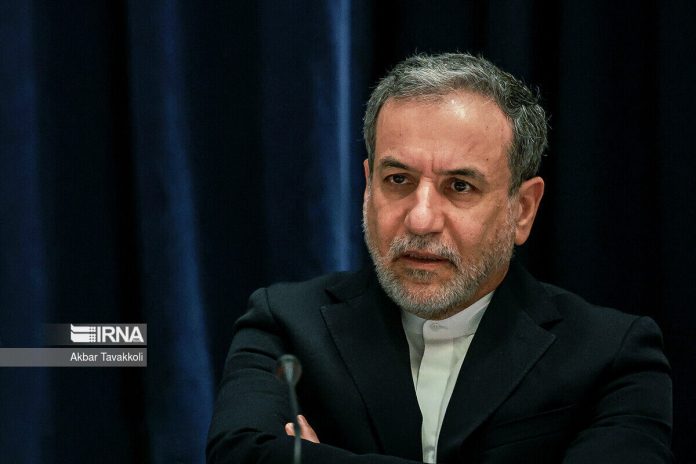
In a statement on X, Araghchi wrote, “It is audacious to preach that Iranianisms must “once and for all make it clear that they will renounce to have nuclear weapons.”

He noted, “Iran’s longstanding commitment to the global nonproliferation regime is clear,” adding, “Iran, in 1968, signed the NPT as a founding member.”

The foreign minister also pointed out that Iran’s Leader has issued a religious decree outlawing all weapons of mass destruction.

Araghchi also referenced Iran’s 2015 signing of the Joint Comprehensive Plan of Action (JCPOA), saying it “imposed the most intrusive inspection regime in IAEA history.”

He explicitly stated: “Iran reaffirms that under no circumstances will ever seek, develop or acquire any nuclear weapons.”

The foreign minister concluded, “The ‘most relevant question’ in our region is Israel’s genocide in Gaza and occupation of Palestinian, Syrian, and Lebanese territory. It is Israel’s actual nuclear arsenal and refusal to join the NPT which is a threat to the world. This must not be normalized or whitewashed.”

Israeli military, Palestinian Authority besiege, raid Jenin hospitals in West Bank

Israel Palestine

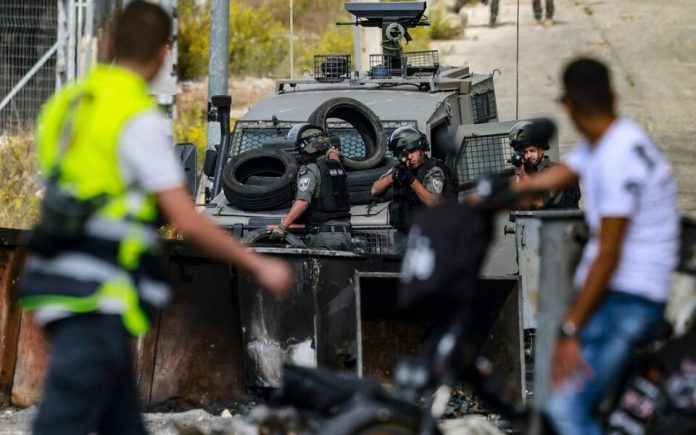
Medical teams attempting to provide care have come under direct Israeli fire, while paramedics have been obstructed from reaching the dead and wounded, who remain strewn across the streets.

Israeli forces have killed at least 10 Palestinians and wounded 40 since the attack began on Tuesday morning, according to the Palestinian Ministry of Health.

Amid the raid, Israeli military bulldozers destroyed the main road leading to the Jenin government hospital, blocking access with dirt barriers.

Wissam Bakr, the hospital’s director, told Middle East Eye that the bulldozers had made it difficult for medical teams to enter or exit.

More than 600 displaced individuals had sought refuge in the hospital, which was surrounded by military forces and cut off from receiving any food for an entire day.

“The situation was tragic last night,” Bakr added.

“The hospital was overwhelmed with displaced people and patients, and the Israeli army had surrounded it on all sides. We feared they would storm it or start shooting.”

Although hospital sieges have occurred during previous military raids, this one is described as the harshest yet.

Hundreds of displaced people arrived at the hospital as the incursion began, with many forced to sleep in its corridors.

Despite attempts by the hospital administration to coordinate the delivery of food, the Israeli military prevented it from reaching those inside.

On Wednesday morning, the Israeli army allowed some displaced people to leave the hospital on foot but only after subjecting them to searches and arresting several individuals, according to Bakr.

Iyad Salahat, who was accompanying his sick mother at the hospital during the attack, recounted the fear and uncertainty amid the siege.

The loud noise of military vehicles and bulldozers, combined with threats over loudspeakers, made him fear the hospital could face the same fate as those destroyed by Israeli forces in Gaza.

“We didn’t know what to do and began to imagine what happened in Gaza’s hospitals,” Salahat told MEE.

“Will they storm the hospital? Will they evacuate us? Will they kill the doctors or arrest them? Everything seemed possible.”

Salahat and his family were among those permitted to leave on Wednesday.

“They divided us into groups of five each, then searched us thoroughly and forced us to take off our clothes,” he explained.

“They arrested at least 10 of those who came out and forced us to walk in one line.”

He added that an Israeli drone was flying overhead, seemingly helping soldiers with inspections.

At the al-Amal hospital in Jenin, the Israeli siege was more violent, with soldiers firing indiscriminately into the courtyard, wounding at least three doctors and two hospital workers.

Their injuries were described as moderate to minor.

Ihsan Rawajba, a receptionist at the hospital, described the situation as chaotic, with gunfire echoing through the hospital grounds on Tuesday.

A nurse was shot behind the hospital and left bleeding until a paramedic was able to rescue him, Rawajba told MEE.

The shooting was random and without warning, he added.

The hospital remains under strict siege, with no one allowed to enter or leave except one ambulance, which is subject to inspection every time it moves in or out.

“We are forced to bring food to those inside the hospital via this ambulance, but its staff is threatened all the time,” Rawajba said.

“We can only accept new casualties under the inspection and supervision of the Israeli army,” he continued.

Separately, PA security forces stormed al-Razi hospital in Jenin on Wednesday and arrested a wounded man believed to be a member of the Jenin Battalion and wanted by the Israeli army.

The PA raid appeared to be the first time Palestinian forces publicly participated in an Israeli military assault in the West Bank.

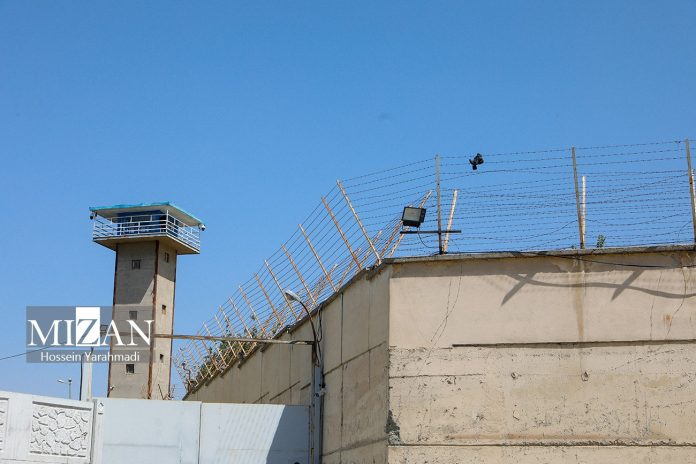
Swiss national who died in prison photographed sensitive military facilities: Iran

Iran Prison

Judiciary spokesperson Asghar Jahangir told reporters during a news conference on Wednesday that the unnamed man entered Iran through the Dogharoun border crossing with Afghanistan in northeastern Razavi Khorasan Province last year.

His vehicle had “a variety of technical equipment with difficult uses” and he entered as a tourist, Jahangir said.

Swiss officials, who had previously confirmed the man’s death, had identified him as a 64-year-old who had been visiting the country as a tourist. They said he had been living in Southern Africa and had not resided in Switzerland for nearly two decades.

The Iranian judiciary spokesperson stated on Wednesday that the man was born in Namibia, held Swiss citizenship, and entered in the Iranian calendar month of Mehr, which ended on October 21.

“The person entered the province of Semnan after passing through several provinces, and was arrested in a prohibited military site while photographing it. He was arrested on charges of photographing restricted resources and cooperation with a hostile government and was moved to prison. At the same time, the Swiss embassy in Tehran was informed.”

Iran has announced that the unnamed Swiss national died by suicide while jailed.

Jahangir said that on January 9, the Swiss national cut off electricity to his cell and killed himself in an area of the cell that was not visible to the prison’s camera system. Attempts to revive him failed.

The spokesperson added a delegation from the Swiss embassy, which comprised a trusted doctor, was invited to the site.

“They examined the body and confirmed the suicide. The body was moved to the coroner’s office in Tehran and handed over in the presence of representatives from the Swiss embassy,” Jahangir continued.

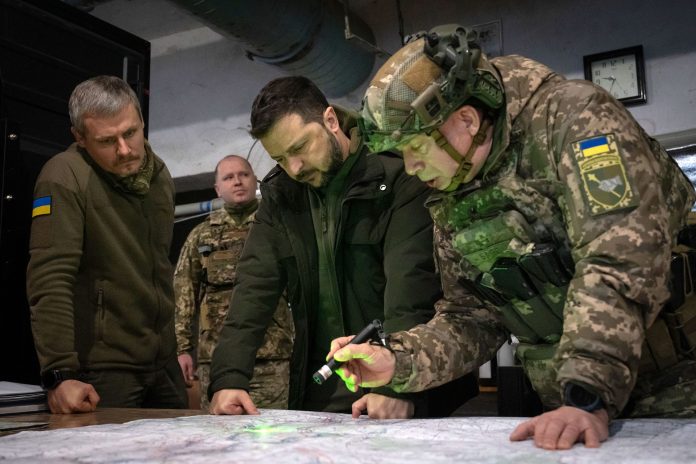
Top NATO general claims Russia lacks sufficient manpower for major breakthrough in Ukraine

Ukraine Zelensky

“I’m not worried that Ukraine could suddenly lose. I don’t see the potential for a massive (Russian) breakthrough,” Cavoli said.

“And this is not a political but a military vision. It’s got to do with both sides, the effective defenses that the Ukrainians have been putting in, but also the difficulty that the Russian side has in generating significant offensive forces to be able to exploit a potential breakthrough.”

Russia quickly advanced in Ukraine’s Donetsk Oblast in late 2024, making operationally significant gains near Toretsk, Chasiv Yar, and Kupiansk, as well as on its own soil in Kursk Oblast. Ukraine has struggled to contain the Russian offensive as Ukrainian troops are overstretched and dealing with manpower shortages.

Despite Russian advances, Cavoli stated Russia’s slow and incremental push is “exhausting” for Moscow’s forces.

“After all, there is a reason why Russia brought thousands and thousands of soldiers from North Korea,” he added, referring to the 12,000-strong North Korean contingent dispatched to Kursk Oblast.

“I think we’re going to continue to see this tension between the desire to attack and the lack of manpower on the part of the Russians. I think that will largely define the conflict and force the Russians to use more weapons of deterrence, as we’ve seen them do in recent years.”

The general also stressed that though it remains unclear whether the U.S. will continue providing military aid packages under the Trump administration, he pointed to the “very significant uplift in European aid” provided to Ukraine.

Recently inaugurated U.S. President Donald Trump criticized military aid for Ukraine during his campaign and, after his reelection, hinted at reducing it. Multiple media reports have nevertheless indicated that Trump does not intend to cut aid completely but wants to see Europe take up greater responsibility for Ukraine’s security.

Trump’s Middle East envoy says will visit Gaza as part of ‘inspection team’

Gaza War

During an interview with Fox News on Wednesday, Witkoff said he would tour two Israeli-held zones in Gaza, as part of an upcoming trip to Israel.

“I’m going to be a part of an inspection team at the Netzarim Corridor and also at the Philadelphia Corridor,” Witkoff added.

“That’s where you have outside overseers, sort of making sure that people are safe and people who are entering are not armed, and no one has bad motivations.”

The Netzarim Corridor separates north and south Gaza and has been occupied by Israeli forces since they invaded the Palestinian enclave in late October 2023. The Philadelphi Corridor runs between southern Gaza and Egypt. Israel’s military took “operational control” of the area in May of last year.

The trip will be the envoy’s first visit to the Middle East since Israel and Hamas agreed to a ceasefire deal on January 15. Witkoff, a businessman with no previous diplomatic experience, had previously joined the talks in Qatar that led to the deal.

It will also be Witkoff’s first trip since Trump took office on Monday. Since his inauguration, Trump said he has little confidence the agreement will hold. The deal came into effect on Sunday, and a day later, an Israeli sniper killed a child in Rafah, in an incident caught on video.

“We have to make sure that the implementation goes well, because if it goes well, we’ll get into phase two, and we’re going to get a lot more live bodies out,” Witkoff stated, referring to Israeli captives held in Gaza.

“And I think that that is what the president’s directive to me and everybody else working in the American government on this is.”

The ceasefire agreement has three phases. Only the implementation of the first phase has begun.

Over the next six weeks, that phase is meant to see a pause in fighting; a partial withdrawal of Israeli troops from Gaza, including from the Netzarim Corridor; and a surge in aid to the enclave.

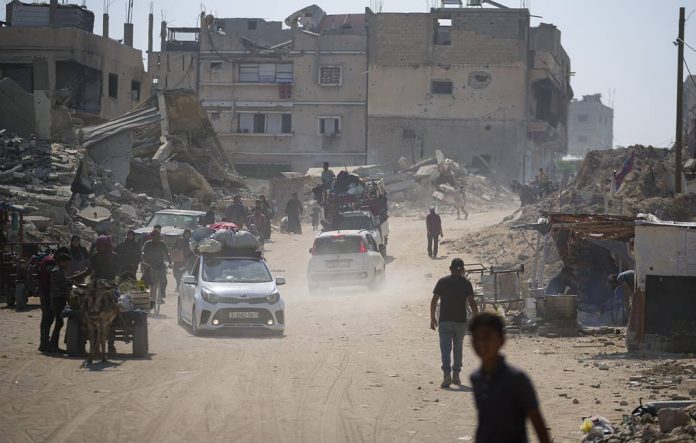
Fifteen months of war in Gaza has left the enclave levelled and the vast majority of its population displaced. The United Nations has repeatedly warned of imminent famine in northern Gaza, and its experts have compared Israel’s warfare tactics to genocide.

All told, at least 47,000 Palestinians have been killed in Gaza since October 7, 2023. The Hamas-led attacks on southern Israel had killed 1,200 people, with 250 taken captive.

The first phase of the ceasefire is also meant to see 33 Israeli captives released from Gaza and about 1,000 Palestinians released from Israeli detention. Three Israeli captives and 90 Palestinian prisoners have so far been released.

The second and third phase have been agreed to in principle, but negotiations on the details remain ongoing. The second phase is expected to see the remaining Israeli captives released in exchange for the “complete withdrawal” of Israeli forces from Gaza.

That goal would be at odds with Israeli Prime Minister Benjamin Netanyahu’s previous pledges to maintain control over Gaza’s security indefinitely after the war. Far-right members of Netanyahu’s government have also called for a return to fighting after the first phase is completed.

Details of the third phase are less clear, but they reportedly include plans for multiyear reconstruction in Gaza and the return of captives’ bodies.

The current deal includes no agreements over who will govern Gaza following the war.

Witkoff spoke to Fox News a day after Trump told reporters he was “not confident” that the ceasefire agreement would hold.

“That’s not our war. It’s their war. But I’m not confident,” Trump told a reporter during a photo opportunity at the White House.

“I looked at a picture of Gaza. Gaza is like a massive demolition site.”

The US president, whose first term stretched from from 2017 to 2021, had demanded a ceasefire agreement between Hamas and Israel prior to his inauguration day, promising “hell to pay” if one was not reached.

It was not immediately clear how Trump would respond if Israel were to break from the agreement.

Trump has generally been more amenable to Israeli interests than his predecessor, former President Joe Biden.

Still, the Biden administration pledged “unwavering” support to Israel and refused to leverage the billions of dollars in military support the US provides to Israel in exchange for a ceasefire.

Trump and Biden have both claimed credit for reaching this month’s ceasefire agreement.

As he begins his second term, Trump is expected to expand US support for Israel. His administration, for example, is packed with pro-Israel hawks, including supporters of illegal Israeli settlements in the occupied West Bank.

Already, he has peeled back Biden-era sanctions on Israeli settler groups accused of violence against Palestinians.

Still, Trump ran on a pledge to be global peacemaker and end conflicts abroad as part of his “America First” agenda.

Speaking on Wednesday, Witkoff credited Trump’s “peace through strength” approach as the driving force behind the ceasefire, while acknowledging the incoming administration was not involved in the “mathematics” that made up the terms of the deal.

Witkoff also added he hoped to reignite Israeli-Arab normalisation efforts Trump spearheaded during his first term, in order to make Israel less diplomatically isolated.

The so-called Abraham Accords saw Israel establish diplomatic ties with Bahrain, the United Arab Emirates, Morocco and Sudan, but the negotiations were widely criticised for sidelining Palestinian interests.

Experts have also said the future of the Abraham Accords has been thrown into doubt amid regional outrage over the war in Gaza.

Still, Witkoff said he believed a long elusive normalisation deal with Saudi Arabia could yet be reached. He went even further, stating he believed every country in the region could get “on board” with such a deal.

“My own opinion is that a conditional precedent to normalisation was a ceasefire,” Witkoff continued, adding, “We needed to get people believing again.”

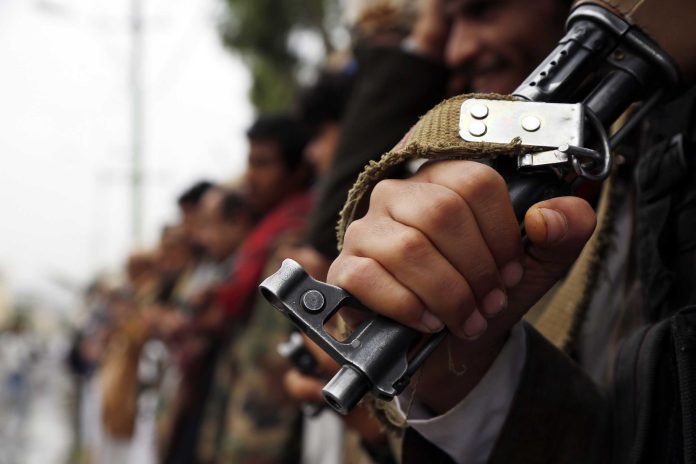
Yemen says freed crew of UK-owned ship after Gaza ceasefire

Yemen Houthis

Yemen’s Supreme Political Council “announced the freeing of the crew of the Galaxy Leader, who were arrested on November 19, 2023.”

It said the move came “in support of the ceasefire” that took hold in Gaza on Sunday.

The crew is comprised of 25 nationals from Bulgaria, Ukraine, the Philippines, Mexico and Romania.

The Bahamas-flagged cargo ship was seized by Houthi fighters, who targeted ships either owned by the Israeli regime or sailing toward Israeli ports in a strong gesture sympathetic to Palestinians in Gaza.

Houthi fighters launched more than 100 attacks on commercial and military vessels in the Red Sea, along with some in the Mediterranean.

Houthi leader Abdul Malik al-Houthi stated on Monday that the resistance fighters are ready to resume anti-Israeli operations if Tel Aviv violates the ceasefire deal in Gaza.