Saturday, December 27, 2025
Home Blog Page 542

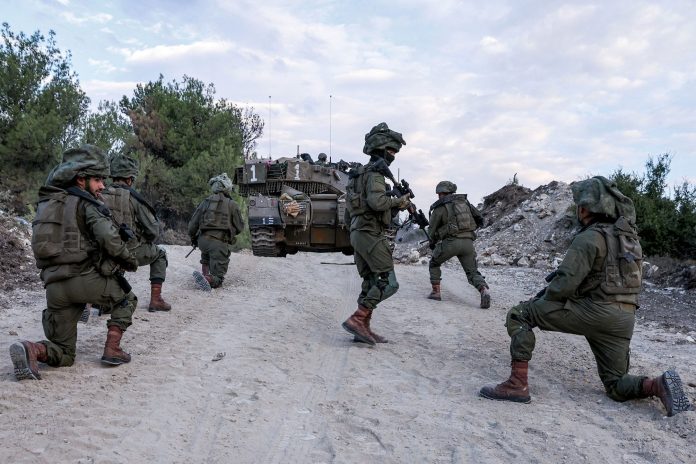
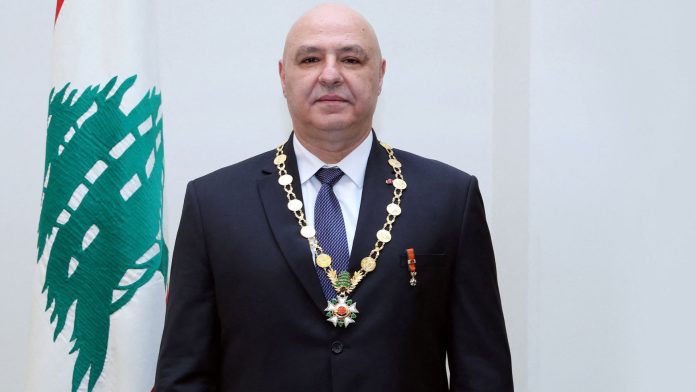
President demands full withdrawal of Israeli soldiers from Lebanon

It came during Aoun’s meeting with the leader of the Greek Cypriot Administration, Nikos Christodoulides, at the Presidential Baabda Palace in eastern Beirut, according to the Lebanese Presidency.

As both leaders discussed the situation in southern Lebanon, Aoun “reaffirmed Lebanon’s insistence on the complete withdrawal of the Israeli enemy from its remaining occupied territories and the deployment of the Lebanese army along the southern border”.

Under a cease-fire signed Nov. 27, Israel is required to withdraw its forces south of the Blue Line — a de facto border — in phases, while the Lebanese army is to deploy in southern Lebanon within the pact’s 60-day timeframe.

Aoun, who had been the army’s chief since 2017, was elected Thursday as president by the parliament, ending more than two years of political deadlock in Lebanon.

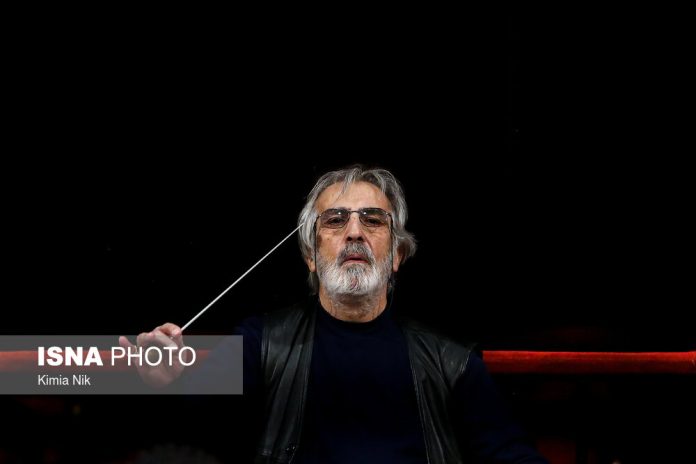
Renowned Iranian musician Fereydoun Shahbazian passes away at 82

Shahbazian was hospitalized in Tehran two days prior to his death. His daughter, Shiva, shared the news of his hospitalization on social media, but did not disclose the specific cause.

Born on June 11, 1942, in Tehran, Shahbazian developed a passion for music early on, influenced by his father, a student of the legendary Abolhasan Saba.

Shahbazian pursued music studies at the Tehran Conservatory of Music and became a member of the Tehran Symphony Orchestra at the age of 17.

His career spanned various roles, including composing for the Farabi Orchestra and leading the Iranian National Orchestra from October 2016 to March 2019.

In the 1980s, he ventured into film scoring and co-founded the Music Council at Iran’s national broadcaster.

Some of his notable film scores include “Life” (1997), “Hiva” (1998), “The Last Supper”, “Innocence Lost” (2003), “The Fourth Child” (2012), and “Son of Fortune” (2012).

Shahbazian’s remarkable contributions to Iranian music earned him a prominent place in the country’s cultural history. His legacy will be remembered through his vast body of work and the impact he made on Iranian music.

Israeli ministers discuss division of Syria: Report

Israeli Army

The news outlet Israel Hayom reported that Defence Minister Israel Katz chaired a small ministerial meeting focused on Turkish involvement in Syria and concerns about the intentions of Syri’s de facto leader, Hay’at Tahrir al-Sham (HTS) commander Ahmed al-Sharaa (also known by his nom de guerre Abu Mohammed Jolani).

During the meeting, which was held before an upcoming discussion with Prime Minister Benjamin Netanyahu, the ministers also reportedly discussed an Israeli plan.

Under this plan, Syria would be divided into provincial regions, or cantons, which Israel Hayom described as a way to “safeguard the security and rights of all Syrian ethnic groups”, including the Druze and Kurdish populations.

Eli Cohen, Israel’s energy and infrastructure minister, reportedly suggested that this proposal should be examined at an international conference convened by Israel, though Israeli politicians know that any initiative associated with Tel Aviv is likely to face significant resistance within Syria.

In December, regional security sources briefed on the plot told Middle East Eye that the overthrow of Bashar al-Assad’s government had thwarted an already-existing Israeli plan to divide Syria into three blocks in order to sever its ties with Iran and Hezbollah, which were supporting Assad.

Israel planned to establish military and strategic ties with the Kurds in Syria’s northeast and the Druze in the south, leaving Assad in power in Damascus under Emirati funding and control.

This would have also served to limit Turkey’s influence in Syria to the northwest, which was the stronghold of HTS and Turkish-backed rebel groups whose lightning offensive led to Assad’s downfall.

The plan, which appears the same as the one discussed by Katz and other Israeli ministers, was alluded to in a speech last November by Israeli Foreign Minister Gideon Saar.

Saar stated Israel needed to reach out to the Kurds and the Druze in Syria and Lebanon, adding that there were “political and security aspects” that needed to be considered.

“We must look at developments in this context and understand that in a region where we will always be a minority we can have natural alliances with other minorities,” Saar added.

The feeling does not seem to be widely reciprocated. In December, the leader of Syria’s Druze, Sheikh Hikmat al-Hijri, condemned Israel’s invasion of Syria and said his country needs to maintain its social and territorial unity.

Speaking to MEE in an exclusive interview from his home in Qanawat, a town in southern Syria’s Sweida province, Hijri stated: “The Israeli invasion concerns me and I reject it.”

Hours after rebels led by HTS toppled the Assad government on 8 December, Israel began moving troops into Syrian territory.

They invaded from the Golan Heights, a Syrian plateau that Israel has occupied since 1967.

Israeli security officials have announced that Israel will maintain positions in captured areas until they judge that “stability” has been achieved.

The plan to divide Syria highlights the concern among Israel’s establishment about Turkish influence in the country.

On Monday, an Israeli government commission noted that Turkey could pose a greater threat to Israel than Iran in Syria if it supports a hostile “Sunni Islamist” force in Damascus.

Ankara has emerged as a major beneficiary of the fall of Assad after it backed HTS and other rebel groups that led the offensive that toppled his administration.

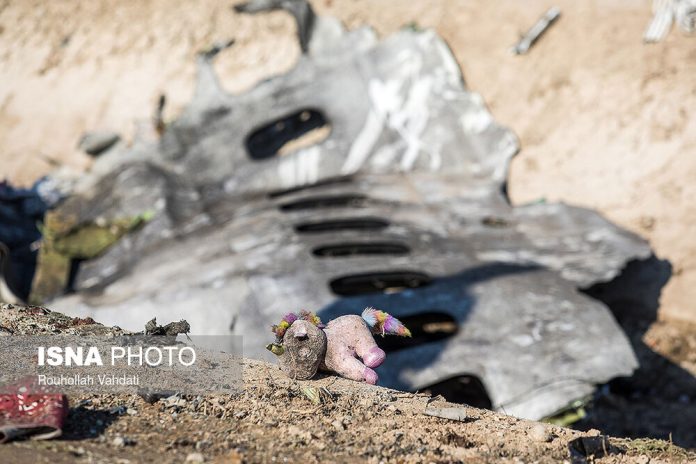
Referring Ukraine plane crash case to ICAO council hasty, unjustified: Iran

Ukraine Plane Crash

The Director General for Legal Affairs at the Iranian Foreign Ministry, Seyed Ali Mousavi, pointed to the four countries’ actions at the International Court of Justice, stating that they lack legal justification.

Referring to the Islamic Republic of Iran’s cooperation with ICAO, he noted that the Iranian Foreign Ministry’s negotiations with those states have not yet been completed regarding the issues pertaining to the tragic incident.

Mousavi added that the Islamic Republic has fulfilled a series of important measures under its international commitments and based on local regulations across legal, international, and criminal-judicial domains.

The Iranian official reiterated that Tehran has paid blood money to the families of the victims, adding that it is resolved to take further measures as well.

Pointing to the anniversary of the plane crash, Mousavi expressed deep regret over the deadly incident.

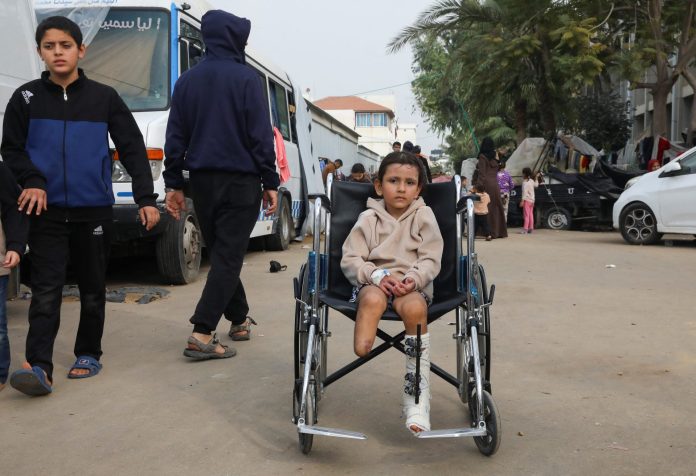
Thousands of amputations reported in Gaza amid Israeli war: Report

“We have recorded 4,500 amputation cases by the end of 2024, as a result of the continuous Israeli airstrikes and ground attacks on Gaza,” Zaher Al-Wahidi, the head of the Health Information Unit at the ministry, said in a statement.

He reported that about 800 of the amputees were children, making up 18% of the cases, while 540 women accounted for 12% of the amputations.

Wahidi stressed that the figures reveal the enormity of the humanitarian catastrophe facing the civilian population, particularly the most vulnerable groups — children and women.

He added that the number of amputations will likely continue to rise as the genocidal war persists, exacerbating the already dire strain on the health care system which is grappling with critical shortages of medical supplies due to the blockade that has been imposed for more than 18 years.

Since the Israeli war began on Oct. 7, 2023, the Israeli army has deliberately targeted health care facilities, bombing hospitals and forcing evacuations while blocking essential medical supplies, particularly in the north, which has been heavily attacked since Oct. 5, 2024.

Wahidi urgently called for international support to address the worsening crisis, demanding immediate action to halt Israeli violations and protect the civilian population.

In response to the escalating number of amputations among children, Lisa Dutton, an official at the UN Office for the Coordination of Humanitarian Affairs (OCHA), said in October that Gaza had become “home to the largest group of child amputees in modern history.”

The Israeli army has continued a genocidal war on Gaza that has killed more than 46,000 victims, mostly women and children, despite a United Nations Security Council resolution calling for an immediate cease-fire.

The International Criminal Court issued arrest warrants in November for Israeli Prime Minister Benjamin Netanyahu and his former Defense Minister Yoav Gallant for war crimes and crimes against humanity in Gaza.

Israel also faces a genocide case at the International Court of Justice for its war on the enclave.

Hamas claims most of Israeli captives in Gaza ‘missing’ after bombardment

Israel Hostages

The armed wing of the Palestinian group, Al-Qassam Brigades, made the announcement on Friday, as the Israeli regime continues its intensified bombardment of the besieged Palestinian territory.

“Most of the enemy captives have gone missing due to the incessant Zionist aggression,” a source from the Brigades told Al Jazeera Arabic.

The source stressed that al-Qassam “once again holds the Israeli regime and its military army fully responsible for the lives and fate of the captives” being held across the blockaded Palestinian region.

Al-Qassam Brigades in recent months has released a series of video messages, saying Netanyahu does not care about the fate of the Israeli captives and is deliberately killing them.

In video messages released by Hamas, Israeli captives in Gaza slam Netanyahu’s failure to secure their release through a deal with the movement. The videos also contain pictures of a number of Israeli captives, who were killed in Israeli military attacks on Gaza.

Hamas has time and again warned Israel that the lives of captives are in danger unless the regime reverses its course.

Hamas held captive around 250 people during its unprecedented operation against the occupied territories on October 7, 2023. The resistance released 105 of the captives during a week-long truce in November 2023.

Six captives were killed in an Israeli airstrike on the southern Gaza Strip in September.

Hamas announced at the time that Netanyahu “is directly responsible for the killing of dozens of captives due to bringing the ceasefire efforts to a failure.”

Al-Qassam Brigades in a recent message said that Netanyahu and the Israeli military’s chief of staff Herzi Halevi “are seeking to get rid of their captives in Gaza by all means.”

The developments come as the Israeli regime continues its intensified bombardment of the northern part of the Gaza Strip.

The Israeli prime minister has long been obstructing mediation for a truce and a deal to release the captives still held by Palestinian groups in Gaza.

The families of the captives have held numerous rallies to call for a deal as public and diplomatic pressure has been mounting on the Netanyahu regime.

Hamas has repeatedly said that there is no alternative other than “a ceasefire, the withdrawal of the occupation forces, and the implementation of a prisoner exchange agreement” in exchange for the release of the Israeli captives.

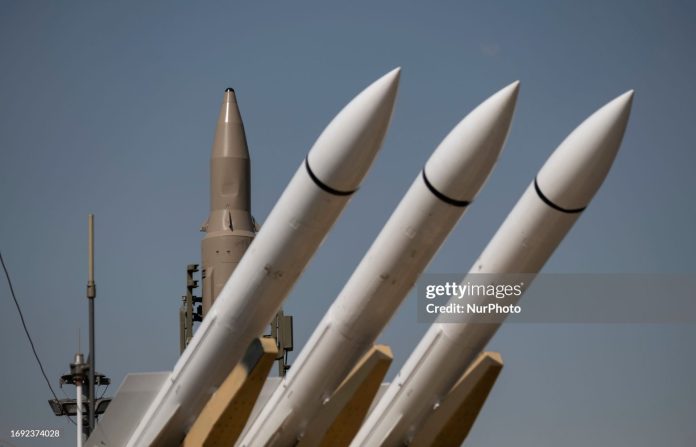
IRGC unveils new missile city

Iran Drone Missile

The unveiling ceremony, held on Friday in the presence of Major General Hossein Salami, Commander-in-Chief of the IRGC, and Brigadier General Amir Ali Hajizadeh, Commander of the IRGC Aerospace Force, showcased Iran’s latest missile base.

According to General Hajizadeh, the newly unveiled missile base is poised to become operational swiftly, posing a significant threat to enemies.

He cited part of the operations True Promise 1 and 2 against Israel were carried out using this underground missile base, where missiles bypassed numerous Israeli defense systems to destroy the Nevatim Airbase, a primary F-35 fighter jet station, which still remains non-operational.

The base houses strategic liquid-fuel missiles such as Emad, Qadr, and Qiam, with only a small section showcased, as the IRGC officials stated, adding approximately 90% of the base remains off-camera, with more missile systems being added across the country daily.

Speaking on an inspection visit to the southwestern city of Abadan, Major General Salami highlighted the ‘uninterrupted growth’ of Iran’s missile capabilities, with ongoing enhancements in quantity, quality, skills, and design.

The senior commander indicated that the IRGC Aerospace Force will continue unveiling new missiles and bases in the near future.

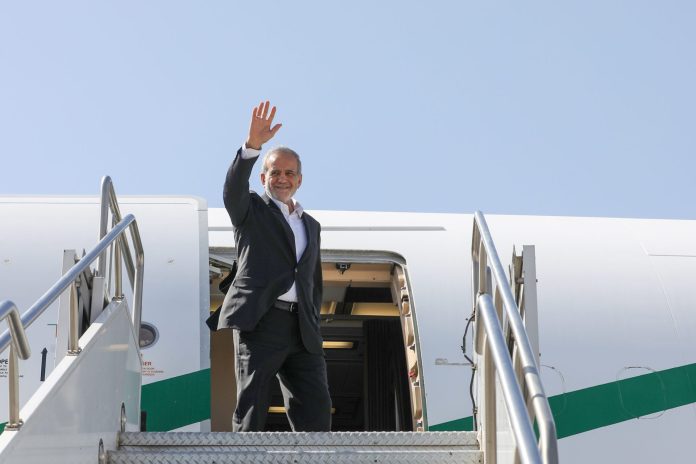
Embassy: Iranian president to sign strategic cooperation treaty during Russia visit

Masoud Pezeshkian

President Pezeshkian will meet with his Russian counterpart Vladimir Putin and other high-ranking Russian officials to discuss and finalize the agreement, the embassy announced on Friday.

The treaty aims to enhance bilateral relations between Iran and Russia across various fields, including economy, trade, energy, environment, defense and security.

The agreement is seen as an update to the cooperation agreement signed by the two countries in the late 1990s, reflecting the expansion of ties over the past three decades.

Iran’s ambassador to Russia, Kazem Jalali, met with Russian Deputy Foreign Minister Andrey Rudenko in preparation for the visit to discuss the formalities and details of the schedule.

The visit is expected to elevate bilateral relations to a new level and facilitate the advancement of mutual collaborations.

Both sides emphasized the importance of the comprehensive strategic cooperation treaty, which will enhance the interactions between Iran and Russia and promote the development of joint projects.

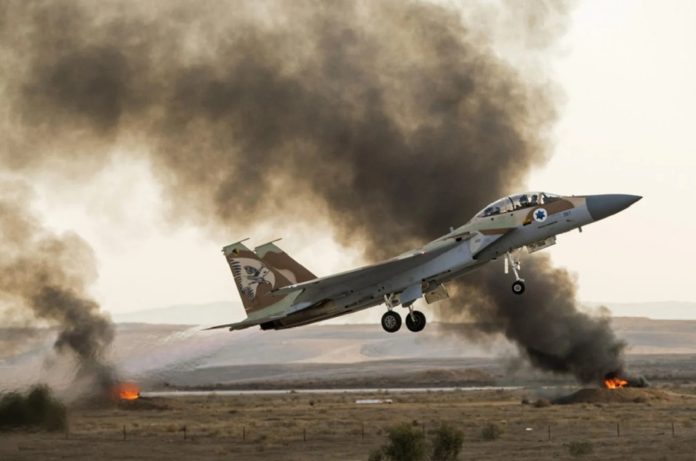
Israel launches air attacks against Yemen’s power station, ports

Israeli Fighter Jet

The Houthi-affiliated Al Masirah TV broadcaster reported on Friday that air raids hit the western ports of Ras Isa and Hodeidah, the Hezyaz Central Power Station near Sanaa, and the Harf Sufyan district of Amran province.

An employee at the Ras Isa port was killed and six others were injured, the outlet said.

A worker at the Hezyay power plant was among three people wounded and a number of homes were damaged in 13 strikes targeting the plant, Al Masirah reported.

The Israeli army issued a statement acknowledging its strikes, claiming that the power plant served “as a central source of energy for the Houthi terrorist regime in its military activities”.

“The State of Israel has the right and obligation to defend itself,” the statement added, alluding to Houthi drone and missile attacks launched towards Israel and attacks on ships in the Red Sea deemed to be affiliated with the nation.

In recent days, the Houthis fired three drones at Israel’s commercial hub Tel Aviv and more drones and missiles at the American aircraft carrier USS Harry S Truman in the Red Sea, Houthi military spokesperson Yahya Saree said.

Yemeni political commentator Hussain al-Bukhaiti told Al Jazeera that it was “clear” the Israeli military “does not have a clue where the Yemen military installations are”.

He added the Houthis would continue their attacks against Israel, referring to rumours that they might use “new types of hypersonic ballistic missiles” to hit “legitimate targets” like “their power station and airport”.

Israeli Prime Minister Benjamin Netanyahu said the Houthis were being punished for their repeated attacks on his country.

“As we promised, the Houthis are paying, and they will continue to pay, a heavy price for their aggression against us,” he stated, pledging not to tolerate attacks against Israel.

Israeli Defence Minister Israel Katz warned that Tel Aviv would “hunt down” Houthi leaders.

“The Hodeidah port is paralysed, and the Ras Isa port is on fire – there will be no immunity for anyone,” he said in a video statement.

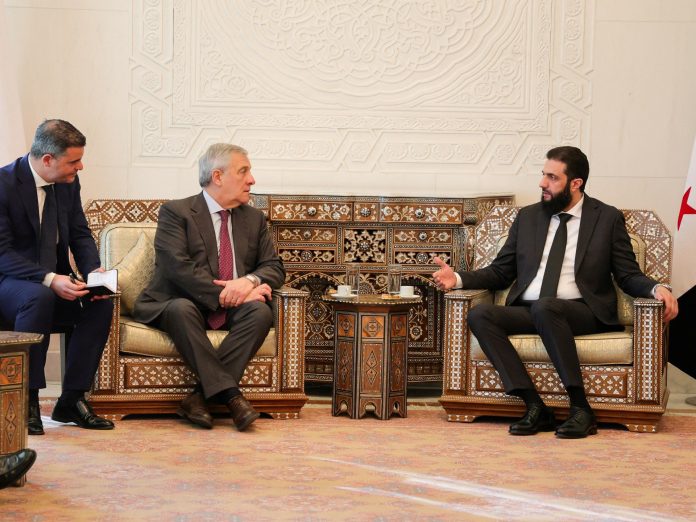
Italy FM calls for talks on relaxing Syria’s sanctions

Tajani met Syria’s de facto leader Ahmed al-Sharaa in Damascus on Friday, saying that sanctions imposed after al-Assad’s crackdown on anti-government protests that triggered the country’s 13-year war “absolutely must not hit the Syrian population”.

“They were imposed because there was a different regime. It’s important to open discussions on the changed situation,” he added, refering to last month’s opposition takeover of the country, led by al-Sharaa’s Hayat Tahrir al-Sham armed group, which brought al-Assad’s rule to an abrupt end.

Tajani said Italy wanted to help Syria recover from civil war and rebuild its broken economy, serving as a bridge between Damascus and the EU.

“The Mediterranean can no longer just be a sea of death, a cemetery of migrants but a sea of commerce a sea of development,” he added.

Tajani arrived in Damascus after hosting talks in Rome with US Secretary of State Antony Blinken, EU foreign policy chief Kaja Kallas, and officials from the United Kingdom, France and Germany on Thursday.

He stated that the meeting of the so-called Quintet on Syria was key to beginning the discussion about a change to the EU sanctions.

Kallas said earlier on Friday that the 27-nation bloc could begin lifting sanctions if Syria’s new rulers took steps to form an inclusive government that protects minorities.

“The EU could gradually ease sanctions provided there is tangible progress,” Kallas wrote on X.

In Damascus, Tajani also met Foreign Minister Asaad Hassan al-Shaibani, who announced that he would soon make his first official tour of Europe.

Al-Shaibani has already visited Saudi Arabia, the United Arab Emirates, Qatar and Jordan since the start of the month.

Al-Shaibani stated he welcomed Tajani’s focus on sanctions.

“We share his opinion that the reasons for imposing them no longer exist, and could be an obstacle to encouraging the return of refugees from outside Syria”, he added.

More than half a million people were killed in Syria’s war, which also ravaged the economy and forced millions of people to flee their homes, including to Europe.