Sunday, January 18, 2026
Home Blog Page 536

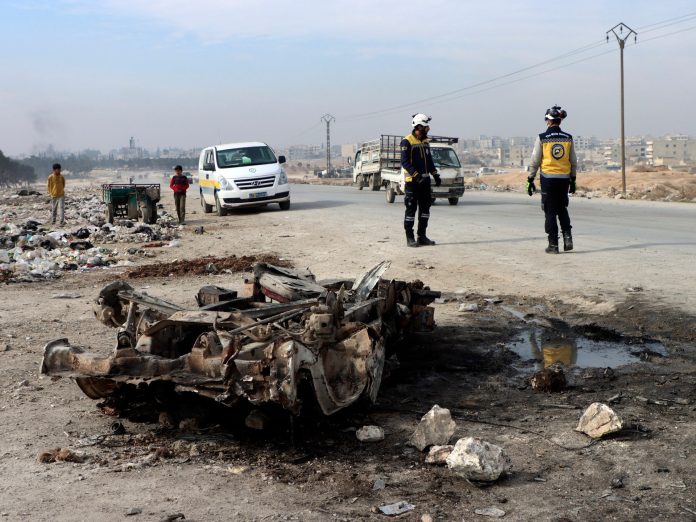
20 killed in Syria’s car bombing

Monday’s blast was the deadliest attack in the country since the fall of President Bashar al-Assad in December of last year.

The incident was also the seventh car bombing in just over a month in the area, which has seen fighting between Turkish-backed forces and a Kurdish-dominated group.

The office of Syria’s new President Ahmed al-Sharaa condemned the “terrorist” attack, saying that it will pursue accountability for the incident.

“This crime will not pass without the strongest punishment for its perpetrators, so they become an example for anyone who considers compromising Syria’s security or harming its people,” the presidency added.

Hospital workers told the Associated Press news agency on Monday that the car detonated near a vehicle at night carrying mostly agricultural workers.

The Syrian Civil Defence, known as the White Helmets, said at least 11 women and three children were killed in the attack.

“Everyone of these victims had families and dreams,” the rescue group announced in a statement.

“Their effort to earn a living turned into death and wounds. Justice for them must be achieved, and the perpetrators of this crime must be held accountable.”

So far, no group has claimed responsibility for the explosion.

On Saturday, a car bombing in the city also killed four people and wounded nine others, state news agency SANA reported.

Jameel al-Sayyed, a Manbij activist and journalist, told the Associated Press that the recurring attacks have forced residents to become more vigilant.

“There are efforts from the people of Manbij to focus on protecting some neighbourhoods as well as setting up surveillance cameras in the main neighbourhoods of the city,” al-Sayyed added.

Throughout the Syrian war, which began in 2011, control over Manbij – which sits to the south of the Turkish border and to the east of Aleppo – has changed numerous times.

In December, Turkish-backed groups captured it from the US-backed, Kurdish-dominated Syrian Democratic Forces (SDF), which denounced Monday’s bombing.

The SDF suggested – without evidence – that what it called Turkiye’s “mercenaries” are behind the attack.

Turkiye, a NATO ally of the US, views the SDF as an extension of the People’s Protection Units (YPG) and the Kurdistan Workers’ Party (PKK), which it considers “terrorist” groups.

Al-Sharaa, a former rebel leader who assumed the presidency on a transitional basis earlier this month, is set to visit Turkiye later this week.
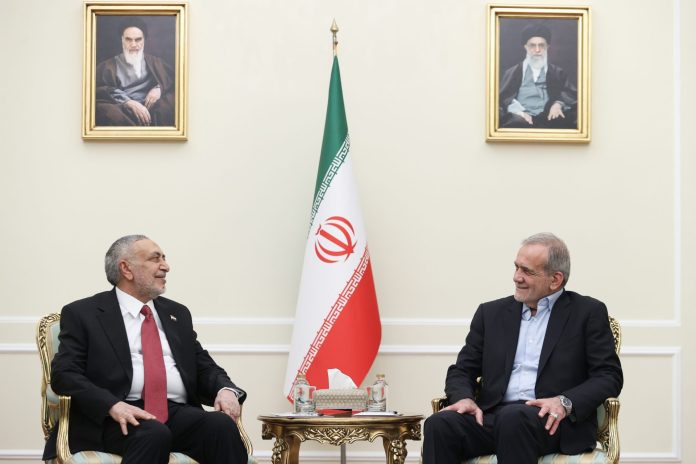
President Pezeshkian urges formation of inclusive Syrian government

In a meeting with Speaker of the Council of Representatives of Iraq Mahmoud al-Mashhadani, held in Tehran on Monday, Pezeshkian stated that if the Muslim nations avoid disputes and promote unity, the enemies’ plots will be thwarted.

Stronger cohesion, empathy and unity among the Islamic states is a vital necessity in today’s world, the president added.

He also called for sustainable coordination and cooperation in various sectors –such as trade, economics, science, technology and border management– to consolidate relationships among the Muslim nations.

Regarding the recent developments in Syria, Pezeshkian expressed Iran’s support for the formation of an inclusive government that represents all Syrian people, emphasizing the importance of preserving Syria’s territorial integrity and preventing disintegration and chaos in the Arab country, his website reported.

He also commended Iraq’s firm stance in support of the oppressed Palestinians in the Gaza Strip, urging the Muslim nations to assist Gaza and Lebanon to the best of their abilities.

Al-Mashhadani, for his part, underscored the need to strengthen mutual cooperation at both regional and international levels.

The Iraqi speaker noted that the axis of resistance has achieved significant success despite the loss of prominent figures and commanders over the past months.

Iran launches second phase of air defense exercise in southwest

Iran Army

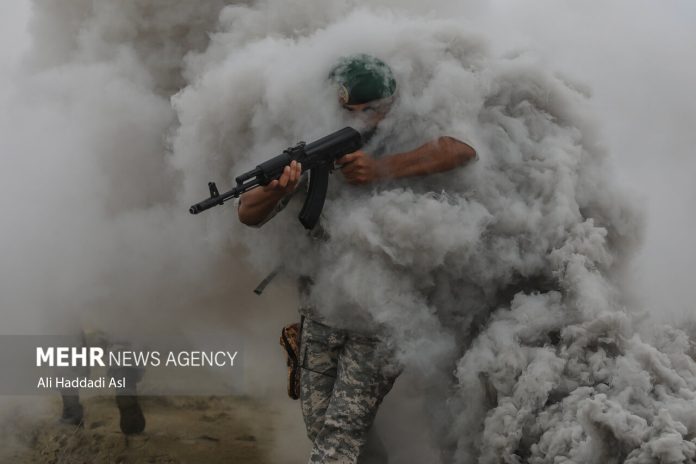
Led by the Iranian Army and the Islamic Revolution Guard Corps (IRGC), the “Air Defense Power” drill focuses on enhancing the country’s integrated air defense capabilities.

The exercise involves the detection, identification, interception, engagement, and destruction of simulated enemy targets using advanced indigenous radar systems and an expanded surveillance network.

Command and control centers are utilizing state-of-the-art active and passive radar systems, alongside signal and electro-optical monitoring, to oversee the operations.

Upon detecting hostile targets, the air defense units deploy smart command and control systems to activate appropriate defense mechanisms tailored to neutralize the threats.

On Monday, the chief of staff of Iran’s Armed Forces, Major General Mohammad Bagheri, lauded the military’s ability to integrate modern defensive technologies, stating, “We are ready in the field of electronic warfare to confront the enemy, providing our nation with security and calm.”

The drill spans areas in the southwest and central regions of Iran, showcasing the country’s ability to safeguard its airspace with domestically developed technology.

Iranian VP says Tehran needs new strategy in ‘war of narratives’ with Israel

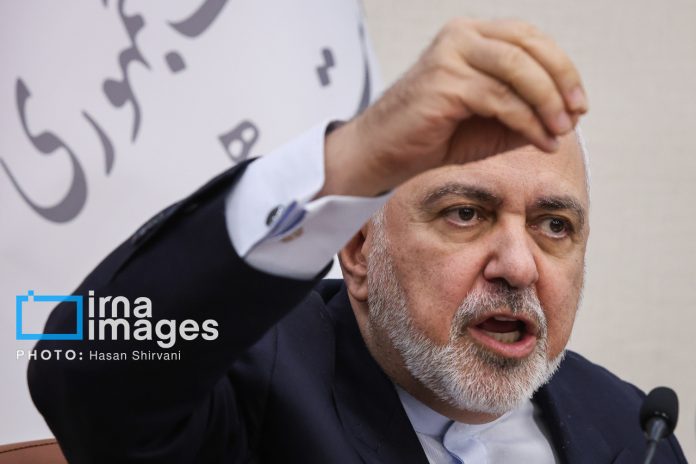
“Today, we live in a world of narratives and a war of narratives, and no one understands this reality better than the Zionists,” Zarif said on Monday, during the unveiling of a policy document titled “Strategy of Consensus for National Security Based on a Historical Approach to Iran’s National Security Issues.”

“If you look at international relations, the first place that started shaping and changing narratives was Israel,” he added.

He traced the origins of the dispute surrounding Iran’s peaceful nuclear activities back to the 1990s, when Israel began accusing Iran of working on a clandestine nuclear weapons program.

“When they say this, many are pleased, while they are in fact manufacturing reality,” he said.

“Do they want to show Iran’s power or are they manufacturing an ‘Iran threat?’” The diplomat explained that what the Israelis have been doing is peddling the narrative that “Iran poses a threat to the entire world.”

Zarif added he did not believe Israel was genuinely fearful of a nuclear Iran, suggesting that if that had been the case, Israel would have welcomed the Joint Comprehensive Plan of Action (JCPOA), the 2015 nuclear agreement between Tehran and originally six world powers.

Israel was a fierce opponent of the international diplomacy that resulted in the JCPOA. Subsequently, the regime left no stone unturned in its efforts to sabotage the deal, which lifted certain sanctions on Iran in exchange for restrictions on its nuclear program. In 2018, Israel was the first to applaud the United States for withdrawing from the accord. Since then, it has been actively working to derail international talks aimed at reviving the deal.

“The Israelis are masters of narrative-making, using Hollywood and professions like journalism and television to their advantage,” Zarif said.

As part of its narrative, he said, Israel argues that Iran has become weakened militarily, leaving it with no choice but to build a nuclear weapon. The conclusion, as far as the Israelis are concerned, is that any length of time before a “weakened” Iran reaches the nuclear threshold is ripe for military action, Zarif added.

“Today, we must dismantle this narrative. Some may say that the way to dismantle this narrative is through the True Promise 3,” Zarif continued, referencing a planned strike against Israel, follow-ups to strikes in April and October last year. Some in Iran are advocating for a third such operation to deter further Israeli aggression against the country.

“In my opinion,” he stated, “this narrative plays into the Zionist narrative.” A second option would be for Iran to retreat, “which is neither necessary nor correct,” he added.

The Iranian government seeks to present a new narrative, which is the result of extensive research at the Center for Strategic Studies, and that will be presented to the world, the diplomat noted.

Five Arab states oppose removing Palestinians from Gaza in letter to US

Gaza War

The letter was sent on Monday and signed by the foreign ministers of Jordan, Egypt, Saudi Arabia, Qatar and the UAE, as well as Palestinian presidential adviser Hussein al-Sheikh. It was reported first by Axios, which said the top diplomats met in Cairo over the weekend.

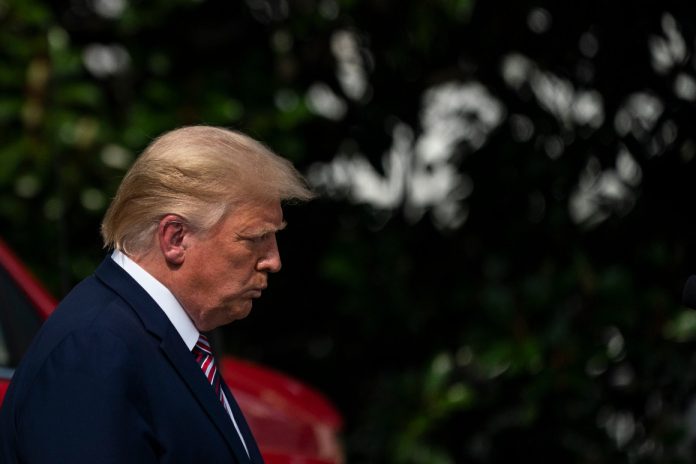
Trump first floated the suggestion of Jordan and Egypt taking in Palestinians from Gaza on Jan. 25. When asked if he was suggesting that as a long-term or short-term solution, the president stressed: “Could be either.”

The U.S. president’s comments echoed long-standing Palestinian fears of being permanently driven from their homes and were labeled as a proposal of ethnic cleansing by critics. Jordan, Egypt and other Arab nations opposed the proposal.

“Reconstruction in Gaza should be through direct engagement with and participation of the people of Gaza. Palestinians will live in their land and help rebuild it,” the letter read.

“And they should not be stripped of their agency during reconstruction as they must take ownership of the process with the support of the international community,” it added.

Authorities in the Gaza Strip have updated the death toll from Israel’s war on the blockaded enclave to 61,709, having added thousands who are missing and now presumed dead.

Trump plans to target UN Human Rights Council, UNRWA

Donald Trump

The move coincides with a visit to Washington by Israeli Prime Minister Benjamin Netanyahu, who has long been critical of UNRWA.

During Trump’s first term in office, from 2017-2021, he also cut off funding for UNRWA, questioning its value, saying that Palestinians needed to agree to renew peace talks with Israel, and calling for unspecified reforms.

The first Trump administration also quit the 47-member Human Rights Council halfway through a three-year term over what it called chronic bias against Israel and a lack of reform. The US is not currently a member of the Geneva-based body. Under Democratic former President Joe Biden, the US was re-elected and served a 2022-2024 term.

A Human Rights Council working group is due to review the US human rights record in August, a process all countries undergo every few years. While the council has no legally binding power, its debates carry political weight and criticism can raise global pressure on governments to change course.

Since taking office for a second term on Jan. 20, Trump has ordered that the US withdraw from the World Health Organization and from the Paris climate agreement – also steps he took during his first term in office.

UNRWA Commissioner-General Philippe Lazzarini stated last week that the agency has been the target of a “fierce disinformation campaign” to “portray the agency as a terrorist organization.”

The US was UNRWA’s biggest donor – providing $300 million-$400 million a year – but Biden paused funding in January 2024 after Israel claimed about a dozen UNRWA staff of taking part in the deadly Oct. 7, 2023, attack on Israel by Hamas that triggered the war in Gaza.

The US Congress then formally suspended contributions to UNRWA until at least March 2025. UNRWA provides aid, health and education services to millions of Palestinians in Gaza, the West Bank, including East Jerusalem, Syria, Lebanon and Jordan.

The United Nations has announced that nine UNRWA staff may have been involved in the Oct. 7, 2023, attack and were fired. The UN has vowed to investigate all claims made and repeatedly asked Israel for evidence, which it says has not been provided.

An Israeli ban went into effect on Jan. 30 that prohibits UNRWA from operating on its territory or communicating with Israeli authorities. UNRWA has cautioned operations in Gaza and West Bank will also suffer.

70 killed in West Bank by Israel since January: Health Ministry

The toll includes 38 in Jenin, 15 in Tubas, six in Nablus, five in Tulkarem, three in Hebron, two in Bethlehem, and one in occupied East Jerusalem.

The Israeli military launched a major offensive dubbed “Iron Wall” in the territory last month, shortly after the ceasefire in Gaza. The operation is especially focused on targeting Palestinian armed groups from the Jenin area.

The ministry added that in addition to the 10 children killed, the Israeli military also killed one woman and two elderly Palestinians.

On Monday, the presidency of the Palestinian Authority (PA) condemned the Israeli attacks, stressing that Palestinians would not accept resettlement plans or an “alternative homeland”.

“The [Israeli] occupation authorities are expanding their all-out war on the Palestinian people in the West Bank to implement their plans aimed at displacing citizens and carrying out ethnic cleansing,” spokesman Nabil Abu Rudeineh said in a statement.

He added that Israel’s policies have left hundreds of people wounded and or detained, “in addition to the destruction of entire residential blocks in the Jenin and Tulkarem refugee camps, the displacement of thousands of citizens, and massive destruction of infrastructure”.

The Israeli escalation in the West Bank came after a ceasefire and prisoner exchange deal took hold in Gaza on January 19, following 15 months of Israel’s genocidal war that reduced the enclave to rubble and killed nearly 62,000 Palestinians, including thousands who are missing and presumed dead.

Since the beginning of Israel’s war on Gaza in October 2023, Israeli soldiers or settlers have killed at least 900 Palestinians.

Former British soldier sentenced to 14 years for ‘spying for Iran’

Daniel Khalife has been sentenced to more than 14 years in custody and condemned as a “dangerous fool” for spying for Iran and escaping from prison.

In September 2023, Khalife, 23, sparked a high-profile manhunt when he broke out of HMP Wandsworth by clinging to the underside of a food delivery truck. At the time he was being held on remand for spying charges.

Last November, a jury at Woolwich crown court found him guilty of breaching the Official Secrets Act and the Terrorism Act by passing on information to Iran while he was serving in the army. During his trial he also admitted escaping from prison before his capture on a canal towpath by a plainclothes detective. He was cleared of carrying out a bomb hoax.

On Monday, Mrs Justice Cheema-Grubb sentenced him to 14 years and three months at Woolwich crown court.

The sentence involved six years each for breaking the Official Secrets Act and the Terrorism Act, and a further two years and three months for escaping from prison. The sentences will run consecutively, the judge said. An older man committing these offences would have had a noticeably longer sentence, she added.

In her sentencing remarks, Mrs Justice Cheema-Grubb stated: “Deterring others from similar behaviour must be the primary aim of this sentence.”

The judge added Khalife was motivated by a “selfish desire to show off”.

The trial heard how Khalife had “exposed military personnel to serious harm” by collecting sensitive information and passing it on to Iranian agents for cash.

The judge said Khalife had exploited a security flaw in the army personnel computer system to screenshot the names of soldiers, including seven in the special forces. She added this was a “very serious example” of a breach of anti-terror laws.

Prosecutors said Khalife played “a cynical game”, claiming he wanted a career as a double agent to help the British intelligence services, when in fact he gathered “a very large body of restricted and classified material”.

Mr Justice Cheema-Grubb said:“Having taken an oath of allegiance, you were motivated by a personal grievance to betray your colleagues and superiors. Your conduct was premeditated and continued for over two years.

“You were aware that the Iranians had technology which could access your mobile phone and track where you, and by direct inference, your colleagues were serving. Although it may be that some of your early material was bogus and of no direct importance, you did not stop when you realised that the domestic security services were not going to respond to your overtures.”

She added: “The mere fact that you started on this dangerous and fantastical plan demonstrates your immaturity and lack of wisdom. That you thought it was appropriate to insert yourself – an unauthorised, unqualified and uninformed junior soldier into communication with an enemy state – is perhaps the clearest indication of the degree of folly and your failure to understand at the most obvious level the risk you posed.”

Defending, Gul Nawaz Hussain KC stated Khalife’s spying activity was amateurish, describing it as more “Scooby Doo than 007”. Some documents Khalife forged to pass to the Iranians were “laughably fake”, Hussain told the court.

He told the judge: “What Daniel Khalife clearly chose to do was not born of malice, was not born of greed, religious fervour or ideological conviction. His intentions were neither sinister nor cynical.”

After asking the defendant to stand up in the dock, the judge said: “Daniel Khalife. When you joined the army as a young man you had the makings of an exemplary soldier. However, through the repeated violation of your oath of service, you showed yourself to be, instead, a dangerous fool.

“The only sentence open to me is one of immediate custody. Anyone who is prepared to betray his country and subject serving soldiers to an increased risk of harm must be punished in respect of deterrence,” the judge added.

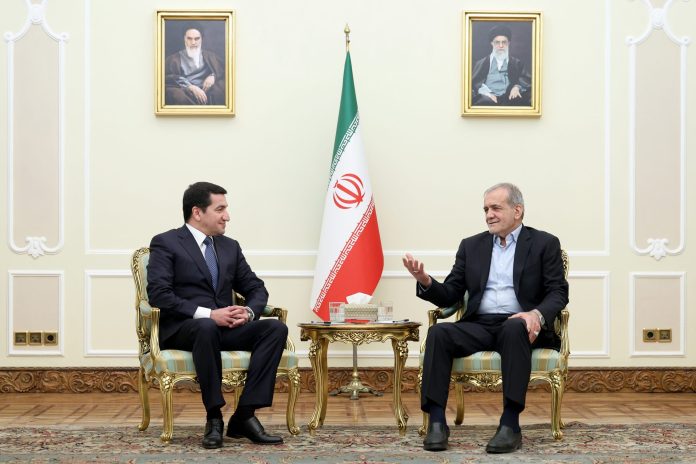
President Pezeshkian: Iran’s policy is to defend territorial integrity of regional countries 

Pezeshkian added that any change to regional borders are unacceptable to the Islamic Republic and underlined the need for unity among regional nations in the face of external influences that could sow discord.

The Iranian president underscored the importance of brotherly relations between Iran and Azerbaijan, noting that Tehran is interested in enhancing cooperation with Baku, among others, in economic, political, cultural and defense spheres.

He reaffirmed Iran’s determination to swiftly remove barriers in trade and transportation.

Pezeshkian said Iran also seeks to bolster relations with all Islamic countries and help strengthen the power of the Muslim world.

He warned that any divisions among Muslims could invite external interference aimed at creating discord.

Hajiyev for his part said Azerbaijan is willing to boost bilateral relations with Iran.

He also underlined the significance of Iran as a friendly nation, adding that the Azeri government is looking forward to Pezeshkian’s visit to Baku.

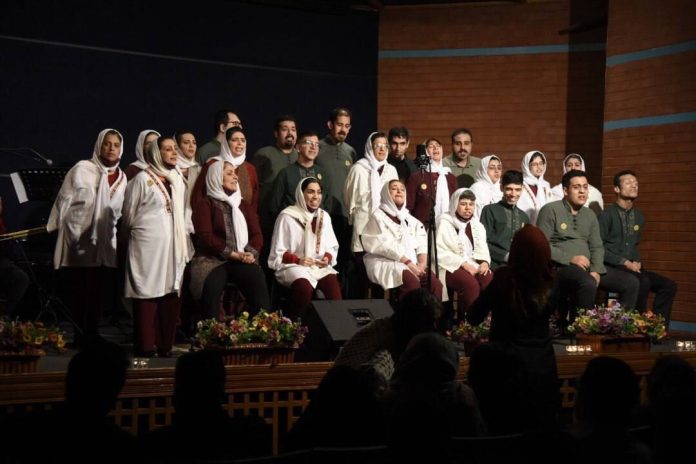
Iran musical group of artists with disabilities to hold concert in Tehran 

Alam Nattaj, founder of the Iranian musical group Mehr o Mah, announced that the group’s concert will take place this Thursday at the House of Artists in Tehran.

Nattaj also said an exhibition showcasing the works of the unique group will be held on February 6 and 7 at Tehran’s House of Artists.

Nattaj noted that the group had performed in November and decided to return to the stage due to the enthusiastic response from the audience.

Nattaj stressed that these artists have reached a level of preparedness that they only need two months of practice for each concert, and with each passing day, their capabilities become more evident.