Friday, December 26, 2025
Home Blog Page 529

Israel’s attacks in Gaza kill over 120 Palestinians since ceasefire announcement

Gaza War

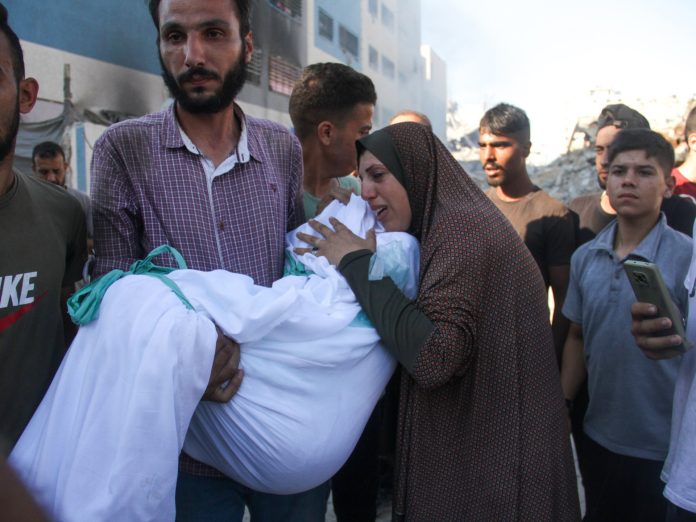
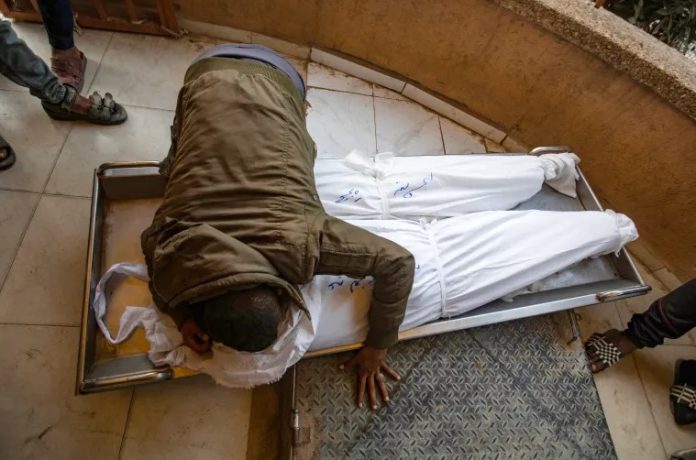
In a written statement, the directorate reported that Israeli attacks across all areas of the Gaza Strip have killed 123 Palestinians and injured 270 others since the ceasefire was announced on Wednesday.

The victims included 33 children and 33 women.

The latest fatalities were five Palestinians, including women and children of the same family, who were killed when Israeli forces bombed a tent sheltering displaced civilians in the Al-Mawasi area, west of Khan Younis in southern Gaza.

The Al-Mawasi region, designated by the Israeli army as a “safe humanitarian zone,” has seen repeated attacks on displaced civilians despite such assurances.

Israeli forces also launched artillery and aerial strikes in other parts of Khan Younis, according to eyewitnesses.

In central Gaza, an Israeli drone dropped a bomb on a home near Al-Awda Hospital in the Nuseirat refugee camp setting the building ablaze. Sporadic shelling was also reported in northwestern Nuseirat.

Northern Gaza saw a continuation of heavy bombardment, particularly in Jabalia, where Israeli forces have destroyed residential buildings and conducted an intensive military operation for over three months.

The violence came amid preparations for the implementation of a ceasefire and prisoner exchange agreement mediated by Qatar, Egypt, and the US.

Qatar announced a three-phase ceasefire agreement on Wednesday to end more than 15 months of deadly Israeli attacks on the Gaza Strip with the ceasefire set to take effect on Sunday.

Nearly 46,900 Palestinians, mostly women and children were killed and more than 110,600 injured in Israel’s genocidal war on Gaza since Oct. 7, 2023, according to local health authorities.

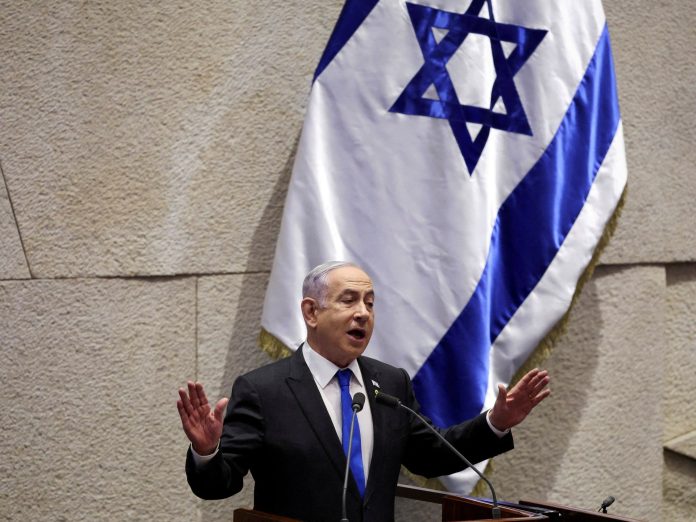
The International Criminal Court issued arrest warrants in November 2024 for Israeli Prime Minister Benjamin Netanyahu and his former Defense Minister Yoav Gallant for war crimes and crimes against humanity in Gaza.

Israel also faces a genocide case at the International Court of Justice for its war on the enclave.
US secretly invested in Ukraine’s UAV program: NYT

Russia Ukraine War

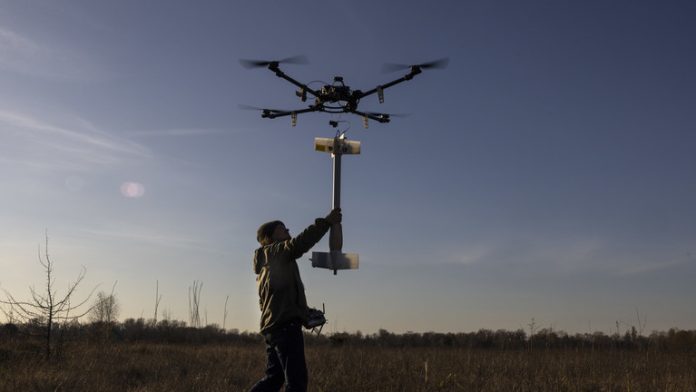
Washington reportedly provided financial and technical assistance to Kiev’s drone program, the sources have told the outlet. While the US had publicly admitted sending billions of dollars in missiles, air defense systems, tanks and training, details about support in other areas remained under wraps.

A tranche of some $1.5 billion paid in September 2024, reportedly allocated direct financial aid to drone manufacturers, intelligence-sharing, and collaboration between American technology firms and Ukrainian producers.

US National Security Adviser Jake Sullivan also said in a statement on Thursday that US involvement had “a real strategic impact” on the battlefield, as drones have become central to Ukraine’s defense strategy.

The funding reportedly began after Kiev’s first counteroffensive in fall 2022 and intensified after the 2023 effort, which ultimately failed due to Russia’s extensive defensive use of mines, artillery, and drones.

US officials reportedly stated that the losses incurred by Kiev pushed them to rapidly increase support to Ukrainian drone makers.

People familiar with the matter told the New York Times that the US effort also included sending American intelligence officials to Ukraine to help build its drone program. However, CIA Director William J. Burns has so far only indirectly acknowledged this, stating earlier this week that US intelligence support extended beyond information-sharing to assisting with key defense systems.

Last month, US Secretary of State Antony Blinken revealed that Washington has provided around $100 billion in financial aid and military assistance to Kiev since the escalation of the Ukraine conflict in 2022. Kiev’s other backers, meanwhile, have “spent about $150 billion”, he said.

Moscow has repeatedly condemned the West’s continued military aid to Ukraine, arguing that it makes it party to the conflict. Russia has also argued that no amount of Western aid will change the ultimate outcome or prevent Moscow from achieving the goals of its military operation.

Judiciary: Two prominent judges shot dead in Iran

Crime Scene

Ali Razini, 71, and Gholamreza Moghiseh, 66, were killed in the act.

Initial investigations reveal that the assailant had no case in the Supreme Court and was not a visitor to its branches.

Immediately after the terrorist act, efforts were made to arrest the armed individual, who quickly committed suicide.

According to initial reports, a third judge along with his bodyguard were also targeted in the assassination attempt, who sustained injuries.

Investigations are underway to identify and apprehend the masterminds behind the terrorist act.

Iranian Army: Gaza ceasefire strengthens resistance’s resolve

Gaza Ceasefire

The Army’s public relations office praised the courage and resilience of the people of Gaza, acknowledging their bravery in facing oppression, crime, and displacement.

The statement emphasized that despite the brutal atrocities of the Israeli regime, the steadfast determination of Gaza’s people has prevailed, marking a “historic victory for the ancient land of Palestine.”

The Army noted that Gaza’s resistance serves as a pivotal point in the fight against Zionism and the liberation of Palestine, inspiring future generations and freedom-loving nations worldwide.

The statement also recognized the sacrifices of the resistance fighters in Palestine, Lebanon, Iraq, and Yemen, and honoring the martyrs, veterans, and resilient men, women, and children who have endured hardships in their quest for victory.

The Iranian Army reaffirmed its support for the Palestinian cause until complete liberation from the Israeli occupation.

Iranian FM: Strategic partnership with Russia primarily economic

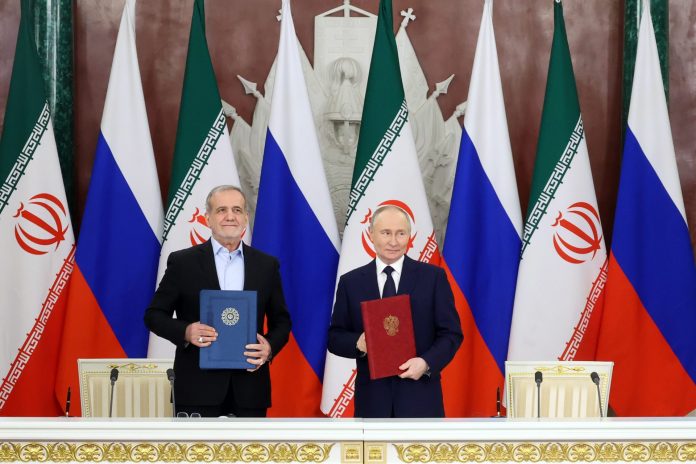
Pezeshkian and Putin

The agreement, signed by Presidents Massoud Pezeshkian and Vladimir Putin, covers key economic sectors such as trade, investment, tourism, transport, and energy.

Araghchi emphasized that the agreement aims to enhance economic cooperation in various domains, including joint trade, mutual investment, and new energy projects, adding, “We expect this to improve our bilateral relations across multiple domains.”

The agreement also covers cultural, judicial, legal, and parliamentary cooperation, ensuring a broad spectrum of collaboration.

Araghchi highlighted that the partnership is not a military alliance, but a comprehensive framework designed to provide a long-term vision for Iran-Russia relations.

He also explained, “This treaty is not against any third party and is a treaty for cooperation between Iran and Russia. It regulates the relations between the two countries and outlines the prospects for cooperation, creating no restrictions for their relations with third countries.”

The Iranian foreign minister expressed optimism that the agreement will facilitate smoother economic, cultural, and political collaborations between the two nations.

Iranian gov’t likely initiating key nuclear negotiations: National security commission member

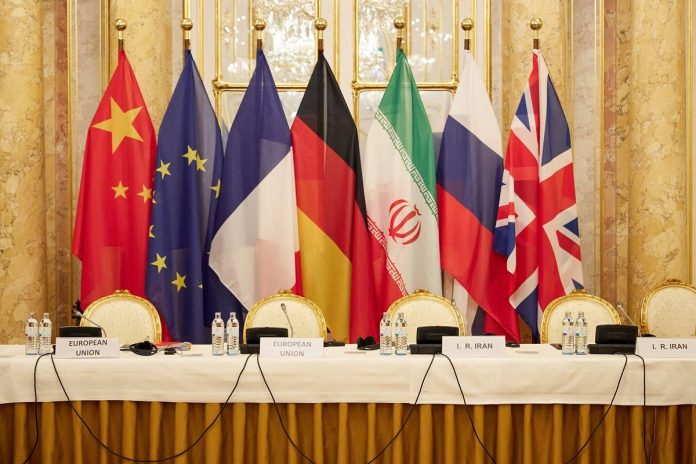
Nuclear Negotiations in Vienna

Mohammad Mehdi Shahriari, in an interview with Shafaqna, mentioned that given the government’s team, including officials like Vice President for Strategic Affairs Mohammad Javad Zarif and Deputy Foreign Minister Majid Takht-Ravanchi, it is likely that essential steps have been taken, although neither the commission nor the lawmakers have been informed, possibly due to concerns about hardliners in the parliament.

Shahriari expressed disappointment with the foreign policy performance of the former administration, noting that the expected active diplomacy, especially in negotiations and lifting sanctions, has not been realized.

Highlighting the economic and livelihood challenges faced by the society, Shahriari stressed that the public voted for President Massoud Pezeshkian with the hope of resolving these issues. He called for a more proactive foreign policy beyond just neighboring countries.

The parliamentarian also pointed out that relations with Europe have been affected by recent policies and need repair.

He also urged officials to recognize the consequences of not joining the Financial Action Task Force (FATF), which is currently under review by the Expediency Council.

UNICEF says Gaza ceasefire ‘critical and so overdue’ as 35 children killed daily

Gaza War

James Elder told a UN briefing in Geneva that a peer-reviewed report in The Lancet had reported numbers of casualties exceeding those reported by the Palestinian Health Ministry, which had reported upwards of 15,000 children having been killed.

“That’s around 35 children killed reportedly every single day for 14 months,” Elder said.

In 2025 alone, he added, an average of 10 children have lost their lives daily in Gaza.

“This moment (ceasefire deal) is so absolutely critical and so overdue,” he said. “This deal should have happened much earlier.”

He noted that what is needed now is phase one, phase two, and phase three of the ceasefire to take place simultaneously.

Qatar announced on Wednesday a cease-fire agreement to end over 15 months of deadly Israeli attacks on the Gaza Strip.

Qatari Prime Minister and Foreign Minister Sheikh Mohammed bin Abdulrahman Al Thani stated the 3-phase deal will be effective on Sunday.

The deal includes a prisoner exchange and sustained calm, aiming for a permanent truce and the withdrawal of Israeli forces from Gaza.

More than 46,700 Palestinians, mostly women and children were killed and over 110,000 others injured in Israel’s genocidal war on Gaza since the October 2023, according to local health authorities.

The war has left more than 11,000 people missing, with widespread destruction and a humanitarian crisis that has claimed the lives of many elderly people and children in one of the worst global humanitarian disasters ever.

In November, the International Criminal Court issued arrest warrants for Israeli Prime Minister Benjamin Netanyahu and his former Defense Minister Yoav Gallant for war crimes and crimes against humanity in Gaza.

Israel also faces a genocide case at the International Court of Justice for its war on the enclave.
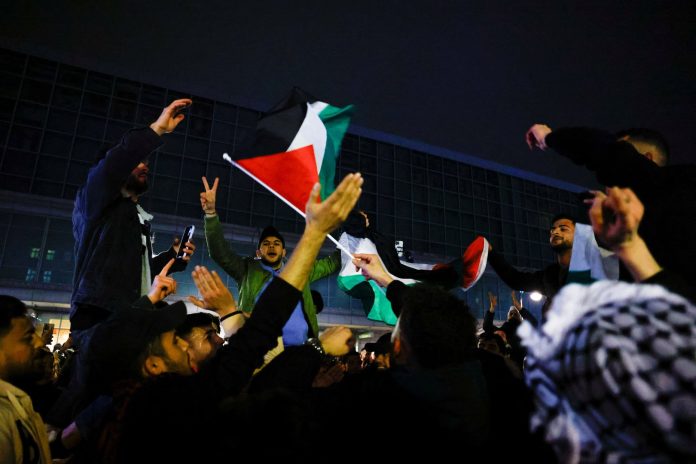
 

Poland told Israeli PM should be detained if he attends Auschwitz event: Report

Benjamin Netanyahu

In letters on Friday, the London-based International Centre of Justice for Palestinians warned Polish officials that they would be in breach of international and domestic law if they failed to enforce an arrest warrant for Netanyahu issued by the International Criminal Court (ICC).

Netanyahu, along with former Israeli defence minister Yoav Gallant, is currently wanted by the ICC over alleged war crimes committed by Israeli forces in Gaza.

As a state party to the ICC, Poland is obliged to enforce warrants issued by the court.

But on 9 January, Poland’s Council of Ministers passed a resolution guaranteeing the “safe participation” of Israeli leaders in the commemorations on 27 January marking the 80th anniversary of the liberation of Auschwitz-Birkenau in 1945.

Polish Prime Minister Donald Tusk said: “I confirm, whether it is the prime minister, the president, or the minister – as it is currently declared – of education of Israel, whoever will come… will be assured of safety and will not be detained.”

But in letters sent to Tusk and his foreign and justice ministers, Radoslaw Sikorski and Adam Bodnar, the ICJP announced that the resolution amounted to the “politicization of the international justice system”.

“The approaching anniversary, inseparably tied with the memory of the victims of the Holocaust, painfully reminds us of the role of an effective international justice system in the face of the gravest crimes,” the letter added.

“Justifying the adopted position as an effort to ‘pay tribute’ to the victims of genocide violates the ideals that underly the international justice system, shaped by the tragic events commemorated by the upcoming anniversary.”

ICJP director Tayab Ali stated: “Should the Polish government attempt to shield individuals accused of such crimes from justice, the ICJP will take immediate and robust legal action in Polish courts.

“Poland, as a state party to the ICC, has a legal and moral duty to cooperate with the Court in bringing perpetrators of serious international crimes to justice.”

There is no indication at present that Netanyahu plans to attend the ceremony at Auschwitz-Birkenau, a former Nazi death camp where more than 1.1 million people, mostly Jews, were killed during World War Two. Polish media has reported that the Israeli delegation will be led by education minister Yoav Kisch.

European countries have taken different positions on the question of whether they would be obliged to arrest Netanyahu if the opportunity arose.

Several countries including the UK, Ireland and Belgium have confirmed that Netanyahu would face arrest. But France in November said it believed Netanyahu would be covered by diplomatic immunity as a head of government.

Asked about Poland’s position earlier this month, a spokesperson for the European Commission called on all European Union countries “to ensure full cooperation with the court, including by the prompt execution of outstanding arrest warrants”.

France calls on Israel to accelerate troop withdrawal from southern Lebanon

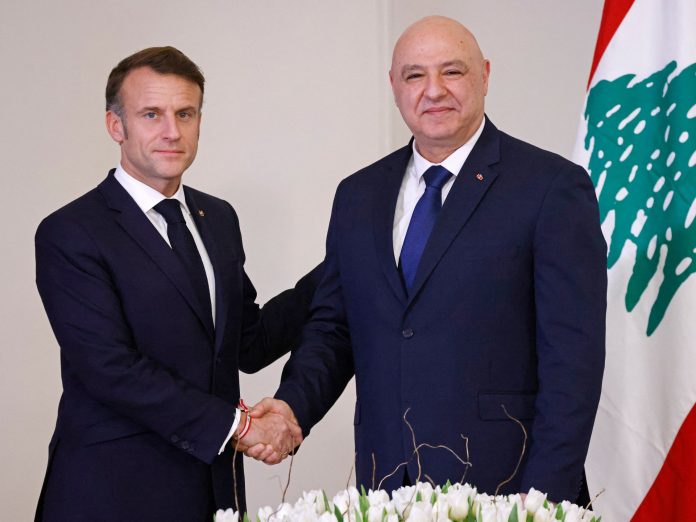
During a visit to Beirut on Friday, Macron also said Lebanon’s military must have a total monopoly on weapons, and he voiced France’s support for strengthening the Lebanese army’s deployment in the country’s south.

“We need a total withdrawal of the Israeli army,” Macron stated, speaking alongside Lebanon’s new president, Joseph Aoun, who was commander of the Lebanese military until his election this month as head of state.

“We support … the increased power of the Lebanese armed forces and their deployment in the south of the country,” the French president added.

Macron is the first foreign head of state to visit Beirut since Aoun was elected by Lebanon’s parliament to fill the vacant post of head of state on January 9, signalling a shift in the country’s power balance after the war, which left Iran-aligned Hezbollah badly weakened.

The ceasefire, which took effect on November 27 and was brokered by the United States and France, requires Israeli forces to withdraw from southern Lebanon within 60 days, and for Hezbollah to remove all its fighters and weapons from the south.

The Lebanese army must also deploy alongside UN peacekeepers in the south as the Israeli army withdraws by January 26.

With just more than a week to go until the cut-off date, Macron called for accelerated implementation of the truce.

“There have been results, … but they must be accelerated and long-lasting. There needs to be complete withdrawal of Israeli forces, and the Lebanese army must hold total monopoly of any weapons” in southern Lebanon, Macron said.

A committee composed of Israeli, Lebanese, French and US delegates alongside a representative from the UN peacekeeping force has been tasked with monitoring the implementation of the ceasefire.

Macron also announced that Paris would host in the coming weeks an international reconstruction conference for Lebanon.

“As soon as the president [Aoun] comes to Paris in a few weeks time, we will organise around him an international reconstruction conference to drum up funding,” Macron added.

“The international community must prepare for massive support to the reconstruction of infrastructure.”

Iran’s executive VP: Approval of FATF will alleviate sanctions pressure

Mohammad Jafar Qaem Panah

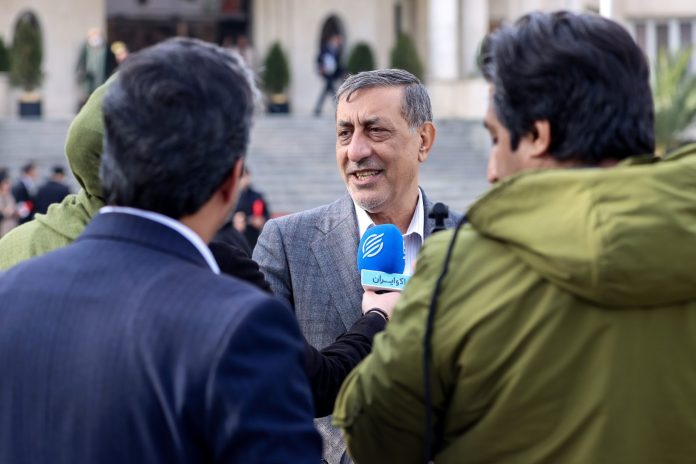
In response to strong reactions from some individuals, including parliament members who are against reviewing the hurdles for Iran’s accession to FATF in the Expediency Council, Mohammad Jafar Qaem Panah emphasized that hearing a single voice is not compatible with democracy.

He stressed that parliament members should be able to express their opinions, and the government is open to listening to opposing views, but reminded that FATF has already been approved by the parliament and cannot be re-voted.

Qaem Panah expressed hope that the approval of FATF in the Expediency Council will alleviate a significant portion of the sanctions’ pressures.

The current Iranian administration has put exiting from the FATF blacklist high on the agenda, arguing not joining the taskforce has deprived the country of many economic opportunities.

FATF is an intergovernmental body that sets standards and regulations for combating money laundering and terrorist financing.

Opponents in Iran argue that accepting the last two conventions and joining the task force would give too much control to foreign actors.