Thursday, December 25, 2025
Home Blog Page 514

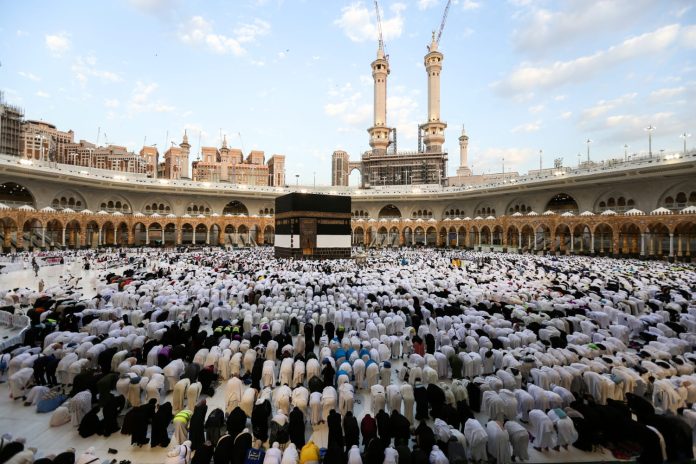
Saudi Arabia opens property investments in two holy cities to foreigners

Hajj

According to a statement from the Capital Market Authority, from Monday foreigners will be allowed to purchase shares and convertible debt instruments in firms owning private or public real estate in the holy cities.

This is despite a continuing ban on non-Muslims directly owning property in the cities, which are coveted by many who see them as reliable, stable locations for investment.

Despite a vast global and domestic investment campaign, Saudi Arabia is still dependent on oil revenue to fund its ongoing economic makeover.

The International Monetary Fund has estimated that Saudi Arabia needs oil prices at $96 per barrel to balance its budget, roughly $20 more than where prices currently stand.

The kingdom has also reoriented its spending from overseas into its domestic market.

One indicator of this was that in 2024, the UAE’s Mubadala surpassed Saudi Arabia’s Public Investment Fund (PIF) as the world’s most active sovereign wealth fund.

The PIF’s spending dropping by 37 percent to $19.9bn in 2024 from $31.6bn the previous year, according to a report by the research consultancy firm, Global SWF.

Although Saudi Arabia has seen little direct foreign investment in its projects, international investors have shown a healthy appetite for Saudi debt.

According to Bloomberg, “investor bids for the $12bn bond exceeded $30bn”, and Saudi Arabia sold $17bn of international bonds in 2024, making it second only to Romania amongst emerging markets.
Iran repatriates over half a million undocumented Afghan nationals

Afghan Refugees

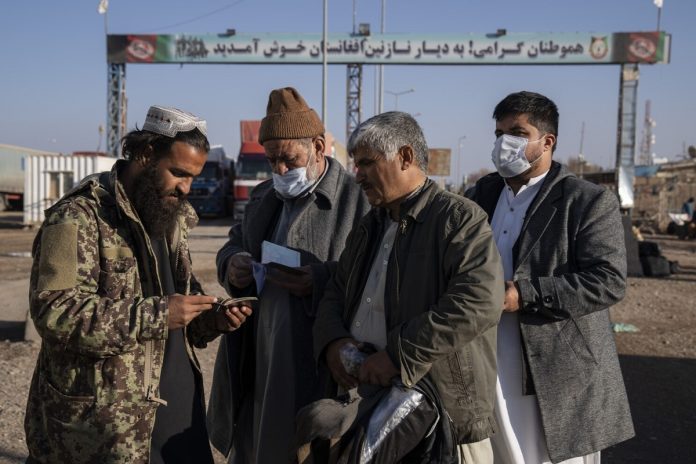
Head of the security affairs of the governor’s office of Khorasan Razavi Province Amir Shamaghdari said the number of border trespassers from Afghanistan has decreased substantially this year.

Shamaghdari however added that there has been an increase in legal entries through the official Dowqarun border, with a high demand for visas from the Afghan side.

He noted that the employment of undocumented foreigners is prohibited in Iran and that the current priority is to identify, organize, and resolve the status of these individuals rather than their immediate deportation.

Shamaghdari noted that the use of advanced technologies for monitoring foreign nationals from entry to settlement and employment is also being implemented.

Unofficial sources say there are ten million Afghan refugees in Iran fleeing conflict and other issues in their country over the decades.

Despite repeated requests for assistance from the UN, Iran has not received substantial support in managing this influx.

US hasn’t won a war in 40 years:  J.D. Vance

US Army

In an interview with CBS News on Sunday, Vance defended the confirmation of Pete Hegseth as the new secretary of defense, which narrowly passed the Senate with a 50-50 tie broken by the vice president himself. Hegseth has faced criticism over his controversial public comments about Islam, limited leadership experience, and accusations of sexual assault, which he has denied.

Vance described Hegseth as a “disruptor” and said he was the right person to usher in long-overdue change.

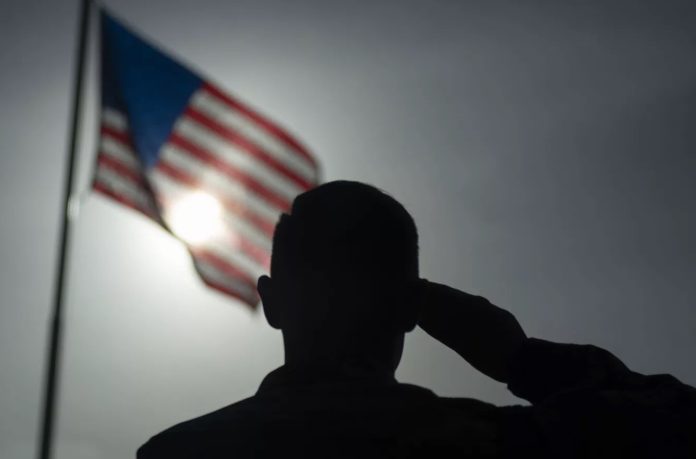
“We fought many wars over the last 40 years, but haven’t won a war about as long as I’ve been alive,” Vance said.

“They’ve got us a military with a major recruitment crisis, a procurement price crisis that’s totally dysfunctional, where we buy airplanes for billions and billions of dollars, terrible cost overruns, the delivery dates are always delayed. So we need a big change,” he continued.

The US has “gotten into way too many wars that we don’t have a plan for winning,” Vance said, adding that “we have to really, top to bottom, change the way that we fund the procurement of weapons.”

Hegseth “is the guy to lead the job,” he insisted, adding that the new secretary, who served in Iraq and Afghanistan, is the one who sees “not through the perspective of the generals or the bureaucrats, [but] through the perspective of the men and women that we send off to fight.”

US President Donald Trump has vowed to end the current conflicts, having already credited himself with brokering the recent ceasefire between Israel and Hamas, while vowing to prioritize domestic issues. Shortly after his inauguration, he ordered additional troops to the US-Mexico border to stave off the migration crisis.

In November, the Pentagon failed its seventh consecutive audit, having been unable to fully account for its $824 billion budget. It has not passed a single audit since 2018, when it became a legal requirement to do so. However, officials have pointed to visible progress, promising to achieve a clean audit by 2028.

Ukraine predicts collapse, if peace negotiations fail to begin by summer

Russia Ukraine War

“If there are no substantial negotiations before the summer, then further very dangerous processes threatening the very existence of Ukraine may be triggered,” the Ukrainska Pravda newspaper has quoted Budanov as saying, citing its source among participants in a closed-door meeting in the Verkhovna Rada.

The daily’s source also said that Budanov dropped this remark “with a cold smile” on his face, which “made everyone look at each other and fall silent.”

In early January, US President Donald Trump admitted that the settlement of the conflict in Ukraine might take more than 24 hours, contrary to what he stated during the election campaign. He expressed his wish to hold talks with Russian President Vladimir Putin on the Ukrainian crisis much earlier than six months after his inauguration. Keith Kellogg, the special envoy for Ukraine in the Trump administration, said that he would like to meet a 100-day deadline.

Putin earlier mentioned conditions for resolving the conflict, which included the withdrawal of Ukrainian armed forces from Donbass and Novorossiya, Kiev’s pledge not to join NATO, the lifting of all Western sanctions on Moscow and Ukraine’s non-aligned and nuclear-free status.

Russia has consistently stated its readiness for peace talks and has accused Kiev of avoiding seeking a diplomatic resolution to the ongoing conflict.

Earlier this week, Putin told Russian journalist Pavel Zarubin that any negotiations between Moscow and Kiev would be “illegitimate” as long as the ban stays in place. Any results of such talks could easily be made null and void, the Russian president warned, adding that, although some preliminary contacts could be made right now, any “serious” steps are not possible until the situation changes.

Putin also called on Kiev’s Western backers to exert pressure on Ukraine and make it lift the prohibition on talks. The Russian president said he believed Kiev was in no rush to lift the ban since it was satisfied with the current situation that allowed it to receive “hundreds of billions [of dollars] from its sponsors” that it can “chomp down on.”

France says to suspend some Syria’s sanctions

Syria War

“We have decided today to lift or suspend certain sanctions affecting the energy, transportation, or financial sectors that currently hinder the country’s economic stabilization and the initiation of the reconstruction process,” said French foreign minister, Jean-Noel Barrot at the doorstep of EU Foreign Affairs Council meeting in Brussels.

“This suspension of sanctions must be accompanied by a political transition involving all Syrians,” Barrot stated, highlighting the necessity for inclusive governance.

He also emphasized the importance of ensuring security in the region.

“Decisive measures must be taken, particularly an unrelenting fight against any resurgence of Daesh terrorism, along with the detection, control, and destruction of chemical weapon stockpiles held by the Bashar Assad regime,” he added.

To bolster these attempts, France will host the third edition of the Aqaba Conference on February 13.

According to Barrot, the event will “bring together Syria’s international partners to provide this support and ensure the implementation of political transition measures and security guarantees.”

This is not only about Syria, but “this also concerns the security of Europeans and French citizens,” he continued.

Israeli PM appears in court for corruption trial after month-long pause

His trial was suspended in December after the premier underwent surgery.

Israeli media published images of Netanyahu entering the courthouse, escorted by his doctor Tzvi Berkovich.

On Friday, Netanyahu urged the court to postpone his trial due to his health condition, but his request was rejected.

Netanyahu pleaded to the court that he wanted to rest for recovery due to his prostate surgery infection.

“Give me a break,” Netanyahu told the court as cited by the daily The Jerusalem Post.

This is the seventh time Netanyahu has appeared in court during his corruption trial.

He faces three separate cases of corruption filed in 2019 against him: Case 1,000, Case 2,000, and Case 4,000, which include accusations of bribery, fraud, and breach of trust.

The Israeli premier denies any wrongdoing, calling the accusations “fake.”

Netanyahu, whose trial began on May 24, 2020, is the first sitting Israeli leader to take the stand as a criminal defendant in the country’s history.

Under Israeli law, he is not required to resign unless convicted by the Supreme Court, a process that could take several months.

Netanyahu also faces charges of war crimes and crimes against humanity, with the International Criminal Court issuing arrest warrants for him and former Defense Minister Yoav Gallant in November 2024 over atrocities in Gaza, where over 47,300 people, mostly women and children, have been killed.

On Jan. 19, a ceasefire agreement took effect, halting Israel’s genocidal war on Gaza.

Homa-ye Saadat, symbol of prosperity, spotted in Iran’s Alamut

Nature photographer Majid Bahrami captured an image of the magnificent bird on Monday, adding to his collection of sightings in the region.

Mehdi Taheri, the commander of Qazvin’s environmental protection unit, stated on Monday that the Homa bird, which represents the biodiversity of Qazvin province, has a wingspan reaching up to three meters in some species.

Despite its size, it is not a predator and primarily feeds on bone marrow.

Taheri emphasized the ecological benefits of the bird and noted its status as a protected species under the Environmental Protection Organization due to its risk of extinction.

He also mentioned that there have been successful breeding records of the bird in Qazvin.

The official further highlighted that the Homa has been frequently spotted and photographed in various mountainous areas of Alamut and Tarom.

Displaced Gazans return home to north, first time since war began

Gaza War

According to the Gaza health ministry, around 650,000 displaced people in the central and southern Gaza Strip will return to their homes in the north of the enclave.

“The passage of displaced Palestinians has begun along the Al Rashid road via the western part of the Netzarim checkpoint towards Gaza City and the northern part of the Gaza Strip,” a Hamas official told AFP.

Footage from Israel’s Channel 12 showed Israeli forces withdrawing from the so-called Netzarim Corridor, enabling civilian movement.

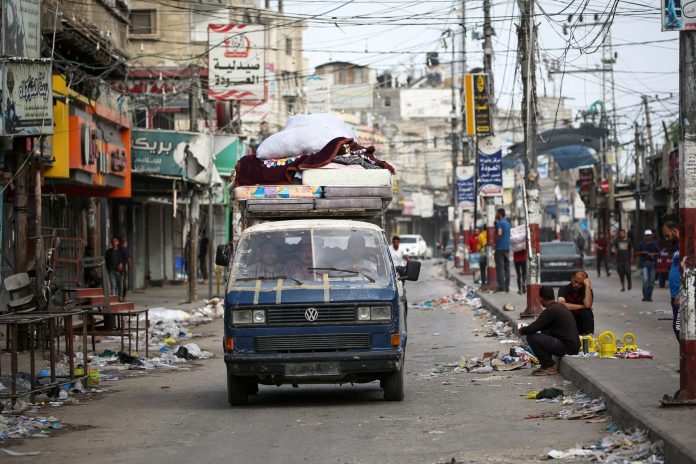
Videos showed trucks, cars, and carts loaded with belongings queuing along the Al Rashid road near the checkpoint, which runs along Gaza’s coastline. Hamas called the return of displaced Palestinians “a victory” for Palestinians and “a setback for Israel”.

The group stressed the images prove “the occupation has failed to achieve its goal of displacing people and breaking their will.”

On Sunday, Israel blocked displaced Palestinians from crossing into northern Gaza, following a dispute over the release of a female Israeli captive.

Qatar, mediating alongside Egypt and the US, announced late Sunday that Hamas would hand over Arbel Yehud and two other captives by Friday. Doha gave assurances Hamas will release additional captives by Friday and Israel will provide a list of 400 Palestinians arrested since 7 October. Following the agreement, Israeli Prime Minister Benjamin Netanyahu said in a post on X that displaced Palestinians would begin returning north on Monday morning.

An Israeli military statement announced that Palestinians will be allowed to cross al-Rashid Street by foot starting at 7am (05:00 GMT) and the eastern Salah al-Din Street by vehicle from 9am (07:00 GMT).

The overwhelming majority of Gaza’s population has been displaced by Israel’s 15-month war, which has devastated much of Gaza and killed over 47,000 people.

Arab League dismisses attempts to relocate Palestinian people in Gaza

Gaza War

“Circumventing these established principles and longstanding commitments, which have garnered Arab and international consensus, will only prolong the conflict and make peace even more unattainable,” it said.

It reiterated that “the just Palestinian cause is one of land and people, and attempts to uproot the Palestinian people from their land through relocation, annexation, or settlement expansion have consistently failed in the past.”

The organization affirmed that such attempts are “rejected and in violation of international law.”

It highlighted that “forcibly displacing people from their land can only be described as ethnic cleansing.”

The statement added “the current phase requires continuous efforts from all parties to solidify and sustain the ceasefire as a precursor to immediately commencing the reconstruction of Gaza and addressing the wounds of its people, who have endured 15 consecutive months of brutal warfare. The infrastructure of the (Gaza) Strip has suffered unprecedented destruction in the history of modern warfare.”

The Arab League called on “all nations that believe in the two-state solution as a pathway to peace to work diligently and immediately to initiate a credible process to achieve this solution and implement it on the ground as soon as possible. This is the only way to ensure security and peace for Palestinians, Israelis, and all peoples of the region and the world.”

Describing Gaza as a “demolition site,” US President Donald Trump called on Saturday to “just clean out” the Palestinian enclave and resettle Palestinians in Jordan and Egypt.

“I’d rather get involved with some of the Arab nations and build housing at a different location where they can maybe live in peace for a change,” he told reporters aboard Air Force One.

“You’re talking about probably a million and a half people, and we just clean out that whole thing and say, ‘You know, it’s over,’” he stated.

His proposal came a week after a ceasefire agreement took effect in Gaza on Jan. 19, suspending Israel’s genocidal war that has killed more than 47,000 Palestinians, most of them women and children, and injured more than 111,000 since Oct. 7, 2023.

The Israeli onslaught has left more than 11,000 people missing, with widespread destruction and a humanitarian crisis that has claimed the lives of many elderly people and children in one of the worst global humanitarian disasters ever.

The International Criminal Court (ICC) issued arrest warrants in November last year for Israeli Prime Minister Benjamin Netanyahu and his former Defense Minister Yoav Gallant for war crimes and crimes against humanity in Gaza.

Israel also faces a genocide case at the International Court of Justice for its war on the enclave.

Controversy surrounding Iranian VP Zarif’s role in US Sanctions, recent criticisms

Javad Zarif

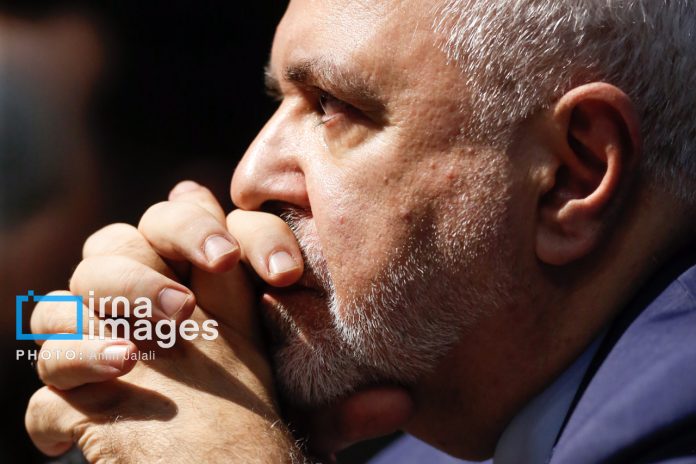
Hossein Shariatmadari labeled him as the true architect of US sanctions against Iran, more so than Richard Nephew, the author of The Art of Sanctions.

Shariatmadari argued that Zarif’s actions during his tenure, including his involvement in nuclear talks as former foreign minister and his recent participation in the WEF, “have significantly contributed to the imposition and intensification of sanctions.”

He accused Zarif of adopting a “submissive stance” in negotiations, which he believes led to piling up US-led Western sanctions instead of removing them.

In Davos, Zarif said, “If today, instead of Massoud Pezeshkian, we had (the far-right candidate) Saeed Jalili as president, there might have been a major war in the region.”
In reaction to his comments, a small number of radical protesters hit the streets of Tehran on Saturday, holding placards reading, “Zarif must be executed!”

In contrast, another conservative newspaper Khorasan criticized the recent vitriols and street rallies against Zarif, highlighting the rise of extreme political rhetoric and the use of harsh accusations such as “treason.”

The article emphasized the need for responsible political behavior and warned against the consequences of divisive language, especially given the current regional and domestic challenges.

Khorasan called for a more balanced and ethical approach to political discourse, urging officials to avoid inflammatory language and focus on constructive criticism.

The newspaper also stressed the importance of maintaining ethical standards in political debates to prevent further polarization of society.