Thursday, January 1, 2026
Home Blog Page 5007

Change is needed in approach to preserving the establishment: MP

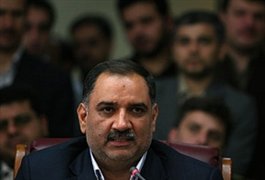
Ali Motahari
Ali Motahari

On December 8, Etemad, a daily, carried an in-depth report about national University Student Day [December 7] and the speeches made to mark the occasion. The following is the translation of part of the report dedicated to a speech by Tehran MP Ali Motahari:

The speech by Ali Motahari was met with a very warm welcome. Slogans were chanted in his favor, with participants hailing him as a shining example of a true principlist. The extent of welcome even caught Motahari by surprise. The crowd was so large that organizers had to let him in through a backdoor of Chamran Conference Hall at Tehran University.

Expressing surprise over the massive turnout for the event, Motahari said in order to critique someone, some rules should be observed.

“The student movement should prepare itself to be critiqued, because it has strengths and weaknesses at the same time,” he said.

“A student is neither a layman nor a scholar, they stand somewhere in between and can plunge into ignorance without knowing it. However, students can play the role of social reformers, because they have an immaculate spirit which is typical of warriors,” he added.

Describing students as the ones who monitor social conditions, he stated, “Nothing can lead our revolution off its course. Of course, the presence of the Supreme Leader is helpful, but his presence does not reduce our obligations. Everyone who comes across injustice should roll up their sleeves and prevent vice.”

He denounced interpretations by some that the rule of the Religious Jurisprudence is a drag on freedom and said, “The problem lies with some followers of the Leader, not with the principle of the Religious Jurisprudence itself, and the Leader himself does not hold such views.”

Recalling a memory about the Supreme Leader, he said, “The Leader embraces criticism with open arms.” Nonetheless, he went on to say that when it comes to critiquing the Leader, his position as the Religious Jurisprudent should be honored, because he rules a school of thought. In the Religious Jurisprudence, it is the jurisprudent that rules not the individual.”

“Presently, anyone who expresses a contrary view is accused of being against the establishment which is wrong. Our second misinterpretation centers on how the establishment should be preserved. Unfortunately, some trample a number of principles to safeguard the establishment. They are under the wrong impression that they can do anything to protect the system. However, the principle of freedom for individuals stipulated in the Constitution forbids the arrest of people unless an indictment has been issued and a trial is swiftly held.

“Things have taken a turn for better and many people have reconciled with the establishment. Despite being harshly critical of it, they take part in annual rallies on February 11 [the victory day of the Islamic Revolution],” he said.

“It looks as if to some people everyone is a seditionist and a subverter unless proven otherwise. These are dangerous conceptions threatening the establishment. We should change our approach to preserving the establishment. I am of the opinion that a majority of students like the establishment and simply seek reforms,” he added.

He described the misinterpretation of freedom of speech as another problem, saying “Some undervalue freedom of speech. The press is the fourth pillar of democracy and can prevent a lot of offenses from happening providing that a considerable number of red lines are lifted.”

“Under the Universal Declaration of Human Rights [Article 18: Everyone has the right to freedom of thought, conscience and religion] everyone is free to think about and worship what he wants. This ideology emerged in Europe and has its roots in Medieval Inquisitorial courts. This concept is contradictory and its contradictions are reflected in the performance of the West. It is not approved of by Islam,” he cited.

Motahari, who is a member of parliament’s Cultural Committee, said, “As for the freedom of speech, strictness still persists. In the previous government, there was a harsh approach. I hope that things will be reformed; President Rouhani honors his pledges.”

When asked about the house arrest [of three people who doubted the results of the 2009 presidential election and stirred up sedition], he said, “Of course, I am not in charge of lifting the house arrest. I only follow up the case because I feel responsible as an MP and the son of a martyr.”

“We should convince each other through dialog and logic, and obstinacy coupled with commotion won’t resolve any issue,” he concluded.

Never ever will Iran roll out the red carpet for the US

Haddade Adel
Haddade Adel

Gholamali Haddad Adel, a principlist MP and a one-time parliament speaker, has said in light of the fact that the blood of many Iranians has been shed it is impossible for the Islamic Republic of Iran to roll out a red carpet for the United States.

The Iranian Students News Agency (ISNA) on December 8 reported the comments of Haddad Adel in a gathering dubbed “We are here as long as the struggle continues” in the University of Tehran to mark national Student Day (December 7). The following is the translation of what he said:

Students should be outspoken advocates of the quest for freedom, truth and independence. They should not allow our enemies and outsiders to interfere in the country’s internal affairs. This is what stands out about students, maybe all over the world.

Sixty-one years ago today Iranian students protested against a trip by Richard Nixon to Tehran which resulted in the murder of three students in the University of Tehran. Sixteen years later Nixon – US vice-president at the time – paid another visit to Tehran and was greeted with stone-throwing student protesters on the streets.

Prior to this event, some would not get engaged in any struggle; some only supported the fight against domestic tyranny, and some others believed that nothing could be done unless foreign despotism was confronted. However, the truth-seeking spirit of students showed that domestic tyranny and foreign despotism could be countered simultaneously.

Students should get engaged in the country’s political issues. They should not remain indifferent to the fate of their homeland. Rather, they are expected to knowingly critique what is happening inside the country since society’s fate is in the hands of the same students.

Political questions should be reviewed critically in universities. Students should talk about fundamental and vital things that the revolution needs to survive. The point is that critical viewpoints should be aired out of commitment to and care for the country, and based on responsibility and conscience.

Students should remain vigilant not turn into tools in the hands of outsiders and foreigners as they walk down the political path. Also they should be vigilant not to lead the student movement off course.

After 1997 we learnt that the US Central Intelligence Agency (CIA) and foreign plotters had plans for Iranian universities and students. They attempted to prompt the students to stand up to the Islamic Republic on student day. That’s why they struggled to prod some people to take on the Islamic revolution on December 7.

The Americans were seeking to simulate the events that unfolded before the revolution. Since the student movement rose up against the regime of the Shah and gained support among people, the enemies thought that such movements can be launched in the era of the Islamic government as well.

It defies common sense to think that a university, which used to be a bastion of the fight against anti-revolutionaries, can change course today and act as the main supporter of the US. The attempts of those who sought to take action against the Islamic establishment misfired because they lacked logic and were only part of a plot dictated to universities.

Islamic Student Associations, Basij in particular, which have acted vigilantly over the years, are expected to insightfully and responsibly act in keeping with the Supreme Leader’s remarks at a gathering of Basij forces.

Questions have been recently raised in student circles as to why the Islamic Republic does not get along with the US or what the sticking point between Iran and the US is. I’ve come here today to provide you with an answer: these are front-page headlines of some newspapers, but to learn about what has gone wrong between the two countries we should look at what the US has done in the world following the Second World War.

In the wake of the War and the collapse of the former Soviet Union, the Americans viewed themselves as the unquestionable master of the entire world or the chief of the global village.

They are after oil wherever it is. The US is present anywhere oil can be found. They fix the prices of crude oil. They put the money they spend [on oil purchase] back into their pockets by selling their consumer products, quality and shoddy goods alike.

Recently, the chokehold death of a black man at the hands of the US police for illegally selling loose cigarettes took Americans, black and white, to the streets from coast to coast. Protesters shouted I can’t breathe – the dying words of the murdered black man. The US treats its own citizen this way, what would it do to us if it got its hand on us?

December 7 should live on in this country as a symbol of the quest for freedom and independence.

Iran hosts international confab against extremism, violence

Iran-WAVE
Iran-WAVE

Iranian president Hassan Rouhani calls on the United Nations (UN) to play a more active role in the campaign against terrorism.

President Rouhani made the remarks on Tuesday in his opening speech at an international conference on the World Against Extremism and Violence (WAVE) in the Iranian capital, Tehran with participants from more than 40 countries attending the two-day event.

Rouhani also called for boosting regional and international cooperation to build a world free of violence.

He urged those states that support Takfiri terrorist groups to renounce violence and terror.

Senior political officials, intellectuals and delegates from some Asian, African and South American countries such as Iraq, Syria and Nicaragua are attending the event.

Iraqi Foreign Minister Ibrahim al-Jaafari and his Syrian counterpart Walid Muallem are in Tehran to participate in the meeting. The two countries have been hit by the ISIL militancy.

On December 18, the UN General Assembly overwhelmingly voted to approve President Rouhani’s WAVE proposal, which calls on all nations across the globe to denounce violence and extremism. The Iranian president made the proposal in his address to the UN Disarmament Conference in New York on September 25.

Tehran Conference comes against the backdrop of the growing threat of violence and extremism across the Middle East, particularly the atrocities committed by Takfiri ISIL terrorists in the Middle East.

The Takfiri militants have seized swathes of land in Iraq and Syria. They have carried out horrific acts of violence in the two countries, including public decapitations. ISIL has also killed people from Shia, Sunni, Kurd and Christian communities in Iraq.

Iran to unveil 40 great oil projects at London conference

Iran Gas Oil
Iran Gas Oil

A National Iranian Oil Company (NIOC) official said Iran is to introduce 40 grand oil projects at a London Conference due in March 2015.

Moshtaq Ali Gohari who is the deputy chief of the company told reporters on Monday that the NIOC will unveil over 40 oil industry projects during the conference.

Most of the projects are related to South Pars and West Karoun oil fields, he said.

The official noted that they are mainly conducted in upstream oil industry as well as exploration and development activities.

He anticipated that disclosure of projects will fetch about $40 billion worth of investment for the projects.

Business as usual after 20 years; A German delegation is in Iran

Iran-Germany-Trade
Iran-Germany-Trade

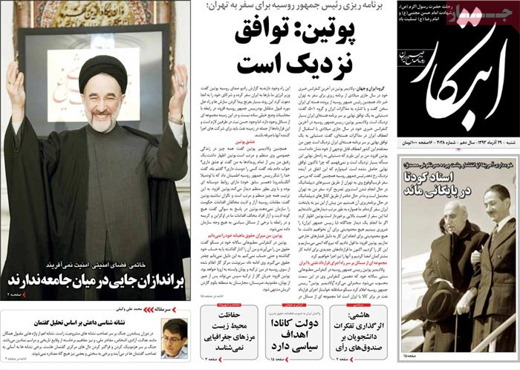
Ebtekar newspaper on December 8 reported that a German trade delegation, which is in Iran for mutual consultation, has entered direct talks with Iranian officials. The following is the translation of the report:

The German delegation, which is in Iran after 20 years, opened direct talks with Iranian businessmen in Iran’s Chamber of Commerce, Industries and Mines (ICCIM).

Since last year when the Geneva talks got underway [over Iran’s nuclear program], different trade delegations have come to Iran to size up investment opportunities in the country. The trip by the German delegation comes after a visit by a French group.

The German team is comprised of the representatives of 29 companies and 34 tradesmen together with the heads of the German Near and Middle East Association (NUMOV) which has played a key role in Germany’s trade ties over the past 80 years.

According to Burkhard Dahmen, an NUMOV vice president, the business team intends to assess Iran’s investment opportunities in the areas of transportation, machinery, foodstuff and technology.

Management of water resources is another issue the Germans are to exchange information with Iranian officials about.

Dahmen also said that the Iranians have positive views of the Germans and we hope we can encourage politicians [on both sides] to explore the ways of enhancing relations.

The German delegation will continue its meetings in Tehran until Tuesday December 9, and has on its agenda plans to meet with Minister of Agriculture Mahmoud Hojjati and Minister of Industry, Mines and Trade Mohammad-Reza Nematzadeh.

[Footer: The German Near and Middle East Association is Germany’s oldest and largest non-profit and independent service provider for the Near and Middle East region. NUMOV supports bilateral business activities between Germany and the Near and Middle East (the Arab countries, together with Afghanistan, Cyprus, Iran, Israel, Pakistan and Turkey). By organizing seminars, conferences and business delegations, it encourages member companies to develop their business activities in the region.]

Iran should abandon talks in case they are dragged into a third stage: MP

Mohammad Kosari
Mohammad Kosari

A member of Parliament’s National Security and Foreign Policy Committee has said Iran would walk out of nuclear talks if they entered a third stage.

Mohammad [Esmail] Kosari told Mehr News except for initial agreements in Geneva that date back to November 2013, no other breakthrough deal has been signed. “We believe that after a year or so, there has been no practical agreement at all. Extension of talks is an outcome and indication of the failure of both sides in hammering out a deal, which forced them to extend the time to negotiate,” he said.

“The government should not put all its eggs in the negotiation basket; if it expects successful negotiations, it should set limits to the talks so that it would not go beyond a certain line,” said Kosari,

“If this second stage of talks also fails, and there is a third stage, the government should abandon the talks altogether; if the government does not have the support of the nation, it definitely will suffer in the talks,” he emphasized.

He recommended the government rely on domestic capabilities for country’s development now that it has become evident that the West and the US cannot be trusted.

Former VP urges students to be tolerant of opposing views

Mohammadreza Aref

The Iranian Student News Agency (ISNA) on December 7 – national Student Day in Iran – filed a report on the remarks of Mohammad Reza Aref, a member of the Expediency Council and a one-time vice-president under reformist Mohammad Khatami, at a ceremony to mark the occasion in Shahid Beheshti University.

In his speech, the former VP called on university students to open-mindedly listen to different viewpoints and show tolerance for opposing views. What appears below is a partial translation of his remarks followed by what happened on the sidelines of the event:

[…] Idealism, anti-colonial moves, and endeavors to help institutionalize revolutionary values were among the salient features of the student movement in Iran in the first decade of the revolution.

[…]

Students are expected to be the flag-bearers of science, freedom and sagacious criticism, meticulously analyze the country’s situation, remain insightful and tactful when it comes to their homeland’s issues and not get entangled in marginal questions.

Conducting a critical analysis of the student movement is imperative. Narrow-mindedness and bad taste are to blame for failure to hold open-thinking forums in spite of the emphasis high-level officials [including the Supreme Leader] have placed on the question.

Students should avoid hasty decisions and sentimentalism. We need to remain on the scene and advance our objectives in stages and by degrees.

The harsh decisions we make may produce effective results in the short run, but they are of no use in the long run. Reliance of the student movement on off-campus political currents has been a drag on the movement, something which has come at the expense of their independence.

Students should take heed of the country’s macro-issues, form think tanks to plan the course of action they are to take and draw on the viewpoints of veteran activists in their movements.

Ethics and moral conduct are needed to woo people in such movements. Student movements should vie [to win over more audience], not to eliminate each other.

As far as foreign policy is concerned, the Supreme Leader determines in what direction the country should be moving and what policies it should adopt, including ties with the US, and we all follow his guidelines.

[…]

As for concerns that reformists may be disqualified by the Guardian Council and banned from running for parliament [in election slated for March 2016], I should say that people have a big say in the country’s affairs; they choose the officials through their direct and indirect vote. […] We need to have a powerful, expert and resourceful parliament and our MPs should look at things from a national angle.

[…]

Nobody lost in the 2013 elections. The election in 2009 was a lose-lose race, we had a win-win election four years later. […] We should not prejudge the upcoming parliamentary election. I hope the Guardian Council and [its] Supervisory Committee act in keeping with the provisions of law. […]

We are not concerned about possible disqualifications since reformists have enough competent names [to put forward]. We have to think positive and push for a big turnout. The reformist mindset will emerge winner if we can secure the swing and silent votes.

[…]

Developments in universities over the eight years [President Ahmadinejad was in office] led up to a point in which only one voice was heard, but students came to terms with it. The Science Ministry should feel it its duty to restore liveliness to universities. Of course over the past months uncertainty has reigned at the ministry due to the absence of a minister who could call the shots. […] Now the ministry has a boss who will restore stability. I hope student demands will be met in a few months with the help of the science ministry.

Some officials in universities have not taken the message of the 2009 elections. Either they cannot or don’t want to understand this message and public demands and adapt themselves. The government has paid a price for it. The government has remained steadfast in supporting the students’ demands. Never did it budge on its nominations for the science ministry.

If you hadn’t turned out to vote in 2013, Rouhani would not have won the election. This is tough for his rivals to digest. They prefer to see a closed, tense atmosphere in universities. So the onus is on students to rejuvenate universities.

Students are expected to tolerate each other. We all want to see the country grow. […] If the current trend persists and we cannot tolerantly accept the views of others, the atmosphere in universities will remain tense.

In the capacity of a university professor, I have always tried to support the students regardless of their political affiliations. I do not even distance myself from those whose ideas do not square with those of the revolution. I try to attract them since they are all the children of this country.

Silence is not what we pursue. We float our critical points in friendly meetings with the government and try our best to offer constructive criticism, something in line with national progress.

On the sidelines of the ceremony

Students taking part in the ceremony were chanting, “Students can easily accept to die, but degradation never they will buy”, “Hail to Aref, Long live Rouhani”, “Hail to Hashemi, Long live Rouhani”.

Some students carried placards which read, “Down with those who turn sedition into a business”. Other placards [carried by an opposing group of students] read, “Down with seditionist”.

Also in the ceremony, a clip produced by Shahid Beheshti University’s Islamic Association of Students was broadcast. Images of Rouhani, Hashemi Rafsanjani, Towfighi, Faraji-Dana, and Seyyed Hassan Khomeini in the clip prompted the students to let out rousing, loud cheers and applause.

As always, Aref was accompanied by his wife, Hamideh Moravej, in the ceremony.


A look at Iranian newspaper front pages on Dec. 9

Iranian Newspapers Headlines

A meeting in Tehran on ways of promoting healthy administrative strategies and countering corruption and the message the Supreme Leader sent to the meeting, which was attended by senior state officials, dominated the front pages of Iranian newspapers on Tuesday. In the message the leader urged officials with the three branches of government to match their words with action in turning up the heat on corruption. The comments of the executive, judiciary, and legislative chiefs in the same meeting made front-page headlines, too. Also in the headlines was the statement of the visiting Iraqi Foreign Minister Ibrahim al-Jaafari that Baghdad does not have any problem with Iran conducting air raids against IS positions on Iraqi soil.

Abrar: “Babak Zanjani [a businessman who stands accused of massive corruption] has siphoned off more than $2 billion in public funds,” said Iranian Oil Minister Bijan Namdar Zanganeh.


Abrar newspaper 12-09


Abrar-e Eghtesadi: Iran’s exports to African and Arab countries have registered a 45 percent hike.


Abrar Eghtesadi newspaper 12-09


Afarinesh: The Intelligence Ministry has stopped almost $2 billion in tax evasion over the past year.


Afarinesh newspaper 12-09


Afkar: “The monopoly of a single institution over resources breeds corruption,” President Rouhani told a national gathering to promote healthy administrative strategies and counter corruption.


Afkar newspaper 12-09


Aftab-e Yazd: “The measures the current government is taking are redressing the problems caused under the previous government,” said Parliament Speaker Ali Larijani.


Aftabe Yazd newspaper 12-09


Arman-e Emrooz: There are as many as 40 million Internet users in Iran.


Arman newspaper 12-09


Asrar: “A clean air bill is waiting for parliamentary approval,” said the director of the Environment Protection Organization.


Asrar newspaper 12-09


Ebtekar: “Cash subsidies won’t increase next year,” said Government Spokesman Mohammad Bagher Nobakht.


Ebtekar newspaper 12-09


Ettela’at: As many as 40 major Iranian oil projects are to be announced in a Conference in London.


Ettelaat newspaper 12-09


Hadaf va Eghtesad: “Germans are eagerly waiting to return to Iran’s petrochemistry market,” said the Iranian deputy oil minister.


Hadaf va Eghtesad newspaper 12-09


Hambastegi: “Our talks with the United States solely focus on the nuclear issue,” said Iranian Foreign Minister Mohammad Javad Zarif.


Hambastegi newspaper 12-09


Hemayat: Judiciary Chief Ayatollah Sadegh Amoli Larijani has urged executive institutions to focus more on areas which have the potential for corruption.


Hemayat newspaper 12-09


Iran: “Removal of sanctions is imminent,” said Government Spokesman Mohammad Bagher Nobakht.


Iran newspaper 12-09


Iran Daily: Iran to introduce oil contracts in London Confab.


Iran Daily newspaper 12-09


Jahan-e Sanat: “Some $40 billion worth of projects across Iran are waiting for foreign investment.”


Jahane Sanat newspaper 12-09


Javan: “There are no problems with Iran conducting air strikes against IS in Iraq,” said the Iraqi foreign minister who is in Tehran to attend a conference on World against Violence and Extremism.

Javan: “Why is it that serious measures are not taken in the fight against corruption?” the Supreme Leader asked in a message to a gathering to promote healthy administrative strategies and counter corruption.


Javan newspaper 12-09


Kayhan: “Instead of organizing seminars, serious measures should be taken in the fight against corruption,” said the Supreme Leader in a message to an anti-corruption conference in Tehran.


Kayhan newspaper 12-09


Khorasan: The heads of the three branches of government have underlined measures to crack down on corruption.


Khorasan newspaper 12-09


Mardomsalari: As many as 800 thousand Iranians have crossed the border into Iraq to take part in ceremonies to mark Arba’een [a Shiite religious observance that comes 40 days after Ashura, which marks the martyrdom of the grandson of Prophet Muhammad].

Mardomsalari: The managing director of Persepolis Football Club, who is in prison after sponsors filed a suit against the Reds, cannot have visitors.


Mardom salari newspaper 12-09


Qods: “Venezuela and Mexico are interested in purchasing Iranian-made drones,” said the chairman of Parliament’s National Security and Foreign Policy Committee.

Qods: The head of the Securities and Exchange Organization is to be replaced.


Qods newspaper 12-09


Resalat: “If parliament does not revise [the government-proposed] budget [for Tehran Municipality], we will have problem running the capital,” said Tehran Mayor Mohammad Bagher Ghalibaf.


Resalat newspaper 12-09


Sayeh: “Airstrikes by the Zionist regime against Syria are designed to boost the morale of terrorists,” said Iranian Foreign Minister Mohammad Javad Zarif.


Sayeh newspaper 12-09


Sharq: “Twenty mid-level managers of the previous government have been arrested for fraud,” said the intelligence minister.


Shargh newspaper 12-09


Taadol: Senior state officials on alert to turn up the heat on corruption.


Taadol newspaper 12-09


Vatan-e Emrooz: Parliament’s Planning and Budget Committee has established that government has unlawfully tapped into the National Development Fund.


Vatane Emrouz newspaper 12-09


Iraqi political, ethnic groups must reinforce unity: Iran’s Larijani

Larijani-Jaafari

Iran’s Parliament (Majlis) Speaker Ali Larijani says political and ethnic groups in Iraq should strengthen their unity in the current “very sensitive” situation in the country.

Larijani, who was speaking during a meeting with Iraq’s Foreign Minister Ibrahim al-Jaafari in Tehran on Monday, also said that Iran is prepared to transfer its experience to the new Iraqi government and help it settle domestic problems.

The Iranian Majlis speaker further criticized the US and its allies for not being serious in their fight against the ISIL terrorist group. He referred to the remarks by US statesmen that the fight on the terrorists in Iraq would take years and said such comments indicate how the Americans have hidden plots.

Iraq is facing a terrorist campaign by Takfiri ISIL militants, who currently control swaths of territory across the country as well as in Syria. They have been committing heinous crimes in the captured areas, including mass executions and beheading of local residents as well as foreign nationals.

A US-led coalition has been conducting airstrikes against ISIL inside Iraq since August.

This is while many of the countries in the US-led bombing coalition, such as Saudi Arabia and Qatar, have been the staunch supporters of the Takfiri ISIL elements in the region.

During the meeting with Larijani, the Iraqi foreign minister, for his part, said Iran, as a powerful country in the region and across the world, has a special position in Iraq’s foreign policy.

He added that the exchange of visits between Iranian and Iraqi officials would improve mutual relations and called for Iran’s participation in the reconstruction of war-stricken Iraq.

Jaafari arrived in Iran on Sunday at the head of a delegation to attend a two-day international conference on the World Against Extremism and Violence (WAVE) in Tehran, scheduled to open on Tuesday in the presence of envoys from 40 countries.

How principlist daily reacts to President Rouhani’s Student Day speech

kayhan-12-08

The speech President Rouhani made at Iran University of Medical Sciences on Sunday to mark University Student Day drew a strong reaction from Kayhan whose managing editor Hossein Shariatmadari had the following to say in the editorial of the principlist daily on Monday December 8:

[…]

There have been two glorious peaks in the history of the student movement in Iran. Thanks to the crucial nature of each of these two events, they have turned into  momentous days [in Iranian history]. December 7 and November 4. On both occasions Iranians stood up to the United States and condemned the criminal acts of this hegemonic power.

December 7 has been registered as University Student Day in the calendar of the Islamic Revolution. November 4 is known as the Anti-Hegemony Day. Special ceremonies are held [each year] on these two days to commemorate epic-making moments in Iranian history.

Down with America is an integral part of the identity of these two occasions which are meant to challenge the US administration, as the late Imam Khomeini said not the American people, for the crimes, plundering and killings it commits.

Obviously, if speeches made on ceremonies to mark these two occasions fail to encourage the public to take on the murderous United States and if they do not identify the Great Satan as the main enemy of the nation, Islam and revolution, they have in fact distorted the true nature of these two epic occasions.

Such failure would amount to disregard for the blood of those who were martyred on December 7, 1953 and disrespect for the glorious takeover of the Den of Espionage in favor of the enemy. It is just like failure, in ceremonies to mourn the martyrdom of Imam Hussein, to mention the crimes Yazid, Shemr, Amr ibn Sa’ad and Ibn Ziyad committed.

One should not forget the fact that mourning ceremonies are designed to keep the memory of the grandson of Prophet Muhammad alive and remind the faithful of the crimes Yazid and his followers committed back then, crimes which are being repeated by some in this day and age.

On Sunday, Dr. Rouhani, the esteemed President of the Islamic Republic, who was at Iran University of Medical Sciences for a speech to mark University Student Day talked about anything but the primary theme of the event: the necessity of countering the US and the crimes this renegade power commits.

There are a few points about the esteemed president’s comments before the carefully chosen audience on Sunday. The present article does not seek to go into detail; it simply reminds the readers of a few points.

Despite expectations, in a speech to honor the memory of those who fell martyr on December 7, 1953, the president made no mention of the US role in the murder of three Iranian students and other heinous crimes the US has since committed.

Instead, the president used the occasion to praise the foreign policy of his own government by saying: Today everyone knows that the government of the Islamic Republic of Iran is against violence and extremism, otherwise the Iranian-proposed World against Violence and Extremism initiative put forth at the UN General Assembly wouldn’t have been voted for almost unanimously with the exception of two or three countries, including the US and Israel.

The president’s comments were meant to praise his government, not recall the crimes committed by the United States. Didn’t the General Assembly unanimously – the US and Israel included – vote for the Dialogue among Civilizations initiative of Mr. Khatami? Why was it that President George W. Bush later called Iran part of an Axis of Evil? Mr. President, why have you pinned so much hope on the vote for your anti-violence initiative?

[…]