Monday, December 29, 2025
Home Blog Page 5002

Elecomp 2014 opens in Tehran

Elecomp Exhibition Tehran

The 20th International Exhibition of Electronics, Computer and E-Commerce (Elecomp 2014) opened on Tehran’s Permanent Fairground on Sunday.

The inaugural ceremony was attended by several high-ranking Iranian officials including Minister of Culture and Islamic Guidance Ali Jannati, Head of the National Cyberspace Center Mohammd-Hassan Entezari and Head of the Chamber of Commerce, Industries, Mines and Agriculture Gholamhossein Shafeie.

Over 300 Iranian and 20 foreign companies from China, the UAE, Germany, Turkey, Russia, India and Italy are participating in the four-day event which will close on December 10.

Former negotiator defends Iranian general, the country’s nuclear program

Hossein Mousavian

On December 7, Tasnim News agency posted the remarks of Hossein Mousavian, a former Iranian diplomat and a current researcher at Princeton University, in response to strongly-worded criticism of Iran by two Western officials at a regional security summit dubbed Manama Dialogue (5-7 December 2014).

At the meeting in the Bahraini capital, Canadian Foreign Minister John Baird described Major General Ghasem Soleimani, the commander of Iran’s Quds Force, affiliated to the Islamic Revolution Guard Corps, as a representative of terrorism who tries to cast himself as an anti-IS hero. At the same forum French Defense Minister Jean-Yves Le Drian decried Iran as a threat to global security. The following is a partial translation of Mousavian’s response to the Western officials:

Mr. minister [a reference to John Baird], while you spend your time in palaces and hotels across the region, Major General Ghasem Soleimani puts his life on the line, fighting against IS and terrorist groups on the frontlines. However, you pin the blame of IS acts of terrorism on Iran. It is widely known that acts of terror by IS, al-Nusra Front, the Taliban and al-Qaeda have roots in a harmful ideology championed by members of the Persian Gulf Cooperation Council (PGCC).

What have you done to uproot terrorism? IS and other terrorist groups have been born and bred with the flow of financial and arms aid of PGCC countries. What action have you taken in the face of such disturbing fact? These are the facts that no one dares bring up at this forum.

Over the past 35 years, America has led hostile measures against Iran. Even the US has praised Iran’s positive role in the battle against IS. Earlier, US Secretary of State John Kerry described as ‘positive’ Iran’s role in the fight against IS. While America has admitted to the positive role of Iran, the question is why US allies unfairly take a swipe at Tehran at this forum.

Mr. Minister [directed at Jean-Yves Le Drian], you denounced Iran as a threat which gives rise to the proliferation of nuclear weapons. You know that Iran does not have a nuclear bomb and there are no signs that Iran has not deviated from its peaceful nuclear program. You know as well that Israel is the only country in the region which has a large arsenal of nukes, posing a threat to the peace and security of the region.

Why have you never raised such a matter and will never bring it up? Mr. Minister! You know that the primary objective of the Nuclear Non-Proliferation Treaty (NPT) is nuclear disarmament. The five world powers which are in nuclear talks with Iran have 22,000 nuclear bombs together and have breached the NPT for four decades.

Have you dismantled your 22,000 nuclear bombs? Why hasn’t France disarmed its nukes? Why does it violate the NPT? Surprisingly, France and other world powers have established strategic ties with the countries which have not entered into the treaty like Israel and Pakistan, while they slap sanctions against Iran. It comes as Iran is a signatory to the NPT and does not have a nuclear bomb. What strikes me as surprising is that France has even helped Israel with building nuclear weapons. Why do you turn a blind eye to such facts?

It’s worth noting that the French defense minister failed to produce any response to the questions posed by Mousavian about Iran’s nuclear program and only said that France, the International Atomic Energy Agency (IAEA) and other major powers have yet to be convinced about the peaceful nature of Iran’s nuclear program.

Iran to launch satellite into space in two months

Hamid Fazeli

Deputy Head of Iran’s Space Agency (ISA) Hamid Fazeli expressed hope that the country would launch a satellite into space by late January.

‘Sharif Sat’ built by Iranian experts at Sharif Poly Technique University, Fajr (Dawn) and Tadbir (Wisdom) satellites are ready to be sent into space.

He further noted that ‘Sharif Sat’ and ‘Fajr’ satellites are top priorities to be launched by late January.

Fazeli also noted that Nahid (Venus) satellite would be sent into space soon.

In July, the ISA formulated a 10-year strategic plan which incorporates three main sections, including sending humans as well as telecommunications and remote sensing satellites into space.

Iran launched its first locally-built satellite, Omid (Hope), in 2009. The country also sent its first bio-capsule containing living creatures into space in February 2010, using Kavoshgar-3 (Explorer-3) carrier.

The country is one of the 24 founding members of the UN Committee on the Peaceful Uses of Outer Space, which was set up in 1959.

Foreign investors interested in Iranian market

Gholam Hossein Shafei and Karsten Dybvad

The head of Iran’s Chamber of Commerce, Industries and Mines has said the rise in the number of business delegations to the country shows foreign investors interest in Iranian market.

Gholam Hossein Shafei, in a meeting with the head of Confederation of Danish Industry, stated that following the 2013 election a new chapter opened in economy. “We have overcome inflation and moved towards development of trade and foreign investment. Our private sector has also flourished and plays a prominent role in the economic field.”

He added that the government has commenced new constructive ties with countries around the world, especially the Europe.

Shafei stated that foreign countries showed much interest in Iran’s market and the country has been witnessing an escalation in the number of business delegations visiting Iran.

He said that considering the market of neighboring states, countries of the Commonwealth, the Middle East and the Caucasus, Iran had a huge customer market with a population of 300 million, which has huge potential for bilateral, trilateral and multilateral cooperation.

Shafei also pointed to the position of Denmark in Iran’s market and said, “Denmark has been present in Iran’s diary industries for over 50 years and more than 80 places in Iran have been cooperating with Denmark in this regard. There has also been cooperation in pharmacy, cement, urea and ammoniac industries as well.”

Head of Confederation of Danish Industry Karsten Dybvad, for his part, said that the confederation “is a private organization with about 10 thousand members of industrial, transportation and serving sectors active in the international arena.”

As for Iran’s nuclear talks with 5+1, he expressed hope that the talks would bear positive outcomes by the next summer deadline.

80% of Iran capital punishments for drug offences to go away

Mohammad-Javad-Larijani

Iran is making a big stride in reducing the number of death penalties being meted out in the country for drug offences, a top Iranian human rights authority says.

The number of drug-related death penalties could be reduced by 80 percent if the current laws change, said in an interview with France 24. He also stressed the move has nothing to do with the West’s criticism of the number of executions in Iran.

“….if the law passes the parliament, almost 80% of the executions will go away. This is big news for us, regardless of the Western criticism,” Larijani, who serves as the secretary of Iran’s Human Rights Council, said in the interview.

Larijani’s comments came as Iran’s Judiciary Chief Ayatollah Sadegh Amoli Larijani said earlier in December that Iran’s drug and trafficking laws were not effective and need to be modified.

Sharing a relatively long border with Afghanistan, Iran is one of the major corridors of drug trafficking in the region. Thousands of traffickers, most of them armed, are arrested annually by Iranian police and border guards. Based on Islamic and national laws, those involved in large-scale transfer and trafficking of drugs are sentenced to death by Iranian courts.
Elsewhere in his remarks, Larijani denied US reports that Iran had carried out airstrikes against the ISIL terrorists in Iraq.

“We do not endorse these claims by the Pentagon. However, this (Iraq’s) human crisis is the result of wrong policies adopted by the US and some of its European allies,” he said.

The human rights chief also elaborated on the situation of the American journalist Jason Rezaian, who has been jailed in Iran on security charges. He expressed hope that his case will be presented to court “as soon as possible.”
Free museum admission for students

Iran Malek Museum and Library

Museums in Tehran province will be charge students no admission fees on December 7 to mark the national Student Day, an official said.

“The museums affiliated to Tehran’s Cultural Heritage Department and some museums affiliated to Tehran’s municipality including Reza Abbasi, Carpet, Abgineh, The Stone and Iranology Museum of Azadi Tower, as well as Film Museum of Iran will be free for students”, head of Tehran’s Cultural Heritage, Handcrafts and Tourism Department said.

Rajabali Khosroabadi also added the Museums of Post and Telegraph, Dr. Sondouzi, Geology as well as Vaziri Caved Museum and Saba Music Museum will be free for the students.

“The plan will indeed encourage the students to visit museums”, he noted.

The Student Day marks the anniversary of the murder of three Tehran University students on December 7, 1953 by the security police of the former Pahlavi regime.

The police opened fire on the students protesting the resumption of Iran’s relations with Britain and a visit by then US vice President Richard Nixon to Iran, following a coup staged by the CIA and the MI6, which toppled the government of Prime Minister Mohammad Mosadeq.

Every year Iranian students mark the day by attending different ceremonies and events.

[…]

Iran hosts Nelson Mandela poster exhibition

Nelson Mandela poster exhibition in Iran

Iran has launched an international poster exhibition in the capital, Tehran, in honor of anti-apartheid legend Nelson Mandela.

The exhibition entitled ‘Nelson Mandela, Bird of Liberty’ is being held at the Iran Artists Forum to commemorate the first anniversary of his death.

Some 76 designs, selected out of 422 works submitted by 63 artists, are being showcased at the exhibition scheduled to run December 5-12.

The posters represent countries including Spain, Germany, Argentina, Ecuador, Italy, England, the US, Peru, Turkey, Denmark and Japan.

South Africa has marked the first anniversary of Nelson Mandela’s death at Freedom Park in Pretoria in remembrance of the country’s freedom icon.

“South Africans have to continue building on Mandela’s legacy, which includes playing an active role in the international community,” said Minister of Science and Technology Naledi Pandor during a speech at the ceremony.

“Nelson Mandela might not be here any longer to guide South Africa, but for many, it’s hoped his positive memory can still have an impact on how the country develops,” Pandor also stated.

South Africa’s former president passed away at age 95 in his Johannesburg home on December 5, 2013.

After years of resistance against the apartheid rule in South Africa, Mandela was arrested in 1962. He was sentenced to life in prison, where he served over 27 years.

Nelson Mandela served as president of South Africa from 1994 to 1999, and was the first South African president to be elected in a fully representative democratic election.

Central Bank chief expounds on new banking corruption case

Valiollah Seif
Valiollah Seif - Governor of the Central Bank

On December 7, the Islamic Republic News Agency (IRNA) filed a report on the explanations of Governor of the Central Bank Valiollah Seif on a corruption case involving an Iranian bank. What follows is the translation of his comments made during a live TV show on Channel One:

The corruption took place between 2006 and 2012, but we learned about it only last year.

After the mishandling of money in the banking system emerged in late September 2013, an investigation was launched and judiciary officials were filled in on the case.

That some have alleged upwards of $4 billion has been siphoned off is not true. In fact, $23 million was the maximum amount of money those implicated in the case got their hands on. Thanks to the banking activity the money in question set in motion, the overall figure rose to around $4 billion.

So far, all those involved in the case have been identified and indicted; one individual is under arrest.

Aside from paying back the initial amount of money borrowed from the bank, those involved in the case face fines calculated on an interest rate of 34%. Four tranches of the six-installment fines have already been paid and the last is due next month.

To safeguard the interests of the bank involved in the case, the announcement of the corruption case was delayed.

Reopening of British embassy; a game of ifs and buts

british embassy in tehran

Etemad newspaper ran a report on December 6 by Ehsan Badaghi on ifs and buts surrounding the reopening of the British embassy in Tehran, citing an Iranian MP as saying that the mission is likely to resume its operations by March 2015. The following is the partial translation of the report:

A new layer of paint coated the tacky gate of the British embassy in Tehran in August, giving a new face to it. But it has so far failed to change the official tone between Tehran and London which soured even further in November 2011.

It was a few months ago, in early August, when strong rumors swirled around the possibility of the reopening of the British embassy in Tehran. Although officials on both sides declined to fix a date for the reopening, they agreed that it would happen “shortly”.

Almost five months on, ties between the two countries have yet to see any practical change. Although a historical meeting between Hassan Rouhani and British Prime Minister David Cameroon on the sidelines of the 69th annual session of the UN General Assembly was a turning point in post-revolution Tehran-London relations, it did little to open the padlocked embassies in Tehran and London. “By yearend” [March 21, 2015] is the possible date the co-chairman of the Iran-UK parliamentary friendship group has floated for the unlocking of the two closed doors.

Iran-UK ties, ifs and buts

What Abbasali Mansouri Arani told the Young Journalists Club on December 5 about the reopening date comes with some ifs and buts. “If the British embassy reopens in Tehran, the problem associated with granting visa should be solved. First the consular part should be activated.”

What seems to be certain is the uncertainty about such an event taking place. Tehran-London ties have been battered by some storms over the past four years. An attack on the British embassy in Tehran in November 2011 was followed two years later by a trip to Iran by a British parliamentary friendship group chaired by the ex-foreign secretary Jack Straw. And the historic September meeting in New York between the two countries’ heads of government, the first in 35 years, took place less than a year later.

Those who stormed the British mission in the Iranian capital still stick to their guns saying that what they did back in 2011 was correct. The other side of the coin shows that those who are pushing for the normalization of ties believe that Iran’s national interests will be better served if tensions in relations between the two nations are eased.

These two groups go to great lengths to determine the policies adopted in dealing with the UK, a permanent member of the UN Security Council. The group favoring better ties held no sway in the country’s political decision making when the British embassy came under attack in 2011.

Things have changed now. The government and the executive institutions are controlled by this group which has some sympathizers in other institutions including in parliament where Mansouri, an Iranian MP, who hosted Straw one year ago, speaks in favor of the normalization of ties.

Straw’s trip to Tehran came six months after the government’s critics warned that they would not allow the former British foreign secretary to enter the chamber if he attended President Hassan Rouhani’s inauguration.

Is UK like other countries?

The latest update on embassy reopening provided by Mansouri said, “In accordance with the talks the two sides have held, Iran and the UK are to reopen their embassies.” […]

He went on to say, “We have no problem with the embassy reopening according to protocols. For us, Britain is no different from France, Italy and other countries. The two sides are waiting to see when the stage is set for the reopening.

“Britain is not a red line for Iran. There is no legal obstacle standing in the way of the reopening of the British embassy in Tehran. I think the British embassy will reopen here in Tehran by the end of this year.”

An eager government and circumspect critics  

Government officials have openly displayed willingness for the normalization of ties between Iran and the UK. That the image of Iran’s foreign minister shaking the hand of the US secretary of state is no longer a strange sight leaves no doubt that the eleventh government has put top on its agenda efforts to ease tensions with countries such as Britain – ties with whom are not part of Iran’s red lines.

A landmark meeting between Hassan Rouhani and David Cameroon in which the Iranian president underscored the need for a rise in foreign investment in Iran – where big economies such as Britain can claim a big share of foreign investment – is yet another sign of Iran’s willingness for resumption of normal ties with the UK.

In spite of this, the critics can resort to a parliamentary decision on downgrading Iran’s ties with Britain from an ambassadorial level to simply having charge d’affaires. That will leave the government very little room to maneuver.

The point is that those who have passed the motion are divided over what the government should do to execute the legislation. On the one hand, Alaeddin Boroujerdi, who chairs parliament’s National Security and Foreign Policy Committee, has said that the law is still holding, and on the other hand, Hossein Naghavi Hosseini, the spokesman of the same committee, has said, “To allow the reopening of the British embassy, the government does not need legislative measures.”

He has argued that the parliamentary act (adopted on November 23, 2011 by the eighth parliament) obliged the cabinet to downgrade ties with the British government, but the government was not given enough time to implement the act due to public reactions.

The act entails an article which authorizes the government to reestablish ties with London at a consular level if it finds out that London has learned a lesson and acts in the framework of its diplomatic and consular duties, he further said, adding that’s why the government needs no parliamentary go-ahead.

Still in contention is the issue of damages. Although Iran has accepted to pay compensations for the damage the mission sustained as a result of the attack under the Vienna Convention [on Diplomatic Relations which gives immunity to diplomatic premises], some members of the Iranian parliament have said Iran should offer no apology to the Britons.

Deputy chair of the National Security and Foreign Policy Committee Mansour Haghighatpour has even gone further saying, “It is very big of Iranians to let the Britons reopen their embassies.”

But this is not all. To reopen its embassy, Britain is expected to meet another condition: issuance of visa in Tehran.

With all being said, it will be clear by yearend if the upsides of the normalization of mutual ties could help remove the hurdles standing in the way, or a new chapter of ifs and buts will open in relations between the two nations.

Footer: On November 27, 2011, Iranian MPs passed a motion to downgrade diplomatic ties with the UK, in response to Britain’s decision to impose new sanctions against Iran. Following the decision, hundreds of Iranian students staged a protest outside the British embassy in Tehran, pulling down the UK flag and demanding the expulsion of the British ambassador. On November 30, London cut off its ties with Tehran, withdrew its diplomatic staff from Iran and the Iranian embassy in London was closed.

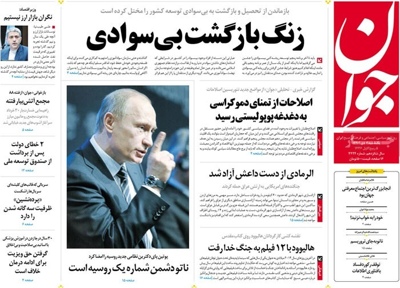
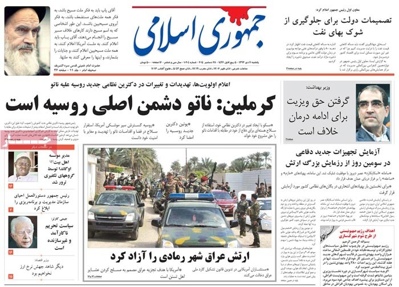
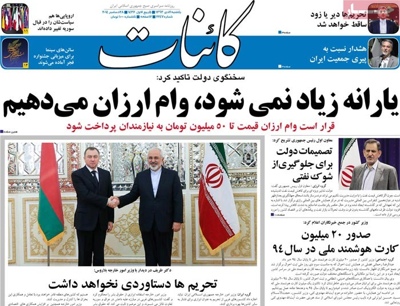
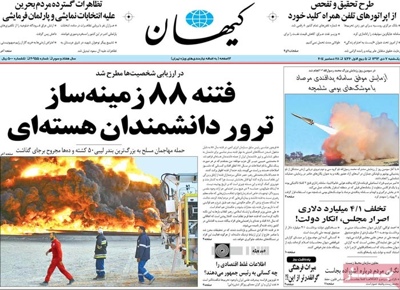
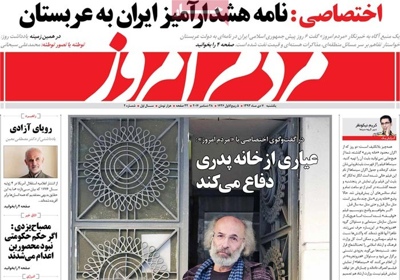
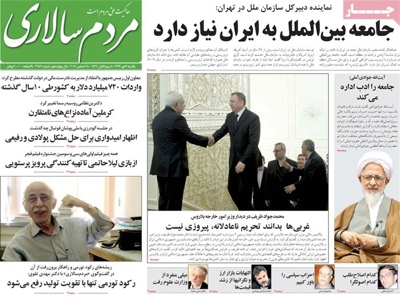
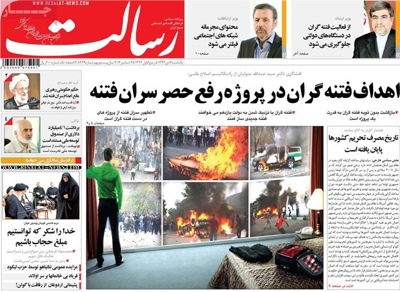
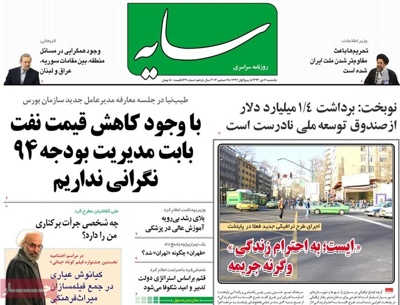
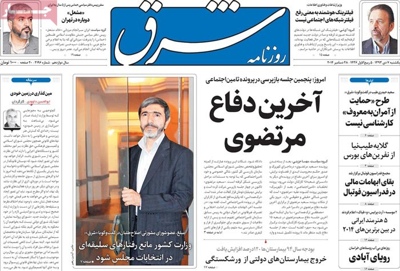
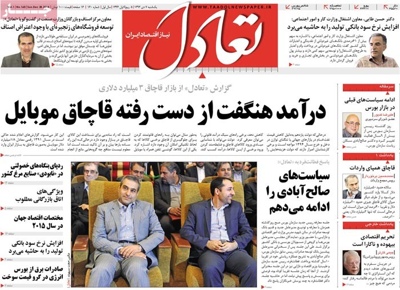
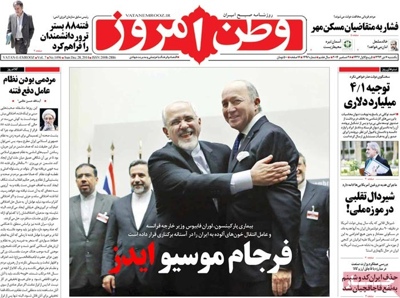
A look at Iranian newspaper front pages on Dec. 7

Iranian Newspapers Headlines

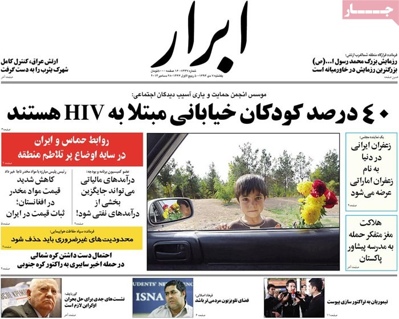
Images of continuing protests across the United States against police brutality dominated the front pages of Iranian newspapers on Sunday. Comments by Iranian minister of economy that a large-scale case of corruption in the banking sector has been unveiled also made headlines.


Abrar: The US ambassador to Iraq has said that Iran has played a key role in the fight against IS.

Abrar: Former US Secretary of State Hillary Clinton has thrown her weight behind President Obama’s decision to extend nuclear talks with Iran.

A look at Iranian newspaper front pages on Dec. 7


Abrar-e Eghtesadi: Mismanagement and unfinished projects have resulted in the minister of roads and urban development to be summoned to parliament to answer questions by MPs.

A look at Iranian newspaper front pages on Dec. 7


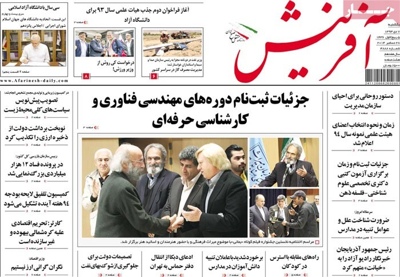
Afarinesh: The Expediency Council has voted for “effective punishment” for those who pollute the environment.

A look at Iranian newspaper front pages on Dec. 7


Afkar: “Exports of petrochemicals have brought in some $6 billion in revenues this year [started March 21, 2014],” said the deputy oil minister.

A look at Iranian newspaper front pages on Dec. 7


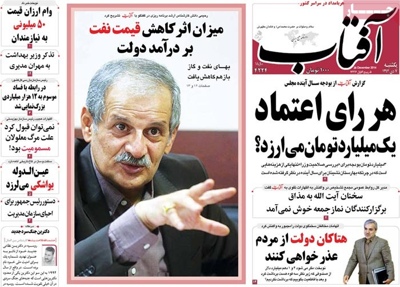
Aftab-e Yazd: The US auto industry has returned to Iran without drawing much attention.

A look at Iranian newspaper front pages on Dec. 7


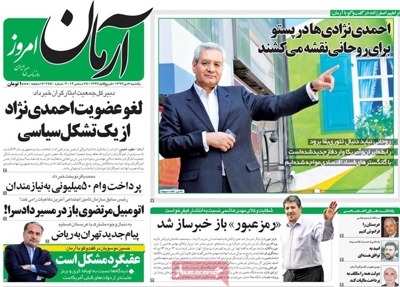
Arman-e Emrooz: “Freedom of press and parties is the most important requirement for the promotion of virtue,” said Seyyed Hassan Khomeini, the grandson of the architect of the Islamic Republic.

Arman-e Emrooz: The new managing director of the capital’s Persepolis Football Club has been arrested [apparently after sponsors filed a suit against the Reds].

A look at Iranian newspaper front pages on Dec. 7


Asr-e Rasaneh: As much as 70 percent of the Oil Ministry’s budget will go to South Pars Gas Field.

A look at Iranian newspaper front pages on Dec. 7


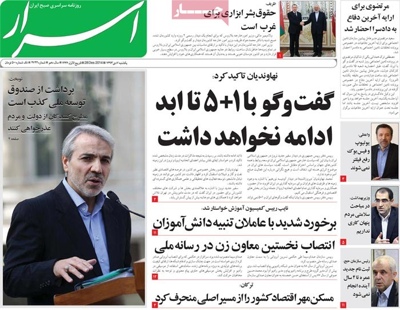
Asrar: I-can’t-breathe protests sweep the United States from coast to coast.

Asrar: “Some want to drive a wedge between reformists and the government,” warned Mohammad Reza Aref, a former vice-president under reformist President Mohammad Khatami.

A look at Iranian newspaper front pages on Dec. 7


Ebtekar: Catherine Ashton will remain on board the train of negotiations [between Iran and P5+1].

A look at Iranian newspaper front pages on Dec. 7


Emtiaz: Iran is the seventh largest consumer of cosmetics in the world.

A look at Iranian newspaper front pages on Dec. 7


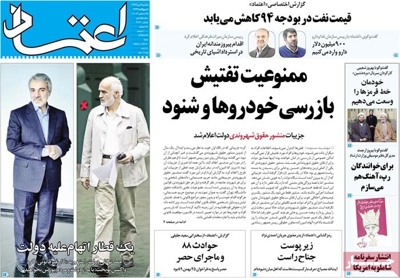
Etemad: President Rouhani is to present next year’s spending package to parliament on Sunday. The proposed budget has been worked out on assumptions that oil prices will hover around $70 a barrel. The package also enshrines a 17 percent pay rise for civil servants.

A look at Iranian newspaper front pages on Dec. 7


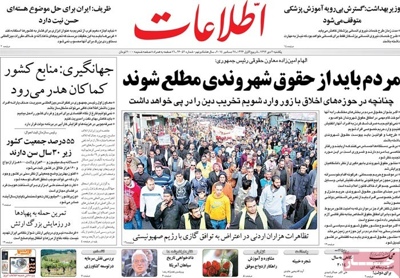
Ettela’at: British Foreign Secretary Philip Hammond said that the role of Iran in the region cannot be ignored.

Ettela’at: “In bid to counter corruption, all economic laws are to be reviewed,” said Minister of Economy and Financial Affairs Ali Tayyebnia.

Ettela’at: An international poster expo dubbed “Nelson Mandela; the Bird of Freedom” has opened in Tehran.

A look at Iranian newspaper front pages on Dec. 7


Hambastegi: “Individuals under 18 years of age cannot buy SIM cards,” said the minister of communications and information technology.

A look at Iranian newspaper front pages on Dec. 7


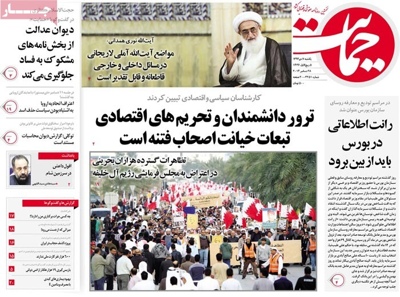
Hemayat: “Tying the country’s economy to [nuclear] talks is wrong,” said Gholamali Haddad Adel, a onetime speaker of the Islamic Consultative Assembly.

Hemayat: “Three Iranian satellites are set to be launched,” said the vice president of the Iranian Space Agency.

A look at Iranian newspaper front pages on Dec. 7


Iran: The Ministry of Economy and Financial Affairs has unveiled a banking corruption case involving billions.

A look at Iranian newspaper front pages on Dec. 7


Iran Daily: Peugeot shows green light to joint venture.

Iran Daily: Tehran to host international conference on WAVE [World against Violence and Extremism on Tuesday]

A look at Iranian newspaper front pages on Dec. 7


Kaenat: More than a million Iranians are predicted to take part in ceremonies in Iraq to mark Arba’een [a Shiite Muslim religious observance that occurs 40 days after Ashura, which marks the martyrdom of the grandson of Prophet Muhammad] on December 13.

A look at Iranian newspaper front pages on Dec. 7


Kayhan: Making comments that are not in line with the viewpoints of the executive branch seems to be forbidden! Amir Kabir University has cancelled the speech of the managing editor of Kayhan.

A look at Iranian newspaper front pages on Dec. 7


Kayhan International: “Testing new centrifuges to continue,” a source close to Iran’s nuclear negotiating team said.

A look at Iranian newspaper front pages on Dec. 7


Rah-e Mardom: “Pressures exerted by US allies prevented the conclusion of a deal,” said the spokesman of parliament’s National Security and Foreign Policy Committee.

A look at Iranian newspaper front pages on Dec. 7


Resalat: “Symbolic nuclear energy is neither strategic nor economical,” said Kamran Daneshju, science minister under President Ahmadinejad.

A look at Iranian newspaper front pages on Dec. 7


Sayeh: The minister of labor and social welfare has said some 100,000 Iranians will have been sent abroad as workforce by late September 2015.

A look at Iranian newspaper front pages on Dec. 7


Shahrvand: An exhibition on equipment used in the oil industry has opened in Khuzestan Province, southwestern Iran.

A look at Iranian newspaper front pages on Dec. 7


Sharq: Police have revealed what they would view as failure to comply with the Hijab (the Islamic Dress Code) in the cold months of the year.

A look at Iranian newspaper front pages on Dec. 7


Tafahom: As many as 10,000 Iranian households are using solar electricity.

A look at Iranian newspaper front pages on Dec. 7


Vatan-e Emrooz: Parliament deputies are worried about privatization of schools.

A look at Iranian newspaper front pages on Dec. 7