Wednesday, December 24, 2025
Home Blog Page 499

Iran working on faster method to create nuclear bomb: US intelligence sources

Iran Nuclear Program

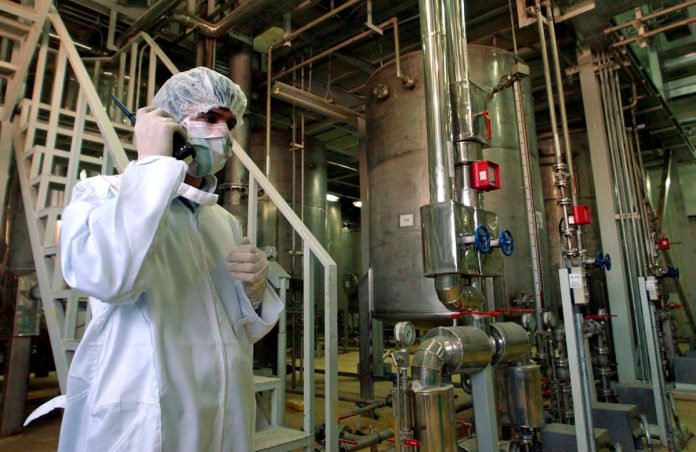
According to the report, a covert team of Tehran-based scientists has been tasked with finding a new way to produce an atomic bomb to deter potential US or Israeli military action.

The sources did not provide details of the new method, but described it as “a faster, if cruder, approach” involving enriched nuclear fuel. They claimed that Iranian scientists have been exploring shortcuts that would allow them to turn nuclear material into a functional weapon within months. The report added that Iran has enough nuclear fuel to build at least four bombs.

US officials told the NYT that while Iran remains below the nuclear weapon threshold, recent regional developments – including the fall of former Syrian President Bashar Assad and the weakening of Hezbollah amid Israeli military operations – have prompted Tehran to accelerate its nuclear activities.

The intelligence was reportedly gathered during the final months of former US President Joe Biden’s administration and has since been shared with the national security team of President Donald Trump.

The report indicates that the new intelligence will be among the topics discussed during Israeli Prime Minister Benjamin Netanyahu’s state visit to the US this week. Netanyahu has reportedly considered ordering strikes on Iran’s nuclear facilities several times but was dissuaded by advisers and Washington.

Last month, Axios reported that Biden had also contemplated military action against Iranian nuclear sites before leaving office, but ultimately refrained from authorizing strikes.

Since taking office, Trump has signaled reluctance to escalate tensions with Iran. Asked whether he would support an Israeli strike on Iranian nuclear infrastructure last month, Trump said he hoped the issue could be resolved diplomatically.

“Hopefully this can be worked out without having to go that further step,” he told reporters, adding that he hopes “Iran will make a deal” regarding its nuclear program.

Iran’s uranium enrichment activities have long been seen by the West as a secret attempt to develop nuclear weapons. Tehran has denied these allegations, insisting its nuclear activities are for peaceful purposes only.

In 2015, Iran signed the Joint Comprehensive Plan of Action (JCPOA) with world powers, agreeing to limit its nuclear program in exchange for sanctions relief. However, Trump withdrew the US from the deal in 2018 during his first term, resulting in Iran ramping up its uranium enrichment activities. Efforts to revive the JCPOA have stalled, though Iranian Foreign Minister Abbas Araghchi stressed last month that Tehran remains open to negotiations if the West agrees to a “mutually beneficial” deal based on respect.
Biden Administration failed to track arms sent to Ukraine: Reuters

Russia Ukraine War Weapons Arms

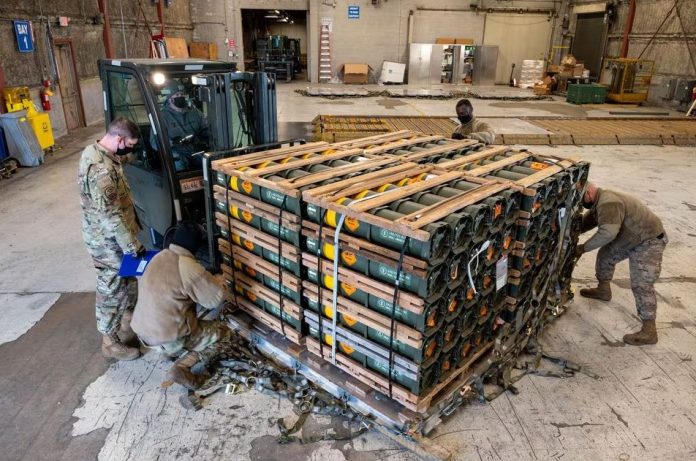
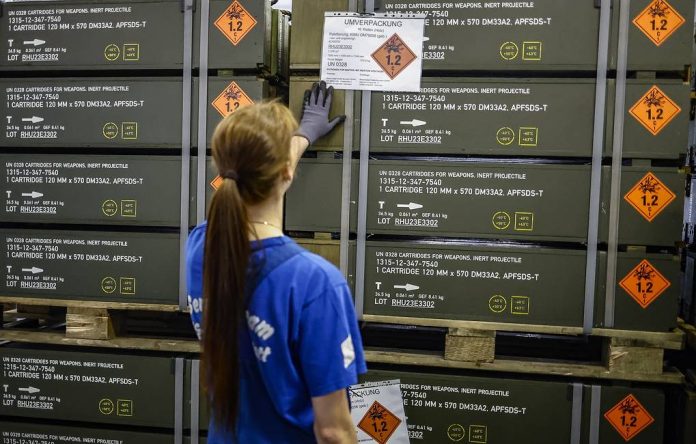
During the final year of former President Joe Biden’s administration, key weapons shipments to Ukraine faced prolonged delays amid concerns about the depleting US stockpile and debates over whether they could trigger an escalation with Russia.

According to a Reuters investigation, another major issue was the Pentagon’s “chaotic weapons-tracking system in which even the definition of ‘delivered’ differed among US military branches.”

This “skewed” Pentagon data, making it almost impossible to accurately pinpoint the weapons in the shipping process at any given time, Reuters said, citing reports by the Government Accountability Office (GAO).

Investigations by the Pentagon’s Inspector General and the GAO also found that the administration lacked clarity on the number of weapons delivered and the extent of shipment delays, according to Reuters.

An unnamed US official told the agency that the Pentagon has since updated internal manuals to clarify the term “delivered.” However, it is not clear how broadly the reform is being implemented in reality, the article added.

Another major issue was delays, the report said, adding that it persisted even after Congress broke a months-long deadlock on $60 billion in supplemental aid for Ukraine, which was caused by Republican opposition.

As a result, by November, only about half of the total commitment the US made in 2024 for Ukraine from American stockpiles had been fulfilled, with only about 30% of promised armored vehicles arriving by early December, Reuters sources claimed.

One US official expressed frustration over the pace of deliveries, suggesting that delays prevented Ukraine from making any substantial progress on the battlefield.

The official echoed the sentiments of numerous Ukrainian officials who have often blamed inadequate Western assistance for Kiev’s failure to stem Russia’s advances in Donbass and elsewhere.

In January 2024, the US Department of Defense Office of Inspector General released a report revealing that the Pentagon was unable to fully track over $1 billion worth of weapons aid to Ukraine. At the time, it said the Pentagon failed to “fully comply” with tracking requirements, adding that it was not possible to complete an inventory of everything sent to Kiev.

Moscow has consistently condemned Western arms deliveries to Ukraine, saying they will only prolong the conflict.

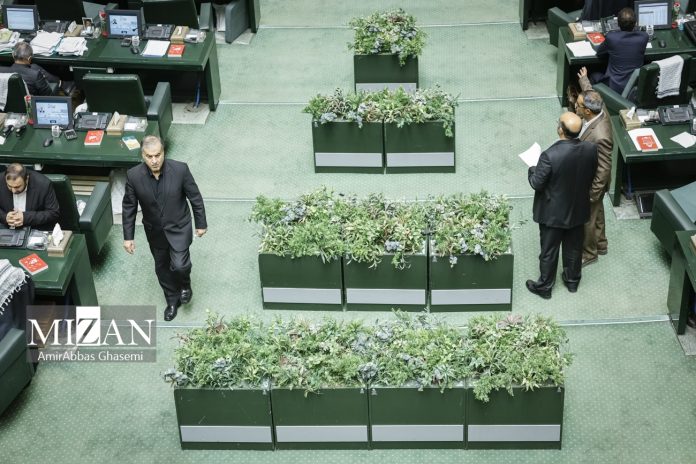
Controversial citizenship law sparks debate in Iranian parliament

Iranian Parliament

Ali Babaee, the head of the parliament’s Social Committee, revealed on Tuesday that Kharazi expressed concerns over the implications of automatic citizenship, jus soli and jus sanguinis, for children of Iranian diplomats and officials serving abroad, particularly regarding their eligibility for sensitive government positions.

In response to the letter, the Leader’s office instructed Parliament Speaker Mohammad Bagher Ghalibaf to address the issue, he said.

The current law could force Iranian diplomats to return home if their children acquire foreign citizenship, potentially disrupting diplomatic missions.

Babaee said that the government has proposed an amendment to exclude children of diplomats from automatic citizenship rules.

He stated that the matter has been referred to the administrative and employment subcommittee, with a final decision expected within two weeks.

The debate highlights the challenges of balancing national security concerns with the practical needs of diplomats and officials serving abroad, especially with recent concerns raised over Iranian Vice President fore Strateic Affairs Mohammad Javad Zarif’s case.

Zarif has provided explanations regarding the citizenship status of his children amid outcry for him to leave office, asserting that his children are natural-born citizens of the US, and dismissed claims that he applied for citizenship.

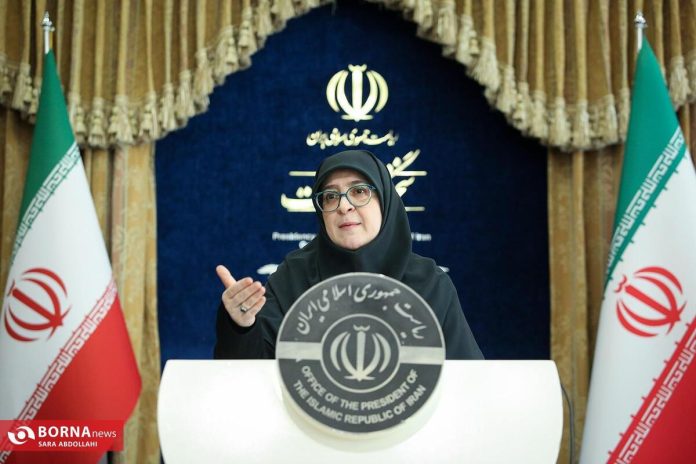
Gov’t spokesperson on FATF: Iran needs to prove non-association with terrorist groups

In a press conference on Tuesday, Fatemeh Mohajerani mentioned that Iran has not yet joined the Palermo and CFT conventions within the FATF framework, stating that resolving the sticking points for accession could aid in lifting banking sanctions.

“To maintain banking relations with friendly countries, such as those in the Eurasian and BRICS regions, it is essential to prove that Iran does not engage in money laundering or organized terrorism,” she noted.

Regarding the potential for future issues with the US post-FATF ratification, Mohajerani acknowledged that there are no guarantees but stressed that self-isolation is not an option.

Meanwhile, the head of Iran’s Expediency Council, said the council will make decisions on possible accession based on thorough technical work, adding “it is difficult to predict the outcome at this stage.”

In an exclusive interview with IRNA, Sadegh Amoli Larijani, clarified that the FATF itself has not been referred to the council, but rather Palermo and CFT are under review.

He emphasized that the council’s commissions are examining the issues raised by the Guardian Council.

After many ups and downs, and based on regulations, the issue of Iran’s accession to the FATF has now been handed over to the Expediency Discernment Council. Opponents of joining the FATF argue that this mechanism facilitates access for enemies to Iran’s financial transactions. Meanwhile, supporters, including the government of Masoud Behzadian, reject this argument and assert that joining the FATF is essential for facilitating trade relations with other countries.

Trump floats new $1 billion weapons sale to Israel: WSJ

White House

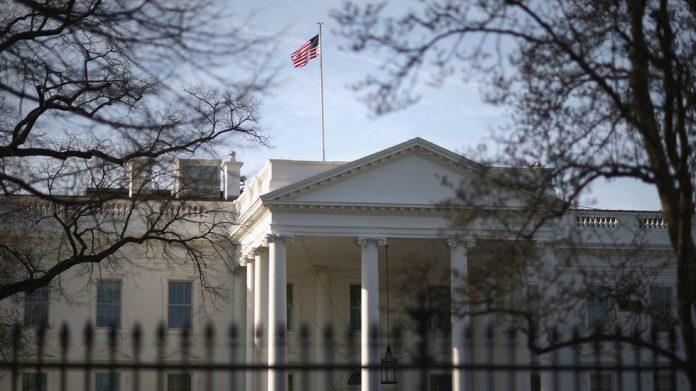
The Trump administration has requested congressional approval for the transfer of roughly $1 billion in bombs and other military equipment to Israel, even as Washington seeks to uphold a fragile cease-fire in Gaza.

The Wall Street Journal, citing US officials familiar with the sale, reported that the proposed arms transfers include 4,700 1,000-pound bombs valued at over $700 million, along with Caterpillar-built armored bulldozers worth more than $300 million.

The report added that the request would be paid from the annual US military aid allocated to Israel, which totals $3.3 billion in foreign military financing.

Congressional approval is required for major foreign arms sales, with the State Department notifying key committees before proceeding. The House Foreign Affairs and Senate Foreign Relations committees must approve such transfers before they can be finalized.

The request comes amid Israeli Prime Minister Benjamin Netanyahu’s visit to Washington, where he is set to meet with Trump on Tuesday to discuss the cease-fire in Gaza as well as broader regional tensions.

The new proposal came after the Joe Biden administration, in the final days of its term, “informally” notified Congress of an $8 billion proposed arms deal with Israel, including munitions for fighter jets and artillery shells.

The US faces criticism for providing military aid to Israel, as nearly 62,000 Palestinians, mostly women and children, have been killed in the Gaza Strip since October 2023.

Amid a cease-fire and hostage exchange deal in Gaza on Jan. 19, Israel intensified violence in the occupied West Bank, where more than 900 Palestinians have been killed by Israeli forces and settlers since last October, according to local authorities.

Several human rights groups, former State Department officials and Democratic lawmakers have urged the US government to halt arms transfers to Israel, citing violations of US laws, including the Leahy Law, as well as international laws and human rights.

The Leahy Law, named after former Sen. Patrick Leahy, requires the US to withhold military assistance from foreign military or law enforcement units if there is credible evidence of human rights violations.

US-made weapons have been documented in several Israeli strikes on Gaza that resulted in civilian casualties, although American authorities have declined to confirm the fact.

A State Department report in May said it is “reasonable to assess” that Israel used US-made weapons in ways that are inconsistent with international humanitarian law. The report stopped short of reaching a definitive conclusion, adding it does not have “complete information.”

Israel building military bases in Syria buffer zone: Al Jazeera

Israel Army

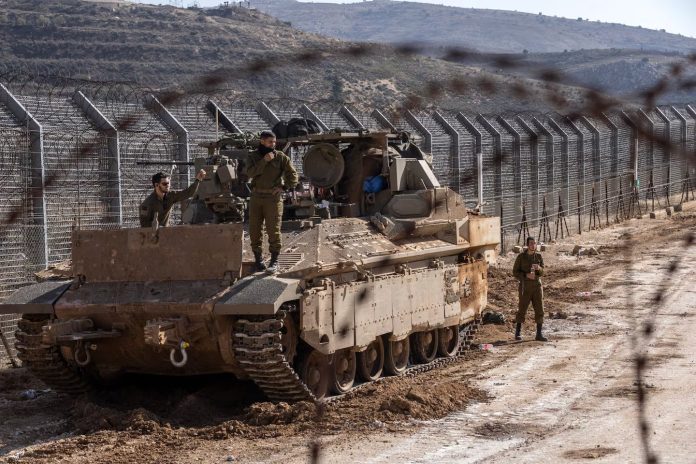
The images were taken between December 19, 2024, just 11 days after Syria’s President Bashar Al-Assad fled to Moscow, and February 1, 2025. They show six sites constructed in that time inside the buffer zone. Another is being constructed outside the buffer zone and inside Syrian territory.

Sanad also found road construction work on the sites.

The seven sites are located west of Hadar village, west of Jabata al-Khashab, north of al-Hamidyah, Quneitra village, south of Lake Aziz (two sites), and above Tal al-Ahmar.

Israel and Syria struck a ceasefire deal in 1974 that determined the area, in the Golan Heights, would be a demilitarised buffer zone. But shortly after news emerged that the al-Assad government had fallen after more than 50 years of dynastic rule, the Israeli military began moving within the buffer zone and entered Syrian territory that lies outside it.

That was despite Syria’s new transitional President Ahmed al-Sharaa making clear that his new administration would recognise the 1974 agreement with Israel.

“Syria’s war-weary condition, after years of conflict and war, does not allow for new confrontations,” he stressed on December 14, 2024.

“The priority at this stage is reconstruction and stability, not being drawn into disputes that could lead to further destruction.”

However, Israel’s Prime Minister Benjamin Netanyahu said the 1974 agreement was struck with “a deposed regime” and is therefore invalid.

“We will not allow any hostile force to establish itself on our border,” Netanyahu added.

The new Syrian administration is largely made up of members of the now-dissolved Hayat Tahrir al-Sham, a group that formerly had links to al-Qaeda, but which has sought to cast a more moderate image in recent years, and particularly after the overthrow of al-Assad.

Syrian citizens in and near the demilitarised zone have complained of Israeli encroachment on their land as well as checkpoints, unauthorised arrests, housing raids, and road closures. Israel’s military claims it is acting to eliminate threats against its citizens.

Israel initially declared that the incursions would be temporary, but the building of bases brings that claim into question.

Instead, taken along with Israel’s assertion that it would remain on top of Mount Hermon – which lies in Syria – indefinitely, and its track record of annexing the occupied Golan Heights, the Israelis could potentially be planning to stay in the newly-entered areas for the long haul.

Turkey seeking to establish military bases in Syria: Report

Turkish Troops in Syria

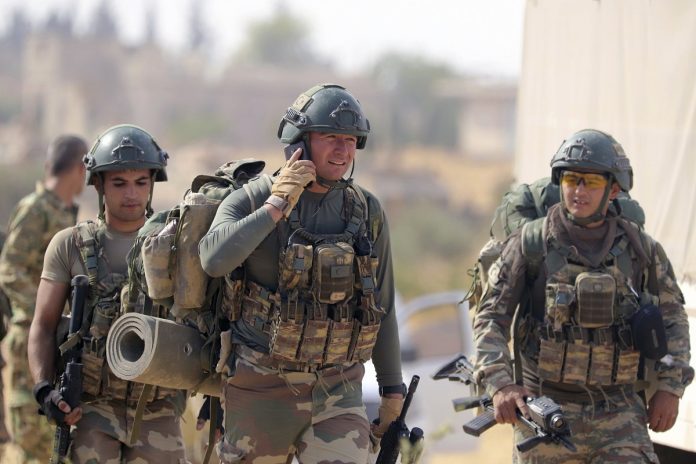
The Turkiye newspaper on Monday said, “Turkey will train the country’s army in two military bases it will establish in Syria.”

It added that in the framework of a military agreement between Ankara and the foreign-backed militants running Syria, the Turkish bases will be used to train the new armed forces of the country.

“Turkey and Syria will sign a joint defense agreement. According to the agreement, which is expected to be signed soon, Ankara will help Syria if Damascus faces a sudden threat,” Turkiye reported.

The HTS militant group seized power in Syria in December amid repeated Israeli strikes against the Syrian army, navy and air force bases.

Fifty Turkish Air Force F-16 jetfighters are planned to nest inside the new bases to support and protect the HTS from collapse until a new Syrian air force is established, according to the daily.

Syrian pilots are to receive training by the Turkish military as well, the report added.

Turkish drones, radars, and electronic warfare systems will be deployed along the country’s border with Israel, according to the agreement.

Former HTS commander Abu Mohammed al-Jolani, who has been named as the country’s new transitional “president” to replace Bashar al-Assad, announced that all armed factions, including the HTS, will be dissolved and responsibilities will be transferred to replacements.

Since overrunning Syria, Jolani has been ramping up efforts to dissociate himself from the terrorist groups who wreaked havoc in the region.

Jolani functioned as a Daesh commander in Iraq’s Nineveh and Mosul Provinces before being handpicked by Daesh’s former ringleader Abu Bakr al-Baghdadi in 2012 to establish a Syrian affiliate at the beginning of the foreign-backed militancy in the region.

Jolani, who is expected to visit Ankara soon, has been a close ally of Ankara in the conflict against Damascus in the past years, receiving weapons, ammunition, provisions and personnel.

“We believe that Turkey-Syria relations, which have been reestablished after the liberation of Syria, will strengthen and gain dimension with the visit by Ahmad Al-Sharaa (Jolani) and his delegation,” stated Fahrettin Altun, the head of the Turkish presidency’s Directorate of Communications.

Ankara’s forces in Syria have supported Jolani for years and backed the attacks that toppled the democratically-elected Assad government in an 11-day offensive.

Jolani also announced that he would not engage in a conflict with the Israeli regime.

Israeli forces have occupied large swathes of southern Syria after the annihilation and abandonment of Syrian armed forces and the demolition of the Arab country’s military bases, weapons and munitions depots.

The new leadership in Damascus has also called on Russia to recompense for the HTS’s losses during Moscow’s close cooperation with Damascus.

Trump wants rare earth elements from Ukraine in exchange for military assistance

Russia Ukraine War Weapons Arms

“We’re handing them money hand over fist. We’re giving them equipment,” Trump said Monday.

“We’re looking to do a deal with Ukraine, where they’re going to secure what we’re giving them with their rare earth and other things,” he told reporters in the Oval Office.

“I want to have security of rare earth,” he added, appearing to refer to rare earth elements, which refers to a specific group of materials that are only deposited in relatively small quantities and can be used in a variety of applications including electronics, health care and batteries.

It’s not clear whether Trump’s desired deal would refer only to the elements that are considered rare earths, or if he is also interested in minerals like lithium and titanium, of which Ukraine has a significant supply.

In Ukraine’s existing “Victory Plan,” the country said it would work to supply its strategic partners with “natural resources and critical metals worth trillions of U.S. dollars” including uranium, titanium, lithium and graphite.

Ukraine may not be the only foreign supplier in Trump’s sights. Mike Waltz, who Trump has tapped as national security adviser, has said that Trump’s quest for Greenland is about minerals and other natural resources.

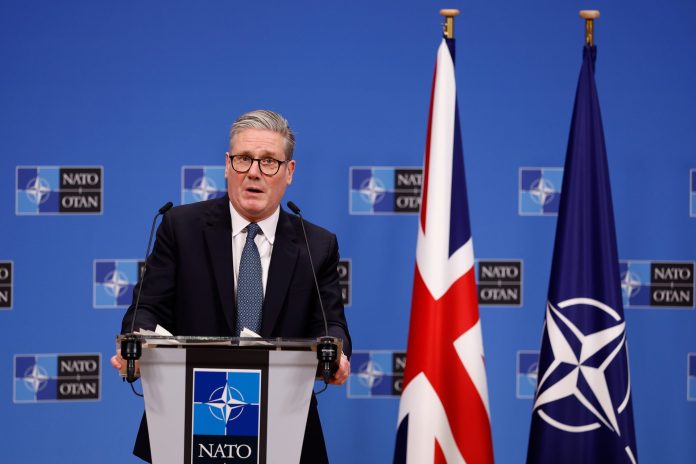
PM says UK to provide more military aid to Ukraine

The U.K. previously announced plans to deliver unprecedented military assistance to Ukraine this year, with 3 billion pounds ($3.6 billion) already committed for lethal aid.

“We must do all that we can to support Ukraine’s defense,” Starmer said at a joint press conference alongside NATO Secretary General Mark Rutte in Brussels.

“That means stabilizing the front line, providing the kit and training that they need, and that’s why this year the UK will give more military support to Ukraine than ever before.”

Starmer’s comments come weeks after the U.K. and Ukraine signed a historic 100-year partnership agreement in Kyiv. The wide-ranging deal encompasses cooperation in military, energy, scientific, cultural, economic, and other sectors.

During the press conference, Starmer described the devastating effects of Russia’s full-scale war that he encountered on his recent visit to Kyiv.

“I saw residential buildings destroyed just days before,” he added.

“I met soldiers in the ICU recovering from really terrible burns. And I met children whose parents are out there now on the front line, and it’s yet another reminder that this is a war not just in Ukraine, but a war on Ukraine, against those children and their future.”

Starmer said it was essential for Ukraine’s allies, particularly its European partners, to step up to help Kyiv meet its defense needs. He also mentioned U.S President Donald Trump’s recent threat of santions against Russia.

“It’s clear that’s got (Russian President Vladimir) Putin rattled,” Starmer added.

“We know that he’s worried about the state of the Russian economy. So I’m here to work with our European partners on keeping up the pressure, targeting the energy revenues and the companies supplying his missile factories to crush Putin’s war machine.”

The U.K. and other European countries have pledged to play a greater role in Ukraine’s defense against Russia amid the transition in the U.S. government. Trump has already limited U.S. foreign aid to Ukraine and other countries, and it is unclear what the future holds for ongoing weapons shipments from Washington to Kyiv.

Starmer has promised that the U.K. will play its “full part” in peacekeeping efforts in Ukraine, possibly including the deployment of British troops to monitor a ceasefire on the ground.

20 killed in Syria’s car bombing

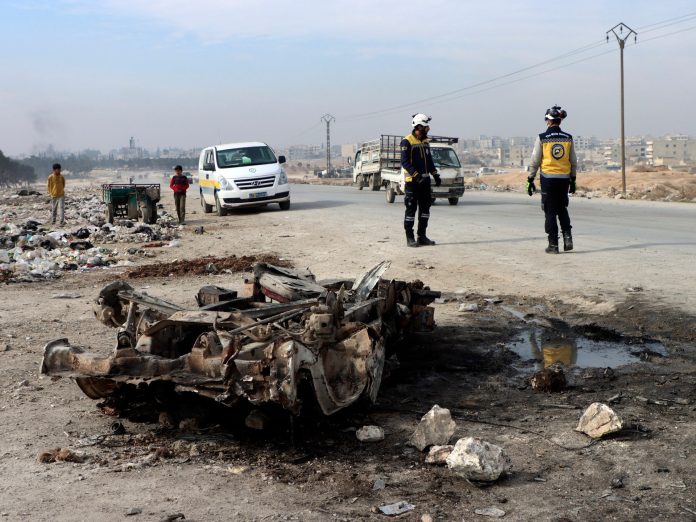
Monday’s blast was the deadliest attack in the country since the fall of President Bashar al-Assad in December of last year.

The incident was also the seventh car bombing in just over a month in the area, which has seen fighting between Turkish-backed forces and a Kurdish-dominated group.

The office of Syria’s new President Ahmed al-Sharaa condemned the “terrorist” attack, saying that it will pursue accountability for the incident.

“This crime will not pass without the strongest punishment for its perpetrators, so they become an example for anyone who considers compromising Syria’s security or harming its people,” the presidency added.

Hospital workers told the Associated Press news agency on Monday that the car detonated near a vehicle at night carrying mostly agricultural workers.

The Syrian Civil Defence, known as the White Helmets, said at least 11 women and three children were killed in the attack.

“Everyone of these victims had families and dreams,” the rescue group announced in a statement.

“Their effort to earn a living turned into death and wounds. Justice for them must be achieved, and the perpetrators of this crime must be held accountable.”

So far, no group has claimed responsibility for the explosion.

On Saturday, a car bombing in the city also killed four people and wounded nine others, state news agency SANA reported.

Jameel al-Sayyed, a Manbij activist and journalist, told the Associated Press that the recurring attacks have forced residents to become more vigilant.

“There are efforts from the people of Manbij to focus on protecting some neighbourhoods as well as setting up surveillance cameras in the main neighbourhoods of the city,” al-Sayyed added.

Throughout the Syrian war, which began in 2011, control over Manbij – which sits to the south of the Turkish border and to the east of Aleppo – has changed numerous times.

In December, Turkish-backed groups captured it from the US-backed, Kurdish-dominated Syrian Democratic Forces (SDF), which denounced Monday’s bombing.

The SDF suggested – without evidence – that what it called Turkiye’s “mercenaries” are behind the attack.

Turkiye, a NATO ally of the US, views the SDF as an extension of the People’s Protection Units (YPG) and the Kurdistan Workers’ Party (PKK), which it considers “terrorist” groups.

Al-Sharaa, a former rebel leader who assumed the presidency on a transitional basis earlier this month, is set to visit Turkiye later this week.