Wednesday, April 22, 2026
Home Blog Page 4959

We are neither proud nor complacent; we seek to compensate backwardness

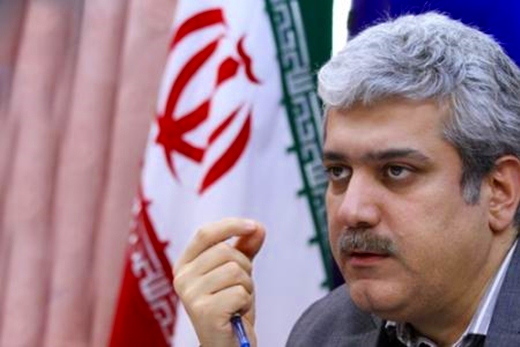
Sorena Sattari
Sorena Sattari

Vice-President for Science and Technology and the President of the National Elites Foundation, Dr. Sorena Sattari, says that the public, scientists and the government have reached a consensus that they need to bring modern sciences out of books and use them to secure sustainable knowledge-based development.

On February 4, the website of the Iranian Science and Technology Department, an affiliate of the Presidential Office (isti.ir) released an opinion piece by Sattari on the state of Iran’s scientific progress. The following is the translation of the piece:

It is common knowledge these days that Iran has made remarkable achievements in science and technology in recent years. Enemies and friends, alike, admit that Iran’s scientific progress in different areas, especially in nanotechnology, is comparable with what it has achieved in nuclear technology. They describe it as a sign that a nation’s willpower is producing results.

The country has moved forward and achieved big gains in nuclear energy, nanotechnology, biotechnology and aerospace and this is because the public, scientists and the government have agreed that they should put in time and energy to bring these sciences out of books and use them to secure sustainable knowledge-based development for the country.

Today modern technologies have turned into a public discourse in Iran. This indicates that a consensus has been developed among the public, scientists and the government. Human experience shows that reaching a consensus is key to securing sustainable development in a country or to bringing the sales of raw materials to an end.

Constant support by the Supreme Leader for the country’s scientific development along with the contribution of government officials is indicative of the steely resolve of the Islamic Republic of Iran to make advancement on scientific and technological fronts.

The Leader expressed satisfaction with what has been done in the country in his inspection tour of a recent exhibition displaying Iran’s latest nanotechnology achievements, underlining three points: stability in management; accurate planning; and culture-building and dialogue creation.

The country can pull off success in political, economic and social areas like what it has gained in modern sciences and technologies such as nanotechnology, nuclear technology, biotechnology and aerospace. Iran can successfully ride out crises and challenges if these three factors come into play.

When there is consensus between society and the establishment, we can powerfully and successfully solve our issues with the world. Such a consensus can help us overcome various economic, political, social and environmental challenges.

The global economy has undergone fundamental changes thanks to new developments in oil markets, something which has affected oil-rich countries, including Iran. The Leader and the elite had already warned of this, saying a knowledge-based economy should be created as a sustainable replacement for oil.

What has unfolded recently can, at best, raise the alarm in the fabric of society and set the stage for creating a dialogue which seems likely to replace the previous interchange.

Today people are more receptive to talks on a knowledge-based economy than before. Besides senior government officials, the general public too eagerly pays attention to such a topic, and this can cement the overwhelming consensus between people and the government on boosting the knowledge-based economy.

The critical environmental challenges Iran is facing are the broad topic in society, not simply in scientific circles. We cannot tackle challenges such as air pollution or climate change unless they are treated as a national question and we mobilize all we have to that end.

What Iran has achieved in science, nanotechnology, nuclear technology and aerospace is a source of pride, but that is not enough. As the Supreme Leader said in his visit to the nano expo we should not be proud of and complacent with the status quo and the country’s headway; we should help Iran continue its fast march toward scientific gains.

“Although the talent of the Iranian youth and the pace of Iran’s scientific march are much higher than the world’s average – Iran ranks seventh in the world in terms of nanotechnology, for instance – we need to increase the speed of Iran’s scientific growth [to make up] for the country’s scientific backwardness over the course of history,” the Leader said.

Today’s achievements should be a model and motivation for our scientific activities in the future. We have to successfully rise to the occasion and overcome the challenges we face in different areas. Our experience has shown that our consensus on opening new doors is a guarantee for our success in the future.
Sorena Sattari is a scientist and inventor. He has a Ph.D. in Mechanical Engineering from Sharif University of Technology.

Quds Force Commander: ISIL nearing demise

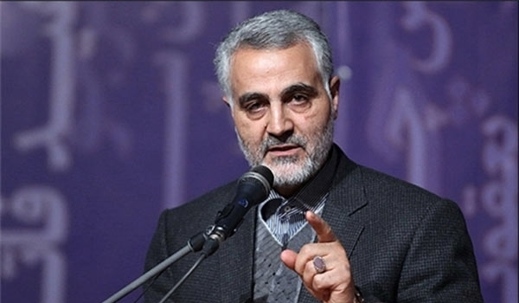
General Ghasem Soleimani

Islamic Revolution Guards Corps (IRGC) Quds Force Commander Major General Ghasem Soleimani underlined that terrorist groups in the region, especially ISIL, are experiencing the last days of their lives.

“Given the heavy failures that ISIL and other terrorist groups in Iraq and Syria have sustained, we are sure that these groups are nearing the end of their life,” Soleimani said, addressing a ceremony on the occasion of the 36th anniversary of the victory of the Islamic Revolution in the southern province of Kerman on Wednesday.

He said that persuading and organizing the Takfiri groups to impair the face of Islam and create sedition and civil war among Muslims is the last weapon used by the arrogant powers.

In relevant remarks in October, General Soleimani underlined that the US moves in the region and the terrorist attacks by the ISIL would end in failure.
“I believe that both the US moves and the terrorist acts of the ISIL are doomed to failure because they are not in quest of truth,” General Soleimani told reporters in Tehran.

“Their solution will not lead to victory; we have all witnessed in Syria that the measures they adopted did not produce any fruit (for them),” he added.

General Soleimani underlined that the victories gained by Islam and the Islamic Republic of Iran had all been the result of their real quest of truth.

[…]

Over the last few years, Gen Soleimani’s role in Iran’s foreign affairs has become more public. These days he is the proud face of Iran, the go-to man when a crisis happens.

Iran has been providing advice and counseling to Syria and Iraq to help them in the war on terrorism.

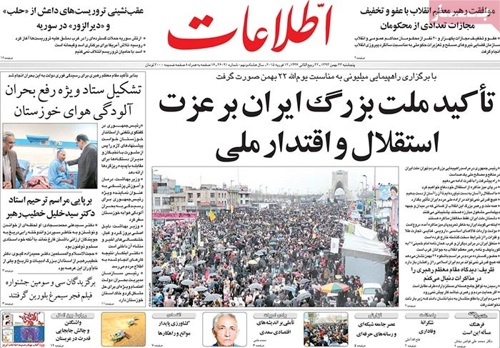
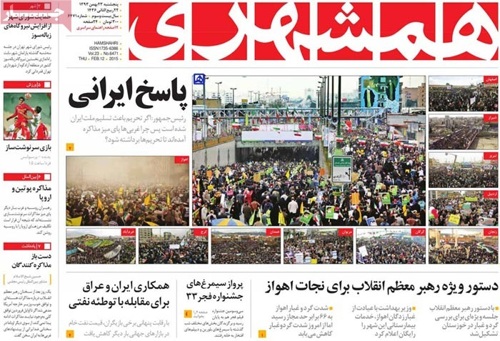
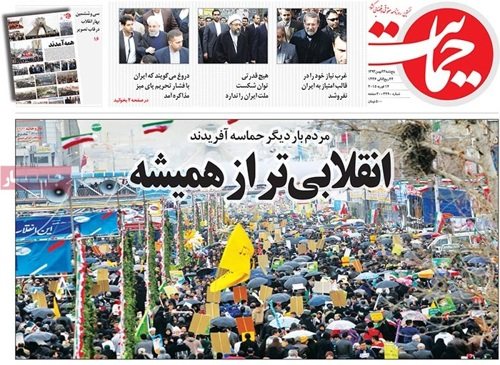
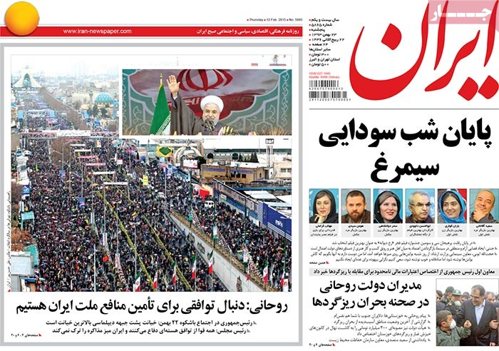
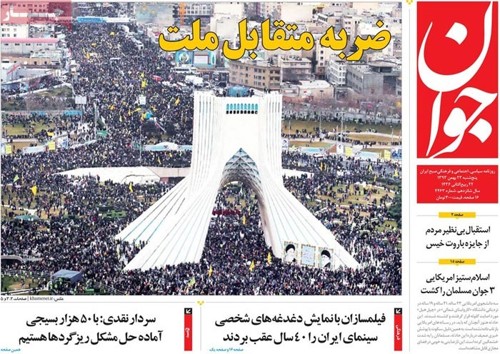
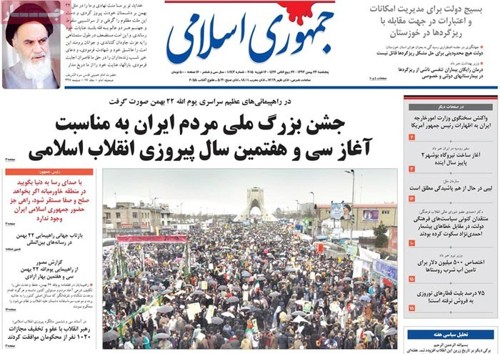
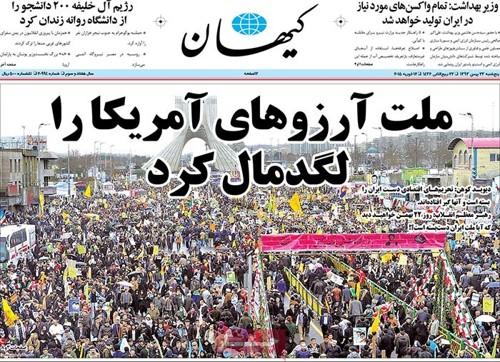
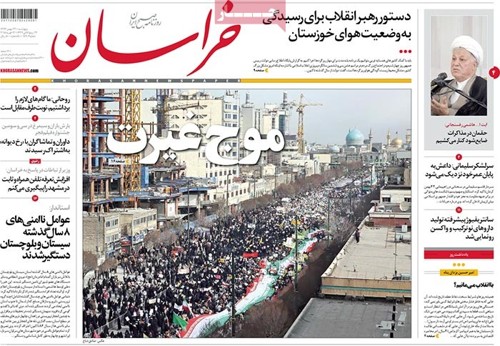
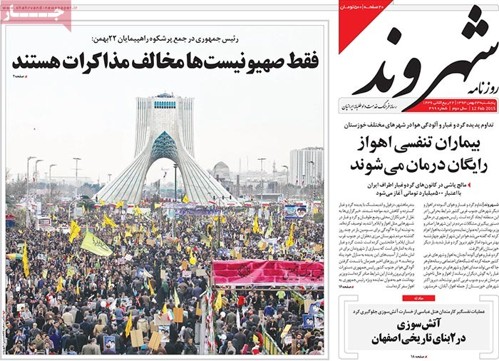
A look at Iranian newspaper front pages on Feb. 12

Iranian Newspapers Headlines

Almost all Iranian dailies splashed on their front pages images of huge rallies across the nation to mark the victory of the Islamic Revolution 36 years ago.

Reformist newspapers called the rallies a declaration of public support for nuclear talks, but principlist dailies said the Iranians said no to the West. “The nation’s nuclear support”, “Iranians created yet another epic; more revolutionary than before”, “The nation’s fist on the table”, and “The peak of zeal and unity”, were some of the front page headlines on Thursday. Comments by President Rouhani at one such rally in Tehran drew a lot of front-page attention too.


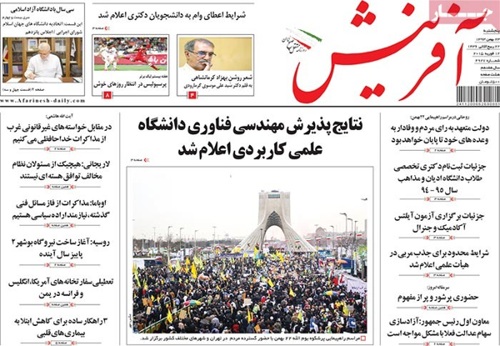
Afarinesh: “We’d leave the negotiating table if the West made illegitimate demands,” said Ayatollah Akbar Hashemi Rafsanjani.

Afarinesh: “None of the establishment’s officials are opposed to a nuclear deal,” said Parliament Speaker Ali Larijani.


Afarinesh Newspapers-02-10-2015


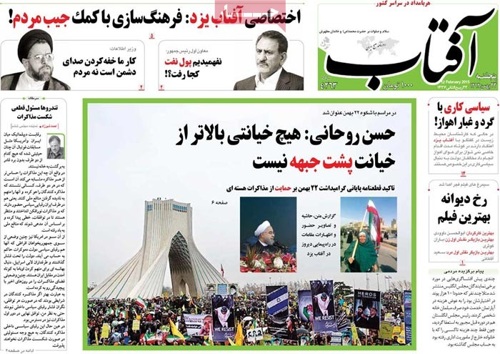
Aftab-e Yazd: Crazy Face by Abolhassan Davoodi was named the best movie at Fajr International Film Festival.

Aftab-e Yazd: “No treason is worse than treason committed behind the scenes,” President Rouhani said.

The president made the comment at a huge rally in Tehran to mark the anniversary of the Islamic Revolution 36 years ago. A statement issued at the end of the rally supported nuclear talks between Iranian officials and P5+1.


Aftabe Yazd Newspapers-02-10-2015


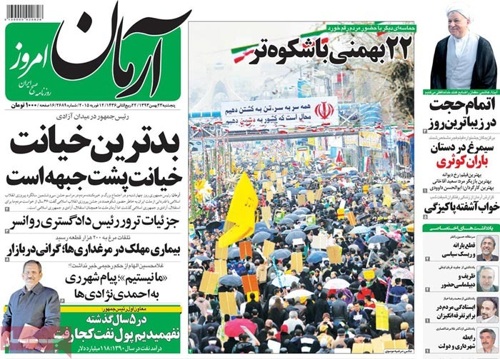
Arman-e Emrooz: We don’t know what happened to petrodollars for five years.

The comment by First Vice-President Eshagh Jahangiri takes aim at the previous administration for its lack of accountability. “Oil sales brought in $118 billion in the 12 months to March 21, 2012 alone.”

Arman-e Emrooz: A deadly disease in chicken farms has sent prices soaring.

So far some 200,000 chickens have died of the disease.
 

Armane Emrooz Newspapers-02-10-2015


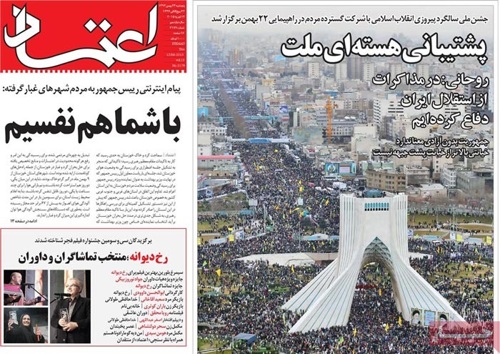
Etemad: “At the talks we have defended Iran’s independence,” said President Rouhani.
The comment came during the president’s speech at a rally in Tehran to mark the anniversary of the Revolution. “In the absence of freedom, Republicanism would be meaningless,” the president also said.


Ettemad Newspapers-02-10-2015


Ettela’at: The Supreme Leader has pardoned or commuted the sentences of some prisoners.

More than 1,000 inmates benefit from the decision made to mark the victory of the revolution.

Ettela’at: A special headquarters has been set up to deal with air pollution in Khuzestan province.


Ettelaat Newspapers-02-10-2015


Hamshahri: Iran and Iraq cooperate to counter the oil plot.


Hamshahri Newspapers-02-10-2015


Hemayat: “No power can defeat the Iranian nation,” said the Judiciary chief during a revolutionary rally in Tehran.

Hemayat: “Assertions that sanctions brought Iran to the negotiating table are untruthful,” said President Rouhani.


Hemayat Newspapers-02-10-2015


Iran: “We seek a deal that would guarantee Iranian interests,” said President Rouhani.


Iran Newspapers-02-10-2015


Javan: “With 50,000 volunteers, we’re ready to settle the problem of particulates,” said Basij Force Commander Brig. Gen. Mohammad Reza Naghdi.


Javan Newspapers-02-10-2015


Jomhouri Islami: Construction of a second [nuclear] power plant in Bushehr gets underway next fall.


Jomhouri Eslami Newspapers-02-10-2015


Kayhan: “Local production of vaccines will meet all domestic needs,” said the health minister.


Kayhan Newspapers-02-10-2015


Khorasan: The Supreme Leader has ordered officials to deal with air pollution in Khuzestan Province.

Khorasan: “IS is nearing the end of the line,” said Major Gen. Ghasem Soleimani, the commander of the Quds Force.

Khorasan: “Those who caused insecurity in Sistan and Baluchestan for eight years have been arrested,” said the governor general.


Khorasan Newspapers-02-10-2015


Shahrvand: “The Zionists are the only ones opposed to nuclear talks,” said the president.

Shahrvand: Those who develop breathing problems in Ahvaz [because of air pollution] are treated free of charge.


Shahrvand Newspapers-02-10-2015


UN says it’s ready to set up environmental database in Iran

UN-Environment

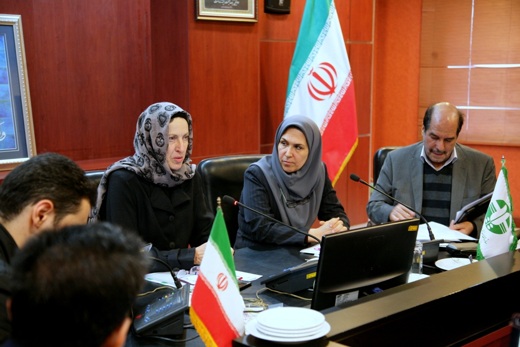
A workshop for the State of Environment (SOE) was held in Tehran with Mahnaz Mazaheri-Assadi, a vice-president of the Environmental Protection Organization for education and research affairs, Jacqueline McGlade, the director of the United Nations Environment Programme’s (UNEP) Division of Early Warning and Assessment, and a host of environment experts in attendance to review how Iran’s environment has changed over the last ten years.

The following is a partial translation of a report filed by doe.ir on February 8 on what was said in the workshop:

The Iranian official told the session that the Statistical Center of Iran has released – for the first time – several environmental parameters and that 700 terms which have been defined by the Statistics and Information Technology Office will be finalized soon.

She further said the Department of Environment has set up an environment databank center, stressing that the database should be shored up.

She said SOE reporting can be used in making the country’s macro policies on management of environmental resources, adding it can be also of use in moving toward a green economy.

For her part, McGlade said countries should submit their SOE at an Asia-Pacific Ministerial Conference on Environment and Development which is expected to be held soon.

Mohammad Zokaee, a faculty member at Shahid Beheshti University and the manager of SOE project, said the first such report came out in 2004 and the second one a year later. He said the third report covers the 2004-2013 period.

He further said that the report should be released regularly so that the country can monitor the improvement or deterioration of water, soil, biodiversity and human habitats.

Iran to launch new national search engine: Minister

Vaeizi

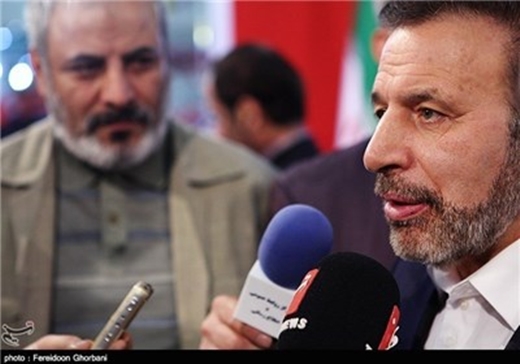
Iranian Minister of Communications and Information Technology Mahmoud Vaezi announced on Wednesday that a new Iranian search engine will be launched soon.

While attending the massive rallies of Iranian people commemorating the Islamic Revolution’s victory anniversary, Vaezi told reporters that in the near future, a new national search engine will be launched.

The new search engine will come as part of the country’s plan to secure its cyberspace.

The Iranian government has launched a massive project to set up a national information network in the country. Iranian authorities say the project will improve internet access and protect the country from cyber attacks.

There are some 45 million internet users in Iran. The Islamic Republic is seen as the leading country in the Middle East region in terms of Internet penetration. It has already been awarded the UNESCO special certificate for providing telecommunication services to rural areas.

Iran’s FM says already sought single-step nuclear deal

Zarif-Rally

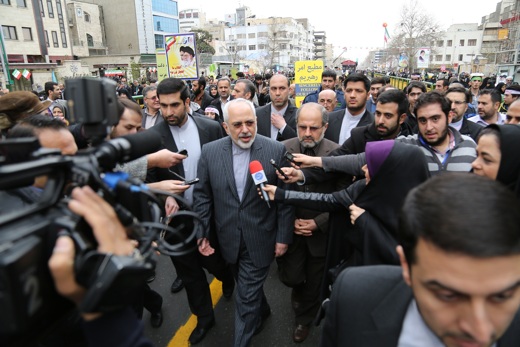
Iranian Foreign Minister Mohammad Javad Zarif said what he had been considering during the nuclear talks with P5+1 was in line with Supreme Leader of the Islamic Revolution Ayatollah Seyyed Ali Khamenei’s view on the two-stage nuclear agreement.

Speaking to reporters in Tehran on Wednesday, Zarif said he was delighted to know that Ayatollah Khamenei had the same view about a long-awaited nuclear deal between Iran and P5+1 (Russia, China, the US, Britain, France and Germany).

He made the comments amid huge rallies in commemoration of the 36th anniversary of the Islamic Revolution victory.

Earlier on Sunday, Ayatollah Khamenei made it clear that any nuclear deal between Iran and world powers should be implementable, stressing that “no deal will be better than a bad one,” including a two-stage agreement.

The Leader expressed outright opposition to the idea of a two-stage nuclear deal, which entails consensus on the generalities at first and requires agreement on details at a later time.

“Such a deal is not acceptable, because our experience of the opposite side’s behavior shows that mere agreement on the generalities will become a tool for making successive excuses over details.”

“If there is to be any deal, it must have a single stage and include generalities and details together,” the Leader explained.

Zarif then reiterated that a final nuclear deal requires a “political will” to be shown by the other negotiating sides.

With the necessary determination, a deal could be clinched right now, otherwise, even 10 years of talks will be fruitless, the top Iranian diplomat explained.

Anti-Iran sanctions will be removed

Zangeneh

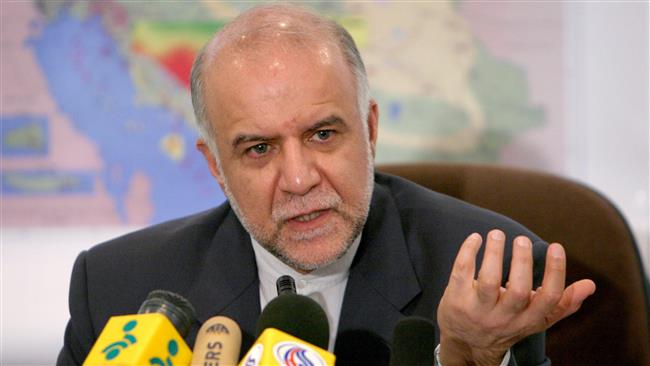
Iran’s oil minister says that the nation will be relieved of sanctions with the expediencies of Leader of the Islamic Revolution Ayatollah Seyyed Ali Khamenei.

Bijan Namdar Zanganeh made a reference to a recent speech by Ayatollah Khamenei on Iran’s nuclear talks with P5+1 and said that the Leader’s speech entailed positive effects for national interests and the other party also received the message.

Zanganeh added that the Iranian administration and its nuclear negotiators have always been under the auspices of the Leader whose “expediencies and guidance” will help rid the country of sanctions.

Iran’s oil chief made the comments at a rally in the capital Tehran on the anniversary of the country’s 1979 Islamic Revolution.

Regarding the recent oil price plunges, Zanganeh said such fluctuations could not have a single explanation and will have to be dealt with over time according to their repercussions.

Ayatollah Khamenei had said on Sunday that Iranian nuclear negotiators are making efforts to secure the removal of hostile sanctions against Tehran during their discussions with the six-party group.

In order to reach a nuclear accord with P5+1, the Islamic Republic has currently suspended 20-percent uranium enrichment as well as the development of centrifuges and nuclear facilities in Arak and Fordow, said the Leader, adding that Tehran has acted logically in the course of the negotiations.

The Leader further pointed out that Iran would rather not have any nuclear agreement with P5+1 than pen a bad deal which runs counter to the interests of the nation.

Gas-sweetening solvents indigenized by Iranian researchers

Iran-Gas

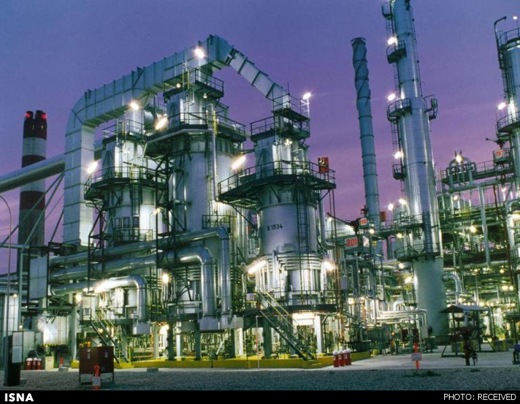
Scientists at the Research Institute of Petroleum Industry in cooperation with the National Iranian Gas Company have indigenized solvents used in gas-sweetening units of refineries.

Stressing that Iran has the world’s second largest natural gas reserves, Ali Zoghi, who leads the project, said Tuesday, “To exploit such resources, treatment is necessary. That’s why gas-sweeting units are among the most important parts of natural-gas refineries. The technology covers the formulation of gas-sweetening solvents (Parsisol Solvent), the design of the gas-treating unit based on Parsisol Solvent, the management of solvents, and the recycle of used solvents.”

Among other things, high absorption of acid gases, little corrosion, the possibility of using common alloys in the process, elimination of anti-corrosion material, production of little foam, high heat-retention, and low energy consumption are some of the advantages of Parsisol Solvents.

The results of a field test on an industrial scale in Masjed Soleyman Refinery show that the Iranian product outperforms a Canadian solvent previously used in the refinery, he concluded.

A visit to Tehran by a former US Congressman

Jim Slattery, a former US Congressman

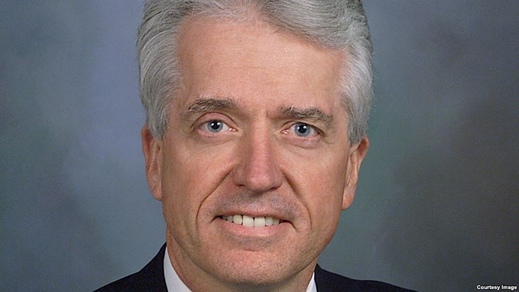
Jim Slattery, a former US Congressman, after his visit to Iran in December said, “Very few members of our administration … have any personal relationships with Iranians. One of the great problems we have to overcome right now is ignorance.” What comes below is a report that Fararu website filed on his comments on February 10:

“The Iranians are deeply concerned about respect – the one thing they yearn for is respect,” Jim Slattery, 66, said in a presentation at the Atlantic Council think tank.

He was told by his hosts in Tehran that it was first invited trip by a US lawmaker since the 1979 Revolution.

The Kansas Democrat, who served in the House of Representatives from 1983 to 1995, attended an international conference in Tehran against violence and extremism. He also met with Iranian officials, including key members of parliament.

Slattery said he believed President Hassan Rouhani and his inner circle were “deeply committed to improving this relationship with the United States. And I believe that if they fail, we are likely to see the return of a much more hardline government in Iran.”

The Iranian officials he met were “all deeply concerned about what effect Congress elections last November will have on President Obama’s capacity to actually implement any agreement” on Iran’s nuclear program.

“They are very troubled by the prospect of … putting their best deal on the table,” only to have US lawmakers reject it.

“This would be a political disaster,” Slattery added. “So they need assurances that if there is a deal that is worked out, they want to be confident that it can actually be approved and implemented by the Obama administration.”

Slattery argued that both Tehran and Washington bore responsibility for obstacles to an international deal.

Iranians turn out in force for Feb. 11 rallies (Photos)

Islamic Revolution victory 1

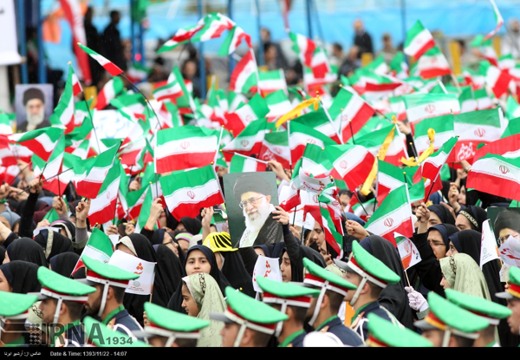
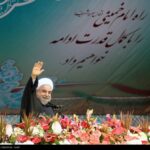
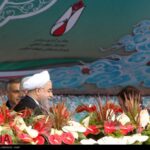
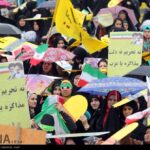
Iranians on Wednesday turned out in their millions across the nation for the Feb. 11 rallies marking the victory of the Islamic Revolution 36 years ago, pledging allegiance to the lofty ideals of the revolution and commitment to the guidelines of Supreme Leader Ayatollah Seyyed Ali Khamenei.

The demonstrators in Tehran praised, in a final resolution, Iran’s scientific and technological achievements and expressed support for the negotiating team in nuclear talks with P5+1, urging the country’s negotiators to take into account the red lines drawn by the Supreme Leader.

The following are the photos the Islamic Republic News Agency (IRNA) posted online of the massive rallies: