Friday, April 17, 2026
Home Blog Page 4946

Iran-P5+1 nuclear talks at sensitive point: Zarif

Iran-Italy-FMs

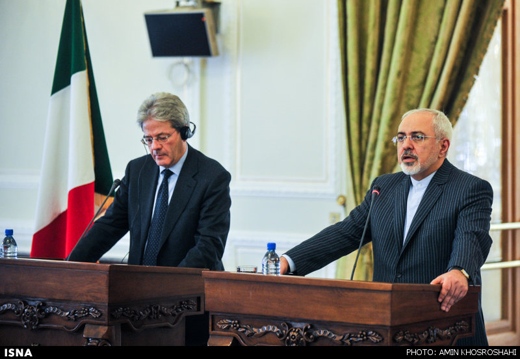
Addressing a joint press conference with his Italian counterpart Paolo Gentiloni in Tehran on Saturday, Zarif added that negotiators of Iran and the United States held “accurate” and fruitful talks in the Swiss city of Geneva on February 22 and 23.

“We have announced many times that as long as general issues are not agreed upon, there will not be any agreement,” the Iranian minister said.

He emphasized that there would be no deal unless the sides reach an agreement on all issues.

The top Iranian nuclear negotiator said the sides certainly made “some serious progress” in Geneva, expressing hope the negotiating sides would also make progress next week on other issues, especially the lifting of sanctions.

“In that case, we will draw it up in the form of a comprehensive and accurate deal,” said Iran’s diplomacy chief.

Nuclear talks between representatives from Iran and the United States were held in Geneva, Switzerland, on February 22 and 23 and the two sides held three rounds of negotiations in two days in an attempt to narrow their differences ahead of a key July 1 deadline for reaching a comprehensive deal.

Both top Iranian and US diplomats said some progress was made toward a final deal.

Political directors from Iran and foreign ministries of P5+1 will hold a fresh round of talks about Tehran’s nuclear program in Montreux, Switzerland, on March 5, EU spokeswoman, Catherine Ray, said on Friday.

A series of bilateral meetings will also be held prior to the planned high-level talks between negotiators from Iran and the five permanent members of the UN Security Council plus Germany, she added.

Iran and P5+1 – Britain, France, China, Russia, and the United States plus Germany – are making attempts to narrow their differences on the outstanding issues related to Tehran’s nuclear program.

Veteran translator expounds on the root cause of woes we face

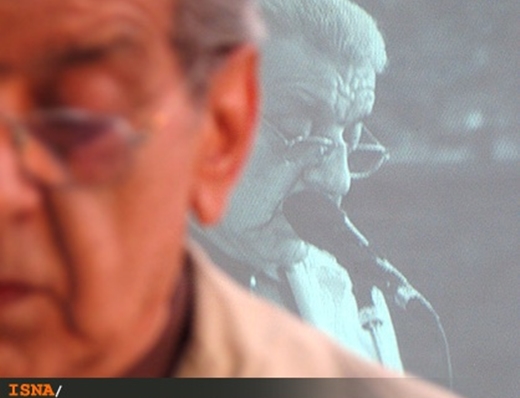
Ezatollah Fouladvand

Ezzatollah Fooladvand, a seasoned translator of philosophical texts, has said that suppression of thoughts, not the thoughts themselves, should be a source of concern. “I believe that any misfortune or misery that has beset our people has its roots in a lack of knowledge.”

What comes below is the translation of a report the Iranian Students News Agency released on February 25 about the comments Fooladvand made at Mahtab Mirzaei award ceremony at Book City Tuesday:

We should extend gratitude to those who in spite of all shortcomings, restrictions, problems and occasional ingratitude still remain committed to the promotion of knowledge and culture in this country; an amazing land which has seen the rise of scholars and scientists like Ferdowsi, Saadi, Hafez, Rumi [all highly revered Persian poets], and Zakariya al-Razi and Avicenna [both prominent Persian scientists].

Eleven centuries ago when by its own admission the West was going through the Dark Ages, a wise man like Rudaki [the first great literary genius of modern Persia] said that knowledge is an enlightening tool which shields individuals from the ills of ignorance.

No wonder, German philosopher Hegel has said that the beginning of evolution of man starts with the history of Persia. However, unfortunately, throughout history, there have been times when we have been deprived of enlightening knowledge and descended into the darkness of ignorance, denied our scholars and artists the gratefulness and respect they have deserved and plunged into superstition and nescience.

[In such periods] Not only have we failed to value our great ancestors, but we have belittled them and also hurt our contemporaries of great caliber, cracked down on them and even shed their blood. A case in point is the murder of Shahab al-Din Suhrawardi [a Persian philosopher] on the order of Salahuddin Ayubi [founder of the Ayyubid dynasty] because of the ideas he held.

I have always believed and continue to believe that any misfortune or misery that has beset our people has its roots in a lack of knowledge.

There is an English proverb which says that to err is human; to persevere in error is diabolical. There have been several times when we have insisted on making an error; inflicting substantial and at times irreparable damage not only on ourselves but on future generations, but what is the antidote?

That no one learns a lesson from history is the lesson we learn from history. However, if we take this concept too seriously, we will have to forget the nations that have learned from the past and gone down the path of progress and prosperity. In that case we will remain stuck in our compound ignorance.

A precious lesson learned in the past and even at present is that in the field of thinking in the battle between pen and sword, the former is the final winner.

A shaky thought in which passion and prejudice replace wisdom and far-sightedness is doomed to failure even if it is founded on good intentions; those who initially rally behind it will eventually end up remorseful.

This experience has repeated itself since the emergence of mankind and has been considered valuable by rulers and the great. In confirmation of this concept, Saadi, the master of eloquence, has said that kings need the company of the wise more than the wise wish to get close to the rulers.

We should not be fearful of thoughts; what should be feared is the suppression of thoughts, because it paves the way for the dominance of lame, insubstantial, misleading and ill-fated ideas.

Therefore, let’s appreciate the intellectuals, authors and artists that truly serve humanity so that they can make their presence felt and market their ideas. I assure you that if they try to sell worthless opinions, they themselves will incur losses and there is no need for any crackdown.

In conclusion, Fooladvand thanked organizers for handing him the award for translation of Philosophy of History.

Ahmadinejad threw nuclear dossier into disarray: Former diplomat

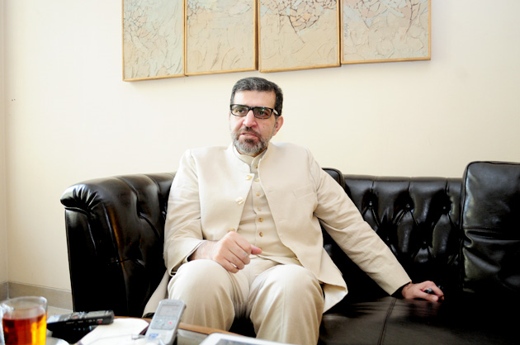
Sadegh Kharazi

On February 28, Khabaronline, a news website, published a report on remarks by Sadegh Kharrazi, a member of the newly-formed NEDA [Farsi initials for a Second Generation of Reformism] Party, among other things, about the role of former President Mahmoud Ahmadinejad in the country’s nuclear dossier. The following is the translation of the report:

Dismissing claims by Ahmadinejad that he did not have any influence on the course of Iran’s nuclear case, Kharrazi said, “Basically, it was Mr. Ahmadinejad who upset the balance of Iran’s nuclear dossier. It cannot be said that he played no role in it. The measures he took, the strange orders he gave to the Atomic Energy Organization, and the nuclear celebrations he organized altogether landed us in trouble.

He tried to tie the nuclear case to the negotiations with America so that he could take all the credit for resumption of ties with the US on the one hand, and claim that he was the one who settled the nuclear dispute, on the other.

From the get-go, a mechanism was in place for Iran’s nuclear program, but he acted in defiance of that mechanism. I must stress that his hands were not tied at all in dealing with any matter. One can even say that in the history of Iran no president wielded as much powers as he did. He manipulated the rules and expressed freely his ideas everywhere.”

Kharrazi went on to say, “By way of ballyhoo, he dealt a blow to Iran’s dignity on the international stage. […] The visit that Mr. Ahmadinejad had with former Russian President Dmitry Medvedev and the response Ahmadinejad produced when the Russian president asked how he was doing turned the Iranian president into the butt of jokes for quite a while in international circles.”

Charity begins at the environment

Charity begins at the environment

A dual-purpose campaign was launched in Tabriz last year to help disabled people hard-pressed for money. The following is a partial translation of a report on the environmental-charitable program as reported by Sharq daily on February 25:

Six poor people in Tabriz [northwestern Iran] have been given wheelchairs bought as part of an environmental charity massively contributed to by locals.

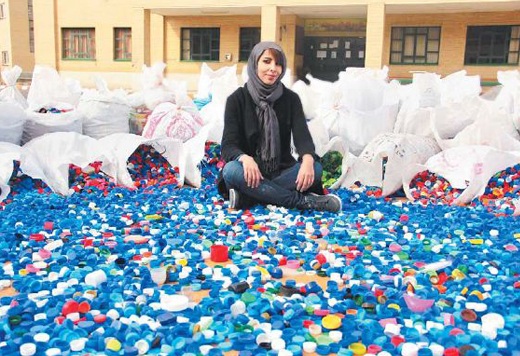
Sepideh Jalali, a 25-year-old girl, initiated the charitable campaign which called on people to collect crown corks of bottled water and other plastic containers, hand them over to collecting centers and help buy the wheelchairs for those in need.

The plan was set in motion late last year [ended March 21, 2014] and was in full swing in the city by April. Finally it led to the accumulation of a stock of 650,000 corks weighing around one ton.

The charity organizers sold the corks to Tabriz Municipality’s Waste Management Organization and bought wheelchairs for six poor people who were physically challenged.

When the campaign for collecting corks was in high gear intense rivalry grew between people in Tabriz for gathering even more crown corks.

Sepideh Jalali says that the idea of collecting corks first occurred to her last year and that she was joined by her sister and then her classmates in Tabriz University of Art. The idea found its way into social networking sites as well and was welcomed by young people who encouraged their families to come on board. The result was a stack of about one ton of corks in the city.

[…]

She said people in Tabriz offered a helping hand both for environmental causes – to keep the environment clean – and for humanitarian causes – to help their fellow Iranians. The two causes were overlapping directly and indirectly. Some people answered a call for action only to help clean up nature and contribute to waste sorting efforts, and others got involved to simply help those in need. The result, however, served both purposes.

[…]

The campaign also drew the attention of people from all cities across the province as well as West Azerbaijan and Tehran. Interestingly, whenever non-local university students who were studying in Tabriz came back from their hometowns they brought in large amounts of corks.

The purchase of wheelchairs was not the end of the story. The campaign is still on and Sepideh hopes to promote the worthwhile idea. In addition to bottle caps, she is seeking to collect other disposable items such as waste paper in the future.
Iran to provide Iraq’s Kurdistan Region with gas, gasoline

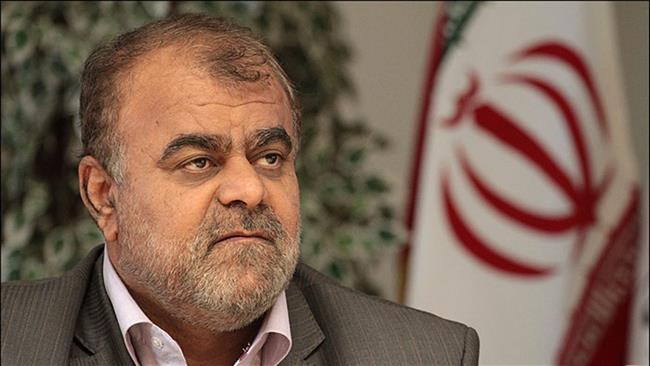
Rostam Ghasemi

An Iranian delegation headed by Iran-Iraq Economic Development Committee Chairman Rostam Ghasemi signed the agreement during a visit to Erbil, the capital of the Iraqi Kurdistan Regional Government (KRG), said Abdullah Akerei, an official representing KRG in Iran, on Friday.

“The gasoline for the region’s power plants will also be supplied by the Islamic Republic of Iran,” the Kurdish official added.

He also gave a positive assessment of the recent negotiations between Tehran and Erbil, saying the region’s Premier Nechirvan Barzani had ordered all ministries to cooperate with the Iranian delegation.

According to the official, the two sides also held negotiations last year and will continue their talks in the near future in a bid to boost bilateral ties.

On Wednesday, the high-ranking economic delegation, accompanied by a special team from Iran’s Oil Ministry, arrived in Erbil for a three-day official visit to the region.

Russia denies losing interest in Iran-P5+1 nuclear talks

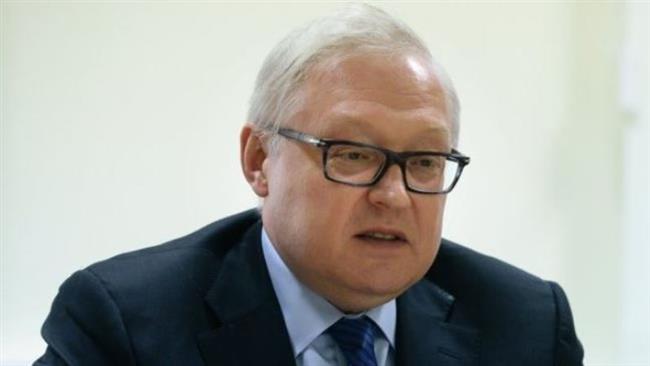
Russian Deputy Foreign Minister Sergei Ryabkov

A success in the nuclear talks between Iran and the six countries will be in Russia’s best interests, Russian Deputy Foreign Minister Sergei Ryabkov said on Friday.

“We were somewhat alarmed to see speculations in some Western media outlets lately that Russia, for some reasons, is losing interest in the productive completion of the negotiations and has slackened its activity for some irrelevant considerations. This categorically doesn’t reflect the reality,” Ryabkov told Interfax.

Adding that Russia is interested in playing its “role in favor of a productive completion of the negotiations,” he emphasized that everybody should be interested in the faster normalization of the process of negotiations between Iran and the P5+1 countries about Tehran’s nuclear program.

“A potential multilateral deal with Iran should not set precedents in the international system negatively,” Ryabkov said.


Russia’s stance on Iran-P5+1 deal

Ryabkov on Tuesday expressed confidence that Iran and P5+1 – Britain, France, China, Russia, and the United States plus Germany – would finally hammer out a comprehensive deal on Tehran’s nuclear program by July 1.

The deputy foreign minister said in Geneva that tangible progress was being made after US Secretary of State John Kerry and Iranian Foreign Minister Mohammad Javad Zarif held two-day talks in the Swiss city.

“We are satisfied to see every new meeting achieve further progress,” Ryabkov added.

“There is a growing confidence that an agreement will be reached by the assigned deadline — in other words, June 30,” Russia’s senior negotiator said.

Nuclear talks between representatives from Iran and the United States started on February 22 in the Swiss city of Geneva and the two sides held three rounds of talks in two days in an attempt to narrow differences ahead of a key July 1 deadline for reaching a comprehensive deal.

Both the Iranian and US top diplomats said some progress was made toward a final deal.

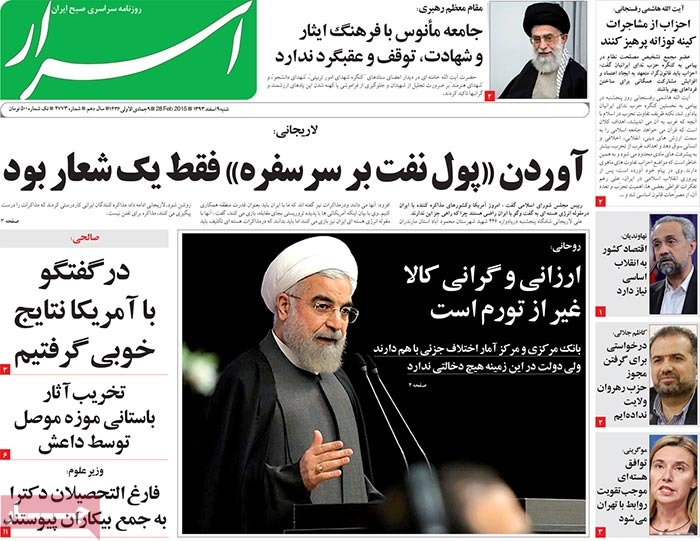
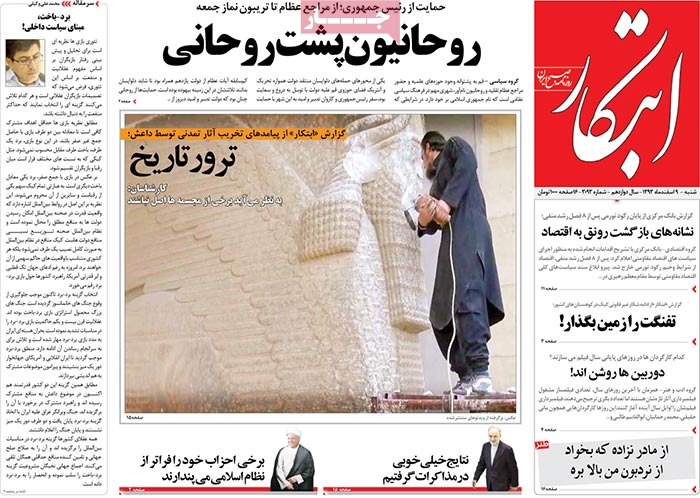
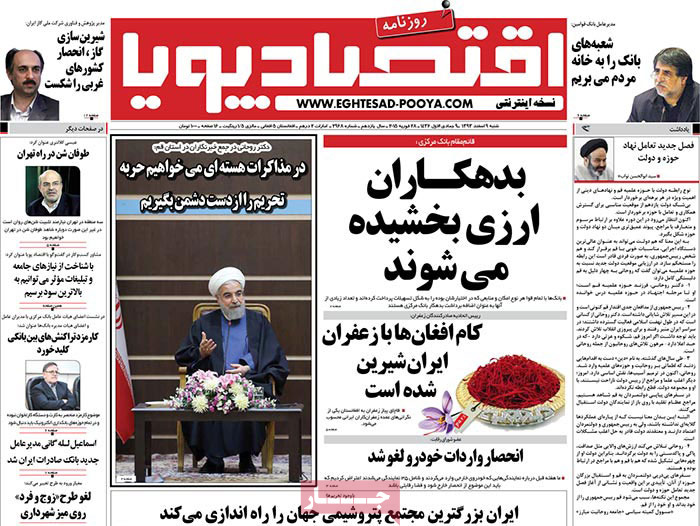
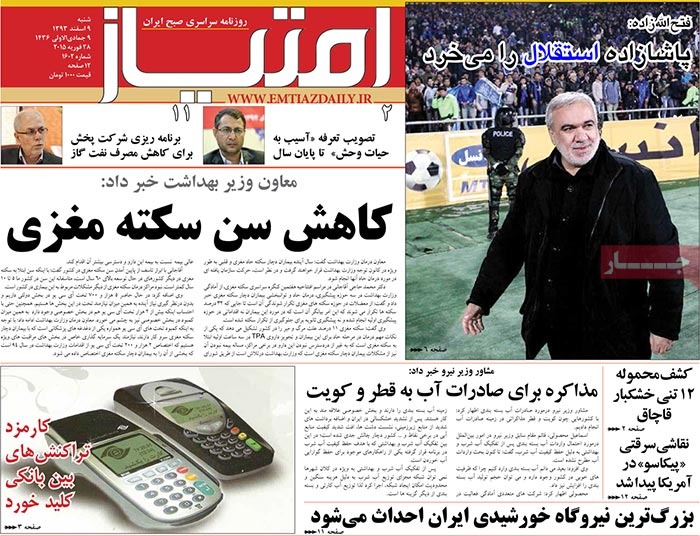
A look at Iranian newspaper front pages on Feb. 28

Iranian Newspapers Headlines

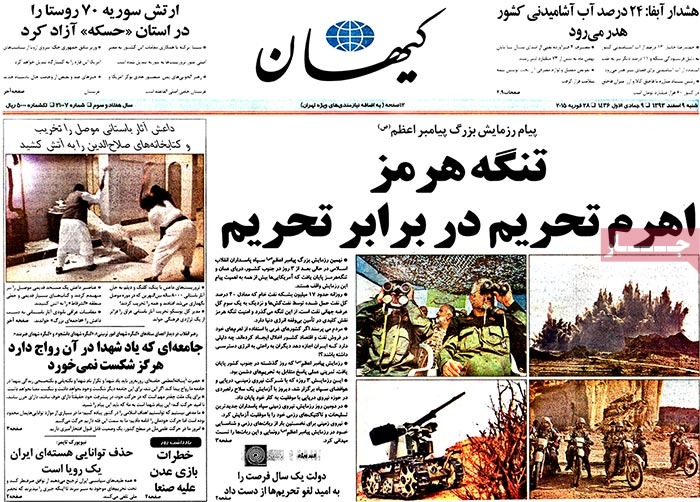
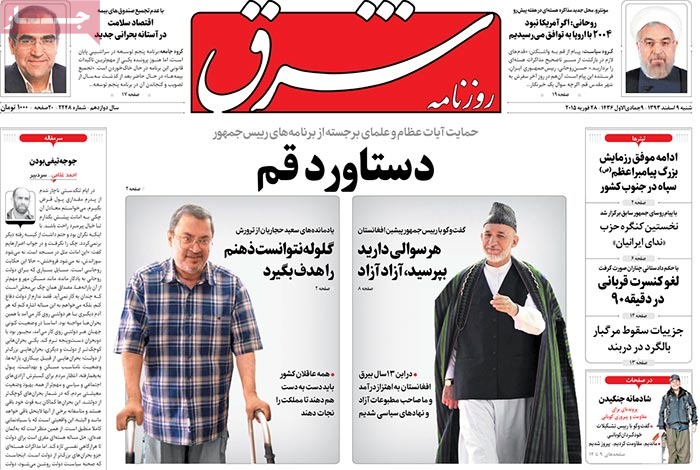
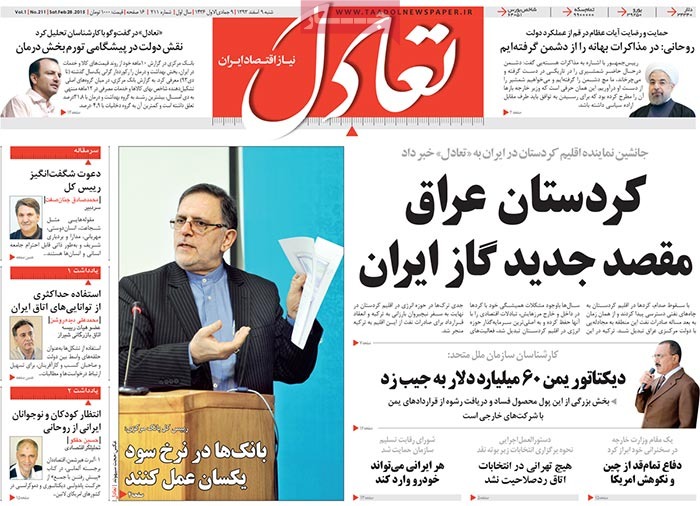
The Qom visit of President Rouhani which featured meetings with senior clerics and their support for the president’s handling of the country’s affairs along with the conclusion of the naval war games of the Islamic Revolution Guard Corps dominated the front pages of Iranian newspapers on Saturday.


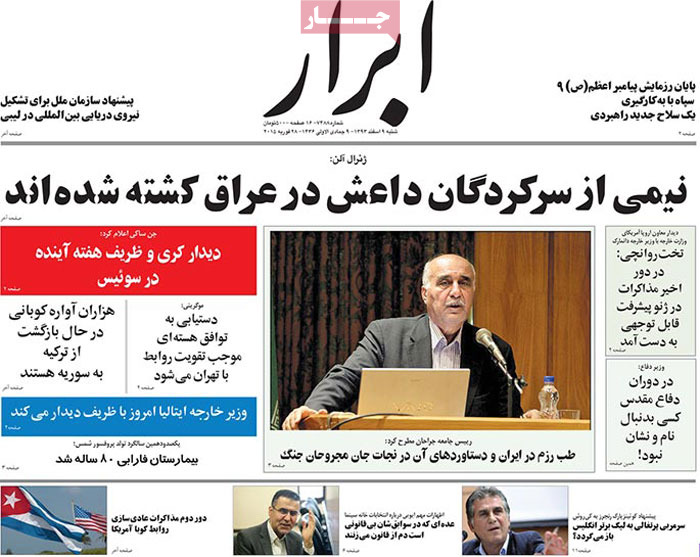
Abrar: “Remarkable progress was made in the most recent round of talks in Geneva,” said Majid Takht Ravanchi, the Iranian deputy foreign minister.

Abrar: The Italian foreign minister will meet with Iran’s Mohammad Javad Zarif on Saturday.


A look at Iranian newspaper front pages on Feb. 28


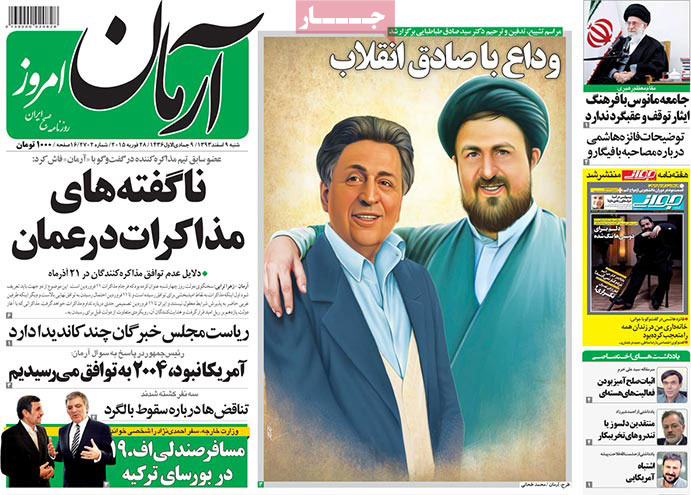
Arman-e Emrooz: The Turkish Foreign Ministry has described a visit by former President Mahmoud Ahmadinejad to Turkey as personal and unofficial.

Arman-e Emrooz: A few candidates are running for the chairmanship of the Assembly of Experts.


A look at Iranian newspaper front pages on Feb. 28


Asrar: “We got good results in talks with the US,” said the director of the Atomic Energy Organization of Iran.


A look at Iranian newspaper front pages on Feb. 28


Ebtekar: The clergy throw their weight behind the president.

Senior clerics based in Qom and Friday prayer leaders have said that they support President Rouhani.


A look at Iranian newspaper front pages on Feb. 28


Eghtesad-e Pooya: Iran is to launch the world’s largest petrochemical plant.


A look at Iranian newspaper front pages on Feb. 28


Emtiaz: “The average age of stroke has decreased,” said the deputy health minister.


A look at Iranian newspaper front pages on Feb. 28


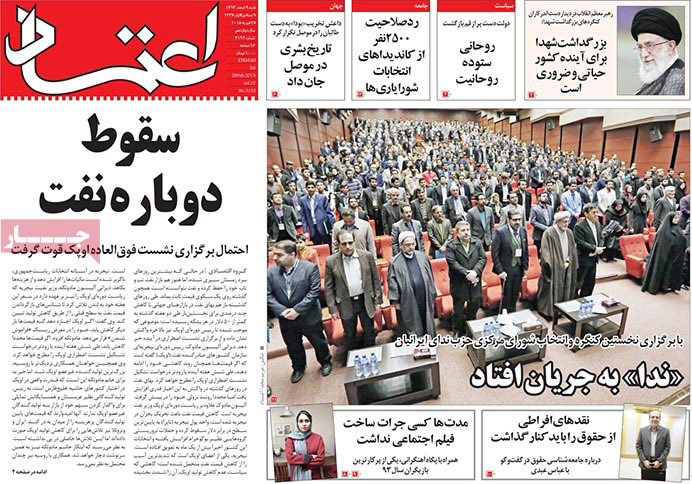
Etemad: Oil prices are falling again.

OPEC is likely to have an extraordinary meeting.


A look at Iranian newspaper front pages on Feb. 28


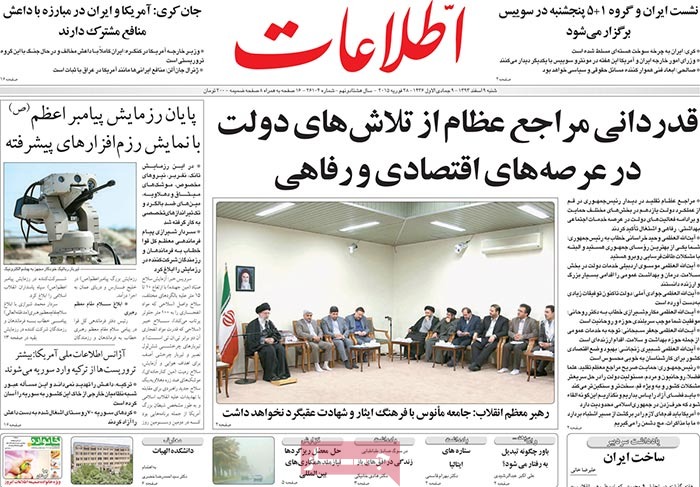
Ettela’at: The next meeting of Iran and P5+1 will be held in Switzerland.


A look at Iranian newspaper front pages on Feb. 28


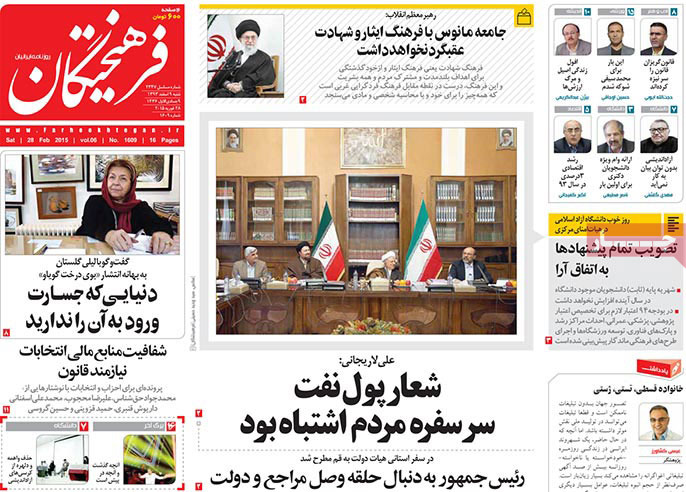
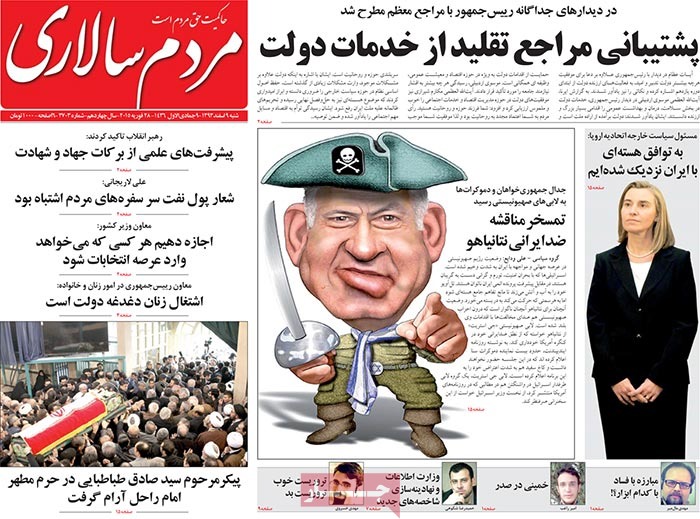
Farhikhtegan: “The promise to take oil money to the houses of people was just a slogan and a mistake,” said Parliament Speaker Ali Larijani.


A look at Iranian newspaper front pages on Feb. 28


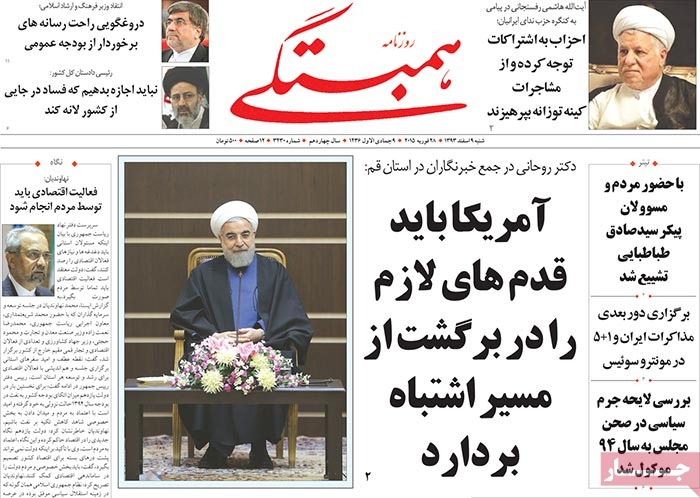
Hambastegi: “The US should reverse the missteps it has taken,” said President Rouhani.


A look at Iranian newspaper front pages on Feb. 28


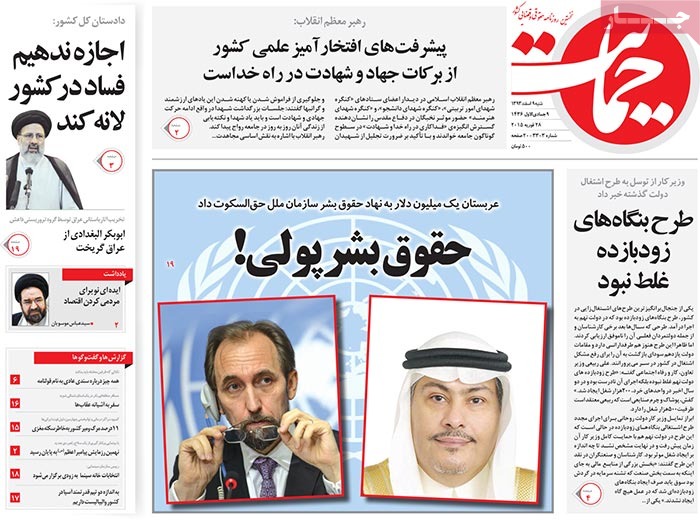
Hemayat: “The country owes its scientific progress to Jihad and martyrdom,” said the Supreme Leader.

Hemayat: Abu Bakr al-Baghdadi is said to have fled Iraq.


A look at Iranian newspaper front pages on Feb. 28


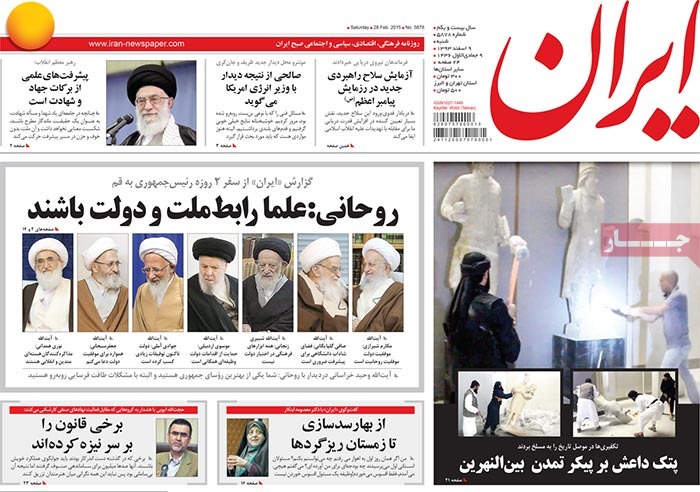
Iran: IS has sledge-hammered the Mesopotamian civilization.


A look at Iranian newspaper front pages on Feb. 28


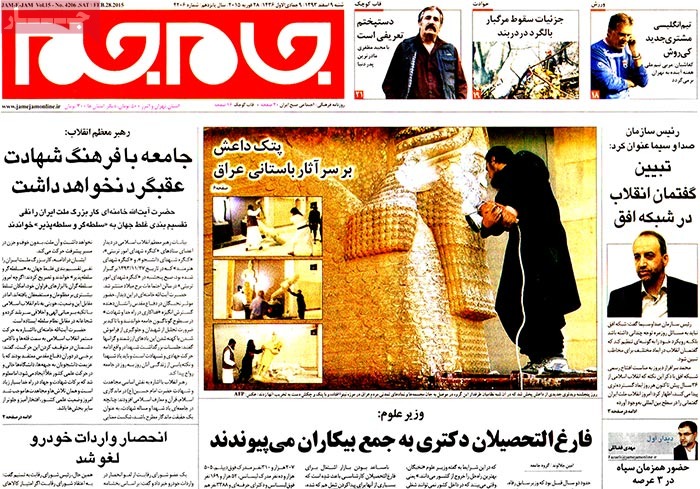
Jamejam: Car imports are no longer a monopoly.


A look at Iranian newspaper front pages on Feb. 28


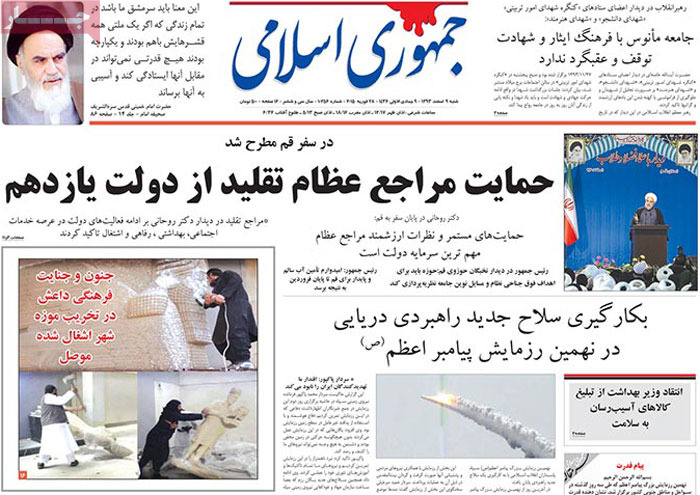
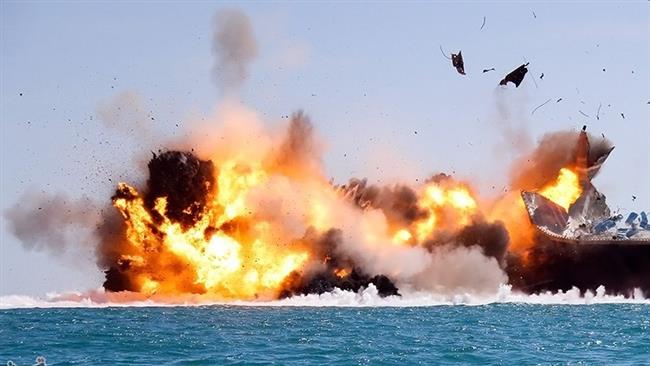
Jomhouri Islami: New strategic naval weapons have been tested in the Great Prophet maneuvers in the south.


A look at Iranian newspaper front pages on Feb. 28


Kayhan: Some 24 percent of the country’s drinking water is wasted.


A look at Iranian newspaper front pages on Feb. 28


Mardomsalari: Seyyed Sadegh Tabatabai has been laid to rest in the mausoleum of the late Imam Khomeini.


A look at Iranian newspaper front pages on Feb. 28


Sharq: “We could have reached a deal with Europe in 2004 had it not been for the US,” said President Rouhani.


A look at Iranian newspaper front pages on Feb. 28


Taadol: The Iraqi Kurdistan Region is the new destination of Iranian natural gas exports.


A look at Iranian newspaper front pages on Feb. 28


Weapons used by Revolution Guards in Persian Gulf exercise

weaponry IRGC Persian Gulf war games

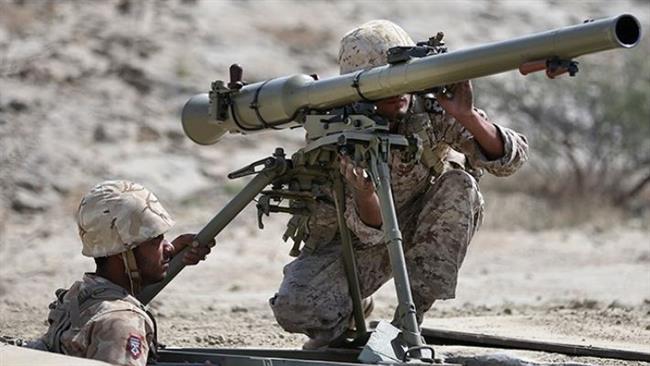
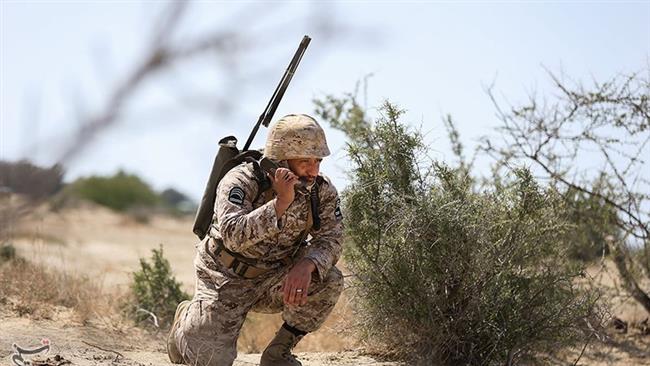
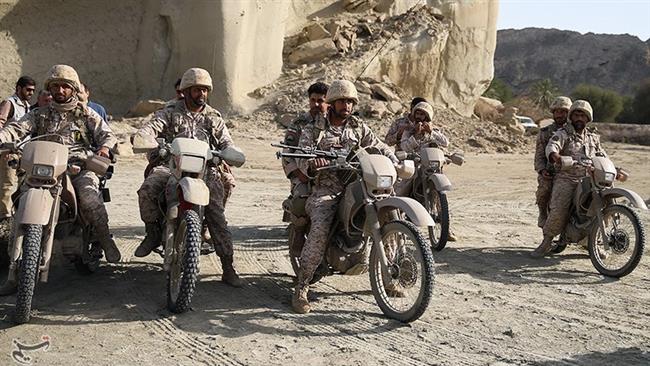
The Islamic Revolution Guards Corps (IRGC) has concluded major maneuvers code-named Great Prophet 9 in the southern Persian Gulf region.

Various types of weaponry were tested with some of them being introduced for the first time.


RPH drone

The reconnaissance drone known as RPH is capable of flying both during days and nights with a maximum range of 14 kilometers. The unmanned aerial vehicle (UAV) is equipped with advanced cameras enabling it to take images of the enemy’s positions.


Jamarat

The weapon is like an engine-free cruise missile which is launched by a gyroplane. The precision of the short-range missile is about one meter and it can hit targets as far away as 14 km.


weaponry IRGC Persian Gulf war games-1


Ramiat

The roadside mine is used to target armored vehicles with high precision and power. The mine is operated by a remote control and if used, it could destroy armored columns within a radius of 100 to 150 meters. The explosive is capable of penetrating up to 50cm into armor and can affect at least 100 enemy forces.


Sayyad

A bounding mine with a projectile height of 10-15 meters and is good at targeting the enemy’s helicopters.


weaponry IRGC Persian Gulf war games-2


Vassel

The weapon is a rocket-fired minefield sweeper which can clear an area 100 meters long and nearly two meters wide. It hugely improves the defensive capability of forces in confronting the enemy.


Khaybar

The weapon contains explosives which doubles the power of normal TNT and can be used on warheads to improve their destructive capability.


Nasir

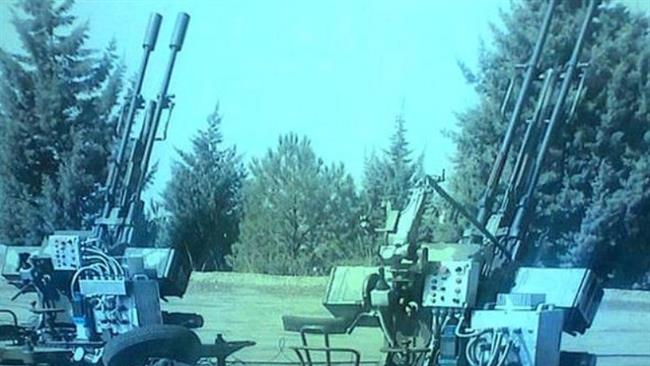
A 12.7 mm shoulder-fired weapon with six rotating barrels used to target cruise missiles. Its rate of firing is 2,500-3,500 rounds per minute.


weaponry IRGC Persian Gulf war games-3


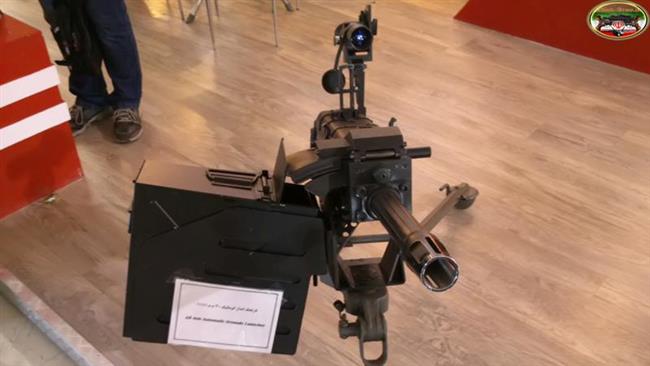
Asefeh

A 23 mm rotary cannon, with a firing rate of 900 to 1,200 per minute used against cruise missiles and low-flying drones.


weaponry IRGC Persian Gulf war games-4


Arash

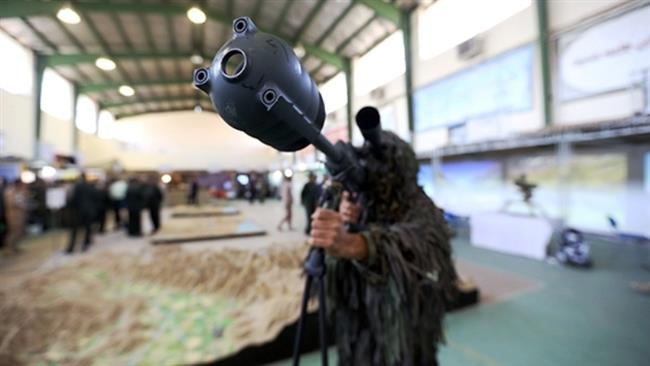
The shoulder-fired weapon is a 20 mm cannon which is used by the infantry.

 

weaponry IRGC Persian Gulf war games-5


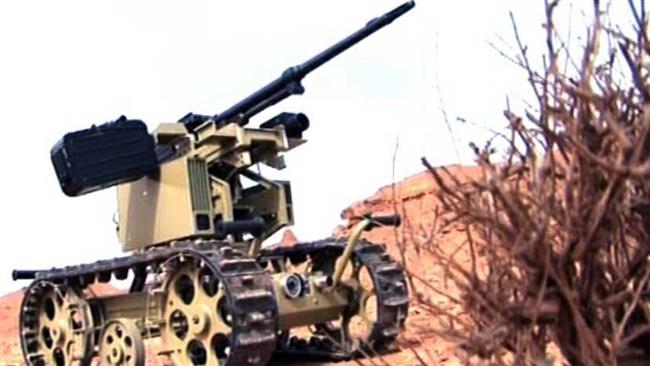
Armed robot

The combat robot is equipped with a 7.62 caliber machine gun, advanced optics and a thermal camera, with an effective operational range of 5-7 km.


weaponry IRGC Persian Gulf war games-6


Multi-cellular walls

The protective layer can be instantly installed to counter explosions or rocket-propelled grenades (RPGs).


weaponry IRGC Persian Gulf war games-7


Final steps in nuclear talks are being taken: Prayer leader

Ayatollah sedighi

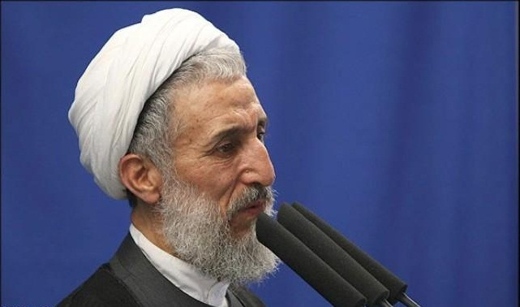
The provisional Friday Prayers Imam of Tehran brought up the “final steps toward a comprehensive nuclear agreement” with six world powers and appreciated the wise management of the negotiations by President Hassan Rouhani.

Hojjatoleslam Kazem Seddiqi also thanked President Rouhani for expressing clear and precise stands about the Iranian nuclear program and the nuclear negotiations during his recent visit of the holy Qom City.

“We thank Almighty God that the esteemed president in Qom and during his meetings with the prominent clerics in that city… declared clear and promising stands and announced that Iran will not yield to humiliation, a shutdown (of nuclear facilities) or continuation of the sanctions,’ said Seddiqi addressing thousands of worshippers.

He said that His Eminence the Leader of Revolution in his last address about the nuclear negotiations stated that the Westerners are used to lengthy bargaining, a case in point for 60 years Palestine has been occupied by the usurper Zionist regime, but they are still negotiating while Israel is destroying Palestinian infrastructure and those useless talks keep going on and on and on.

“His Eminence added that if that is going to be the case, we insist that the main points and the minute details need to be resolved all together; but they intend to keep the sanctions in effect and block the path for our country’s progress and prosperity, which is not acceptable as all sanctions need to be lifted and annulled together,” he said.

Seddiqi reiterated that the Westerners are not allowed to interfere in Iran’s internal affairs; neither are they allowed to define the quantity of the fuel that we can produce.

“Such blackmailing was a characteristic of the colonial era, not the Islamic Revolution’s period in which Iran is conquering the peaks of scientific progress,” he stressed.

Hojjatoleslam Seddiqi added that Arak Heavy Water Reactor must be activated; Fordo needs to continue its activities and the extent of enrichment must not be restricted as these are our people’s demands and they will not be content getting anything less.

Iranian diplomats in Kabul safe and sound: Afkham

Marzieh Afkham speakerwoman

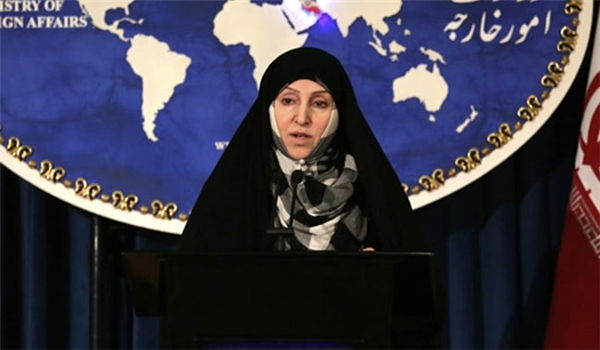
Foreign Ministry Spokeswoman Marziyeh Afkham said Thursday that all Iranian diplomats in Kabul are safe and sound after a terrorist incident occurred outside the Iranian embassy in the Afghan capital earlier in the day.

Condemning the terrorist attack, Afkham said no damage has been inflicted on the Iranian embassy.

She underlined the need ‘to confront any act of terror which takes place in any corner of the world by any individual or group.’

The spokeswoman also called for collective efforts to pinpoint the root causes of extremism and terrorism in different countries and deal with the problem with no double standards.

The terrorist attack targeting a vehicle of the Turkish embassy outside the Iranian embassy in Kabul killed one person.

The incident occurred at 8:15 local time when a suicide bomber driving a bomb-laden car tried to hit the diplomatic car belonging to the Turkish embassy while it was passing by the Iranian mission in the Afghan capital.

The driver was killed, said Deputy Interior Minister of Afghanistan General Mohammad Ayoub Salangi.

Salangi told reporters that police have launched an investigation into the terrorist incident.