Saturday, April 18, 2026
Home Blog Page 4927

Iran, US end deputy-level talks in Lausanne

Iran Talks

Deputy foreign ministers of Iran and the US under-secretary of state have held a meeting in Lausanne after the end of a plenary meeting among top representatives of the Islamic Republic and P5+1 on Tehran’s nuclear program.

Abbas Araghchi and Majid Takht-e Ravanchi, the two Iranian deputy foreign ministers, sat with US Under-Secretary of State for Political Affairs Wendy Sherman in the Swiss city on Monday as a Tuesday’ deadline looms.

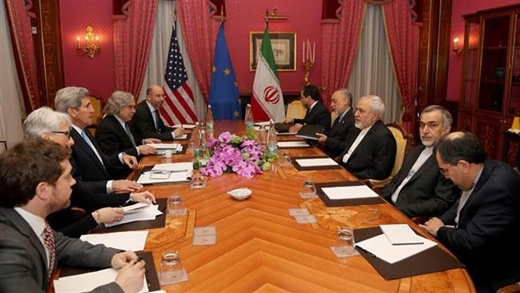
Iranian Foreign Minister Mohammad Javad Zarif held a meeting earlier with US Secretary of State John Kerry, German Foreign Minister Frank-Walter Steinmeier, French Foreign Minister Laurent Fabius, Chinese Foreign Minister Wang Yi, Russian Foreign Minister Sergei Lavrov, British Foreign Secretary Philip Hammond and High Representative of the European Union for Foreign Affairs and Security Policy Federica Mogherini.

Ready for compromise: Russia

Following the plenary session of the foreign ministers of Iran and P5+1, the Russian Foreign Ministry published a statement saying Foreign Minister Sergei Lavrov has called on all participants in the nuclear negotiations to be ready for compromise.

“During the plenary session, Lavrov confirmed Russia’s adherence to prompt achievement of a comprehensive agreement. The minister reiterated the importance for all parties to be ready for compromise in the interests of finding mutually acceptable solutions,” the statement said.

According to the statement, the plenary session “focused on the search for a political and technical compromise” on issues preventing the achievement of a mutual understanding.

“All participants stated considerable progress reached in the negotiation process and confirmed the general wish to achieve a comprehensive solution to the situation regarding the Iranian nuclear program within the next few days,” the Russian Foreign Ministry added.

The United States and Europe reportedly want the UN Security Council (UNSC) sanctions on Iran to be automatically reversible, meaning that if Iran violates the deal at any point, the UNSC sanctions will automatically be re-imposed on Tehran.

Russia opposes such a scenario, saying in such a case the UNSC should decide what to do. Moscow says automatic imposition of sanctions goes against the mechanism of the Security Council.

China also reportedly shares Russia’s viewpoint and is against the imposition of automatically reversible sanctions on Iran.

The final stage of the ongoing talks between Iran and P5+1 – the United States, Britain, France, Russia and China plus Germany – in Lausanne is expected to continue until Tuesday, which was set as a deadline for reaching mutual understanding in the negotiations.
US has no option but to continue negotiations: Leader’s adviser

Velayati-Iran

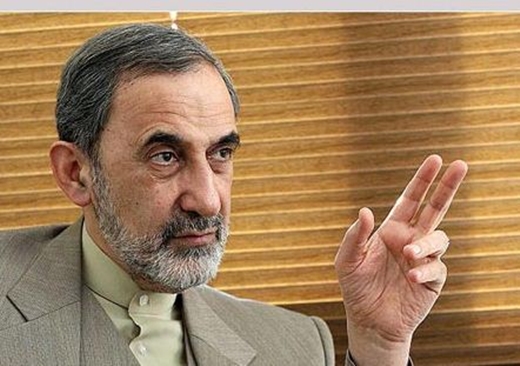
Supreme Leader’s Adviser for International Affairs Ali Akbar Velayati said on Monday that the US has no option but to continue talks as it has experienced other unsuccessful options.

The Islamic Republic of Iran has always remained committed to Islamic and political ethics and this has been substantiated many times by the reports of IAEA but the US has stuck to hypocrisy and plots, he said.

The Supreme Leader of the Islamic Revolution Ayatollah Seyyed Ali Khamenei in his New Year message had warned against the US plot and said they claim that they will clinch a deal while fully monitoring Iran’s behavior after economic sanctions are lifted. This requires that the faithful and committed Iranian nuclear negotiators exercise vigilance in dealing with the plots of enemies.

The US continues throwing obstacles in the way of nuclear talks while they are in dire need of such talks, he said.

Iran, P5+1 hold plenary nuclear meeting in Lausanne

Iran Nuclear Talks

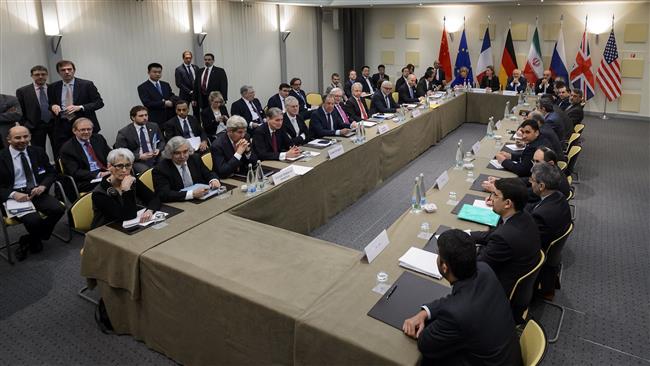
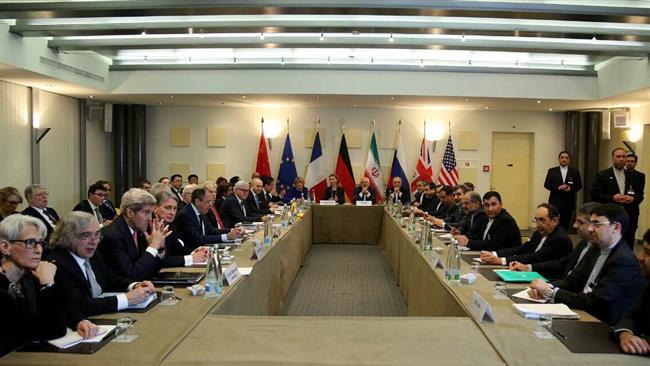
Top representatives from Iran and P5+1 held a plenary meeting in the Swiss city of Lausanne earlier Monday to narrow their differences in negotiations aimed at reaching a final deal over the Islamic Republic’s nuclear program.

Iranian Foreign Minister Mohammad Javad Zarif sat down with US Secretary of State John Kerry, German Foreign Minister Frank-Walter Steinmeier, French Foreign Minister Laurent Fabius, Chinese Foreign Minister Wang Yi, Russian Foreign Minister Sergei Lavrov, British Foreign Secretary Philip Hammond and High Representative of the European Union for Foreign Affairs and Security Policy Federica Mogherini.

Meanwhile, Maria Zakharova, the deputy spokesperson for the Russian ministry of foreign affairs, said Lavrov would leave Lausanne today and return if necessary tomorrow night. She added that Russia does not want any possible agreement to be in violation of the UN Security Council mechanisms.

This comes as sources say that the US and Europe want UN Security Council (UNSC) sanctions to be automatically reversible, meaning that if Iran violates the deal at any point, the UNSC sanctions will automatically be re-imposed on Tehran.

Russia opposes such a scenario, saying in such a case the UNSC should decide what to do. Moscow says automatic imposition of sanctions goes against the mechanism of the UNSC.

China also reportedly shares Russia’s viewpoint and is against the imposition of automatically reversible sanctions on Iran.

Deputy FM urges Red Crescent to help war-stricken Yemenis

Ghashghavi-12

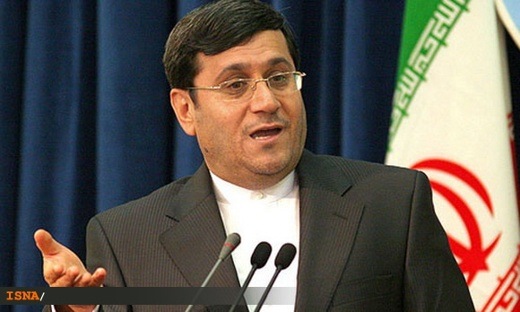
Deputy Foreign Minister Hassan Ghashghavi said the International Red Crescent (IRC) and all human rights organizations should help Yemeni people who are suffering under the Saudi-led aggression.

Speaking to IRNA on Monday, Ghashghavi said all sides should look at the Yemen problem realistically since the solution to the problems of this country is not foreign intervention and military aggression.

The solution is dialogue between all Yemeni political groups, he added, and attributing the problem to others such as Iran cannot solve anything.

“Holding Iran responsible is part of psychological warfare and continuation of Iranophobia project,” the Iranian diplomat said.

Ghashghavi said the priority in Yemen is providing people with medicine, treatment and relief aids and Iran’s Embassy in Geneva has been assigned to work in this regard.

In an act of military adventurism, Saudi Arabian war planes bombarded areas in Yemen Thursday. Scores of innocent people were killed or injured in the attacks which have since continued.

Rafsanjani cancels Saudi visit

Hashemi Rafsanjani

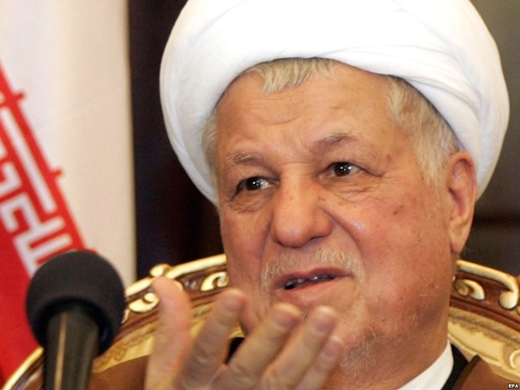
Former Iranian President Akbar Hashemi Rafsanjani, who now chairs the State Expediency Council, has called off his visit to Saudi Arabia, his senior aide announced on Sunday.

“Rafsanjani’s visit to Riyadh has been cancelled,” Ghodratollah Alikhani, a senior advisor to Ayatollah Rafsanjani said Sunday.

He further said Rafsanjani condemned the Saudi aggression against Yemen during his meeting with senior Iranian officials on Saturday, and called off his visit to Riyadh in protest at the Saudi aggression against Yemen.

Rafsanjani, who is known to have had very good relations with senior Saudi officials when he was Iran’s president, has voiced deep concern over the ongoing crisis in Yemen, and said the Saudi attack on Yemen means playing with fire.

“Unfortunately, some Arab countries have committed a clear and dangerous mistake by aimlessly bombarding Yemen. In fact, they have started playing with fire,” Rafsanjani said in a meeting with a group of Iranian officials, past and present.

He blasted the Arab countries that have formed an anti-Yemen coalition led by Saudi Arabia, saying, “They have not taken the slightest measure against the Quds occupying regime [Israel] for over 50 years, but have become united against a regional Muslim country. That is quite regrettable.”

[…]

Iran protests Turkish president’s ‘improper’ remarks

Erdogan

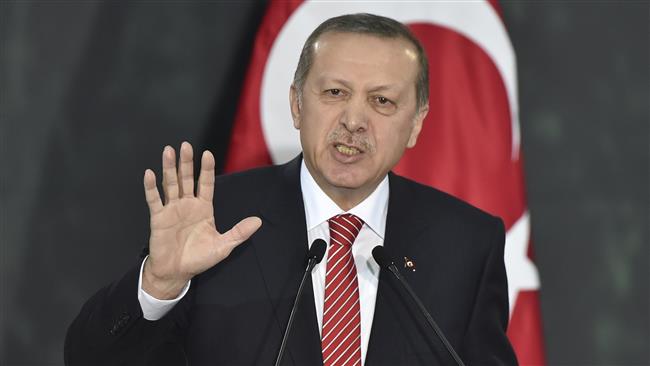
Iran has summoned Turkey’s charge d’affaires to hear Tehran’s protest against Turkish President Recep Tayyip Erdogan’s “improper” remarks regarding the Islamic Republic.

Iran’s Foreign Ministry Spokeswoman Marzieh Afkham said on Sunday that following Erdogan’s recent remarks, Iran summoned the country’s charge d’affaires in the absence of the ambassador and demanded a “clear and convincing response.”

“The strategic approach of the Islamic Republic of Iran to the region and its ties with neighbors is based on peace, stability and cooperation on the basis of mutual respect,” Afkham said, adding, “We believe that cooperation between Iran and Turkey has the potential to achieve this goal.”

The Turkish president accused Iran on Thursday of “trying to dominate the region” and said Tehran’s efforts had begun annoying Ankara, as well as Saudi Arabia and Persian Gulf Arab countries.

Following Erdogan’s accusations, Iranian Foreign Minister Mohammad Javad Zarif urged regional countries to act responsibly to help restore calm to the Middle East and called on the states which have adopted wrong policies to abandon their erroneous strategies.

“Those who have caused irreparable damage with their strategic mistakes and ambitious policies had better adopt responsible policies and tap into the existing potential to ensure tranquility and convergence in the region,” Zarif added.

[…]

Waste no time; we must protect the environment from trash

Mahlagha Mallah

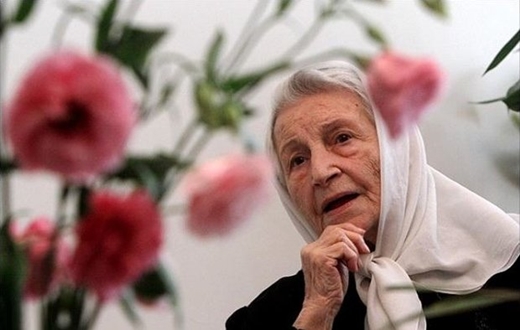
Mahlagha Mallah, 96, is an environmental activist who has not produced any waste over the past 60 years.

Earlier in March, Mehr News Agency ran a report on the founding mother of Iran’s environmental protection and her waste minimization efforts. The following is a partial translation of the report:

Hailed as an environment-friendly individual and a leading natural heritage figure, Mrs. Mallah says a book on the environment inspired her. Back from France where she got her Ph.D. and learned library science, she started to work in a Tehran University library.

“I asked all embassies [in Tehran] to provide me with the environmental information of their countries. After studying the issue, I came to the conclusion that collective measures are needed to do something for the environment. I wanted to teach people how to protect the environment.”

Dr. Mallah was not the first in her family who tried not to produce waste. “My mom would not place the waste outside the house. Back then people produced less garbage and each family would recycle –one way or another – their waste at home. They used to give food leftovers to the poultry.

A rural lifestyle helped people to use less paper and plastic and do less damage to the environment in the process. But today new sources of pollution cause new diseases. Something must be done about it.”

For the past 60 years, Mrs. Mallah and her family have not placed any waste in the garbage can to be collected unless it was recyclable. They bury the waste in a pit in their yard to let it turn into fertilizer.

“We still don’t use plastic bottles. In the past I used to take a cloth shopping bag to store to help the environment, and I’d encourage others to follow suit. We need to stop harming the environment so that future generations can use this natural heritage.”

Mrs. Mallah talks with people in different neighborhoods and teachers at schools about the need for waste sorting. […] We can run environmental programs to raise public awareness. We love nature and the environment and we do not work to get money in return.

Dr. Mallah has always offered great ideas about environment protection. “We can do more for a plan which segregates the [dry and wet] waste at households. We can teach women in this regard. […]

“Municipalities can separately collect disposable batteries, which leave a destructive impact on the environment. The used cooking oil – which harms the environment after entering the sewage system – can be collected, refined and reprocessed, exactly like used engine oil.”

[…]

Mrs. Mallah says the waste produced in Tehran is too much. Everyone can do their share and help reduce waste production. People can turn the waste to compost –a fertilizer for plants in organic farming – or Vermicompost – which is light and odorless. […]


Mahlagha Mallah, who holds a Ph.D. from Sorbonne in Sociology, is the founder and managing director of Women’s Society against Environmental Pollution. She was praised as the 2010 personality of the year in the field of “Natural Heritage and Environment” for her decades-old struggle to preserve the environment.

Rouhani: Country’s economy back on fast recovery track

Rouhani-Iran

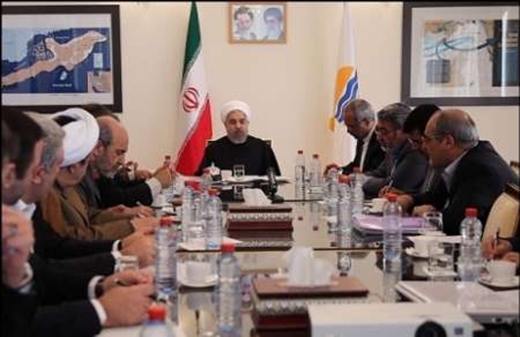
President Hassan Rouhani said on Sunday that free trade economic zones can turn into exemplary models for economic development as the country’s economy lands back on the fast recovery track.

Addressing the board of directors of free trade zones, President Rouhani said taking advantage of new technologies, absorbing investment and making use of experts are among top priorities of these regions.

General conditions of the country are now improving day by day, he said.

There is no doubt that Iran will attain economic prosperity this year and we should spare no effort to materialize this goal, he said.

“The era of recession is now over and we need some more time to reach satisfactory conditions through more efforts,” the president said.

To gain economic development, the general market conditions and employment opportunities should improve, he said.

To attain the goals, all domestic and foreign assets should be utilized and the country’s free trade zones play a very significant role to this end, Rouhani said.

The active role of people and the private sector has played a vital role in putting an end to recession, he said.

The tourism industry will create a large number of employment opportunities and help attain economic development, he said.

The free trade zones should focus their activities on export of non-oil products, absorbing foreign investments and tourists, protecting environment, preserving historical and religious sites and satisfying people residing in those regions, President Rouhani said.

Yemen invasion, a strategic mistake: Senior diplomat

Morteza Samadi

A top Iranian diplomat slammed Saudi-led air strikes against Yemen as a strategic mistake, urging an immediate halt to the bombings which he said only add to extremist moves in the region.

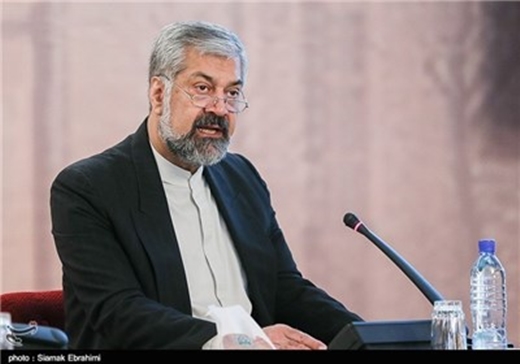
“It seems that, unfortunately, a very strategic mistake has been made in the aggression against Yemen,” Iranian Deputy Foreign Minister Morteza Sarmadi told reporters in Tehran on Sunday.

He called for an immediate end to the air strikes that a coalition of Arab countries, led by Saudi Arabia, has launched on Yemen, stressing the need for dialogue among different Yemeni groups as a way out of the conflict in the poor state on the Arabian Peninsula.

“Undoubtedly, the more this war lingers and the more killing of people and destruction of Yemen’s infrastructure continue, the more hatred, terrorism and extremism will spread in the region and that will be the biggest threat to regional countries that are highly vulnerable in this regard,” Sarmadi noted.

On March 26, Saudi Arabia began to militarily interfere in Yemen’s internal affairs by launching deadly air strikes against the Houthi Ansarullah movement in an attempt to restore power to fugitive Yemeni President Abd Rabbuh Mansur Hadi, a close ally of Riyadh.

Saudi Arabia’s King Salman said in an Arab summit in the Egyptian resort of Sharm el-Sheikh that the operation would continue “until Yemen achieved peace and security”.

A Persian Gulf diplomatic source, speaking on condition of anonymity, said the Arab alliance initially planned a month-long campaign, but it could last up to six months.

Zarif, Kerry open fifth day of nuclear talks in Lausanne

Iran Talks Lusanne

Iranian Foreign Minister Mohammad Javad Zarif and US Secretary of State John Kerry have held another meeting as the fifth day of a new round of talks over Tehran’s nuclear program kicks off in Lausanne, Switzerland.

The meeting between the Iranian and US top diplomats is part of broader negotiations between the Islamic Republic and the P5+1 countries aimed at clinching a final deal over Tehran’s nuclear program.

Following his meeting with Kerry, Zarif is also scheduled to sit down with his Chinese counterpart Wang Yi in the Swiss city.

Russian Foreign Minister Sergei Lavrov and British Foreign Secretary Philip Hammond are also expected to join the talks in Lausanne with separate talks scheduled between the two and Zarif on Sunday.

On Saturday, Zarif held separate talks with his German and French counterparts over the outstanding issues between the parties to the negotiations.

He described his talks with Frank-Walter Steinmeier and Laurent Fabius as “very good” and said, “We discussed all the issues that need to be resolved.”

Zarif said, “I think we can in fact make the necessary progress to be able to resolve all the issues and write them down in a text that will become the final agreement. It depends on how long it will take to do that but we are prepared to work diligently in order to move forward and I think that there is every indication that we can in fact move forward.”

Kerry also held trilateral talks with Steinmeier and Fabius on Saturday.

[…]