Friday, December 26, 2025
Home Blog Page 4925

Iran starts massive naval drill in Persian Gulf, Strait of Hormuz

Iran starts massive naval drill

The Islamic Revolution Guard Corps (IRGC) started a massive naval drill code-named Prophet Muhammad in the Persian Gulf and the Strait of Hormuz, southern Iran.

The exercise started in the presence of the Commander of Iran’s Islamic Revolution Guard Corps Major General Mohammad Ali Jafari, Deputy Chief of Staff of the Iranian Armed Forces Major General Gholamali Rashid, Parliament Speaker Ali Larijani and some high-ranking military commanders.

The initial stage of the drill features mine planting by ultra-speed boats.

Iran ready to introduce single forex system

Tayyebnia-economy minister

Iran’s economy minister said the country would replace the current multi-tier foreign exchange system with a single system if economic conditions prove to be propitious.

“The conditions for unifying forex rate should be met in the country’s economy so that this plan could be implemented,” Ali Tayyebnia said.

He noted that Iran will be able to introduce a single forex rate system as early as next fiscal year, which starts on March 21, in case of appropriate conditions.

The minister recently said the government is committed to unifying forex rate while curbing the country’s inflation rate.

“A single forex rate system will be possible only after financial markets witness relative calm,” said Tayyebnia.

The governor of Central Bank of Iran, Valiollah Seif, has said that Iran needs economic stability before dealing with forex rate.

Iran’s national currency started depreciating sharply three years ago. The rial is currently traded at two rates with one being decided by CBI and the other one set by money changers. The open-market-rate is subject to fluctuations almost on a daily basis.

On Tuesday, the US dollar traded for IRR 27,700 at official rate and for IRR 34,000 on open market.

Iran’s economy shrank 9 percent in 2012 and 2013.

On Sunday, President Hassan Rouhani said his economic team has done what he described as “a miracle” to bring the country back from the brink of economic collapse to the positive territory.

“We were able to bring down inflation from 40 percent to well below 16 percent,” he told an economic forum in Tehran.

Rouhani said he had promised to take measures to decrease Iran’s inflation from the record highs of above 40 percent to as low as 15.5 percent. “This comes as we have promised to bring down inflation to 25 percent before April 2015,” he said.

Iranian short film shines in French Cour Joujours Festival

Iranian short film 'Rainfall of Roof'

Rainfall of Roof, an Iranian short film from Kurdistan Province gained the jurors prize of the Cour Joujours Festival.

Directed by Teymur Qaderi, Rainfall of Roof competed with films from Russia, Tajikistan, Belgium, Portugal, Egypt, Mexico, the Switzerland and some other countries before winning the special prize of the jurors and the 1,500 frank in cash.

The short film had earlier won the prize for best director in Iranian Ruyesh Short Religious Films Festival, the bronze medal of Malaysia’s Islamic World Film Festival, the best film prize in Hamedan Prayers Festival and the prizes of numerous other festivals.

A look at Iranian newspaper front pages on Feb. 25

Iranian Newspapers Headlines

Comments by the government spokesman that fuel prices won’t increase next year dominated the front pages of Iranian newspapers on Wednesday. Also on the cover of dailies were the remarks of Iranian Foreign Minister Mohammad Javad Zarif on issues such as talks with P5+1 and Iran’s continued support for Iraq in the fight against IS terrorists.


Abrar: “We have no plans to walk away from the negotiating table,” said the Iranian FM after talks with his US counterpart in Geneva.

His comments came as the US State Department spokeswoman said some progress has been made in nuclear talks.


A look at Iranian newspaper front pages on Feb. 25


Arman-e Emrooz: “Energy prices won’t go up for now,” said government spokesman Mohammad Bagher Nobakht.


A look at Iranian newspaper front pages on Feb. 25


Ebtekar: “Handing out cash subsidies was wrong in the first place,” said the first vice-president.

Ebtekar: “We have a tough year ahead in meeting the water and electricity needs of citizens,” said the energy minister.


A look at Iranian newspaper front pages on Feb. 25


Etemad: “We have a good record in dealing with corruption cases,” said Judiciary Chief Ayatollah Sadegh Amoli Larijani.

Etemad: A meeting between Iran’s Abbas Araghchi and the IAEA chief has set in motion closer cooperation between Tehran and the UN nuclear watchdog.


A look at Iranian newspaper front pages on Feb. 25


Ettela’at: “Steps have been taken forward in nuclear talks,” Zarif said.

The Iranian top diplomat further said that he and his team are in quest of a solution that fully recognizes the rights of the Iranian nation.


A look at Iranian newspaper front pages on Feb. 25


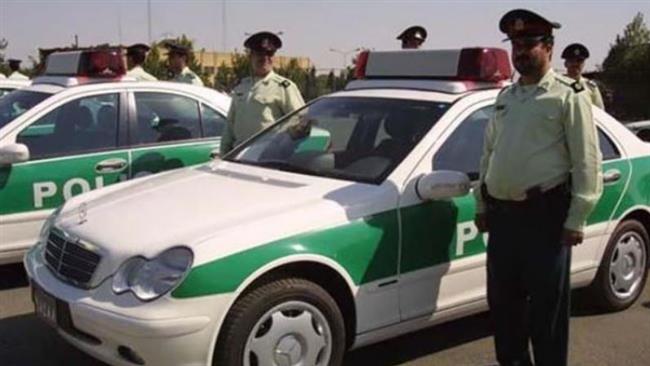
Hemayat: “Some 90 percent of cases cyber police deal with have to do with fraud,” said Police Chief Brigadier General Ahmadi Moghaddam.


A look at Iranian newspaper front pages on Feb. 25


Jamejam: Persepolis had a stellar performance in their Asian Champions League opener, beating a Qatari team 3-0 at Tehran’s Azadi Stadium.


A look at Iranian newspaper front pages on Feb. 25


Jomhouri Islami: Nine tankers carrying gas extracted from South Pars gas field have set out for global markets.


A look at Iranian newspaper front pages on Feb. 25


Kar va Kargar: “We will continue to help Iraq crack down on IS,” said the Iranian foreign minister at a joint press conference with his Iraqi counterpart.

Kar va Kargar: Women’s wrestling has been officially launched in Iran.


A look at Iranian newspaper front pages on Feb. 25


Kayhan: Water crisis management commissions have been ordered set up.

Kayhan: “In case the ministry of culture does not deal with Etemad Daily, the culture minister will be dealt with,” warned the chairman of parliament’s Cultural Committee.

[The MP has alleged that the reformist-leaning daily has insulted the second Shiite Imam]

A look at Iranian newspaper front pages on Feb. 25


Khorasan: Under a parliamentary decision cash subsidies will remain unchanged next year.


A look at Iranian newspaper front pages on Feb. 25


Mardomsalari: “Parliament seems to lack resolve to settle the problem of dust storm [gripping the southwest],” said the deputy director of the Environment Protection Organization.


A look at Iranian newspaper front pages on Feb. 25


Resalat: “The case involving Mehdi Hashemi [a son of Ayatollah Hashemi Rafsanjani] includes 12 charges,” said a deputy judiciary chief.


A look at Iranian newspaper front pages on Feb. 25


Rooyesh-e Mellat: “Today is not the time to air grievances against Rouhani, we need to help him,” said Ayatollah Hashemi Rafsanjani.


A look at Iranian newspaper front pages on Feb. 25


Shahrvand: “Government faces more than $5 billion in deficit to pay out cash subsidies,” said the first vice-president.

Shahrvand: “The Judiciary is looking into up to 15 million legal cases,” said Judiciary Chief Ayatollah Larijani.


A look at Iranian newspaper front pages on Feb. 25


Iranian researchers convert injecting chemo drugs to edible forms

Nano

Iranian researchers at Tehran University of Medical Sciences have developed a drug carrying system, capable of converting injecting chemo drugs to edible form.

Shahrouz Saremi, the lead author of the research, said studies were made to produce mucoadhesive nano-particles using chitosan polymer for transferring edible anti-cancer drugs.

He said the study is focusing on designing a system which converts injecting drugs to edible forms so that patients could undergo chemotherapy through edible medicines without having to visit medical centers.

The researchers produced the edible drug using thiolated chitosan and polymethyl methacrylate polymers.

He said the drug combinations are kept within the nano-particles and are absorbed by body gradually.

The Iranian researcher said the method also increases the level of drug absorption. The nano-system can be used for carrying drug in chemotherapy. The studies were conducted on Docetaxel chemo drug.

US media try to keep Ayatollah Khamenei’s message under wraps: Flounders

Sara Flounders

Sara Flounders, a senior member of the International Action Center, says that American media which are run by figures with militaristic mentality seek to hide the content of the valuable message of Iran’s Supreme Leader Ayatollah Khamenei to the youth in Europe and North America from the Americans, in particular the youth.

What comes next is the translation of an interview with Sara Flounders the Islamic Republic News Agency (IRNA) posted on its website on February 24:

The American author and anti-war activist described the letter of the Leader as immensely important and told IRNA that she had read the message which was released at a perfect time.

Flounders is a senior member of the International Action Center founded by former US Attorney General Ramsey Clark.

Flounders, who is in Lebanon to take part in a gathering dubbed international justice for Palestine, said that in the letter the Leader has appealed to the youth to conduct in-depth studies about Islam and its teachings, so that they could secure an insight into the objectives of the enemies of Islam who seek to paint an unrealistic image of this great religion.

She stressed that the enemies of Islam seek to set the stage for continued aggressions against Islamic countries.

A dream success story you don’t wanna miss

Abbas Barzegar in the village of Bazm in Fars Province

It all started when Abbas Barzegar, a villager in southern Iran, bumped into two foreign tourists and their interpreter who had lost their way. The hospitable rural man invited the trio over to his humble abode, served them local food, and put them up for the night.

According to a February 23 issue of SMT daily, that is how the village of Bazm in Fars Province made a name for itself as a foreign tourist mecca. The following is a partial translation of the newspaper report:

On a rainy night two German tourists are invited to the humble house of Abbas Barzegar, a resident of Bazm, a small village near Bavanat in Fars Province, and are served local food.

When Barzegar finds one of the two German tourists pretty down, he inquires about the reason behind his sadness. Through the interpreter the young German tells his host that the following day is his birthday and he is unhappy about being unable to be with friends and family back home to celebrate his birthday.

When the children of the young villager learn about the German tourist’s birthday, they hastily arrange a party to celebrate the occasion. The German guy, who is elated by the arrangement, films the impromptu party and takes it back home.

In Germany the young man’s mother who is a journalist publishes a report on what has happened to her son in Iran. And that marks the start of Barzegar Tourist Village, which allows visitors to experience Iranian rural life during their stay.

The owner of the hotel says he is expanding business, preparing as many as 15,000 tents to accommodate foreign tourists.

In its tourism guide, UNESCO has described the nomadic tour as one of the most exciting tourism experiences in Iran.

Presently, Barzegar charges tourists, who are mostly from Spain, Portugal and Poland, 700 euros [!] a night for their stay in the tent village he runs.

Experts say if the quality of services offered in this unique complex is improved, its revenues can top those of five-star hotels in the Middle East and across the world.

Barzegar says he is now training locals on how to host foreign tourists and that some 100 youngsters have learned English already to be able to communicate with visitors. These future tour guides of sorts are supposed to help foreign tourists experience firsthand what rural people do, including taking trips to nearby mountainsides to pick medicinal herbs and attending nomadic functions.

The owner of the tourist hotel which is booked solid through early 2017 says honesty holds the key to his success. He says he doesn’t do anything that might dent the trust that has been established between him and the guests.


Imports, contraband inflicting damage on Iran’s economy: Leader

Supreme Leader Ayatallah Khamenehi

Supreme Leader of the Islamic Revolution Ayatollah Seyyed Ali Khamenei warned of the detrimental effects of imported and smuggled goods on Iran’s economy, stressing the need for measures to make the homegrown products a priority.

Back on January 26, Ayatollah Khamenei had a meeting with a group of officials tasked with commemorating the National Engineering Day, which falls on February 24.

The comments in that meeting, which were made public on Monday, indicate the Supreme Leader’s great concern for the country’s economy and the negative effects of uncontrolled imports on it.

“Today, the pressure of imports is crippling the country, and there are very peculiar figures for the inflow of contraband to the country,” the Leader had announced.

Imam Khamenei, however, had made it clear that allowing huge imports is no way a logical justification for the fight against commodity smuggling and for earning profit through customs.

The Leader had also called for measures to prevent the imported goods from undermining the indigenous products manufactured by the talented, skillful and genius local youth.

In February 2014, Ayatollah Khamenei in a proclamation outlined a series of general policies to boost the country’s economy and lower its vulnerabilities.

In a speech in March 2014, the Leader described resistance-based economy as a dynamic and long-term strategy that can help Iran realize its economic objectives.

“Resistance economy is not just for the present circumstances; rather it is a long-term solution for the country’s economy and for achieving the lofty economic goals of the Islamic establishment,” Ayatollah Khamenei said at the time.

Iran, Japan sign MoU on health cooperation

Minister of Health Dr. Hassan Hashemi and Japan's Minister of Health Yasuhisa Shiozaki

Iran and Japan have agreed to expand their cooperation on healthcare, and medical issues.

Minister of Health, Treatment, and Medical Education Dr. Hassan Hashemi, who is on an official visit to Japan, signed an MoU with Japan’s Minister of Health, Labor, and Welfare Yasuhisa Shiozaki on Monday on expansion of bilateral cooperation in health field.

According to the MoU, the two countries will cooperate in areas such as treatment, education, health, medicines, and research.

Holding scientific seminars and closer cooperation between medical schools of the two countries were also emphasized by the two ministers.

At the invitation of the government of Japan and heading a delegation, Dr. Hashemi arrived in Tokyo on Sunday.

He met with his Japanese counterpart on Monday and visited Medical Research Center (MRC) in Tokyo.

In his visit to the MRC, Dr. Hashemi suggested that the two countries cooperate on vaccine production which was welcomed by the Japanese side.

On Tuesday, the Iranian minister will give a speech in a meeting of Iran-Japan Commerce Chamber and meet the Chairman of Japan External Trade Organization Hiroyuki Ishige and President of the Sasakawa Peace Foundation. Dr. Hashemi leaves Tokyo for Tehran on Wednesday.

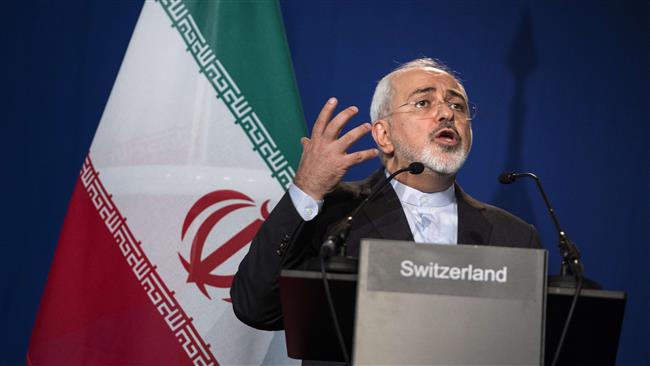
Some progress made on some nuclear issues: Zarif

Iran Foreign Minister Mohammad Javad Zarif

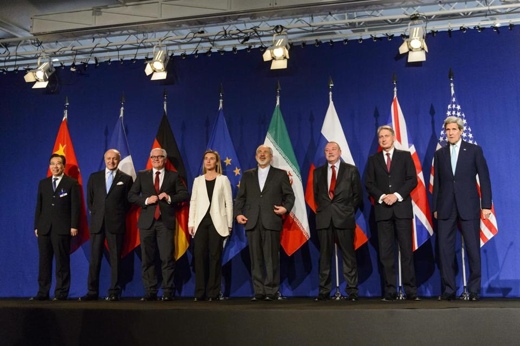
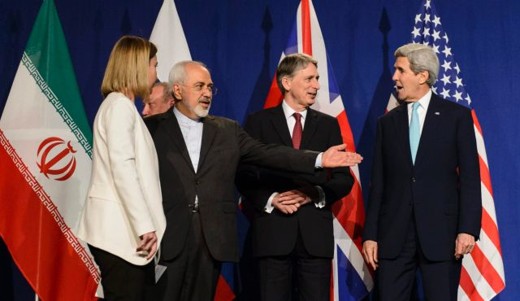
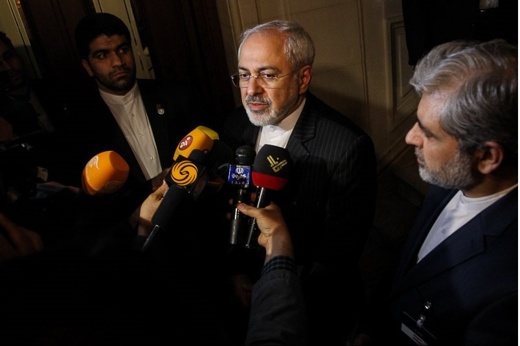
Foreign Minister Mohammad Javad Zarif said on Monday that there is a long way ahead before clinching the final deal but the two sides made progress in certain areas of the negotiations.

Speaking to reporters after his meeting with US Secretary of State John Kerry, he said that the two sides had very serious, useful and constructive talks.

The two sides made headway in some issues but there is still a long way ahead before clinching the final deal, he said.

He said that the negotiations will proceed until a final deal to be struck.

Representatives of Iran and P5+1 agreed to proceed with talks next Monday.

Zarif thanked the active and useful presence of Head of the Atomic Energy Organization of Iran Ali Akbar Salehi in the meeting.