Sunday, December 28, 2025
Home Blog Page 4902

Objections to nuclear talks despite Leader’s approval illogical

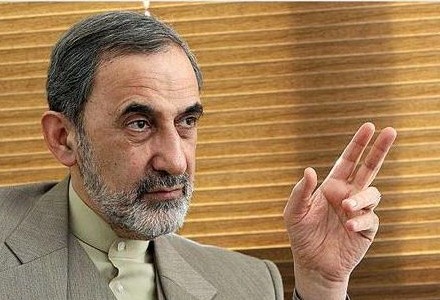
Ali Akbar Velayati

Supreme Leader’s Adviser in Int’l Affairs Ali Akbar Velayati said on Sunday when the Islamic Revolution Leader has approved of nuclear negotiations with world powers, opposite voices against those talks are illogical.

“His Eminence the Leader of the Revolution in his remarks supported the negotiations and their continuation, and we know that our nuclear negotiation team’s moves are in line within the Leader’s defined framework,” said Velayati after his talks with the UN Secretary General’s Special Envoy for Iraq, in response to a question on recent remarks by some stubborn critics of the government.

“Our country’s nuclear negotiation team has thus far observed all redlines drawn by the Leader of Revolution and they have spent tremendous efforts, which are worth appreciation,” added the head of the Strategic Research Center of the Expediency Council.

Velayati reiterated that some people might argue that the nuclear negotiations are quite useless, while some others believe they are pretty useful, but everyone should know that the Leader of Revolution has the final word on every issue.

“Therefore, when His Eminence said that we agree with the negotiations and with their continuation, arguments against the nuclear negotiations should not be made,” reiterated Velayati.

Iraq president calls for Iran’s help in anti-terror fight

Fouad Masoum - Iraq President

Iraqi President Fouad Masoum has called for the continuation of cooperation with Iran to eradicate terrorism.

In a Sunday meeting with Iran’s Ambassador to Baghdad Hassan Danaeifar, the Iraqi president commended the Islamic Republic’s support for Iraq in the battle against terrorism.

He further stressed the importance of improving Tehran-Baghdad relations in all fields and said the two sides’ officials should hold regular meetings and consultations to find appropriate solutions to regional problems.

The Iranian envoy, for his part, urged more support for the Iraqi government and nation to fight the ISIL Takfiri terrorists.

The Iraqi military, supported by volunteer fighters, on Saturday succeeded in flushing out ISIL militants from the Hamrin Mountains in the eastern province of Diyala and inflicting heavy losses on the Takfiri group in the area.

The Iraqi army has so far managed to make numerous gains in the fight against the ISIL militants, pledging to continue the battle against the extremist group.

The ISIL terrorists control some areas across northern and western Iraq as well as eastern Syria.

Iran’s top security official: Military attack no more among enemies’ options

Iran-shamkhani
Iran-shamkhani

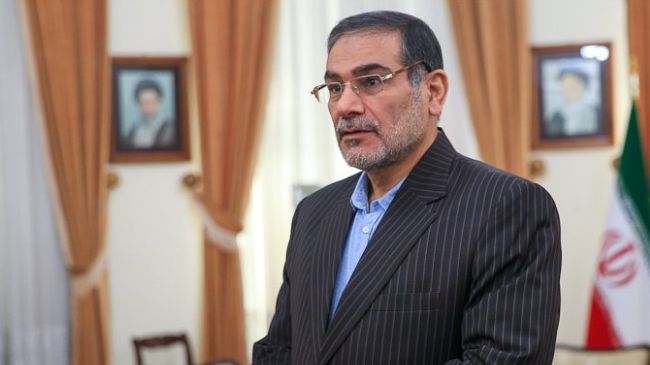
Secretary of Iran’s Supreme National Security Council (SNSC) Rear Admiral Ali Shamkhani underscored the country’s missile power, and said military attack against Iran is no longer among the enemies’ options.

“At present and in the near future, no military threat would be posed to Iran; this doesn’t mean that they (the enemies) don’t want (to threaten Iran) but (means that) they cannot as such a move would incur heavy costs on them and therefore, they have excluded it from their agenda,” Shamkhani said after visiting an exhibition of Iran’s air defense in Tehran on Sunday.

He underlined Iran’s high missile power, and said, “Iran’s missile tests and ranges are proportionate to threats, but Iran’s missile power has never diverted towards unconventional weapons and this issue cannot and will never go under foreign monitoring and inspection.”

Noting that the asymmetric enemies of Iran enjoy highly good air force power, Shamkhani said Iran has also made huge progress in the missile and air defense field to combat the same power.

He emphasized the country’s self-reliance and self-sufficiency in building different missiles, and said like the nuclear technology, Iran’s missile industry is in pursuit of peaceful purposes.

[…]

Iran to host confab on extremism: Zarif

Mohammad-Javad-Zarif

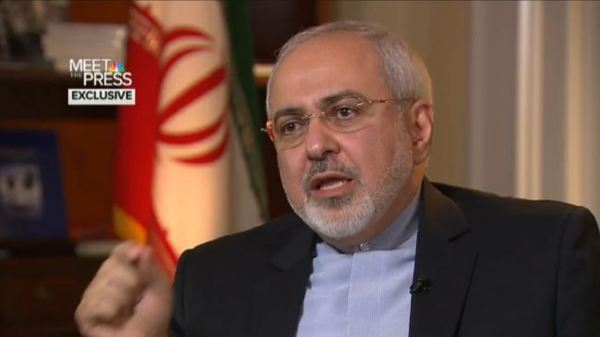
Iran plans to host an international conference on violence and extremism in the near future, Iranian Foreign Minister Mohammad Javad Zarif says.

He made the remarks in a meeting with Nickolay Mladenov, the special representative of UN Secretary General Ban Ki-moon to Iraq, in the Iranian capital Tehran on Sunday.

Zarif added that distinguished international and regional figures will attend the gathering entitled “World against Violence and Extremism,” yet he did not provide any details on the exact date and place of the conference.

He described relations between Tehran and Baghdad as strategic, stressing, “Iraq’s stability, security, development, and progress are among the priorities of the Islamic Republic of Iran and we will spare no effort in this regard.”

The UN should identify key elements that can play an instrumental role in the resolution of the crisis in Iraq and Syria, Zarif said, adding, ongoing consultation among regional countries is necessary to uproot the menace of extremism in Iraq.

“Any country that aims to help improve the situation in Iraq…should quit supporting Takfiri terrorist groups,” the top Iranian diplomat added.

The UN official, for his part, called the situation in Iraq hard and complicated, urging the participation and cooperation of all countries in the fight against terrorism.

Mladenov also appreciated Iran’s assistance for the Iraqi people and government, underscoring that the UN is prepared to play a more effective role to stem terrorism in the Arab country.

The ISIL terrorists launched an offensive in Iraq in June and took control of the country’s second largest city, Mosul, before sweeping through parts of the country’s Sunni Arab heartland.

The extremist group has threatened all communities, including Shias, Sunnis, Kurds and Christians, during its advances in the violence-torn Arab state.

Shakespeare my magic carpet to Iran

iran-shakespeare
iran-shakespeare

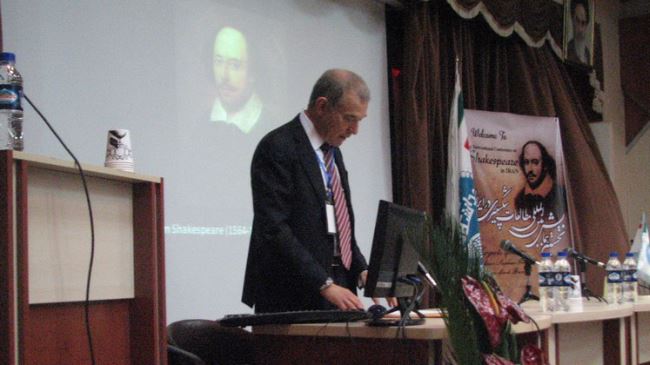
Pulitzer Prize-winning author Professor Stephen Greenblatt visited Iran during the First International Conference on Shakespeare Studies at the University of Tehran.
“I never thought that Shakespeare would become my magic carpet to the land of Persia, where I wished I could have seen someday,” said Harvard scholar Prof. Greenblatt when he expressed his enthusiasm for Iran and Persian cultural and historical heritage during the conference.
One of the world’s most celebrated Shakespearean scholars, Greenblatt took part in the conference and delivered a keynote speech on November 26.
He is best known for his biography of Shakespeare titled “Will in the World: How Shakespeare became Shakespeare,” which was on the New York Times Best Seller List for nine weeks.
He also won the Pulitzer Prize in 2012 for his groundbreaking book, The Swerve: How the World Became Modern.
Organized by the Faculty of Foreign Languages and Literatures, the University of Tehran, the conference was held on November 26-27, 2014.
The conference explored themes such as ‘Shakespeare and Political Discourse’, ‘Shakespeare under the Iranian Eye’, ‘Shakespeare and Adaptation’, ‘Radical Shakespeare’, ‘Shakespeare and Mysticism’ and ‘Shakespeare and Popular Culture’.
Prof. Mark Burnett from Queen’s University in Belfast, was another keynote speaker whose discussion focused on cinematic representations of Shakespeare in Iran.
He talked about an Iranian adaptation of Shakespeare’s Hamlet entitled Doubt (Tardid), a 2009 Iranian Crystal Simorgh-winning film directed by Varuzh Karim Masihi.
Iranian scholar, author and lecturer on literature, art and mysticism Hossein Elahi Ghomshei also spoke at the literary gala.
The event was organized by Dr. Ismail Salami and Dr. Maryam Soltan Beyad, professors at the University of Tehran.

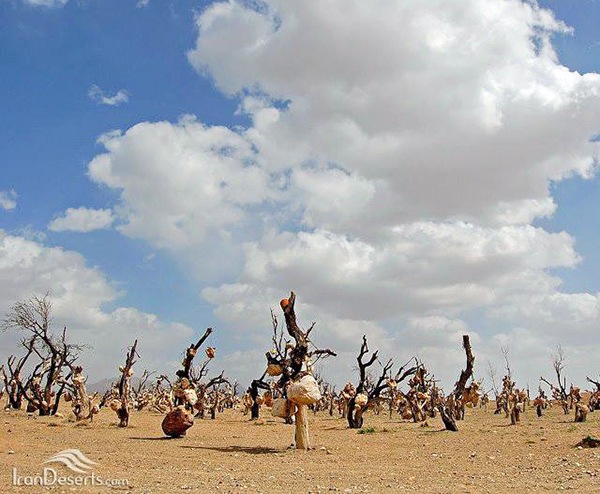
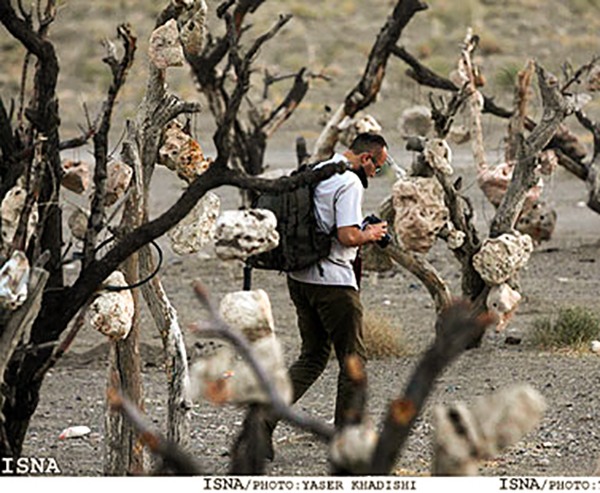
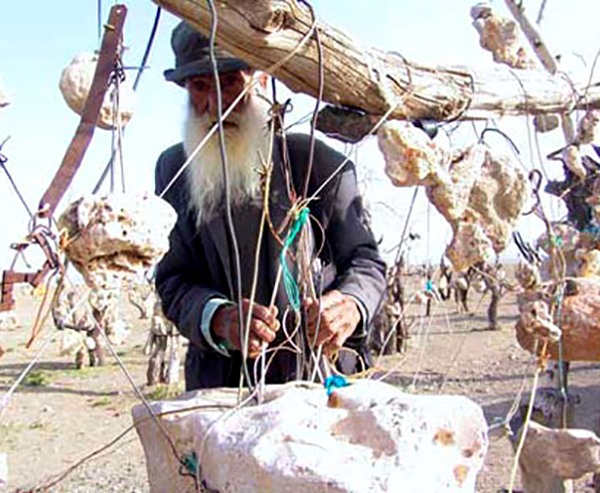
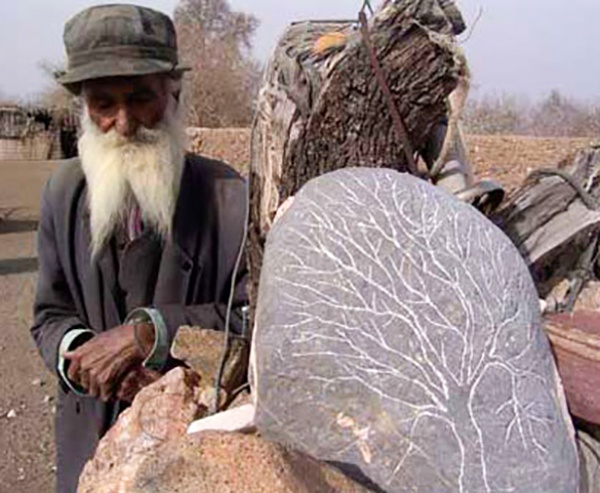
Iran’s Beauties in Photos: Garden of Stones in Sirjan

Iran Stones gaudren
Iran Stones gaudren

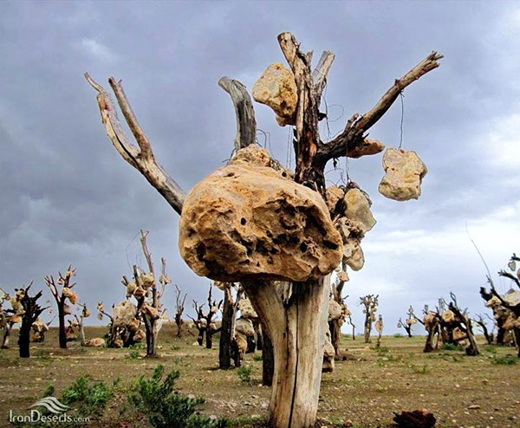
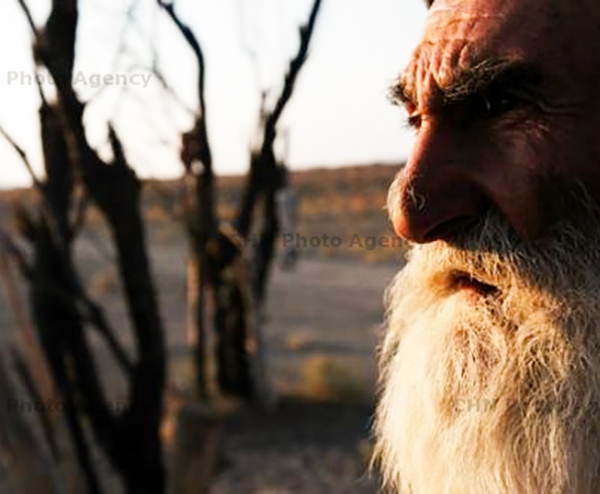
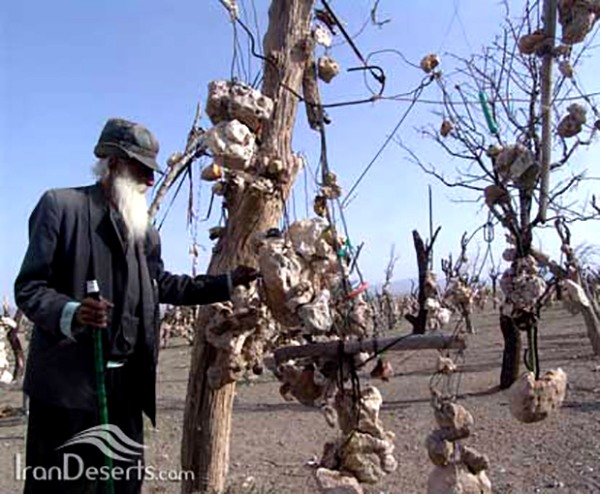
The Garden of Stones is located in the vicinity of Balvard Village, 45 km to the southeast of Sirjan, a town in the southeastern province of Kerman. Darvish Khan Gong Esfandiyarpour, who festooned his dried and dead trees with stones back in 1961 in protest at a series of planned land reforms introduced by Mohammad Reza Pahlavi, never thought that his garden would one day find a place on the list of tourist attractions in Kerman Province. Darvish Khan passed away in 2007 at the age of 90 and was buried in the same stone garden he had created.

Among other filmmakers, Parviz Kimiavi, a famous director and screenwriter, has made two films about Darvish Khan. His first film featuring Darvish Khan and his family was produced in 1971. The second was a documentary entitled The old man and his garden of stones which came out 23 years later.

The following is a photo gallery of the Garden of Stones that Irandesert.com has posted on its website:


Victim of acid attack in Tehran says he’s much better; health chief visits him in hospital

Dr. Anvari
Dr. Anvari

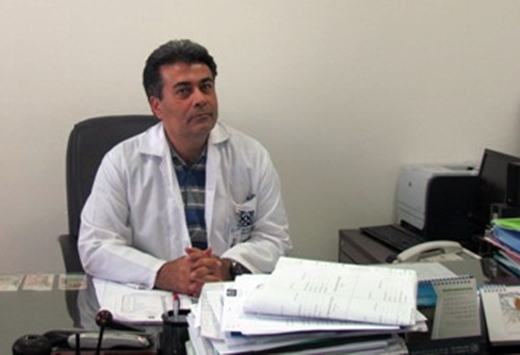
There was an acid attack late Saturday on the administrator of the capital’s Ziaeian Hospital. On Sunday, Fars News Agency quoted Dr. Siamand Anvari, who had undergone eye surgery, as saying that he was better and that he was praying for those behind the attack to be led to the correct path.

Dr. Anvari’s comment came after Health Minister Seyyed Hassan Hashemi, a veteran ophthalmologist himself, paid a bedside visit to him in Tehran’s Farabi Hospital. In other news, Alireza Zali, the director of the Islamic Republic of Iran Medical Council, called on judicial officials and the police to seriously deal with those who staged the acid attack. The following is the translation of part of the agency’s report:

Doctor Anvari said Sunday, “I am much better. I underwent eye surgery last night. Doctors are satisfied with how the operation went. It could have been much worse.”

He went on to say that he believes those behind such attacks seek to disturb the peace and quiet of society. “Anytime people are happy, these microbes step in to create chaos. But they should know that our people won’t budge in the face of such trivial measures.”

At around 9 p.m. Saturday, when Dr. Anvari was on his way home, acid was thrown on him by two assailants on a motorbike.

OPEC; the known unknowns

OPEC-OIL
OPEC-OIL

A recent meeting of the Organization of the Petroleum Exporting Countries (OPEC) failed to lower its crude output. The reason is not simple to explain. Whether the decision was the result of unknown aspects of political or economic gamesmanship, refusal to cut production has had a shattering impact on jittery world markets, sending prices tumbling. The plunge is still continuing and the market remains on edge, thanks to the psychological impact of the status-quo strategy.

Shargh newspaper on November 29 ran an opinion piece by Seyyed Hamid Hosseini, the former chairman of the board at the Association of Iranian Exporters of Oil, Gas and Petrochemical Products, who is not pleased with the OPEC session, saying it achieved nothing. What comes below is a partial translation of the piece:

[…] Nothing came out of the recent OPEC meeting. That a politically charged atmosphere prevailed in the Vienna session contributed to the inconclusiveness of the gathering. The nuclear talks between Iran and P5+1 in Vienna, an unexpected trip by Saudi Foreign Minister Prince Saud Al-Faisal to the Austrian capital, his consultations there over Iran’s nuclear program and Putin’s refusal to meet him all helped sour the climate. (Russia, Iran and Venezuela were calling for a cut in oil production).

Better results could have been produced if other tactics had been adopted to soften the atmosphere. This proves that when it comes to international questions, extensive lobbying is needed, and efforts should be made to prepare the region and help regional states figure out where they stand.

If not, it would be harder for those seeking “change” to get results than for those countries which are merely trying to maintain the status quo.

Another question which arises here in Iran is the budget deficit. In spite of plummeting crude prices, the country’s budget deficit which is projected to run into $3 billion won’t be much of a problem since Iran is hopeful to earn around $11.7 billion in tax revenues. In addition, Iran can tap into its development budget which is somewhere in the neighborhood of $10.5 billion to make up for the budget deficit.

There is no denying that the government budget has no impact whatsoever on the economic condition in the country. A wealthy, interventionist government does more harm than a government which is short of cash and has no intention of meddling in the economy.

If Iran can leave behind the current tough times, next year [starting March 21, 2015] the government will have tools such as targeted subsidies and increases in foreign exchange and energy prices at its disposal to ride out the budgetary storm.

Besides, with the nuclear talks seem more likely to result in a deal, the psychological effects of sanctions will be undone and countries will begin to ask for imports of Iran’s oil. And finally, strict conditions on other fronts would ease even before the conclusion of a comprehensive nuclear deal.


 

A look at Iranian newspaper front pages on Nov. 30

Iranian Newspapers Headlines

Economy should not be tied to the outcome of talks: Senior businessman

asadollah asgar oladi

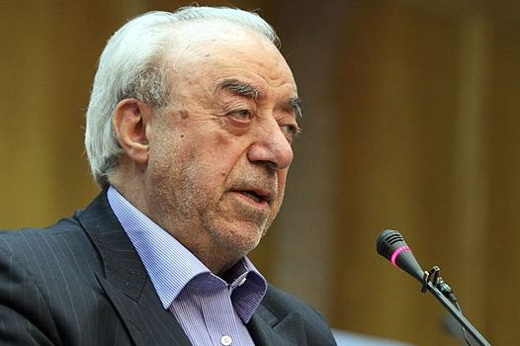
In an opinion piece in Arman-e Emrooz daily on Saturday, November 29, Asadollah Asgar-Oladi, a business magnate who heads the Iran-China Joint Chamber of Commerce, said the Iranian economy has learned how to skirt sanctions and its future should not be tied to the success of nuclear negotiators to strike a deal with P5+1. The following is the translation of the piece:

The Iranian economy has known the complex labyrinth of sanctions for years. Of course, one cannot deny that the past few years have seen an uptick in the intensity of sanctions. What should not be forgotten, though, is that despite all restrictions, Iran has managed to bypass the sanctions and keep its economy on track. In other words, conclusion of a deal [in nuclear talks] or failure to do so won’t have much of an impact, either positive or negative.

There are two points worth mentioning, though. Conclusion of a nuclear deal can help the country’s economy by having the banking and oil sanctions lifted. In light of the fact that the US has said in case of a deal, sanctions would be lifted gradually, clinching a deal or failure to arrive at one won’t introduce immediate change. That is why the Iranian government has not pinned much hope on the talks, rather it is trying to manage the sanctions and turn them into an opportunity.

In other words, in exerting pressure on Iran sanctions are not as powerful a tool as they used to be, because Iran has developed the know-how to bypass or manage them. Besides, many countries are no longer as eager as in the past to keep the sanctions regime in place.

Some economists are talking about the economic jolt of the sanctions which seems unlikely, whether or not a deal is struck. The only thing that is of the essence is the kind of management which is employed to handle these sanctions. Employment of a resistance-based economy can help us secure that goal. The country gets some $150 billion in revenues per year. In the worst-case scenario, that figure would remain unchanged. So the economy won’t suffer a jolt as a result of a potential failure to sign a deal.

That Iran should do all its planning based on the likely conclusion of a deal is too simplistic. Of course, if the talks lead to the termination of oil and banking sanctions, the stage will be set. But if talks fail to produce a breakthrough, it won’t present a big challenge to the economy.

Ayatollah Khamenei urges Navy to bolster defense capabilities

Ayatollah-Khamenei-naval

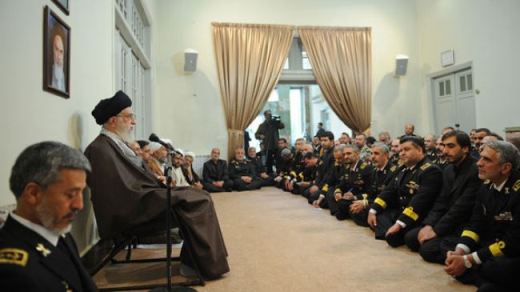
Leader of the Islamic Revolution Ayatollah Seyyed Ali Khamenei has emphasized the role of Iran’s Navy in protecting national security, calling on the naval forces to further boost their preparedness in the face of enemy threats.

In a Sunday meeting with a group of senior Iranian Navy officers in Tehran, the Leader said the Islamic Republic’s naval forces play a “great” and “important” role in safeguarding the country’s national security.

Iranian naval forces should increase their preparedness and further bolster their military capabilities as well as “their faith and spirit of sacrifice” to fulfill their role of defending the nation, Ayatollah Khamenei added.

Ayatollah Khamenei further pointed to Iran’s vast maritime borders and enemy threats against the country, adding that the Navy should overcome its shortcomings and develop strategies to deal with enemy threats.

The Leader also praised the sacrifices made by the country’s naval forces at different junctures, particularly during the eight-year war imposed on the Islamic Republic by the regime of former Iraqi dictator Saddam Hussein in 1980s.

In recent years, the Iranian Navy has been increasing its presence in high seas to protect naval routes and provide security for merchant vessels and tankers.

In line with international efforts to combat piracy, the Iranian Navy has been also conducting anti-piracy patrols in the Gulf of Aden since November 2008 to safeguard the vessels involved in maritime trade, especially the ships and oil tankers owned or leased by Iran.