Monday, December 29, 2025
Home Blog Page 4893

Iran calls Senate report on CIA torture ‘shocking’

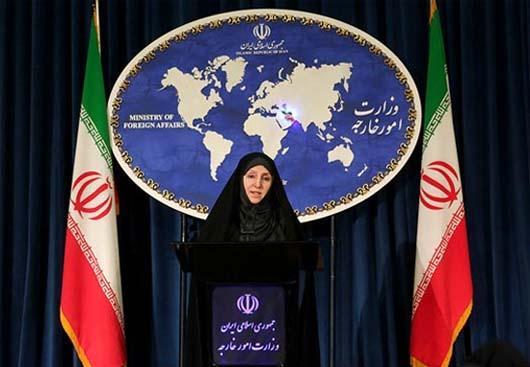
Iranian Foreign Ministry Spokeswoman Marziyeh Afkham

Iranian Foreign Ministry spokeswoman Marzieh Afkham has called a US Senate report on the CIA’s torture program “shocking”.

“The content of this shocking report shows violence, extremism, and secrecy as institutionalized in the US security system,” Afkham said in a statement on Wednesday.

She voiced concerns that the “illegal processes and inhumane measures” presented in the report “still continue and there has been no guarantee from the US government to prevent the repetition of such disasters.”

Iran expects the report to pave the way for the prosecution of those responsible for the “criminal” measures, Afkham added, citing the fact that a significant number of those tortured are non-US citizens.

The landmark Senate report on the CIA’s interrogation techniques, released on Tuesday, falls into four main categories consisting of ineffective use of torture, misleading the US government about how the methods were conducted, flawed management, and extensive use of torture far more brutal than the Central Intelligence Agency had allowed anyone to believe.

The report has drawn harsh criticism from the United Nation and prominent rights groups, which have called for prosecution of those responsible for the use of torture during the George W. Bush administration.

However, the US Justice Department has rejected pursuing charges against anyone involved in the program.

Iran condemns killing of Palestinian minister by Israelis

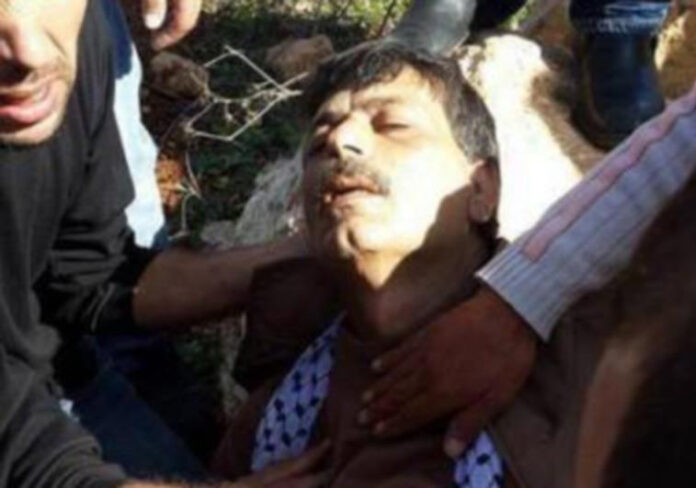
Palestinian-Abu Ein

“This act is another clear piece of evidence proving that the Zionist regime [of Israel] is criminal,” the Iranian Foreign Ministry spokeswoman Marzieh Afkham said on Wednesday, offering condolences to the Palestinian nation and officials.

The recurrence of Israeli crimes undoubtedly motivates the Palestinian people to demonstrate steelier determination to stand up to the Tel Aviv regime and further cements unity among the Palestinians, she said

Abu Ein, who was a minister in the Palestinian Authority, lost his life as he participated in a march by some 300 Palestinians who planned to plant olive trees as a symbolic act of protest against Israeli settlements.

According to Palestinian security sources, Abu Ein, who was in charge of  the issue of Israeli settlements within the Palestinian Authority, died after Israeli soldiers hit him with the butts of their weapons and their helmets during the rally in the village of Turmusayya.

The president of the Palestinian national unity government, Mahmud Abbas, condemned “the brutal assault that led to the martyrdom” of Abu Ein, calling it “a barbaric act that cannot be tolerated or accepted.”

Tensions have been running high in the past few weeks in the West Bank and East al-Quds (Jerusalem) over the desecration of the al-Aqsa Mosque by Israeli troops.

With oil prices in free fall, an OPEC extraordinary meeting is likely: Iranian oil minister

OPEC Zangeneh
OPEC Zangeneh

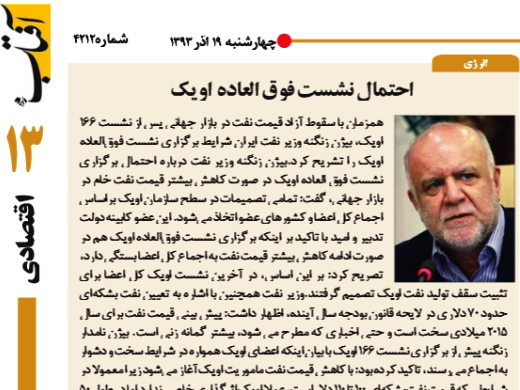
On December 10, Aftab-e Yazd, a daily, dedicated a column of its economy section to the comments of Iran’s Oil Minister Bijan Namdar Zanganeh about the recent decline in oil prices. What follows is the translation of the comments of the minister about the likelihood of an extraordinary OPEC (Organization of Petroleum Exporting Countries) meeting if oil prices continue their free fall:

“All decisions at OPEC are made by consensus among all members. Whether or not the organization convenes an extraordinary session will depend on a consensus too. At the last OPEC gathering, all members contributed to the decision-making process when it came to an output ceiling,” he said.

As for next year’s spending package which is drafted based on oil prices of $70 per barrel, he said, “It is not an easy task to project oil prices in 2015. News on the issue is mostly speculative.”

Ignorance is a tool in the hands of rulers to crush uprisings

Hashemi Rafsanjani

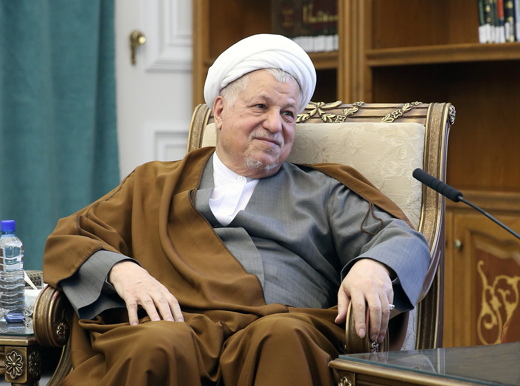
Arman-e Emrooz, a reformist daily, on December 10 filed a report on the remarks of Chairman of the Expediency Council Ayatollah Akbar Hashemi Rafsanjani in a meeting with members of a committee charged with reviewing the so-called Jungle Movement [led by Mirza Koochak Khan in Gilan province in the early 20th century against the Qajar Monarchy]. What appears below is the translation of what he had to say in the meeting:

Ignorance in a society plays into the hands of rulers who want to put down [people’s] uprisings. Awareness depicts a promising future for societies. Informed youngsters are a precious asset societies can tap into if they seek to walk down the path to a better future.

The youth, students and people are expected to get familiar with the point in history during which Mirza Koochak Khan led an uprising which is a key historic, Islamic and national issue.

Many tried to tarnish the name of Koochak Khan to consign his movement into history books. This reminds you of what some did to Amir Kabir [Naser al-Din Shah Qajar’s chief minister who was widely known in Iran for his selfless endeavors to build the country].

The rapid increase in awareness is the result of the information explosion. Those who raise their awareness work out solutions to their own problems and those of society through logic.

What the colonialism and despotism have done to plunder the resources of nations are like a double-edged knife. Although colonialists and despots have pinned much hope on hardliners to guarantee their survival, when the Muslim youth get equipped with knowledge and awareness, no enemy will be able to confront them.

Through a preplanned plot, colonialists and arrogant powers have created the terrorist groups to divert popular uprisings in societies, especially in the Islamic nations. Arrogant and colonial powers’ interference is to blame for the emergence of terrorism in the [Middle East] region.

Taking on terrorist groups is tough but possible. Muslim scholars should do what it takes to stop attempts which aim to blacken the name of Muslims. A case in point is what some do to displace and kill people in the name of religion.

Recent developments in Egypt over the past years are a jarring example of cooperation between colonialism, despotism and hardliners which are the three sides of an ominous triangle.

People in Egypt who have an impressively good track record in human civilization and Islamic culture rose up and staged a revolution, but you saw how hardliners took the popular uprising hostage, helped military men return to politics and caused the despot to be acquitted.

In the early years after the victory of the Islamic revolution, people’s presence [on the scene] together with the matchless stewardship of the late Imam Khomeini denied the terrorists the opportunity to disintegrate the country and mount blind revolts.

When compared with the fighting in Afghanistan, Iraq, Libya and Yemen, we can find two standout features about the Islamic revolution in Iran. The popularity of the revolution and Imam Khomeini’s leadership are the two reasons which make the struggle of the Iranians and their [ultimate] triumph which manifested itself in the Islamic revolution starkly different from other uprisings.

Iran, S. Africa eye $2 billion trade; a dream that can come true

SMT-South Africa

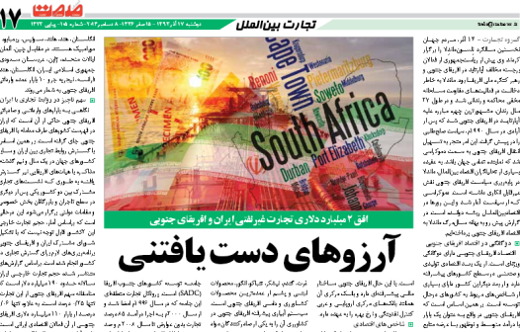
SMT daily on December 8 filed a report on the prospect of trade ties between Iran and South Africa, saying the $2 billion target set for bilateral non-oil trade is by no means overambitious; on the contrary it is quite achievable. The following is a partial translation of the report:

South Africa is viewed as an emerging middle-income economy with manifold rich natural resources. Although this country mainly relies on mines, industrial products, services and agriculture, it is also known for its big potential in the areas of communications, energy, and transportation. The South African government is committed to an open market economy and pursues privatization as it attracts foreign investment.

Iran is on the list of the countries which have trade ties with South Africa. Over the last one and a half years, Iran has developed its business relations with other countries, including South Africa. Since the two sides’ trade volume is meager, a joint Iran-South Africa Council has been tasked with promoting mutual trade.

Iran’s annual foreign trade stands at 190 or so billion dollars in which the share of South Africa is only 0.25%. On the other hand, Iran’s businesses have a 0.06% share of South Africa’s $110 billion market.

Statistics also show that Iran earned $59 million from exports to the African country and imported $27 million worth of goods. This comes as South Africa could be a thriving market for Iran’s technical-engineering services.

Opportunities are plentiful for the private sector in both countries to make their presence felt in the other country’s market. To enhance bilateral ties, Iran and South Africa should identify common ground and remove obstacles. A target of $2 billion in non-oil trade may look ambitious at first, but it is attainable if the two sides redouble their efforts.

A magnetic boy in Iran attracts foreign objects

magnetic boy

A nine-year-old Iranian boy has mysterious power that causes objects – metal and non-metal – to stick to his body. This was the lead of a brief report by Kayhan daily on December 8 on this rare case of human magnet which happens when a heightened electromagnetic current runs through a person’s body. The following is the translation of the report:

Amir-Reza Salmannejad, a nine-year-old boy in Damghan, a city in Semnan province, says he first learnt, quite by chance, about his magnetism a few days ago, and that he used steel objects to test his magnetic power.

Objects such as keys, forks and spoons stick to the front and back of my body, and face and stay there for a while, the magnetic boy said, adding that the pulse is at its strongest at night when his body pulls in even more objects.

Mahmoud Khoshnevisan, a physics professor, said that Amir-Reza has electromagnetic power much higher than the magnetic field [everyone has in their bodies], citing his attraction of iron and non-iron items alike.

He went on to say that plastics, silver, steel, gold and metal objects stick to the kid’s body, adding that scientists have no idea why some people have high levels of magnetism in their bodies.

A critical look at the 5:2 diet

Diet 5-2

On December 6, Salamat, a weekly, carried a report in which specialists weighed in on a diet known as the 5:2 and its potentially harmful side effects. The following is a partial translation of the report by the weekly’s Neda Ahmadlou:

The 5:2 diet! Many of you have never heard of such diet, but diet fans and those who are interested in continued yet easy diets are thoroughly familiar with it. The 5:2 is a new diet which first gained popularity with the British before finding its way to Western Europe and America.

The attributes of “fast and simple” which the specific dietary regimen possesses have earned it popularity with celebrities. Among other celebrities, American singer Jennifer Lopez, Miranda May Kerr, an Australian fashion model, and Dominic John Joly [known as Dom Joly], an English television comedian and journalist have promoted the newly-emerged diet. If you want to learn more about the pros and cons of it you’d better read what follows.

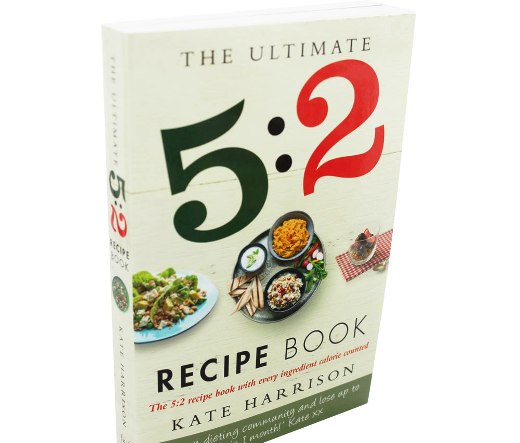
The 5:2 Diet Book’ which builds on ‘Feast for 5 days a week and fast for just 2 to lose weight, boost your brain and transform your health’ hit the British bookshelves and before long it turned into a bestseller. Among other things, simplicity, flexibility, affordability and freedom offered by the 2-days-a-week diet which reportedly contributes to minimizing the risks of diseases are the key advantages that the book claims the diet has. Although the book goes to great lengths to highlight the healthy aspects of the dietary regimen, the fact remains that there is not much scientific evidence to substantiate such claims.

The 5:2 diet is a weekly diet based on which women cannot consume over 500 calories for two non-consecutive days a week, whereas the calorie intake for men is 600.

Dr. Mohammad-Hassan Entezari, a nutritionist, is of the opinion that the 5:2 diet is not based on science, whereas nutrition is the science of balance, proportion and variety. A thin, fat or even a fit individual should consume all food groups daily based on their body needs to maintain their health and get the required energy.

Entezari’s sys he believes the diet is not sustainable and thus cannot be followed in the long run. He denounces the imbalance in calorie intake of the diet as its major problem, saying that a drastic and sudden rise and fall in weekly calorie intake could take a heavy toll on digestive, cardiovascular and immunity systems, leaving people susceptible to diseases.

The nutritionist is of the conviction that the average weekly calorie intake will probably see a fall by sticking to this diet. However, the heavy damage caused by the erratic diet cannot be easily ignored.

Dr. Entezari says based on scientifically-recommended weight-loss diets, the daily calorie intake should not go below 1,100 Kcal for women and 1,200 Kcal for men. And the calorie intake of 500 or 600 Kcal even for two days a week could trigger extreme hunger and deliver a serious blow to vital body organs.

Dr. Shahram Aghah, a gastroenterologist, is of the opinion that some digestive conditions can be aggravated by this diet. For instance, the stomach of those who digest little food for two days a week will get used to taking in a small volume of food. When the dieter uses more food on the other five days, he will suffer indigestion.

Dr. Mohammadreza Rajabi, a cardiologist, says that difficulties in breathing and palpitations are the cardiovascular complications which threaten the fans of the 5:2 diet or any dietary regimen that includes periods of hunger and overeating.

And Dr. Aria Jenabi, a nephrologist, recommends that in order to have healthy kidneys, we should follow a balanced, low-salt and low-protein diet. The more erratic a dietary regimen like the 5:2 diet is, the heavier the damage it causes to kidney in the long run, he warns.

Beautiful autumn in Alangdareh Jungle Park

autumn in Iran's Alangdareh Jungle Park

Alangdareh is a natural resort adjacent to Gorgan, Golestan province, north of Iran. Its beauty is so breathtaking that it is among the top seven tourist resorts in the country.

The following is a photo gallery of the jungle park in northern Iran:


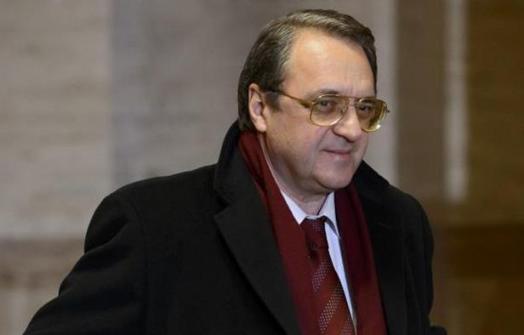
Only one hurdle in the way of a final nuclear deal: Russian Deputy FM

Mikhail Bogdanov
Mikhail Bogdanov

Irdiplomacy.ir, an Iranian website that focuses on international issues and Iran’s foreign relations, carried a report on December 7 about the comments of Russian Deputy Foreign Minister Mikhail Bogdanov about the future of nuclear negotiations between Iran and world powers. The following is a partial translation of what Beirut-based Arabic-language newspaper al-Akhbar quoted the Russian diplomat as saying during a recent visit to Lebanon:

“The only knot which is yet to be untied and has put back a final deal between Iran and P5+1 was the timeline for a final accord as well as for the removal of sanctions. Iran wants sanctions swiftly lifted, while America wants an interval to come between clinching a deal and the time it comes into effect. Such matters have brought the forward-moving resolution process of Iran’s nuclear dispute to a halt. Other than that, an agreement has been reached over other questions,” the Russian deputy foreign minister said.

Mikhail Bogdanov would not go into detail about nuclear talks between Iran and P5+1 and just added, “From my perspective, the White House is dealing with some complexity. As a result both negotiating sides have been mired in domestic issues. Based on what we have realized, while there were fierce electoral campaigns in America [to secure seats in the Senate] the Obama-Kerry negotiating team could not tell the American public that they wanted to lift the sanctions against Iran. Because it would have robbed the White House of the trump card it so badly needed in a tougher race at home. Loss of public support would translate into governance with Republicans at the helm on Capitol Hill, they thought.”

He went on to say, “As for the Iranian negotiating team, things did not look any better either. The return of Zarif-led Iranian negotiating team to Tehran with a deal that would keep Western sanctions in place would have resulted in prompt changes to the government and power composition in Iran even though Supreme Leader Ayatollah Ali Khamenei had openly thrown his weight behind Iran’s negotiating team.”

“In fact, both sides are constrained by the stance of hardliners at home. However, the same issue helped both parties to the talks agree on one thing: they both represented the moderate factions of their capitals, despite all known differences that existed between them,” he stated.

“What matters is that an agreement between the two sides was secured which led to their announcement that they needed more time. Time could solve the issue with hardliners on both sides. We have three kinds of sanctions. European sanctions which are in effect for a certain, limited period of time. They are expected to run out before long and are unlikely to be extended. In practice, their expiry would translate into practical removal of sanctions eliminating the need for their lifting.

The same pattern applies to the second type of sanctions which are international ones. American sanctions are the third group which is expected to be discussed over the time left by July1, 2015 when both sides return to the negotiating table. By that time, America is expected to be able to clinch a final deal without having to secure the domestic go-ahead to lift the sanctions. Likewise, Iran could return to the negotiating table without having to deal with unattainable domestic demands and ink the deal. We will be present throughout the whole process, follow up the case carefully and insist on the conclusion of a deal,” he concluded.

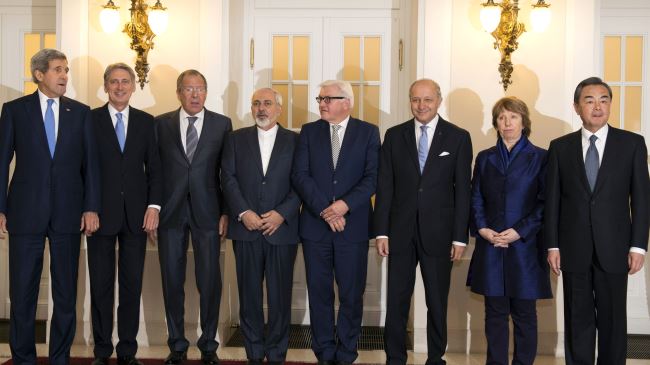
P5+1 changed nuclear demands, redlines: Iran negotiator

Iran-Sextet

A top Iranian nuclear negotiator says the Sextet of world powers has made some changes in their demands and redlines in the course of its nuclear talks with Iran.

Araghchi made the remarks at a Tuesday meeting with Iran’s Parliament (Majlis) Committee on National Security and Foreign Policy members, said Seyyed Hossein Naghavi Hosseini, the spokesman for the parliamentary body.

Commenting on the extension of Iran’s nuclear talks until June 2015, Araghchi said the two sides have agreed to reach a general agreement in four months and work out the details in the next three months, Naghavi Hosseini added.

According to the lawmaker, Araghchi also warned that if the negotiations drag on for a longer period, the situation will become further complicated as the Western side will face further pressure from lobbyists.

During the session, Naghavi Hosseini said, Araghchi also noted that Israel and some of the regional countries opposed any nuclear agreement with Iran and they even sought to prompt the West to engage in a military conflict with Tehran.

Last month, Iran and P5+1 – Russia, China, Britain, France, the US and Germany – failed to meet the November 24 deadline to sign a permanent nuclear deal. They agreed to extend their discussions until June 2015, so that they could resolve their differences and clinch a permanent accord.

US Secretary of State John Kerry said in a Sunday address to the Brookings Institution in Washington that Iran and P5+1 could reach a final deal on Tehran’s nuclear issue months “sooner” than the new deadline.