Sunday, December 21, 2025
Home Blog Page 4885

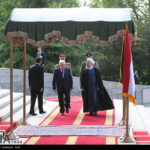
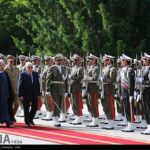
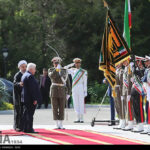
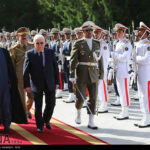
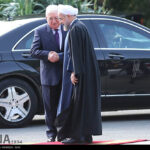
Iran FM arrives in Kazakhstan to hold key regional talks

zarif

Speaking to reporters upon his arrival in Kazakhstan on Sunday, the Iranian minister said consultation with Kazakh officials about regional issues, particularly Saudi Arabia’s ongoing military campaign in Yemen, is among the objectives of his visit.

“The fight against extremism, the issue of the Caspian Sea, and other issues and crises that have befallen the Persian Gulf region are among topics of mutual negotiations with the Kazakh side,” Zarif added.

He pointed to very broad relations between Tehran and Astana and said mutual ties need more attention in view of their high importance.

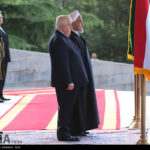
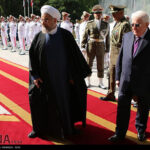
The Iranian minister, who is visiting Astana at the invitation of his Kazakh counterpart, Yerlan Idrisov, is scheduled to sit with the country’s President Nursultan Nazarbayev and foreign minister.

In September 2014, Iran’s President Hassan Rouhani, leading a high-ranking economic and diplomatic delegation, made a five-day tour of the Central Asian states of Kazakhstan and Tajikistan. During the trip, Iran signed separate agreements with the two states on the expansion of ties in various fields.

Historical house of Imam Khomeini in his hometown (PHOTOS)

Historical house of Imam Khomeini

The ancestral home of the founder of the Islamic Republic Imam Khomeini in Khomein, his hometown in Markazi Province, has become a tourist attraction which is visited by a lot of Iranian and foreign tourists, in particular during Nowruz holidays.

What comes next is a group of photos that Jamaran, a website, has placed online of the historical building which dates back to the Qajar era:


When the art of statesmanship turns the tables

Mohammad Javad Zarif

Mohammad Javad Zarif, the number one figure in Iran’s diplomacy machine, flaunted – to the world and the Arab countries in the Persian Gulf – his high diplomatic dexterity over the past few weeks and tipped the balance in the region – which was heading toward a tipping point – in favor of Iran and peace in the Middle East by helping craft the Lausanne agreement and convincing Pakistan not to join the [Saudi-led] war [against Yemen].

This is the opening sentence of an analytical report entekhab.ir, a news website, released on April 12 on the professional performance, foreign policy achievements and diplomatic agility of Iran’s top diplomat. The following is the translation of the report:

After days of waiting, on April 2 the world saw Zarif and Federica Mogherini, the EU foreign policy chief, announce that they have worked out joint solutions in nuclear talks to close Iran’s 12-year-old atomic case. The [Lausanne] framework agreement surprised the most seasoned of observers, with some saying what Zarif did was among the key measures Iran has taken since the [1979] Islamic Revolution.

Zarif is so busy these days that he does not have time to catch his breath. He has his hands full with the nuclear talks (which have a long way to go [before they are declared closed]) as well as critical regional questions which matter greatly to Iran.

A man who has been lifted to the level of a national hero in the court of the public opinion was heavily involved – up until two weeks ago – in the talks over Iran’s nuclear program in Lausanne, Switzerland and managed to arrive at an agreement which could [ultimately] pave the way for a final nuclear deal.

If conclusion of an agreement had a 50-50 chance prior to what unfolded in Lausanne, thanks to marathon talks and all-nighters by Zarif and his team as well as the Supreme Leader’s guidance and the president’s serious efforts to follow the case, it has now gotten closer than ever to settlement of the dispute sparked by the West, the US in particular.

Reporters based in Lausanne say that Zarif’s indefatigability shocked everybody; eventually eight and a half hours of non-stop talks with the US secretary of state and European and Asian ministers helped Iran’s top diplomat set a new world record as far as international talks were concerned.

Despite the spontaneous, rousing welcome Zarif and his team received upon arrival in Tehran from Lausanne, certain people – who were expected to shout their opposition loud and clear, irrespective of results – found fault with the achievements of the Lausanne talks and went so far to claim, “We have exchanged a saddled horse for a broken bridle”.

To the disbelief of the few contrarians, the country’s ranking officials – including the chief of staff of the Armed Forces and the IRGC commander – praised the achievements of Lausanne agreement. The Supreme Leader too voiced his support for “the revolution’s sons”, underlining his concerns about the talks and – drawing on almost four decades of experience since the revolution – warning about the deceitfulness on the part of the US and certain European countries.

What happened in Lausanne was not the whole story, however. One week after the breakthrough [Iran and P5+1] made in the Swiss talks, the Yemeni crisis entered a new stage, something which was very much likely to degenerate into a catastrophe in the region.

Saudi Arabia, which has rained bombs down on Yemen for almost a month, asked Pakistan to join the military operation against the Houthis. In case of Pakistan’s positive answer, the current Saudi-led coalition which is more of an Arab alliance would have turned into a Sunni alliance and would have rekindled the memory of a Shiite-Sunni war in the minds of people.

In the meantime, [Turkish President Recep Tayyip] Erdogan, who had adopted unprecedented inflammatory rhetoric against Iran, arrived in Tehran on a daylong trip, entered talks with Iranian officials and reached an agreement with Tehran over the Yemeni crisis.

One day after Erdogan’s Tehran visit, Zarif paid a surprise, short visit to Oman with the question of Yemen top on his agenda, and was welcomed by Muscat and Foreign Minister Yusuf bin Alawi.

Iran’s foreign minister took a proposed package to Oman on settling the Yemeni crisis and shared it with Omani officials and later with authorities in Islamabad.

The day Zarif arrived in the Pakistani capital coincided with the third day of that country’s parliament debating a request by Riyadh to join the Saudi-led military alliance against Yemen.

Following two days of intensive talks over Tehran’s proposed package on the Yemeni crisis and meetings between the head of Iran’s diplomacy machine and Pakistan’s senior officials – among them the army commander who plays a decisive role in the country and is believed to hold more sway than the prime minister and other officials – Zarif came back home in the final hours of Thursday [April 9].

One day after the departure of the Iranian foreign minister, on Friday, the Pakistani parliament gave a big “No” to [the country joining] Saudi Arabia and other Persian Gulf Arab states in their fight in Yemen. The Pakistani parliament also announced, “(Parliament) desires that Pakistan should maintain neutrality in the Yemen conflict so as to be able to play a proactive diplomatic role to end the crisis”. This [Islamabad neutrality] exactly matches the Islamic Republic of Iran’s line of reasoning.

Islamabad’s decision gave Iran an edge; Tehran’s diplomacy caused Pakistan – which was believed to be the skeleton key which can help shift the scales in the Yemeni war in Saudi’s favor – to loosen the grip of Riyadh.

The uneasy reaction of this group of Arabs – who follow the lead of Zionists – was sparked off by the Supreme Leader’s significant remarks on reprimanding the wickedness of the Saudi conduct and that of its “new rulers” after the death of King Abdullah.

After the Islamic Republic’s diplomatic breakthrough [in Pakistan] and the bewilderment on the part of the Persian Gulf Arabs at the rejection by Pakistan – which has been beset by economic woes – of their tantalizing [financial] promises, the United Arab Emirates addressed Islamabad acrimoniously, “Tehran seems to be more important to Islamabad and Ankara than the [Persian] Gulf countries”.

[…]
What has played out in recent weeks conjures up remarks by a prominent Iranian diplomat who said, “Zarif is a religious diplomat who is determined to serve the country’s national interests; the Iranian history does not remember anybody like him over the past one hundred years.”

What has transpired thanks to the efforts of Zarif and the Leader’s trust in and guidance for him and other members of the Iranian team will play an undeniable role in the future of the Middle East.

Twelve years of love and hope (PHOTOS)

Mohammad Reza Peykani

Mohammad Reza Peykani, who is from Zanjan, northwestern Iran, has been confined to bed for over a decade.

Being infected with a virus about 12 years ago, Peykani sustained severe damage to his brain and has since been looked after by his caring wife, Ms. Abassabadi, and his two children.

Hope for his recovery has sustained the family through the hard time. It seems that their patience is paying off and signs of recovery are presenting themselves.

The following is a photo gallery that Fars News Agency posted online on April 10 of the family who stuck together through thick and thin:


Qasr Garden Museum Built in Former Prison in Tehran

Ghasr Garden Museum

Before its transition to a garden museum, Qasr building used to a prison built on the ruins of a magnificent edifice. As part of urban developmental plans under Tehran Mayor Mohammad Bagher Ghalibaf, the detention facility was converted to a garden museum in September 2011.

What appears next is the photos of honaronline website from Qasr Garden Museum:


Iran, EU Banks in preliminary talks

bank

A senior Iranian banking official says the representatives from a European bank will travel to Tehran next week to hold preliminary talks over restoration of financial transactions with Iranian banks.

Gholam Reza Panahi, deputy head of Bank Melli Iran for International and Foreign Affairs said that Iranian banks are ready to start cooperation with their foreign counterparts as soon as banking sanctions against Iran are lifted.

“Once sanctions are removed, the ground will be prepared to provide brokerage services as well as international money transfer and other banking services for imports and exports,” said the Iranian official.

The remarks come against the backdrop of new reports that that SWIFT – a company that provides a global electronic banking system – has started talks with Iranian banks to restart its services in Iran.

According to a report by Tabnak – a news website – SWIFT has already held a series of “official and unofficial meetings” with Iran’s private banks over the resumption of its services to the country.

Back in March 2012, the Belgium-based Society for Worldwide Interbank Financial Telecommunication, or SWIFT, expelled as many as 30 Iranian financial institutions as part of US-led sanctions against Iran over its nuclear energy program.

The move blocked the Iranian banks from using its service, literally cutting off the country from the global banking system.

Grand Ayatollah: National flag must be the only flag raised across Iraq

Ayatollah Sistani

Iraq’s top Shiite cleric, Grand Ayatollah Ali al-Sistani, has called for all-out support for the country’s security and volunteer forces.

The senior cleric made the appeal in a recent meeting with Prime Minister Haider al-Abadi and Vice-President Nouri al-Maliki which focused on security situation in Iraq.

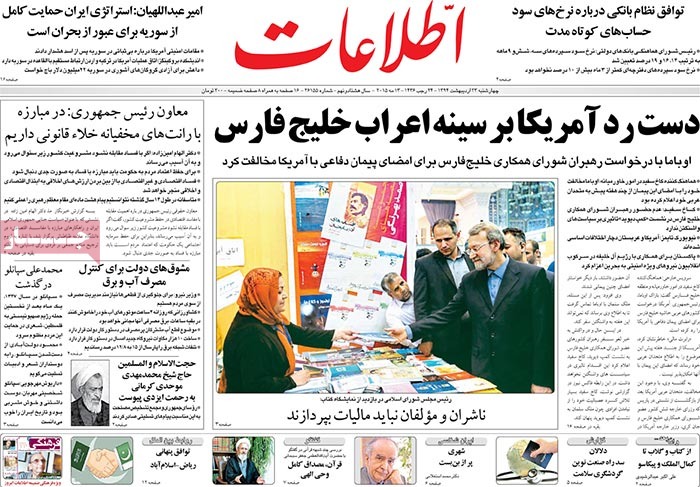
Ettela’at daily published the Ayatollah’s remarks on April 12. The following is a partial translation of what the top cleric said in the meeting:

The Grand Ayatollah asked the government not to release his images and those of other religious figures in the areas recaptured from terrorist groups, saying that the Iraqi national flag should be the only flag which is hoisted in different parts of the country.

Ayatollah Sistani also called for efforts to speed up the liberation of Iraqi cities from the hands of ISIL terrorists, saying that unwavering support should be lent to security forces and volunteer troops in the country.

The meeting also debated the question of Iraqi refugees and the ways to address their problems.

Afterward, the Iraqi premier said that the Grand Ayatollah stressed in the meeting that the country’s volunteer forces should be supervised and fully controlled by the government.

[…]
Why so many street brawls?

khiaban

The number of street brawls reported across the country in the 11 months to February 21, 2015 registered a 2.2 percent drop. But figures released by authorities in the capital for the same period spoke of a 3.1 percent hike in the number of altercations.

During the period in question, more than 550 thousand brawls were registered by forensic officials across Iran, almost 18 percent of the total figure in Tehran.

In an analysis published by Arman-e Emrooz daily on April 8, Anahita Khodabakhshi Kulaei, a university professor, has taken a look at violence and street brawls in big cities. The following is a partial translation of the piece:

[…]
There are social and individual aspects to anger management and prevention of street brawls.

On the social front, naturally when people enjoy welfare, they feel less stressed and display more flexibility and tolerance. For instance, one of the most common public quarrels in Iran pits cab drivers against passengers over hikes in taxi fares. Such wrangling has its roots in financial issues.

However, we should not pin all the blame on economic problems; rather, we should invest in social and cultural solutions in the long run as well.

Life in megacities stokes individualism which in turn prompts citizens to think to be in the right all the time and show less flexibility in dealing with others.

If in Iran like many other countries courses on anger management become compulsory, people learn about esprit de corps and civic duties and respect them; consequently, such problems will be gradually fixed.

The stage must be set to promote patience and respect for other people’s rights as a value and institutionalize order in society.

There are larger and more populous metropolises than Tehran in the world where no such brawls break out. For example, in Tokyo, order has been internalized in individuals and everyone is automatically respectful of other people’s rights.

Another emerging problem is the growing involvement of women in public run-ins. The bigger presence of women in society might be the reason behind this problem, because more contribution of women to social affairs inevitably exposes them to more harm.

Iranian female researcher wins UNESCO award

Iranian female

The UNESCO director general awarded an Iranian female scientist Soudabeh Davaran in Paris, UNESCO Headquarters, Iran’s Ministry of Science, Research and Technology said.

She is associate professor of Pharmaceutical materials at Faculty of Pharmacy in Tabriz University of Medical Science.

She received her MS in Organic Chemistry in 1990 and her PhD in Polymer Science in 1996 both from faculty of chemistry in Tabriz University of Medical Science.

Dr. Davaran currently teaches Organic Chemistry, Polymer, Synthesis of Organic Chemistry and Medicinal Chemistry (Drug Synthesis). She is a member of Iran Chemical and Engineering Society.

She won the First Rank of 9th Razi festival in Pharmacy (Basic Science Research), selected by Women Elites of Iran and All Elites around the Islamic World, 2007, selected as the First Festival of Prominent Women, 2008, included in the first edition of ‘Who’s Who in Plastics and Polymers’, James P Harrington, Editor in chief, Society of Plastic Engineers, Technomic Publishing Company Inc., Lancaster, Pennsylvania, USA, selected as TOP 100 SCIENTISTS 2008 and 2012 by International Biographical Centre of Cambridge, selected as the best researchers of Research Centers of Tabriz University of Medical Sciences, December 2003 and of Drug Applied Research Center of Tabriz University of Medical Science, 2004 December, best researcher of Research centers of Tabriz University of Medical Science, Tabriz Iran and selected lecturer of Tabriz University of Medical Science, 2007.

Her books are Dyehouse in Textile Industry, Advanced Nanoparticles in Biomedical Sciences, and Impacts of Biodegradable Polymers towards Biomedical Applications, IRNA reported.

Beautiful rocky coasts of Chabahar (PHOTOS)

rocky coast12

Coasts along the Sea of Oman, particularly in Chabahar, are rocky. Iran’s most beautiful rocky coasts are in Sistan and Baluchestan Province.

Whales can often be seen frolicking off these coasts.

The following images have been released by different websites: