Ms. Khalili and her husband started breeding trout at home about 15 years ago and today their fish farm yields 4 tons of fish in each breeding cycle.
A photo gallery of her domestic fish farm in the north of Iran by Mehr News Agency follows:
Ms. Khalili and her husband started breeding trout at home about 15 years ago and today their fish farm yields 4 tons of fish in each breeding cycle.
A photo gallery of her domestic fish farm in the north of Iran by Mehr News Agency follows:
Different units of the Iranian armed forces staged parades in front of President Hassan Rouhani on the occasion of the National Army Day on Saturday.
The parades were held outside the mausoleum of the founder of the Islamic Republic of Iran, the late Imam Khomeini in southern Tehran.
The latest Iranian military achievements would be unveiled during the parades.
Iranian Air Force fighters will also participate in the parade.
Over 400 reporters from Iran, Syria, Germany, China, Turkey, France, Palestine, Qatar, Iraq, Lebanon, Algeria, Kuwait and Japan would cover the event.
In recent years, Iran has made great achievements in its defense sector and attained self-sufficiency in producing essential military equipment and systems.
Tehran has repeatedly assured other nations that its military might poses no threat to other countries, insisting that the Islamic Republic’s defense doctrine is entirely based on deterrence.
Shahrbanoo is a selfless mother who has devoted her life to her daughter, Zeinab, who fell from a walnut tree four years ago and sustained spinal cord injury.
Her daughter’s paralysis, high cost of living and being a single mother have imposed a lot of hardship on her, but she is a true fighter who is not giving up.
The following are photos Mehr News Agency released of Shahrbanoo and her daughter:
President Rouhani’s comments on nuclear talks with P5+1 dominated the front pages of Iranian newspapers which also put news of the death of a former deputy of Saddam Hussein on their covers. Time Magazine’s inclusion of Iranian Foreign Minister Mohammad Javad Zarif on the list of 100 most influential people in the world also appeared on the front pages of Iranian dailies.
Abrar: Further nuclear talks will be held in Vienna and New York in the weeks ahead.
Afkar: “Containing particulates which come in from beyond our borders is not possible,” said the Iranian environment chief.

Aftab-e Yazd: President Rouhani has said that even if a final deal is not struck, sanctions won’t be as strict as in the past.
Aftab-e Yazd: In case a final nuclear deal is clinched, the European Union will consider natural gas imports from Iran.

Amin: The Ministry of [Culture and Islamic] Guidance does not have any opposition to Mohammad Reza Shajarian holding a concert.
The comment was made by the spokesman of the ministry.

Arman-e Emrooz:Zarif has become a global figure.
The Iranian foreign minister has landed a place on the list of the 100 most influential figures in the world.
Arman-e Emrooz: The presence of Brits in Tehran Stock Exchange
A European delegation has visited the Securities and Exchange Organization.

Asr-e Rasaneh: Some 400 hotels are to be built across Iran in a bid to promote tourism.
Asr-e Rasaneh: Up to 200 state firms will be privatized this year.

Asrar: As many as 1 million Afghans are employed under the radar in Iran.

Ebtekar: There are no transparent laws to supervise electoral campaign finances, complained the justice minister.

Ettela’at: Izzat Ibrahim al-Douri, a deputy of Saddam and a senior IS leader, has been killed.
Ettela’at: “Sloganeering and imprisonment won’t eliminate corruption,” said President Rouhani.

Resalat: “If the US fails to honor its commitments, it will take the dream of a deal to the grave,” said Tehran Friday prayer leader Ayatollah Movahedi Kermani.

Roozan: Ahmadinejad has hit the campaign trail.
The former president’s bid to help his supporters capture a majority in parliament starts in Mashhad.

Khuzestan is a center for breeding water buffalos which need to spend a lot of time in water to survive. Children living on the banks of the Karun River take a dip along with the beasts in the river.
The recent severe water shortage has worried water buffalo breeders in the region about the future.
The following photos have been provided by the Islamic Republic News Agency:
The kitchen at the Saadabad Palace, built by the Pahlavi dynasty in northern Tehran, has been renovated and retrofitted as the Royal Kitchen Museum.
The following are snapshots of the newly-opened museum released by honaronline.ir:
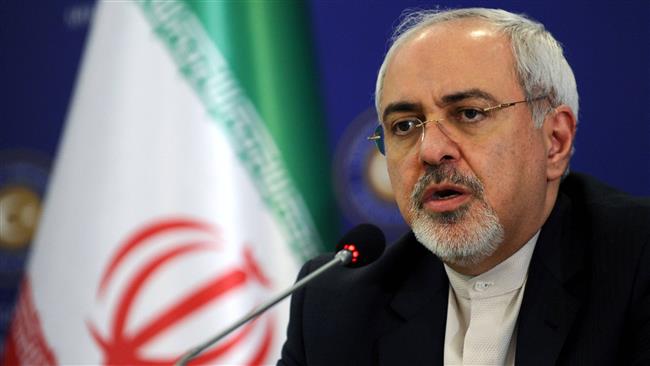
Iranian Foreign Minister Mohammad Javad Zarif says all sanctions against Tehran must be lifted on the day of a possible nuclear deal between Iran and P5+1.
“We’re not talking about phased removal of sanctions. Unfortunately the United States started talking about and using the phrase ‘phased sanctions’ and if you go through the joint statement you will not even see the word ‘suspension’ and you will not see the word ‘phase’,” Zarif said in an interview with Euronews broadcast on Friday.
Iran and P5+1– Russia, China, France, Britain, the US and Germany – issued the joint statement at the end of eight days of intensive nuclear negotiations in the Swiss city of Lausanne on April 2, saying that no Iranian nuclear facility will be shut down or suspended and all sanctions against the Islamic Republic will be lifted once an agreement on Tehran’s nuclear program is signed.
Referring to the statement, Zarif added, “It’s clear that all sanctions, all economic and financial sanctions will be terminated. On the day that we agree… the [UN] Security Council will adopt a resolution, which will terminate all the previous resolutions and will set the stage for termination of all sanctions.”
Less than 24 hours after Iran and P5+1 reached the mutual understanding over Tehran’s nuclear program, the US published its own fact sheet detailing the parameters for the Joint Comprehensive Plan of Action (JCPOA). The sheet, however, had differences with the original joint statement.
However, on April 7, the European Union said the only valid statement regarding the nuclear talks with Iran was the one published in Switzerland. “The general statement, which is valid, is the one which has been agreed on and delivered on the second of April by [EU] High Representative [for Foreign Affairs and Security Policy] Federica Mogherini and Iranian Foreign Minister [Mohammad] Javad Zarif in Switzerland,” said Catherine Ray, Mogherini’s spokesperson, at a media briefing in Brussels.
Although Iran has reiterated that all sanctions have to be lifted simultaneously as soon as the final deal comes into force, the US edition indicates that the architecture of nuclear-related sanctions will be retained for much of the duration of the deal.
Elsewhere in his remarks, Zarif noted that negotiations were sometimes difficult because Western diplomats “had come to believe that sanctions were an asset, were something that they should not relinquish so easily.”
The Iranian foreign minister also mentioned two objectives for the nuclear talks, saying, “One objective was to ensure that Iran’s nuclear program will remain always peaceful and the second objective was to remove the sanctions.”
Iran and the six countries are now expected to start work to draw up a final comprehensive deal over the Islamic Republic’s nuclear program by the self-designated June 30 deadline.
In response to a question about Russia’s recent decision to deliver the S-300 air defense missile system to Iran, Zarif hailed the move as a contractual commitment.
“We had an agreement with Russia… to provide the means for our air defense. These are not offensive weapons, they are defensive weapons that we had ordered a long time ago from Russia, and now they have decided to honor their contract and commitment and deliver.”
He went on to say that the delivery is not against any UN sanctions because Iran regards the bans as “illegal and unjustified.”
On April 13, Russian President Vladimir Putin signed a presidential decree, paving the way for the long-overdue delivery of the S-300 missile shield system to Iran.
The move, which greatly irked the Western governments and their regional allies, came following the mutual understanding on Tehran’s nuclear program in Lausanne.
Iran and Russia have reportedly agreed to examine all technical issues related to the S-300 missile system in the coming months, so that it could be delivered to Tehran by the end of the current year.
Iran’s defense minister says the Islamic Republic and China share a very successful experience of defense cooperation and are determined to strengthen mutual relations in the defense sector.
Brigadier General Hossein Dehghan made the remarks in a meeting with China’s Defense Minister Chang Wanquan in Moscow, Russia, on Friday.
The Iranian official brought up the issue of the ISIL Takfiri terrorists and the extent of their influence in East Asia, which he stated, meant a threat to security of China, the Caucasus region and the Central Asia.
Brigadier General Dehghan, who was in the Russian capital to attend the fourth Moscow International Security Conference, also emphasized that regional countries should improve serious cooperation and interaction to eradicate Takfiri-Zionist groups.
He denounced the West for supporting terrorist groups and violating the rights of nations in the region and warned that insecurity would have its own repercussions for the very governments that support the extremist groups.
He added that a meeting which is scheduled to be held among Iran, Russia and China in the near future would play a very effective role in “countering common threats and settling security problems in the region.”
The Chinese defense minister, for his part, hailed Iran’s proposal for the trilateral meeting and stressed the importance of improving bilateral and multilateral defense and military on global issues.
Brigadier General Hossein Dehqan on Thursday hailed Russia for not trusting the United States, saying Tehran and Moscow should insist on adopting policies to foil security threats facing them.
“We support Russia’s correct understanding at the strategic level that the US government could not be a reliable friend and partner,” said Dehqan in a meeting with Russian Defense Minister Sergey Shoygu.
Dehqan, who was in the Russian capital to attend the fourth Moscow International Security Conference, also Moscow’s stance in appreciating the necessity for the establishment of a new global order.
The Russian defense minister, for his part, urged the expansion of ties between Tehran and Moscow, saying constructive relations between the two sides can play an important role in securing regional and global stability.

Shoygu touched upon a recent military agreement signed between Iran and Russia, calling it a significant foundation on which the two sides could expand their ties.
The Russian defense chief lashed out at Western governments for imposing sanctions on sovereign states, describing them as tyrannical and against international regulations.
Shoygu further took a swipe at the United States for its unilateral policies across the world and called on all countries to to work together closely to confront and foil Washington’s one-sided moves.
He then urged Russia, China and Iran to hold a joint summit in the near future to coordinate their policies for confronting common threats.
The two sides also agreed to examine all technical issues related to the S-300 air defense missile system in the coming months, so that it could be delivered to Tehran by the end of the current year.
On April 13, 2015 Russian President Vladimir Putin signed a presidential decree, paving the way for the long-overdue delivery of the S-300 missile shield systems to Iran.
It is again the question of S-300 system and the viewpoints for and against its supply to Iran. This time people – not officials – have shown reaction. Alef, a news website, has created a new section for its visitors – Interaction with the Readers – asking them to comment on the unfolding developments in the country and across the world.
The following is the translation of remarks by Saeed Ghasemizadeh Tamar, one of the readers, on Moscow’s decision to sell S-300 air defense system to Iran:
Russian President Vladimir Putin has [in a decree] ordered the lifting of a ban on selling S-300 air defense system to Iran. In reaction, the Iranian ambassador to Moscow described the presidential decree as praiseworthy.
Iran is expected to swiftly pursue the $800 million contract based on which it will buy the air defense system from Russia, since reports on a new Russian decision [to supply the S-300 system to Iran] provide no detail about the timing of such a transfer.
If the transfer happens before the final meetings in the nuclear talks between Iran and the US, it could be welcome as good news.
But if Russia under Putin has simply promised to transfer the system and enforce the 800-million-dollar contract [with Iran], Iran is not the target audience of such reports.
It is in fact a message to Israel and its supporters saying, “If an agreement between Iran and the West is finalized, you will find Iran equipped with more arms than before. If you reach a deal, Russia sees no reason to stop selling arms. So be careful that the price you are to pay for agreement with Iran will be more intolerable to you!”
If the nuclear talks with P5+1 are regarded as talks between Iran and the US, Iran – which has a vested interest in the talks – should immediately ask Moscow to openly and frankly explain its intention of sending the air defense system to Iran by signing a contract which revives its former version. If done, this will prevent Russia from playing the Iran card to score points in its interaction with the West.
Bear in mind that this time around, the edge Russia is seeking to gain in its dealings with the West – unlike the past – exactly targets Iran’s interests by trying to overshadow the decision of the other party to the talks [P5+1] on Iran’s nuclear case.
It is simple-mindedness if we say that the purchase [of S-300 air defense system] is independent of the nuclear talks and that Russia can implement the contract [it has signed with Iran] at will.
Russia has to implement the contract, especially for the time being that the purchase of the system is not legally banned. Light needs to be shed on the procedures of the contract as soon as possible.
In case of negligence on our part, Russia will threaten the breakthrough in the nuclear talks only to serve its own benefits, and not those of Iran.
As far as Russia is concerned, can Iran play another game with S-300 air defense system? It may sound ridiculous (because talks only focus on the nuclear issue and the threats remain the same) but to clarify the matter in question we put forward a proposal: What if Iran gives assurances to the Americans that it will drop a decision to buy the Russian air defense system if a nuclear deal is clinched [by July 1 deadline]?