Sunday, December 21, 2025
Home Blog Page 4855

Asia refiners renew Iran crude purchase deal

Oil refinery in India

Asian refiners buying Iran’s crude oil have renewed their contracts for the purchase of oil from the Islamic Republic, a top official says.

Mohsen Ghamsari, director for international affairs at National Iranian Oil Company (NIOC), said Chinese, Indian, South Korean, Japanese and Turkish refiners have all extended their oil purchase contracts with Iran.

Ghamsari was reacting to media reports that Japanese oil refiner Idemitsu Kosan Co has not renewed its annual crude purchase contract with Iran for the fiscal year that started in April.

Major refineries in China, India, South Korea, Japan and Turkey are currently buying a total of 1 mb/d of crude oil from Iran.

China is the largest buyer of Iran’s crude oil, importing 400,000 b/d from Iran. India comes second.
Oil buyers in Asia are preparing to purchase more crude oil from Iran amid hopes of a long-awaited nuclear deal to ease sanctions against the Islamic Republic.

Mangalore Refinery and Petrochemicals Ltd. in India and Cosmo Oil Co. in Japan are among the refiners hoping for Iran sanctions relief.
Iran is currently exporting around 1 mb/d of oil, due to US-imposed restrictions, while it has potential to supply up to 4 mb/d.

Iran and P5+1 of global powers – the United States, Britain, France, Russia, China and Germany – reached mutual understanding on the parameters of a comprehensive agreement over the Islamic Republic’s nuclear program in Lausanne, Switzerland, on April 2. The two sides have agreed to finalize a comprehensive deal on the nuclear program by the end of June.

A final nuclear deal would result in the lifting of sanctions imposed on the Islamic Republic.

At the beginning of 2012, the US and European Union (EU) imposed sanctions on Iran’s oil and financial sectors with the goal of preventing other countries from purchasing Iranian oil and conducting transactions with the Central Bank of Iran.

On October 15, 2012, the EU foreign ministers reached an agreement on another round of sanctions against Iran.

Iran’s nuclear chief undergoes successful surgery, in stable condition

Ali Akbar Salehi

Director of Atomic Energy Organization of Iran (AEOI) Ali Akbar Salehi has undergone successful surgery on Monday.

“Mr. Salehi’s physicians said that he is now in stable conditions and he will be moved to the recovery unit any time,” AEOI Spokesman Behrouz Kamalvandi said early Tuesday.

AEOI chief was hospitalized after he complained of digestion problems and he had to undergo intestine surgery.

Iran, South Africa keen for closer economic ties

Rouhani-South Africa

Iranian President Hassan Rouhani and South African Minister of International Relations and Cooperation Maite Nkoana-Mashabane explored avenues for the promotion of Tehran- Pretoria ties in diverse areas, economy in particular.

During the meeting in Tehran on Monday, Rouhani said there is good ground for boosting cooperation between the two countries at bilateral and multilateral levels.

“The Islamic Republic of Iran is ready to further increase consultations and mutual cooperation,” the Iranian president said.

Tehran is willing to expand economic relations with Pretoria, he stated, adding that the ties should develop with a good momentum.

The South African minister, for her part, emphasized that the two countries should use the “good political relations” for boosting economic ties.

“Today, we are conveying the message of goodwill, solidarity, partnership and extensive cooperation between South Africa and the Islamic Republic of Iran,” she said.

Expansion of relations with African nations in all political, economic and cultural fields is top on the agenda of Iran’s foreign policy.

Iranian President Hassan Rouhani, who took office in August 2013, has repeatedly stressed his government’s interest in boosting relations with the African states.

Iran rejects UN human rights report on executions

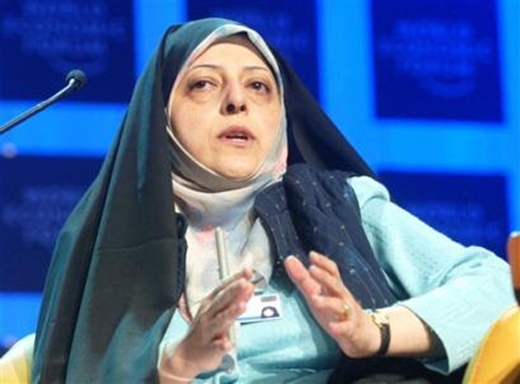
Ms. Marzieh Afkham

Iran’s Foreign Ministry rejected as “downright lie” a recent report prepared by the UN special rapporteur on the situation of human rights in Iran, Ahmed Shaheed, and Christof Heyns, the UN rapporteur on extrajudicial, summary or arbitrary executions.

The report on the alleged unreported executions in Iran or the execution of political prisoners is a downright lie, Foreign Ministry Spokeswoman Marzieh Afkham said on Sunday, stressing that such untrue claims run counter to the professional responsibilities of Shaheed and Heyns.

Her comments came after the two UN staffers in a May 8 report condemned what they called a sharp increase in executions in recent weeks in Iran, alleging that many executions have gone unreported by official sources, and the names of prisoners have not been published.

Maldivian Shaheed and South African Heyns have also alleged that 98 prisoners “are reported to have been executed” in Iran between April 9 and 26, including at least six political prisoners and seven women.

In reaction, Afkham underscored that the allegation of a rise in the death penalty and “reliance on the estimated figures without any source or sources that are not authentic” nullify such a report.

“It’s a great pity that the trend of the (UN) special rapporteur’s (Shaheed’s) activities suggest that he does not seek credible evidence, and despite the reports and documents issued by Iran, such claims are continuously repeated with quite political purposes,” she noted.

The spokeswoman explained that Iran’s law hands out capital punishment only for “the most serious crimes, including narcotics trafficking”.

“The Islamic Republic of Iran calls on the special rapporteur not to include traffickers, murderers and those who have committed terrorist crimes in the list of the political prisoners,” she pointed out.

What happened in Mahabad was a personal issue: Interior minister

Rahmani Fazli

Replacing some executive officials is a matter that every government might deal with, but the Interior Ministry has not had and does not have any plan at present to do so, Interior Minister Abdolreza Rahmani Fazli was quoted by Entekhab, a news website, as telling reporters on Monday.

Speaking on the sidelines of a gathering which brought together provincial governors from across the country, the interior chief also said his ministry and the president might decide to change some state executives in the weeks and months ahead.

On the suspicious death of a young woman in Mahabad in West Azerbaijan Province, he said, “What happened in Mahabad was a personal issue. In fact the deceased had an affair with the suspect, who was her suitor. Fearing that her family might learn about their relationship, she tried to leave the hotel with the help of a colleague. Unfortunately, however, she fell to the ground from the third floor and lost her life.”

He added, “Opportunist media tried to turn the personal issue into a political question by resorting to fabrications, claiming that a member of security forces tried to sexually assault her and that the woman jumped off the hotel window to her death to escape rape.”

The interior chief said the suspect is not a member of security forces, rather he is a specialist that often visited the hotel to help its personnel.

Rahmani Fazli went on to say, “The incident turned into a social problem thanks to the media which incited the public, particularly the youth in Mahabad. As a result, a large crowd thronged outside the hotel, shattered its windows and torched part of the facility.”

The interior minister further said, “Unfortunately, 21 police forces suffered injuries when protesters threw stones at them. Police invited demonstrators to stay calm and I extend my gratitude to police [for their restraint].”

Earlier, Seyyed Ebrahim Raeisi, the prosecutor general, said that those behind the unrest in the city would be punished.

Tehran flower exhibition (PHOTOS)

Tehran flower exhibition1

The 13th International Exhibition of Flowers and Plants opened in Tehran on May 11 with the Tehran mayor and chairman of Tehran City Council in attendance.

Snapshots of the expo released online by different news websites:

International festival of creativity in Islamic arts opens in Iran

T2852848-4310571

The second International Festival of Creativity and Innovation in Islamic Arts and Handicrafts opened in Tabriz on May 9.

The weeklong festival brings together 35 Islamic countries, said Secretary General of the festival Mehdi Mohammadzadeh, adding out of the 80 artists who have taken part in the event, 18 are Iranians.

Miniature, illuminated manuscripts, calligraphy, pottery, carpet-weaving, drawing, textile printing and glassmaking, wooden, and metal handicrafts are among the arts over which the participants are competing with each other at the event.


Dolls, the victims’ best friends in a Tehran rehab center (PHOTOS)

Ehsan House

Victims of the social ills are kept in Ehsan House, a charitable institute for protecting social victims. Like other rehab centers, the sufferers there receive treatment and rehabilitation services, but – unlike other places –dolls are also on the menu to ease the loneliness of those institutionalized.

The Islamic Republic News Agency has released the following pictures of the rehab center in Tehran:

A short stop by Lake Orumiyeh (PHOTOS)

Lake Orumiyeh

Lake Orumiyeh in northwestern Iran is a famous salt lake whose shrinkage in recent years has put it under the spotlight.

Efforts to revive the lake have gathered momentum in recent months and have been fairly successful.

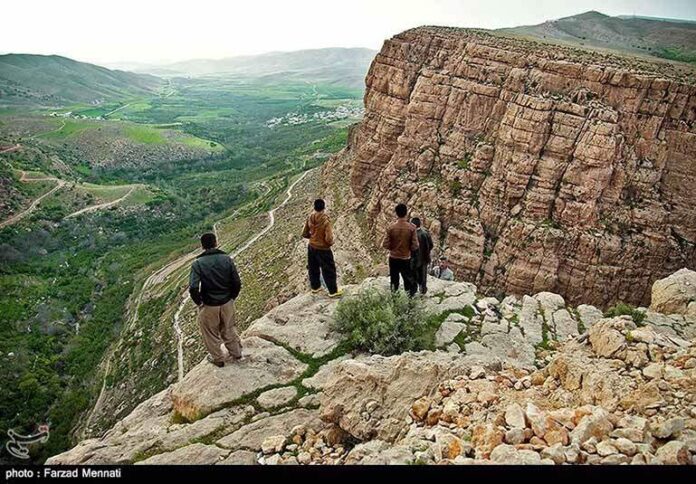
The photographer of the Islamic Students’ News Agency has stopped by the famous lake to take the following photos:

Alignment, not crackdown, can help better direct public opinion

Ali Jannati

The minister of culture and Islamic guidance has said that the government needs to align with people if it seeks to better control and shape public opinion.

Ali Jannati made the remark in a gathering of police officials Sunday and added that media cannot be controlled and the flow of information cannot be blocked.

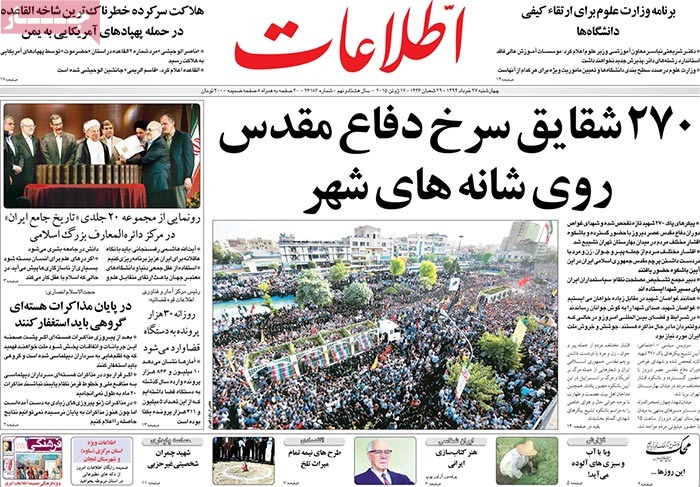
Ettela’at newspaper on May 11 published the minister’s remarks on public opinion and the ways to handle it in society. The following is the translation of excerpts of Jannati’s remarks:


Uncontrollability of information sharing

[…]

The minister said technically speaking, media cannot be brought under control, nor do geographical boundaries and legal requirements allow for such control.

He added nothing can staunch the [free] flow of information and news.

[…]

Jannati further said certain pieces of information are exchanged through Viber and WhatsApp, either mutually or within groups, adding we cannot control or interrupt these exchanges.


What should be done?

The culture chief went on to say that production of [decent Internet] content is of immense significance when it comes to dissemination of information and molding public opinion.

“We need to [rush to the scene] and take over and produce materials. The more we produce information in cyberspace, the more we can affect public opinion [in society]”, he stressed.

[…]

To counter the [inaccurate and misleading] information which is relayed via the web, the minister said, we have to tap into the potential satellite channels and the virtual world. He said we need to put these tools to good use. “Why shouldn’t we upload videos on [video-sharing website such as] YouTube?” he wondered.

If we align ourselves with people, we can better control public opinion, Jannati said, adding we can get nothing through opposing [people’s individual views, attitudes and beliefs which form] public opinion.

At the current situation, we need to develop appropriate software for cell phone systems in order not to let others sway public opinion, Jannati said, adding we need to take measures to address public opinion, both at home and abroad.

Iran’s revolution has a cultural nature, he said, adding we want to export our way of thinking and culture [to other nations].

The minister also said that we should exploit all potential to spread public diplomacy the world over. If so, we can influence public opinion in other nations too, he concluded.

[…]